seamus dubhghaill

Promoting Irish Culture and History from Little Rock, Arkansas, USA


Leave a comment

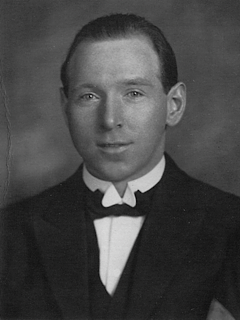
Birth of Charles McGuinness, Sailor & Adventurer

Charles John McGuinness, sailor and adventurer, is born on March 6, 1893, in Derry, County Londonderry.

McGuinness is the elder of two sons of John McGuinness, sea captain and harbourmaster who is born in the United States, and Margaret McGuinness (née Hernand) from Donegal, County Donegal.

In 1908, at the age of 15, McGuinness leaves home, stowing away in a ship and traveling extensively throughout the world for several years. At the age of 17 he is involved in the first of several shipwrecks, drifting for two weeks on a lifeboat before being rescued near Tahiti. He works as a pearl fisher in the South Seas for a year before resuming his nautical career.

In 1913, McGuinness travels through Canada, working as a panhandler and briefly joining the Canadian Militia. In August 1914, following the outbreak of World War I, he joins the British navy, serving in Admiral Reginald Bacon‘s Dover Patrol and in Cameroon. After learning of the 1916 Easter Rising, he deserts the British navy but later joins the South African Army, in which he fights in east Africa. He is captured by the German Schutztruppe of Colonel Paul von Lettow-Vorbeck but manages to escape by trekking through the jungle.

Disillusioned with the war, McGuinness resumes his travels. In 1920, he returns to Derry and joins the Irish Republican Army (IRA), leading a flying column in northwest Ireland. McGuinness, who reputedly introduces the first monkey to Derry, is viewed locally as an eccentric adventurer but is much celebrated for his instrumental role in the daring escape of Frank Carty, the IRA Sligo Brigade commander, from Derry jail.

Wanted for the murder of Inspector Robert Johnson in Glasgow, a charge he denies, McGuinness is captured by the British army in June 1921 after a failed bank raid in Glenties, County Donegal, but escapes from Derry’s Ebrington Barracks before his identity is established. Shortly after the truce in July 1921 he is sent by Liam Mellows to Germany, from where he smuggles arms to Ireland. After the treaty split, he continues to smuggle arms for the republican side but leaves the IRA, having become disillusioned with its incompetence. He claims to have been arrested in Berlin in 1922 for conspiring with Bulgarian revolutionaries, and released on condition that he leaves the state.

McGuinness emigrates to New York in 1923 where, following an alleged spell of employment by Chiang Kai-shek‘s forces in China, he establishes himself as a building contractor. In 1928, he joins Admiral Richard E. Byrd‘s expedition to the Antarctic, serving as a navigation officer. At a reception on his return in 1929, he presents the mayor of New York City, Jimmy Walker, with an Irish tricolour which, he claims, Byrd had flown over the South Pole. He is not, as he claims, awarded a congressional medal by the secretary of the navy.

In 1930, McGuinness embarks on a new career, smuggling rum between Canada and the United States (his memoirs of which are subsequently published in the American press under the pseudonym “Night-Hawk”). After losing his fortune when his boat and cargo are impounded in the summer of 1931, he travels to the Soviet Union to observe communism at first hand. He remains in the Soviet Union around two years, where he claims to work as a harbourmaster in Murmansk, and forms an unfavourable opinion of the Soviet Union.

McGuinness’s autobiography, Nomad, is published in 1934. His publisher, Methuen Publishing, is sued for considerable damages by the notorious Alderman John William Nixon, MP, as a result of McGuinness’s veiled reference to him as the former Royal Ulster Constabulary (RUC) detective inspector who led a murder gang in Belfast in 1922, believed responsible for the murder of the McMahon family.

In late 1936, McGuinness joins the International Brigades in the Spanish Civil War but soon deserts after disagreements with the authorities. He returns to Ireland, where he pens a sensational exposé of the International Brigades, I fought with the Reds, which is published by the Irish Independent. He also writes colourful accounts of life under communism, such as Behind the Iron Curtain, under the pseudonym “Peter Dawson.”

In 1942, while serving as chief petty officer in the marine service at Haulbowline, McGuinness offers to assist the German legation by smuggling spies out of Ireland. Despite his British naval service, he is virulently anti-British. According to local legend he has the sole of both feet tattooed with the Union Jack so wherever he goes he is safe in the knowledge that he is “trampling on the butcher’s apron.” He is arrested and sentenced to seven years imprisonment but is released shortly after the end of the Emergency.

McGuinness is believed to have died on December 4, 1947, when he supposedly drowns alongside four other crew members of the schooner Isaalt that he is piloting on Ballymoney Strand near GoreyCounty Wexford. Two members of the crew survive, managing to swim ashore, the ship is a mere 100 metres from land. However, members of McGuinness’ family express doubt over the years. A nephew claims to have encountered McGuinness on the London Underground in 1955. Upon their gazes meeting, McGuinness is reported to smile and say four simple words: “You never saw me.”

(From: “McGuinness, Charles John” by Fearghal McGarry, Dictionary of Irish Biography, http://www.dib.ie, October 2009)


Leave a comment

Death of Archbishop Luciano Storero

Michael Sullivan US Ambassado

Archbishop Luciano Storero, former Apostolic Nuncio in Ireland and Archbishop of the Titular See of Tigimma, dies in Dublin on October 1, 2000.

Storero is born in Pinasca, Italy on September 26, 1926. He is ordained into the priesthood on June 29, 1949. On November 22, 1969, he is appointed Titular Archbishop of Tigimma and the same day is appointed an Apostolic Delegate. He is appointed Apostolic Nuncio on December 24, 1970, to the Dominican Republic. He serves as Pro-Nuncio to Gabon and Cameroon from 1973. He is the Apostolic Nunciature to India from 1976 to 1981. He also serves as Apostolic Nunciature to Venezuela from 1981. On November 15, 1995, he is appointed the tenth Apostolic Nunciature to Ireland. He remains in that position until his death.

It is reported in the United States in January 2011, as Nuncio to Ireland in 1997, Storero signed a two-page letter that warns the Irish bishops against implementing a policy “that included ‘mandatory reporting’ of suspected abusers to civil authorities.” The policy, which had been approved by the Irish bishops, put the Irish church in opposition to Storero and the Vatican.

That opposition is not reversed at least until Cardinal Joseph Aloisius Ratzinger (the future Pope Benedict XVI) is put in charge of the Congregation for the Doctrine of the Faith by Pope John Paul II in 2001. At that time the Vatican begins to tip the balance in canon law in favour of the victims. “But has [the Pope] done enough?” asks a report earlier in 2011 on the Irish television network RTÉ. “The Vatican has yet to acknowledge its contribution in creating the problem in the first place … [when] they put the reputation of the Church and the avoidance of scandal over the concerns for the victims [under Storero and before].”

Luciano Storero dies of cancer at Mater Private Hospital in Dublin on October 1, 2000. His remains are removed from the hospital to the St. Mary’s Pro-Cathedral in Dublin where Requiem Mass is celebrated at noon on October 3, 2000, before being transferred to Dublin Airport under Army escort for transport to Italy where he is interred in his hometown of Pinasca.


Leave a comment

Birth of Irish Novelist Arthur Joyce Lunel Cary

arthur-joyce-lunel-cary

Irish novelist Arthur Joyce Lunel Cary is born in a hospital in Derry, County Londonderry, in what is now Northern Ireland, on December 7, 1888. Shortly after his birth the family moved to London.

Cary is born into an old Anglo-Irish family, and at age 16 he studies painting in Edinburgh and then in Paris. From 1909 to 1912 he is at Trinity College, Oxford, where he reads law. Having joined the colonial service in 1914, he serves in the Nigeria Regiment during World War I. He is wounded while fighting in Cameroon and returns to civil duty in Nigeria in 1917 as a district officer. West Africa becomes the locale of his early novels.

Resolved to become a writer, Cary settles in Oxford in 1920. Although that year he publishes ten short stories in The Saturday Evening Post, he decides he knows too little about philosophy, ethics, and history to continue writing in good conscience. Study occupies the next several years, and it is only in 1932 that his first novel, Aissa Saved, appears. The story of an African girl converted to Christianity but still retaining pagan elements in her faith, it is followed by three more African novels — An American Visitor (1933), The African Witch (1936), and Mister Johnson (1939) — and a novel about the decline of the British Empire, Castle Corner (1938). Childhood is the theme of his next two novels, his own in A House of Children (1941) and that of a cockney wartime evacuee in the country in Charley Is My Darling (1940).

Cary’s trilogy on art begins with the first-person narration of a woman, Sara Monday, in Herself Surprised (1941) and follows with that of two men in her life, the lawyer Tom Wilcher in To Be a Pilgrim (1942) and the artist Gulley Jimson in The Horse’s Mouth (1944), his best-known novel. Monday is portrayed as a warm-hearted, generous woman who is victimized both by the conservative upper-class Wilcher and by the talented but disreputable painter Jimson. The latter character is a social rebel and visionary artist whose humorous philosophy and picaresque adventures in The Horse’s Mouth helped make him one of the best-known characters in 20th-century fiction.

Similarly, Cary’s other trilogy is seen from the vantage of a politician’s wife in A Prisoner of Grace (1952), the politician himself in Except the Lord (1953), and the wife’s second husband in Not Honour More (1955).

In 1952, Cary has some muscle problems which are originally diagnosed as bursitis, but as more symptoms are noted over the next two years, the diagnosis is changed to that of motor neuron disease (known as Lou Gehrig’s disease (ALS) in North America), a wasting and gradual paralysis that is terminal. As his physical powers fail, Cary has to have a pen tied to his hand and his arm supported by a rope to write. Finally, he resorts to dictation until unable to speak, and then ceases writing for the first time since 1912. His last work, The Captive and the Free (1959), first volume of a projected trilogy on religion, is unfinished at his death on March 29, 1957. His short stories are collected in Spring Song (1960).