seamus dubhghaill

Promoting Irish Culture and History from Little Rock, Arkansas, USA


Leave a comment

Birth of Biblical Scholar James Henthorn Todd

james-henthorn-todd

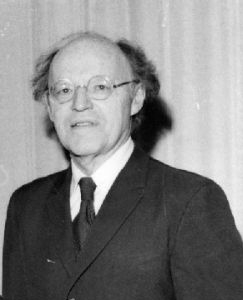
James Henthorn Todd, biblical scholar, educator, and Irish historian, is born in Rathfarnham, a Southside suburb of Dublin, on April 23, 1805. He is noted for his efforts to place religious disagreements on a rational historical footing, for his advocacy of a liberal form of Protestantism, and for his endeavours as an educator, librarian, and scholar in Irish history.

Todd is the son of Charles Hawkes Todd, a professor of surgery, and Eliza Bentley, and is the oldest of fifteen children. Noted physician Robert Bentley Todd is among his younger brothers. His father dies a year after he receives a B.A. from Trinity College, Dublin in 1825, diminishing his prospects for success. However, he is able to remain at the college by tutoring and editing a church periodical.

Todd obtains a premium in 1829, and two years later is elected Fellow, taking deacon’s orders in the same year. From that time until 1850, when he becomes a Senior Fellow, he is among the most popular tutors in Trinity College.

Todd takes priest’s orders in 1832. He begins publishing in earnest, including papers on John Wycliffe, church history, and the religious questions of his day. He is Donnellan Lecturer in 1838 and 1839, publishing works related to the Antichrist in which he opposes the views of the more extreme of his co-religionists who apply this term to the Roman Catholicism and the Pope. In 1840 he graduates Doctor of Divinity.

In 1837 Todd is installed Treasurer at St. Patrick’s Cathedral in Dublin and becomes Precentor in 1864. His style of preaching is described as simple and lucid, and his sermons interesting. He co-founds Saint Columba’s College in 1843, a school which promotes the Irish language for those who intend to take orders, as well as promoting the principles of the Church of Ireland.

In 1849 Todd is made Regius Professor of Hebrew at Trinity, and a Senior Fellow the following year. In 1852 he is appointed Librarian, and working alongside John O’Donovan and Eugene O’Curry, he classifies and arranges the collection of manuscripts. When his office receives money, he spends it on the acquisition of manuscripts and rare books, and he deserves much credit for the library’s high ranking as one of the chief libraries of Europe.

Todd’s secular achievements are no less remarkable. In 1840 he co-founds the Irish Archaeological Society and acts as its honorary secretary. He is elected a member of the Royal Irish Academy and strives actively to acquire transcripts and accurate accounts of Irish manuscripts from foreign libraries. He is honorary secretary from 1847 to 1855, and president from 1856 to 1861. In 1860 he is given an ad eundem degree at the University of Oxford.

Todd is a notable person among notable people. His work is widely respected and cited. Among his friends and acquaintances are lawyer and poet Sir Samuel Ferguson, Conservative Member of Parliament (MP) and Roman Catholic convert Edwin Wyndham-Quin, fellow historian William Reeves, artist Sir George Petrie, and the Stokes family (physician father William, future lawyer and Celticist son Whitley, and future antiquarian daughter Margaret).

James Henthorn Todd dies at his house in Rathfarnham on June 28, 1869, and is buried in the churchyard of St. Patrick’s Cathedral.


3 Comments

Birth of Melesina Trench, Writer, Poet & Diarist

melesina-trench

Melesina Trench (née Chenevix), Irish writer, poet and diarist, is born in Dublin on March 22, 1768. During her lifetime she is known more for her beauty than her writing. It is not until her son, Richard Chenevix Trench, publishes her diaries posthumously in 1861 that her work receives notice.

Melesina Chenevix is born to Philip Chenevix and Mary Elizabeth Gervais. She is orphaned before her fourth birthday and is brought up by her paternal grandfather, Richard Chenevix (1698–1779), the Anglican Bishop of Waterford and Lismore. The family is of Huguenot extraction.

After the death of Richard Chenevix she goes to live with her other grandfather, the Archdeacon Gervais. On October 31, 1786, she marries Colonel Richard St. George, who dies only four years later in Portugal, leaving one son, Charles Manners St. George, who becomes a diplomat.

Between 1799 and 1800, Melesina travels around Europe, especially Germany. It is during these travels that she meets Lord Horatio Nelson, Lady Hamilton and the cream of European society, including Antoine de Rivarol, Lucien Bonaparte, and John Quincy Adams while living in Germany. She later recounts anecdotes of these meetings in her memoirs.

On March 3, 1803, in Paris she marries her second husband, Richard Trench, who is the sixth son of Frederick Trench and brother of Frederick Trench, 1st Baron Ashtown.

After the breakdown of the Peace of Amiens, Richard Trench is detained in France by Napoleon‘s armies, and in August 1805 Melesina takes it upon herself to petition Napoleon in person and pleads for her husband’s release. Her husband is released in 1807, and the couple settles at Elm Lodge in Bursledon, Hampshire, England.

Their son, Francis Chenevix Trench, is born in 1805. In 1807, when they are on holiday in Dublin, their son Richard Chenevix Trench is born. He goes on to be the Archbishop of Dublin, renowned poet and contemporary of Alfred, Lord Tennyson. Her only daughter dies a few years later at the age of four.

Trench corresponds with, amongst others, Mary Leadbeater, with whom she works to improve the lot of the peasantry at her estate at Ballybarney. She dies at the age of 59 in Malvern, Worcestershire on May 27, 1827.

Melesina Trench’s diaries and letters are compiled posthumously by Richard Chenevix Trench as The remains of the late Mrs. Richard Trench in 1861 with an engraving of her taken from a painting by George Romney. Another oil painting, The Evening Star by Sir Thomas Lawrence, has her as a subject, and she is reproduced in portrait miniatures – one in Paris by Jean-Baptiste Isabey and another by Hamilton that is copied by the engraver Francis Engleheart.

Copies of a number of her works are held at Chawton House Library.

(Pictured: “Melesina Chenevix, Mrs. George, later Mrs. Trench,” attributed to George Romney (British, 1734–1802), oil on canvas)


Leave a comment

Birth of William Reeves, Bishop of Down, Connor & Dromore

bishop-william-reeves

William Reeves, Irish antiquarian and the Church of Ireland Bishop of Down, Connor and Dromore from 1886 until his death, is born on March 16, 1815. He is the last private keeper of the Book of Armagh and at the time of his death is President of the Royal Irish Academy.

Reeves is born at Charleville, County Cork, the eldest child of Boles D’Arcy Reeves, an attorney, whose wife Mary is a daughter of Captain Jonathan Bruce Roberts, land agent to the Edmund Boyle, 8th Earl of Cork. This grandfather had fought at the Battle of Bunker’s Hill, and Reeves is born at his house in Charleville.

From 1823, Reeves is educated at the school of John Browne in Leeson Street, Dublin, and after that at a school kept by the Rev. Edward Geoghegan. In October 1830, he enters Trinity College, Dublin, where he quickly gains a prize for Hebrew. In his third year, he becomes a scholar and goes on to graduate BA in 1835. He proceeds to read medicine, wins the Berkeley Medal, and graduates MB in 1837. His object in taking his second degree is that he intends to become a clergyman and to practice the medical profession among the poor of his parish.

In 1838, Reeves is appointed Master of the diocesan school in Ballymena, County Antrim, and is ordained a deacon of Hillsborough, County Down. The following year, he is ordained a priest of the Church of Ireland at Derry.

In 1844, Reeves rediscovers the lost site of Nendrum Monastery when he visits Mahee Island in Strangford Lough, County Down, searching for churches recorded in 1306, and recognises the remains of a round tower. By 1845, he is corresponding with the Irish scholar John O’Donovan, and an archive of their letters between 1845 and 1860 is preserved at University College, Dublin. In July 1845, Reeves visits London.

Reeves resides in Ballymena from 1841 to 1858, when he is appointed vicar of Lusk following the success of his edition of Adomnán‘s Life of Saint Columba (1857), for which the Royal Irish Academy awards him their Cunningham Medal in 1858. In 1853, he purchases from the Brownlow family the important 9th-century manuscript known as the Book of Armagh, paying three hundred pounds for it. He sells the book for the same sum to Archbishop Beresford, who has agreed to present it to Trinity College, Dublin.

In 1875 Reeves is appointed Dean of Armagh, a position he holds until 1886 when he is appointed as Bishop of Down, Connor and Dromore. In 1891 he is elected as President of the Royal Irish Academy. As bishop, he resides at Conway House, Dunmurry, County Antrim, and signs his name “Wm. Down and Connor.”

William Reeves dies in Dublin on January 12, 1892, while still President of the Academy. At the time of his death, he is working on a diplomatic edition of the Book of Armagh, by then in the Trinity College Library. The work is completed by Dr. John Gwynn and published in 1913.


Leave a comment

St. Andrew’s Church Destroyed by Fire

church-of-st-andrews

St. Andrew’s Church in Suffolk Street, Dublin, is destroyed by fire on January 8, 1860. The church is a former parish church of the Church of Ireland and now houses the Central Tourist Office.

The original St. Andrew’s Church is located on present-day Dame Street but disappears during Oliver Cromwell’s reign in the mid-17th century. A new church is built in 1665 a little further away from the city walls, on an old bowling-green close to the Thingmote, the old assembly place of the Norse rulers of the city. Due to its shape, it is commonly known as the “Round Church.” Local landlords of the time, Lord Anglesey (after whom Anglesey Street is named) and Sir John Temple (after whose family Temple Bar is named) are churchwardens. The architect is William Dodson. The neighbouring houses located in that part of the Dublin Corporation estate are known as “the Whole Land of Tib and Tom.”

The church is rebuilt in 1793, but burns down in 1860, after which the present building is constructed.

The boundaries of the ecclesiastical parish are coextensive to those of the civil parish of St. Andrew. The population of this parish in 1901 is 3,058, in 1971 it is 300.


Leave a comment

Birth of Edward Pakenham, 6th Earl of Longford

Francis Pakenham, 7th Earl of Longford

Edward Arthur Henry Pakenham, 6th Earl of Longford and an Irish peer, politician, and littérateur, is born on December 29, 1902. Also known as Eamon de Longphort, he is a member of the fifth Seanad Éireann, the upper house of the Oireachtas, in the 1940s.

Pakenham is the elder son of Thomas Pakenham, 5th Earl of Longford and Mary, Countess of Longford, née Child-Villiers. He is the only one of the Pakenham children on whom his mother dotes, apparently because he is to succeed to the earldom on his father’s death and because he is always in delicate health.

As a pupil at Eton College, where he twice received the Wilder Divinity Prize, Pakenham succeeds to the earldom when his father is killed in action at the Battle of Gallipoli on August 21, 1915. He is an Irish Nationalist since his days at Eton, taking inspiration from the Easter Rising in 1916 and the Russian Revolution of 1917. He learned Irish and adopted the name Eamon de Longphort.

Pakenham becomes an undergraduate at Christ Church, Oxford and meets his future wife, Christine Patti Trew, an Oxford “undergraduette.” They are married on July 18, 1925. His political views make him unpopular at both Eton and Christ Church, where he is famously put in “Mercury,” the pond containing a statue of Mercury in Tom Quad.

Pakenham becomes Chairman of the Gate Theatre in Dublin in 1930 and continues to work for the theatre until 1936, when he founds the Longford Players. His plays include Ascendancy, The Melians, The Vineyard, and Yahoo. An excellent linguist and Classical scholar, he translates Le Bourgeois gentilhomme, Le Malade Imaginaire, L’école des femmes, Tartuffe, Le Barbier de Séville, Agamemnon and Oedipus Rex and adapts the novella Carmilla for the stage.

Pakenham also has several volumes of poetry published, some at the expense of his mother when he is still at Eton, but he is not considered to have been a very good poet.

Pakenham is an Anglo-Catholic who never leaves the Church of Ireland. On November 13, 1946, he is nominated by the Taoiseach, Éamon de Valera, as a member of 5th Seanad Éireann, filling a vacancy caused by the death of Professor William Magennis. He is not re-appointed to the 6th Seanad.

Pakenham often collaborates with his wife with whom he is also responsible for redecorating Pakenham Hall, now Tullynally Castle, in Chinese style. Pakenham Hall is often the scene of gatherings of Oxford-educated intellectuals such as John Betjeman, Evelyn Waugh, and Maurice Bowra.

Edward Pakenham dies without issue on February 4, 1961, and is succeeded by his younger brother Frank. He is buried at Mount Jerome Cemetery in Dublin.


Leave a comment

Birth of Clergyman Narcissus Marsh

narcissus-marsh

Narcissus Marsh, English clergyman who is successively Church of Ireland Bishop of Ferns and Leighlin, Archbishop of Cashel, Archbishop of Dublin and Archbishop of Armagh, is born on December 20, 1638, at Hannington, Wiltshire.

Marsh is educated at Magdalen Hall, Hertford College, Oxford. He later becomes a fellow of Exeter College, Oxford, in 1658. In 1662 he is ordained, and presented to the living of Swindon, which he resigns in the following year.

After acting as chaplain to Seth Ward, Bishop of Exeter and then Bishop of Salisbury, and Lord Chancellor Clarendon, he is elected principal of St. Alban Hall, Oxford, in 1673. In 1679 he is appointed provost of Trinity College, Dublin, where he does much to encourage the study of the Irish language. He helps to found the Dublin Philosophical Society and contributes to it a paper entitled Introductory Essay to the Doctrine of Sounds (printed in Philosophical Transactions, No. 156, Oxford, 1684).

In 1683 Marsh is consecrated Bishop of Ferns and Leighlin, but after the accession of James II he is compelled by the turbulent soldiery to flee to England in 1689, when he becomes Vicar of Gresford, Flintshire, and Canon of St. Asaph. Returning to Ireland in 1691 after the Battle of the Boyne, he is made Archbishop of Cashel, and three years later he becomes Archbishop of Dublin. About this time, he founds Marsh’s Library in Dublin, which is the oldest public library in Ireland. He becomes Archbishop of Armagh in 1703. Between 1699 and 1711 he is six times a Lord Justice of Ireland.

Narcissus Marsh dies on November 2, 1713. His funeral oration is pronounced by his successor at Dublin, Archbishop William King. A more acerbic account is provided by Jonathan Swift.

Many oriental manuscripts belonging to Narcissus Marsh are now in the Bodleian Library in Oxford.


Leave a comment

Birth of Poet Charles Wolfe

charles-wolfe

Charles Wolfe, Irish poet, is born at Blackhall, County Kildare, on December 14, 1791. He is chiefly remembered for “The Burial of Sir John Moore after Corunna” which achieves popularity in 19th century poetry anthologies.

Wolfe is the youngest son of Theobald Wolfe of Blackhall and his wife Frances, who is also his cousin and daughter of the Rev. Peter Lombard of Clooncorrick Castle, Carrigallen, County Leitrim. He is a brother of Peter Wolfe, High Sheriff of Kildare. His father is the godfather, but widely believed to be the natural father, of Theobald Wolfe Tone and the first cousin of Arthur Wolfe, 1st Viscount Kilwarden.

Not long after he is born, his father dies, and the family moves to England. In 1801, Wolfe is sent to a school in Bath but is sent home a few months later due to ill health. From 1802 to 1805, he is tutored by a Dr. Evans in Salisbury before being sent to Hyde Abbey School, Winchester. In 1808, his family returns to Ireland, and the following year he enters Trinity College, Dublin, graduating in 1814.

Wolfe is ordained as a Church of Ireland priest in 1817, first taking the Curacy of Ballyclog in County Tyrone before transferring almost immediately to Donaghmore, County Tyrone. There he develops a close friendship and deep respect for the Rev. Thomas Meredith, Rector of nearby Ardtrea, and a former Fellow of Trinity College Dublin. Wolfe writes two epitaphs for Meredith, one on his memorial in the parish church of Ardtrea, and another intended for his tomb.

Wolfe is best remembered for his poem “The Burial of Sir John Moore after Corunna”, written in 1816 and much collected in 19th and 20th century anthologies. The poem first appears anonymously in the Newry Telegraph of April 19, 1817, and is reprinted in many other periodicals. But it is forgotten until after his death when Lord Byron draws the attention of the public to it. Wolfe’s only volume of verse, Poetical Remains, appears in 1825 with “The Burial of Sir John Moore” and fourteen other verses of an equally high standard.

Wolfe remains at Donaghmore until 1820 but, rejected by the woman for whom he gave up his academic career, and with Meredith, his only real friend in County Tyrone, now dead, he moves to Southern France. Shortly before his death he returns to Ireland and lives at Cobh, County Cork, where he dies at the age of 31 of consumption, which he catches from a cow. He is buried in Cobh at Old Church Cemetery. There is also a plaque to his memory in the church at Castlecaulfield, the village where he lives whilst Curate at Donaghmore, as well as a marble monument to him at St. Patrick’s Cathedral, Dublin.

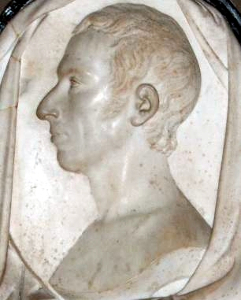
(Pictured: Bas-relief of Charles Wolfe in St. Patrick’s Cathedral, Dublin)


Leave a comment

Execution of John Atherton, Anglican Bishop of Waterford & Lismore

john-atherton-execution-pamphlet

John Atherton, Anglican Bishop of Waterford and Lismore in the Church of Ireland, is executed on December 5, 1640, on a charge of immorality.

Atherton is born in 1598 in Somerset, England. He studies at Oxford University and joins the ranks of the Anglican clergy. In 1634 he becomes Bishop of Waterford and Lismore in the Church of Ireland. In 1640 he is accused of buggery with a man, John Childe, his steward and tithe proctor. They are tried under a law that Atherton himself had helped to institute. They are both condemned to death, and Atherton is executed in St. Stephen’s Green, Dublin. Reportedly, he confesses to the crime immediately before his execution, although he had proclaimed his innocence before that.

More recently, some historical evidence has been developed that shows Atherton might have been a victim of a conspiracy to discredit him and his patrons. This is attributable to Atherton’s status as an astute lawyer, who seeks to recover lost land for the relatively weak Protestant Church of Ireland during the 1630s. Unfortunately for Atherton, this alienates him from large landowners, who then allegedly use his sexuality to discredit him.

English Puritan, Congregationalist and Independent activists, as well as English and Scottish Presbyterian activists, contemporaneously campaign to abolish Episcopacy (bishops) within the embattled Church of England, Church of Scotland and Church of Ireland, notionally expediting the political interest in Atherton’s downfall.

Posthumous accusations of sexual wrongdoing also include allegations of “incest” with his sister-in-law, and infanticide of the resultant child, as well as zoophilia with cattle. However, these allegations begin to be circulated several months after his death in an anonymous pamphlet, and may have been intended to further discredit the bishop’s campaign to restore the finances of the Church of Ireland.

(Pictured: Anonymous pamphlet of the hangings of John Atherton and John Childe, 1641)


Leave a comment

Death of C.S. Lewis, Novelist & Poet

Clive Staples Lewis, novelist, poet, academic, medievalist, literary critic, essayist, lay theologian, broadcaster, lecturer, and Christian apologist, dies in Oxford, England, on November 22, 1963.

Lewis is born in Belfast on November 29, 1898. When he is seven, his family moves into “Little Lea,” the family home of his childhood, in the Strandtown area of East Belfast. He was schooled by private tutors until age 9, when his mother dies from cancer. His father then sends him to live and study at Wynyard School in Watford, Hertfordshire. The school closes soon afterwards due to a lack of pupils. He then attends Campbell College in the east of Belfast about a mile from his home, but leaves after a few months due to respiratory problems. He is then sent to the health-resort town of Malvern, Worcestershire, where he attends the preparatory school Cherbourg House. It is during this time that Lewis abandons his childhood Christian faith and becomes an atheist. In September 1913, he enrolls at Malvern College, where he remains until the following June. After leaving Malvern, he studies privately with William T. Kirkpatrick, his father’s old tutor and former headmaster of Lurgan College.

Lewis holds academic positions at both Oxford University (Magdalen College, 1925–1954) and Cambridge University (Magdalene College, 1954–1963). He is best known for his works of fiction, especially The Screwtape Letters, The Chronicles of Narnia, and The Space Trilogy, and for his non-fiction Christian apologetics, such as Mere Christianity, Miracles, and The Problem of Pain.

Lewis and fellow novelist J.R.R. Tolkien are close friends. They both serve on the English faculty at Oxford University, and are active in the informal Oxford literary group known as the Inklings. According to Lewis’s memoir Surprised by Joy, he is baptised in the Church of Ireland, but fell away from his faith during adolescence. He returns to Anglicanism at the age of 32, owing to the influence of Tolkien and other friends, and he becomes an “ordinary layman of the Church of England.” His faith profoundly affects his work, and his wartime radio broadcasts on the subject of Christianity bring him wide acclaim.

Lewis writes more than 30 books, which have been translated into more than 30 languages and have sold millions of copies. The books that make up The Chronicles of Narnia have sold the most and have been popularised on stage, TV, radio, and cinema. His philosophical writings are widely cited by Christian apologetics from many denominations.

In early June 1961, Lewis begins suffering from nephritis, which results in blood poisoning. His illness causes him to miss the autumn term at Cambridge, though his health gradually begins improving in 1962 and he returns that April. His health continues to improve and he is fully himself by early 1963. On July 15 of that year he falls ill and is admitted to hospital. At 5:00 PM the following day he suffers a heart attack and lapses into a coma, unexpectedly awaking the following afternoon. After he is discharged from the hospital he is too ill to return to work. As a result, he resigns from his post at Cambridge in August. His condition continues to decline, and in mid-November he is diagnosed with end-stage renal failure. On November 22, exactly one week before his 65th birthday, he collapses in his bedroom at 5:30 PM and dies a few minutes later. He is buried in the churchyard of Holy Trinity Church, Headington, Oxford.

Media coverage of Lewis’s death is almost completely overshadowed by news of the assassination of U.S. President John F. Kennedy, which occurs on the same day approximately 55 minutes following Lewis’s collapse, as does the death of English writer Aldous Huxley, author of Brave New World.

In 2013, on the 50th anniversary of his death, Lewis is honoured with a memorial in Poets’ Corner in Westminster Abbey. His works enter the public domain in 2014 in countries where copyright expires 50 years after the death of the creator, such as Canada.


Leave a comment

Death of Erskine Hamilton Childers, 4th President of Ireland

Erskine Hamilton Childers, Fianna Fáil politician who serves as the 4th President of Ireland, dies on November 17, 1974. He also serves as Tánaiste and Minister for Health from 1969 to 1973, Minister for Transport and Power from 1959 to 1969, Minister for Posts and Telegraphs from 1951 to 1954 and 1966 to 1969. He served as a Teachta Dála (TD) from 1938 to 1973.

Childers is born on December 11, 1905, in the Embankment Gardens, London, to a Protestant family originally from Glendalough, County Wicklow. He is educated at Gresham’s School, Holt, and the University of Cambridge. In 1922, when Childers is sixteen, his father, Robert Erskine Childers, is executed by the new Irish Free State on politically inspired charges of gun-possession. After attending his father’s funeral, Childers returns to Gresham’s, then two years later he goes on to Trinity College, Cambridge.

After finishing his education, Childers works for a period in a tourism board in Paris. In 1931, Éamon de Valera invites him to work for his recently founded newspaper, The Irish Press, where Childers becomes advertising manager. He becomes a naturalised Irish citizen in 1938. That same year, he is first elected as a Fianna Fáil Teachta Dála (TD) for Athlone–Longford. He remains in the Dáil Éireann until 1973, when he resigns to become President.

Childers joins the cabinet in 1951 as Minister for Posts and Telegraphs in the de Valera government. He then serves as Minister for Lands in de Valera’s 1957–59 cabinet, as Minister for Transport and Power under Seán Lemass, and, successively, as Transport Minister, Posts and Telegraphs Minister, and Health Minister under Jack Lynch. He becomes Tánaiste in 1969.

Fine Gael TD Tom O’Higgins, who had almost won the 1966 presidential election, is widely expected to win the 1973 election when he is again the Fine Gael nominee. Childers is nominated by Fianna Fáil at the behest of de Valera, who pressures Jack Lynch in the selection of the presidential candidate. He is a controversial nominee, owing not only to his British birth and upbringing but to his Protestantism. However, on the campaign trail his personal popularity proves enormous, and in a political upset, Childers is elected the fourth President of Ireland on May 30, 1973, defeating O’Higgins by 635,867 votes to 578,771.

Childers quickly gains a reputation as a vibrant, extremely hard-working president, and becomes highly popular and respected. However, he has a strained relationship with the incumbent government, led by Taoiseach Liam Cosgrave of Fine Gael. Childers had campaigned on a platform of making the presidency more open and hands-on, which Cosgrave views as a threat to his own agenda as head of government. Childers considers resigning from the presidency but is convinced to remain by Cosgrave’s Minister for Foreign Affairs and Trade, Garret FitzGerald.

Though frustrated about the lack of power he has in the office, Childers’ daughter Nessa believes that he plays an important behind-the-scenes role in easing the Northern Ireland conflict, reporting that former Prime Minister of Northern Ireland Terence O’Neill meets secretly with her father at Áras an Uachtaráin on at least one occasion.

Prevented from transforming the presidency as he desired, Childers instead throws his energy into a busy schedule of official visits and speeches, which is physically taxing. On November 17, 1974, just after making a speech to the Royal College of Physicians of Ireland in Dublin, Childers suffers a heart attack. He dies the same day at Mater Misericordiae University Hospital.

Childers’s state funeral in St. Patrick’s Cathedral, Dublin is attended by world leaders including the Louis Mountbatten, 1st Earl Mountbatten of Burma (representing Queen Elizabeth II), the Prime Minister of the United Kingdom and leader of the Opposition, and presidents and crowned heads of state from Europe and beyond. He is buried in the grounds of the Church of Ireland Derralossary church in Roundwood, County Wicklow.