Ward, 25, from Stockport in Cheshire, receives a life term for each of those who died when the coach exploded on the M62 motorway. The sentences are to run concurrently with three other sentences of up to twenty years for causing explosions. She remains impassive as Justice Waller passes sentence.
During the trial the court hears that Ward had joined the army – from which she later deserts – on the instructions of the republican group, the IRA. Her detailed knowledge of bases helps to facilitate the coach bombing, prosecution barrister John Cobb QC alleges. She also gives information to the IRA which leads to two attacks on army targets in which six people die, Cobb adds.
Ward initially confesses her crimes in a statement to police which she later retracts. She denies being a member of the IRA but photographs of her in the outlawed organisation’s uniform are shown to the jury at Wakefield Crown Court.
It also emerges in court that Ward was arrested after the bombing of Euston railway station in September 1973 but is later released. Questions are raised as to why the police let her go even though traces of explosives were found on her hands.
As Ward is led from the courtroom to the cells, the only member of her family present, sister-in-law Jean Ward, sobs. Her father, Thomas, says earlier he does not believe his daughter is capable of such “brutal and callous acts.” Her brother, Tommy, says none of the family think Judith has ever been in the IRA. “We don’t think she was so heavily involved. There has been a lot of romancing,” he says.
That is a point echoed in court by Ward’s solicitor, Andrew Rankin QC, who highlights many improbabilities in her confessions. They include having been married to an IRA man and having borne a child by another.
Ward spends 18 years in jail before her conviction is quashed in 1992. Her lawyers argue that the trial jury should have been told of her history of mental illness.
Three Appeal Court judges conclude that Ward’s conviction had been “secured by ambush.” They say government forensic scientists had withheld information that could have changed the course of her trial. Her case is one of a spate of miscarriage of justices revealed in the early 1990s.
After her release, Ward writes an autobiography, Ambushed, published in 1992. She subsequently starts a course in criminology and becomes a campaigner for prisoners’ rights.
(From: “On This Day – 4 November,” BBC News, news.bbc.co.uk)
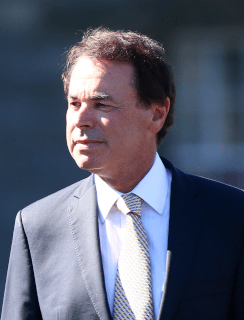
Shatter is the son of Reuben and Elaine Shatter, an English couple who meet by chance when they are both on holiday in Ireland in 1947. He is educated at The High School, Dublin, Trinity College Dublin (TCD) and the Europa Institute of the University of Amsterdam. In his late teens, he works for two months in Israel on a kibbutz. He is a partner in the Dublin law firm Gallagher Shatter (1977-2011). As a solicitor he acts as advocate in many seminal and leading cases determined both by the Irish High and Supreme Courts. He is the author of one the major academic works on Irish family law which advocates substantial constitutional and family law reform.
Under Shatter’s steerage, a substantial reform agenda is implemented with nearly 30 separate pieces of legislation published, many of which are now enacted including the Personal Insolvency Act 2012, Criminal Justice Act 2011, DNA Database Act, and the Human Rights and Equality Commission Act.
Under Shatter’s guidance, major reforms are introduced in 2011 into Ireland’s citizenship laws and a new Citizenship Ceremony is created. He both devises and pilots Ireland’s first ever citizenship ceremony which takes place in June 2011 and a new inclusive citizenship oath which he includes in his reforming legislation. During his time as Minister, he clears an enormous backlog of citizenship applications, and 69,000 foreign nationals become Irish citizens. Some applications had lain dormant for 3 to 4 years. He introduces a general rule that save where there is some real complication, all properly made citizenship applications should be processed within a six-month period. He also takes steps to facilitate an increased number of political refugees being accepted into Ireland and creates a special scheme to facilitate relations of Syrian families already resident in Ireland who are either caught up in the Syrian civil war, or in refugee camps elsewhere as a result of the Syrian civil war, to join their families in Ireland.
Shatter enacts legislation before the end of July 2011 to facilitate access to financial documentation and records held by third parties in investigations into banking scandals and white-collar crime. The legislation is first used by the Gardaí in September 2011.
During Ireland’s Presidency of the Council of the European Union in 2013, Shatter chairs the Justice and Home Affairs Council (JHA) meetings and, in January 2013, in Dublin Castle, the meeting of EU Defence Ministers. Under his guidance, Ireland plays a more active role than in the past in EU defence matters and in deepening Ireland’s participation in NATO’s partnership for peace. During the Irish Presidency, substantial progress is made at the European Union level in the adoption and development of new legislation and measures across a broad range of Justice and Home Affairs issues.
Shatter implements substantial reform in the Department of Defence and restructures the Irish Defence Forces. He is a strong supporter of the Irish Defence Forces participation in international peacekeeping and humanitarian engagements and is an expert on the Middle East. As a member of the Irish Parliament and as Minister on many occasions, he visits Irish troops participating in United Nations (UN) missions in the Middle East. Under his watch contracts are signed for the acquisition of two new naval vessels with an option to purchase a third. All three naval vessels are now part of the Irish Naval Service and have been actively engaged in recent years in rescuing drowning refugees in the Mediterranean Sea attempting to enter Europe.
As Minister for Defence he enacts legislation to grant a pardon and an amnesty to members of the Irish Defence Forces who deserted during World War II to fight on the allied side against Nazi Germany and gives a state apology for their post-war treatment by the Irish State.
Shatter is the minister responsible for two amendments to the Constitution of Ireland which are passed in referendums: the Twenty-ninth Amendment in 2011 to allow for the reduction of judges’ pay, and the Thirty-third Amendment in 2013 to establish a Court of Appeal. Just prior to his resignation from government, the draft legislation to create the court is published and the court is established and sitting by October 2014.
The jurisdictions of the courts are extended for the first time in 20 years and the maximum civil damages payable for the emotional distress of bereaved relations following a negligent death is increased.
As a politician, Shatter plays a lead role in effecting much of the constitutional and legislative change he advocates. He is a former chairperson of FLAC (the Free Legal Advice Centres), a former chairperson of CARE, an organisation that campaigns for childcare and children’s legislation reform in the 1970s and a former President of the Irish Council Against Blood Sports.
Shatter is a founder member of the Irish Soviet Jewry Committee in 1970 and pioneers a successful all party Dáil motion on the plight of Soviet Jewry (1984) and visits various refuseniks in Moscow in 1985. He is a former chairperson of the Oireachtas Foreign Affairs Committee (1996-97) and initiates the creation of an Ireland/Israel Parliamentary Friendship group in 1997, leading a number of visits to Israel by members of the Dáil Éireann and Seanad Éireann.
Shatter is the author of the satirical book Family Planning Irish Style (1979), and the novel Laura (1989). In 2017 his biography, Life is a Funny Business, is published by Poolbeg Press and in 2019 Frenzy and Betrayal: The Anatomy of a Political Assassination is published by Merrion Press. In 2023, his book Cyril’s Lottery of Life, a comedic book with an English solicitor from a small town as its protagonist, is published.
Mary Irvine, Irish judge who is the President of the Irish High Court between 2020 and 2022, is born on December 10, 1956, in Clontarf, Dublin. She first practiced as a barrister. She is a judge of the High Court between 2007 and 2014, a judge of the Court of Appeal from 2014 to 2019 and serves as a judge of the Supreme Court of Ireland from May 2019 until becoming President of the High Court on June 18, 2020. In addition to being the first woman to hold that position, she is the first judge to have held four judicial offices. She is an ex officio member of the Supreme Court and the Court of Appeal.
Irvine is born to John and Cecily Irvine, her father once being deputy director of RTÉ. She is educated at Mount Anville Secondary School, University College Dublin (UCD) and the King’s Inns. She is an international golf player, winning the Irish Girls Close Championship in 1975.
Irvine’s practice also extends to constitutional law. As a junior counsel, she represents the plaintiff in Cahill v. Sutton in 1980 in the Supreme Court with seniors Niall McCarthy and James O’Driscoll. The case establishes the modern Irish law of standing for applicants to challenge the constitutional validity of statutes. She appears with Peter Kelly to argue on behalf the right of the unborn in a reference made by President of IrelandMary Robinson under Article 26 of the Constitution to the Supreme Court in 1995 regarding the Information (Termination of Pregnancies) Bill 1995.
Irvine is appointed as a Judge of the High Court in June 2007. She is in charge of the High Court Personal Injuries list from 2009 to 2014 and subsequently becomes the second Chair of the Working Group on Medical Negligence and Periodic Payments, established by the President of the High Court.
Irvine is appointed to Court of Appeal on its establishment in October 2014. Some of her judgments on the Court of Appeal reduce awards given by lower courts for personal injuries compensation. She writes “most of the key” Court of Appeal judgments between 2015 and 2017 which have the effect of reducing awards arising from subsequent actions in the High Court.
Irvine is appointed to chair a statutory tribunal to conduct hearings and deal with cases related to the CervicalCheck cancer scandal in 2019. However, following her appointment as President of the High Court in 2020, she is unable to continue with the position.
On April 4, 2019, Irvine is nominated by the Government of Ireland as a Judge of the Supreme Court. She is appointed by the President of Ireland, Michael D. Higgins, on May 13, 2019. She writes decisions for the court in appeals involving planning law, the law of tort, intellectual property law, judicial review, and chancery law.
Irvine is appointed by Chief Justice Frank Clarke in 2019 to chair the Personal Injuries Guidelines Committee of the Judicial Council. The purpose of the committee is to review the levels of compensation issues in court cases arising out of personal injuries. Minister of State at the Department of FinanceMichael W. D’Arcy writes a letter to congratulate her on her appointment and outlines his views that personal injuries awards in Ireland should be “recalibrated.” She responds to the letter by saying it is the not the committee’s duty to tailor its findings “in a manner favourable to any particular interest group.”
Following a cabinet meeting on June 12, 2020, it is announced that Irvine will be nominated to succeed Peter Kelly as President of the High Court. A three-person panel consisting of the Chief Justice Frank Clarke (later substituted by George Birmingham), the Attorney GeneralSéamus Woulfe and a management consultant, Jane Williams, reviews applications for the position, before making recommendations to cabinet. The President of the Law Society of Ireland welcomes her appointment, describing her as an “outstandingly able judge.” She is the first woman to hold the role. As she is previously an ordinary judge of three courts, her appointment as President of the High Court makes her the first person to have held four judicial offices. She is appointed on June 18, 2020, and makes her judicial declaration on June 19.
Irvine takes over as president in the midst of the COVID-19 pandemic in the Republic of Ireland. She issues guidelines for lawyers to negotiate personal injuries cases outside of court due to the backlog formed by delays in hearings. She issues a practice direction in July 2020 that face coverings are to be worn at High Court hearings. She criticises barristers and solicitors in October 2020 for not wearing masks in the Four Courts.
In Irvine’s first week as president, she presides over a three-judge division of the High Court in a case taken by a number of members of Seanad Éireann. The plaintiffs seek a declaration that the Seanad should sit even though the nominated members of Seanad Éireann have not been appointed. The court refuses the relief and finds for the State. In 2021, she also presides over a three-judge division on a Seanad Éireann voting rights case, where the plaintiff argues for the extension of voting rights to graduates of all third-level educational institutions and the wider population. The court finds against the plaintiff.
Irvine continues to sit in the Supreme Court following her appointment.
In April 2022, Irvine announces her intention to retire in July 2022. She retires on July 13, 2022, and is succeeded by David Barniville.
Irvine is formerly married to retired judge Michael Moriarty, with whom she has three children. Her only known son, Mark Moriarty, dies suddenly on August 19,2022.
(Pictured: Justice Mary Irvine with the President of Ireland, Michael D. Higgins, on her appointment on the Supreme Court in 2019)
Following his exit from politics in 1957, having lost his Dáil seat, Finlay resumes practicing as a barrister. He successfully defends Captain James Kelly in the infamous 1970 arms trial.
In 1971, Finlay is tasked by the Fianna Fáil government with representing Ireland before the European Commission of Human Rights, when, in response to the ill treatment of detainees by security forces in Northern Ireland, they charge the British government with torture. Despite the notional recourse such prisoners would have within the British legal system, the Commission rules the complaint admissible.
During this period Finlay presides over a number of landmark cases, including Attorney General v X in 1992, when he overturns a High Court injunction preventing a pregnant teenage rape victim travelling to the UK for an abortion.
When, in the same year, Judge Liam Hamilton of the High Court, chair of the Beef Tribunal, seeks disclosure of the cabinet’s minutes for a particular meeting, Chief Justice Finlay along with the majority of the Supreme Court deny the request ruling that the concept of collective government responsibility in the Constitution takes precedence.
Finlay announces his resignation as Chief Justice of Ireland and retirement as a judge in 1994.
After his retirement, Finlay presides over a number of public inquiries.
In 1996, Finlay oversees the inquiry into the violence by English fans at the aborted 1995 friendly soccer match versus the Republic of Ireland at Lansdowne Road. His report to Bernard Allen, Minister for Sport, is critical of security arrangements on the night and recommends improvements to ticketing, seat-allocation, fan-vetting and policing arrangements. The Irish Government shares his report with the British Home Office.
After the collapse of The Irish Press group in 1995, the Minister for Enterprise and Employment, John Bruton, receives a damming report from the Competition Authority that Independent Newspapers has abused its dominant position and acted in an anti-competitive manner by purchasing a shareholding in The Irish Press. In September 1995, Bruton announces the Commission on the Newspaper Industry with an extremely wide remit to examine diversity and ownership, competitiveness, editorial freedom and standards of coverage in Irish newspapers as well as the impact of the sales of the British press in Ireland. Minister Bruton appoints 21 people to the commission and appoints Finlay chair. Due to the wide remit and huge number of submissions, the commission’s report is delayed but is eventually published at the end of July recommending widespread reforms.
Following the discovery of the BTSB anti-D scandal, in 1996, Finlay is appointed the chair and singular member of the Tribunal of Inquiry into the Blood Transfusion Service Board. The speed and efficiency with which his BTSB Tribunal conducts its business, restores confidence in the Tribunal as a mechanism of resolving great controversies in the public interest.
Finlay also sits on an Irish Rugby Football Union (IRFU) panel to adjudicate on the cases of Rugby players accused of using banned performance-enhancing substances.
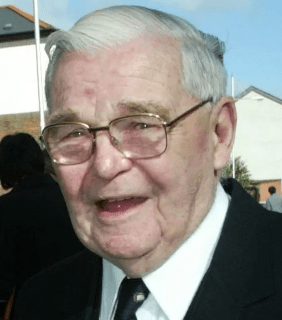
Finlay is married to Alice Blayney, who predeceases him in 2012. They have five children, two of whom follow in his family’s legal tradition: his son John being a Senior Counsel and his daughter Mary Finlay Geoghegan a former judge of the High Court, Court of Appeal and Supreme Court. Whenever his work schedule allows, he escapes to County Mayo where he indulges his passion for fishing.
Thomas Finlay dies at the age of 95 in Irishtown, Dublin, on December 3, 2017.
Hogan is called to the Bar in July 1984 and becomes a Senior Counsel in 1997. He appears domestically in cases in the High Court and the Supreme Court and internationally at the European Court of Human Rights and the European Court of Justice.
Hogan is noted in particular for his experience in constitutional law. He acts for the Attorney General of Ireland in references made by President Mary Robinson under Article 26 of the Constitution of Ireland to the Supreme Court regarding the Information (Termination of Pregnancies) Bill 1995 and the Employment Equality Bill of 1997. He appears again for the Attorney General (with Dermot Gleeson and Paul Gallagher) in another reference made by President Mary McAleese regarding the Health (Amendment) (No. 2) Bill 2004.
Hogan is a law lecturer and fellow at Trinity College Dublin from 1982 to 2007. He lectures on constitutional law, competition law and the law of tort. He is regarded as “one of the foremost constitutional and administrative lawyers in Ireland.” He is the co-author of Administrative Law in Ireland and JM Kelly: The Irish Constitution, the core Irish legal texts in Irish administrative and constitutional law respectively. He also writes a text on political violence and a book chronicling the origins of the Constitution of Ireland.
Hogan appears for Katherine Zappone and Ann Louise Gilligan in Zappone v. Revenue Commissioners in the High Court and Miss D in her case related to the rights to travel abroad for an abortion. He represents the State in the High Court and the Supreme Court in litigation that emerges following a court finding that an offence of unlawful carnal knowledge is unconstitutional. In 2008, he acts for Colm Murphy and Seamus Daly in the Supreme Court who are contesting an action taken by families of victims of the Omagh bombing when they are refused access to books of evidence.
Hogan is the first barrister to appear in an Irish court without a wig, following the enactment of the Courts and Court Officers Act 1995.
Throughout his career, Hogan has been a member of committees and boards in areas requiring legal expertise. He chairs the Department of Justice‘s Balance in Criminal Law Review Group and is a member of three other review groups: the Constitution Review Group, the Competition and Mergers Review Group and the Offences Against the State Acts Review Group. He is also a member of the Competition Authority‘s Advisory Panel and the Committee on Court Practice and Procedure.
Hogan is appointed a Judge of the High Court in 2010. Soon after his appointment, he holds an emergency hearing in his home regarding a blood transfusion for a sick baby. He is one of three judges who hears a case taken by Marie Fleming, seeking a right to die in 2012. His reference to the European Court of Justice in 2014 regarding the International Safe Harbor Privacy Principles, results in a declaration by the Grand Chamber that the Safe Harbour Decision is invalid. He subsequently becomes a Judge of the Court of Appeal upon its establishment in October 2014.
In May 2018, Hogan is nominated by the Government of Ireland for appointment as the Advocate General to the European Court of Justice. His term begins in October 2018 and was scheduled to expire in October 2024. Anthony Collins is appointed in 2021 to complete his term following his appointment to the Supreme Court. He concludes his term on October 7, 2021.
In one of his first opinions, on a reference from the French Conseil d’État, Hogan finds that Regulation (EU) No 1169/2011 of the European Parliament and of the Council of October 25, 2011, requires that products originating from Israeli-occupied territories should indicate if these products come from such a territory. His opinion is followed by the Court of Justice.
In April 2021, the Irish government nominates Hogan to the Supreme Court of Ireland. He is appointed in October 2021.
Christian is considered one of the best Irish lawyers of his time, but as a judge, he regularly courts controversy. His bitter and sarcastic temper and open contempt for most of his colleagues leads to frequent clashes both in Court and in the Press. Though he is rebuked for misconduct several times by the House of Commons, no serious thought seems to be given to removing him from office.
Christian is the third son of George Christian, a solicitor, and his wife Margaret Cormack. He is educated at the Trinity College Dublin, enters Gray’s Inn in 1831 and is called to the Bar of Ireland in 1834. He marries Mary Thomas in 1859 and they have four sons and four daughters. He lives at Ravenswell, Bray, County Wicklow.
Christian’s early years at the Bar are not successful, and he admits to being near to despair at times about his prospects. His practice lays in the Court of Chancery (Ireland). Chancery procedures are extremely complex, and he finds them at first almost unintelligible. Gradually he masters the intricacies of Chancery practice and becomes a leader of the Bar, taking silk in 1841. It is said that his expertise in Chancery procedures leaves even the Lord Chancellor himself quite unable to argue with him.
Christian is appointed Law Adviser to the Lord Lieutenant of Ireland, an influential post which involves assisting the Attorney General and Solicitor General in advising the Crown in 1850, but resigns after only a few months, on the ground that it interferes with his private practice. He is appointed Third Sergeant later the same year but resigns in 1855, allegedly because he is disappointed at not receiving further promotion. Promotion does in time come his way. He is appointed Solicitor General the following year and a judge of the Court of Common Pleas in 1858. He is unusual in having no strong political loyalty. It is said that his political allegiance is known only to himself.
As a judge of the Court of Common Pleas, Christian gets on well with his colleagues, and any dissenting judgements he writes are short and courteous. It is after his appointment as a Lord Justice of Appeal in Chancery in 1867 that his behaviour begins to attract unfavourable comment, as he goes out of his way to court controversy on a wide variety of topics.
Christian develops a deep contempt for the Irish Reports, castigating them in open Court as “nonsense,” “worthless rubbish” and “disjointed twaddle.” All attempts by colleagues to get him to moderate his language fail. He threatens to refuse to let his judgements be reported, and in his last years, his relations with the law reporters are so bad that they simply publish their uncorrected notes of his decisions rather than sending them to the judge for revision.
In 1867 a new office of Vice-Chancellor for Ireland is created. It is filled throughout its existence by one man, Hedges Eyre Chatterton, who retires in 1904. Despite his length of service, he is not considered a judge of the first rank, and Christian evidently combines feelings of professional contempt with a personal dislike for him. Christian usually votes on appeals to overturn his judgments, and frequently adds personal attacks on Chatterton, despite protests from his colleagues. The feud between the two judges reaches the Press in 1870 when The Irish Times, without naming them, quotes one judge’s opinion that another is “lazy, stupid, conceited and dogmatic.” Although Christian denies it, it is universally believed that he is the author of the remarks, which are aimed at Chatterton. Chatterton is fortunate in enjoying the support of the Lord Chancellor of Ireland, Thomas O’Hagan, 1st Baron O’Hagan, who is also on bad terms with Christian.
Christian had worked well with Abraham Brewster, O’Hagan’s predecessor, whom he respected. For O’Hagan on the other hand, he feels the same dislike and contempt which he felt for Chatterton. Although they served together in the Court of Common Pleas without any obvious conflict, Christian considers O’Hagan’s appointment as Lord Chancellor to be a purely political act, and that he is unfit to be either head of the judiciary or an appeal judge in Chancery. He also complains of what he sees as O’Hagan’s laziness, which puts an extra burden on him. During O’Hagan’s first term as Chancellor, Christian subjects him to constant criticism. Unwisely he does not confine these attacks to the Courtroom but publishes numerous pamphlets, which is widely seen as improper conduct in a judge. When O’Hagan becomes Chancellor for the second time, a friend congratulates him on escaping from “the misnamed Christian” who had retired two years earlier.
It is probably Christian’s feud with O’Hagan which leads to his extraordinary decision to publicly attack the House of Lords for reversing, by a majority including O’Hagan, his judgment in O’Rorke v Bolingbroke. In a letter to The Times in 1877, whose content has been described as “astounding,” he questions the Law Lords knowledge of equity. While he singles out Lord Blackburn for criticism, it is likely that he also intends to harm O’Hagan’s reputation.
A major source of contention between Christian and O’Hagan is the Landlord and Tenant (Ireland) Act 1870, which O’Hagan steers through Parliament. The Act provides for compensation for tenants in the event of eviction. Christian, though he is not a landowner and is not as a rule much interested in politics, objects strongly to the policy of the Act, which he believes to be most unjust to landlords. His attacks from the Bench on the Act lead to serious rebukes both from the House of Commons and from the Press, which comment on the impropriety of a judge attacking an Act of Parliament, which it is his duty to enforce.
O’Hagan’s retirement does nothing to lessen Christian’s ill-temper. Other judges come in for attack, including Lord Chief Justice of IrelandJames Whiteside, whom he accuses of speaking constantly on matters of which he is ignorant. In his later years, he seems to be a lonely and isolated figure. His vigorous opposition to the Supreme Court of Judicature (Ireland) Act 1877 is entirely unsuccessful. A feeling of isolation may partly explain his decision to retire, though certainly his increasing deafness also plays a part.
V.T.H. Delaney praises Christian as a great master of equity, a man of great learning and a judge with a great desire to see justice done, but he does not deny that Christian loved controversy. Even his supporters spoke of “arrows too sharply pointed.” Critics spoke of his “spirit of personal sarcasm, cold, keen and cynical.” No doubt Christian was genuinely concerned to uphold high standards of judicial conduct, but as Daire Hogan points out, his own conduct struck most observers as far more improper than anything he complained of in others.
The ten-judge court is established in 2014. President of the Court of Appeal, Justice Sean Ryan, says the court has achieved major success in dealing with criminal appeals. He says the court is also committed to realising the hopes and expectations of the people when they established the new court and to making whatever changes are necessary.
Justice Ryan says the new court has inherited 660 cases from the Court of Criminal Appeal and has taken on 287 new appeals up to the previous July. Two hundred eighty have been disposed of and all cases ready for hearing are listed for hearing next term.
On the civil side Justice Ryan says the total number of civil appeals disposed of is 468. New civil appeals number 60 a month. He adds that he and his colleagues have achieved a remarkable amount in a short space of time.
President Higgins pays tribute to the work of the court to date. He says it inherited a significant workload from the Supreme Court and the initial priority is to reduce the backlog of criminal cases. Inroads have also been made into reducing the waiting times for dealing with civil appeals.
President Higgins says that the courts play a vital role in the function of the State and there are also plans to faciltate a second court to hear civil appeals which will make further progress in reducing waiting times. He says the effectiveness and efficiency in the court system is also underscored by Ireland’s obligations under a number of international agreements, including Article 6 of the European Convention on Human Rights, which guarantees citizens a right to a fair and speedy trial.
Chief JusticeSusan Denham says the occasion is a significant one for the people of Ireland who decided there should be a Court of Appeal. She adds that it is an important day for all involved in the law and that the new judges of the court have “done trojan work on this great project for the people of Ireland.”
(From: “President opens new Court of Appeals building,” Raidió Teilifís Éireann (RTÉ), http://www.rte.ie, November 26, 2015 | Pictured: President Michael D. Higgins (left) pays tribute to the work of the court to date)
Holmes appears to be a stern judge, who does not suffer fools gladly and often imposes exceptionally severe sentences in criminal cases. Although the story is often thought to be apocryphal, Maurice Healy maintains that Holmes did once sentence a man of great age to 15 years in prison, and when the prisoner pleaded that he could not do 15 years, replied “Do as much of it as you can.” His judgments do however display some good humour and humanity, and the sentences he imposes often turned out to be less severe in practice than those he announces in Court.
The quality of his judgments is very high and Holmes, together with Christopher Palles and Gerald FitzGibbon, is credited with earning for the Irish Court of Appeal its reputation as perhaps the strongest tribunal in Irish legal history. His retirement, followed by that of Palles (FitzGibbon had died in 1909), causes a loss of expertise in the Court of Appeal from which its reputation never recovers. Among his more celebrated remarks is that the Irish “have too much of a sense of humour to dance around a maypole.” His judgment in The SS Gairloch remains the authoritative statement in Irish law on the circumstances in which an appellate court can overturn findings of fact made by the trial judge.
During 1920 and 1921, Kennedy is a senior legal adviser to the representatives of Dáil Éireann during the negotiations for the Anglo-Irish Treaty. He is highly regarded as a lawyer by Michael Collins, who later regrets that Kennedy had not been part of the delegation sent to London in 1921 to negotiate the terms of the treaty.
On January 31, 1922, Kennedy becomes the first Attorney General in the Provisional Government of the Irish Free State. Later that year he is appointed by the Provisional Government to the Irish Free State Constitution Commission to draft the Constitution of the Irish Free State, which is established on December 6, 1922. The functions of the Provisional Government are transferred to the Executive Council of the Irish Free State. He is appointed Attorney General of the Irish Free State on December 7, 1922.
In 1923, Kennedy is appointed to the Judiciary Commission by the Government of the Irish Free State, on a reference from the Government to establish a new system for the administration of justice in accordance with the Constitution of the Irish Free State. The Judiciary Commission is chaired by James Campbell, 1st Baron Glenavy, who had also been the last Lord Chancellor of Ireland. It drafts the Courts of Justice Act 1924 for a new court system, including a High Court and a Supreme Court, and provides for the abolition, inter alia, of the Court of Appeal in Ireland and the Irish High Court of Justice. Most of the judges are not reappointed to the new courts. Kennedy personally oversees the selection of the new judges and makes impressive efforts to select them on merit alone. The results are not always happy. His diary reveals the increasingly unhappy atmosphere, in the Supreme Court itself, due to frequent clashes between Kennedy and his colleague Gerald Fitzgibbon, since the two men prove to be so different in temperament and political outlook that they find it almost impossible to work together harmoniously. In a similar vein, Kennedy’s legal opinion and choice of words could raise eyebrows amongst legal colleagues and fury in the Executive Council e.g. regarding the Kenmare incident.
Kennedy is also a delegate of the Irish Free State to the Fourth Assembly of the League of Nations between September 3-29, 1923.
Kennedy is elected to Dáil Éireann on October 27, 1923, as a Cumann na nGaedheal TD at a by-election in the Dublin South constituency. He is the first person to be elected in a by-election to Dáil Éireann. He resigns his seat when he is appointed Chief Justice of Ireland in 1924.
On June 5, 1924, Kennedy is appointed Chief Justice of Ireland, thereby becoming the first Chief Justice of the Irish Free State. He is also the youngest person appointed Chief Justice of Ireland. When he is appointed, he is 44 years old. Although the High Court of Justice and the Court of Appeal had been abolished and replaced by the High Court and the Supreme Court respectively, one of his first acts is to issue a practice note that the wearing of wigs and robes will continue in the new courts. This practice is still continued in trials and appeals in the High Court and the Supreme Court (except in certain matters). He holds the position of Chief Justice until his death on December 1, 1936, in Goatstown, Dublin.
In September 2015, a biography by Senator Patrick Kennedy (no relation) is written about Kennedy called Hugh Kennedy: The Great but Neglected Chief Justice.





 seamus dubhghaill