Trevor wins the 2008 International Nonino Prize in Italy. In 2014, he is bestowed with the title of Saoi within Aosdána. He resides in England from 1954 until his death in 2016, at the age of 88.
Trevor is educated at a succession of schools including St Columba’s College, Dublin (where he is taught by Oisín Kelly) and at Trinity College Dublin (TCD), from which he receives a degree in history. He works as a sculptor under the name Trevor Cox following his graduation from TCD, supplementing his income by teaching.
Trevor marries Jane Ryan in 1952 and emigrates to England, working as a teacher, a sculptor and then as a copywriter for an advertising agency. During this time he and his wife have their first son. In 1952, he becomes an art teacher at Bilton Grange, a prep school near Rugby. He is commissioned to carve reliefs for several churches, including All Saints’ Church, Braunston, Northamptonshire. In 1956, he moves to Somerset to work as a sculptor and carries out commissions for churches. He stops wood carving in 1960.
Trevor’s first novel, A Standard of Behaviour, is published in 1958 by Hutchinson & Co. of London, but receives little critical success. He later disowns this work, and, according to his obituary in The Irish Times, “refused to have it republished.” It is, in fact, republished in 1982 and in 1989.
In 1964, at the age of 36, Trevor is awarded the Hawthornden Prize for The Old Boys. This success encourages him to become a full-time writer.
In 1971, he and his family move from London to Devon in South West England, first to Dunkeswell, then in 1980 to Shobrooke, where he lives until his death. Despite having spent most of his life in England, he considers himself to be “Irish in every vein”.
Trevor dies peacefully in his sleep, at the age of 88, at Crediton, Devon, England, on November 20, 2016.
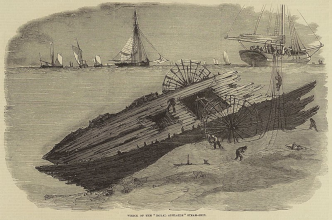
The RMS Royal Adelaide, captained by John Batty, leaves Cork fully laden with cargo and about 250 passengers on Wednesday, March 27,1850, touching off at Plymouth, Devon, England, on Thursday evening. By the time the ship leaves Plymouth for London at 3:00 a.m. on Friday, March 29, there are almost three hundred deck passengers.
The ship is totally lost at about 11:00 p.m. on Saturday, March 30 on Tongue Sands north of Margate, Kent, England, with the loss of all on board. News only reaches London late on Sunday as the river pilot waiting for the ship happens to meet a Deal, Kent, pilot, Charles Gillham, who reports seeing a ship of a similar description in distress the previous evening (The Illustrated London News, April 6 and 13, 1850).
The dead include more than one hundred fifty deck passengers from Ireland, during a time when the Great Famine is at its height.
(Pictured: “The Wreck of the Royal Adelaide,” illustration for The Illustrated London News, April 13, 1850)
Prior to becoming Stiff Little Fingers, Jake Burns (vocals and guitar), Henry Cluney (guitar), Gordon Blair (bass), and Brian Faloon (drums), are playing in a rock music cover band, Highway Star (named after the Deep Purple song), in Belfast. Upon the departure of Blair, McMordie takes over on bass. Cluney has by this time discovered punk, and introduces the rest of the band to it. They decide that Highway Star is not a punk enough name, and after a brief flirtation with the name “The Fast,” decide to call themselves Stiff Little Fingers, after The Vibrators‘ song, which appears on the album Pure Mania.
Stiff Little Fingers is formed in 1977 at the height of the Troubles in Northern Ireland, which informs much of their songwriting. They are the first punk band in Belfast to release a record – the “Suspect Device” single comes out on their own independent label, Rigid Digits. Their album Inflammable Material, released in partnership with Rough Trade Records, becomes the first independent LP to enter the UK top 20.
In the face of low sales and concert attendances, Stiff Little Fingers disbands in 1983. McMordie joins a group of Reading musicians in the newly formed dance-punk band, Friction Groove. They secure a deal with Warner label, Atlantic Records, and go on to record an album, The Black Box, in Berlin and Brussels, from which the first single, “Time Bomb,” charts very briefly.
Around 1986 McMordie provides, along with other Friction Groove members, the core band behind Sinéad O’Connor, who had just arrived in London from Dublin. He is later sacked.
Between 1992 and 1994, McMordie is executive producer for the Peace Together Irish concert events. Since 1994 he has been the tour manager for American artist Richard Hall, AKA Moby, with whose band he has sometimes played bass. He has also been used as the live bassist for Belfast singer-songwriter Dan Donnelly, having played in Dan’s live band at the Beautiful Days music festival in Devon in 2006.
In 2006, it is announced that McMordie is rejoining Stiff Little Fingers for their current tour, and subsequently he rejoins the band on a permanent basis. As of 2021, he is still playing bass with Stiff Little Fingers.
Besides being a live musician, McMordie runs Alistair McMordie Tour Management.
O’Donnell is born in an army barracks in Devon, England, where his father, Sergeant Bernard MacDonald, is stationed. His mother, Mary Kain, is a native of Ballybane, close to Galway city. He is educated at the Erasmus Smith School in Galway, Coláiste Iognáid (the “Jes”), and later enrolls in Queen’s College Galway, where he studies English literature, history and political economy. While a student at the college, he acquires a considerable reputation as an orator, and is a frequent contributor to meetings of the college’s Literary and Debating Society, of which he becomes vice-auditor for the 1864–65 session.
Even in his student days, O’Donnell seems to be quick to voice his opinions, and revells in controversy. In November 1866, addressing the Literary and Debating Society on the question “Was the character of Warren Hastings as Governor-General of India praiseworthy?” he causes uproar by denouncing “the principle and the system which have lain at the root of the international and intercolonial policy of England, from the days when Elizabeth, the Infamous, chartered for profit two of the first ships which opened the African slave trade.” His remarks cause the chairman of the meeting, Professor Thomas Moffett, to prevent him from continuing his speech, stating that “such an epithet ought not to be applied to any predecessor of our present gracious Queen.” O’Donnell regards such action as an unwarranted restriction on his freedom of speech, and in a letter published in the local press gives an early example of his high-flown literary style:
“I hold that Debating Societies are the nurseries of independent thought, and the training schools of sober criticism. I believe in the power and impartiality of an enlightened studenthood … I have followed the mind of Austin. I have sat at the feet of Cairnes. I have drunk of the philosophy of Mill. I claim for Judicial Science, for Economic Science, for the Philosophy of History, a place in the discussions of our society, I pity, and I scorn the formidable confederacy of fools who dare not call a spade a spade.”
This incident, combined with the reluctance of the society to prevent O’Donnell from addressing its meetings, eventually leads to the suspension of the society from the Queen’s College and its temporary migration to rooms in the city of Galway.
O’Donnell graduates from the Queen’s College with an M.A. degree in 1868, winning several gold medals for his academic performance. By this stage, he has begun to style himself ‘Frank Hugh O’Donnell,’ believing himself to be a descendant of Hugh O’Donnell, 2nd Earl of Tyrconnell.
Leaving Galway, O’Donnell moves to London, where he embarks on a career in journalism, following his college contemporary T. P. O’Connor. O’Connor’s knowledge of modern European languages has helped him to establish himself as a correspondent on European affairs, and he assists O’Donnell in developing a similar reputation. He spends a brief period on the staff of The Morning Post.
In the 1874 United Kingdom general election, O’Donnell is elected Member of Parliament (MP) for Galway Borough but is unseated by the courts in what appears to be a politically inspired judgment which uses certain unsavoury campaigning tactics in which O’Donnell had indulged as its basis. He is succeeded in the seat by his election agent, Dr. Michael Francis Ward, who is himself succeeded in 1880 by T. P. O’Connor in an unusual succession, all three having been either auditor or vice-auditor of the Queen’s College Literary and Debating Society in the same era.
In 1875, O’Donnell is a founding member of the Constitutional Society of India, a group promoting political autonomy for India. In 1877, he secures a more permanent election to the House of Commons of the United Kingdom as MP for Dungarvan. He holds the seat until 1885, when the constituency is abolished. He strikes a colourful and controversial figure in parliament and becomes renowned for his declamatory speech-making. He is a prominent obstructionist and claims credit for inventing the tactic of obstructionism which is to yield such results for the Home Rule League under Charles Stewart Parnell. Indeed, he sees himself as a natural leader and becomes disillusioned when Parnell is selected in May 1880 to succeed William Shaw as leader of the Irish Parliamentary Party. He calls the British ‘Imperial pirates’ and inaugurates the Constitutional Society of India. Its aim is Home Rule for India, “Mr. O’Donnell’s grand passion in politics was a confederation of all the discontented races of the Empire under the lead of the Irish party. He once brought down some scores of dusky students of all the races and creeds of Hindustan to the House of Commons.”
Parnell refuses to let O’Donnell be nominated in 1885. He leaves the Irish Parliamentary Party and conventional politics, but not its general aims of promoting home rule and tenant farmers’ rights. His last and perhaps most important contribution to the fortunes of the party is the libel case he launches against The Times in 1888 over the series “Parnellism and Crime.” Though the case is lost, it results in the establishment of the Parnell Commission which exonerates Parnell from condoning the Phoenix Park Murders and exposes the Pigott Forgeries.
In his later years O’Donnell begins investigating misconduct by both the British Civil Service and the Roman Catholic church in Ireland. His Paraguay on Shannon (1908) is an amusing but serious critique of unethical practices by the Catholic clergy in local politics, education, and their involvement in the Congested Districts Board for Ireland that is financed by Parliament in order to improve the depressed economy of western Ireland. Parliament believes that by improving the living standards of the Irish peasant class, they can “kill Home Rule with kindness.”
After careful investigation, O’Donnell accuses members of the Catholic clergy of illegally diverting Government money earmarked for economic development into new Cathedrals, parish churches, and other ecclesiastical building projects. He argues that the British Government needs to provide better oversight of how the Congested Districts Board’s funds are being used. He believes that “in Ireland material ruin has accompanied clerical despotism.” His hostility to the Church draws the ire of Catholic historians who systematically undermine his credibility.
Ernest Belfort Bax writes that O’Donnell’s “matter is better than his manner.”
O’Donnell dies a bachelor in London on November 2, 1916, and is buried in Glasnevin Cemetery, Dublin.
On his release Coote returns to England, is promoted major in the 47th (Lancashire) Regiment of Foot in 1783, and in 1784 inherits the substantial estates of his uncle Sir Eyre Coote. He inherits a further £200,000 by remainder on his father’s death in 1796. He resides for a time at Portrane House, Maryborough, Queen’s County, and is elected MP for Ballynakill (1790–97) and Maryborough (1797–1800). Although he opposes the union, he vacates his seat to allow his elder brother Charles, 2nd Baron Castle Coote, to return a pro-union member. He serves with distinction in the West Indies (1793–95), particularly at the storming of Guadeloupe on July 3, 1794, and becomes colonel of the 70th (Surrey) Regiment of Foot (1794), aide-de-camp to King George III (1795), and brigadier-general in charge of the camp at Bandon, County Cork (1796).
Coote is active in suppressing the United Irishmen in Cork throughout 1797, and in June arrests several soldiers and locals suspected of attempting to suborn the Bandon camp. On January 1, 1798, he is promoted major-general and given the command at Dover. He leads the expedition of 1,400 men that destroy the canal gates at Ostend on May 18, 1798, holding out stubbornly for two days against superior Dutch forces until he is seriously wounded and his force overwhelmed. Taken prisoner, he is exchanged and in 1800 commands a brigade in Sir Ralph Abercromby‘s Mediterranean campaign, distinguishing himself at Abu Qir and Alexandria. For his services in Egypt, he receives the thanks of parliament, is made a Knight of the Bath, and is granted the Crescent by the Sultan.
In 1801 Coote returns to Ireland. Elected MP for Queen’s County (1802–06), he generally supports the government and is appointed governor of the fort of Maryborough. He gives the site and a large sum of money towards the building of the old county hospital in Maryborough. In 1805 he is promoted lieutenant-general, and he serves as lieutenant-governor of Jamaica (1806–08). His physical and mental health deteriorates in the West Indian climate, and he is relieved of his post in April 1808. He is second in command in the Walcheren Campaign of 1809 and leads the force that takes the fortress of Flushing. However, he shows signs of severe stress during the campaign and asks to be relieved from command because his eldest daughter is seriously ill.
Coote is conferred LL.D. at Trinity College, Cambridge in 1811. Elected MP for Barnstaple, Devon (1812–18), he usually votes with government, but opposes them by supporting Catholic emancipation, claiming that Catholics strongly deserve relief because of the great contribution Catholic soldiers had made during the war. He strongly opposes the abolition of flogging in the army. Despite a growing reputation for eccentricity, he is promoted full general in 1814 and appointed Knight Grand Cross (GCB) on January 2, 1815, but his conduct becomes increasingly erratic. In November 1815 he pays boys at Christ’s Hospital school, London, to allow him to flog them and to flog him in return. Discovered by the school matron, he is charged with indecent behaviour. The Lord Mayor of London dismisses the case and Coote donates £1,000 to the school, but the scandal leads to a military inquiry on April 18, 1816. Although it is argued that his mind had been affected by the Jamaican sun and the deaths of his daughters, the inquiry finds that he is not insane and that his conduct is unworthy of an officer. Despite the protests of many senior officers, he is discharged from the army and deprived of his honours.
Coote continues to decline and dies in London on December 10, 1823. He is buried at his seat of West Park, Hampshire, where in 1828 a large monument is erected to him and his uncle Sir Eyre Coote.
Coote first marries Sarah Robard in 1785, with whom he has three daughters, all of whom die young of consumption. Secondly, he marries in 1805, Katherine, daughter of John Bagwell of Marlfield, County Tipperary, with whom he has one son, his heir Eyre Coote III, MP for Clonmel (1830–33). He also has a child by Sally, a slave girl in Jamaica, from whom Colin Powell, United States Army general and Secretary of State, claims descent.
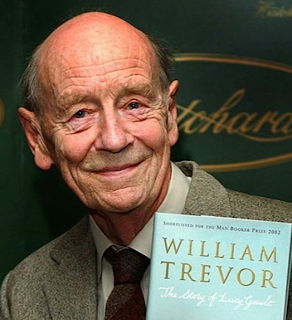
Trevor is born to a middle-class, Anglo-IrishProtestant family. They move several times to other provincial towns, including Skibbereen, Tipperary, Youghal and Enniscorthy, as a result of his father’s work as a bank official. He is educated at St. Columba’s College, Dublin, and at Trinity College, Dublin, from which he receives a degree in history. He works as a sculptor under the name Trevor Cox after his graduation from Trinity College, supplementing his income by teaching. He marries Jane Ryan in 1952 and emigrates to Great Britain two years later, working as a copywriter for an advertising agency. It is during this time that he and his wife have their first son.
Trevor’s first novel, A Standard of Behaviour, is published in 1958 by Hutchinson of London, but has little critical success. He later disowns this work and, according to his obituary in The Irish Times, “refused to have it republished.” It was, in fact, republished in 1982 and in 1989.
In 1964, at the age of 36, Trevor wins the Hawthornden Prize for Literature for The Old Boys. The win encourages him to become a full-time writer. He and his family then move to Devon in South West England, where he resides until his death. In 2002, he makes honorary KBE for services to literature. Despite having spent most of his life in England, he considers himself to be “Irish in every vein.”
Trevor writes several collections of short stories that are well received. His short stories often follow a Chekhovian pattern. The characters in his work are typically marginalised members of society. The works of James Joyce influence his short-story writing, and “the odour of ashpits and old weeds and offal” can be detected in his work, but the overall impression is not of gloominess since, particularly in his early work, his wry humour offers the reader a tragicomic version of the world. He adapts much of his work for stage, television and radio. In 1990, Fools of Fortune is made into a film directed by Pat O’Connor, along with a 1999 film adaptation of Felicia’s Journey, which is directed by Atom Egoyan.
Trevor’s stories are set in both England and Ireland. They range from black comedies to tales based on Irish history and politics. His early books are peopled by eccentrics who speak in a pedantically formal manner and engage in hilariously comic activities that are recounted by a detached narrative voice. Instead of one central figure, the novels feature several protagonists of equal importance, drawn together by an institutional setting, which acts as a convergence point for their individual stories. The later novels are thematically and technically more complex. The operation of grace in the world is explored, and several narrative voices are used to view the same events from different angles.
Widgery receives promotion to the Court of Appeal in 1968. He has barely gotten used to his new position when Lord Parker of Waddington, who had been Lord Chief Justice of England and Wales since 1958, announces his retirement. There is no obvious successor and Widgery is the most junior of the possible appointees. The Lord Chancellor, Quintin Hogg, Baron Hailsham of St. Marylebone, chooses Widgery largely on the basis of his administrative abilities. On April 20, 1971, he is created a life peer taking the title Baron Widgery, of South Molton in the County of Devon.
Shortly after taking over, Widgery is handed the politically sensitive job of conducting an inquiry into the events of January 30, 1972, in Derry, where troops from 1st Battalion, Parachute Regiment had murdered 13 civil rights marchers, commonly referred to as Bloody Sunday. A 14th person dies shortly after Widgery’s appointment. He hears testimony from the paratroopers, who claim they had been shot at, while the marchers insist that no one from the march was armed. Widgery produces a report that takes the British Army‘s side. He placed the main blame for the deaths on the march organisers for creating a dangerous situation where a confrontation was inevitable. His strongest criticism of the Army is that the “firing bordered on the reckless.”
The Widgery Report is accepted by the British government and Northern Ireland‘s unionists but is immediately denounced by Irish nationalist politicians, and people in the Bogside and Creggan areas are disgusted by his findings. The British Government had acquired some goodwill because of its suspension of the Stormont Parliament, but that disappears when Widgery’s conclusions are published. The grievance with Widgery’s findings lingers and the issue remains live as the Northern Ireland peace process advances in the 1990s.
In January 1998, on the eve of the 26th anniversary of Bloody Sunday, Prime MinisterTony Blair announces a new inquiry, criticising the rushed process in which Widgery failed to take evidence from those wounded and did not personally read eyewitness accounts. The resulting Bloody Sunday Inquiry lasts 12 years before the Saville Report is published on June 15, 2010. It demolishes the Widgery Report, finding that soldiers lied about their actions and falsely claimed to have been attacked.
Prime Minister David Cameron, on behalf of the United Kingdom, formally apologises for the “unjustified and unjustifiable” events of Bloody Sunday. As a result of the Saville Report, even observers who are natural supporters of the British Army now regard Widgery as discredited. The conservative historian and commentator Max Hastings describes the Widgery report as “a shameless cover-up.”
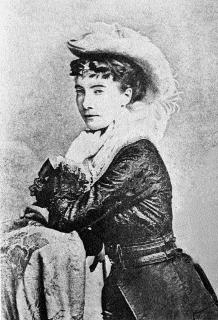
Parnell is born at Avondale House near Rathdrum, County Wicklow, the tenth of eleven children of John Henry Parnell, a landlord, and Delia Tudor Stewart Parnell, an Irish American and daughter of Admiral Charles Stewart of the United States Navy. She has very little formal education as a child, but the family has an extensive library which she is encouraged to read by her mother. After her father dies in 1859, she moves with the family to Dublin. Delia Parnell is an active socialite while in Dublin and exposes her children to a wide variety of political views.
In 1865 the family moves to Paris, but Parnell feels stifled by upper class society rules imposed upon her. She is in Paris when the Franco-Prussian War breaks out in 1870 and is active in the American Ladies’ Committee fundrasing and setting up hospitals. She returns alone to Dublin in 1870 to study art.
Parnell moves to London in 1875 to continue studying art. When her brother Charles is elected as a Member of Parliament (MP) for Meath, she becomes increasingly political. She frequently visits Parliament during debates, sitting in the Ladies’ Gallery. She writes articles about the debates in a column titled Notes From the Ladies’ Cage in the Celtic Monthly. In 1879 she joins her sister, Fanny Parnell, a poet, in New York City where they raise money in support of the Irish National Land League. The sisters work closely with their brother Charles and Michael Davitt but are critical of how the funds raised in America are being used in Ireland. In October 1880 the sisters found the New York Ladies’ Land League with their mother as president. They raised thousands of dollars sent to Ireland.
Parnell returns in Dublin in late 1880. When it seems that the Land League men are likely to be arrested, it is suggested that a women’s league in Ireland could take over the work in their absence. Public opinion at the time is against women in politics, but the Ladies’ Land League is founded on January 31, 1881, with Parnell as its effective leader.
When Charles Parnell and other leaders are imprisoned in 1881, as predicted, the Ladies’ Land League takes over their work. Though it is envisioned as a place holder until the men are released, Parnell organises branches throughout Ireland, encouraging women to play an active role in Land League activities. Offices are given to the ladies but little help. They raise funds for the League and for the support of prisoners and their families. They distribute Land League wooden huts to shelter evicted tenant families and by the beginning of 1882 they have 500 branches, thousands of women members and considerable publicity. They distribute £60,000 in relief aid.
This puts the Ladies’ Land League in serious debt. Parnell approaches her brother Charles, requesting money to settle the debts. Charles, who distrusts her understanding of politics, agrees to provide the money under the condition that the Ladies’ Land League is disbanded. She agrees, disbanding in 1882, but she never forgives Charles.
After her brother’s death in 1891 Parnell lives the rest of her life in the south of England under the assumed name Cerisa Palmer. She writes an angry account of her Land League experiences in Tale of a Great Sham, which is not published until 1986. She makes one last political appearance when she campaigns for a Sinn Féin candidate in a 1907 by-election.
By the summer of 1911, the 59-year-old Parnell is staying in lodgings at Ilfracombe in Devon. An enthusiastic swimmer since childhood, she bathes every day, and on September 20, disregarding a warning of dangerous seas, she goes swimming as usual. She is seen to be in difficulties and the alarm is raised, but by the time rescuers reached her, she is dead. Unlike her brother, whose funeral in Dublin had been the occasion for a massive outpouring of grief and remorse, Anna Parnell was buried quietly in the churchyard of Holy Trinity Church in Ilfracombe, in the presence of just seven strangers, and far away from the scenes of her greatest efforts and notoriety.
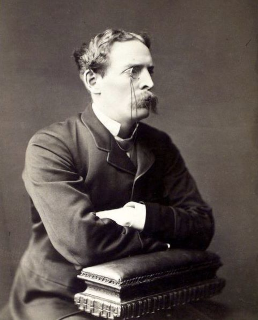
Sir John de Wogan, Cambro-Norman judge styled lord of Picton, ceases to be Justiciar of Ireland on August 6, 1312 although remaining nominally justiciar until April 1313. He serves as Justiciar of Ireland from 1295 to 1313.
In February 1308, under orders from the new king Edward II, Wogan suppresses the Knights Templar in Ireland. In June 1308 his forces are defeated by the O’Tooles and O’Byrnes, who are harrying The Pale from the Wicklow Mountains. From September 1308 to May 1309 Piers Gaveston, 1st Earl of Cornwall is in Ireland as “king’s lieutenant,” a new position outranking the justiciar, and he has more success against the Gaels. Wogan leaves Ireland in August 1312 although remaining nominally justiciar until April 1313.
Todd spends a few of his childhood years in India, where his father, an officer in the British Army, serves as a physician. Later his family moves to Devon, and he attends Shrewsbury School. Upon leaving school, he trains for a potential military career at Royal Military Academy Sandhurst before beginning his acting training at the Italia Conti Academy of Theatre Arts in London. This change in career leads to estrangement from his mother. When he learns at age 19 that she has committed suicide, he does not grieve long for her, he admits in later life.
After the war, Todd is unsure what direction to take in his career. His former agent, Robert Lennard, has become a casting agent for Associated British Picture Corporation and advises him to try out for the Dundee Repertory Company. He does so, performing in plays such as Claudia, where he appears with Claudia Grant-Bogle. Lennard arranges for a screen test and Associated British offers him a long-term contract in 1948. He is cast in the lead in For Them That Trespass (1949), directed by Alberto Cavalcanti. The film is a minor hit and his career is launched.
Having portrayed the role of Yank in the Dundee Repertory stage version of John Patrick‘s play The Hasty Heart, Todd is subsequently chosen to appear in the 1948 London stage version of the play, this time in the leading role of Cpl. Lachlan McLachlan. This leads to his being cast in that role in the Warner Bros. film adaptation of the play, which is filmed in the United Kingdom, alongside Ronald Reagan and Patricia Neal. He is nominated for the Academy Award for Best Actor for the role in 1949.
Todd’s career in films rapidly declines in the 1960s as the counter-culture movement in the Arts becomes fashionable in England, with social-realist dramas commercially replacing the more middle-class orientated dramatic productions that Todd’s performance character-type had previously excelled in.
In retirement, Todd lives in the village of Little Ponton and later in Little Humby, eight miles from Grantham, Lincolnshire. Suffering from cancer, he dies at his home on December 3, 2009. He is buried between his two sons, Seamus and Peter, at St. Guthlac’s Church in Little Ponton, Lincolnshire, England.






 seamus dubhghaill