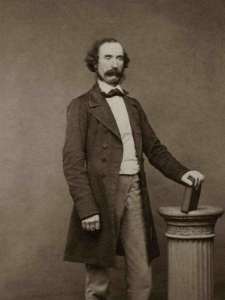
Dobbs’ father, Conway Edward Dobbs, is Justice of the Peace for County Antrim, High Sheriff for Carrickfergus in 1875, and High Sheriff for County Louth in 1882. The family spends time living in Dublin which is where Dobbs is born. She attempts to learn Irish. However, when her father dies in 1898 her mother, Sarah Mulholland, daughter of St. Clair Kelvin Mulholland Eglantine, moves the family back to Glenariff.
Dobbs’ interest in learning Irish continues and she finds it easier to learn in Donegal where the language is still spoken. Her first teacher is Hugh Flaitile. She attends the Irish College at Cloughaneely in the Donegal Gaeltacht. She brings the idea of promoting the language to the Glens of Antrim and her circle of friends. Dobbs is one of the small numbers of Protestant women interested in the Gaelic revival.
The “Great Feis” takes place in Antrim in 1904. Dobbs is a founding member of the Feis na nGleann committee and later a tireless literary secretary. In 1946, the Feis committee decides to honour her by presenting her with an illuminated address. It can be seen today at Portnagolan House with its stained-glass windows commemorating a great Irishwoman. During her speech she says, “Ireland is a closed book to those who do not know her language. No one can know Ireland properly until one knows the language. Her treasures are hidden as a book unopened. Open the book and learn to love your language.”
Dobbs writes seven plays, published by Dundalgan Press in 1920, though only three are ever performed. The Doctor and Mrs. McAuley wins the Warden trophy for one-act plays at the Belfast festival in 1913. However, her plays are generally not a success and after 1920 she never writes another. She continues to work on historical and archaeological studies and her articles are published in the Ulster Journal of Archaeology, in a German magazine for Celtic studies, in the French Revue Celtique, and in the Irish magazine Eriu.
Roger Casement is a good friend and, although Dobbs never makes her political opinions known, she contributes to his defence costs when he is accused of treason. She also is a member of the Gaelic League and in the executive of Cumann na mBan.
She dies in Portnagalon, County Antrim, on January 2, 1962.
John McGahern, regarded as one of the most important Irish writers of the latter half of the twentieth century, is born in Knockanroe about half a mile from Ballinamore, County Leitrim, on November 12, 1934. Known for the detailed dissection of Irish life found in works such as The Barracks, The Dark, and Amongst Women, The Observer hails him as “the greatest living Irish novelist” before his death in 2006.
McGahern is the eldest child of seven. Raised alongside his six young siblings on a small farm in Knockanroe, McGahern’s mother runs the farm with some local help whilst maintaining a job as a primary school teacher in the local school. His father, a Garda sergeant, lives in the Garda barracks at Cootehall in County Roscommon, a somewhat sizeable distant away from his family at the time. In 1944, when McGahern is ten years old, his mother dies of cancer, resulting in the unrooting of the McGahern children to their new home with their father in the Garda barracks at Cootehall.
In the years following his mother’s death, McGahern completes his primary schooling in the local primary school, and ultimately wins a scholarship to the Presentation Brothers secondary school in Carrick-on-Shannon. Having travelled daily to complete his second level education, McGahern continues to accumulate academic accolades by winning the county scholarship in his Leaving Certificate enabling him to continue his education to third level.
Following his second level success, McGahern is offered a place at St. Patrick’s College of Education in Drumcondra where he trains to be a teacher. Upon graduation from third level education, McGahern begins his career as a primary schoolteacher at Scoil Eoin Báiste primary school in Clontarf where, for a period, he teaches the eminent academic Declan Kiberd, before returning to third level education in University College Dublin where he graduates in 1957. He is first published by the London literary and arts review magazine, X, which publishes in 1961 an extract from his unpublished first novel, The End or Beginning of Love.
McGahern’s first published novel, The Barracks (1963), chronicles the life of the barrack’s Garda sergeant’s second wife, Elizabeth Reegan, who is in the decline of health due to cancer. The Barracks is adapted for the stage in 1969 by Hugh Leonard.
McGahern marries his first wife, Finnish-born Annikki Laaski, in 1965 and in the same year publishes his second novel, The Dark, which is banned by the Irish Censorship Board for its alleged pornographic content along with its implied sexual abuse by the protagonist’s father. Due to the controversy, which is stirred by the book’s publication, McGahern is dismissed from his teaching post and forced to move to England where he works in a variety of jobs, including on building sites, before returning to Ireland to live and work on a small farm near Fenagh in County Leitrim.
After the publications of The Leavetaking (1974) and The Pornographer (1975), his fifth and perhaps best-known novel, Amongst Women, is published in 1990. The novel details the story of Michael Moran, an Irish Republican Army (IRA) veteran of the Irish War of Independence and the Irish Civil War, who now dominates his family in the unforgiving farmlands of County Leitrim, near Mohill.
John McGahern dies from cancer at the age of 71 in the Mater Hospital in Dublin on March 30, 2006. He is buried in St. Patrick’s Church Aughawillan alongside his mother.
Patrick Henry Pearse, teacher, barrister, poet, writer, nationalist, and political activist who is one of the leaders of the 1916 Easter Rising, is born in Dublin on November 10, 1879. Pearse’s father, James, is a stone worker who works on church buildings in Dublin and his mother, Margaret, comes from a family that has endured the Great Famine in 1846 and has left County Meath for Dublin. Here she brings up four children, Patrick being the second. Pearse has a comfortable childhood as his father is in constant work.
It is at school that Pearse first develops a love of Irish history. He is also taught the Irish language for the first time and while still a teenager, Patrick joins the Gaelic League, an organisation that wants to promote the Irish language and Irish literature. Pearse graduates with a law degree from the King’s Inns and, in 1901, he starts a BA course in modern languages but is called to the Bar in Dublin.
Regardless of his law training, Pearse is more interested in what he is learning about Ireland as a nation. All his knowledge about law has been based around the English language and he wants to know more about what he considers to be the rightful language of Ireland. This is not the Gaelic used in Dublin. Pearse has convinced himself that the real Irish language is based in Connaught, and he teaches himself the dialect of the area. Connaught is also a region that has been severely affected by the Great Famine. Therefore, the number of people who speak what Pearse considers to be proper Gaelic have been greatly reduced. From 1903 to 1909, Pearse develops his involvement in the Gaelic League’s An Claidheamh Soluis (The Sword of Light) which seeks to expand the use of Gaelic in Irish life, and, in particular, literature.
By 1909, Pearse has developed some political leanings. He cannot accept the impact England, and all things English have on Ireland and the Irish people, but his concern is more for Irish culture rather than Irish politics. Pearse wants Irish history and culture taught as compulsory subjects in both Irish schools and colleges. He breaks with the Roman Catholic Church when its national college, St. Patrick’s College, Maynooth, demotes courses in Irish history/culture to topics for trainee priests. He is keen for Maynooth to have compulsory Irish courses simply because priests then have a major influence in the areas where they work. However, all of Pearse’s protests fall on deaf ears. As a result, he founds his own school in Dublin, an “Irish-Ireland” school called St. Enda’s School.
Between 1909 and 1912, Pearse becomes more interested and involved in politics. Despite a limited income and the problems of keeping St. Edna’s on an even financial keel, Pearse launches his own newspaper called An Barr Buadh (The Trumpet of Victory). At this time the Home Rule issue has reared its head again. Sinn Féin and other republican movements have far more impact than Pearse, who seems to many to be no more than a political maverick. Many feel that Pearse is out of his depths in politics and that his input into Irish politics is no more than romanticism with an Irish slant.
By 1913, Pearse has become more depressed about the way Ireland is going under the rule of London. Those who know him, describe him as becoming more and more melancholy as the year progresses. Others believe that he is becoming more fanatical. He helps to organise the Irish Volunteers, the public face of the outlawed Irish Republican Brotherhood, before the outbreak of World War I. In 1914, he is sent on a fund-raising tour of America by Clan na Gael, an organisation that aids the Irish Republican Brotherhood. While the tour is a reasonable success financially, not many Americans are swayed by Pearse’s speeches.
By the time World War I starts, Pearse has taken an extreme political stance. He wants full Irish independence – not what the suspended Home Rule Bill of 1912 offers. He does not support the part Ireland plays in the war effort. He also splits the Irish Volunteers. He takes a small number of these men with him when John Redmond gives his agreement to suspend the Home Rule Bill until the war is over. By now, Pearse has become extreme. He publishes a pamphlet called The Murder Machine which is a severe condemnation of the Irish educational system. He also realises that with London totally focused on the war in Europe, the time is ripe to overthrow British rule in Ireland.
However, in this respect, Pearse is totally wrong. The young men who have volunteered to fight in the war have done so because they want to. Pearse has no mass support in Ireland whereas John Redmond has far more public support in the south. He also assumes incorrectly that all those in southern Ireland are completely against British rule. What Pearse fails to recognise, is that many people in Dublin itself rely on the British for work. They may not like this, but work brings in money regardless of where or who it comes from.
Those who participate in the Easter Uprising of 1916 are in the minority. Pearse decides to take command of the rebellion, and he reads aloud the declaration of independence at the General Post Office. Pearse also is one of the signatories of “Poblacht na hÉireann” (To the People of Ireland).
If Pearse expects the actions of the rebels in Dublin to spark off other uprisings in other Irish cities and towns, he is mistaken. In Dublin, the people of the city fail to offer the rebels any support. In fact, some Dubliners take the opportunity of the rebellion to loot the shops in Sackville Street. The Uprising is doomed from the start.
During the rebellion, Pearse says, “When we are all wiped out, people will blame us for everything, condemn us…. (but) in a few years they will see the meaning of what we tried to do.” Ironically, he is correct in this assessment.
On Friday, April 28, 1916, Pearse surrenders to the British army. By the following day all the rebels have surrendered. As they are paraded through the streets of Dublin before going to Kilmainham Gaol, they are jeered and verbally abused by Dubliners who have seen parts of their city destroyed. They blame Pearse and his followers rather than the British.
At Kilmainham Gaol, Pearse is charged with treason by a military court and sentenced to death. On May 16, Pearse is shot by firing squad. Eventually fourteen other rebel leaders are also executed by firing squad. Pearse’s body, and those of the other leaders, are thrown into a pit without a coffin or a burial service. Ironically, it is in death that Pearse finds real fame.
No one knows the fate of the rebel leaders until after the executions. Many in Ireland are horrified at the way they have been treated. If Pearse had not received national support during his life, his movement certainly received it after his death. Pearse had written that he wanted his fame and deeds to “live after me.” In death, Patrick Pearse is known as the “First President of Ireland” and Irish history and culture become part of the educational system after 1922.
Lane is brought up in Cornwall, England, and begins his career as an apprentice painting restorer and later becomes a successful art dealer in London.
Through regular visits to the home of his aunt, Lady Gregory, in Coole Park, near Gort in County Galway, Lane remains in contact with Ireland. He soon counts among his family, friends, and social circle those who collectively form the core of the Irish cultural renaissance in the early decades of the 20th century.
Extolling the cause of Irish art abroad, Lane also becomes one of the foremost collectors and dealers of Impressionist paintings in Europe, and amongst those works purchased by him for the new gallery are La Musique aux Tuileries by Édouard Manet, Sur la Plage by Edgar Degas, Les Parapluies by Pierre-Auguste Renoir, and La Cheminée by Jean-Édouard Vuillard.
The Municipal Gallery of Modern Art opens in January 1908 in temporary premises in Harcourt Street, Dublin. Lane hopes that Dublin Corporation will run it, but the corporation is unsure if it will be financially viable. Lane does not live to see his gallery permanently located as he dies on May 7, 1915, during the sinking of the RMS Lusitania off the west coast of Cork. The gallery, extended in 2005, is now in Parnell Square in central Dublin.
For his “services to art” in Ireland, Lane is knighted in June 1909 at the comparatively young age of 33.
Following his death, Lane’s will bequeaths his collection to London, but an unwitnessed later codicil bequeaths it to Dublin. Having possession, London’s National Gallery does not recognise the codicil. At the request of Lane’s aunt, Lady Gregory, W.T. Cosgrave, leader of the Irish Government unsuccessfully approaches Ramsay MacDonald on the matter in 1929. When John A. Costello becomes Taoiseach in 1948, he initiates further negotiations with the government of the United Kingdom, eventually leading to a compromise in 1959, under Taoiseach Seán Lemass, whereby half of the Lane Bequest will be loaned and shown in Dublin every five years. In 1993 the agreement is varied so that 31 of the 39 paintings would stay in Ireland. The remaining 8 are divided into two groups, so that four would be loaned for six years at a time to Dublin. In 2008, The National Gallery in London arranges for the entire collection to be on display in Dublin together for the first time.
Mallet is born in Dublin on June 3, 1810, the son of factory owner John Mallet. He is educated at Trinity College, Dublin, entering it at the age of 16 and graduating in science and mathematics in 1830 at the age of 20.
Following his graduation, he joins his father’s iron foundry business and helps build the firm into one of the most important engineering works in Ireland, supplying ironwork for railway companies, the Fastnet Rock lighthouse, and a swing bridge over the River Shannon at Athlone. He also helps manufacture the characteristic iron railings that surround Trinity College, and which bear his family name at the base.
In 1838 he becomes a life member of the Royal Geological Society of Ireland and serves as its President from 1846–1848. From 1848–1849 he constructs the Fastnet Rock lighthouse, southwest of Cape Clear.
On February 9, 1846, he presents to the Royal Irish Academy his paper On the Dynamics of Earthquakes, which is considered to be one of the foundations of modern seismology. He is also credited with coining the word “seismology” and other related words which he uses in his research. He also coins the term epicentre.
From 1852 to 1858, he is engaged in the preparation of his work, The Earthquake Catalogue of the British Association (1858) and carries out blasting experiments to determine the speed of seismic propagation in sand and solid rock.
On December 16, 1857, the area around Padula, Italy is devastated by the Great Neapolitan earthquake which causes 11,000 deaths. At the time it is the third largest known earthquake in the world and has been estimated to have been of magnitude 6.9 on the Richter Scale. Mallet, with letters of support from Charles Lyell and Charles Darwin, petitions the Royal Society of London and receives a grant of £150 to go to Padula and record at first hand the devastation. The resulting report is presented to the Royal Society as the Report on the Great Neapolitan Earthquake of 1857. It is a major scientific work and makes great use of the then new research tool of photography to record the devastation caused by the earthquake. In 1862, he publishes the Great Neapolitan Earthquake of 1857: The First Principles of Observational Seismology in two volumes. He brings forward evidence to show that the depth below the Earth’s surface, from where the impulse of the Neapolitan earthquake originated, is about 8–9 geographical miles.
One of Mallet’s papers is Volcanic Energy: An Attempt to develop its True Origin and Cosmical Relations, in which he seeks to show that volcanic heat may be attributed to the effects of crushing, contortion, and other disturbances in the crust of the earth. The disturbances leading to the formation of lines of fracture, more or less vertical, down which water would find its way, and if the temperature generated be sufficient volcanic eruptions of steam or lava would follow.
Hal Roach, prominent Irish comedian, is born in Waterford on November 4, 1927. He spends over 60 years in show business, and is featured in the Guinness Book of Records for the longest-running engagement of a comedian at the same venue: 26 years at Jury’s Irish Cabaret, Jury‘s Ballsbridge Hotel, Dublin.
Born John Roach, he attends the Manor C.B.S. school. He begins his career after winning a local talent competition as a boy soprano. He initially tours with an illusionist and specialises in magic, but later moves to comedy. Roach has been cited as a major influence by other comedians such as Brendan Grace.
A couple of typical Hal Roach jokes go like this:
“He told me that I have a cult following, at least I think that’s what he said.”
“There is a man sitting in the middle of the road casting his fishing line… now none of us is perfect, but c’mon! So I asked him, ‘How many have you caught today?’ He said, ‘You’re the ninth.'”
Perhaps his most famous catchphrase is “Write it down, it’s a good one!”
Roach is popular particularly with American tourists visiting Ireland. His act plays heavily on traditional tourist imagery of Ireland and on Irish jokes. Several of his shows have been released on cassette and CD, and they are popular with tour bus drivers in several English-speaking countries who play them to passengers to help pass the time between destinations.
After suffering from a long bout of ill health, Roach dies on February 28, 2012. The following month, RTÉ broadcasts a tribute to Roach in one of its graveyard slots, a repeat airing of a programme from the That’s Entertainment series first broadcast in 1972.
The Catholic University of Ireland in Dublin is opened, and lectures commence on November 3, 1854, with the registration of seventeen students, the first being Daniel O’Connell, grandson of the notable Catholic politician Daniel O’Connell.
The university is founded in 1851 following the Synod of Thurles in 1850, and in response to the Queen’s University of Ireland and its associated colleges which are non-denominational. CardinalPaul Cullen has previously forbidden Catholics from attending these “godless colleges.” On May 18, 1854, the university is formally established with five faculties of law, letters, medicine, philosophy, and theology with John Henry Newman as the Rector.
In 1861, Dr. Bartholomew Woodlock, the rector from 1860–1879, tries to secure land for a building near Holy Cross College Clonliffe, the establishment to be known as St. Patrick’s University. Plans are drawn up by architect J.J. McCarthy and a foundation stone laid. Cardinal Cullen is against the idea of educating lay and clerical students on the same premises. However, this plan is shelved because of the expansion of the railway line. A church and monastery are eventually built on the site. Under the name St. Patrick’s University night classes are advertised by the University under Dr. Woodlock’s name.
The Catholic University is neither a recognised university so far as the civil authorities are concerned, nor an institution offering recognised degrees. Newman has little success in establishing the new university, though over £250,000 has been raised from the laity to fund it. Though they hold the foundation money as trustees, the hierarchy in 1859 spends most of it to support an Irish Brigade led by Myles O’Reilly to help defend Rome in the Second Italian War of Independence. Newman leaves the university in 1857.
Subsequently the school goes into a serious decline, with only three students registered in 1879. The situation changes in 1880 when the recognised Royal University of Ireland comes into being and students at the Catholic University are entitled to sit the Royal University examinations and receive its degrees.
In 1909 the Catholic University essentially comes to an end with the creation of the National University of Ireland, with University College Dublin as a constituent, however the Catholic University of Ireland remains a legal entity until 1911.
(Pictured: J. J. McCarthy’s design for the Catholic University of Ireland)
Republican Sinn Féin (Irish: Sinn Féin Poblachtach), an unregistered Irish Republican political organisation, is founded at the West County Hotel in Dublin on November 2, 1986.
Republican Sinn Féin (RSF) claim to be heirs of the Sinn Féin party founded in 1905 and take its present form in 1986 following a split with Provisional Sinn Féin. RSF members take seats when elected in local Irish councils but do not recognise the partition of Ireland and subsequently the legitimacy of the Northern Ireland or Republic of Ireland governments, so does not register itself under them.
The decision to form, or to reorganise or reconstitute as its supporters see it, the organisation was taken in response to Gerry Adams-led Sinn Féin’s decision at its 1986 ardfheis to end its policy of abstentionism and to allow elected Sinn Féin Teachtaí Dála take their seats in Leinster House‘s Dáil Éireann. The supporters of Ruairí Ó Brádaigh and Dáithí Ó Conaill who go on to form RSF oppose this move as it signals a departure from the traditional republican analysis which views the parliament of the Republic of Ireland as an illegal assembly, set up by an act of the British parliament. They argue that republicans owe their allegiance to the All-Ireland (32 County) Irish Republic, maintaining that this state exists de jure and that its authority rests with the IRA Army Council. Hence, if elected, its members refuse to take their seats in the Oireachtas.
The organisation views itself as representing “true” or “traditional” Irish republicanism, while in the mainstream media the organisation is portrayed as a political expression of “dissident republicanism.” Republican Sinn Féin rejects the Good Friday Agreement and indeed the Anglo-Irish Treaty. As part of this they refuse to discount Irish republicans using militant means to “defend the Irish Republic” and considers the Continuity Irish Republican Army (IRA) to be the legitimate army of the Irish Republic. The CIRA is designated as a terrorist organisation by the governments of the United Kingdom and Republic of Ireland.
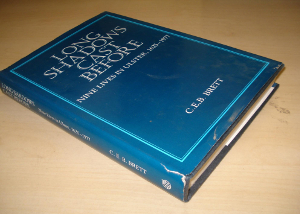
Brett is born into a long line of solicitors, the family firm being L’Estrange and Brett, based in Belfast. He is a partner there from 1954 until 1994. He is educated at Rugby School and New College, Oxford, where he is President of the Poetry Society and a friend of Dylan Thomas and attends lectures by Lord Clark.
Between 1949 and 1950 he works in France as a journalist with the Continental Daily Mail, where he is said to have mixed in anarchist and Trotskyite circles.
In 1956, the Earl of Antrim invites Brett to join the Northern Ireland Committee of the National Trust. On finding there are no books written to prepare himself for this, he resolves to write the necessary volumes. In 1957 he becomes the first chairman of the Ulster Architectural Heritage Society, founded alongside, amongst others Lady Dunleath. Brett serves as chairman for ten years and then as President from 1979 until his death.
With the National Trust he puts his legal skill to use in order to establish a public footpath along the cliffs of the North Coast of Ulster. He also sits on the board of the Irish Architectural Archive in Dublin.
In 1971, he is appointed to the board of the newly created Northern Ireland Housing Executive. He serves as Chairman for five years from 1979, during which time 50,000 dwellings are built. He is asked to compile a list of historic buildings in Jersey in 1975. In 1986, Brett becomes the first chairman of the International Fund for Ireland, established to encourage investment in Ireland.
Brett is also involved in Northern Irish politics, being chairman of the Northern Ireland Labour Party for a time. In 1981 he receives a CBE, this is followed by a Knighthood in 1990.
Brett dies on December 19, 2005. His church memorial is located along those of his family in the Comber Church of Ireland Parish Church of St. Mary, in Comber, North County Down.
As an heir to the Guinness brewing fortune and a handsome, charming young man, Bryan is an eligible bachelor. One of London’s “Bright Young Things,” he is an organiser of the 1929 “Bruno Hat” hoax art exhibition held at his home in London. Also, in 1929 he marries the Hon. Diana Mitford, one of the Mitford sisters, and has two sons with her. The couple become leaders of the London artistic and social scene and are dedicatees of Evelyn Waugh‘s second novel Vile Bodies. However, they divorce in 1933 after Diana deserts him for British fascist leader Sir Oswald Mosley.
Guinness remarries happily in 1936 to Elisabeth Nelson, of the Nelson publishing family, with whom he has nine children.
During World War II, Guinness serves for three years in the Middle East with the Spears Mission to the Free French, being a fluent French speaker, with the rank of major. Then in November 1944 Guinness succeeds to the barony when his father, posted abroad as Resident Minister in the Middle East by his friend Winston Churchill, is assassinated in Cairo.
After the war, Lord Moyne serves on the board of the Guinness corporation as vice-chairman (1947-1979), as well as the Guinness Trust and the Iveagh Trust, sitting as a crossbencher in the House of Lords. He serves for 35 years as a trustee of the National Gallery of Ireland and donates several works to the gallery. He writes a number of critically applauded novels, memoirs, books of poetry, and plays. With Frank Pakenham he seeks the return of the “Lane Bequest” to Dublin, resulting in the 1959 compromise agreement. He is invested as a Fellow of the Royal Society of Literature.
Lord Moyne dies of a heart attack on July 6, 1992, at Biddesden House, his home in Wiltshire, and is succeeded by his eldest son Jonathan. He is buried at Ludgershall, Wiltshire, England.