seamus dubhghaill

Promoting Irish Culture and History from Little Rock, Arkansas, USA


Leave a comment

Death of Jeremiah O’Donovan Rossa

jeremiah-odonovan-rossa

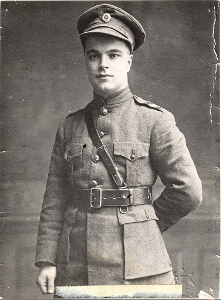
Jeremiah O’Donovan Rossa, Irish Fenian leader and prominent member of the Irish Republican Brotherhood, dies suddenly in Staten Island, New York, on June 29, 1915.

Jeremiah O’Donovan Rossa is born Jeremiah O’Donovan at Reenascreena, Rosscarbery, County Cork, on September 10, 1831. Rossa becomes a shopkeeper in Skibbereen where, in 1856, he establishes the Phoenix National and Literary Society, the aim of which is “the liberation of Ireland by force of arms.” This organisation later merges with the Irish Republican Brotherhood (IRB), founded two years later in Dublin.

In December 1858, Roosa is arrested and jailed without trial until July 1859. He is charged with plotting a Fenian rising in 1865, put on trial for high treason, and sentenced to penal servitude for life due to previous convictions. He serves his time in Pentonville, Portland, and Chatham prisons in England.

In an 1869 by-election, Roosa is returned to the British House of Commons for the Tipperary constituency, defeating the Liberal Catholic Denis Caulfield Heron by 1054 to 898 votes. The election is declared invalid because Rossa is an imprisoned felon.

After giving an understanding that he will not return to Ireland, Rossa is released as part of the Fenian Amnesty of 1870. Boarding the S.S. Cuba, he leaves for the United States with his friend John Devoy and three other exiles. Together they were dubbed “The Cuba Five.”

Rossa takes up residence in New York City, where he joins Clan na Gael and the Fenian Brotherhood. He organises the first ever bombings by Irish republicans of English cities in what is called the “dynamite campaign.” The campaign lasts through the 1880s and makes him infamous in Britain. The British government demands his extradition from America but without success.

In 1885, Rossa is shot outside his office near Broadway by an Englishwoman, Yseult Dudley, but his wounds are not life-threatening. He is allowed to visit Ireland in 1894, and again in 1904. On the latter visit, he is made a “Freeman of the City of Cork.”

Rossa is seriously ill in his later years and is finally confined to a hospital bed in St. Vincent’s Hospital, Staten Island, where he dies at the age of 83 on June 29, 1915. His body is returned to Ireland for burial and a hero’s welcome. The funeral at Glasnevin Cemetery on August 1, 1915, is a huge affair, garnering substantial publicity for the Irish Volunteers and the IRB at time when a rebellion, later to emerge as the Easter Rising, is being actively planned. The graveside oration given by Patrick Pearse remains one of the most famous speeches of the Irish independence movement stirring his audience to a call to arms.


2 Comments

Michael Collins Made President of the IRB

michael-collins

Michael Collins, who is also a leader in the Irish Republican Army, is made president of the Irish Republican Brotherhood (IRB) on June 28, 1919.

At the start of the 20th century, the IRB is a stagnating organisation, concerned more with Dublin municipal politics than the establishment of a republic. A younger generation of Ulster republicans aim to change this and, in 1905, Denis McCullough and Bulmer Hobson found the Dungannon Clubs, whose purpose is to discourage enlistment into the British Army and encourage enlistment into the IRB.

In 1909, Michael Collins is introduced to the brotherhood by Sam Maguire. By 1914, the Supreme Council is largely purged of its older, tired leadership, and is dominated by enthusiastic men such as Hobson, McCullough, Patrick McCartan, John MacBride, Seán Mac Diarmada, and Tom Clarke. The latter two are to become the primary instigators of the Easter Rising in 1916.

Following the Rising some republicans, notably Éamon de Valera and Cathal Brugha, leave the organization as they view it as no longer necessary since the Irish Volunteers now perform its function. The IRB, during the War of Independence (1919-1921), is under the control of Michael Collins, who initially is secretary and subsequently, on June 28, 1919, is made president of the Supreme Council.

When the Anglo-Irish Treaty is signed on December 6, 1921, it is debated by the Supreme Council, which votes to accept it by an 11-4 vote. Those who oppose the Treaty include former leader Harry Boland, Austin Stack, and Liam Lynch. Anti-Treaty republicans like Ernie O’Malley, who fought during the Civil War against the Treaty, see the IRB as being used to undermine the Irish Republic.

The IRB becomes quiescent during the Irish Civil War, which ends in May 1923, but it emerges again later that year as a faction within the National Army. It supports Minister for Defence Richard Mulcahy against the “Old IRA,” which fights against the recruitment of ex-British Army personnel and the demobilization of old IRA men. This comes to a head with the Army Mutiny of 1924, in the wake of which Mulcahy resigns and other IRB members of the army are dismissed by acting President of the Executive Council Kevin O’Higgins. The IRB subsequently dissolves itself, although it is not known whether a formal decision is made, or it simply ceases to function.


Leave a comment

Birth of Charles Stewart Parnell

charles-stewart-parnell

Charles Stewart Parnell, Irish nationalist politician and one of the most powerful figures in the British House of Commons in the 1880s, is born on June 27, 1846, in County Wicklow.

Born into a wealthy and powerful Anglo-Irish Protestant landowning family, Parnell enters the House of Commons in 1875. He is a land reform agitator and becomes leader of the Home Rule League in 1880, insisting on operating independently of the Liberals, and winning great influence by his balancing of constitutional, radical, and economic issues, and by his skillful use of parliamentary procedure. He is imprisoned in Kilmainham Gaol in 1882 but, being a very capable negotiator, is released when he renounces violent extra-Parliamentary action in an informal agreement, the Kilmainham Treaty, with British Prime Minister William Ewart Gladstone. That same year he reforms the Home Rule League as the Irish Parliamentary Party, which he controls minutely as Britain’s first disciplined democratic party.

The hung Parliament of 1885 sees him hold the balance of power between Gladstone’s Liberals and Lord Salisbury‘s Conservatives. His power is one factor in Gladstone’s adoption of Home Rule as the central tenet of the Liberal Party. His reputation peaks in 1889-1890 when letters published in The Times linking him to the Phoenix Park murders of 1882 are shown to have been forged by Richard Pigott. However, the Irish Parliamentary Party splits in 1890 after the revelation of Parnell’s long adulterous love affair, causing many English Liberals, many of them nonconformists, to refuse to work with him, and strong opposition from Catholic bishops. He heads a small minority faction until his death in 1891.

parnell-marker

In describing Parnell, Gladstone says, “I do not say the ablest man; I say the most remarkable and the most interesting. He was an intellectual phenomenon.” Liberal leader H. H. Asquith calls him as one of the three or four greatest men of the 19th century, while Lord Haldane describes him as the strongest man the House of Commons has seen in 150 years. Historian A.J.P. Taylor says, “More than any other man he gave Ireland the sense of being an independent nation.”

Charles Stewart Parnell dies of pneumonia at age 45 in his home at 10 Walsingham Terrace, Hove, England on October 6, 1891, in the arms of his wife Katharine. Though an Anglican, his funeral on October 11 is at the Irish National nondenominational Glasnevin Cemetery in Dublin and is attended by more than 200,000 people. His notability is such that his gravestone of unhewn Wicklow granite, erected in 1940, reads only “Parnell.”


Leave a comment

State Visit of U.S. President John F. Kennedy

jfk-state-visit

John F. Kennedy, an Irish American and the first Catholic to become president of the United States, arrives in Ireland on a state visit on June 26, 1963. After Air Force One touches down at Dublin airport, Kennedy’s motorcade weaves through the streets of Dublin city, the thrilled crowd, lacking ticker tape, improvises by throwing rolls of bus tickets.

Kennedy is proud of his Irish roots and makes a special visit to his ancestral home in Dunganstown, County Wexford, while in the country. There, he is greeted by a crowd waving both American and Irish flags and is serenaded by a boys’ choir that sings The Boys of Wexford. Kennedy breaks away from his bodyguards and joins the choir for the second chorus, prompting misty-eyed reactions from both observers and the press.

Kennedy meets with 15 members of his extended Irish family at the Kennedy homestead in Dunganstown. There he enjoys a cup of tea and some cake and makes a toast to “all those Kennedys who went and all those Kennedys who stayed.” His great-grandfather, Thomas Fitzgerald, had left Ireland for the United States in the middle of the Great Famine of 1848 and settled in Boston, becoming a cooper. Generations of his descendants go on to make their mark on American politics.

At the time of JFK’s visit to Ireland, the predominantly Catholic Irish Republic has been an independent nation for 41 years. The northern counties of the island, however, remain part of the largely Protestant British Empire and still suffer from long-standing sectarian violence. On the day after his arrival in Dublin, Kennedy speaks before the Irish parliament, where he openly condemns Britain’s history of persecuting Irish Catholics. Two days later, he travels to England, America’s oldest ally, to meet with British Prime Minister Harold Macmillan and his cabinet to discuss setting up a pro-democratic regime in British Guiana.

Kennedy later tells his aides that his favourite part of the trip was the wreath laying and silent funeral drill done by the Irish Army cadets at Arbour Hill military cemetery in Dublin.

Five months later, his widow, Jacqueline Kennedy, makes a special request to the Irish government. She asks that those same Irish army cadets, who so impressed the President on his visit, perform the drill again at his state funeral. Within days, those awe-stuck, trembling young men stand just inches away from foreign dignitaries from over 90 countries and perform their silent funeral drill in memory of a president that had inspired their country just a few short months earlier.


Leave a comment

Founding of the Dublin Society for Improving Husbandry

royal-dublin-society-logoThe Dublin Society for Improving Husbandry (Cumann Ríoga Bhaile Átha Cliath) is founded on June 25, 1731 “to promote and develop agriculture, arts, industry, and science in Ireland.” On June 25, 1820, the name is changed to Royal Dublin Society (RDS) and is commonly known as the “Dublin Society.”

The society is originally founded by members of the Dublin Philosophical Society, chiefly Thomas Prior and Samuel Madden, as the “Dublin Society for improving Husbandry, Manufactures and other Useful Arts.” On July 8, 1731, a couple of weeks after initial foundation, the designation “and Sciences” is added to the end of its name.

The stated aim of the “Dublin Society” is therefore to promote the development of arts, agriculture, industry, and science in Ireland. In 1792 the Society purchases the Leskean Cabinet to further this ambition. The “Royal” prefix is adopted in 1820 when George IV becomes Society patron.

The society purchases Leinster House, home of the Duke of Leinster, in 1815 and founds a natural history museum there. The society acquires its current premises at Ballsbridge in 1879, and has since increased from the original fifteen acre site to forty acres. The premises consist of a number of exhibition halls, a stadium, meeting rooms, bars, restaurants, and a multi purpose venue named RDS Simmonscourt Pavilion.

The RDS Main Hall is a major centre for exhibitions, concerts, and other cultural events in Dublin. It hosts, for example, the Young Scientist and Technology Exhibition each January.

The Simmonscourt Pavilion has a capacity of approximately 7,000, and hosted the Meteor Music Awards in February 2008, as well as a number of concerts including The Smashing Pumpkins and My Chemical Romance, and two Eurovision Song Contests, in 1981 and 1988. Simmonscourt is where the show jumping horses are stabled during Dublin Horse Show week.


Leave a comment

Archbishop Paul Cullen Elevated to First Irish Cardinal

cardinal-paul-cullen

Archbishop Paul Cullen, Roman Catholic Archbishop of Dublin and previously of Armagh, is elevated to the cardinalate as Cardinal-Priest of San Pietro in Montorio on June 22, 1866, becoming the first Irish cardinal.

Cullen is born at Prospect, Narraghmore, Athy, County Kildare. He enters St. Patrick’s, Carlow College, in 1816, and proceeds to the Pontifical Urban College in Rome in 1820.

Cullen is ordained in 1829 and is appointed Rector of the Pontifical Irish College in Rome in late 1831. He successfully secured the future of the college by increasing the student population and thereby strengthening the finances of the college.

Cullen is promoted to the primatial See of Armagh on December 19, 1849, and is consecrated by the Cardinal Prefect of Propaganda at the Irish College in Rome on February 24, 1850. He is also named Apostolic Delegate. Cullen is transferred to the See of Dublin on May 1, 1852.

Cullen is sent to Ireland to bring the Irish church into conformity with Roman canon law and usage. His first major act as Archbishop of Armagh is to convene the Synod of Thurles, the first national synod held in Ireland since the Reformation. This occurs during the period of the debilitating Irish Famine which reduces the population of the country by over 2 million people through starvation, disease, and emigration. After a series of disastrous harvests in the 1860s, he founds, along with the Lord Mayor of Dublin, the Mansion House Relief Committee in 1862. Cullen also starts the practice of Irish priests wearing Roman clerical collars and being called “Father” rather than “Mister” by their parishioners.

Cullen pays frequent visits to Rome. He takes part in the definition of the dogma of the Immaculate Conception of the Blessed Virgin Mary in 1854, and with the eighteenth centenary of the martyrdom of Saints Peter and Paul in 1867.

After his elevation to cardinal, Cardinal Cullen takes an active part in deliberations during the Vatican Council. Towards the close of the council at the express wish of the Central Commission, Cardinal Cullen proposes a formula for the definition of Papal Infallibility. It is a matter of great delicacy, as promoters of the definition are split up into various factions, some anxious to assign a wide range to the pope’s decisions, while others wish to set forth in a somewhat indefinite way the papal prerogative.

Cullen is the most important Irish political figure in the thirty years between Daniel O’Connell and Charles Stewart Parnell. In political matters Cullen makes it a rule to support every measure, whatever its provenance, conducive to the interests of his vision for the Roman Catholic Church in Ireland. Cullen is also a frequent visitor at the vice-regal lodge to lobby the government.

Cardinal Paul Cullen dies in Dublin on October 24, 1878, at the age of 75. He is buried at Holy Cross College in Drumcondra.


Leave a comment

Birth of Theobald Wolfe Tone

theobald-wolfe-tone

Theobald Wolfe Tone, posthumously known as Wolfe Tone, a leading Irish revolutionary figure and one of the founding members of the United Irishmen, is born on June 20, 1763, in Dublin. He is regarded as the father of Irish republicanism and leader of the Irish Rebellion of 1798.

The son of a coach maker, Tone studies law and is called to the Irish bar in 1789 but soon gives up his practice. In October 1791 he helps found the Society of United Irishmen, initially a predominantly Protestant organization that works for parliamentary reforms, such as universal suffrage and Roman Catholic emancipation. In Dublin in 1792 he organizes a Roman Catholic convention of elected delegates that force Parliament to pass the Catholic Relief Act of 1793. Tone himself, however, is anticlerical and hopes for a general revolt against religious creeds in Ireland as a sequel to the attainment of Irish political freedom.

By 1794, he and his United Irishmen friends begin to seek armed aid from Revolutionary France to help overthrow English rule. After an initial effort fails, Tone goes to the United States and obtains letters of introduction from the French minister at Philadelphia to the Committee of Public Safety in Paris. In February 1796 Tone arrives in the French capital, presents his plan for a French invasion of Ireland, and is favourably received. The Directory then appoints one of the most brilliant young French generals, Lazare Hoche, to command the expedition and makes Tone an adjutant in the French army.

On December 16, 1796, Tone sails from Brest with 43 ships and nearly 14,000 men. The ships are badly handled and, after reaching the coast of west Cork and Kerry, are dispersed by a storm. Tone again brings an Irish invasion plan to Paris in October 1797, but the principal French military leader, Napoleon Bonaparte, takes little interest. When insurrection breaks out in Ireland in May 1798, Tone can only obtain enough French forces to make small raids on different parts of the Irish coast. In September he enters Lough Swilly, County Donegal, with 3,000 men and is captured there.

At his trial in Dublin on November 10, 1798, he defiantly proclaims his undying hostility to England and his desire “in fair and open war to produce the separation of the two countries.” He is found guilty and is sentenced to be hanged on November 12. Early in the morning of the day he is to be hanged, Tone cuts his throat with a penknife.

Theobald Wolfe Tone dies of his self-inflicted wound on November 19, 1798, at the age of 35 in Provost’s Prison, Dublin, not far from where he was born. He is buried in Bodenstown, County Kildare, near his birthplace at Sallins, and his grave is in the care of the National Graves Association.


Leave a comment

Birth of Sister Stanislaus Kennedy

stanislaus-kennedy

Sister Stanislaus Kennedy, campaigner against poverty and homelessness and a member of the congregation of Religious Sisters of Charity since 1958, is born in Dingle, County Kerry, on June 19, 1939. She is affectionately known as Sr. Stan.

At the age of 18, Sr. Stan, then Treasa Kennedy, decides to become a nun. Following in the footsteps of Mary Aikenhead, founder of the Religious Sisters of Charity, she too is drawn to work on behalf of the poor in the towns and cities of Ireland. For over fifty years she has pioneered, campaigned, explored, and developed a range of inspiring social innovations to benefit thousands of people who have experienced exclusion in its many forms.

In the 1960s, Sr. Stan is missioned to Kilkenny to work alongside Bishop Peter Birch in developing Kilkenny Social Services. For nineteen years Peter Birch is both guide and mentor to Sr. Stan as the Kilkenny social services develop into an innovative, comprehensive model of community care becoming a blue-print for the rest of Ireland.

In 1974, the Irish Government appoints Sr. Stan as the first chair of The National Committee on Pilot Schemes to Combat Poverty, and in 1985 the European Commission appoints her as trans-national coordinator in the European rural anti poverty programme working across Europe.

Moving to Dublin in the early 1980s, Sr. Stan tackles one of Ireland’s most neglected social inequalities – homelessness. In 1985, she establishes Focus Point which is now Focus Ireland, the biggest national, voluntary organisation helping people to find, create, and maintain a home.

Sr. Stan founds The Sanctuary in 1998, a meditation/spirituality centre in the heart of Dublin, a place where people can find a quiet space and time for themselves to explore and develop their inner world and wisdom and find stillness.

Sr. Stan establishes two other initiatives in 2001, the Immigrant Council of Ireland (ICI), an independent national organisation working to promote the rights of immigrants through information, advocacy, and legal aid and the Young Social Innovators (YSI), a national showcase providing an opportunity for students to become involved in social issues.

Sr. Stan has also written thousands of articles that have been published in Ireland and elsewhere. She lectures on social issues and policies, is a frequent keynote speaker at many events, and regularly gives talks to many diverse groups in Ireland, Europe, and outside of Europe.


Leave a comment

First Known Meeting of the Parliament of Ireland

parliament-of-ireland-coat-of-arms

The Parliament of Ireland meets at Castledermot in County Kildare on June 18, 1264, the first definitively known meeting of this Irish legislature. There is some evidence to suggest that the word “parliament” may have been in use as early as 1234.

There is nothing new about parliamentary assemblies in Ireland. The Normans, who begin to settle in Ireland in 1169, are the first to give Ireland a centralised administration. The Irish legal system and courts of law are, in large measure, inherited from them. So too is the Irish legislature which is directly descended from the parliament which develops in medieval Ireland.

The Parliament of Ireland is formally founded in 1297 by the Justiciar, Sir John Wogan, to represent the Irish and Anglo-Norman population of the Lordship of Ireland. It exists in Dublin from 1297 until 1800 and is comprised of two chambers – the House of Commons and the House of Lords. The House of Lords consists of members of the Irish peerage and the bishops (after the Reformation, Church of Ireland bishops), while the Commons is directly elected, albeit on a very restricted franchise.

The main purpose of parliament is to approve taxes that are then levied by and for the Lordship of Ireland. Those who pay the bulk of taxation, the clergy, merchants, and landowners, naturally comprise the members. In 1541 the parliament votes to create the Kingdom of Ireland.

Over the centuries, the Irish parliament meets in a number of locations both inside and outside Dublin. The first meeting at Castledermot in June 1264 takes place some months earlier than the first English Parliament containing representatives of towns and cities. However, this Irish Parliament is a meeting of Irish nobles and bishops, not representatives of Irish people. Later, in the 15th century, Irish parliaments began to invite representatives of the people.

Among its most famous meeting places are Dublin Castle, the Bluecoat School, Chichester House and its final permanent home, the Irish Parliament House in College Green.


Leave a comment

Birth of The Pogues’ Guitarist Philip Chevron

philip-chevron

Philip Ryan, Irish singer-songwriter and guitarist professionally known as Philip Chevron and best known as a member of The Pogues, is born on June 17, 1957. He is regarded as one of the most influential figures in Irish punk music.

Chevron grows up in Santry, a suburb of Dublin. Beginning in the late 1970s, he is lead singer and co-founder of the punk rock group The Radiators from Space, receiving some critical acclaim but little widespread popularity or financial success. Following a temporary breakup of the band in 1981, he lives in London for a while where he meets and befriends Shane MacGowan through time spent working together at a record shop. Following the release of the Pogues’ 1984 debut album Red Roses For Me, Chevron is invited to join the band as a temporary replacement for banjo player Jem Finer while on paternity leave. He takes over as guitarist following MacGowan’s decision to concentrate on singing, thereby becoming a full-time member of the band in time for the recording of its second album, Rum, Sodomy and the Lash.

Chevron proves himself as a singer-songwriter, writing the songs Thousands Are Sailing and Lorelei among others. He leaves The Pogues in 1994 following problems with drugs and alcohol. In 2003, he reforms The Radiators (Plan 9) with ex-Pogues bassist Cait O’Riordan. They release the album Trouble Pilgrim in 2006.

In later years, he becomes The Pogues’ unofficial spokesperson and resident expert on the reclusive MacGowan, frequently visiting online fora and directly answering questions from fans. In 2004, he personally oversees the remastering and re-release of The Pogues’ entire back catalogue on CD. He tours regularly with The Pogues, who reunite after a successful reunion tour in 2001.

In June 2007, The Pogues’ website announces that Chevron has been diagnosed with oesophageal cancer. In early 2008, the website announces that Chevron has recovered, and to his surprise and joy, his hearing has returned to almost pre-treatment levels. He embarks on the March 2008 tour of the United States and manages to sing Thousands Are Sailing at each performance. By 2009, Chevron appears to have recovered from the cancer.

However, in May 2013, it is announced that the cancer has returned, and it is “lethal.” In June he stoically tells the Irish Daily Mail, “I am a gay, Irish, Catholic, alcoholic Pogue who is about to die from cancer – and don’t think I don’t know it.” Chevron dies on October 8, 2013, in Dublin at the age of 56. His last public appearance is at the Olympia Theatre in Dublin for a fundraiser in August of that same year.