seamus dubhghaill

Promoting Irish Culture and History from Little Rock, Arkansas, USA


Leave a comment

Birth of Brian Coffey, Poet & Publisher

Brian Coffey, Irish poet and publisher, is born in Dún LaoghaireCounty Dublin on June 8, 1905. His work is informed by his Catholicism and by his background in science and philosophy, and his connection to surrealism. For these reasons, he is seen as being closer to an intellectual European Catholic tradition than to mainstream Irish Catholic culture.

Coffey attends the Mount St. Benedict boarding school in GoreyCounty Wexford from 1917 to 1919 and then Clongowes Wood College, in ClaneCounty Kildare from 1919 until 1922. In 1923, he goes to France to study for the Bachelor’s degree in Classical Studies at the Institution St. Vincent, SenlisOise. While still at college, Coffey begins writing poetry. He publishes his first poems in University College Dublin‘s The National Student under the pseudonym Coeuvre.

In the early 1930s, Coffey moves to Paris where he studies Physical Chemistry under Jean Baptiste Perrin, who won the Nobel Prize for Physics in 1926. He completes these studies in 1933, and his Three Poems is printed in Paris by Jeanette Monnier that same year. In 1934 he enters the Institut Catholique de Paris to work with the noted French philosopher Jacques Maritain, taking his licentiate examination in 1936. He then moves to London for a time and contributes reviews and a poem to T.S. Eliot‘s The Criterion magazine. He returns to Paris in 1937 as an exchange student to work on his doctoral thesis on the idea of order in the work of Thomas Aquinas. In 1938, Coffey’s second volume of poetry, Third Person, is published by George Reavey‘s Europa Press.

During the war, Coffey teaches in schools in London and Yorkshire, leaving his young family in Dublin. After the war, he returns to Paris and completes his doctoral thesis. The family then moves so that Coffey can take up a teaching post at the Jesuit Saint Louis University.

By the early 1950s, Coffey becomes uncomfortable for a number of reasons, including the nature of his work, his distance from Ireland and the pressures that inevitably come to bear on an academic who has previously associated with well-known left-wing writers in Paris. For these reasons, he resigns in 1952.

In 1952, Coffey returns to live in London and, from 1973, Southampton. He begins again to publish his poetry and translations, mainly of French poetry. The first work in English to appear after this period of silence is Missouri Sequence, apparently begun in St. Louis but first appearing in the University Review, later known as the Irish University Review, in 1962.

Over the next decade or so, he publishes regularly in the University Review. He also sets up his own publishing enterprise, Advent Press, which publishes work by himself and by younger writers he wants to support.

Brian Coffey dies at the age of 89 on April 14, 1995, and is buried in Southampton, England.


Leave a comment

Birth of Artist Sarah Henrietta Purser

Sarah Henrietta Purser, Irish artist mainly noted for her work with stained-glass, is born on March 22, 1848, in Kingstown (now Dún Laoghaire) in County Dublin, and raised in DungarvanCounty Waterford. She is educated in Switzerland and afterwards studies at the Metropolitan School of Art in Dublin and in Paris at the Académie Julian.

Purser works mostly as a portraitist. She is also associated with the stained-glass movement, founding a stained-glass workshop, An Túr Gloine, in 1903. Some of her stained-glass work is commissioned from as far as New York City, including a window at Christ Church, Pelham dedicated to the memory of Katharine Temple Emmet and Richard Stockton Emmet, grandson of the Irish patriot, Thomas Addis Emmet. Through her talent and energy and owing to her friendship with the Gore-Booths, she is very successful in obtaining commissions, famously commenting, “I went through the British aristocracy like the measles.”

In 1977 Bruce Arnold noted, “some of her finest and most sensitive work was not strictly portraiture, for example, An Irish Idyll in the Ulster Museum, and Le Petit Déjeuner (in the National Gallery of Ireland).”

Sarah Purser becomes wealthy through astute investments, particularly in Guinness. She is very active in the art world in Dublin and is involved in the setting up of the Hugh Lane Municipal Gallery, persuading the Irish government to provide Charlemont House to house the gallery. In 1923 she becomes the first female member of the Royal Hibernian Academy.

Until her death she lives for years in Mespil House, a Georgian mansion with beautiful plaster ceilings on Mespil Road, on the banks of the Grand Canal. After her death in Dublin on August 7, 1943, it is demolished and is developed into apartments. She is buried in Mount Jerome Cemetery in Dublin.


Leave a comment

Birth of Neil Patrick Jordan, Screenwriter & Director

neil-patrick-jordan

Neil Patrick Jordan, film director, screenwriter, novelist, and short-story writer, is born in County Sligo on February 25, 1950. His first book, Night in Tunisia, wins a Somerset Maugham Award and the Guardian Fiction Prize in 1979. He wins an Academy Award for Best Original Screenplay for The Crying Game (1992). He also wins the Silver Bear for Best Director at the Berlin International Film Festival for The Butcher Boy (1997).

Jordan is educated at St. Paul’s College, Raheny. Later, Jordan attends University College Dublin, where he studies Irish history and English literature. He is raised a Catholic and is quite religious during the early stages of his life. Regarding his current beliefs, he states that “God is the greatest imaginary being of all time. Along with Einstein‘s General Theory of Relativity, the invention of God is probably the greatest creation of human thought.”

When John Boorman is filming Excalibur in Ireland, he recruits Jordan as a “creative associate.” A year later Boorman is executive producer on Jordan’s first feature, Angel, a tale of a musician caught up in the Troubles, starring Stephen Rea who subsequently appears in almost all of Jordan’s films to date. During the 1980s, he directs films that win him acclaim, including The Company of Wolves and Mona Lisa, both made in England. The Company of Wolves becomes a cult favorite.

As a writer/director, Jordan has a highly idiosyncratic body of work, ranging from mainstream hits like Interview with the Vampire to commercial failures like We’re No Angels to a variety of more personal, low-budget arthouse pictures. He is also the driving force behind the cable TV series The Borgias.

Unconventional sexual relationships are a recurring theme in Jordan’s work, and he often finds a sympathetic side to characters that audiences would traditionally consider deviant or downright horrifying. His film The Miracle, for instance, follows two characters who struggle to resist a strong, incestuous attraction, while The Crying Game makes complicated, likable characters out of an IRA volunteer and a transgender woman. Interview with the Vampire, like the Anne Rice book it is based on, focuses on the intense, intimate interpersonal relationship of two undead men who murder humans nightly, accompanied by an equally lusty vampire woman who is eternally trapped in the body of a little girl. While Lestat (Tom Cruise) is depicted in an attractive but villainous manner, his partner Louis (Brad Pitt) and the child vampire Claudia (Kirsten Dunst) are meant to capture the audience’s sympathy despite their predatory nature.

In addition to the unusual sexuality of Jordan’s films, he frequently returns to the Troubles of Northern Ireland. The Crying Game and Breakfast on Pluto both concern a transgender character, both concern the Troubles, and both feature frequent Jordan leading man Stephen Rea. The two films, however, are very different, with The Crying Game being a realistic thriller/romance and Breakfast on Pluto a much more episodic, stylized, darkly comic biography. Jordan also frequently tells stories about children or young people, such as The Miracle and The Butcher Boy. While his pictures are most often grounded in reality, he occasionally directs more fantastic or dreamlike films, such as The Company of Wolves, High Spirits, Interview with the Vampire, and In Dreams.

The critical success of Jordan’s early pictures leads him to Hollywood, where he directs High Spirits and We’re No Angels. Both are critical and financial disasters. He later returns home to make the more personal The Crying Game, which is nominated for six Academy Awards. Jordan wins the Academy Award for Best Original Screenplay for the film. Its unexpected success leads him back to American studio filmmaking, where he directs Interview with the Vampire. He also directs the crime drama The Brave One starring Jodie Foster.

Jordan also writes and directs the Irish-made film Ondine (2009), starring Colin Farrell and Alicja Bachleda-Curuś. He also directs Byzantium, an adaptation of the vampire play of the same name starring Saoirse Ronan, Gemma Arterton, and Jonny Lee Miller.

Jordan lives in Dalkey, which is a part of the larger town of Dún Laoghaire.


Leave a comment

Last British Troops Leave the Irish Free State

british-troops-leave-ireland

The last British troops leave the Irish Free State on December 17, 1922. They are the remnants of a 5,000 strong garrison maintained up to that point in Dublin, commanded by Nevil Macready.

It appears to be a friendly farewell, even while Ireland is embroiled in its own Civil War. The Union Jack is lowered at the hospital and Macready goes to review the final contingent of troops as they leave the Royal barracks, later known as the Collins barracks. He then motors to Kingstown, now Dún Laoghaire, where he receives a 17-gun salute and joins Admiral Cecil Fox, the Sligo-born naval commander in the area, on board the cruiser HMS Dragon to sail home to England and retirement.

Meanwhile, the troops, 3,500 men mostly from the Leicester, Worchester, and Border regiments, march to the port. At Beresford Place they are greeted by 500 members of the Legion of Irish Ex-Servicemen, in civilian clothes but wearing their decorations. Thousands of other people line the quays and the armoured cars and the Dublin Metropolitan Police stand by, but there is no trouble. Embarkation onto six ships begins around 1:15 PM. At 3:10 PM, the last ship to leave, the steamer Arvonia chartered from the London and North Western Railway, weighs anchor while a band on deck plays “God Save the King” and a crowd breaks into the North Wall Extension to wave a final farewell as it enters Alexandra Basin.

The armoured cars them drive north to Ulster and the evacuation of the Irish Free State, apart from the Treaty ports, is over. General Richard Mulcahy, who takes over the Royal barracks that day, claims “the incubus of occupation that has lain as a heavy hand on the country for years has been removed.”

In his memoirs, Macready expresses annoyance that a photograph of Fox and himself published in The Irish Times on December 18 has the caption “two gallant Irishmen.” Although he has an Irish grandfather, he cordially loathes Ireland.

The British leave fully outfitted barracks to the Irish Army and artifacts including a large card in the Headquarters in Parkgate Street printed with the admonition “LOVE ONE ANOTHER.”


Leave a comment

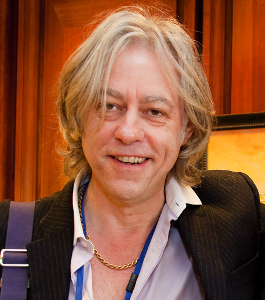
Birth of Singer & Political Activist Bob Geldof

Robert Frederick Zenon “Bob” Geldof, singer, songwriter, author, occasional actor, and political activist, is born in Dún Laoghaire, County Dublin, on October 5, 1951.

Geldof attends Blackrock College, though he later says he did not enjoy his time there because of its Catholic ethos and bullying for his lack of rugby prowess and for his middle name, Zenon. After leaving school he gains certain odd jobs but is not inspired by any of them. He then goes to Vancouver, British Columbia, Canada to work as a music journalist.

Returning to Ireland in 1975, Bob Geldof becomes the lead singer of The Boomtown Rats, a rock group closely linked with the punk movement. He famously states the reason for joining a pop band is “to get rich, to get famous, and to get laid.”

By 1978, The Boomtown Rats achieve their first U.K. hit single with Rat Trap and later achieve a second hit with I Don’t Like Mondays.

In 1981, Geldof is invited to take part in a concert for Amnesty International and this sows a seed of future ideas.

In 1984, Geldof moves from being a rock start to international celebrity for raising awareness of humanitarian charities. During that year, Ethiopia and other African countries experience a severe famine which leads to death by starvation for thousands of people. The plight of starving children is widely seen on television and Geldof, along with Midge Ure, decide to do something about it, releasing the single Do They Know It’s Christmas?. It is a spontaneous event with many of the best-known names in pop music invited. It becomes an instant best seller selling a record 3 million copies.

In the summer of 1985, Geldof is one of the main organisers behind the Live Aid concert at Wembley Stadium. It is a sixteen-hour rock extravaganza aimed at raising money and awareness for Africa. It is a unique musical event capturing the imagination and attention of the world. Following this concert, he becomes more involved in work for non-governmental organisations in Africa and becomes one of the leading spokespersons on Third World debt and relief.

In 2005, he organises a Live 8 concert, coinciding with the Make Poverty History campaign. He seeks the co-operation of leading G8 leaders such as Tony Blair to write off Third World debt. Some criticise him for becoming too close to politicians and some argue his presence in the Third World campaign issue does more harm than good.

However, Geldof remains a powerful figurehead for motivating Western attitudes to pay more attention to the problems and challenges of the poorest parts of the world. He feels a passion for improving conditions in Africa.

Geldof is knighted in 1986 and is often affectionately known as “Sir Bob.”


Leave a comment

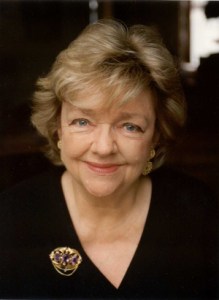
Birth of Irish Novelist Maeve Binchy

maeve-binchy

Maeve Binchy Snell, known as Maeve Binchy, Irish novelist, playwright, short story writer, columnist, and speaker best known for her sympathetic and often humorous portrayal of small-town life in Ireland, is born on May 28, 1939, in Dalkey, County Dublin.

Binchy is the oldest of four children born to William and Maureen (née Blackmore) Binchy. Educated at St. Anne’s, Dún Laoghaire, and later at Holy Child Convent, Killiney, she goes on to study at University College Dublin, where she earns a bachelor’s degree in history. She works as a teacher of French, Latin, and history at various girls’ schools.

A 1963 trip to Israel profoundly affects both her career and her faith. One Sunday, attempting to find the location of the Last Supper, she climbs a mountainside to a cavern guarded by an Israeli soldier. She weeps with despair and the soldier asks, “What’ya expect ma’am – a Renaissance table set for 13?” She replies, “Yes! That’s just what I did expect.” This experience causes her to renounce her Catholic faith and eventually turn to atheism.

In 1968, Binchy joins the staff at The Irish Times, and works there as a writer, columnist, the first Women’s Page editor, and the London editor reporting for the paper from London before returning to Ireland.

Binchy, tall and rather stout, never considers herself to be attractive. She ultimately encounters the love of her life, children’s author Gordon Snell, while recording a piece for Woman’s Hour in London. Their friendship blossoms into a cross-border romance, with her in Ireland and him in London, until she eventually secures a job in London through The Irish Times. They are married in 1977 and eventually return to live in Dalkey, not far from where she had grown up.

In all, Binchy publishes 16 novels, four short-story collections, a play, and a novella. A 17th novel, A Week in Winter, is published posthumously. Her literary career begins with two books of short stories, Central Line (1978) and Victoria Line (1980). She publishes her debut novel Light a Penny Candle in 1982.

Most of Binchy’s stories are set in Ireland, dealing with the tensions between urban and rural life, the contrasts between England and Ireland, and the dramatic changes in Ireland between World War II and the present day. Her books have been translated into 37 languages.

In 2002, Binchy suffers a health crisis related to a heart condition, which inspires her to write Heart and Soul. The book about a heart failure clinic in Dublin and the people involved with it, reflects many of her own experiences and observations in the hospital.

Binchy dies on July 30, 2012, at the age of 73, in a Dublin hospital with her husband at her side. She had suffered from various maladies, including painful osteoarthritis, which results in a hip operation. A month before her death she suffers a severe spinal infection and finally succumbs to a heart attack. Just ahead of that evening’s Tonight with Vincent Browne and TV3‘s late evening news, Vincent Browne and then Alan Cantwell, who respectively anchor these shows, announce to Irish television viewers that Binchy has died earlier in the evening.

Despite being an atheist, Binchy is given a traditional Requiem Mass which takes place at the Church of the Assumption, in her hometown of Dalkey. She is later cremated at Mount Jerome Cemetery and Crematorium.


Leave a comment

The Battle of Mount Street Bridge

mount-street-bridge

Some of the bloodiest fighting of the 1916 Easter Rising occurs one hundred years ago today during the Battle of Mount Street Bridge on Wednesday, April 26, 1916.

Some of the rebel positions in Dublin are isolated and are bombarded from a distance. They barely see a British soldier during the six days of the Rising. The fighting is much bloodier when the British assault Volunteer positions dominating the routes into the city. In such instances, street fighting, snipers, and sudden close-range crossfires are prevalent. This happens mainly at three locations, Mount Street Bridge, South Dublin Union/Marrowbone Lane, and North King Street.

At Mount Street, on the approach to the city centre from the port at Kingstown, now known as Dún Laoghaire, a volunteer outpost manned by only 17 men under the command of Lieutenant Michael Malone and armed with rifles and hand guns, faces the frontal assault of a reinforcement column of British troops.

The reinforcement column meets its first resistance when it pauses at Carisbrook House. They respond to sniper fire by riddling the house, though it does not contain any Volunteers. The column, however, is thus alerted that Volunteers are in the area. They go no more than 500 yards further when they come under sustained fire from two Volunteers in 25 Northumberland Road. It takes five hours of sustained firing to dislodge the defenders. Ten British soldiers fall at the first volley. Volunteers in the other outposts nearby also begin picking off the attackers who are exposed to their fire.

Finally, the house is rushed, and Volunteer Lieutenant Malone is shot dead. The other Volunteer in the house, Section Commander James Grace, succeeds in hiding himself behind a cooker and escapes the area several hours later. He is arrested a few days later.

While the British soldiers attack 25 Northumberland Road, they also move against the Schoolhouse and the Parochial Hall, which is located between 25 Northumberland Road and Clanwilliam House. The Parochial Hall is held by four men, P.J. Doyle in command, Joe Clarke, William Christian, and J. McGrath. The Volunteers continue a fierce firefight until flames drive them from their stations.

The fight at Clanwillaim House continues as British soldiers try in vain to cross Mount Street Bridge. When the house is eventually engulfed in flames and their ammunition spent, the surviving four Volunteers escape over the back wall. When the final charge comes, one officer throws a grenade at one of the remaining intact windows, but it bounces back and explodes, killing him.

Up to 250 British soldiers are killed or wounded and their morale shattered by the gallant band of Volunteers around Mount Street and the British advance is delayed by a day. The fighting at Mount Street results in almost two thirds of British casualties in Easter week. Four Volunteers, Michael Malone, Dick Murphy, George Reynolds, and Patrick Doyle, lose their lives in the battle. Five others escape arrest, while four are captured, including Joe Clarke.

Clarke and his comrades from the other outposts are first brought to Ladd Lane Barracks, before joining the other captured Volunteers and those who surrender at the end of the week. Eventually, they are transported to British jails to serve their sentence or to be interned.