seamus dubhghaill

Promoting Irish Culture and History from Little Rock, Arkansas, USA


Leave a comment

Birth of Jeremiah Joseph “Ginger” O’Connell, Irish Revolutionary

Jeremiah Joseph “Ginger” O’Connell, Irish revolutionary, active in the Irish War of Independence, and later a senior officer in the Defence Forces, is born in Ballina, County Mayo, on December 21, 1887.

O’Connell is born to Jeremiah Ambrose and Winifred O’Connell. He is nicknamed “Ginger” because of his red hair. His father is a national school inspector, so the family lives in Sligo, Derry, Longford and Belfast, and he attends a succession of primary schools. He studies at University College Dublin (UCD) where he receives a BA and a first-class MA. He is a member of the Literary and Historical Society at UCD and has an interest in boxing.

O’Connell is living in Cavan with his father, his sister Mary Margaret, his brother John Aloysius and two servants, Mary Burke and Rose Anne O’Reilly, at the time of the 1911 census, when he is 23. He is working as a Solicitor’s Apprentice, can read and write as well as speak both English and Irish, and is single. His mother is not living as it is recorded that his father is a widower.

O’Connell spends some time in the United States Army, serving with the 69th New York Infantry Regiment between 1912 and 1914. He returns to Ireland in 1914 and joins the Irish Volunteers, becoming Chief of Inspection in 1915. He travels the country organising volunteer corps, as well as contributing to the Irish Volunteer’s journal and delivering lectures on military tactics to both the Volunteers and Fianna Éireann. He also delivers a series of lectures about the famous Irish battles to the Gaelic League in Dublin. He is not a member of the Irish Republican Brotherhood (IRB) as he believes that soldiers should not be a part of secret societies.

At the time the 1916 Easter Rising, O’Connell is operating in Dublin under instruction from Joseph Plunkett. He is dispatched to Cork by Eoin MacNeill to try to prevent the Rising. Following the Rising, he is arrested and held in Frongoch internment camp from April to July 1916. In 1918 he is again arrested and interned, spending time in Wandsworth Prison with Arthur Griffith for the alleged involvement in the fabricated German Plot.

During the Irish War of Independence, O’Connell is a member of the Irish Republican Army (IRA) headquarters staff, as Assistant Director of Training and, after the killing of Dick McKee in 1920, as Director of Training. He coordinates, and is the principal lecturer, for a training course for military officers. The course is run clandestinely in the premises of the Topographical Society on Gardiner Street in Dublin. A sympathetic doorkeeper allows the group in at night when the society is not present. Topics delivered by O’Connell include tactics, ordinance and engineering.

In the IRA split after Dáil Éireann ratifies the Anglo-Irish Treaty, O’Connell takes the pro-Treaty side. He is made Deputy Chief of Staff in the National Army. On June 26, 1922, he is kidnapped by anti-treaty forces in reprisal for the arrest of an anti-treaty officer. His kidnapping is a precipitating factor in the formal outbreak of the Irish Civil War, when government pro-treaty forces two days later attack anti-treaty forces occupying the Four Courts. He survives the fighting and spends the rest of the civil war as General Officer Commanding the Curragh Command.

Following the Irish Civil War, the National Army is reorganised, and as part of that O’Connell is demoted from general to colonel. He subsequently holds a variety of positions: chief lecturer in the army school of instruction (1924–1929); director of no. 2 (intelligence) bureau (1929–1932); OC Irish Army Equitation School (March–June 1932); quartermaster-general (1932–1935) and director of the military archives (1935–1944). He also publishes articles on Irish and foreign military history and tactics in his time as a military historian. He marries Gertrude McGilligan, and they have two children together – one son and one daughter.

O’Connell dies of a heart attack at the age of 56 on February 19, 1944.


Leave a comment

Death of Kieran Doherty, Irish Republican Hunger Striker

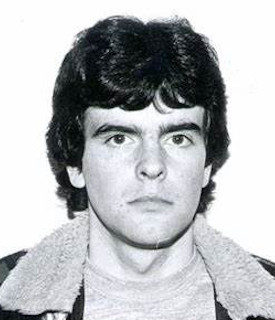
Kieran Doherty, Irish republican hunger striker and politician who serves as a Teachta Dála (TD) for the Cavan–Monaghan constituency from June 1981 to August 1981, dies on August 2, 1981, in HM Prison Maze (known to republicans as Long Kesh) on the 73rd day of his hunger strike. He is a volunteer in the Belfast Brigade of the Provisional Irish Republican Army (IRA).

Doherty is the third son in a family of six. He is born on October 16, 1955, in the Andersonstown area of Belfast and is educated at St. Theresa’s Primary School and Glen Road Christian Brothers School (CBS). The Doherty brothers are known cyclists and sportsmen in the Andersontown area. He wins an Antrim Gaelic football medal at minor level in 1971.

Doherty joins Fianna Éireann in 1971 and is interned by the British Government between February 1973 and November 1975. His brothers Michael and Terence are interned between 1972 and 1974.

Doherty works as an apprentice heating engineer. His girlfriend is Geraldine Scheiss and, although they never become formally engaged, they become very close toward the end of his life. Before his arrest, she had not known that he is in the IRA.

In August 1976, while he is out to set a bomb, the van in which he is riding is chased by the Royal Ulster Constabulary (RUC). During the chase Doherty manages to leave the van and hijack a car. He later ditches the car and is found one mile away from the car. He is convicted and sentenced to 18 years for possession of firearms and explosives, with another four years for the hijack.

Doherty starts his hunger strike on May 22, 1981. While on hunger strike, he is elected as an Anti H-Block TD for the Cavan–Monaghan constituency at the 1981 Irish general election, which is held on June 11. He receives 9,121 (15.1%) first preference votes and is elected on the fourth count. The two seats gained by Anti H-Block candidates denies Taoiseach Charles Haughey the chance to form a government, and the 22nd Dáil Éireann sees a Fine GaelLabour Party coalition government come to office, with Garret FitzGerald as Taoiseach.

Doherty dies at the age of 25 on August 2, 1981. He lasts 73 days on hunger strike, the longest of the 1981 hunger strikers, and only one day short of Terence MacSwiney. He is the shortest-serving Dáil deputy ever, serving as a TD for only two months.

Doherty is commemorated on the Irish Martyrs Memorial at Waverley Cemetery in Sydney, Australia. In October 2016, a painting of him is unveiled in Leinster House by Sinn Féin.


2 Comments

Irish Republican Patsy O’Hara Dies on Hunger Strike

Patsy O’Hara, Irish republican hunger striker and member of the Irish National Liberation Army (INLA), dies on hunger strike in the H Blocks of Long Kesh Prison at 11:29 PM on May 21, 1981. Earlier in the day, at 2:11 AM, he is preceded in death by his friend and fellow hunger-striker, Raymond McCreesh.

O’Hara is born on July 11, 1957, in Bishop Street, Derry, County Londonderry, Northern Ireland.

O’Hara joins Na Fianna Éireann in 1970 and, in 1971, his brother Sean is interned in Long Kesh Prison. In late 1971, at the age of 14, he is shot and wounded by a soldier while manning a barricade. Due to his injuries, he is unable to attend the civil rights march on Bloody Sunday but watches it go by him in the Brandywell Stadium, and the events of the day have a lasting effect on him.

In October 1974, O’Hara is interned in Long Kesh Prison, and upon his release in April 1975 he joins the Irish Republican Socialist Party (IRSP) and INLA. He is arrested in Derry in June 1975 and held on remand for six months. In September 1976, he is arrested again and once more held on remand for four months.

On May 10, 1978, O’Hara is arrested on O’Connell Street in Dublin under section 30 of the Offences Against the State Act and is released eighteen hours later. He returns to Derry in January 1979 and is active in the INLA. On May 14, 1979, he is arrested and is convicted of possessing a hand grenade. He is sentenced to eight years in prison in January 1980.

O’Hara becomes Officer Commanding of the INLA prisoners at the beginning of the first hunger strike in 1980, and he joins the 1981 strike on March 22.

On Thursday, May 21, 1981, at 11:29 PM, Patsy O’Hara dies at the age of 23 after 61 days on hunger strike. In accordance with his wishes, his parents do not get him the medical intervention needed to save his life. His corpse is found to be mysteriously disfigured prior to its departure from prison and before the funeral, including signs of his face being beaten, a broken nose, and cigarette burns on his body.

O’Hara’s mother, Peggy O’Hara, is a candidate in the 2007 Northern Ireland Assembly election in the Foyle constituency. She is not elected, but she is one of the more successful dissident republican candidates opposed to the new policy of the Sinn Féin leadership of working with the Police Service of Northern Ireland (PSNI) and wins 1,789 votes. On the eve of the election, over 330 former republican prisoners write a letter to the Derry Journal endorsing her campaign.


Leave a comment

Republican Prisoner Denny Barry Dies on Hunger Strike

Irish Republican prisoner Denis “Denny” Barry dies on hunger strike in Newbridge internment camp on November 20, 1923, shortly after the Irish Civil War.

Barry is born into a farming family in Riverstick, ten miles south of Cork city, on July 15, 1883. He enjoys Gaelic culture and sport and is a prominent member of the Ballymartle hurling club. He later joins the famous Blackrock National Hurling Club where he wins four senior county championships in a row during the years of 1910 to 1913.

In 1913, Barry joins the newly formed Irish Volunteers. He is a member of the first Cork brigade and has been politically active in Sinn Féin. In 1915, he moves to Kilkenny to take up employment there, where he continues his volunteer activities. Shortly after the Easter Rising in 1916, he is arrested in Kilkenny in a British Government crackdown and sent to Frongoch internment camp in North Wales. In 1917 he becomes election agent for W. T. Cosgrave in the Kilkenny by-election, one in which Cosgrave is successfully elected. However, just six years later he finds himself imprisoned by Cosgrave’s own government.

In 1922 Barry is imprisoned in Newbridge camp in Kildare and takes part in the hunger strike of 1923. On November 20, 1923, after 34 days protesting against the harsh regime and undignified conditions, he dies but even in death he is still refused dignity.

Barry’s body is not released to his family and is instead, on the orders of Minister of Defence, Richard Mulcahy, buried in the grounds of Newbridge internment camp. The Barry family takes legal action against this and eventually receives the body, but this is not the last of their troubles.

Upon their arrival in Cork with Barry’s body, the Bishop of Cork, Daniel Cohalan, instructs his priests not to allow Barry’s funeral in any church. Ironically just a few short years before, Bishop Cohalan had been a strong vocal supporter of Terence MacSwiney, Sinn Féin Lord Mayor of Cork, who died on hunger strike in Brixton Prison.

Shortly after MacSwiney’s death, Bishop Cohalan’s attitude towards the Irish Republican Army (IRA) changes and he issues a decree condemning the IRA in which he states, “Anyone who shall within the diocese of Cork organise or take part in an ambush or in kidnapping or otherwise, shall be guilty of murder or attempted murder and shall incur by the very fact the censure of excommunication.”

On December 10, 1922, Bishop Cohalan preaches publicly his support for the Anglo-Irish Treaty which establishes the Irish Free State, and he urges his flock to do the same. This leads to an even greater wedge between the Catholic Church and many IRA members, yet it is the incident with Barry that seriously taints the Bishop of Cork and the Catholic Church in republican eyes.

Because of Bishop Cohalan’s stern objection to Barry’s body being permitted into a Catholic church, his body has to lay in state in the Cork Sinn Féin headquarters on the Grand Parade in Cork city. He is then taken in a funeral procession to St. Finbarr’s Cemetery where he is buried in the Republican plot next to Terence MacSwiney, whose funeral Bishop Cohalan had presided over three years previously. In place of a priest is David Kent, Sinn Féin Teachta Dála for Cork and brother of Thomas Kent, who was executed for his part in the 1916 Rising. Kent gives an oration, recites the Rosary and sprinkles holy water on the grave.

On November 28, 1923, the day Barry is buried, Bishop Cohalan sends an open letter to The Cork Examiner publicly denying a Christian burial for Barry and urging all men of the cloth to stay away from any such attempts for such a funeral. He goes so far as to write to the Bishop of Kildare and Leighlin, Dr. Patrick Foley, to enquire about Barry getting the last sacraments. Barry did indeed receive the last rites from a Fr. Doyle who was serving as prison chaplain, and this does not impress the Bishop of Cork.

Barry’s funeral precession through Cork City draws massive crowds with people from all walks of Cork’s political, social and sporting life attending to pay their respects to this man who had been at the heart of the revolution in Cork during the last decade of his life. The IRA, Cumann na mBan and Na Fíanna Éireann march in military formations with the funeral party.

Two days after Barry’s death another IRA prisoner, Andrew O’Sullivan, from Cork dies and the strike is called off the following day. Women prisoners are then released while men remain in prison until the following year.

A memorial to Barry is unveiled in Riverstick in 1966.


Leave a comment

Birth of Irish Republican Joe Cahill

joe-cahill

Joe Cahill, a prominent figure in the Irish Republican movement in Northern Ireland and former Chief of Staff of the Provisional Irish Republican Army (IRA), is born in Belfast on May 19, 1920.

Cahill is educated at St. Mary’s Christian Brothers’ Grammar School. At age 14 he leaves school to assist in his father’s print shop. Soon after, he joins the Catholic Young Men’s Society, which campaigns on social issues with a focus on eradicating moneylenders from working-class areas of Belfast, as they often charge usurious interest rates. At the age of seventeen, he joins Na Fianna Éireann, a republican-orientated Scouting movement. Na Fianna Eireann is regarded as the “Junior Irish Republican Army.”

Cahill joins the local Clonard-based ‘C’ Company of the Belfast Brigade of the Irish Republican Army in 1938. Four years later, during an anniversary march by the IRA for the Easter Rising, he gets into a shootout with five other IRA men against four Royal Ulster Constabulary (RUC) officers. Several men are wounded, and Constable Patrick Murphy is killed. Cahill and four of the other men spend time in prison in Belfast. The IRA declares a formal ceasefire in 1945. Afterwards, republican prisoners begin to be released. Cahill is released in October 1949.

The IRA launches a new campaign in 1956. The IRA border campaign attacks ten targets in six counties, damaging bridges, courthouses and border roads. By 1957, three RUC officers and seven republicans have been killed during the campaign. Cahill is arrested and interned in January 1957 with several other republicans. He is released from internment in April 1961. Following his release from prison, he is disappointed at the direction of the IRA and resigns from the organisation around 1962.

In 1969, Cahill is a key figure in the founding of the Provisional Irish Republican Army. During his time in the Provisional IRA, he helps import weapons and raise financial support. He serves as the chief of staff in 1972 but is arrested the following year when a ship importing weapons was intercepted.

After his release, Cahill continues to serve on the IRA Army Council and leads all financial dealings for Sinn Féin. In the 1990s, the IRA and Sinn Féin begin to work on seeking peace. Cahill serves on the council that calls a cessation on July 21, 1996. He attends several of the talks that finally lead to the Good Friday Agreement on April 10, 1998. Shortly after the agreement is made, he resigns as treasurer of Sinn Féin. To honour his service, he is made honorary Sinn Féin Vice-President for life. He serves the Republican movement in Ireland all his life, as one of the longest-serving political activists in Ireland of any political party.

Cahill dies at age 84 in Belfast on July 23, 2004. He had been diagnosed with asbestosis, which he probably developed while working at the Harland & Wolff shipyards in his twenties. He and several other former shipyard workers later sue the company for their exposure to the dangerous substances but only win minimal compensation.


Leave a comment

Death of IRA Volunteer Séamus McElwaine

seamus-turlough-mcelwaine

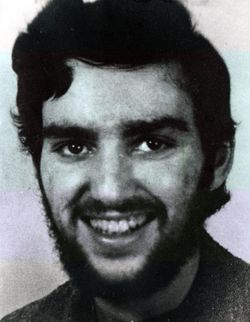
Séamus Turlough McElwaine, a volunteer in the South Fermanagh Brigade of the Provisional Irish Republican Army (PIRA), is killed on April 26, 1986, by the Special Air Service (SAS) while on active duty with Seán Lynch, who is seriously injured in the shooting.

McElwaine is born on April 1, 1960, the oldest of eight children, in the townland of Knockacullion, beside the hamlet and townland of Knockatallon, near the village of Scotstown in the north of County Monaghan. At the age of 14, he takes his first steps towards becoming involved in physical force republicanism when he joins Na Fianna Éireann. Two years later he turns down an opportunity to study in the United States and joins the Irish Republican Army (IRA), stating “no one will ever be able to accuse me of running away.”

McElwaine becomes Officer Commanding of the IRA in County Fermanagh by the age of 19. On February 5, 1980, he kills off-duty Ulster Defence Regiment (UDR) corporal Aubrey Abercrombie as he drives a tractor in the townland of Drumacabranagher, near Florencecourt. Later that year, on September 23, he kills off-duty Royal Ulster Constabulary (RUC) Reserve Constable Ernest Johnston outside his home in Rosslea. He is suspected of involvement in at least ten other killings.

On March 14, 1981, a detachment of the British Army surrounds a farmhouse near Rosslea, containing McElwaine and three other IRA members. Despite being armed with four rifles, including an Armalite, the IRA members surrender and are arrested. While on remand in Crumlin Road Gaol, McElwaine stands in the February 1982 Irish general election as an independent candidate for Cavan–Monaghan and receives 3,974 votes (6.84% of the vote). In May 1982 he is convicted of murdering the RUC and UDR members, with the judge describing him as a “dangerous killer” and recommending he spend at least 30 years in prison.

On September 25, 1983, McElwaine is involved in the Maze Prison escape, the largest break-out of prisoners in Europe since World War II and in British prison history. Thirty-eight republican prisoners, armed with six handguns, hijack a prison meals lorry and smash their way out of the prison. After the escape McElwaine joins an IRA Active Service Unit operating in the area of the border between Counties Monaghan and Fermanagh. The unit targets police and military patrols with gun and bomb attacks, while sleeping rough in barns and outhouses to avoid capture.

McElwaine holds a meeting with Pádraig McKearney and Jim Lynagh, members of the Provisional IRA East Tyrone Brigade, in which they discuss forming a flying column aimed at destroying police stations to create IRA-controlled zones within Northern Ireland. However, this plan never materialises. McKearney and Lynagh are later themselves killed in the Loughgall ambush.

On April 26, 1986, McElwaine and another IRA member, Seán Lynch, are preparing to ambush a British Army patrol near Rosslea, County Fermanagh when they are ambushed themselves by a detachment from the Special Air Service Regiment. Both are wounded but Lynch manages to crawl away. A January 1993 inquest jury returns a verdict that McElwaine had been unlawfully killed. The jury rules the soldiers had opened fire without giving him a chance to surrender, and that he was shot dead five minutes after being wounded. The Director of Public Prosecutions requests a full report on the inquest from the RUC, but no one has been prosecuted for McElwaine’s death.

McElwaine is buried in Scotstown, with his funeral attended by an estimated 3,000 people, including Gerry Adams and Martin McGuinness. McGuinness gives an oration describing McElwaine as “a brave intelligent soldier, a young man who gave up his youth to fight for the freedom of his country” and “an Irish freedom fighter murdered by British terrorists.”

In 1987 McElwaine’s father, Jimmy, a longtime member of Monaghan County Council, became the chairman of the Séamus McElwain Cumann of Republican Sinn Féin.

On April 1, 1990, a monument to McElwaine is erected in Corlat, County Monaghan. The oration is given by a Catholic priest, Father Piaras Ó Dúill, who compares McElwaine to Nelson Mandela, saying they both had the same attitude to oppression, and both refused to denounce principle. The inscription on the monument is a quote from Patrick Pearse: “As long as Ireland is unfree the only honourable attitude for Irishmen and Irishwomen is an attitude of revolt.” A monument to McElwaine and six other republicans is erected in Rosslea in 1998 and unveiled by veteran republican Joe Cahill.


Leave a comment

Death of Helena Molony, Feminist & Labour Activist

helena-moloney

Helena Mary Molony, prominent Irish republican, feminist and labour activist, dies in Dublin on January 28, 1967. She fights in the 1916 Easter Rising and later becomes the second woman president of the Irish Trades Union Congress (ITUC).

Molony is born in Dublin on January 15, 1883, to Michael Molony, a grocer, and Catherine McGrath. Her mother dies early in her life. Her father later remarries, but both became alcoholics, something which influences her years later.

In 1903, inspired by a pro-nationalist speech given by Maud Gonne, Molony joins Inghinidhe na hÉireann and begins a lifelong commitment to the nationalist cause. In 1908 she becomes the editor of the organisation’s monthly newspaper, Bean na hÉireann (Woman of Ireland). The newspaper brings together a nationalist group – Constance Markievicz designs the title page and writes the gardening column, Sydney Gifford writes for the paper and is on its production team and contributors include Eva Gore-Booth, Susan L. Mitchell, and Katharine Tynan, as well as Patrick Pearse, Thomas MacDonagh, George William Russell, Roger Casement, Arthur Griffith and James Stephens.

Molony is central to the school meals activism of the movement. With Maud Gonne, Marie Perolz and others, she organises the supply of daily school meals to children in impoverished areas, and pressures Dublin Corporation and other bodies to provide proper meals to the starved children of Dublin city.

Molony also has a career as an actress and is a member of the Abbey Theatre. However, her primary commitment is to her political work. She is a strong political influence, credited with bringing many into the movement, including Constance Markievicz and Dr. Kathleen Lynn.

As a labour activist, Molony is a close colleague of Markievicz and of James Connolly. In November 1915 Connolly appoints her secretary of the Irish Women Workers’ Union, in succession to Delia Larkin. This union had been formed during the strike at Jacob’s Biscuit Factory that was part of the 1913 Dublin lock-out. She manages the union’s shirt factory in Liberty Hall, founded to give employment to the strikers put out of work and blacklisted after the strike. She is friendly with the family of Thomas MacDonagh and his wife, Muriel, and is the godmother of their daughter Barbara, whose godfather is Patrick Pearse.

Fianna Éireann, the cadet body of the Irish Volunteers, is founded by Constance Markievicz in Molony’s home at 34 Lower Camden Street, Dublin, on August 16, 1909. Markievicz works closely with Molony and Bulmer Hobson in organising the fledgling Fianna. It is during this period of working together in building the Fianna that Molony and Hobson grow close and became romantically linked. However, the relationship does not last.

Molony is a prominent member of Cumann na mBan, the republican women’s paramilitary organisation formed in April 1914 as an auxiliary of the Irish Volunteers. Members of Cumann na mBan train alongside the men of the Irish Volunteers in preparation for the armed rebellion against the English forces in Ireland.

During the 1916 Easter Rising, Molony is one of the Citizen Army soldiers who attacks Dublin Castle. During the defence of City Hall, her commanding officer, Sean Connolly, is killed and she is captured and imprisoned until December 1916.

After the Irish Civil War, Molony becomes the second female president of the Irish Trades Union Congress. She remains active in the republican cause during the 1930s, particularly with the Women’s Prisoner’s Defense League and the People’s Rights Association.

Molony retires from public life in 1946 but continued to work for women’s labour rights. She dies in Dublin on January 28, 1967.


Leave a comment

The Execution of Tom Williams, IRA Volunteer

File source: http://en.wikipedia.org/wiki/File:Vol._Tom_Williams.jpg

Thomas Joseph Williams, a volunteer in C Company, 2nd Battalion of the Belfast Brigade in the Irish Republican Army (IRA), is hanged in the Crumlin Road Gaol on September 2, 1942, for his involvement in the killing of Royal Ulster Constabulary (RUC) police officer Patrick Murphy during the Northern campaign.

Williams is born in the Beechmount area of Belfast on May 12, 1923. He is the third child in a family of six. After the death of his mother, he and his brother go to live with their grandmother at 46 Bombay Street in the Clonard area of Belfast. The Williams family has to leave the small Catholic enclave in the Shore Road area of Belfast after their house is attacked and burned.

As a child, Williams suffers from asthma and as a result is often very ill. He attends St. Gall’s Primary School but leaves at an early age to obtain work, which at the time is difficult due to discrimination. His work therefore consists of labouring and as a delivery boy.

As soon as Williams is old enough, he joins Na Fianna Éireann, the republican Scout Organisation founded by Constance Markievicz in 1909, becoming a member of the Con Colbert slua in the Clonard area. Alfie Hannaway, a friend of Williams, is his OC in Na Fianna, and assigns him to the rank of Quartermaster for the company. He takes his role in Na Fianna very seriously and all who came to know him are struck by his dedication and maturity, even at this early age.

At the age of 17, Williams is old enough to become a volunteer and joins C Company of the IRA in the Clonard area where he lives. Due to his “dedication and his remarkable ability” he is appointed to the role of Adjutant of C Company.

At Easter 1942 the government of Northern Ireland bans all parades to commemorate the anniversary of the Easter Rising. An IRA unit of six men and two women stage a diversionary action against the RUC to allow three parades to take place in West Belfast, but in this clash a RUC officer is killed, and the six IRA men are captured. The RUC officer, Constable Patrick Murphy, a father of nine children, from the Falls Road area of Belfast, is one of a minority of Catholics serving in the RUC.

There is debate over the years about who actually fired the fatal shot. The six IRA members are convicted and sentenced to death for murder under the law of common purpose. Five have their sentences commuted. The sentence of Williams, who acknowledges that he is the leader of the IRA unit involved and takes full responsibility for the actions of his men, is not commuted.

Williams is hanged in Crumlin Road Gaol in Belfast on the morning of September 2, 1942. The executioner is the official English hangman Thomas Pierrepoint, assisted by his nephew Albert Pierrepoint. Afterwards Williams’ body is interred in unhallowed ground in an unmarked grave within the grounds of the prison. His remains are only released in January 2000 after the closure of the prison in 1996 and a lengthy campaign by the National Graves Association, Belfast.

Williams’s funeral is held on January 19, 2000, and is attended by thousands, with burial at Milltown Cemetery. Joe Cahill, Williams’s cell mate, and John Oliver, sentenced to death with Williams but later reprieved, as well as Madge McConville, who had been arrested with Williams, Greta McGlone, Billy McKee, Eddie Keenan and perhaps least known, Nell Morgan, Williams’s girlfriend at the time of his death, are all present. Six senior Sinn Féin members including Gerry Adams are also present in St. Paul’s Church on the Lower Falls Road for the Mass.

Williams is remembered in a ballad Tom Williams. Various recordings have been made, most notably by the Flying Column and Éire Óg, who preamble their version with the story of the campaign to release his body. The now disbanded, Volunteer Tom Williams Republican Flute Band from Glasgow, Scotland is named in his memory as is the Tom Williams Camogie Club in Belfast.

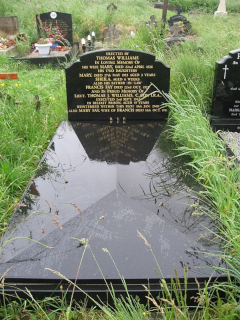
(Pictured: Tom Williams’ headstone at Milltown Cemetery after being reinterred)


Leave a comment

Birth of Patsy O’Hara, Republican Hunger Striker

patsy-o-hara

Patsy O’Hara, Irish republican hunger striker and member of the Irish National Liberation Army (INLA), is born on July 11, 1957, in Bishop Street, Derry, County Londonderry, Northern Ireland.

O’Hara joins Na Fianna Éireann in 1970 and, in 1971, his brother Sean is interned in Long Kesh Prison. In late 1971, at the age of 14, he is shot and wounded by a soldier while manning a barricade. Due to his injuries, he is unable to attend the civil rights march on Bloody Sunday but watches it go by him in the Brandywell Stadium, and the events of the day have a lasting effect on him.

In October 1974, O’Hara is interned in Long Kesh Prison, and upon his release in April 1975 he joins the Irish Republican Socialist Party (IRSP) and INLA. He is arrested in Derry in June 1975 and held on remand for six months. In September 1976, he is arrested again and once more held on remand for four months.

On May 10, 1978, O’Hara is arrested on O’Connell Street in Dublin under section 30 of the Offences Against the State Act and is released eighteen hours later. He returns to Derry in January 1979 and is active in the INLA. On May 14, 1979, he is arrested and is convicted of possessing a hand grenade. He is sentenced to eight years in prison in January 1980.

O’Hara becomes Officer Commanding of the INLA prisoners at the beginning of the first hunger strike in 1980, and he joins the 1981 strike on March 22.

On Thursday, May 21, 1981, at 11:29 PM, Patsy O’Hara dies after 61 days on hunger strike, at the age of 23. In accordance with his wishes, his parents do not get him the medical intervention needed to save his life. His corpse is found to be mysteriously disfigured prior to its departure from prison and before the funeral, including signs of his face being beaten, a broken nose, and cigarette burns on his body.

O’Hara’s mother, Peggy O’Hara, is a candidate in the 2007 Northern Ireland Assembly election in the Foyle constituency. She is not elected, but she is one of the more successful dissident republican candidates opposed to the new policy of the Sinn Féin leadership of working with the Police Service of Northern Ireland (PSNI) and wins 1,789 votes. On the eve of the election, over 330 former republican prisoners write a letter to the Derry Journal endorsing her campaign.


Leave a comment

Birth of Proinsias De Rossa, Labour Party Politician

File source: http://commons.wikimedia.org/wiki/File:Proinsias_De_Rossa.jpg

Proinsias De Rossa, former Irish Labour Party politician, is born in Dublin on May 15, 1940. He serves as Minister for Social Welfare from 1994 to 1997, leader of Democratic Left from 1992 to 1999 and leader of the Workers’ Party from 1988 to 1992. He serves as Member of the European Parliament (MEP) for the Dublin constituency from 1989 to 1992 and 1999 to 2012. He is a Teachta Dála (TD) for the Dublin North-West constituency from 1989 to 2002.

Born as Francis Ross, he is educated at Marlborough Street National School and Dublin Institute of Technology. He joins Fianna Éireann at age 12. Soon after his sixteenth birthday he joins the Irish Republican Army (IRA) and is politically active in Sinn Féin from an early age. During the IRA Border Campaign, he is arrested while training other IRA members in Glencree in May 1956. He serves seven months in Mountjoy Prison and is then interned at the Curragh Camp.

De Rossa takes the Official Sinn Féin side in the 1970 split. In 1977, he contests his first general election for the party. He is successful on his third attempt and is elected at the February 1982 general election as a Sinn Féin TD for the Dublin North-West constituency. He retains his seat until the 2002 general election when he stands down in order to devote more time to his work in the European Parliament.

In 1988, De Rossa succeeds Tomás Mac Giolla as president of the Workers’ Party. The party had been growing steadily in the 1980s and has its best-ever electoral performance in the general and European elections held in 1989. The party wins 7 Dáil seats with 5% of the vote. De Rossa himself is elected to the European Parliament for the Dublin constituency, where he tops the poll, and the party almost succeeds in replacing Fine Gael as the capital’s second-largest party. However, the campaign results in a serious build-up of financial debt by the Workers’ Party, which threatens to greatly inhibit the party’s ability to ensure it will hold on to its gains.

Long-standing tensions within the Workers’ Party come to a head in 1992. Disagreements on policy issues are exacerbated by the desire of the reformers to ditch the democratic centralist nature of the party structures, and to remove any remaining questions about alleged party links with the Official IRA. De Rossa calls a special Ardfheis to debate changes to the constitution. The motion fails to get the required two-thirds majority, and subsequently he leads the majority of the parliamentary group and councillors out of a meeting of the party’s Central Executive Committee the following Saturday, splitting the party.

De Rossa and the other former Workers’ Party members then establish a new political party, provisionally called New Agenda. At its founding conference in March 1992, it is named Democratic Left and De Rossa is elected party leader. Later that year he resigns his European Parliament seat, in favour of Democratic Left general secretary Des Geraghty.

Following the collapse of the Fianna Fáil–Labour Party coalition government in 1994, Fine Gael, Labour and Democratic Left negotiate a government programme for the remaining life of the 27th Dáil, which becomes known as the “Rainbow Coalition.” De Rossa becomes Minister for Social Welfare, initiating Ireland’s first national anti-poverty strategy, a commission on the family, and a commission to examine national pension policy.

The 1997 general election results in the defeat of the outgoing coalition. At this point, Democratic Left, having accumulated significant, merges with the Labour Party. Labour leader Ruairi Quinn becomes leader of the unified party. De Rossa takes up the symbolic post of party president, which he holds until 2002.

In 1999, De Rossa is elected at the European Parliament election for the Dublin constituency. He is re-elected at the 2004 European Parliament election. He does not contest his Dáil seat at the 2002 general election.

As a member of the European Parliament, De Rossa takes a strong pro-integration approach from a distinctly social democratic perspective, as well as a keen interest in foreign policy and social policy. He is a member of the European Convention which produces the July 2003 draft European constitution. He is chair of the European Parliament’s delegation for relations with the Palestinian Legislative Council, a member of the Committee on Employment and Social Affairs and the Conference of Delegation Chairs, and a substitute member of the Committee on Development and the delegation to the Euro-Mediterranean Parliamentary Assembly.

On January 16, 2012, De Rossa announces his decision to resign as an MEP and steps down on February 1.