Discontented with James Chichester-Clark and Brian Faulkner who come to government after O’Neill’s 1969 fall from power, Boal resigns from the UUP in 1971 and joins Ian Paisley in establishing the Democratic Unionist Party (DUP) in order to provide dissident unionist opinion with a viable political alternative. He works as the first chairman and one of the first public representatives of the DUP and continues to sit in Stormont during the years of 1971–1972. He later resumes his practice as a barrister.
While Boal’s interest in federalism diminishes after the 1970s, the federalist Boal scheme of January 1974 is again put forward by liberal protestants such as John Robb as late as 2007. His friendship with Paisley finally breaks when the DUP agrees to enter government with Sinn Féin in 2007. He tells Paisley, who takes the breach very hard, that he had betrayed everything he ever advocated.
Born in Derry in 1677, Farquhar is one of seven children born to William Farquhar, a clergyman of modest means. The author of “Memoirs of Mr. George Farquhar,” a biographical sketch prefixed to certain 18th-century editions of his works, claims that he “discovered a Genius early devoted to the Muses. When he was very young, he gave Specimens of his Poetry; and discovered a Force of Thinking, and Turn of Expression, much beyond his years.”
Farquhar is educated at Foyle College and later enters Trinity College Dublin at age seventeen as a sizar under the patronage of the Bishop of Dromore, who may have been related to Farquhar’s mother. He may have initially intended to follow his father’s profession and become a clergyman but is “unhappy and rebellious as a student” and leaves college after two years to become an actor. His 18th-century biographer claims that the departure is because “his gay and volatile Disposition could not long relish the Gravity and Retirement of a College-life,” but another story of uncertain veracity has him being expelled from Trinity College due to a “profane jest.” The two accounts are not necessarily mutually exclusive.
Farquhar joins a company performing on the Dublin stage, probably through his acquaintance with the well-known actor Robert Wilks. However, he is reportedly not that impressive as an actor. It is said that “his voice was somewhat weak” and that “his movements [were] stiff and ungraceful.” But he is well received by audiences and thought to continue in this career “till something better should offer.” Some of the roles reportedly played by Farquhar are Lennox in William Shakespeare‘s Macbeth, Young Bellair in The Man of Mode by George Etherege, Lord Dion in Philaster by Francis Beaumont and John Fletcher, and Guyomar in The Indian Emperour by John Dryden.
During one of the performances in the Dryden play, an accident on stage puts an end to Farquhar’s acting career. As Guyomar, he is supposed to “kill” Vasquez, one of the Spanish generals in the drama. Forgetting to exchange his sword for a foil before enacting this scene, he severely wounds Price, the actor playing Vasquez. Although Price recovers, Farquhar resolves after this mishap to give up acting for good.
Farquhar then leaves for London, “possibly with a draft of his first play in his portmanteau.” Some writers tie his move to that of his friend Wilks, who had received an offer from the manager of Drury Lane to come to London and join that theatre. Wilks is also credited with encouraging Farquhar’s efforts at writing plays.
Farquhar’s first comedy, Love and a Bottle, premieres in 1698 and is well received by the audience. Called a “licentious piece” by one scholar and cited as proof that Farquhar had “absorbed the stock topics, character-types, and situations of Restoration comedy” by another, the play deals with Roebuck, “An Irish Gentleman of a wild roving Temper” who is “newly come to London.” The general character of the play can be evaluated by considering that in the opening scene, Roebuck tells his friend Lovewell that he has left Ireland due to getting a woman pregnant with twins and to Roebuck’s father trying to force Roebuck to marry the woman; however, Roebuck remarks, “Heav’n was pleas’d to lessen my Affliction, by taking away the She-brat.”
After the favourable reception of Love and a Bottle, Farquhar decides to devote himself to playwriting. He also at this point receives a commission in the regiment of the Earl of Orrery, so his time for the next few years is divided between the vocations of soldier and dramatist. It is also at about this time that he discovers Anne Oldfield, who is reading aloud a scene from The Scornful Lady at her aunt’s tavern. Impressed, he brings her to the notice of Sir John Vanbrugh, and this leads to her theatrical career, during which she is the first performer of major female roles in Farquhar’s last comedies.
In 1700, Farquhar’s The Constant Couple is acted at Drury Lane and proves a great success, helped considerably by his friend Wilks’ portrayal of the character of Sir Henry Wildair. The playwright follows up with a sequel, Sir Harry Wildair, the following year, and in 1702 writes the comedies The Inconstant and The Twin Rivals. Also in 1702, he publishes Love and Business, a collection that includes letters, verse, and A Discourse Upon Comedy.
The next year, Farquhar marries Margaret Pemell, “a widow with three children, ten years his senior,” who reportedly tricks him into the marriage by pretending to have a great fortune. His 18th century biographer records that “though he found himself deceived, his Circumstances embarrassed, and his Family increasing, he never upbraided her for the Cheat but behaved to her with all the Delicacy and Tenderness of an indulgent Husband.” He is engaged in recruiting for the army, due to the War of the Spanish Succession, for the next three years, writing little except The Stage Coach in collaboration with Peter Motteux, an adaptation of a French play. He draws on his recruiting experience for his next comedy, The Recruiting Officer (1706). However, he has to sell his army commission to pay debts, reportedly after the Duke of Ormonde advises him to do so, promising him another but failing to keep his promise.
Early in 1707, Farquhar’s friend Wilks visits him. Farquhar is ill and in distress, and Wilks is said to have “cheered him with a substantial present and urged him to write another comedy.” This comedy, The Beaux’ Stratagem, is given its première on March 8, 1707. It is known from Farquhar’s own statement prefacing the published version of the play that he wrote it during his sickness:
“The reader may find some faults in this play, which my illness prevented the amending of; but there is great amends made in the representation, which cannot be match’d, no more than the friendly and indefatigable care of Mr. Wilks, to whom I chiefly owe the success of the play.”
Best’s parents are Henry Best and Margaret Jane Best (née Irvine). His father is an excise officer working in Paisley, Renfrewshire, Scotland, at the time of his birth.
Best’s education takes place locally at Foyle College, a grammar school in County Londonderry which dates back to 1617, schooling children ages eleven to eighteen. Following his time at Foyle College, he does not attend university, however he is a member of the Irish Literary Society in London. Instead of attending university he works as a banking assistant for a time before an inheritance allows him to travel to Paris, France.
It is in Paris that Best meets, and becomes friends with, John Millington Synge, who recommends the lectures of Marie Henri d’Arbois de Jubainville at the Collège de France. He later goes on to translate and annotate Henri d’Arbois de Jubainville’s work, Le cycle mythologique irlandais et la mythologie celtique into The Irish Mythological Cycle and Celtic Mythology.
Upon returning to Dublin from Paris, Best becomes Honorary Secretary of the School of Irish Learning from its inception in 1903. It is incorporated into the Royal Irish Academy in 1926. He acts as joint editor of the school’s journal Ériu, and continues after the transfer of the journal to the Academy. In 1904, he joins the staff of the National Library of Ireland as an assistant director. He succeeds as Chief Librarian in 1924, and subsequently Library Director, a post he holds until 1940. Throughout his career, he becomes a prolific expert on Celtic studies, and is widely attributed to the survival and success of the subject as it is known today.
Best’s work earns him several accolades. He receives the Leibniz Medal of the Royal Prussian Academy in 1914, an honorary D.Litt. by the National University of Ireland in 1920, and an Honorary D.Litt. by Trinity College Dublin in 1923. In 1936, he is awarded the Medal of the Pontifical Academy of Sciences by Pope Pius XI for his facsimile edition of the Milan codex. He is elected as President of the Royal Irish Academy in 1942. His works, Bibliography of Irish Philology and of Irish Printed Literature (1913) and Bibliography of Irish Philology and Manuscript Literature, 1913-41 (1942), are considered to be some of his most important scholarly outputs.
Upon his retirement from the National Library, Best becomes a Senior Professor at the Dublin Institute for Advanced Studies (DIAS). He retires from the DIAS in 1947 at the age of seventy-five. From 1948 to 1956, he becomes chairman of the Irish Manuscripts Commission, a position previously held by Eoin MacNeill. While in this role, he supervises several facsimiles, including RIA MS 23 N 10, later renamed the Book of Ballycummin in 2019.
Following his retirement from the Irish Manuscripts Commission, Best spends much of the final three years of his life “sorting out his large correspondence,” much of which is currently held in the National Library. He also continues to publish new work throughout his later life. He works on a translation of the Book of Leinster alongside Osborn Bergin and Professor M. A. O’Brien, who takes over after Bergin’s death in 1950. The first fasciculus is published in 1954, the second in 1956 and the third in 1959. His work also appears in multiple academic journals, including Éiriu, and the Zeitschrift für celtische Philologie, Revue Celtique, Études Celtiques, Hermathena, The Dublin Magazine, and The Proceedings of the Royal Irish Academy. He also continues with his work in palaeography, including the last paper he completes on the Book of Armagh in 1958, which appeared in Éiriu vol. xviii. His aid in the writing of others is particularly visible in his surviving correspondence with George Moore.
Best marries his wife, Edith Best (née Oldham), in 1906, he being seven years her junior. She is the older sister of Charles Hubert Oldham, who goes on to become Professor of Economics at University College Dublin. She herself is a musician, a pianist, who had studied at the Royal College of Music in London. The couple has no children, and also claims to have no affiliation with any religion. Edith passes away at their home on March 9, 1950.
Best dies on September 25, 1959, at his home on 57 Upper Leeson Street in Dublin. The Richard I. Best Papers are currently held at the National Archives of Ireland and have been instrumental in the foundation of The Richard Irvine Best Memorial lecture. This discussion and celebration of Best’s work, organised by Richard Irvine Best Memorial Lecture Trust, has taken place since 1969.
During a period in India Kennedy meets Sir Charles James Napier and when he returns to Ireland he sets up agricultural schools designed to improve the economy of the country. One is at Cloghan near Ballybofey, and another at Eglinton near Derry. He becomes a farm manager and marries Anna, daughter of Sir Charles Styles, who owns large estates around Ballybofey, in 1838. Kennedy′s methods of improving the condition of the agricultural classes are indicated by the title of his work, Instruct; Employ; Don’t Hang Them: or Ireland Tranquilized without Soldiers and Enriched without English Capital (1835). He writes several others of similar nature, and as inspector general for Irish education (1837), as secretary to the Devon Commission (1843), and to the Famine Relief Committee (1845), his labours are unceasing in behalf of his native land.
Kennedy returns to the army in 1849 as military secretary to Sir Charles Napier and accompanies him to India, where he builds the military road named after him and extending from Kalka via Shimla to Kunawur and Tibet. He publishes British Home and Colonial Empire (1865–69), as well as a number of technical works relating to his Indian career. He also serves as District Grandmaster of Bengal.
Percy French, one of Ireland’s foremost songwriters and entertainers of his day, dies of pneumonia in Formby, England, on January 24, 1920.
French is born at Cloonyquin House, near Tulsk, County Roscommon. He is educated at Foyle College, Derry, and writes his first successful song, Abdul Abulbul Amir, while studying at Trinity College Dublin in 1877. The song is sold for £5 to an unscrupulous publisher and later becomes hugely popular and is falsely claimed by other authors.
He graduates from Trinity as a civil engineer in 1881 and joins the Board of Works in County Cavan as an “Inspector of Drains.” It is said that he writes his best songs during this period. French is also a prolific painter of landscape watercolours and during this period he considers art to be his true vocation. When he becomes well-known later in his life, his paintings from his time as a civil engineer become fashionable and sought after.
When the Board of Works reduces its staff around 1887, French turns to journalism as the editor of The Jarvey, a weekly comic paper. Upon the failure of the paper, he embarks on a long and successful career as a songwriter and entertainer. It is around this time that he marries Ethel Kathleen Armitage-Moore, second daughter of William Armytage-Moore, brother of Countess of Annesley. Tragically, at the age of 20, she dies during childbirth along with her daughter.
French becomes renowned for composing and singing comic songs and gains considerable distinction with such songs as Phil the Fluther’s Ball, Slattery’s Mounted Foot, and The Mountains of Mourne. One of his most famous songs is Are Ye Right There Michael, a song that ridicules the state of the rail system in rural County Clare. The song causes such embarrassment to the rail company that it lead to an ultimately unsuccessful libel action against French. It is said that he arrives late for the libel hearing and, when questioned by the judge on his lateness, he responds, “Your honour, I travelled by the West Clare Railway,” which results in the case being thrown out.
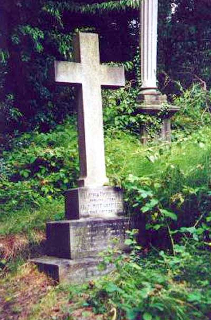
French takes ill while performing in Glasgow and dies of pneumonia on January 24, 1920, at the age of 65 at the home of his cousin, Canon Richardson of Green Lea, in Formby. He is buried in the churchyard of St. Luke’s Parish Church, Formby in Merseyside. A statue of him sitting on a park bench can be found in the town center of Ballyjamesduff in honour of him and his famous song, Come Back Paddy Reilly to Ballyjamesduff.





 seamus dubhghaill