seamus dubhghaill

Promoting Irish Culture and History from Little Rock, Arkansas, USA


Leave a comment

Birth of Kathleen Goodfellow, Writer, Poet & Translator

Kathleen Goodfellow, Irish writer, poet, and translator known for her literary works, nationalist sympathies, and patronage of the arts, is born in Dublin on August 20, 1891.

Born to George and Susan Goodfellow (née Nicholson), Goodfellow is raised in a Quaker family. Her father and uncle are builders who construct a row of houses on Morehampton Road, Donnybrook, where she lives for the rest of her life. She is educated at Alexandra College and graduates with an Arts degree from Trinity College Dublin (TCD).

Goodfellow joins the Rathmines branch of Cumann na mBan, a women’s republican organization, where she learns first aid, drilling, and signaling. There, she meets artist Estella Solomons, with whom she forms a lifelong friendship. Solomons’ studio later becomes a safe house for republicans during the Irish War of Independence.

Under the pseudonym Michael Scot, Goodfellow publishes Three Tales of the Times in 1921, a work about life in Ireland under the Black and Tans. She also writes poetry and translates French poetry, notably the works of 15th-century poet François Villon, publishing these translations in The Dublin Magazine between 1924 and 1928.

Goodfellow is independently wealthy, inheriting property in Ireland and England after her mother’s death in 1932. She is a generous patron of the arts, supporting The Dublin Magazine, a literary journal owned by her friend Seumas O’Sullivan, to which she contributes articles, poems, and reviews. She also supports children’s charities and serves on the Board of Governors of the Royal Hospital in Donnybrook.

Her philanthropy extends to securing funding for The Dublin Magazine (1926–1958) and gifting a bird sanctuary, The Grove, in Donnybrook to An Taisce. Despite her influence, she remains modest and private about her contributions, and her own photographic collection is destroyed after her death.

In 1939, Goodfellow falls while getting off a tram and breaks her leg badly, which leaves her with a limp. She dies at the aged of 89 on May 20, 1980, and is buried with her parents in Mount Jerome Cemetery in Dublin.

A plaque is erected in memory of Goodfellow’s donation at The Grove, a woodland area at the corner of Morehampton Road and Wellington Place, on October 19, 2022. A plaque commemorating Estella Solomons is placed on the opposite gatepost. Goodfellow’s diaries, poems and literary manuscripts are held in the Trinity College Dublin archives.

Goodfellow’s work and life reflect the intersection of Irish literary culture, nationalist history, and cultural patronage in early-to-mid 20th-century Ireland.

Leave a comment

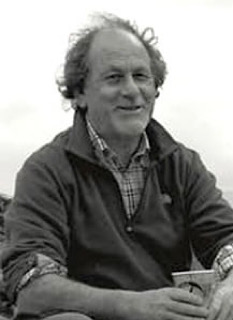
Birth of Liam Ó Muirthile, Poet, Writer & Journalist

Liam Ó Muirthile, prominent Irish language poet and journalist who also writes plays and novels, is born in Cork, County Cork, on November 15, 1950. He originally comes to the fore as a member of a group of poets from University College Cork (UCC) who collaborate in the journal Innti in the late 1960s.

Ó Muirthile is educated at cork, taking a BA in Irish and French at UCC. His Irish is acquired at school and from sojourns in the Gaeltacht of West Kerry. He is a member of a group of poets at UCC in the late 1960s who choose Irish as a creative medium and are closely associated with the modernist poetry journal Innti, founded by fellow poet Michael Davitt. They are influenced by the work of Cork poet Seán Ó Ríordáin, by the musician and composer Seán Ó Riada, and by popular American culture.

Greg Delanty, writing for Poetry International, claims that a fundamental achievement of Ó Muirthile and other members of the Innti group was to adapt the language to a contemporary urban landscape in a way that reflected the counterculture of the sixties.

Ó Muirthile has been described as a poet of immense formal and musical mastery who reads deeply into the classical and neo-classical poetry of the Irish language. He studies French literature as a student and this influences his work. He translates poetry by Guillaume ApollinaireFrançois VillonJacques Prévert and Anne Hébert.

Ó Muirthile’s first collection of poetry is Tine Chnámh (1984). This receives the Irish American Cultural Institute’s literary award and an Oireachtas prize for poetry. He subsequently publishes a number of other collections. In 1996, he receives the Butler Award for his novel Ar Bhruach na Laoi. Several plays by him have been staged. From 1989 to 2003 he writes a weekly column, “An Peann Coitianta,” for The Irish Times. Poems by him have been translated into EnglishGerman, French, ItalianHungarian and Romanian.

Two of Ó Muirthile‘s poems, Meachán Rudaí and Áthas, have been put to music by the Irish/American group The Gloaming and featured on their third studio album The Gloaming 3.

Ó Muirthile dies peacefully in St. Vincent’s Hospital, Dublin, on May 18, 2018. A Requiem Mass is held in Holy Family Church, Kill of the Grange, County Dublin, on May 21. This is followed with prayers and music in St. Gobnait’s Church, Cúil Aodha, County Cork, which precedes his burial in Reilig Ghobnatan, Ballyvourney.