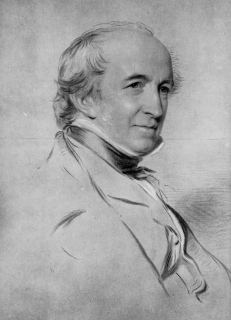
seamus dubhghaill

Promoting Irish Culture and History from Little Rock, Arkansas, USA


Leave a comment

Birth of Robert Stewart, 2nd Marquess of Londonderry

Robert Stewart, 2nd Marquess of Londonderry, KG, GCH, PC, PC (Ire), Anglo-Irish politician and statesman usually known as Lord Castlereagh, derived from the courtesy title Viscount Castlereagh by which he is styled from 1796 to 1821, is born in Dublin on June 18, 1769. As secretary to the Viceroy of Ireland, he works to suppress the Irish Rebellion of 1798 and to secure passage in 1800 of the Irish Act of Union. As the Foreign Secretary of the United Kingdom from 1812, he is central to the management of the coalition that defeats Napoleon and is British plenipotentiary at the Congress of Vienna. In the post-war government of Lord Liverpool, he is seen to support harsh measures against agitation for reform.

Stewart is born in 28 Henry Street, in Dublin’s Northside. He is the second and only surviving child of Robert Stewart (the elder) and his wife Sarah Frances Seymour-Conway. His parents marry in 1766. He has recurring health problems throughout his childhood, and is sent to The Royal School, Armagh, rather than to England for his secondary education. At the encouragement of Charles Pratt, 1st Earl Camden, who takes a great interest in him and treats him as if he is a grandson by blood, he later attends St. John’s College, Cambridge (1786–87), where he applies himself with greater diligence than expected from an aristocrat and excels in his first-year examinations. But he then withdraws, pleading an illness that he admits to Camden is something “which cannot be directly acknowledged before women,” i.e. something sexually transmitted.

Early in his career in Ireland, and following a visit to revolutionary France, Stewart recoils from the democratic politics of his Presbyterian constituents in Ulster. Crossing the floor of the Irish House of Commons in support of the government, he takes a leading role in detaining members of the republican conspiracy, the United Irishmen, his former political associates among them. After the 1798 Rebellion, as Chief Secretary for Ireland, he pushes the Act of Union through the Irish Parliament. But it is without the Catholic Emancipation that both he and British Prime Minister William Pitt believe should have accompanied the creation of a United Kingdom.

From 1805 Stewart serves under Pitt and then the Duke of Portland as Secretary of State for War. In 1809 he is obliged to resign after fighting a duel with the Foreign Secretary, George Canning, in a dispute over the Walcheren Campaign. In 1812 he returns to government serving Lord Liverpool as Foreign Secretary and as Leader of the House of Commons.

Stewart organises and finances the alliance that defeats Napoleon, bringing the powers together at the Treaty of Chaumont in 1814. After Napoleon’s second abdication in 1815, he works with the European courts represented at the Congress of Vienna to frame the territorial, and broadly conservative, continental order that holds until mid-century. He blocks harsh terms against France believing that a treaty based on vengeance and retaliation will upset a necessary balance of powers. France is restored to the frontiers of 1791, and her British-occupied colonies are returned. In 1820 Stewart enunciates a policy of non-intervention, proposing that Britain hold herself aloof from continental affairs.

After 1815, at home, Stewart supports repressive measures that link him in public opinion to the Peterloo Massacre of 1819. Widely reviled in both Ireland and Great Britain, overworked, and personally distressed, he commits suicide on August 12, 1822. He is found in a dressing room seconds after he has cut his own throat using a small knife. He collapses and dies almost instantly.

(Pictured: “Robert Stewart, 2nd Marquess of Londonderry,” oil on canvas by Thomas Lawrence, National Portrait Gallery)


Leave a comment

Birth of Thomas Spring Rice, 1st Baron Monteagle of Brandon

Thomas Spring Rice, 1st Baron Monteagle of Brandon, PC, FRS, FGS, British Whig politician who serves as Chancellor of the Exchequer from 1835 to 1839, is born on February 8, 1790, into a notable Anglo-Irish family which owns large estates in Munster.

Spring Rice is one of the three children of Stephen Edward Rice, of Mount Trenchard House, and Catherine Spring, daughter and heiress of Thomas Spring of Ballycrispin and Castlemaine, County Kerry, a descendant of the Suffolk Spring family. He is a great grandson of Sir Stephen Rice, Chief Baron of the Irish Exchequer and a leading Jacobite Sir Maurice FitzGerald, 14th Knight of Kerry. His grandfather, Edward, converted the family from Roman Catholicism to the Anglican Church of Ireland, to save his estate from passing in gavelkind.

Spring Rice is educated at Trinity College, Cambridge, and later studies law at Lincoln’s Inn, but is not called to the Bar. His family is politically well-connected, both in Ireland and Great Britain, and he is encouraged to stand for Parliament by his father-in-law, Lord Limerick.

Spring Rice first stands for election in Limerick City in 1818 but is defeated by the Tory incumbent, John Vereker, by 300 votes. He wins the seat in 1820 and enters the House of Commons. He positions himself as a moderate unionist reformer who opposes the radical nationalist politics of Daniel O’Connell and becomes known for his expertise on Irish and economic affairs. In 1824 he leads the committee which establishes the Ordnance Survey in Ireland.

Spring Rice’s fluent debating style in the Commons brings him to the attention of leading Whigs and he comes under the patronage of the Marquess of Lansdowne. As a result, he is made Under-Secretary of State for the Home Department under George Canning and Lord Goderich in 1827, with responsibility for Irish affairs. This requires him to accept deferral of Catholic emancipation, a policy which he strongly supports. He then serves as joint Secretary to the Treasury from 1830 to 1834 under Lord Grey. Following the Reform Act 1832, he is elected to represent Cambridge from 1832 to 1839. In June 1834, Grey appoints him Secretary of State for War and the Colonies, with a seat in the cabinet, a post he retains when Lord Melbourne becomes Prime Minister in July. A strong and vocal unionist throughout his life, he leads the Parliamentary opposition to Daniel O’Connell’s 1834 attempt to repeal the Acts of Union 1800. In a six-hour speech in the House of Commons on April 23, 1834, he suggests that Ireland should be renamed “West Britain.” In the Commons, he also champions causes such as the worldwide abolition of slavery and the introduction of state-supported education.

The Whig government falls in November 1834, after which Spring Rice attempts to be elected Speaker of the House of Commons in early 1835. When the Whigs return to power under Melbourne in April 1835, he is made Chancellor of the Exchequer. As Chancellor, he has to deal with crop failures, a depression and rebellion in North America, all of which create large deficits and put considerable strain on the government. His Church Rate Bill of 1837 is quickly abandoned and his attempt to revise the charter of the Bank of Ireland ends in humiliation. Unhappy as Chancellor, he again tries to be elected as Speaker but fails. He is a dogmatic figure, described by Lord Melbourne as “too much given to details and possessed of no broad views.” Upon his departure from office in 1839, he has become a scapegoat for the government’s many problems. That same year he is raised to the peerage as Baron Monteagle of Brandon, in the County of Kerry, a title intended earlier for his ancestor Sir Stephen Rice. He is also Comptroller General of the Exchequer from 1835 to 1865, despite Lord Howick‘s initial opposition to the maintenance of the office. He differs from the government regarding the exchequer control over the treasury, and the abolition of the old exchequer is already determined upon when he dies.

From 1839 Spring Rice largely retires from public life, although he occasionally speaks in the House of Lords on matters generally relating to government finance and Ireland. He vehemently opposes John Russell, 1st Earl Russell‘s policy regarding the Irish famine, giving a speech in the Lords in which he says the government had “degraded our people, and you, English, now shrink from your responsibilities.”

In addition to his political career, Spring Rice is a commissioner of the state paper office, a trustee of the National Gallery and a member of the senate of the University of London and of the Queen’s University of Ireland. Between 1845 and 1847, he is President of the Royal Statistical Society. In addition, he is a Fellow of the Royal Society and a Fellow of the Geological Society of London. In May 1832 he becomes a member of James Mill‘s Political Economy Club.

Spring Rice is well regarded in Limerick, where he is seen as a compassionate landlord and a good politician. An advocate of traditional Whiggism, he strongly believes in ensuring society is protected from conflict between the upper and lower classes. Although a pious Anglican, his support for Catholic emancipation wins him the favour of many Irishmen, most of whom are Roman Catholic. He leads the campaign for better county government in Ireland at a time when many Irish nationalists are indifferent to the cause. During the Great Famine of the 1840s, he responds to the plight of his tenants with benevolence. The ameliorative measures he implements on his estates almost bankrupts the family and only the dowry from his second marriage saves his financial situation. A monument in honour of him still stands in the People’s Park in Limerick.

Even so, Spring Rice’s reputation in Ireland is not entirely favourable. In a book regarding assisted emigration from Ireland, a process in which a landlord pays for their tenants’ passage to the United States or Australia, Moran suggests that Spring Rice was engaged in the practice. In 1838, he is recorded as having “helped” a boat load of his tenants depart for North America, thereby allowing himself the use of their land. However, he is also recorded as being in support of state-assisted emigration across the British Isles, suggesting that his motivation is not necessarily selfish.

Spring Rice dies at the age of 76 on February 7, 1866. Mount Monteagle in Antarctica and Monteagle County in New South Wales are named in his honour.

(Pictured: Thomas Spring Rice, 1st Baron Monteagle of Brandon (1790-1866), contemporary portrait by George Richmond (1809-1896))


Leave a comment

Birth of John Toler, 1st Earl of Norbury

John Toler, 1st Earl of Norbury PC, KC, Irish lawyer, politician and judge known as The Lord Norbury between 1800 and 1827, is born at Beechwood, Nenagh, County Tipperary, on December 3, 1745. A greatly controversial figure in his time, he is nicknamed the “Hanging Judge” and is considered to be one of the most corrupt legal figures in Irish history. He is Chief Justice of the Common Pleas for Ireland between 1800 and 1827.

Toler is the youngest son of Daniel Toler, MP, and Letitia, daughter of Thomas Otway (1665–1724), of Lissenhall, Nenagh, County Tipperary. His elder brother Daniel Toler is also a politician, serving as High Sheriff for Tipperary and also as MP for Tipperary. The Toler family is originally from Norfolk, East Anglia, England, but settles in County Tipperary in the 17th century. He is educated at Kilkenny College and at Trinity College, Dublin.

After graduating from university Toler enters the legal profession and is called to the Irish Bar in 1770. In 1781 he is appointed a King’s Counsel. He is returned to the Parliament of Ireland for Tralee in 1773, a seat he holds until 1780, and later represents Philipstown between 1783 and 1790 and Gorey from 1790 until the Acts of Union 1800. In 1789 he is appointed Solicitor-General for Ireland, which he remains until 1798 when he is promoted to Attorney-General for Ireland and sworn of the Privy Council of Ireland. In his role as Attorney-General he is responsible for the prosecution of those involved in the Irish Rebellion of 1798. According to the Dictionary of National Biography “his indifference to human suffering … disgusted even those who thought the occasion called for firmness on the part of government.” In 1799, he brings forward a law which gives the Lord Lieutenant of Ireland power to suspend the Habeas Corpus Act and to impose martial law.

In 1800 Toler is appointed Chief Justice of the Common Pleas for Ireland and raised to the Peerage of Ireland as Baron Norbury, of Ballycrenode in the County of Tipperary. His appointment to the bench is controversial and John FitzGibbon, 1st Earl of Clare, the Lord Chancellor of Ireland, is said to have quipped, “Make him a bishop, or even an archbishop, but not a chief justice.” His tenure as Chief Justice lasts for 27 years, despite the fact that, the Dictionary of National Biography opines, “his scanty knowledge of the law, his gross partiality, his callousness, and his buffoonery, completely disqualified him for the position. His court was in constant uproar owing to his noisy merriment. He joked even when the life of a human being was hanging in the balance.” This earns him the nickname the “Hanging Judge.” His most famous trial is that of Irish nationalist leader Robert Emmet. He interrupts and abuses Emmet throughout the trial before sentencing him to death. In spite of this, with his strong belief in the Protestant Ascendancy, he is considered to have had great influence over the government in Ireland in the early part of the nineteenth century.

However, Toler’s position eventually becomes untenable even to his strongest supporters, especially with the British government‘s aim of establishing a better relationship with the Catholic majority. His reputation is tainted in 1822, when a letter written to him by William Saurin, the Attorney-General for Ireland, is discovered, in which Saurin urges him to use his influence with the Irish Protestant gentry which makes up local juries against the Catholics. Saurin is dismissed soon afterwards. He finds his greatest adversary in Daniel O’Connell, to whom Toler is “an especial object of abhorrence.” At O’Connell’s instigation the case of Saurin’s letter is brought before the House of Commons of the United Kingdom by Henry Brougham. Toler survives this as well as an 1825 petition drawn up by O’Connell, which calls for his removal on the grounds of him falling asleep during a murder trial and later being unable to present any account of the evidence given. However, it is not until George Canning becomes Prime Minister in 1827 that Toler, then 82, is finally induced to resign. His resignation is sweetened by him being created Viscount Glandine and Earl of Norbury, of Glandine in King’s County, in the Peerage of Ireland. Unlike the barony of Norbury these titles are created with remainder to his second son Hector John. His eldest son Daniel is then considered mentally unsound.

Toler marries Grace, daughter of Hector Graham, in 1778. They have two sons and two daughters. In 1797 Grace is raised to the Peerage of Ireland as Baroness Norwood, of Knockalton in the County of Tipperary, in honour of her husband. She dies in 1822 and is succeeded in the barony by her eldest son, Daniel. Toler survives her by nine years and dies at the age of 85 at his Dublin home at 3 Great Denmark Street on July 27, 1831. He is succeeded in the barony of Norbury by his eldest son Daniel and in the viscountcy and earldom according to the special remainder by his second son, Hector. In 1832 the latter also succeeds his elder brother in the baronies of Norwood and Norbury. He is considered to be the father of the astronomer John Brinkley.

(Pictured: John Toler, 1st Earl of Norbury, coloured etching by unknown artist, early 19th century, National Portrait Gallery, NPG D9303)


Leave a comment

Birth of Arthur Wellesley, 1st Duke of Wellington

Arthur Wellesley, 1st Duke of Wellington, Anglo-Irish soldier and statesman and one of the leading military and political figures of the 19th century, is born at 6 Merrion Street, Dublin, on May 1, 1769.

Wellesley is born to Garret Wesley, 1st Earl of Mornington and Anne Wellesley, Countess of Mornington. Fatherless at an early age and neglected by his mother, he is a reserved, withdrawn child. He fails to shine at Eton College and instead attends private classes in Brussels, followed by a military school in Angers, France. Ironically, he has no desire for a military career. Instead, he wishes to pursue his love of music. Following his mother’s wishes, however, he joins a Highland regiment.

Wellesley fights at Flanders in Belgium in 1794, and directs the campaign in India in 1796, where his elder brother Richard is Governor-General. Knighted for his efforts, he returns to England in 1805.

In 1806 Wellesley is elected Member of Parliament for Rye, East Sussex, and within a year he is appointed Chief Secretary of Ireland under Charles Lennox, 4th Duke of Richmond. He continues with his military career despite his parliamentary duties, fighting campaigns in Portugal and France, and being made commander of the British Army in the Peninsular War. He is given the title Duke of Wellington in 1814 and goes on to command his most celebrated campaigns in the Napoleonic Wars, with final victory at the Battle of Waterloo in 1815. When he returns to Britain he is treated as a hero, formally honoured, and presented with both an estate in Hampshire and a fortune of £400,000.

After the Battle of Waterloo, Wellesley becomes Commander in Chief of the army in occupied France until November 1818. He then returns to England and Parliament, and joins Robert Jenkinson, 2nd Earl of Liverpool’s government in 1819 as Master-General of the Ordnance. He undertakes a number of diplomatic visits overseas, including a trip to Russia.

In 1828, after twice being overlooked in favour of George Canning and F. J. Robinson, 1st Viscount Goderich, Wellesley is finally invited by King George IV to form his own government and set about forming his Cabinet. As Prime Minister, he is very conservative; known for his measures to repress reform, his popularity sinks a little during his time in office. Yet one of his first achievements is overseeing Catholic emancipation in 1829, the granting of almost full civil rights to Catholics in the United Kingdom. Feelings run very high on the issue. George Finch-Hatton, 10th Earl of Winchilsea, an opponent of the bill, claims that by granting freedoms to Catholics Wellesley “treacherously plotted the destruction of the Protestant constitution.”

Wellesley has a much less enlightened position on parliamentary reform. He defends rule by the elite and refuses to expand the political franchise. His fear of mob rule is enhanced by the riots and sabotage that follow rising rural unemployment. His opposition to reform causes his popularity to plummet to such an extent that crowds gathered to throw missiles at his London home.

The government is defeated in the House of Commons and Wellesley resigns on November 16, 1830, to be replaced by Charles Grey, 2nd Earl Grey. Wellesley, however, continues to fight reform in opposition, though he finally consents to the Great Reform Act in 1832.

Two years later Wellesley refuses a second invitation to form a government because he believes membership in the House of Commons has become essential. The king reluctantly approves Robert Peel, who is in Italy at the time. Hence, Wellesley acts as interim leader for three weeks in November and December 1834, taking the responsibilities of Prime Minister and most of the other ministries. In Peel’s first cabinet (1834–1835), he becomes Foreign Secretary, while in the second (1841–1846) he is a Minister without portfolio and Leader of the House of Lords. Upon Peel’s resignation in 1846, he retires from politics.

In 1848 Wellesley organises a military force to protect London against possible Chartist violence at the large meeting at Kennington Common.

Arthur Wellesley dies at Walmer Castle, Kent, England on September 14, 1852, after a series of seizures. After lying in state in London, he is buried in St. Paul’s Cathedral. The Wellington Arch in London’s Hyde Park is named in his honor.

(From: “Arthur Wellesley, 1st Duke of Wellington,” GOV.UK (wwww.gov.uk) | Pictured: “Arthur Wellesley, 1st Duke of Wellington (1769-1852)” by Thomas Lawrence, oil on canvas)


Leave a comment

Birth of Edmond Malone, Shakespearean Scholar

Edmond Malone, Shakespearean scholar and editor of the works of William Shakespeare, is born on October 4, 1741 in Dublin.

Malone is born to Edmond Malone Sr. (1704–1774), MP of the Irish House of Commons and judge of the Court of Common Pleas in Ireland, and Catherine Collier, the niece of Robert Knight, 1st Earl of Catherlough. He has two sisters, Henrietta and Catherine, and an older brother, Richard (later Lord Sunderlin). His father is a successful lawyer and politician in England, but his practice fails and he returns to Ireland. Little is known of his childhood and adolescence except that in 1747 he is sent to Dr. Ford’s preparatory school in Molesworth Street, Dublin. The next record of his education is ten years later, in 1757, when he enters Trinity College, Dublin. He receives his BA degree on February 23, 1762.

After practicing in Ireland as a lawyer and journalist, Malone settles in London in 1777. There he numbers among his literary friends Samuel Johnson, Horace Walpole, and the ballad collector Thomas Percy, the Bishop of Dromore. He also is an associate of the statesmen Edmund Burke and George Canning and of the dean of English painters, Sir Joshua Reynolds, who paints his portrait and whose literary works he collects and publishes (1797). The portrait now resides in the National Portrait Gallery, London.

In the following months Malone sends a steady stream of notes and corrections to George Steevens, who, by then the inheritor, from Samuel Johnson, of the editor’s mantle for the Jacob Tonson edition of Shakespeare’s collected works, is busy preparing a second edition. His main contribution appears in the first volume as “An Attempt to Ascertain the Order in Which the Plays Attributed to Shakspeare Were Written.”

Malone’s three supplemental volumes (1780–1783) to Steevens’ edition of Johnson’s Shakespeare, containing apocryphal plays, textual emendations, and the first critical edition of the sonnets, are landmarks in Shakespearean studies. His “Historical Account of the Rise and Progress of the English Stage, and of the Economy and Usages of the Ancient Theatres in England” (1800) is the first treatise on English drama based on original sources. His own edition of Shakespeare in 11 volumes appears in 1790. A new octavo edition, unfinished at his death, is completed by James Boswell, the son of Samuel Johnson’s biographer, and published in 1821 in 21 volumes. This work, which includes a memoir of Malone, is the standard edition of Shakespeare’s writings for more than a century.

Malone dies at the age of 70 in London on May 25, 1812.

(Pictured: Portrait of Edmond Malone by Joshua Reynolds (1778), National Portrait Gallery)