seamus dubhghaill

Promoting Irish Culture and History from Little Rock, Arkansas, USA


Leave a comment

Birth of Composer Geoffrey Molyneux Palmer

Geoffrey Molyneux Palmer (Irish: Seathrún de Pámar), Irish composer, is born to Protestant Irish parents in Staines, Middlesex, England, on October 8, 1882. His compositions consist mainly of operas and vocal music, among them the first musical settings of poems by James Joyce.

Palmer grows up in South Woodford, an area of East London, where his father, Abram Smythe Palmer, is vicar at Holy Trinity Church. He studies at the University of Oxford where, in 1901, he is the youngest Bachelor of Music (BMus) in college history. Between 1904 and 1907 he studies composition with Charles Villiers Stanford at the Royal College of Music, London. He moves to Ireland in 1910 where he is initially active as a church organist in Dublin suburbs. From his early twenties he suffers from multiple sclerosis, which makes a professional independence increasingly difficult.

Palmer’s music includes at least three operas, a number of choral pieces and many songs. His strong interest in opera comes during a politically difficult period in Irish history. Ireland is struggling for independence, and cultural politicians often regard opera (and classical music in general) as alien to Irish culture. Initially, however, he is successful, his earliest stage work being Finn Varra Maa (a transliteration from the Gaelic meaning “good Finbar”), subtitled The Irish Santa Claus. It survives as a libretto only, published in a drama series by Talbot Press, Dublin, in 1917. Contrary to what the (sub-)title may suggest, the work is a political satire that is much criticised for its nationalismSruth na Maoile (“The Sea of Moyle”) is first performed in July 1923 and restaged by the O’Mara Opera Company in the cultural by-programme of the Tailteann Games in August 1924. Its story is based on the legend of the Children of Lir, while the music relies on numerous references to Irish traditional music, including the song Silent O Moylefrom Thomas Moore‘s Irish Melodies. A third work, Grania Goes (1924), conceived as a light, comic opera, cannot be performed in the years following Irish independence. The manuscript scores of the Sruth na Maoile and Grania Goes are in the National Library of Ireland.

Between 1925 and 1930, Palmer embarks on a cycle of three full-scale operas on the Cuchullain cycle to words by William Mervyn Crofton. In one of them, Deirdre of the Sorrows (1925), Crofton acknowledges Palmer’s “beautiful music.” Despite this, Palmer’s illness prevents the completion of the score, which is later handed over to the composer Staf Gebruers (1902–70), but they are never performed. The manuscript scores of the operas Cuchullain and Deirdre of the Sorrows composed by Gebruers are held by his son Adrian. Unfortunately, despite extensive searching, the score of The Wooing of Emer has not been located, though it is referenced in Gebruers’ own inventories and mentioned as being of three hours duration. In addition, there is a copy of The King’s Song, also composed by Gebruers with lyrics by Crofton and described as from Act 1 of The Black Hag, but whether or not this has any connection with Palmer is unknown.

Palmer is mainly known as the composer of light songs and ballads, often in a folkloristic style, that find publishers in England and are frequently performed. “They show a skilled hand with a talent for vocal harmony but little originality.” His choral music is mainly on a similar miniature scale, an exception being the early cantata The Abbot of Innisfallen (1909). There are some isolated examples of orchestral music performed by the orchestra of Radio Éireann, but the surviving references may not give a full picture of his output.

In the last decades of his life, Palmer was confined to a wheelchair and depends upon the care of his two sisters, who were running Hillcourt, a private girls’ boarding school in Glenageary, near their home in Sandycove (south Dublin). Palmer dies in Dublin on November 29, 1957.

Leave a comment

Birth of Irish Novelist Joseph O’Connor

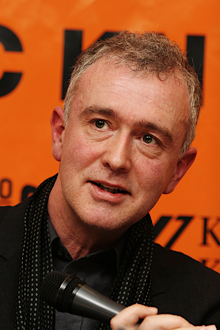
Joseph Victor O’Connor, an Irish novelist, is born in Dublin on September 20, 1963. His 2002 historical novel Star of the Sea is an international number one bestseller. Before success as an author, he is a journalist with the Sunday Tribune newspaper and Esquire. He is a regular contributor to RTÉ and a member of the Irish artists’ association Aosdána.

O’Connor is the eldest of five children and brother of singer Sinéad O’Connor. He is from the Glenageary area of south Dublin. His parents are Sean O’Connor, a structural engineer who later turns barrister, and Marie O’Connor.

Educated at Blackrock College, O’Connor graduates from University College Dublin (UCD)with an MA in Anglo-Irish literature. He does post-graduate work at Oxford University and receives a second MA from Leeds Metropolitan University‘s Northern School of Film and Television in screenwriting. In the late 1980s, he works for the British Nicaragua Solidarity Campaign. His second novel, Desperadoes (1993), draws on his experiences in revolutionary Nicaragua.

O’Connor’s novel Cowboys and Indians (1991) is on the shortlist for the Whitbread Book Award.

On February 10, 1985, O’Connor’s mother is killed in a car accident. The mother of his character Sweeney in The Salesman (1998) dies in the same manner.

In 2002, O’Connor writes the novel Star of the Sea, which The Economist lists as one of the top books of 2003. His 2010 novel Ghost Light is loosely based on the life of the actress Maire O’Neill, born Mary “Molly” Allgood, and her relationship with the Irish playwright John Millington Synge. It is published by Harvill Secker of London in 2010.

O’Connor is a Research Fellow at the New York Public Library and Visiting Professor of Creative Writing/Writer in Residence at Baruch College, the City University of New York.

In 2014, O’Connor is announced as the inaugural Frank McCourt Chair in Creative Writing at the University of Limerick, where he teaches on the MA in Creative Writing.

O’Connor is a regular contributor to Drivetime, an evening news and current affairs programme on RTÉ Radio 1.

O’Connor’s Shadowplay, published in 2019, is shortlisted for the2019 Costa Book Award in the Novel category.

O’Connor is married to television and film writer Anne-Marie Casey. They have two sons. He and his family have lived in London and Dublin, and occasionally reside in New York City.


Leave a comment

Birth of Monica Barnes, Fine Gael Politician

Monica Barnes (née MacDermott), Fine Gael politician who serves as a Teachta Dála (TD) for the Dún Laoghaire constituency from 1982 to 1992 and 1997 to 2002, is born at Carrickmacross, County Monaghan, on February 12, 1936. She is a Senator for the Labour Panel from February 1982 to November 1982 and a Member of the Council of State from 1991 to 1995.

Barnes is educated at the Louis Convent, Carrickmacross, County Monaghan. After the birth of her first child, she later says she suffers from postpartum depression, a condition largely unrecognised in Ireland at the time. She is told by her doctor to “pull yourself together,” and subsequently she sets up a support group for women suffering from the condition and begins to take an interest in equality and women’s rights. She is a co-founder of the Council for the Status of Women (now the National Women’s Council of Ireland) in 1973, a move which prompts her to fully commit herself to politics.

Barnes unsuccessfully contests the 1981 Irish general election in the Dún Laoghaire constituency, and after a further defeat at the February 1982 Irish general election she is elected to the 16th Seanad as a Senator for the Labour Panel.

Barnes is first elected to Dáil Éireann at the November 1982 Irish general election and retains her seat until losing it at the 1992 Irish general election. She is re-elected at the 1997 Irish general election and retires at the 2002 Irish general election.

Barnes also unsuccessfully contests the European Parliament election for the Leinster constituency in 1979 and 1994.

Barnes dies at the age of 82 on May 2, 2018, at Glenageary, Dublin.

Following Barnes’s death, Taoiseach Leo Varadkar says in a statement, “Monica Barnes was an inspiration for so many people in the Fine Gael party and beyond. She was particularly inspirational for women and younger members of our party. Monica gave great service to Fine Gael and to the people of Dún Laoghaire, having been encouraged to enter the political arena by [former Taoiseach] Garret FitzGerald, as a result of her work in the women’s movement.”

President Michael D. Higgins says, “I am very saddened to learn of the death of former TD and Senator, Monica Barnes, who provided exceptional public service to the people of Dún Laoghaire and Ireland over many years. Monica was a proud feminist and championed women’s rights throughout her parliamentary career and beyond. She was a pioneer in the struggle for a space for women’s rights to be discussed.”

Barnes is credited as a feminist and an advocate of women’s rights. She is seen as having made a critical intervention that led to the passing of the Health (Family Planning) (Amendment) Bill 1985, which gives Irish adults the right to purchase non-medical contraceptives without having to get a doctor’s prescription, which passed the Dáil by a narrow margin.


Leave a comment

Birth of John Neill, Church of Ireland Archbishop of Dublin

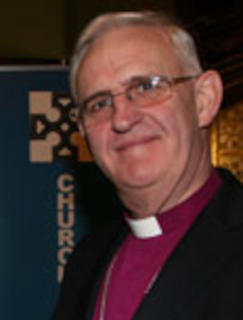
John Robert Winder Neill, the Church of Ireland Archbishop of Dublin until the end of January 2011, is born on December 17, 1945.

The fourth generation of his family to become a clergyman, Neill is educated at the Avoca School, Blackrock, Dublin, and Sandford Park School, Ranelagh, Dublin. He attends Trinity College Dublin studying Hebrew and oriental languages winning a scholarship in 1965 and graduating in 1966. He is awarded an MA degree at Jesus College, Cambridge, in 1972.

Ordained in 1969 for the curacy of St. Paul’s Glenageary, Dublin, Neill is the fourth generation of his family to enter the ministry. He is Bishop of Tuam, Killala and Achonry from 1986 to 1997 before his consecration as Bishop of Cashel and Ossory in 1997.

At the Lambeth Conference in 1988, Neill proposes all the approved resolutions in respect of Women in the Episcopate and is chairman of the Church of Ireland General Synod Committee on Ordination of Women (1988–91). He serves on many central committees of the Church of Ireland covering issues such as liturgical reform, education, communications, ministry, Christian unity and synodical structures.

Neill serves as President of the Council of Churches for Britain and Ireland (1990-94) and as President of Churches Together in Britain and Ireland (1999-2002) and is co-founder and chairman of the Church of Ireland/Methodist Church Joint Theological Working Party.

On August 29, 2002, the Church of Ireland announces that the Right Reverend John Neill, Bishop of Cashel and Ossory, is to succeed the Most Reverend Dr. Walton Empey as Archbishop of Dublin. The announcement is made at a meeting of the Church of Ireland Episcopal Electoral College in Christ Church Cathedral, Dublin.

Neill and his wife Betty have three sons, The Reverend Canon Stephen Neill, Rector of Celbridge, Andrew Neill, a member of Garda Síochána, and Peter Neill, a photographer.


Leave a comment

Birth of Richard Boyd Barrett, People Before Profit-Solidarity Politician

Richard Boyd Barrett, Irish People Before Profit-Solidarity politician, is born in Dublin on February 6, 1967. He has been a Teachta Dála (TD) for the Dún Laoghaire constituency since the 2011 Irish general election.

Boyd Barrett is adopted as a baby and is raised as a Roman Catholic in Glenageary, County Dublin, by his parents, David Boyd Barrett, an accountant, and his wife, Valerie. He attends St. Michael’s College in Dublin. He holds a master’s degree in English literature from University College Dublin (UCD). His birth mother is Sinéad Cusack, with whom he is later reunited in public. Since their reunion, he has had a good relationship with Cusack, her husband Jeremy Irons, and his half-brothers, Sam and Max. In May 2013, he reveals that theatre director Vincent Dowling is his biological father.

Boyd Barrett contests the 2004 Irish local elections for Dún Laoghaire–Rathdown County Council but is not elected. In 2009, he is elected to Dún Laoghaire-Rathdown County Council, winning 22.8% of the vote and topping the poll.

Boyd Barrett stands in the Dún Laoghaire constituency at the 2002 Irish general election for the Socialist Workers Party (SWP) and at the 2007 Irish general election for the People Before Profit. This switch of identification is intended to increase his support from non-socialist voters. He loses to Ciarán Cuffe of the Green Party, by 9,910 votes to 7,890 votes on the 10th count.

Boyd Barrett again contests the Dún Laoghaire constituency at the 2011 Irish general election as part of the United Left Alliance. On the ballot paper, he is named a member of People Before Profit, because the United Left Alliance had not yet been registered as a political party. Following a “nail-biting two days” of counting and recounting votes, he is elected on the 10th count without reaching the quota.

As a TD, Boyd Barrett, supports protests against cuts to Dublin Bus services. In Dáil Éireann, he condemns the 2011 murder of PSNI officer Ronan Kerr as “an utterly brutal action, which leads back down a road which has failed.” Marie O’Halloran in The Irish Times describes his “consistently passionate outrage and opposition to the Government’s handling of the financial and banking crisis.”

Boyd Barrett speaks at the Dublin location of the October 15, 2011 global protests, inspired by the Spanish “Indignants” and the Occupy Wall Street movements. The same month he says Enda Kenny‘s government is engaging in “spin and disingenuity” to cover up its austerity policies, decrying the closure of hospital emergency departments around the country for “health and safety” reasons.

On November 2, 2011, Boyd Barrett leads the United Left Alliance TDs out of the Dáil, in protest against the government’s decision not to hold a debate on the payment of more than €700 million to Anglo Irish Bank bondholders. On December 15, 2011, he helps launch a nationwide campaign against a proposed household charge being brought in as part of the 2012 Irish budget. He is part of an Oireachtas delegation that meets the Bundestag‘s Budgetary and European Affairs committees in Berlin in late January 2012.

On March 10, 2016, at the first sitting of the 32nd Dáil, Boyd Barrett is one of four candidates nominated for the position of Taoiseach, all of whom fail to reach a majority. Ruth Coppinger nominates Boyd Barrett for the role, but the nomination is defeated by 9 votes to 111. As well as the six other AAA–PBP TDs, he also has the support of Séamus Healy of the Workers and Unemployed Action, Tommy Broughan of Independents 4 Change, and Independent TD Catherine Connolly.

At the 2020 Irish general election in February 2020, Boyd Barrett is again re-elected, having topped the poll.


Leave a comment

Death of Mother Mary Martin

Mother Mary of the Incarnation Martin, foundress of the Catholic religious institute of the Medical Missionaries of Mary, dies in Drogheda, County Louth, on January 27, 1975.

Martin is born Marie Helena Martin in Glenageary, County Dublin, on April 24, 1892, the second of twelve children of Thomas Martin and Mary Moore. In 1904, while attending classes for her First Communion, she contracts rheumatic fever, which is to affect her heart permanently. Tragedy hits the family on St. Patrick’s Day 1907, as her father is killed in what is presumed to be an accidental shooting. Later her mother sends her to schools in Scotland, England and Germany, all of which she leaves as quickly as possible.

Upon the outbreak of World War I, Martin joins the Voluntary Aid Detachment, a division of the Red Cross. In October 1915, she is assigned to work in Malta. After learning that her brother had been killed in the campaign of Gallipoli, she returns to Ireland in April 1916. She is called to serve again a month later at Neufchâtel-Hardelot, France, in a field hospital near the front lines of the Battle of the Somme. This assignment lasts until December of that year, followed by a brief stint in Leeds, England. After the war, she is called upon help in nursing victims of the Spanish flu, which had begun to devastate populations around the world.

In 1917 a new curate comes to the parish which Martin attends, the Reverend Thomas Roynane, to whom she turns for guidance. Roynane inspires her with an interest in pursuing missionary work. She goes to England in January 1919 for further medical training. Her mother’s severe illness the following year interrupts her training, however, as she has to return home to care for her.

In April 1920, Roynane arranges for Martin to meet the new bishop, and she volunteers her services as a lay missionary to work in his jurisdiction in southern Nigeria. Agnes Ryan, a local schoolteacher now in her fourth year of medical training, advises her that she wishes to join her in the African mission.

In April 1921, Martin and Ryan leave Ireland for Nigeria. They set sail for Africa from Liverpool on May 25 and arrive in the port of Calabar on June 14. They arrive prepared to provide medical care, only to learn that they are expected to run a school which had been staffed by French Religious Sisters until two years prior. To give the parents and children of the school a sense of continuity, the two women are addressed as “Sisters” by the priests and treated as if they are already members of an established religious institute.

By October, Ryan contracts malaria and develops a heart condition, which require her return to Ireland. Forced to fill in as Acting Headmistress, Martin meets with the bishop in his headquarters at Onitsha and is advised that caution is needed in providing medical care to the people of her mission, so as not to provoke objections by other missionaries in the region. Upon her return to Calabar, she makes a 30-day retreat.

In April 1922 the bishop travels there and holds two weeks of consultations with Martin, Roynane and another missioner, during which the Rule and Constitutions of a new congregation are hammered out, with the understanding that Martin will be the foundress. Martin does not see the bishop again for two years. During this time, she learns that the bishop is working to establish the new congregation in Ireland, a direction she feels will focus the congregation on teaching rather than the medical care. An Irish Sister of Charity, Sister Magdalen Walker, is released from her congregation to help in this new work and arrives in Calabar in October 1923.

The following January Martin is directed by the bishop to return to Ireland to make a canonical novitiate. In March she starts her time of postulancy, prior to admission to the novitiate year. After 18 months, however, upon completion of the novitiate year she leaves the community, as the training provided by the Dominican Sisters has not been oriented toward medical care.

In this formal step of forming the new congregation, Martin encounters the prohibition in the new Code of Canon Law of 1917 of the Catholic Church against members of religious orders practicing medicine. Facing this barrier, she still feels a call to consecrated life and considers following the example of the recently canonized Carmelite nun, Thérèse of Lisieux. In 1927 she applies to the community of that Order in Dublin, but her application is declined, solely on the decision of the prioress who feels that Martin is called to a different path in life. She then goes through a new period of confusion until she is requested to consider again serving the missions. She then forms a small group of women to provide the domestic service for the preparatory school run by the Benedictine monks Glenstal Abbey.

In 1933, following a long period of illness, Martin approaches the new Apostolic Nuncio to Ireland, Archbishop Paschal Robinson. He is supportive of her goals and encourages her continually over the next years. Finally, in February 1936, the Holy See lifts prohibition against Religious Sisters serving as doctors or midwives. She then seeks a diocese which will accept a new congregation, without success. In October of that same year, Antonio Riberi is named Apostolic Delegate in Africa, based in Kenya. He gives his support to having the congregation established in Calabar.

While still negotiating to purchase a house in Ireland as a local base, complicated by the fact that they are not yet a formal congregation, the small community sails for Nigeria at the end of 1936. Upon their arrival Martin suffers a heart attack and is hospitalized at Port Harcourt. It is there that she professes religious vows on April 4, 1937. With that the Medical Missionaries of Mary become established.

Martin’s health is always a source of concern, but she lives until 1975. Today the Medical Missionaries of Mary number some 400 women from 16 different nations, who serve in 14 different countries around the world.


Leave a comment

Death of Playwright & Broadcaster Máiréad Ní Ghráda

Máiréad Ní Ghráda, poet, playwright, and broadcaster, dies on June 13, 1971. She is a tireless promoter of the Irish language and writes many educational texts, some of which are still widely used today including Progress in Irish.

Máiréad is born and raised in Kilmaley, County Clare, a Breac Ghaeltacht, with Irish speaking parents. She wins a university scholarship while attending the local Convent of Mercy School and receives a BA in English, Irish, and French and an MA in Irish from University College Dublin (UCD).

An active member of the Gaelic League and Cumann na mBan, she is imprisoned in 1920 for selling flags on behalf of the Gaelic League on Grafton Street. After a short time teaching in St. Brendan’s private school, Glenageary, County Dublin, Máiréad is employed as organiser and later as secretary to Ernest Blythe in the first Dáil Éireann and during the Irish Civil War. In 1923, she marries Richard Kissane, a civic guard (Garda Síochána). They have two sons and settle in Ranelagh, Dublin.

Beginning in 1926 she spends nine years working for 2RN (now Radió Éireann). She is the first female announcer with 2RN, engaged as Woman’s Organiser with the national radio station for many years, a job which involves programming for women and children. She is the first female announcer in Ireland and Britain, and perhaps in Europe.

Máiréad writes her first play in 1931 while teaching Irish in a domestic science college in Kilmacud. An Uacht, a one act comedy based on Gianni Schicchi by Giacomo Puccini, is produced by Michéal Mac Liammóir at the Gate Theatre (1931). Her writing for theatre includes Mícheál, 1933 (adaptation of Michael, a story by Leo Tolstoy), An Grádh agus an Garda (1937), Giolla an tSoluis (1945), Hansel & Gretel (1951), Lá Buí Bealtaine (1953), Úll glas Oíche Shamhna (1955), Ríte (1955), Súgán Sneachta (1959), Mac Uí Rudaí (1961) and Stailc Ocrais (1962). An Triail (1964) and On Trial (1965) and Breithiúnas (1968), although critical of Irish society at the time, are her greatest successes.

Her enormous contribution to Irish language theatre includes eleven original plays, more than any other playwright in Irish.