seamus dubhghaill

Promoting Irish Culture and History from Little Rock, Arkansas, USA


1 Comment

Final Rally of the Peace People’s Campaign

A rally of twelve to fifteen thousand Peace People from both north and south takes place at the new bridge over the River Boyne at Drogheda, County Louth, on December 5, 1976. In general, the Peace People’s goals are the dissolution of the Irish Republican Army (IRA) and an end to violence in Northern Ireland. The implicit goals of the Peace People rallies are delegitimization of violence, increasing solidarity, and gaining momentum for peace.

In the 1960s, Northern Ireland begins a period of ethno-political conflict called the Troubles. Through a series of social and political injustices, Northern Ireland has become a religiously divided society between historically mainland Protestants and Irish Catholics. Furthermore, the Irish people have become a fragmented body over a range of issues, identities, circumstances and loyalties. The conflict between Protestants and Catholics spills over into violence, marked by riots and targeted killings between the groups beginning in 1968. In addition, paramilitary groups, including the prominent IRA, launch attacks to advance their political agendas.

The violence continues to escalate. On August 10, 1976, Anne Maguire and her children are walking along Finaghy Road North in Belfast. Suddenly, a Ford Cortina slams into them. The car is being driven by Danny Lennon, who moments before had been shot dead by pursuing soldiers.  The mother is the only survivor. The collision kills three of her four children, Joanne (8), John (2), and Andrew (6 months). Joanne and Andrew die instantly while John is injured critically.

The next day, immediately following John’s death, fifty women from the Republican neighborhoods of Andersonstown and Stewartstown protest Republican violence by marching with baby carriages. That evening, Mairead Corrigan, Anne Maguire’s sister, appears on television pleading for an end to the violence. She becomes the first leader of the Peace People to speak publicly.

However, she was not the only one to initiate action. As soon as she hears Mairead speak on the television, Betty Williams begins petitioning door-to-door for an end to sectarian violence. She garners 6,000 signatures of support within a few days.  This support leads directly into the first unofficial action of the Peace People. On 14 August, only four days after the incident, 10,000 women, both Protestant and Catholic, march with banners along Finaghy Road North, the place of the children’s death, to Milltown Cemetery, their burial site.  This march mostly includes women along with a few public figures and men. The marchers proceed in almost utter silence, only broken by short bouts of singing from the nuns in the crowd and verbal and physical attacks by Republican opposition.

The following day, the three who become leaders of the Peace People – Mairead Corrigan, Betty Williams, and journalist Ciaran McKeown – come together for their first official meeting.  During these initial meetings they establish the ideological basis of nonviolence and goals for the campaign.  The essential goals for the movement are the dissolution of the IRA and an end to the violence in Northern Ireland.  The goals of the campaign implicit in their declaration are awareness, solidarity, and momentum. 
Peace People’s declaration:

“We have a simple message to the world from this movement for Peace. We want to live and love and build a just and peaceful society. We want for our children, as we want for ourselves, our lives at home, at work, and at play to be lives of joy and peace. We recognise that to build such a society demands dedication, hard work, and courage. We recognise that there are many problems in our society which are a source of conflict and violence. We recognise that every bullet fired, and every exploding bomb make that work more difficult. We reject the use of the bomb and the bullet and all the techniques of violence. We dedicate ourselves to working with our neighbours, near and far, day in and day out, to build that peaceful society in which the tragedies we have known are a bad memory and a continuing warning.”

During the four-month campaign, Peace People and partners organize and participate in 26 marches in Northern Ireland, Britain, and the Republic of Ireland. In order to organize these marches effectively they establish their main headquarters in Belfast.

After the initial Finaghy Road March, the Peace People, both Protestants and Catholics, rally in Ormeau Park on August 21. The official Declaration of the Peace People is first read at this rally, the largest rally of the entire campaign.   The group numbers over 50,000. The rally even includes some activists from the Republic of Ireland, most notably Judy Hayes from the Glencree Centre of Reconciliation near Dublin. After the rally, she and her colleagues return to the south to organize solidarity demonstrations.     

In the few days before the next march, the organization “Women Together” request Peace People to call off the march, disapproving of Catholics and Protestants participating in a joint march. The Peace People are not dissuaded. The next Saturday, 27,000 people march along Shankill Road, the loyalist/Protestant neighborhood.

In the next three months, Peace People organize and participate in a rally every Saturday; some weeks even have two. Some of the most notable marches include the Derry/Londonderry double-march, the Falls march, the London march, and the Boyne march.

The Saturday following the Shankill march marks the Derry/Londonderry double-march. At this march, Catholics march on one side of the River Foyle and Protestants on the other.  The groups meet on the Craigavon Bridge.  Simultaneously, 50,000 people march in solidarity in Dublin.

On October 23, marchers meet in the Falls, Belfast, in the pouring rain on the same Northumberland street corner where the Shankill March had started.  The Falls Road rally is memorable for the fear and violence that ensues. During this rally Sinn Féin supporters throw stones and bottles at the marchers.  The attackers escalate the violence as the marchers near Falls Park. The marchers are informed by others that more attackers await them at the entrance to the park, inciting fear within the body of the rally.  The leaders decide that this is an important moment of conflict in the rally and that they must push on.  They continue verbally encouraging the marchers through the cloud of bottles, bricks, and stones.

The leaders plan to escalate the campaign momentum for the last two major symbolic rallies in London and Boyne, Drogheda.  A week before the rallies, on November 20-21, they plan a membership drive. Over 105,000 people sign within two days.

The symbolic week of the culminating rallies begins on November 27 at the glamorous London Rally. They begin to march at Hyde Park, cut through Westminster Abbey, and end at Trafalgar Square. Some groups sing “Troops Out,” and others resound with civil rights songs.  

On December 5, Peace People holds its final march of the campaign, along the River Boyne. The Northern and Southern Ireland contingents met at the Peace Bridge. This is an important point in the legacy of the Peace People movement. Now that the enthusiastic rallies are over, the people are responsible for the tedious local work and continuing the momentum and solidarity that the rallies have inspired. The shape of the Peace People is changing.

After the planned marches are over, the rally portion of the campaign fades and the Peace People take a new shape. Corrigan, Williams, and McKeown stop planning marches, but continue to be involved in action that takes the form of conferences and traveling overseas. However, the leaders begin doing more separated work. Ciaran McKeown increases his focus on radical political restructuring.

In 1977, Betty Williams and Mairead Corrigan receive the Nobel Peace Prize.  Issues regarding the use of the monetary award impact the two leaders’ relationships in an irreconcilable manner.  

Due to the fact that many people, unlike McKeown, are less interested in the political side of the equation, the People continue actions along the lines of rallies and social work. Actions continue through the People’s initiative in the form of Peace Committees that each does separate work in local areas.

The Peace People makes a substantial impact.  They help to de-legitimize violence, increase solidarity across sectarian lines, and develop momentum for peace.  Although the violence does not fully subside until 1998 with the negotiation of political change, Ireland sees in 1976 one of its most dramatic decreases in political violence, accompanying the Peace People’s marches and rallies. The campaign dramatizes how tired the people are of bloodshed, their desperate desire for peace, and the clear possibility of alternatives.

(From: “Peace People march against violence in Northern Ireland, 1976” by Hannah Lehmann, Global Nonviolent Action Database, https://nvdatabase.swarthmore.edu/, 2011 | Pictured: The Peace People organisation rally in Drogheda, County Louth, December 5, 1976)


Leave a comment

Death of James Maclaine, “The Gentleman Highwayman”

“Captain” James Maclaine, an Irish man of a respectable Presbyterian family who has a brief but notorious career as a mounted highwayman in London with his accomplice William Plunkett, is hanged at Tyburn Gallows in Middlesex, London, on October 3, 1750.

Maclaine is born in County Monaghan in 1724, second son among two sons and one daughter of the Rev. Lauchlin Maclaine, a Presbyterian minister from Scotland, and Elizabeth Maclaine (née Milling). His brother, Archibald Maclaine, later becomes a minister. Educated locally, he is reckless, headstrong, and dismissive of his parents’ attempts to make him respectable. When his father dies he squanders his inheritance on a dissolute lifestyle and is forced to find work in London.

Maclaine considers joining the Irish Brigade in the French Royal Army, but is told that he would make little progress with them unless he becomes a Roman Catholic, which he is unwilling to do. Instead he enlists in Lord Albemarle‘s horse troops. Again his propensity for fast living costs him dearly, and he suffers a thrashing after he is discovered having an affair with an officer’s wife.

Around 1746 Maclaine marries the daughter of a publican on Oxford Road, London, and with her dowry of five hundred pounds establishes himself as a grocer and chandler in Welbeck Street, Cavendish Square. His wife dies in 1748, leaving one daughter.

Frustrated by his lack of opportunities, Maclaine decides to embark on a life of crime. Together with William Plunkett, an Irish apothecary who had attended to his wife, he decides to find a rich heiress to marry. Pretending to be a high-living gentleman, with Plunkett as his liveried servant, he exhausts all his money dancing and gambling but has little success in his quest. Undaunted, he now turns his hand to robbery and becomes a highwayman. This proves extremely profitable and he takes lodgings at St. James’s Street, where he passes himself off as an Irish squire, with Plunkett again in attendance.

A dashing, handsome man, Maclaine soon becomes a popular figure in London. His most infamous adventure occurs in November 1749 when he robs the famous diarist and politician Horace Walpole at Hyde Park. For the first and only time in his career, he fires a shot, as one of his pistols discharges accidentally, scorching Walpole’s face. He later insists that he would have committed suicide if he had killed his victim. Walpole’s retort is that he would be satisfied if Maclaine just allowed himself to be hanged. Overcome with guilt, Maclaine afterwards sends two letters to Walpole apologising for the injury and suggesting a duel if he wants satisfaction. Walpole wisely ignores the correspondence.

After visiting his brother at The Hague, where he impresses with his extravagant gifts and lifestyle, Maclaine again decides to seek an heiress. Together with Plunkett, who is visiting Ireland, he sets his sights on a woman with an income of £40,000, but the scheme comes to nothing.

Returning to his career as a highwayman, Maclaine commits a number of daring robberies in the summer of 1750. On June 26, 1750, he and Plunkett hold up the coach of the Earl of Eglinton on Hounslow Heath, which proves to be his undoing. One passenger makes public a list of his stolen possessions, and when Maclaine sells some of the items on July 19 the crime is traced to him. On July 27 he is arrested and immediately breaks down in prison, confessing everything. Weeping in his cell, he consistently blames Plunkett, who evaded capture, for leading him astray.

Maclaine’s trial on September 13 attracts enormous interest, especially from women who are enamoured of his romantic image. The jury finds him guilty without leaving the box. Sentenced to death, he attempts to read a plea for mercy but loses his nerve and is only able to speak a few words. After a few minutes of embarrassed silence he cries, “My lord, I can go no further.” His brother denounces him, and from his cell he writes a number of letters expressing regret for his actions.

Maclaine is executed at Tyburn on October 3, 1750, having informed a minister that he went to his execution “without being daunted but rather with eagerness.” A great crowd attends the execution, before whom he maintains a steady composure, and his last words to them are, “O God, forgive my enemies, bless my friends and receive my soul!” A later publication tells that, as the cart is about to be drawn from under him, a witness hears him say, “I must never more behold this beauteous sun! Do thou, O sun of righteousness, shine on my departing soul.” After his death an enduring legend develops around the story of “the gentleman highwayman” and “the ladies’ hero.”

The film Plunkett and Macleane (1999) is an innovative retelling of his story, with Robert Carlyle as Plunkett and Johnny Lee Miller as the dashing highwayman.


Leave a comment

Birth of Arthur Wellesley, 1st Duke of Wellington

Arthur Wellesley, 1st Duke of Wellington, Anglo-Irish soldier and statesman and one of the leading military and political figures of the 19th century, is born at 6 Merrion Street, Dublin, on May 1, 1769.

Wellesley is born to Garret Wesley, 1st Earl of Mornington and Anne Wellesley, Countess of Mornington. Fatherless at an early age and neglected by his mother, he is a reserved, withdrawn child. He fails to shine at Eton College and instead attends private classes in Brussels, followed by a military school in Angers, France. Ironically, he has no desire for a military career. Instead, he wishes to pursue his love of music. Following his mother’s wishes, however, he joins a Highland regiment.

Wellesley fights at Flanders in Belgium in 1794, and directs the campaign in India in 1796, where his elder brother Richard is Governor-General. Knighted for his efforts, he returns to England in 1805.

In 1806 Wellesley is elected Member of Parliament for Rye, East Sussex, and within a year he is appointed Chief Secretary of Ireland under Charles Lennox, 4th Duke of Richmond. He continues with his military career despite his parliamentary duties, fighting campaigns in Portugal and France, and being made commander of the British Army in the Peninsular War. He is given the title Duke of Wellington in 1814 and goes on to command his most celebrated campaigns in the Napoleonic Wars, with final victory at the Battle of Waterloo in 1815. When he returns to Britain he is treated as a hero, formally honoured, and presented with both an estate in Hampshire and a fortune of £400,000.

After the Battle of Waterloo, Wellesley becomes Commander in Chief of the army in occupied France until November 1818. He then returns to England and Parliament, and joins Robert Jenkinson, 2nd Earl of Liverpool’s government in 1819 as Master-General of the Ordnance. He undertakes a number of diplomatic visits overseas, including a trip to Russia.

In 1828, after twice being overlooked in favour of George Canning and F. J. Robinson, 1st Viscount Goderich, Wellesley is finally invited by King George IV to form his own government and set about forming his Cabinet. As Prime Minister, he is very conservative; known for his measures to repress reform, his popularity sinks a little during his time in office. Yet one of his first achievements is overseeing Catholic emancipation in 1829, the granting of almost full civil rights to Catholics in the United Kingdom. Feelings run very high on the issue. George Finch-Hatton, 10th Earl of Winchilsea, an opponent of the bill, claims that by granting freedoms to Catholics Wellesley “treacherously plotted the destruction of the Protestant constitution.”

Wellesley has a much less enlightened position on parliamentary reform. He defends rule by the elite and refuses to expand the political franchise. His fear of mob rule is enhanced by the riots and sabotage that follow rising rural unemployment. His opposition to reform causes his popularity to plummet to such an extent that crowds gathered to throw missiles at his London home.

The government is defeated in the House of Commons and Wellesley resigns on November 16, 1830, to be replaced by Charles Grey, 2nd Earl Grey. Wellesley, however, continues to fight reform in opposition, though he finally consents to the Great Reform Act in 1832.

Two years later Wellesley refuses a second invitation to form a government because he believes membership in the House of Commons has become essential. The king reluctantly approves Robert Peel, who is in Italy at the time. Hence, Wellesley acts as interim leader for three weeks in November and December 1834, taking the responsibilities of Prime Minister and most of the other ministries. In Peel’s first cabinet (1834–1835), he becomes Foreign Secretary, while in the second (1841–1846) he is a Minister without portfolio and Leader of the House of Lords. Upon Peel’s resignation in 1846, he retires from politics.

In 1848 Wellesley organises a military force to protect London against possible Chartist violence at the large meeting at Kennington Common.

Arthur Wellesley dies at Walmer Castle, Kent, England on September 14, 1852, after a series of seizures. After lying in state in London, he is buried in St. Paul’s Cathedral. The Wellington Arch in London’s Hyde Park is named in his honor.

(From: “Arthur Wellesley, 1st Duke of Wellington,” GOV.UK (wwww.gov.uk) | Pictured: “Arthur Wellesley, 1st Duke of Wellington (1769-1852)” by Thomas Lawrence, oil on canvas)


Leave a comment

Terence O’Neill Becomes Fourth Prime Minister of Northern Ireland

File source: http://en.wikipedia.org/wiki/File:Captain_Terence_O%27Neill.jpg

Terence O’Neill becomes the fourth Prime Minister of Northern Ireland on March 25, 1963, following the resignation of Basil Brooke, 1st Viscount Brookeborough. He plays a significant role in the first year of the Troubles, trying unsuccessfully to stem growing sectarian violence.

O’Neill is born on September 10, 1914, at 29 Ennismore Gardens, Hyde Park, London, the son of Captain Arthur O’Neill of Shane’s Castle, Randalstown, the first member of parliament (MP) to be killed in action in World War I five months later. He is educated in the English public school system at West Downs SchoolWinchester and Eton College, spending his summer holidays at the family estate in Ulster. He is later commissioned in the British Army, rising to the rank of captain and serving with the Irish Guards in World War II. He is wounded in 1944 and opts to resettle permanently in Northern Ireland.

In 1946, O’Neill is elected to the Parliament of Northern Ireland, representing the Unionist stronghold of Bannside. He remains in the parliament at Stormont for almost 25 years. He becomes Northern Ireland’s Minister of Home Affairs in April 1956, Minister of Finance in September 1956 and Prime Minister in March 1963.

As Prime Minister, O’Neill introduces economic reforms to stimulate industrial growth and employment, with mixed results. He also tries narrowing the divide between Protestants and Catholics. He does this with important gestures, like visiting Catholic schools and expressing condolences on the death of Pope John XXIII.

O’Neill also seeks better relations with the Republic of Ireland, and in January 1965 invites Taoiseach Seán Lemass to Belfast. Catholics and moderate Unionists welcome this reconciliation but many conservative Loyalists, like Ian Paisley, condemn it as treachery.

When the civil rights movement erupts in the late 1960s, O’Neill offers a package of reforms and concessions, including changes to the allocation of housing. These proposals, however, anger staunch Unionists and fail to satisfy many Republicans.

In December 1969, O’Neill appears on Northern Ireland television and makes an impassioned plea for unity, warning that “Ulster stands at the crossroads.” His government is reelected in February 1969, though O’Neill himself is almost voted out of his own seat.

With the situation worsening, O’Neill is further embarrassed by Loyalist attempts to sabotage Belfast’s water supply. Fast losing the confidence of his own party, he resigns the prime ministership in April 1969. He remains in the parliament until January 1970.

O’Neill is made Baron O’Neill of the Maine and spends the last decade of his life in Britain’s House of Lords. He dies of cancer on June 12, 1990.


Leave a comment

The Hyde Park and Regent’s Park Bombings

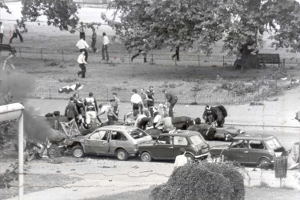
The Hyde Park and Regent’s Park bombings occur on July 20, 1982, in London. Members of the Provisional Irish Republican Army (IRA) detonate two bombs during British military ceremonies in Hyde Park and Regent’s Park, both in Central London.

At 10:40 AM, a nail bomb explodes in the boot of a blue Morris Marina parked on South Carriage Drive in Hyde Park. The bomb comprises 25 lbs. of gelignite and 30 lbs. of nails. It explodes as soldiers of the Household Cavalry, Queen Elizabeth II‘s official bodyguard regiment, are passing. They are taking part in their daily Changing of the Guard procession from their barracks in Knightsbridge to Horse Guards Parade. Three soldiers of the Blues & Royals are killed outright, and another, their standard-bearer, dies from his wounds three days later. The other soldiers in the procession are badly wounded, and a number of civilians were injured. Seven of the regiment’s horses are also killed or had to be euthanised because of their injuries. Explosives experts believe that the Hyde Park bomb is triggered by remote by an IRA member inside the park.

The second attack happens at about 12:55 PM, when a bomb explodes underneath a bandstand in Regent’s Park. Thirty Military bandsmen of the Royal Green Jackets are on the stand performing music from Oliver! to a crowd of 120 people. It is the first in a series of advertised lunchtime concerts there. Six of the bandsmen are killed outright and the rest are wounded. A seventh dies of his wounds on August 1. At least eight civilians are also injured. The bomb had been hidden under the stand some time before and triggered by a timer. Unlike the Hyde Park bomb, it contains no nails and seems to be designed to cause minimal harm to bystanders.

A total of 22 people are detained in hospital as a result of the blasts. The IRA claims responsibility for the attacks by deliberately mirroring Prime Minister Margaret Thatcher‘s words a few months before when Britain entered the Falklands War. They proclaimed that “The Irish people have sovereign and national rights which no task or occupational force can put down.” Reacting to the bombing, Thatcher states, “These callous and cowardly crimes have been committed by evil, brutal men who know nothing of democracy. We shall not rest until they are brought to justice.” The bombings have a negative impact on public support in the United States for the Irish republican cause.

In October 1987, 27-year-old Gilbert “Danny” McNamee, from County Armagh, is sentenced at the Old Bailey to 25 years in prison for his role in the Hyde Park bombing and others, despite his plea that he is not guilty. He is released from HM Prison Maze in late 1998 under the Good Friday Agreement.

On May 19, 2013, 61-year-old John Anthony Downey, from County Donegal, is charged with murder in relation to the Hyde Park bomb and intending to cause an explosion likely to endanger life. He appears at the Old Bailey on January 24, 2014, for the beginning of his trial and enters a not guilty plea. On February 25, 2014, it is revealed that Downey’s trial has collapsed after the presiding judge has ruled upon a letter sent by the Police Service of Northern Ireland to Downey in 2007, assuring him that he would not face criminal charges over the attack. Although the assurance is made in error and the police realise the mistake, it is never withdrawn, and the judge rules that therefore the defendant has been misled and prosecuting him would be an abuse of executive power. Downey is one of 187 IRA suspects who receive secret on-the-run letters guaranteeing them unofficial immunity from prosecution.

A memorial marks the spot of the Hyde Park bombing and the troop honours it daily with an eyes-left and salute with drawn swords. A plaque commemorating the victims of the second attack also stands in Regent’s Park.


Leave a comment

Birth of Shane MacGowan, Lead Singer of The Pogues

shane-macgowan

Shane Patrick Lysaght MacGowan, Anglo-Irish musician and singer, best known as the lead singer and songwriter of Celtic trad punk band The Pogues, is born to Irish parents in Pembury, Kent, England, on December 25, 1957.

MacGowan spends his early childhood in County Tipperary, before his family moves back to England when he is six years old. He lives in many parts of the southeast of England, including Brighton and London.

MacGowan’s father, Maurice, works for a department store. MacGowan’s mother, Therese, is a singer and traditional Irish dancer, and has worked as a model in Dublin. In 1971, after attending Holmewood House School at Langton Green, Tunbridge Wells, MacGowan earns a literature scholarship and is accepted into Westminster School. He is found in possession of drugs and is expelled in his second year.

MacGowan gets his first taste of fame in 1976 at a concert by British punk band The Clash, when his earlobe is damaged by Jane Crockford, later to be a member of Mo-dettes. A photographer snaps a picture of him covered in blood and it makes the papers, with the headline “Cannibalism at Clash Gig.” Shortly after this, he forms his own punk rock band, The Nipple Erectors, later renamed The Nips.

MacGowan draws upon his Irish heritage when founding The Pogues and changes his early “punk” voice for a more authentic sound with tutoring from his extended family. Many of his songs are influenced by Irish nationalism, Irish history, the experiences of the Irish in London and the United States, and London life in general.

Between 1985 and 1987, he co-writes “Fairytale of New York,” which he performs with Kirsty MacColl. In the coming years MacGowan and The Pogues release several albums.

After The Pogues throw MacGowan out for unprofessional behaviour, he forms a new band, Shane MacGowan & The Popes, recording two studio albums, a live album, three tracks on The Popes Outlaw Heaven (2010) and a live DVD, and touring internationally. From December 2003 until May 2005, Shane MacGowan & The Popes tour extensively in the UK, Ireland, and Europe.

The Pogues and MacGowan reform for a sell-out tour in 2001 and each year from 2004 to 2009 for further tours, including headline slots at GuilFest in England and the Azkena Rock Festival in Basque Country. In May 2005, he rejoins The Pogues permanently.

The Pogues’ last performance on British soil occurs on July 5, 2014 at the British Summer Time festival in London’s Hyde Park.

For many years MacGowan suffers from binge drinking and heroin use. In 2001, Sinéad O’Connor reports MacGowan to the police in London for drug possession in what she says is an attempt to discourage him from using heroin. Initially furious, MacGowan later expresses gratitude towards O’Connor and claims that the incident helped him kick his heroin habit.

MacGowan has long been known for having very bad teeth. He loses the last of his natural teeth around 2008. In 2015, he has 28 new dentures on a titanium frame fitted in a nine-hour procedure which is the subject of an hour-long television programme. Dr. Darragh Mulrooney, the dental surgeon who carries out the procedure, comments that MacGowan recorded most of his great works while he still had some teeth: “We’ve effectively re-tuned his instrument and that will be an ongoing process.”

In the summer of 2015, MacGowan falls as he is leaving a Dublin studio, fracturing his pelvis. He is seen in public on crutches by December 2015, and continues to experience difficulty with general mobility.


Leave a comment

Death of Irish Dramatist Seán O’Casey

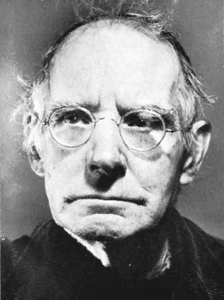
Seán O’Casey, Irish dramatist and memoirist, dies of a heart attack in Torquay, Devon, England on September 18, 1964. A committed socialist, he is the first Irish playwright of note to write about the Dublin working classes.

O’Casey is born John Casey at 85 Upper Dorset Street, in the northern inner-city area of Dublin on March 30, 1880. He is a member of the Church of Ireland, baptised on July 28, 1880 in St. Mary’s parish and confirmed at St. John the Baptist Church in Clontarf. He is an active member of Saint Barnabas until his mid-twenties, when he drifts away from the church.

As O’Casey’s interest in Irish nationalism grows, he joins the Gaelic League in 1906 and learns the Irish language. At this time, he Gaelicises his name from John Casey to Seán Ó Cathasaigh. He also learns to play the Uilleann pipes and is a founder and secretary of the St. Laurence O’Toole Pipe Band. He joins the Irish Republican Brotherhood, and becomes involved in the Irish Transport and General Workers Union, established by James Larkin to represent the interests of the unskilled labourers who inhabit the Dublin tenements. In March 1914 he becomes General Secretary of Larkin’s Irish Citizen Army. On July 24, 1914 he resigns from the ICA, after his proposal to deny dual membership to both the ICA and the Irish Volunteers is rejected.

In 1917, his friend Thomas Ashe dies in a hunger strike and it inspires him to write. He spends the next five years writing plays. O’Casey’s first accepted play, The Shadow of a Gunman, is performed at the Abbey Theatre in 1923. This is the beginning of a relationship that is to be fruitful for both theatre and dramatist but which ends in some bitterness. It is followed by Juno and the Paycock (1924) and The Plough and the Stars (1926).

The Plough and the Stars is not well received by the Abbey audience. There is a riot reported on the fourth night of the show. His depiction of sex and religion offends some of the actors who refused to speak their lines. W.B. Yeats intervenes and describes the audience as “shaming themselves.”

In 1928, Yeats rejects O’Casey’s fourth play, The Silver Tassie, for the Abbey. It is an attack on imperialist wars and the suffering they cause. The Abbey refuses to perform it. The plays O’Casey writes after this include the darkly allegorical and highly controversial Within the Gates (1934), which is set within the gates of a busy city park based on London’s Hyde Park. It closes not long after opening and is another box office failure.

Over the next twenty years, O’Casey writes The Star Turns Red (1940), Purple Dust (1943), Red Roses for Me (1943), Oak Leaves and Lavender (1945), Cock-a-Doodle Dandy (1949), The Bishop’s Bonfire (1955), and The Drums of Father Ned (1958). In 1959, O’Casey gives his blessing to a musical adaptation of Juno and the Paycock by American composer Marc Blitzstein. The musical, retitled Juno, is a commercial failure, closing after only 16 Broadway performances. Also in 1959, George Devine produces Cock-a-Doodle Dandy at the Royal Court Theatre and it is also successful at the Edinburgh International Festival and has a West End run.

On September 18, 1964, at the age of 84, O’Casey dies of a heart attack, in Torquay, Devon. He is cremated at the Golders Green Crematorium.