seamus dubhghaill

Promoting Irish Culture and History from Little Rock, Arkansas, USA


Leave a comment

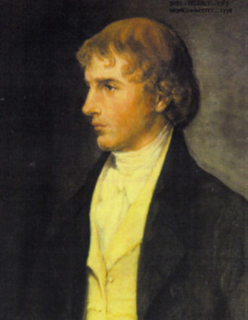
Death of James Orr, Weaver, Radical & Poet

James Orr, weaver, radical, and poet, dies on April 24, 1816.

Orr is the son of James Orr, who farms a few acres and is a linen weaver. His mother’s name is unknown. They live in the small village of Ballycarry, in the parish of Broadisland, County Antrim. He is an only child, born when his parents are middle-aged. They are unwilling to risk sending him to school, so they carefully educate him at home, his father having been very well educated. A near-contemporary source George Pepper (1829), claims that the youngster is something of a prodigy, able to read Spectator essays at the age of six. Later in life, partly thanks to membership of a local reading society, he is remarkably well read. Handloom weavers are reputedly one of the most literate and politically radical groups in the period, and he certainly fits the stereotype. Pepper also claims that William Orr is James Orr’s uncle, and that the younger man lives for three years with William Orr and his family, where his literary talents are nurtured and where he develops an interest in radical politics. Other sources do not support this account, but if there is a relationship it might explain an almost morbid interest in assizes, executions, and gallows, evident in several poems. This also might have been prompted by witnessing William Orr’s trial and execution.

Pepper “heard from good authority” that Orr in 1797 is secretary to the Antrim Association, of which William Orr is president; presumably this means the Society of United Irishmen. He sings a patriotic song called “The Irishman,” one of his most celebrated compositions, at a meeting of that body. The earliest publications traced are poems published pseudonymously (1796–97) in the Northern Star newspaper. This paper, edited by Samuel Neilson, is sympathetic to United Irish views, and it is clear that Orr, like many of his neighbours, is actively involved in the 1798 rebellion. Several poems dealing with the events of June 1798, provide a rare participant’s perspective. He takes part in the skirmish at Donegore, and flees after the defeat at the Battle of Antrim. Local sources record his successful efforts to prevent cruelty and looting by his colleagues. He goes into hiding in an Irish-speaking area, perhaps in the Glens of Antrim or in the Sperrin Mountains. After a short time, he escapes to the United States, but unlike many of his former comrades he finds himself unable to settle there, and very soon returns home to Ballycarry, and thenceforth makes his living as a weaver. In 1800, he seeks to join the militia set up to counter a feared Napoleonic invasion, but the local gentry in command rejects his application because of his United Irish associations.

Orr’s first verses are composed at meetings of a local singing school, where rival versifiers produce impromptu verses for the company to sing to the psalm tunes being practised, and he later writes songs for masonic meetings. He publishes poems in the Belfast newspapers. A few carefully written essays on morality and education, signed “Censor, Ballycarry,” are apparently also his work. A collection of poems is published in 1804, with almost 400 subscribers, and another selection is published in 1817 after his death by his friend Archibald McDowell. Orr had requested that the proceeds should go to help the poor of Ballycarry. His poems are an excellent source of information about the life and concerns of a fairly humble stratum of late eighteenth-century Ulster society.

Many of Orr’s best poems deal with subjects of interest to his community – weaving, social life, and farming – and are written in the Scots language still widely spoken in the area. He expertly uses Scots stanza forms, and joyously participates in the almost competitive composition of verse typical of the Scots tradition. Several of his poems rework themes found in Robert Burns or other earlier writers. His An Irish Cottier’s Death and Burial is derived from a Burns poem, The Cottier’s Saturday Night, but later critics acknowledge that the Orr poem is much more successful. He and his friend Samuel Thomson are pioneers in the use of written Scots in Ulster and are regarded as the two most skillful Scots poets in Ulster. Both are celebrated in their day, and their work in Scots has been rediscovered in the twentieth-century revival of interest in the traditional literature and history of the north of Ireland.

Orr’s verse in standard English is equally competent, even more ambitious and almost as interesting. The best of his work, particularly in Scots, is characterised by pleasing cadences and assured control of tone and technique. His novel and generally impressive experiments with soliloquies, verse epistles, and versified direct speech, in English and Scots, parallel his interest in extending the registers in which he could use the vernacular Scots language. He seems not to have known of William Wordsworth‘s poetry, but, apparently independently and arguably more successfully, produces verse written in “the language really used by men” (Wordsworth, preface to Lyrical Ballads (1798)). As well as fascinating foreshadowings of romanticism, his work more often reveals the influence of the enlightenment and of New Light presbyterianism. He is a member of the congregation of the Rev. John Bankhead, whose theological views are decidedly liberal, tending even towards unitarianism. His poems provide a great deal of evidence on his reading, interests, radical aspirations and convictions; and in them and in the prose essays, the reader encounters a humane and generous personality. Like many other United Irishmen, he is an enthusiastic freemason, and believes that freemasonry and education will help to usher in a peaceful millennium. His poetry reveals humanitarian concerns, not yet common in the period. He opposess slavery and cruelty to animals and children and expresses support for a contemporary popular rising in Haiti. In 1812, he signs a petition in favour of Catholic emancipation.

Orr never marries. His friend McDowell believes that the resulting lack of domestic comforts drives the poet to socialise in taverns, and it is said that local fame and popularity encourages his excessive drinking. He suffers from ill health in later life. A neglected cold in 1815 leads to tuberculosis. He dies on April 24, 1816, and is buried in the old Templecorran graveyard at Ballycarry. Some years later, freemasons erect an impressive monument over the grave.

Orr’s poems are republished by a group of local enthusiasts in 1935. Another selection appears in 1992. A plaque put up by the local district council commemorates “the bard of Ballycarry,” probably the most significant eighteenth-century English-language poet in Ulster.

(From: “Orr, James” by Linde Lunney, Dictionary of Irish Biography, http://www.dib.ie, October 2009)


Leave a comment

Execution of James Dickey, Member of the Society of United Irishmen

James Dickey, a young barrister from a Presbyterian family in Crumlin, County Antrim, in the north of Ireland, is hanged at Corn Market, Belfast, on June 26, 1798. He is active in the Society of United Irishmen and is hanged with Henry Joy McCracken for leading rebels at the Battle of Antrim.

The Society of United Irishmen is formed in October 1791 by leading citizens in Belfast who seek a representative government in Ireland based on principles they believe have been modelled by the American and French Revolutions. At their first meeting they embrace the argument of Theobald Wolfe Tone for a “brotherhood of affection” between Irishmen of all religious persuasions. Tone argues that in Ireland the landed Anglican Ascendancy and the English appointed Irish executive employ division between Protestants and Catholics to balance “the one party by the other, plunder and laugh at the defeat of both.”

Despairing of reform, and in the hope of French assistance, in May 1798, the United Irishmen take up arms against the Dublin government and the British Crown. Beginning in Kildare, the insurrection spreads to other counties in Leinster before finally reaching the Presbyterian districts surrounding Belfast. On June 5, the Antrim societies of United Irishmen meet in Templepatrick where they elect textile manufacturer Henry Joy McCracken as their General. The next day McCracken issues a proclamation calling for the United army of Ulster to rise. The initial plan meets with success, as the towns of Larne, Ballymena, Maghera and Randalstown are taken and the bridge at Toome is damaged to prevent the government rushing reinforcements into Antrim from west of the River Bann.

According to the memoirs of James Burns from Templepatrick, Dickey commands the insurgents at Randalstown and kills Samuel Parker, a “traitor, with his own hands, while standing at his own door, where he went for the purpose.”

McCracken leads a body of about 6,000 rebels in an attack on Antrim town. As promised, Catholic Defenders turn out, but in the march upon the town tensions with the Presbyterian United Irish causes some desertions and a delay in McCracken’s planned assault. McCracken’s men are defeated, and his army melts away. On June 15, Dickey, together with McCracken, James Hope, James Orr and about fifty other rebel survivors from Antrim, arrive at Slemish, near Ballymena. There they set up camp for three weeks before leaving under threat of attack from Colonel Green of the Tay Fencibles.

Dickey is captured by the Sutherland fencibles on Divis, a hill northwest of Belfast. He is court-martialed and hanged at Corn Market, Belfast on June 26, 1798. Famously, before his hanging he refuses to wear a black hood saying to the hangman, “Sir, don’t cover my face!” According to local legend he shouts, “Don’t think gentlemen, I am ashamed to show my face among you, I am dying for my country!” However, a loyalist source hostile to the United Irish cause, Henry Joy of the Belfast News Letter, has Dickey on the scaffold recanting his commitment to the “brotherhood of affection” between Catholic and Protestant. He supposedly warned the assembled that had “the Presbyterians of the north succeeded in their [republican] designs, they would ultimately have had to contend with the Roman Catholics.” It is testament to the sentiment that in the north is to largely expunge the memory of his, and McCracken’s, sacrifice.

Dickey is 22 years old at the time of his execution. His head is placed on a spike outside the Market House on Belfast’s High Street.

Dickey’s brother, John Dickey of Crumlin, is also implicated in the rebellion. He is informed on by neighbours who had noticed that he was making pikes and attending secret meetings of the United Irishmen late at night. Arrested and court-martialed, he refuses the terms granted by the government to the “State Prisoners” in Dublin. He is transported to the West Indies for penal servitude but manages to escape and makes his way to the United States.


Leave a comment

Death of Henry Joy McCracken, Founding Member of the United Irishmen

Henry Joy McCracken, Irish Republican, industrialist and a founding member of the Society of United Irishmen, is hanged from gallows erected in front of the Market House on Belfast‘s High Street on July 17, 1798, on land his grandfather had donated to the city.

McCracken is born in Belfast on August 31, 1767, into two of the city’s most prominent Presbyterian industrial families. He is the son of a shipowner, Captain John McCracken and Ann Joy, daughter of Francis Joy, of French Huguenot descent. The Joy family makes their money in linen manufacture and founds the News Letter. He is the older brother of political activist and social reformer Mary Ann McCracken, with whom he shares an interest in Irish traditional culture.

In 1792, McCracken helps organise the Belfast Harp Festival which gathers aged harpists from around Ireland and helps preserve the Irish airs by having them transcribed by Edward Bunting. Bunting, who lodges in the McCracken’s Rosemary Lane home, is a classically trained musician.

McCracken becomes interested in republican politics from an early age and along with other Protestants forms the Society of United Irishmen in 1795 which quickly makes him a target of the authorities. He regularly travels throughout the country using his business as a cover for organising other United Irish societies but is arrested in October 1796 and imprisoned in Kilmainham Gaol in Dublin. While imprisoned with other leaders of the United Irishmen, he falls seriously ill and is released on bail in December 1797.

Following the outbreak of the Irish Rebellion of 1798 in Leinster in May 1798, the County Antrim organisation meets on June 3 to decide on their response. The meeting ends inconclusively with a vote to wait for French aid being passed by a narrow margin. A new meeting of delegates is held in Templepatrick on June 5 where McCracken is elected general for Antrim, and he quickly begins planning military operations.

McCracken formulates a plan for all small towns in Antrim to be seized after which rebels will converge upon Antrim town on June 7 where the county’s magistrates are to hold a crisis meeting. Although the plan meets initial success and McCracken leads the rebels in the attack on Antrim, the Catholic Defenders group whom he expects assistance from are conspicuous by their absence. The mainly Ulster Scots rebels led by McCracken are defeated by the English forces and his army melts away.

Although McCracken initially escapes with James Hope, James Orr, and James Dickey and is supported in his month-long period of hiding by his sister Mary Ann, a chance encounter with men who recognize him from his cotton business leads to his arrest. He is offered clemency if he testifies against other United Irishmen leaders, but he refuses to turn on his compatriots.

McCracken is court martialed and hanged at Corn Market, Belfast, on land his grandfather had donated to the city, on July 17, 1798. According to historian Guy Beiner, his corpse is spared the indignity of decapitation in order not to provoke renewed agitation. He is buried in the Parish Church of St. George in Belfast, but a few years later the grave is demolished.

McCracken’s remains are believed to have been re-interred by Francis Joseph Bigger in 1909 at Clifton Street Cemetery, Belfast, alongside his sister Mary Ann. His illegitimate daughter Maria, whose mother is speculated to have been Mary Bodell, is raised by her aunt Mary Ann McCracken.


Leave a comment

Birth of Henry Joy McCracken, Irish Republican

henry-joy-mccracken

Henry Joy McCracken, Irish Republican and industrialist, is born in Belfast on August 31, 1767. He is a founding member of the Society of the United Irishmen.

McCracken is born into two of the city’s most prominent Presbyterian industrial families. He was the son of a shipowner, Captain John McCracken and Ann Joy, daughter of Francis Joy, of French Huguenot descent. The Joy family made their money in linen manufacture and founded the Belfast News Letter. He is the older brother of political activist and social reformer Mary Ann McCracken, with whom he shares an interest in Irish traditional culture.

In 1792, McCracken helps organise the Belfast Harp Festival which gathers aged harpists from around Ireland and helps preserve the Irish airs by having them transcribed by Edward Bunting. Bunting, who lodges in the McCracken’s Rosemary Lane home, is a classically trained musician.

McCracken becomes interested in republican politics from an early age and along with other Protestants forms the Society of the United Irishmen in 1795 which quickly makes him a target of the authorities. He regularly travels throughout the country using his business as a cover for organising other United Irish societies but is arrested in October 1796 and imprisoned in Kilmainham Gaol in Dublin. While imprisoned with other leaders of the United Irishmen, he falls seriously ill and is released on bail in December 1797.

Following the outbreak of the Irish Rebellion of 1798 in Leinster in May 1798, the County Antrim organisation meets on 3 June to decide on their response. The meeting ends inconclusively with a vote to wait for French aid being passed by a narrow margin. A new meeting of delegates is held in Templepatrick on June 5 where McCracken is elected general for Antrim, and he quickly begins planning military operations.

McCracken formulates a plan for all small towns in Antrim to be seized after which rebels will converge upon Antrim town on June 7 where the county’s magistrates are to hold a crisis meeting. Although the plan meets initial success and McCracken leads the rebels in the attack on Antrim, the Catholic Defenders group whom he expects assistance from are conspicuous by their absence. The mainly Ulster Scots rebels led by McCracken are defeated by the English forces and his army melts away.

Although McCracken initially escapes with James Hope, James Orr, and James Dickey and is supported in his month-long period of hiding by his sister Mary Ann, a chance encounter with men who recognize him from his cotton business leads to his arrest. He is offered clemency if he testifies against other United Irishmen leaders, but he refuses to turn on his compatriots.

McCracken is court martialed and hanged at Corn Market, Belfast, on land his grandfather had donated to the city, on July 17, 1798. According to historian Guy Beiner, his corpse is spared the indignity of decapitation in order not to provoke renewed agitation. He is buried in the Parish Church of St. George in Belfast, but a few years later the grave is demolished.

McCracken’s remains are believed to have been re-interred by Francis Joseph Bigger in 1909 at Clifton Street Cemetery, Belfast, alongside his sister Mary Ann. His illegitimate daughter Maria, whose mother is speculated to have been Mary Bodell, is raised by her aunt Mary Ann McCracken.