seamus dubhghaill

Promoting Irish Culture and History from Little Rock, Arkansas, USA


Leave a comment

Death of Sir Thomas de Rokeby, Justiciar of Ireland

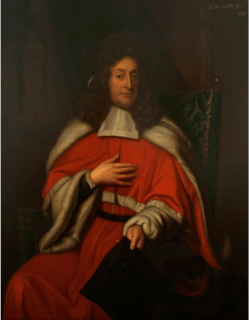
Sir Thomas de Rokeby, a soldier and senior Crown official in fourteenth-century England and Ireland, who serves as Justiciar of Ireland, dies on April 23, 1357. He is appointed to that office to restore law and order to Ireland, and has considerable early success in this task, but he is recalled to England after the military situation deteriorates. He is later re-appointed Justiciar, and returns to Ireland to take up office, but dies soon afterwards.

The Rokebys are a prominent landowning family from Mortham in North Yorkshire. He is probably the son of Thomas de Rokeby, who dies in 1318. His nephew, also named Thomas, the son of his brother Robert, is closely associated with him in his later years and the elder Thomas is often called “l’oncle” to distinguish him from his nephew.

Rokeby first comes to public attention in 1327 when, after his return from prison in Scotland, he receives the thanks of the new King Edward III for being the squire who had first pointed out the approach of the Scots army during the invasion of the previous July. As a reward he is knighted and given lands worth £100 a year. He sees action against the Scots regularly between 1336 and 1342 and has charge of Stirling Castle and Edinburgh Castle while they are held by the English. He is High Sheriff of Yorkshire from 1342 to 1349. He is one of the English commanders at the Battle of Neville’s Cross in 1346, and it is said, “gave the Scots such a draught as they did not care to taste again.” He is then entrusted with bringing King David II of Scotland as a captive to London, and he receives further grants of land as a reward for his good services.

In 1349 Rokeby is appointed Justiciar of Ireland, and given a large armed retinue to accompany him, as it is recognised by the English Crown that “Ireland is not in good plight or good peace.” While there is some surprise at the appointment of an old soldier to such a sensitive political position, the more informed view is that Rokeby is well suited to the task of enforcing justice by military force. He arrives in December and makes a quick circuit of the south of Ireland, mainly to keep watch on the powerful but troublesome magnate Maurice FitzGerald, 1st Earl of Desmond.

Rokeby is praised by his contemporaries for his regard for justice and his zeal in checking extortion by Crown officials. He undertakes a general overhaul of the Irish administration, aimed particularly at the detection and prevention of corruption and the removal of incompetent officials. Arguably he shows excessive zeal in arresting and imprisoning the Lord High Treasurer of Ireland, Robert de Emeldon, a man who enjoys the King’s personal regard. Admittedly the charges against Emeldon are very serious, including rape, robbery and manslaughter, but the King, out of regard for their long friendship and Emeldon’s record of good service to the Crown in Ireland, had already pardoned Emeldon for killing one Ralph de Byrton, a knight, in 1336. Emeldon is once more pardoned and quickly released.

In November 1351 Rokeby holds a Great Council at Kilkenny. It deals partly with the problem of official corruption already mentioned, partly with the problem of defence of the Pale, and partly with the question of intermarriage and other close contacts between the Anglo-Irish and the Old Irish. Otway-Ruthven notes that little of the legislation is new, apart from the application to Ireland of the English Statute of Labourers of 1351, and that much of it is repeated in the better-known Statutes of Kilkenny of 1366.

In 1353 the Clan MacCarthy of Muskerry, the dominant clan in central County Cork, who had until then been loyal to the English Crown, rebels. Rokeby shows considerable skill in crushing the uprising and succeeds in replacing the rebellious head of the clan, Dermot MacCarthy, with his more compliant cousin Cormac. Cormac’s descendants gain great wealth, extensive lands and the title Earl of Clancarty.

This promising state of good order does not last long. A rebellion by the O’Byrne Clan of Wicklow in 1354 is followed by a general uprising headed by the MacMurrough-Kavanagh dynasty. Although Muirchearteach MacMurrough-Kavanagh, the self-styled King of Leinster, is captured and executed, Rokeby suffers several military defeats. He is unable to suppress the O’Byrnes’ rebellion, and other risings take place in Tipperary, Kildare and Ulster.

Rokeby, now an ageing and discouraged man, is recalled in 1355. His replacement, rather surprisingly, is that Earl of Desmond whom it had been one of his main tasks to keep in check. Desmond dies a year later on July 26, 1356. Rokeby is reappointed Justiciar, and returns to Ireland, only to die soon afterwards on April 23, 1357 at Kilkea Castle.

Rokeby is married and his wife is named Juliana, but little else is known of her. They have no children, and his estates pass to his nephew, the younger Thomas.

(Pictured: Portrait of Sir Thomas de Rokeby, painting by Godfried Schalcken)

2 Comments

Murder of Vincent Patrick Fovargue

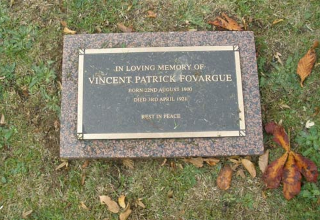
Vincent Patrick Fovargue, a company officer in the Dublin brigade of the Irish Republican Army (IRA) during the Irish War of Independence, is shot dead at a golf course near London, England by the IRA on April 2, 1921. The IRA accuses him of being a British spy.

Fovargue is born on August 22, 1900, at 2 Rutland Place, Clontarf, Dublin, to Robert Fovargue, an engineer/fitter, and Elizabeth (Lillie) Larkin.

An intelligence officer with the 4th Battalion of the Dublin Brigade of the IRA in the Ranelagh area, he is captured by the British Army in Dublin. Under interrogation, he allegedly leaks information that results in the arrest of the other members of his unit a few days later. In return for this information, the Intelligence Corps allegedly allow him to escape during a staged ambush in Dublin’s South Circular Road.

This attempted ruse however does not go unnoticed by Michael Collins‘ informants in the Crown’s security forces. On the night of the escape, Detective Constable David Neligan of the Dublin Metropolitan Police‘s “G” Division is on duty in Dublin Castle when he is passed a telephone message on a police form. The message, issued by the British Military Headquarters, states that a “Sinn Féin” suspect named Fovargue had escaped from three Intelligence Corps officers in a car while en route to prison. It gives a description of his appearance and asks that the British Army be notified in the event of his recapture by the Dublin Metropolitan Police.

Joe Kinsella is the I/O of the 4th Battalion. He is temporarily transferred to take care of munitions under Seán Russell for a few weeks and Fovargue is put in his place. In Kinsella’s statement to the BMH, he writes:

“From the outset I personally did not place a lot of trust in him, because on the morning that he took over from me he appeared to me, to be too inquisitive about the movements of Michael Collins and the GHQ staff generally. He wanted to know where they could be located at any time. He said that he had big things in view, and that it would be to the advantage of the movement generally if he was in a position to get in touch with the principal men with the least possible delay. From his attitude I there and then formed the opinion, rightly or wrongly, that he was inclined to overstep his position. I did not feel too happy about him and I discussed him with Sean Dowling. It transpired that my impressions of this man were correct. I told him of two meeting places of Intelligence staff, one of Company Intelligence held at Rathmines Road and one of Brigade Intelligence held at Saville Place. A short time after giving him this information both these places were raided…I was now confirmed in my suspicions that Fovargue was giving away information. He was later shot in England by the IRA.”

Neligan is not fooled by this either, as he explains:

“Now if they had said that this man (who was completely unknown to both of us) had escaped from one I.O. it might have sounded reasonable enough. But to tell us that an unarmed man had escaped out of a motor-car in the presence of three presumably armed men was imposing a strain on our credulity. Both of us thought this story too good to be true.”

The two men retype the message and pass it to Collins the following day. Meanwhile, Fovargue has been sent to England where he adopts the alias of Richard Staunton. Fovargue has in fact been sent to England by Intelligence Corps Colonel Ormonde Winter to infiltrate the IRA in Britain.

Sean Kavanagh, a Kilkenny IRA man, claims that Fovargue is put in a cell with him in Kilmainham in 1921 in order to try to extract information from him.

On April 2, 1921, a boy walking on the golf links of the Ashford Manor Golf Club in Ashford, Middlesex discovers the body of Fovargue, who had been shot through the chest. Discovered near the corpse is a small piece of paper on which had been scribbled in blue pencil the words “Let spies and traitors beware – IRA.”

In the Neil Jordan film Michael Collins, Fovargue’s assassination is depicted onscreen. Fovargue is tracked down while working out at the golf course, allowed to say the Act of Contrition, and then fatally shot by Liam Tobin (Brendan Gleeson).


Leave a comment

Death of T. P. Gill, Member of the Irish Parliamentary Party

Thomas Patrick (T. P.) Gill, a prominent member of the Irish Parliamentary Party (IPP) in the late 19th and early 20th century, dies on January 19, 1931. He is a Member of Parliament (MP) in the British House of Commons representing the South Louth constituency unopposed from 1885 to 1892. His uncle Peter is an unsuccessful election candidate in 1868 in County Tipperary.

Gill is born on October 25, 1858, in Ballygraigue, Nenagh, County Tipperary, the first of four sons of Robert Gill, a civil engineer who is assistant county surveyor, and Mary (née Clampett), daughter of a woolen merchant, James Clampett of Mount Kennett, County Limerick. He attends St. Joseph’s CBS Nenagh, St. John’s College, Kilkenny, and Trinity College Dublin becoming a journalist, firstly as editor of the Catholic World magazine of New York, and an associate editor of the North American Review (1883–85). He marries Annie Fennell of Dublin in 1882 and they have two sons, Donat and Roy, and a daughter Finola.

Gill is a friend and political ally of Charles Stewart Parnell. After the death of Parnell, he remains with the Irish Parliamentary Party. He works with Horace Plunkett in developing the Irish co-operative movement. He is member and honorary secretary to the 1895 Recess Committee which leads to the formation of both the Department of Agriculture and Technical Instruction (DATI), forerunner of the Irish Department of Agriculture, and the Vocational Education Committee (VEC). His key work for the Recess Committee is research into the state aid to agriculture in France and Denmark. In February 1900, he is appointed Secretary of the new Department of Agriculture and Technical Instruction in Ireland. In 1907, he is appointed Chairman of the Departmental Committee on Irish Forestry. He also serves on a number of governmental committees concerning agriculture and agricultural production. He is President of the Irish Technical Instruction Association from 1925 to 1929.

A raconteur with, in the words of R. A. Anderson, ‘a queer charm about him,’ Gill moves in Dublin literary circles, and in his retirement, he makes a translation of Louis Paul-Dubois’ Le drame irlandais et l’Irlande nouvelle (1927), published posthumously as The Irish struggle and its results (1934).

Gill is an uncle of former Workers’ Party of Ireland president and Dublin West TD Tomás Mac Giolla.

Gill dies in a Dublin hospital on January 19, 1931. His papers are in the National Library of Ireland.

(Pictured: “Portrait of T.P. Gill, Journalist, Secretary, Department of Agriculture and Technical Instruction,” oil on canvas by Sarah Purser, 1898, National Gallery of Ireland)


Leave a comment

Death of Owen Roe O’Neill, Member of the O’Neill Dynasty of Ulster

Owen Roe O’Neill, Gaelic Irish soldier and one of the most famous of the O’Neill dynasty of Ulster, dies on November 6, 1649 at the O’Reilly stronghold of Cloughoughter Castle located on an island in Lough Oughter in County Cavan.

O’Neill is the illegitimate son of Art MacBaron O’Neill, a younger brother of Hugh O’Neill, 2nd Earl of Tyrone, who holds lands in County Armagh. His mother is the daughter of Aodh Conallach O’Raghallaigh, the chief of Breifne O’Reilly in County Cavan.

As a young man O’Neill leaves Ireland, one of the ninety-nine involved in the Flight of the Earls escaping the English conquest of his native Ulster. He grows up in the Spanish Netherlands and spends 40 years serving in the Irish regiment of the Spanish army. He sees most of his combat in the Eighty Years’ War against the Dutch Republic in Flanders, notably at the Siege of Arras, where he commands the Spanish garrison. He also distinguishes himself in the Franco-Spanish War by holding out for 48 days with 2,000 men against a French army of 35,000.

O’Neill is, like many Gaelic Irish officers in the Spanish service, very hostile to the English Protestant presence in Ireland. In 1627, he is involved in petitioning the Spanish monarchy to invade Ireland using the Irish Spanish regiments. He proposes that Ireland be made a republic under Spanish protection to avoid in-fighting between Irish Catholic landed families over which of them would provide a prince or king of Ireland. This plot comes to nothing. However in 1642, He returns to Ireland with 300 veterans to aid the Irish Rebellion of 1641.

The subsequent war, known as the Irish Confederate Wars, is part of the Wars of the Three Kingdoms, civil wars throughout Britain and Ireland. Because of his military experience, O’Neill is recognised on his return to Ireland in July 1642, at Doe Castle in County Donegal, as the leading representative of the O’Neills and head of the Ulster Irish. Sir Phelim O’Neill resigns the northern command of the Irish rebellion in his favour and escorts him from Lough Swilly to Charlemont.

Jealousy between the kinsmen is complicated by differences between O’Neill and the Catholic Confederation which meet at Kilkenny in October 1642. O’Neill professes to be acting in the interest of Charles I, but his real aim is the complete Independence of Ireland as a Roman Catholic country, while the Old English Catholics represented by the council desire to secure religious liberty and an Irish constitution under the crown of England. More concretely, O’Neill wants the Plantation of Ulster overturned and the recovery of the O’Neill clan’s ancestral lands. Moreover, he is unhappy that the majority of Confederate military resources are directed to Thomas Preston‘s Leinster army. Preston is also a Spanish veteran but he and O’Neill have an intense personal dislike of each other.

Although O’Neill is a competent general, he is outnumbered by the Scottish Covenanter army that lands in Ulster in 1642. Following a reverse at Clones, he has to abandon central Ulster and is followed by thousands of refugees, fleeing the retribution of the Scottish soldiers for some atrocities against Protestants in the rebellion of 1641. He does his best to stop the killings of Protestant civilians, for which he receives the gratitude of many Protestant settlers. From 1642–1646 a stalemate exists in Ulster, which he uses to train and discipline his Ulster Army. This poorly supplied force nevertheless gains a very bad reputation for plundering and robbing friendly civilians around its quarters in northern Leinster and southern Ulster.

In 1646 O’Neill, with substantial Gallowglass numbers and additionally furnished with supplies by the Papal Nuncio, Giovanni Battista Rinuccini, attacks the Scottish Covenanter army under Major-General Robert Monro, who had landed in Ireland in April 1642. On June 5, 1646 O’Neill utterly routs Monro at the Battle of Benburb, killing or capturing up to 3,000 Scots. However after being summoned to the south by Rinuccini, he fails to take advantage of the victory, and allows Monro to remain unmolested at Carrickfergus.

In March 1646 a treaty is signed between James Butler, 1st Duke of Ormond and the Catholics, which would have committed the Catholics to sending troops to aid the Royalist cause in the English Civil War. The peace terms however, are rejected by a majority of the Irish Catholic military leaders and the Catholic clergy including the Nuncio, Rinuccini. O’Neill leads his Ulster army, along with Thomas Preston’s Leinster army, in a failed attempt to take Dublin from Ormond. However, the Irish Confederates suffer heavy military defeats the following year at the hands of Parliamentarian forces in Ireland at Dungan’s Hill and Knocknanauss, leading to a moderation of their demands and a new peace deal with the Royalists. This time O’Neill is alone among the Irish generals in rejecting the peace deal and finds himself isolated by the departure of the papal nuncio from Ireland in February 1649.

So alienated is O’Neill by the terms of the peace the Confederates have made with Ormond that he refuses to join the Catholic/Royalist coalition and in 1648 his Ulster army fights with other Irish Catholic armies. He makes overtures for alliance to George Monck, 1st Duke of Albemarle, who is in command of the parliamentarians in the north, to obtain supplies for his forces, and at one stage even tries to make a separate treaty with the English Parliament against the Royalists in Ireland. Failing to obtain any better terms from them, he turns once more to Ormond and the Catholic confederates, with whom he prepares to co-operate more earnestly when Oliver Cromwell‘s arrival in Ireland in August 1649 brings the Catholic party face to face with serious danger.

Before, however, anything is accomplished by this combination, O’Neill dies on November 6, 1649 at the O’Reilly stronghold of Cloughoughter Castle located on an island in Lough Oughter in County Cavan. There is no clear evidence of the cause of death, with one belief being that he was poisoned by a priest, while others think it is more likely that he died from an illness resulting from an old wound. Under cover of night he is reputed to have been brought to the Franciscan abbey in Cavan town for burial. However some local tradition still suggests that it may have been at Trinity abbey located upon an island in Lough Oughter, which may be more likely given the logistics of his removal. His death is a major blow to the Irish of Ulster and is kept secret for some time.

The Catholic nobles and gentry meet in Ulster in March 1650 to appoint a commander to succeed O’Neill, and their choice is Heber MacMahon, Roman Catholic Bishop of Clogher, the chief organiser of the recent Clonmacnoise meeting. O’Neill’s Ulster army is unable to prevent the Cromwellian conquest of Ireland, despite a successful defence of Clonmel by O’Neill’s nephew Hugh Dubh O’Neill and is destroyed at the Battle of Scarrifholis in County Donegal in 1650. Its remnants continue guerrilla warfare until 1653, when they surrender at Cloughoughter Castle in County Cavan. Most of the survivors are transported to serve in the Spanish Army.

In the nineteenth century, O’Neill is celebrated by the Irish nationalist revolutionaries, the Young Irelanders, who see him as an Irish patriot. Thomas Davis writes a famous song about O’Neill, titled “The Lament for Owen Roe” which is popularised in their newspaper, The Nation.

O’Neill has been commemorated in the names of several Gaelic Athletic Association clubs, including Middletown Eoghan Rua Gaelic Athletic Club in County Armagh; CLG Eoghan Rua in Coleraine; St. Oliver Plunketts/Eoghan Ruadh GAA in Dublin, and Brackaville Owen Roes GFC; Owen Roe O’Neill’s GAC in County Tyrone; and the defunct Benburb Eoghan Ruadh GAC.


Leave a comment

Ulster Rebels Take Dundalk During the Irish Rebellion of 1641

Ulster rebels take Dundalk on October 31, 1641 during the Irish Rebellion of 1641. The rebellion is an uprising by Irish Catholics in the Kingdom of Ireland, who want an end to anti-Catholic discrimination, greater Irish self-governance, and to partially or fully reverse the plantations of Ireland. They also want to prevent a possible invasion or takeover by anti-Catholic English Parliamentarians and Scottish Covenanters, who are defying the king, Charles I.

The rebellion begins on October 23, 1641 as an attempted coup d’état by Catholic gentry and military officers, who try to seize control of the English administration in Ireland. However, it develops into a widespread rebellion and ethnic conflict with English and Scottish Protestant settlers, leading to Scottish military intervention. The rebels eventually found the Irish Catholic Confederacy.

The plan to seize Dublin Castle is foiled, but the rebels swiftly capture numerous towns (including Dundalk), forts and fortified houses in the northern province of Ulster. Within days they hold most of the province. Rebel leader Felim O’Neill of Kinard issues a forged proclamation, the Proclamation of Dungannon, claiming he has the king’s blessing to secure Ireland against the king’s opponents. The uprising spreads southward and soon most of Ireland is in rebellion. In November, rebels besiege Drogheda and defeat an English relief force at Julianstown. The following month, many Anglo-Irish Catholic lords join the rebellion. In these first months, especially in Ulster, some Catholic rebels drive out or kill thousands of Protestant settlers (most notably the Portadown massacre), and settlers respond in kind. Reports of rebel massacres outrage Protestants in Britain, and leave a lasting impact on the Ulster Protestant community.

King Charles and the English parliament both seek to quell the rebellion, but parliament does not trust the king with command of any army raised to do so. This is one of the issues that lead to the English Civil War. Charles orders forces to be raised in Ireland, and the English parliament drafts a bill to give itself the power to raise armed forces. Eventually, in April 1642, following negotiations between the English and Scottish parliaments, the Scots send a Covenanter army to Ireland. It swiftly captures most of eastern Ulster, while a Protestant settler army holds northwestern Ulster. Government forces meanwhile recapture much of the Pale, and hold the region around Cork. Most of the rest of Ireland is under rebel control.

In May 1642, Ireland’s Catholic bishops meet at Kilkenny, declare the rebellion to be a just war and take steps to control it. With representatives of the Catholic nobility in attendance, they agree to set up an alternative government known as the Irish Catholic Confederacy and draw up the Confederate Oath of Association. The rebels, now known as Confederates, hold most of Ireland against the Protestant Royalists, Scottish Covenanters and English Parliamentarians. The rebellion is thus the first stage of the Irish Confederate Wars and part of the wider Wars of the Three Kingdoms, which lasts for the next ten years.

(Pictured: Depiction of the massacre of Ulster Protestants during the 1641 rebellion, the LIFE Picture Collection via Getty Images)


Leave a comment

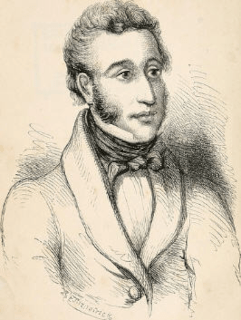
Death of Short Story Writer Michael Banim

Michael Banim, Irish short story writer and brother of John Banim, dies in Booterstown, a coastal suburb of Dublin, on August 30, 1874.

Banim is born in Kilkenny, County Kilkenny on August 5, 1796. He is educated at Dr. Magrath’s Catholic school. He goes on to study for the bar, but a decline in his father’s business causes him to retire from his studies. He returns home to take over the family business, which he returns to prosperity, restoring his parents to comfort, both material and mental. In 1826 he visits John in London, making the acquaintance of many distinguished men of letters. When the struggle for Catholic emancipation is at its height, he works energetically for the cause.

Around 1822, Banim’s brother John broaches his idea for a series of national tales. He assists John in the O’Hara Tales, where he uses the name “Abel O’Hara,” and there is difficulty in allocating their respective contributions. While John is the more experienced writer, Michael provides material based on his social observations. They revise each other’s work. He writes in such hours as he can snatch from business and is the principal author of about thirteen out of the twenty-four works attributed to the brothers, including Crohoore of the Bill-Hook, The Croppy, and Father Connell. He is amiable, unambitious, modest, and generous to a degree. He keeps himself in the background, letting his younger brother have all the honor of their joint production. In 1828 he has the honor of a visit from the Comte de Montalembert, who has read the O’Hara Tales and is then on a tour through Ireland.

When his brother John is struck down by illness, Banim writes and earnestly invites him to return to Kilkenny and share his home. “You speak a great deal too much,” he observes in one letter, “about what you think you owe me. As you are my brother, never allude to it again. My creed on this subject is, that one brother should not want while the other can supply him.” However, John remains in France, seeking medical care in Paris.

Following his brother’s death in 1842, Banim writes Clough Fionn (1852), and The Town of the Cascades (1864). In 1861 he writes prefaces and notes for a reprint of the “O’Hara” novels by the publishing firm William H. Sadlier, Inc. of New York City. Besides their desire to give a true picture of their country, still crippled and prostrate from the effects of the Penal Laws, the Banims are undoubtedly influenced by the Romantic movement, then at its height.

In 1840, Banim marries Catherine O’Dwyer with whom he has two daughters, Mathilde and Mary. Although a man of means, in less than a year he loses almost the whole of his fortune through the failure of a merchant. Poor health follows. He is appointed postmaster of Kilkenny in 1852, a position he holds until illness forces him to retire in 1873. He also serves a term as mayor. His health failing, he goes with his family to reside at Booterstown, near Dublin, where he dies on August 30, 1874. His widow is granted a civil list pension.


Leave a comment

Death of Thomas Butler, 6th Earl of Ossory

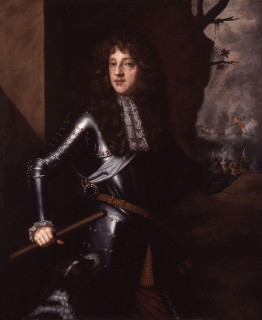
Vice Admiral Thomas Butler, 6th Earl of Ossory, KG, PC, PC (Ire), Irish soldier and politician, dies in London on July 30, 1680.

Thomas is born on July 8, 1634, at Kilkenny Castle, the eldest son and one of ten siblings of James Butler, 1st Duke of Ormond and his wife Elizabeth Preston. His father is then the 12th Earl of Ormond but would be raised to marquess and duke. His family, the Butler dynasty, is Old English and descends from Theobald Walter, who had been appointed Chief Butler of Ireland by Henry II of England in 1177. His mother is a second cousin once removed of his father as she is a granddaughter of Thomas Butler, 10th Earl of Ormond. Her father, however, is Scottish, Richard Preston, 1st Earl of Desmond, a favourite of James I. Both parents are Protestants.

As the eldest living son, he is the heir apparent and is styled with the corresponding courtesy title, which at first is Viscount Thurles but changed to Earl of Ossory when his father becomes marquess in 1642. His early years are spent in Ireland until 1647 when he accompanies his father to England. In 1648 his father renews his support for the royalist cause and he and his son have to flee to France, arriving in Caen in February 1648. Lady Ormond also moves to Caen, where she arrives on June 23, 1648, with his siblings.

Butler is an accomplished athlete and a good scholar. Having come to London in 1652 he is rightly suspected of sympathising with the exiled royalists, and in 1655 is jailed by Oliver Cromwell. After his release about a year later he goes into exile to the Netherlands where Charles II has his exile court at the time.

On November 17, 1659, while in exile, Butler marries Emilia van Nassau, the second daughter of Louis of Nassau, Lord of De Lek and Beverweerd. They have eleven children.

Butler accompanies Charles II back to England in 1660. In 1661 he becomes a member of both the English and the Irish houses of commons, representing in the former Bristol and Dublin University in the latter.

In 1662 Butler is called to the Irish House of Lords under a writ of acceleration as the Earl of Ossory. His father holds the title “5th Earl of Ossory” as one of his subsidiary titles. The acceleration makes Thomas Butler the 6th Earl of Ossory. This is the only substantive title he ever holds, as he predeceases his father and therefore never succeeds to his father’s titles.

Butler holds several military appointments including lieutenant-general of the army in Ireland, created an English peer as Lord Butler in 1666, and Lord of the Bedchamber to Charles II (appointed in 1660 and held until his death).

In 1665 a fortunate accident allows Butler to take part in the Battle of Lowestoft against the Dutch, and in May 1672, being now in command of a ship, he fights against the same enemies in the Battle of Solebay, serving with great distinction on both occasions. While visiting France in 1672 he rejects the liberal offers made by Louis XIV to induce him to enter the service of France and returning to England he adds to his high reputation by his conduct during the Battle of Texel in August 1673. From 1677 until 1679, he serves alongside his father as a Lord of the Admiralty.

Butler is intimate with William II, Prince of Orange, and in 1677 he joins the allied army in the Netherlands, commanding the British contingent and winning great fame at the siege of Mons in 1678. He acts as deputy for his father, who is Lord Lieutenant of Ireland. In 1680 he is appointed governor of English Tangier, but his death prevents him from taking up his new duties.

Butler dies on July 30, 1680, at Arlington House in London. He is buried provisionally in Westminster Abbey on July 31, 1680. The ceremony of burial is performed belatedly on November 13, 1680. Some say his body is later taken to Ireland and reburied in the family vault in St. Canice’s Cathedral, Kilkenny. James, his eldest son, succeeds him as the 7th Earl of Ossory and becomes the 2nd Duke of Ormond in 1688.

(Pictured: “Thomas Butler, Earl of Ossory,” painting by Peter Lely, circa 1678, Source: National Portrait Gallery)


Leave a comment

Death of John O’Reily, Archbishop of Adelaide

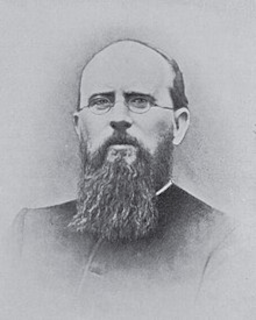
John O’Reily, the first Bishop of Port Augusta and the second Archbishop of Adelaide, dies in Adelaide, Australia on July 6, 1915.

O’Reily is born John O’Reilly on November 19, 1846, in Kilkenny, County Kilkenny, the son of Michael, a military officer, and Anne, née Gallagher. He completes his primary education at the parochial school of St. John’s Parish, and spends six and a half years at St. Kieran’s College. Due to poor health, he decides against pursuing a military career, and in 1864 he enters All Hallows College in Dublin to study for the priesthood. He learns the Irish language and studies mental philosophy, mathematics and ecclesiastical studies, achieving first prize in each of his classes.

After being ordained on June 21, 1869, O’Reily leaves Ireland for Western Australia in October, arriving in January 1870. Having served briefly in Newcastle (present day Toodyay) and Northam, he becomes a parish priest in Fremantle, establishing the West Australian Catholic Record in 1874 and serving as its publisher, editor and printer from 1883.

When the Diocese of Port Augusta is established in 1887, Pope Leo XIII names O’Reily as its first bishop. Concerned about the financial position of the diocese, which had inherited significant debt from the Diocese of Adelaide, he accepts the posting reluctantly. As bishop, he greatly improves the financial position of the new diocese, reducing its debt by half and earning a reputation as a competent administrator.

In 1894, O’Reily is appointed to replace the deceased Christopher Reynolds as Archbishop of Adelaide. The archdiocese he inherits is burdened with substantial debt, again left over from the old Diocese of Adelaide. Through the sale of church assets and a fundraising campaign, he is able to eliminate most of the Archdiocese’s liabilities while still investing in church infrastructure. He also actively participates in public discussions relating to education policy at a time when the role of the state in supporting religious education is topical. He publicly advocates government assistance for religious schools, stating that it is unfair Catholics pay taxes to support state schools, but receive no funding for their own.

In the later years of his life, poor health forces O’Reily to spend less time attending to his episcopal duties, and from 1905, he keeps to himself in his house in Glen Osmond, leading to the local press referring to him as the “Recluse of Glen Osmond.” Increasingly, his episcopal duties are fulfilled by Bishop of Port Augusta John Norton, who has to visit the more remote parts of O’Reily’s see on his behalf.

As he becomes more frail, O’Reily asks certain priests to accompany him when he travels, among whom is the Dominican prior Robert Spence. When O’Reily requests a coadjutor in 1913, he chooses Spence as his first preference for the role. Despite the reluctance of some clergy to the appointment of a religious as Archbishop, Spence is consecrated as coadjutor, with right of succession, in August 1914.

O’Reily dies at his house in Adelaide on July 6, 1915 and is buried under a large Celtic cross at the West Terrace Cemetery in Adelaide. He is highly regarded by many in South Australian society, with Adelaide’s daily newspapers praising his character, administrative ability and positive relations with non-Catholics.


Leave a comment

Birth of Architect Sir Thomas Newenham Deane

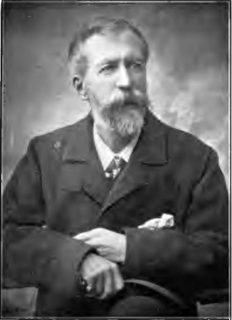
Sir Thomas Newenham Deane, Irish architect, is born in Dundanion, County Cork on June 15, 1828. He is the son of Sir Thomas Deane and Eliza Newenham, and the father of Sir Thomas Manly Deane. His father and son are also architects.

Deane is educated at Trinity College, Dublin, from 1845 to 1849. On January 29, 1850, he marries Henrietta Manly, daughter of Joseph H. Manly of Ferney, County Cork. He and his wife have several children.

Deane joins his father’s architecture practice in 1850, and in 1851, he becomes a partner along with Benjamin Woodward. Their work is primarily a Gothic style influenced by the principles of John Ruskin, and include the museum at Trinity College, Dublin, the Oxford University Museum of Natural History, the Pitt Rivers Museum, the Kildare Street Club in Dublin, and Queen’s College Cork, now University College Cork. He is known as a conservation architect, involved in the restoration, including the incorporation of the original twelfth-century Romanesque chancel, of St. Mary’s Cathedral, Tuam.

Deane’s work on the conservation of St. Canice’s Cathedral, Kilkenny, is less successful and brings him into conflict with the dean and chapter, and in particular with the treasurer James Graves. It is possibly his interest in the restoration of medieval buildings which leads to his appointment as the first Inspector of National Monuments under the Irish Board of Works after the disestablishment of the Church of Ireland brought ruined buildings under their care. His work includes St. Cronan’s Church, Roscrea, County Tipperary.

In contemporary circles, Deane’s partner Woodward is seen as the creative influence behind the business, and their practice suffers after his early death on May 15, 1861. Nevertheless, Deane continues to work with his son, Thomas Manly Deane, designing the National Museum of Ireland and National Library of Ireland in Kildare Street, Dublin. He is knighted in 1890.

On November 8, 1899, Deane dies suddenly in his office on St. Stephen’s Green, into which he had only just moved. He is buried in Deans Grange Cemetery, where his son Thomas designs and erects a cross in his memory.


Leave a comment

Birth of Richard Downey, Archbishop of Liverpool

Richard Downey, English prelate of the Roman Catholic Church, is born in Kilkenny, County Kilkenny on May 5, 1881. He serves as Archbishop of Liverpool from 1928 until his death.

Downey is ordained to the priesthood on May 25, 1907, at St. Joseph Seminary, Up Holland, Skelmersdale, Lancashire. He is Professor of Philosophy at Sacred Heart College, Hammersmith, and then Professor of Dogmatic Theology at St. Joseph’s College, Up Holland, where he is also Vice-Rector. On August 3, 1928, he is appointed Archbishop of Liverpool by Pope Pius XI, succeeding the late Frederick William Keating. He receives his Episcopal consecration on the following September 21 from Cardinal Francis Bourne, with Bishops Robert Dobson and Francis Vaughan serving as co-consecrators.

Downey’s tenure sees the construction and dedication of the crypt of Liverpool Metropolitan Cathedral, built to a design by Sir Edwin Lutyens, although the Cathedral itself is never completed as he had envisaged. A picture of Lutyens proposed cathedral is printed on postcards sold to raise funds.

In 1929, before the actual construction begins, Downey states, “Hitherto all cathedrals have been dedicated to saints. I hope this one will be dedicated to Christ himself with a great figure surmounted on the cathedral, visible for many a mile out at sea.” He also declares that while the Cathedral will not be medieval and Gothic, neither will it be as modern as the works of Jacob Epstein, a statement somewhat at odds with the design that is finally realised after his death.

In 1933, after the urn containing the bones of King Edward V and Richard of Shrewsbury, Duke of York is removed from Westminster Abbey for examination and then returned with an Anglican burial service, Downey says, “It is difficult to see what moral justification there can be for reading a Protestant service over the remains of these Roman Catholic princes, even though it were done on the plea of legal continuity of the present Anglican Church with the pre-Reformation Church of Britain.”

Downey dies in Liverpool at the age of 72 on June 16, 1953, having served as Liverpool’s archbishop for twenty-four years. His remains are interred in a crypt at Liverpool Metropolitan Cathedral, Liverpool.