
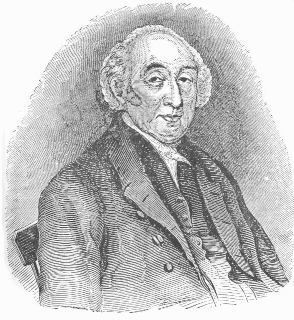
Edward Pennefather, PC, KC, Irish barrister, Law Officer and judge of the Victorian era, who holds office as Lord Chief Justice of Ireland, dies on September 6, 1847, in Dunlavin, County Wicklow.
Pennefather is born at Darling Hill, Knockevan, County Tipperary, on October 22, 1773, the second son of William Pennefather of Knockevan, member of the Irish House of Commons for Cashel, and his wife Ellen Moore, daughter of Edward Moore, Archdeacon of Emly. He goes to school in Clonmel and graduates from Trinity College Dublin. He is called to the Irish Bar in 1795. He lives at Rathsallagh House, near Dunlavin, County Wicklow.
His brother, Richard Pennefather, has a longer and more successful career as a judge. Appointed a Baron of the Court of Exchequer in 1821, he serves for nearly 40 years and is held in universal regard. With the general support of the profession, he remains on the Bench until shortly before his death at eighty-six, by which time he is blind. Edward and Richard, “the two Pennefathers,” are leading practitioners in the Court of Chancery (Ireland).
Pennefather is generally regarded as more gifted, a master of the law of equity and also a skilled libel lawyer. In 1816, he is one of the lead counsels in the celebrated libel case of Bruce v. Grady, which arises from the publication of a scurrilous poem called “The Nosegay,” written by a barrister, Thomas Grady, about his former friend, the notably eccentric banker George Evans Brady of Hermitage House, Castleconnell, County Limerick. The quarrel is said to arise from a dispute over money which Bruce had loaned to Grady. The plaintiff claims £20000 but the jury awards £500.
Pennefather is made a King’s Counsel by 1816. He is very briefly Attorney-General for Ireland in 1830 and is made Third Serjeant-at-law (Ireland) in the same year. He becomes Second Serjeant and First Serjeant in the two following years. He is Solicitor-General for Ireland in the first Peel ministry in 1835 and again in the second Peel ministry in 1841. In the latter year, he is appointed Lord Chief Justice of the Queen’s Bench for Ireland and holds the position until he resigns on health grounds in 1846.
According to Elrington Ball, Pennefather is considered to be one of the greatest Irish advocates of his time, and one with few rivals in any age, but he does not live up to expectations as a judge, due largely to his age and increasing ill-health. As a judge he is remembered mainly for presiding at the trial of Daniel O’Connell in 1843 for sedition, where his alleged bias against the accused damages his reputation: he is accused of acting as prosecutor rather than judge, and his summing-up is described as simply an extra speech for the prosecution. Further damage to his reputation is done by the majority decision of the House of Lords quashing the verdict in the O’Connell case: while many of the errors were the fault of the prosecution, the Law Lords do not spare Pennefather for his conduct of the proceedings, and in particular for his summing-up. The Law Lords comment severely that the course of the trial, if condoned, will make a mockery of trial by jury in Ireland.
The related trial of Sir John Gray descends into farce when the Attorney-General, Sir Thomas Cusack-Smith, who is noted for his hot temper, challenges one of the defence counsel, Gerald Fitzgibbon, to a duel, for having allegedly accused him of improper motives. Pennefather tells the Attorney-General severely that a man in his position has no excuse for such conduct, whereupon the Attorney-General agrees to let the matter drop. The public notes with interest that Fitzgibbon’s wife and daughter are present in Court during the contretemps.
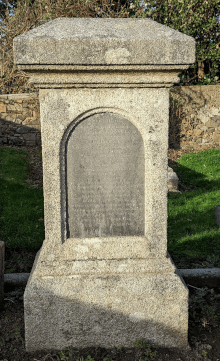
Following a long illness, Pennefather dies in Dunlavin, County Wicklow, on September 6, 1847. He is buried in Christ Church Cemetery, Delgany, County Wicklow.
In January 1806, Pennefather marries Susannah Darby, eldest daughter of John Darby of Leap Castle, County Offaly, and his wife Anne Vaughan, and sister of John Nelson Darby, one of the most influential of the early Plymouth Brethren. They have ten children, including Edward, the eldest son and heir; Richard, Auditor General of Ceylon; Ellen, who marries James Thomas O’Brien, Bishop of Ossory, Ferns and Leighlin, and Dorothea, who marries in 1850, as his second wife, James Stopford, 4th Earl of Courtown, and has three sons. Two of Dora’s sons, General Sir Frederick Stopford, commander at the Landing at Suvla Bay, and Admiral Walter Stopford, become famous.





 seamus dubhghaill