seamus dubhghaill

Promoting Irish Culture and History from Little Rock, Arkansas, USA


Leave a comment

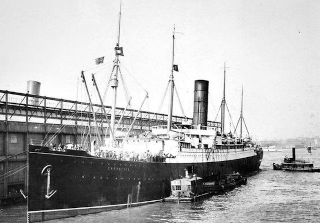
RMS Carpathia Arrives in New York City with RMS Titanic Survivors

The RMS Carpathia, a Cunard Line transatlantic passenger steamship, arrives in New York City on April 18, 1912, with 705 survivors from the RMS Titanic, which sank in the North Atlantic three days earlier.

As she is making her way from New York to Fiume, Austria-Hungary (now Rijeka, Croatia), RMS Carpathia receives a distress call from the “unsinkable” RMS Titanic. RMS Carpathia’s captain, Arthur Rostron, later testifies that the distance to RMS Titanic was 58 nautical miles (67 miles) and was expected to take three and a half hours to reach the doomed liner as its top speed, which was about 14.5 knots.

However, braving dangerous ice fields of its own, Rostron orders extra stokers to feed coal and cut off heating and hot water elsewhere in order to supply the ship’s engines with as much steam as possible. These decisions help accelerate the ship to more than 17 knots and the RMS Carpathia arrives on the scene approximately one hour and 40 minutes after RMS Titanic went down. For the next four and a half hours, the ship rescues 705 survivors from RMS Titanic‘s lifeboats.

Slowed by storms and fog since early Tuesday, April 16, RMS Carpathia arrives in New York City on the cold and rainy evening of Thursday, April 18, escorted by the scout cruiser USS Chester. RMS Carpathia first bypasses Pier 54, its Cunard Line pier, and sails up the Hudson River to Pier 59, the berth for White Star Line and where RMS Titanic was supposed to have arrived. Having dropped off the empty lifeboats, RMS Carpathia then sails back toward Pier 54.

A tugboat filled with photographers follows the ship to the pier, and the flashlight of cameras lights up the ship in the night sky to reveal that the decks are crammed with passengers.

Tens of thousands of people gather around Pier 54 to meet them and receive the first physical confirmation of the maritime disaster. On the orders of Rostron, RMS Carpathia‘s passengers disembark first, believing the scene will become tumultuous as soon as RMS Titanic survivors first appear. That moment comes when a teary-eyed woman with makeshift clothes descends a gangway and stumbles away from the boat into the arms of an officer.

The RMS Carpathia is initially a transatlantic passenger ship that makes its maiden voyage in 1903. During World War I, she is used to transfer Canadian and American Expeditionary Forces to Europe.

On July 15, 1918, under the command of Captain William Prothero, RMS Carpathia is a part of a large convoy that is making its way from Liverpool to Boston. Two days later, carrying 57 passengers and 166 crew, she is torpedoed on the port side by a German U-boat off the southwest coast of Ireland.

A second strike follows, which penetrates the engine room, killing three firemen and two trimmers. Prothero gives the order to abandon ship and all passengers and the surviving crew members board the lifeboats.

A third torpedo strike hits the gunner’s rooms, resulting in a large explosion that dooms the ship. The U-boat starts approaching the lifeboats when the HMS Snowdrop arrives on the scene and drives away the submarine with gunfire before picking up survivors.

The wreck of the RMS Carpathia is only discovered in 2000 after an 80 year-long search for the missing ship.

(From: “On This Day: Carpathia arrives in New York with Titanic survivors” by Michael Dorgan, IrishCentral, http://www.irishcentral.com, April 15, 2022)


Leave a comment

Sinking of the RMS Leinster

RMS Leinster, a ship operated by the City of Dublin Steam Packet Company and serving as the KingstownHolyhead mailboat, is torpedoed and sunk by the Imperial German Navy submarine SM UB-123, which is under the command of Oberleutnant zur See Robert Ramm, just outside Dublin Bay on October 10, 1918, while bound for Holyhead. The exact number of dead is unknown but researchers from the National Maritime Museum of Ireland believe it to be at least 564, making it the largest single loss of life in the Irish Sea.

In 1895, the City of Dublin Steam Packet Company orders four steamers for Royal Mail service, named for four provinces of Ireland: RMS Leinster, RMS Connaught, RMS Munster, and RMS Ulster. The RMS Leinster is a 3,069-ton packet steamship with a service speed of 23 knots. The vessel, which is built at Cammell Laird‘s in Birkenhead, England, is driven by two independent four-cylinder triple-expansion steam engines. During World War I, the twin-propellered ship is armed with one 12-pounder and two signal guns.

The ship’s log states that she carries 77 crew and 694 passengers on her final voyage under the command of Captain William Birch. The ship had previously been attacked in the Irish Sea but the torpedoes missed their target. Those on board include more than 100 British civilians, 22 postal sorters and almost 500 military personnel from the Royal Navy, British Army and Royal Air Force. Also aboard are nurses from the UK, Ireland, Australia, New Zealand, Canada and the United States.

Just before 10:00 AM as it is sailing east of the Kish Bank in a heavy swell, passengers see a torpedo approach from the port side and pass in front of the bow. A second torpedo follows shortly afterwards, and strikes the ship forward on the port side in the vicinity of the mail room. Captain Birch orders the ship to make a U-turn in an attempt to return to Kingstown as it begins to settle slowly by the bow. It sinks rapidly, however, after a third torpedo strikes her, causing a huge explosion.

Despite the heavy seas, the crew manages to launch several lifeboats and some passengers cling to life-rafts. The survivors are rescued by HMS Lively, HMS Mallard and HMS Seal. Among the civilian passengers lost in the sinking are socially prominent people such as Lady Alexandra Phyllis Hamilton, daughter of James Hamilton, 2nd Duke of Abercorn, Robert Jocelyn Alexander, son of Irish composer Cecil Frances Alexander, Thomas Foley and his wife Charlotte Foley (née Barrett) who was the brother-in-law of the world-famous Irish tenor John McCormack. The first member of the Women’s Royal Naval Service to die on active duty, Josephine Carr, is among the dead, as are two prominent officials of the Irish Transport and General Workers’ Union, James McCarron and Patrick Lynch.

Captain Birch who is wounded in the initial attack, drowns when his lifeboat is swamped in heavy seas and capsizes while attempting to transfer survivors to HMS Lively. Several of the military personnel who die are buried in Grangegorman Military Cemetery.

Survivors are brought to Kingstown harbour. Among them are Michael Joyce, an Irish Parliamentary Party MP for Limerick City, and Captain Hutchinson Ingham Cone of the United States Navy, the former commander of the USS Dale (DD-4).

One of the rescue ships is the armed yacht and former fishery protection vessel HMY Helga. Stationed in Kingstown harbour at the time of the sinking, she had shelled Dublin during the 1916 Easter Rising in Dublin two years earlier. She was later bought and renamed the Muirchú by the Irish Free State government as one of its first fishery protection vessels.

At October 18, 1918 at 9:10 AM SM UB-125, outbound from Germany, picks up a radio message requesting advice on the best way to get through the North Sea minefield. The sender is Oberleutnant zur See Robert Ramm aboard SM UB-123. Extra mines have been added to the minefield since SM UB-123 had made her outward voyage from Germany. As SM UB-125 had just come through the minefield, Vater radios back with a suggested route. SM UB-123 acknowledges the message and is never heard from again.

The following day, ten days after the sinking of the RMS Leinster, SM UB-123 accidentally detonates a mine while trying to cross the North Sea and return to base in Imperial Germany. It is October 19, 1918. Oberleutnant zur See Robert Ramm, who has a wife and children, never returns to them. Thirty-five other German families are similarly bereaved. No bodies are ever found.

In 1991, the anchor of the RMS Leinster is raised by local divers. It is placed near Carlisle Pier and officially dedicated on January, 28, 1996.


Leave a comment

U.S. Senate Inquiry into the RMS Titanic Sinking

william-alden-smith

The April 15, 1912 sinking of the RMS Titanic, the trans-Atlantic passenger liner built by Harland & Wolff in Belfast, results in an inquiry by the United States Senate, which begins at the Waldorf-Astoria Hotel in New York City  on April 19, 1912. Chaired by Senator William Alden Smith (R-Michigan), the inquiry is a subcommittee of the Senate’s Committee on Commerce. The hearings later move to the Russell Senate Office Building in Washington, D.C. and conclude on May 25, 1912 with a return visit to New York.

Seven senators serve on the subcommittee, with three Republicans and three Democrats in addition to Smith as chair. The other six senators are Jonathan Bourne (R-Oregon), Theodore E. Burton (R-Ohio), Duncan U. Fletcher (D-Florida), Francis G. Newlands (D-Nevada), George Clement Perkins (R-California), and Furnifold McLendel Simmons (D-North Carolina). The composition of the subcommittee is carefully chosen to represent the conservative, moderate and liberal wings of the two parties.

During 18 days of official investigations, punctuated by recesses, testimony is recorded from over 80 witnesses. These include surviving passengers and crew members, as well as captains and crew members of other ships in the vicinity, expert witnesses, and various officials and others involved in receiving and transmitting the news of the disaster. The evidence submitted varies from spoken testimony and questioning, to the deposition of correspondence and affidavits. Subjects covered include the ice warnings received, the inadequate (but legal) number of lifeboats, the handling of the ship and its speed, RMS Titanic‘s distress calls, and the handling of the evacuation of the ship.

The final report is presented to the United States Senate on May 28, 1912. It is nineteen pages long and includes 44 pages of exhibits, and summarises 1,145 pages of testimony and affidavits. Its recommendations, along with those of the British inquiry that concludes on July 3, 1912, lead to many changes in safety practices following the disaster.

The report is strongly critical of established seafaring practices and the roles that RMS Titanic‘s builders, owners, officers and crew had played in contributing to the disaster. It highlights the arrogance and complacency that had been prevalent aboard the ship and more generally in the shipping industry and the British Board of Trade. However, it does not find the International Mercantile Marine Company, an American consortium, or the White Star Line negligent under existing maritime laws, as they had merely followed standard practice, and the disaster could thus only be categorised as an “act of God.”

The inquiry is heavily criticised in Britain, both for its conduct and for Smith’s style of questioning. Many newspapers publish scathing editorial cartoons depicting Smith in unflattering terms. The British government is also hostile towards the inquiry. The British Ambassador to the United States, James Bryce, demands that President William Howard Taft dissolve the committee and refuses to recognise its jurisdiction.

Some British writers, however, applaud the inquiry. G. K. Chesterton contrasts the American objective of maximum openness with what he calls Britain’s “national evil,” which he describes as being to “hush everything up; it is to damp everything down; it is to leave the great affair unfinished, to leave every enormous question unanswered.” The American reaction is also generally positive. The American press welcomes Smith’s findings and accepts his recommendations, commending the senator for establishing the key facts of the disaster.

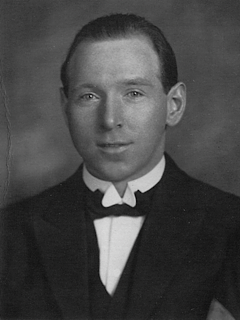
(Pictured: U.S. Senator William Alden Smith, chairman of the Senate inquiry into the RMS Titanic disaster)