seamus dubhghaill

Promoting Irish Culture and History from Little Rock, Arkansas, USA


Leave a comment

Birth of Anna Manahan, Stage, Film & Television Actress

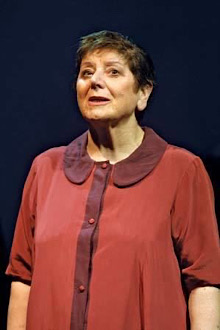
Anna Maria Manahan, Irish stage, film and television actress, is born on October 18, 1924, in County Waterford in what is at the time the Irish Free State (now the Republic of Ireland).

Manahan receives two Tony Award for Best Featured Actress in a Play nominations for her performances in the 1968 production of Lovers and the 1998 production of The Beauty Queen of Leenane, the latter for which she wins at the 52nd Tony Awards.

Manahan is also nominated for two Drama Desk Awards, a Laurence Olivier Award, and an Outer Critics Circle Award in a career that spans more than 60 years. She interprets the works of, among others, Seán O’CaseyJohn B. KeaneJohn Millington SyngeOscar WildeJames JoyceMartin McDonaghChristy Brown, and Brian Friel.

Manahan’s career begins when, as a young woman, she is recruited by the legendary Irish impresarios and theatrical directors Micheál Mac Liammóir and Hilton Edwards. She later marries stage director Colm O’Kelly, who dies not long afterward of polio, which he contracts after swimming in the Nile during a theatre tour of Egypt. They have no children and she never remarries. She is known professionally by her maiden name. In 1946 she appears in a production by Irish playwright Teresa DeevyThe Wild Goose, where she plays the part of Eileen Connolly. This is performed by Equity Productions in the Theatre Royal, Waterford.

In 1957, Manahan plays Serafina in the first Irish production of Tennessee Williams‘s The Rose Tattoo and achieves unexpected notoriety when she and several other members of the cast are arrested for the possession of a condom on stage.

Manahan plays a minor role in the Irish cult soap opera The Riordans (1960s), and as Mrs. Mary Kenefick in the TV comedy Me Mammy (1970s). She also plays the lead in the Irish comedy series, Leave It To Mrs O’Brien (1980s) and Mrs. Cadogan in The Irish R.M. (1980s). Most recently she plays Ursula in Fair City, for which her niece, Michele Manahan (daughter of Michael Manahan), is a writer.

Manahan has an extensive theatre portfolio having played at theatres throughout Ireland including the Abbey Theatre, the United Kingdom, continental Europe, the United States and Australia. She wins the Tony Award for Best Featured Actress in a Play for her role as Mag in Martin McDonagh’s The Beauty Queen of Leenane on Broadway. She previously receives a Tony nomination in 1969 for Brian Friel’s Lovers.

The Irish playwright John B. Keane writes the play Big Maggie specifically for Manahan. In 2001 she stars in Keane’s The Matchmaker with veteran Irish actor Des Keogh. In 2005 she stars in Sisters, a new play by Declan Hassett that is also written for her and for which she is nominated for a Drama Desk Award in the category of Outstanding Solo Performance. The production tours Ireland and is staged at the International Festival of World Theatre in Colorado and also plays at the 59E59 Theater in New York City in 2006.

Manahan appears in films starring, among others, Laurence OlivierPeter CushingKenneth MoreChristopher WalkenMaggie SmithAlbert Finney and Brenda Fricker, and with John Gielgud in A Portrait of the Artist as a Young Man (1977).

Manahan receives the Gold Medal of the Éire Society of Boston in 1984 and thus joins the company of past recipients such as John F. Kennedy, and film makers John Ford and John Huston. She receives an honorary doctorate in letters from the University of Limerick in 2003. She is granted the freedom of the city of Waterford in 2002 in recognition of her life’s achievement in the arts. She thus becomes the 28th Freeman of Waterford since Isaac Butt in 1877.

In 2004 Manahan starts to play the role of Ursula in Fair CityAll About Anna (2005), a documentary on her life and work is made by Charlie Mc Carthy/Icebox Films for RTÉ Television. In 2008, she becomes the first ever patron of the Active Retirement Ireland organization.

Manahan dies of multiple organ failure on March 8, 2009 in Waterford. She had suffered from a longterm illness.

Her funeral is held on March 11, officiated by her “longtime friend” the psychoanalyst, poet, and priest Bernard Kennedy. “As the final curtain falls, the lights dim, the auditorium becomes silent, we remember her” he says. Describing her as a woman of faith (who “sought to bring the word of God alive”), he says she had brought everyone together to be present at “her last great exit from this great stage of life,” saying her life’s work had drawn people from all over the world. “Anna believed in the empty tomb of the Resurrection and she believed the empty tomb could be filled by hearing the word take the place of the emptiness,” he says. “She knew the bedsits which preceded the Tony nomination.”

Manahan is buried in Ballygunner Cemetery, Knockboy, County Waterford.


Leave a comment

Birth of Brendan Gleeson, Actor & Film Director

Brendan Gleeson, Irish actor and film director, is born in Dublin on March 29, 1955. He is the recipient of three Irish Film & Television Academy (IFTA) Awards, two British Independent Film Awards (BIFA), and a Primetime Emmy Award and has been nominated twice for a BAFTA Award, five times for a Golden Globe Award and once for an Academy Award. In 2020, he is listed at number 18 on The Irish Times list of Ireland’s greatest film actors. He is the father of actors Domhnall Gleeson and Brian Gleeson.

Gleeson is the son of Frank and Pat Gleeson. He has described himself as having been an avid reader as a child. He receives his second-level education at St. Joseph’s CBS in Fairview, Dublin, where he is a member of the school drama group. He receives his Bachelor of Arts at University College Dublin (UCD), majoring in English and Irish. After training as an actor, he works for several years as a secondary school teacher of Irish and English at the now defunct Catholic Belcamp College in north County Dublin. He works simultaneously as an actor while teaching, doing semi-professional and professional productions in Dublin and surrounding areas. He leaves the teaching profession to commit full-time to acting in 1991. In an NPR interview to promote Calvary in 2014, he states he was molested as a child by a Christian Brother in primary school but was in “no way traumatised by the incident.”

As a member of the Dublin-based Passion Machine Theatre company, Gleeson appears in several of the theatre company’s early and highly successful plays such as Brownbread (1987), written by Roddy Doyle and directed by Paul Mercier, Wasters (1985) and Home (1988), written and directed by Paul Mercier. He also writes three plays for Passion Machine: The Birdtable (1987) and Breaking Up (1988), both of which he directs, and Babies and Bathwater (1994) in which he acts. Among his other Dublin theatre work are Patrick Süskind‘s one-man play The Double Bass and John B. Keane‘s The Year of the Hiker.

Gleeson starts his film career at the age of 34. He first comes to prominence in Ireland for his role as Michael Collins in The Treaty, a television film broadcast on RTÉ One, and for which he wins a Jacob’s Award in 1992. He acts in such films as Braveheart, I Went Down, Michael Collins, Gangs of New York, Cold Mountain, 28 Days Later, Troy, Kingdom of Heaven, Lake Placid, A.I. Artificial Intelligence, Mission: Impossible 2, and The Village. He wins critical acclaim for his performance as Irish gangster Martin Cahill in John Boorman‘s 1998 film The General.

In 2003, Gleeson is the voice of Hugh the Miller in an episode of the Channel 4 animated series Wilde Stories. While he portrays Irish statesman Michael Collins in The Treaty, he later portrays Collins’ close collaborator Liam Tobin in the film Michael Collins with Liam Neeson taking the role of Collins. He later goes on to portray Winston Churchill in Into the Storm, winning a Primetime Emmy Award for his performance. He plays Barty Crouch, Jr. impersonating Hogwarts professor Alastor “Mad-Eye” Moody in the fourth, and Alastor Moody himself in fifth and seventh Harry Potter films. His son Domhnall plays Bill Weasley in the seventh and eighth films.

Gleeson provides the voice of Abbot Cellach in The Secret of Kells, an animated film co-directed by Tomm Moore and Nora Twomey of Cartoon Saloon, which premieres in February 2009 at the Jameson Dublin International Film Festival. He stars in the short film Six Shooter in 2006, written and directed by Martin McDonagh, which wins an Academy Award for Best Live Action Short Film. In 2008, he stars in the comedy crime film In Bruges, also written and directed by McDonagh. The film, and his performance, enjoy huge critical acclaim, earning him several award nominations, including his first Golden Globe nomination. In the movie, he plays a mentor-like figure for Colin Farrell‘s hitman. In his review of In Bruges, Roger Ebert describes the elder Gleeson as having a “noble shambles of a face and the heft of a boxer gone to seed.”

In July 2012, Gleeson starts filming The Grand Seduction, with Taylor Kitsch, a remake of Jean-François Pouliot‘s French-Canadian La Grande Séduction (2003) directed by Don McKellar. The film is released in 2013. In 2016, he appears in the video game adaptation Assassin’s Creed and Ben Affleck‘s crime drama Live by Night. In 2017, he finishes Psychic, a short in which he directs and stars. From 2017 to 2019 he stars in the crime series Mr. Mercedes. He receives a Golden Globe Award nomination for his performance as Donald Trump in the Showtime series The Comey Rule (2020). In 2022, he reunites with Martin McDonagh in the tragic comedy The Banshees of Inisherin starring opposite Colin Farrell. For his performance as Colm Doherty, he receives numerous awards nominations, including the Academy Award, Golden Globe, and Critics’ Choice Movie Award for Best Supporting Actor. He receives an Emmy Award nomination for Stephen Frears‘s Sundance TV series State of the Union (2022).

Gleeson is a fiddle and mandolin player, with an interest in Irish folklore. He plays the fiddle during his roles in Cold Mountain, Michael Collins, The Grand Seduction, and The Banshees of Inisherin, and also features on Altan‘s 2009 live album. In the Coen brothersThe Ballad of Buster Scruggs (2018), he sings “The Unfortunate Rake.” He also makes a contribution in 2019 to the album by Irish folk group Dervish with a version of “Rocky Road to Dublin.”

Gleeson has been married to Mary Weldon since 1982. They have four sons: Domhnall, Fergus, Brían, and Rory. Domhnall and Brían are also actors. He speaks fluent Irish and is an advocate of the promotion of the Irish language. He is a fan of the English football club Aston Villa, as is his son Domhnall.


Leave a comment

The Murder of Dominic “Mad Dog” McGlinchey

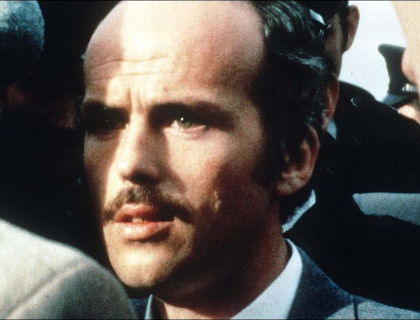
Dominic “Mad Dog” McGlinchey, Irish republican paramilitary leader who moves from the Provisional Irish Republican Army (IRA) to become head of the Irish National Liberation Army (INLA) paramilitary group in the early 1980s and self-confesses participation in more than thirty killings, dies in a hail of bullets while making a phone call in Drogheda, County Louth, on February 10, 1994. No one is ever convicted of his murder.

McGlinchey is one of eleven siblings born into a staunchly republican home in Ballyscullion Road, Bellaghy, in rural south County Londonderry, Northern Ireland. His father owns a garage and some of his father’s police customers later die at McGlinchey’s hands. His mother Monica is a devout Catholic. He is educated at the local school. When he was sixteen, he begins an apprenticeship in his father’s garage. About this time, he is joining the numerous civil rights marches that are taking place in the county. His precise reasons for doing so are unclear, but speculation is that he is reacting to events around him and the idea of participating in marches offers glamour and a close identification with his own community.

In 1971, McGlinchey is interned without charge for ten months in Long Kesh Detention Centre. Not long after his release the following year, he is imprisoned again on arms charges. On July 5, 1975, during his imprisonment, he marries Mary O’Neil, daughter of Patrick O’Neil from Toomebridge. Together they have three children.

Following his release, McGlinchey joins Ian Milne and future Provisional IRA hunger strikers Francis Hughes and Thomas McElwee and wages a campaign of shooting and bombing throughout the county and beyond. Together, they later join the Provisional IRA. The gang spends the late 1970s on the run, carrying out operations and evading both the British Army and the Garda Síochána. Following a mailvan robbery, the latter force arrests McGlinchey in County Monaghan in 1977 for carjacking a Garda patrol vehicle and threatening the officer with a pistol, although he claims that the gun is actually a wheel brace. He fails to make bail at Dublin‘s Special Criminal Court after a Garda Superintendent argues that McGlinchey would fail to attend court if bailed. He is convicted and sent to the maximum-security Portlaoise Prison. In 1982, while serving his prison sentence, he clashes with the prison’s IRA leadership and is either expelled by them for indiscipline or leaves the organisation due to strategic differences.

Following his departure from the IRA and his release from prison, McGlinchey joins the INLA. Due to his experience, he rises through the ranks, becoming chief of staff by 1982. Under his leadership, the INLA, which had previously had a reputation for disorganisation, becomes extremely active in cross-border assassinations and bombings. These include many individual assassinations and woundings, but also massacres such as the Droppin Well bombing of 1982 in which both civilians and soldiers die. There are some failed operations, and McGlinchey, who believes this is the result of an informer within the ranks, devotes much time and energy to finding the cause. Those suspected of betraying the organisation are treated brutally, often by McGlinchey personally. As a result of this resurgence of activity and his high profile, the press nicknames him “Mad Dog.” Under his tenure the Darkley massacre is carried out, ostensibly by another group but using a weapon supplied by McGlinchey. In late 1983, while still on the run, he gives an interview with the Sunday Tribune newspaper in which he condemns the Darkley killings but also lays out his political philosophy and plans for the future.

By 1984, McGlinchey has fallen out with members of a powerful Republican family from South Armagh over what he considers missing funds. Men loyal to this family are subsequently killed by McGlinchey’s unit, which includes his wife. In March of the same year, he is captured in Newmarket-on-Fergus, County Clare, following a gunfight with the Gardaí. At this time, he is wanted in Northern Ireland for the shooting of an elderly woman, but republicans have traditionally been able to avoid extradition by claiming their offences were political. The bloody war in the north is leading the Republic of Ireland to re-evaluate its position, however, and he becomes the first republican to be extradited to Northern Ireland. Although convicted and sentenced there to life imprisonment, this is overturned in 1985. As a result, he is returned to the Republic, where he is sentenced to ten years’ imprisonment on firearms charges. While he is incarcerated, his wife is shot dead at her Dundalk home.

McGlinchey is released in March 1993 and claiming to have no further involvement with the INLA, moves to Drogheda. He survives an assassination attempt soon after his release from prison, but in February 1994, his enemies catch up with him. At around 9:30 on the evening of Thursday, February 10, 1994, he visits and dines with friends of his in Duleek Road, near his home. He leaves about forty minutes later, intending to take a video back to a shop in Brookville, on the north side of town. At around 11:00 p.m. he and his 16-year-old son Dominic are returning home, when he pulls up to make a phone call from a public kiosk on Hardman’s Gardens, near Our Lady of Lourdes Hospital. Almost immediately and despite the presence of four witnesses, a red Mazda pulls up alongside him. While his son watches from the car, three men get out and beat McGlinchey. Once he is on the ground the men, who are armed with three pump action shotguns and a pistol, fire into him fourteen times. The attack finishes with a coup de grâce to the head, although he is already dead. His last words are reputed to be “Jesus, Mary help me.” His son yells for an ambulance.

The following day, an autopsy is carried out in Our Lady of Lourdes Hospital, which indicates McGlinchey had been hit in the neck, skull, the left upper chest, the left arm, and both legs. His inquest is held in Drogheda two weeks later, suspended and then reopened in November 1996. Gardaí forensic officers tell the coroner that they had compared the shell casings they had found with the database, but no matches have been made to other known weapons. The officer notes that no such information has been received from the Royal Ulster Constabulary (RUC). The shotguns used are impossible to trace ballistically, but it is ascertained that the Mazda was registered in the north. His and his wife’s killers have never been found.

McGlinchey’s funeral is held on February 13, 1994, in Bellaghy, with no republican accoutrements. There is no INLA colour guard, and only an Irish tricolor draped over the coffin. Over 1,500 people attend and are watched closely by 200 RUC. Police armoured vans are held on the perimeter. He is buried alongside his wife and their young daughter Máire. His coffin is carried from the McGlinchey family home to St. Mary’s Church by pallbearers who are swapped out from the crowd every 40-yards or so. Martin McGuinness is among them, as is Bernadette McAliskey and her daughter Róisín. His sons carry the coffin for the final yards.

McGlinchey’s posthumous reputation ranges from being a “psycho” to his enemies to being an inspiration to those who followed him. Commentators have speculated on what he would have contributed to Irish politics had he lived. Some have suggested that he would have contributed to the Northern Ireland peace process, while others have argued that dissident republicans, opposed to that process, would have found him a willing rallying point. He remains an influence on Irish fiction and music, with both Edna O’Brien and Martin McDonagh producing acclaimed pieces based on his life and career. He is also featured in popular songs.


Leave a comment

Birth of Actor Colin Farrell

colin-farrell

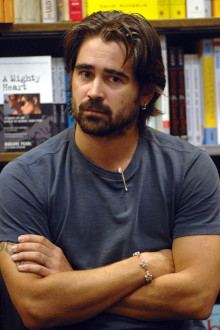
Irish actor Colin James Farrell is born on May 31, 1976, in Castleknock, Dublin.

Farrell is educated at St. Brigid’s National School, followed by secondary school at Castleknock College, an exclusive all boys private school and then Gormanston College in County Meath. He unsuccessfully auditions for the Irish musical group Boyzone around this time.

Farrell is inspired to try acting when Henry Thomas‘ performance in E.T. the Extra-Terrestrial moves him to tears. With his brother’s encouragement, he attends the Gaiety School of Acting, dropping out in 1998 when he is cast as Danny Byrne on Ballykissangel, a BBC drama about a young English priest who becomes part of an Irish rural community.

Farrell makes his film debut in the Tim Roth-directed drama The War Zone in 1999 and is discovered by Hollywood when Joel Schumacher casts him as the lead in the war drama Tigerland in 2000. He then stars in Schumacher’s psychological thriller Phone Booth (2003) where he plays a hostage in a New York City phone booth, and the American thrillers S.W.A.T. (2003) and The Recruit (2003), establishing his international box-office appeal. During this time, he also appears in Steven Spielberg‘s science fiction thriller Minority Report (2002) and as the villain Bullseye in the superhero film Daredevil (2003).

After starring in the independent films Intermission (2003) and A Home at the End of the World (2004), Farrell heads Oliver Stone‘s biopic Alexander (2004) and Terrence Malick‘s The New World (2005). Roles in Michael Mann‘s Miami Vice (2006), the adaptation of John Fante‘s Ask the Dust (2006), and Woody Allen‘s Cassandra’s Dream (2007) follow, underscoring his popularity among Hollywood writers and directors. However, it is his role in Martin McDonagh‘s In Bruges (2008) that earns him a Hollywood Foreign Press Association Golden Globe Award for Best Actor – Motion Picture Musical or Comedy.

Farrell stars in the black comedy film Horrible Bosses (2011), for which he receives critical praise, along with the comedy-horror film Fright Night (2011) and the science fiction action film Total Recall (2012), both remakes, and McDonagh’s second feature, the black comedy crime film Seven Psychopaths (2012). He also stars in the Niels Arden Oplev action film Dead Man Down (2013), and as Travers Goff in the period drama Saving Mr. Banks (2013). In 2014, he stars as Peter Lake in the supernatural fable Winter’s Tale, an adaptation of the novel of the same name by Mark Helprin. In 2015, he stars as Detective Ray Velcoro in the second season of HBO‘s True Detective, and also stars in the film The Lobster, for which he is nominated for his second Golden Globe Award for Best Actor – Motion Picture Musical or Comedy. In 2016, he plays Percival Graves in the Harry Potter spin-off film Fantastic Beasts and Where to Find Them.

In December 2005, Farrell checks into a rehabilitation treatment centre for addictions to recreational drugs and painkillers. He speaks about it on the Late Show with David Letterman after coming out of rehab and continues to do so in the years following. “There was an energy that was created,” he says of the time when he was addicted, “a character that was created, that no doubt benefited me. And then there was a stage where it all began to crumble around me.”

In 2007, Farrell joins other celebrities as a spokesman for the Special Olympics World Games in Shanghai, China. He has also lent his support to the anti-bullying campaign Stand Up! organised by the Irish LGBT youth organisation BeLonG To in March 2012. He appears on The Ellen DeGeneres Show two years earlier to increase awareness of the subject. In 2015 he becomes an official Ambassador of the Homeless World Cup which uses street football to inspire homeless people to change their lives.


Leave a comment

“The Beauty Queen of Leenane” Wins Four Tony Awards

the-beauty-queen-of-leenane

After being nominated in six categories, Galway’s Druid Theatre Company wins four Tony Awards on June 8, 1998, for its production of The Beauty Queen of Leenane, a 1996 comedy by Irish playwright Martin McDonagh.

The play receives its world premiere when the Druid Theatre Company opens the production at the Town Hall Theatre, Galway on February 1, 1996. It then tours Ireland, stopping off in Longford, Kilkenny and Limerick. It transfers to London‘s West End, where it opens at the Royal Court Theatre on February 29, 1996.

The Druid production returns to Ireland to embark on an extensive national tour, playing in Galway, Cork, Kerry, Limerick, Fermanagh, Donegal and Derry amongst others. The play returns to London where it is revived at the Duke of York’s Theatre on November 29, 1996, for several months.

The play is produced as part of Druid’s Leenane Trilogy, which includes two other plays by Martin McDonagh, in 1997 where it plays as part of another Irish and UK tour, which includes stops at the Olympia Theatre, Dublin and the Royal Court Theatre in London again.

The play receives its American premiere opening Off-Broadway on February 11, 1998, presented by the Atlantic Theatre Company at the Linda Gross Theater. It transfers to the Walter Kerr Theater on Broadway where it opens on April 14, 1998. It receives six Tony Award nominations, winning four for Best Supporting Actor (Tom Murphy), Best Actress (Marie Mullen), Best Supporting Actress (Anna Manahan), and Best Director (Garry Hynes), the first female recipient of a Tony Award for directing a play.

The play is produced in Australia in 1998 and again in 1999. The 1999 production is a tour by the Royal Court Theatre Company, appearing at the Adelaide Festival Centre (May – June 1999) and Wharf 1 (July 1999) and directed by Garry Hynes. The production returns to Ireland in 2000 as part of a final national tour.

The play is revived in July 2010 at the Young Vic Theatre in the West End, starring Irish actress Rosaleen Linehan. The production transfers to Dublin’s Gaiety Theatre where Linehan reprises her role opposite Derbhle Crotty. It then returns to the Young Vic for another run, closing in September 2011.

The Druid Theatre Company presents a revival in 2016–2017. The production starts in Ireland in Galway at the Town Hall Theatre in September 2016, and then tours to The Everyman in Cork, the Lime Tree Theatre in Limerick and the Gaiety Theatre, Dublin. The play then tours in the United States starting in November 2016. The play runs at the Mark Taper Forum in Los Angeles in November 2016 then opens at the Brooklyn Academy of Music in New York City, running from January 11, 2017, to February 5. The production returns to Ireland, playing at The Gaiety Theatre from March 28 to April 15, 2017.