seamus dubhghaill

Promoting Irish Culture and History from Little Rock, Arkansas, USA


Leave a comment

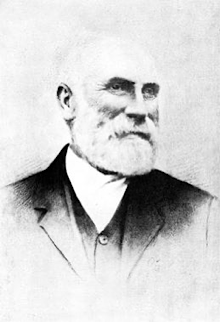
Birth of Andrew Kettle, Agrarian Reformer & Nationalist Politician

Andrew Joseph Kettle, a leading Irish nationalist politician, progressive farmer, agrarian agitator and founding member of the Irish National Land League, is born on September 26, 1833, in Drynam House, Swords, County Dublin.

Kettle is one among six children of Thomas Kettle, a prosperous farmer, and his wife, Alice (née Kavanagh). His maternal grandmother, Mary O’Brien, had smuggled arms to United Irishmen in the district in 1798, while her future husband, Billy Kavanagh, had been a senior figure in the movement. He is educated at Ireland’s most prestigious Catholic boarding schoolClongowes Wood College. His education is cut short when he is called to help full-time on the farm. Though an autodidact and always a forceful writer, he is beset later by an exaggerated sense of his “defective education and want of talking powers.” Fascinated by politics, he enjoys the repeal excitement of 1841–44 and in his late teens speaks once or twice at Tenant Right League meetings in Swords. Through the 1850s and most of the 1860s he sets about expanding the family farm into a composite of fertile holdings in Swords, St. Margaret’s, Artane, and Malahide (c.150 acres). Getting on well with the Russell-Cruise family of Swords, his first landlords, he benefits from a favourable leasehold arrangement on their demesne in the early 1860s. The farm is mostly in tillage, though Kettle also raises some fat cattle and Clydesdale horses, which he eventually sells to Guinness’s.

Kettle first enters politics in 1867, when he disagrees with John Paul Byrne of Dublin Corporation in public and in print over the right of graziers to state aid during an outbreak of cattle distemper. In 1868, he joins an agricultural reform group initiated by Isaac Butt. He becomes friendly with Butt and later claims to have converted him to support tenant-right. His memoirs, which are somewhat egocentric, contain a number of such questionable claims. It is, however, the case that he habitually writes up, for his own use, cogent summaries of the direction of current political tendencies, which sometimes become useful confidential briefs for Butt and later Charles Stewart Parnell. He is among the published list of subscribers to the Home Rule League in July 1870.

In 1872, disappointed by the Landlord and Tenant (Ireland) Act 1870, Kettle organises a Tenants’ Defence Association (TDA) in north County Dublin, soon sensing the need for a central body to coordinate the grievances of similar groups around the country. The Dublin TDA effectively acts as this central body, under his guidance as honorary secretary. At the 1874 United Kingdom general election in Ireland, the Dublin TDA decides to challenge the electoral control of certain corporation interests in County Dublin. Kettle secures the cautious approval of Cardinal Paul Cullen for any candidate supporting the principle of denominational education. He is also one of a deputation to ask Parnell to fight the constituency, which the latter loses. He becomes closely acquainted with Parnell, who frequently attends Dublin TDA meetings after his election for Meath in April 1875.

Taking a sombre view of the threat of famine in the west of Ireland after evidence of crop failure appears in early summer 1879, Kettle calls a conference of TDA delegates at the European Hotel in Bolton Street, Dublin, in late May. After a heated debate in which a proposal for a rent strike is greatly modified, Parnell comes to seek Kettle’s advice on whether to become involved in the evolving land agitation in County Mayo. Kettle urges him to go to the Westport meeting set for June 8, 1879, and claims later to have stressed in passing that “if you keep in the open you can scarcely go too far or be too extreme on the land question.” If the incident is correctly recounted, this is a most important statement, which virtually defines Parnell’s oratorical strategy throughout the land war. In October 1879, Kettle agrees to merge the TDA with a new Irish National Land League, set up at a meeting in the Imperial Hotel, Dublin, chaired by Kettle. As honorary secretary of the Land League, Kettle frankly admits that he is able to attend meetings without “the necessity of working.” His attendance is, however, among the most regular of all League officers, with him taking part in 73 of 107 meetings scheduled between December 1879 and October 1881.

In March 1880, Kettle disputes Michael Davitt‘s reluctance to use League funds in the general election. He canvasses vigorously together with Parnell in Kildare, Carlow, and Wicklow and is later pressed by his party leader into standing for election in County Cork, though aware that the local tenant movement has already prepared their own candidates. His association with Parnell antagonises the catholic hierarchy in Munster, who issues a condemnation of his candidacy. The hurly-burly of this election creates the persistent impression that Kettle is anti-clerical in politics, and he is defeated by 151 votes.

On a train journey to Ballinasloe in early April 1880, Kettle confides to Parnell his idea that land purchase can be facilitated by the recovery of tax allegedly charged in excess on Ireland by the British government since the act of union. At League meetings in June and July 1880, he advances his “catastrophist” plan: to cease attempts to prevent the development of an irresistible crisis among the Irish smallholding population, by diverting the application of League funds from general relief solely to the aid of evicted tenants, who might be temporarily housed “encamped like gypsies and the land lying idle,” in the belief that the British government will thereby be compelled to introduce radical remedial legislation. Smallholders do not have enough faith in either League or parliamentary politicians to listen.

At a meeting of the League executive in London and in Paris, before and after Davitt’s arrest on February 3, 1881, Kettle presents his plan that the parliamentary party should, if faced with coercive legislation, withdraw from Westminster, “concentrate” in Ireland, and call a general rent strike. Republicans on the League executive continually find themselves embarrassed by Kettle’s radical calls to action motivated solely by the project of agrarian reform. Parnell is later supposed to have lamented party failure to execute the plan at this juncture.

Kettle is arrested in June 1881 for calling for a collective refusal of rent. After two weeks in Naas jail he is transferred to Kilmainham Gaol, where in October he is, with some misgivings, one of the signatories to the No Rent Manifesto. Discharged from Kilmainham in late December 1881 owing to poor health, he returns principally to work on the family farm for most of the 1880s, though he claims to have formulated a draft solution for the plight of the agricultural labourer and “pushed it through” in correspondence with Parnell. He reemerges in 1890 to defend Parnell after the divorce scandal breaks. Attempting to establish a new ”centre” party independent of extreme Catholic and Protestant interests, he stands for election as a Parnellite at the 1891 County Carlow by-election, where he is comprehensively beaten, having endured weeks of insinuating harangues by Tim Healy, and raucous mob insults to the din of tin kettles bashed by women and children at meetings around the county. He is intermittently involved in County Dublin politics in the 1890s and 1900s and maintains a brusque correspondence on matters of the day in the national press.

Kettle dies on September 22, 1916, at his residence, St. Margaret’s, County Dublin, anguished by the death on September 9 of his brilliant son, Tom Kettle, near the village of Ginchy during the Battle of the Somme. He is buried at St. Colmcille’s cemetery, Swords.

Kettle marries Margaret McCourt, daughter of Laurence McCourt of Newtown, St. Margaret’s, County Dublin, farmer and agricultural commodity factor. They have five sons and six daughters.


Leave a comment

Irish National Land League Outlawed by the British Government

The Irish National Land League, also known as the Land League, is outlawed by the British government on October 20, 1881. From the start, the League is a thorn in the side of the government of British Prime Minister William Ewart Gladstone.

The Irish National Land League is an Irish political organisation of the late 19th century which organises tenant farmers in their resistance to exactions of landowners. Its primary aim is to abolish landlordism in Ireland and enable tenant farmers to own the land they work on. The period of the Land League’s agitation is known as the Land War.

The Irish National Land League is founded at the Imperial Hotel in Castlebar, County Mayo, on October 21, 1879. At that meeting Charles Stewart Parnell, the prominent Home Rule Member of Parliament, is elected president of the league. Andrew Kettle, Michael Davitt and Thomas Brennan are appointed as honorary secretaries. This unites practically in a single organisation all the different strands of land agitation and tenant rights movements on the nationalist side of the increasingly frozen sectarian-political divide in Ireland. 

The government had introduced the Landlord and Tenant (Ireland) Act 1870, the first Land Act, which proves largely ineffective. It is followed by further marginally more effective Irish Land Acts of 1880 and 1881. These establish the Irish Land Commission that starts to reduce some rents. The passage of the second Land Act in 1881 fails to mollify many of the leaders of the Land League, mainly due to the fact that close to 300,000 tenants behind in their rents are excluded from its benefits. Parnell together with all of his party lieutenants, including Father Eugene Sheehy, known as “the Land League priest,” go into a bitter verbal offensive.

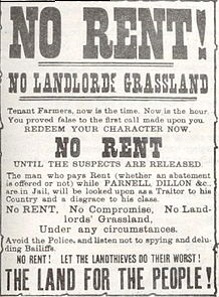
William Ewart Gladstone has them arrested and imprisoned in Kilmainham Gaol in October 1881 under the Irish Coercion Act for “sabotaging the Land Act,” from where the No Rent Manifesto is issued, calling for a national tenant farmer rent strike until “constitutional liberties” are restored, and the prisoners freed. It has a modest success In Ireland and mobilizes financial and political support from the Irish diaspora. Many other leaders of the League, including Michael Davitt, whose name is added to the bottom of the document by others, and other moderate elements in Ireland oppose this move.

Perhaps sensing weakness in the League organization, the government outlaws the League on October 20, 1881, but the work of the League is then continued by the Ladies’ Land League, which had been founded earlier by Parnell’s sister Anna. In 1882, Parnell is released from jail after reaching a written compact with the government, which extends the benefits of the Land Act to those excluded earlier, while Parnell pledges to help end land-agitation violence in Ireland and cooperate with Gladstone’s Liberal party.

In October 1882, Parnell forms the Irish National League, replacing the Land League. The Land League passes into history, but it has helped show Irish peasants that if they all stand together there is strength in numbers.

(Pictured: Irish land League poster dating from the 1880s)


Leave a comment

Death of William O’Brien, Journalist & Politician

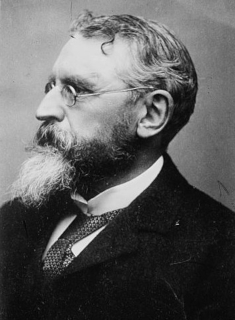
William O’Brien, Irish nationalist, journalist, agrarian agitator, social revolutionary, politician, party leader, newspaper publisher, author and Member of Parliament (MP) in the House of Commons of the United Kingdom of Great Britain and Ireland, dies suddenly on February 25, 1928, at the age of 75 while on a visit to London with his wife.

O’Brien, who is for several years second only to Charles Stewart Parnell among Irish Nationalist leaders, is born on October 2, 1852, in Mallow, County Cork. He is perhaps most important for his Plan of Campaign (1886), by which Irish tenant farmers withhold all rent payments from landlords who refuse to lower their rents and instead pay the money into a mutual defense fund on which evicted tenants can draw.

O’Brien shares his primary education with a townsman with whom he is later to have a close political connection, Canon Patrick Augustine Sheehan of Doneraile. He enjoys his secondary education at the Cloyne diocesan college, which results in his being brought up in an environment noted for its religious tolerance. He greatly values having had this experience from an early age, which strongly influences his later views for the need of such tolerance in Irish national life.

A journalist from 1869, O’Brien is appointed editor of the Irish Land League’s weekly United Ireland by Parnell in 1881. In October of that year the British authorities suppress the paper and put O’Brien in Kilmainham Gaol in Dublin, along with Parnell and others. There he draws up a No Rent Manifesto, which, when read at a Land League meeting, results in the outlawing of the League. Released from prison in 1882, he resumes the editorship of United Ireland, and in 1883 he is elected to the British House of Commons, remaining there until 1895. His “plan of campaign” is disavowed by Parnell but nonetheless stirs up fierce agitation. To suppress the movement, the British government passes the Criminal Law and Procedure (Ireland) Act 1887, under which O’Brien is jailed again.

For some time following the Katherine O’Shea divorce case (1889–90), in which Parnell is correspondent, O’Brien attempts to mediate between the Parnellites and their opponents, although he sides with the majority in rejecting Parnell’s continued leadership of the Irish Home Rule struggle. In 1902 he supports the Land Conference, which secures agreement between landlords and tenants’ representatives and results in George Wyndham‘s Land Purchase Act (1903), which is designed to turn Irish tenant farmers into occupying owners.

In 1898 O’Brien founds the United Irish League, and in 1910, after control of that group passes to the Parnellite John Redmond, he establishes the All-for-Ireland League in opposition to the older organization. Most of his personal following, however, join Arthur Griffith’s Sinn Féin party by the end of World War I.

Retiring from political life, O’Brien contents himself with writing and declines Éamon de Valera‘s offer to stand for Fianna Fáil in the 1927 general election. He dies suddenly at the age of 75 on February 25, 1928, while on a visit to London with his wife. His remains rest in Mallow, and one of the principal streets in the town bears his name to this day. His head-bust overlooks the town Council’s Chamber Room and one of his finest portraits hangs in University College Cork.


Leave a comment

Birth of William O’Brien, Journalist & Politician

william-o-brien

William O’Brien, journalist and politician who is for several years second only to Charles Stewart Parnell among Irish Nationalist leaders, is born on October 2, 1852, in Mallow, County Cork. He is perhaps most important for his Plan of Campaign (1886), by which Irish tenant farmers withhold all rent payments from landlords who refuse to lower their rents and instead pay the money into a mutual defense fund on which evicted tenants can draw.

O’Brien shares his primary education with a townsman with whom he is later to have a close political connection, Canon Patrick Augustine Sheehan of Doneraile. He enjoys his secondary education at the Cloyne diocesan college, which results in his being brought up in an environment noted for its religious tolerance. He greatly values having had this experience from an early age, which strongly influences his later views for the need of such tolerance in Irish national life.

A journalist from 1869, O’Brien is appointed editor of the Irish Land League’s weekly United Ireland by Parnell in 1881. In October of that year the British authorities suppress the paper and put O’Brien in Kilmainham Gaol in Dublin, along with Parnell and others. There he draws up a No Rent Manifesto, which, when read at a Land League meeting, results in the outlawing of the League. Released from prison in 1882, he resumes the editorship of United Ireland, and in 1883 he is elected to the British House of Commons, remaining there until 1895. His “plan of campaign” is disavowed by Parnell but nonetheless stirs up fierce agitation. To suppress the movement, the British government passes the Criminal Law and Procedure (Ireland) Act 1887, under which O’Brien is jailed again.

For some time following the O’Shea divorce case (1889–90), in which Parnell is corespondent, O’Brien attempts to mediate between the Parnellites and their opponents, although he sides with the majority in rejecting Parnell’s continued leadership of the Irish Home Rule struggle. In 1902 he supports the Land Conference, which secures agreement between landlords and tenants’ representatives and results in George Wyndham‘s Land Purchase Act (1903), which is designed to turn Irish tenant farmers into occupying owners.

In 1898 O’Brien founds the United Irish League, and in 1910, after control of that group passes to the Parnellite John Redmond, he establishes the All-for-Ireland League in opposition to the older organization. Most of his personal following, however, join Arthur Griffith’s Sinn Féin party by the end of World War I.

Retiring from political life, O’Brien contents himself with writing and declines Éamon de Valera‘s offer to stand for Fianna Fáil in the 1927 general election. He dies suddenly at the age of 75 on February 25, 1928, while on a visit to London with his wife. His remains rest in Mallow, and one of the principal streets in the town bears his name to this day. His head-bust overlooks the town Council’s Chamber Room and one of his finest portraits hangs in University College Cork.


Leave a comment

Founding of the Irish National Land League

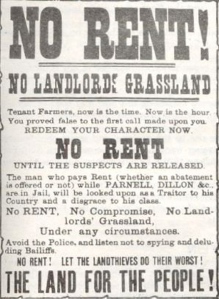
land-league-poster

The Irish National Land League, one of the most important political organizations in Irish history which seeks to help poor tenant farmers, is founded at the Imperial Hotel in Castlebar, County Mayo, on October 21, 1879. Its primary aim is to abolish landlordism in Ireland and enable tenant farmers to own the land they work on. The national organization is modeled on the Land League of Mayo, which Michael Davitt had helped found earlier in the year.

At the founding meeting Charles Stewart Parnell is elected president of the league. Davitt, Andrew Kettle, and Thomas Brennan are appointed as honorary secretaries. This unites practically all the different strands of land agitation and tenant rights movements under a single organisation.

Parnell, Davitt, John Dillon, and others including Cal Lynn then go to the United States to raise funds for the League with spectacular results. Branches are also set up in Scotland, where the Crofters Party imitates the League and secures a reforming Act in 1886.

The government introduces the Landlord and Tenant (Ireland) Act 1870, which proves largely ineffective. It is followed by the marginally more effective Land Acts of 1880 and 1881. These establish a Land Commission that starts to reduce some rents. Parnell together with all of his party lieutenants including Father Eugene Sheehy, known as “the Land League priest,” go into a bitter verbal offensive and are imprisoned in October 1881 under the Protection of Person and Property Act 1881 in Kilmainham Gaol for “sabotaging the Land Act.” It is from here that the No-Rent Manifesto is issued, calling for a national tenant farmer rent strike until “constitutional liberties” are restored and the prisoners freed. It has a modest success In Ireland and mobilizes financial and political support from the Irish Diaspora.

Although the League discourages violence, agrarian crimes increase widely. Typically, a rent strike is followed by eviction by the police and the bailiffs. Tenants who continue to pay the rent can be subject to a boycott by local League members. Where cases go to court, witnesses would change their stories, resulting in an unworkable legal system. This in turn leads on to stronger criminal laws being passed that are described by the League as “Coercion Acts.”

The bitterness that develops helps Parnell later in his Home Rule campaign. Davitt’s views as seen in his famous slogan: “The land of Ireland for the people of Ireland” is aimed at strengthening the hold on the land by the peasant Irish at the expense of the alien landowners. Parnell aims to harness the emotive element, but he and his party are strictly constitutional. He envisions tenant farmers as potential freeholders of the land they have rented.


Leave a comment

The Kilmainham Treaty Signed by Parnell and Gladstone

land-league-posterThe Kilmainham Treaty, an informal agreement between Liberal British Prime Minister William Ewart Gladstone and the Irish nationalist leader Charles Stewart Parnell, is signed on April 25, 1882.

The agreement extends the terms of the Second Land Act of 1881, with which Gladstone intends to make broad concessions to Irish tenant farmers. But the Act has many weaknesses and fails to satisfy Parnell and the Irish Land League because it does not provide a regulation for rent-arrears or rent-adjustments in the case of poor harvests or deteriorated economic conditions.

After the Second Land Act becomes law on August 22, 1881, Parnell, in a series of speeches in September and October, launches violent attacks on Chief Secretary for Ireland William Forster and even on Gladstone. Gladstone warns him not to frustrate the Act, but Parnell repeats his contempt for the Prime Minister. On October 12, the Cabinet, fully convinced that Parnell is bent on ruining the Act, takes action to have him arrested in Dublin the next day.

Parnell is conveyed to Kilmainham Gaol, where he joins several other prominent members of the Land League who have also protested against the Act and been jailed. There, together with William O’Brien, he enacts the No Rent Manifesto campaign. He is well aware that some in the Liberal Cabinet, in particular Joseph Chamberlain, are opposed to the mass internment of suspects then taking place across Ireland under the Protection of Person and Property Act 1881. The repressions do not have the desired effect, with the result that Forster becomes isolated within the Cabinet, and coercion becomes increasingly unpopular with the Liberal Party.

In gaol Parnell begins to turn over in his mind the possibility of coming to an arrangement with the Government. He has been corresponding with Katharine O’Shea who engages her husband, Captain William O’Shea, in April 1882 to act as a go-between for negotiations on behalf of Parnell. O’Shea contacts Gladstone on May 5 having been informed by Parnell that should the Government settle the rent-arrears problem on the terms he proposes, he is confident that he can curtail outrages. He further urges for the quick release of the League’s organizers in the West who will then work for pacification. This shocks Forster but impresses Gladstone.

Accordingly on May 2, Gladstone informs the House of Commons of the release of Parnell and the resignation of Forster. Gladstone always denies there has been a “Kilmainham Treaty,” merely accepting that he “had received informations.” He keeps his side of the arrangement by subsequently having the Arrears of Rent Act 1882 enacted. The government pays the landlords £800,000 in back rent owed by 130,000 tenant farmers.

Calling the agreement a “treaty” shows how Parnell manages to place a spin on the agreement in a way that strengthens Irish nationalism, since he manages to force concessions from the British while in gaol. Since real treaties are usually signed between two states, it leads to the idea that Ireland could become independent from Britain. After the “treaty” is agreed, those imprisoned with Parnell are released from gaol. This transforms Parnell from a respected leader to a national hero.

The Phoenix Park Murders, in which two top British officials in Ireland are assassinated, take place four days later and undo much of the goodwill generated by it in Britain. Though strongly condemned by Parnell, the murders show that he cannot control nationalist “outrages” as he has undertaken to do.