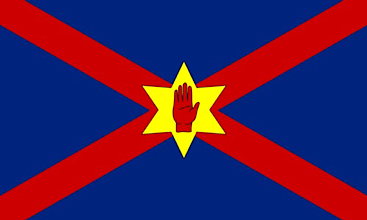
The UIC initially has a network of 11 branches and first enters the political arena in 1990 when Ross stands in a by-election for the Upper Bann constituency following the death of sitting MPHarold McCusker. Finishing fourth out of eleven candidates with 1,534 votes (4.3%) (and ahead of the Alliance Party of Northern Ireland candidate), the result indicate to the UIC that there is potential for an Ulster nationalist party.
The Committee reconstitutes itself in 1994 as a full political party, largely as a reaction to the Downing Street Declaration, changing its name to the UIM and putting forward Ross as a candidate in the 1994 elections to the European Parliament (one of three pro-independence candidates to stand). Ross proves the most successful of the three, gaining 7,858 first preference votes (a 1.4% share) and retains his deposit. In the aftermath of this election a general meeting of pro-independence groups and individuals is organised by Ross after overtures are sent out to David Kerr, Robert Mooney (the other two Ulster nationalist candidates in the European election) and the Ballymena-based Ulster Party. Mooney does not turn up but Kerr and Agnes McLeister of the Ulster Party agree to pool resources and join forces with Ross’ movement.
Buoyed by the relative success of the previous election and the influx of new affiliates, the UIM puts up 40 candidates in 18 seats in the Northern Ireland Forum elections of 1996, its most high-profile election campaign. With every seat contested as well as the regional list (which is headed by Ross) Kerr is placed as a candidate in Belfast North with McLeister in North Antrim, while other candidates who have or will go on to have a higher profile include Willie Frazer in Newry and Armagh (who subsequently organise Families Acting for Innocent Relatives and Love Ulster) and Kenny McClinton and Clifford Peeples in Belfast West (a pastor who is later jailed for possession of explosives).
Despite this higher profile campaign, the UIM’s vote drops as parties directly associated with loyalistparamilitary groups, such as the Ulster Democratic Party and Progressive Unionist Party, begin to win votes. Alongside this, the party is still not the only Ulster nationalist option, and finishes behind Ulster’s Independent Voice in Belfast North and Strangford, while beating them in Belfast West and tying exactly with them in North Down. The UIM polls 2,125 votes (0.5%) across Northern Ireland and no representation is secured.
Party activity continues after the signing of the Good Friday Agreement, with the UIM playing a role in the unsuccessful ‘No’ campaign against it. The party fields two candidates in the Northern Ireland Assembly of 1998 but fail to win a seat. Seeing their chances becoming increasingly diminished, the UIM formally abandons their role as a political party in January 2000 and instead reconstitutes as a “ginger group.” This comes in the wake of a Channel 4 programme, “The Committee,” which alleges links between the UIM and loyalist killings, allegations that damage their credibility and see a number of members leave the group.
The UIM is all but dead now, even as a think tank, although some of its former members have continued as members of the Ulster Third Way.
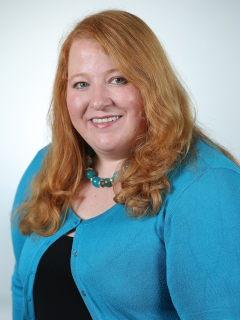
Long first takes political office in 2001 when she is elected to Belfast City Council for the Victoria ward. In 2003, she is elected to the Northern Ireland Assembly for Belfast East, succeeding her fellow party member John Alderdice. In 2006, she is named deputy leader of her party. In the 2007 Northern Ireland Assembly election, she more than doubles the party’s vote in the constituency, being placed second ahead of the leader of the Ulster Unionist Party (UUP). The overall UUP vote, however, is 22%. At 18.8%, her vote share is higher than that for Alderdice in 1998.
On December 10, 2012, Long receives a number of death threats, and a petrol bomb is thrown inside an unmarked police car guarding her constituency office. This violence erupts as a reaction by Ulster loyalists to the decision by Alliance Party members of Belfast City Council to vote in favour of restricting the flying of the Union flag at Belfast City Hall to designated days throughout the year, which at the time constitutes 18 specific days.
In January 2016, Long announces that she will return as an Assembly candidate in the 2016 Northern Ireland Assembly election having been nominated in place of incumbent Judith Cochrane. She is subsequently elected on the first count with 14.7% of first-preference votes. Following her return to the Assembly, she assumes positions on the Committee for Communities, the All-Party Group on Fairtrade, the All-Party Group for Housing, and chairs the All-Party Group on Science, Technology, Engineering and Mathematics.
In August 2016, Long calls for Sinn Féin‘s Máirtín Ó Muilleoir to stand aside as Minister of Finance during an investigation of the Stormont Finance Committee’s handling of its Nama inquiry, while Ó Muilleoir is a committee member. This follows allegations that his party had “coached” loyalist blogger Jamie Bryson prior to his appearance before the committee.
In November 2016, Long criticises Sinn Féin and the DUP for delaying the publication of a working group report on abortion, which recommends legislative changes in cases of fatal foetal abnormality, calling on the Executive “to act without further delay to help women who decide to seek a termination in these very difficult circumstances.”
On October 26, 2016, Long is elected Alliance leader unopposed following the resignation of David Ford. In the first manifesto released under her leadership, she affirms her commitment to building a “united, open, liberal and progressive” society. Her party’s legislative priorities are revealed to include the harmonisation and strengthening of equality and anti-discrimination measures, the introduction of civil marriage equality, development of integrated education and a Northern Ireland framework to tackle climate change.
In the 2017 Northern Ireland Assembly election, Long tops the poll in Belfast East and is returned to the Assembly with 18.9% of first-preference votes. The election is widely viewed as a success for Alliance, with the party increasing its vote share by 2 percentage points and retaining all of its seats in a smaller Assembly. The party subsequently holds the balance of power at Stormont.
Following the collapse of talks to restore devolution in February 2018, Long reiterates her view that the pay of MLAs should be cut in the absence of a functioning Executive. In March 2018, Alliance launches its “Next Steps Forward” paper, outlining a number of proposals aimed at breaking the deadlock and Stormont. At the 2019 Alliance Party Conference, she accuses Secretary of State for Northern IrelandKaren Bradley of an “appalling dereliction of duty” over the ongoing stalemate, saying that she had made “no concerted effort to end this interminable drift despite it allegedly being her top priority.”
In the 2019 Northern Ireland local elections, Alliance sees a 65% rise in its representation on councils. Long hails the “incredible result” as a watershed moment for politics in Northern Ireland.
Long is elected to the European Parliament as a representative for Northern Ireland in May 2019 with 18.5% of first-preference votes, the best ever result for Alliance. She is subsequently replaced in the Assembly by Máire Hendron, a founding member of the party and former deputy lord mayor of Belfast. She then replaces Hendron in the Assembly with effect from January 9, 2020.
In 2019, Long becomes the first Northern Ireland politician to have served at every level of government.
On January 11, 2020, following the restoration of the Northern Ireland Assembly after three years of stalemate, Long is elected Minister of Justice in the Northern Ireland Executive. On January 28, she announces that she will progress new domestic abuse legislation through the Assembly which will make coercive control a criminal offence in Northern Ireland. In June 2020, she commissions a review into the support available for prison officers following concerns about absence rates. That same month, she announces her intention to introduce unexplained wealth orders in Northern Ireland to target paramilitary and criminal finances.
In November 2020, Long says she is seriously reconsidering her position within the Executive following the DUP’s deployment of a cross-community vote to prevent an extension of COVID-19 regulations. She tells BBC News, “I have asked people to desist from this abuse of power because it will make my position in the executive unsustainable.”
In March 2022, Long tells the Alliance Party Conference that “some politicians are addicted to crisis and conflict and simply not up to the job of actually governing.” Long leads Alliance into the 2022 Northern Ireland Assembly election on a platform of integrated education, health reform, a Green New Deal, tackling paramilitarism and reform of the Stormont institutions.
Long is a member of Bloomfield Presbyterian Church. Following the Church’s decision to exclude those in same-sex relationships from being full members, she expresses “great concern” and states that she “didn’t know” if she would remain a member herself. She is married to Michael Long, an Alliance councillor on Belfast City Council and former Lord Mayor of Belfast, and son of the engineer Professor Adrian Long. Long and her husband are the first husband and wife to have both served as Lord Mayors of Belfast.