seamus dubhghaill

Promoting Irish Culture and History from Little Rock, Arkansas, USA


Leave a comment

Birth of James Graham Fair, Mining Tycoon & U.S. Senator

james-graham-fair

James Graham Fair, banker, mining tycoon, and United States Senator from Nevada, is born in Clogher, County Tyrone on December 3, 1831. He is credited with discovering the Big Bonanza, one of the richest pockets of gold and silver on the Comstock Lode.

Born in what is now Northern Ireland in 1831 to Scotch-Irish parents, Fair immigrates with his family to the United States when he is a boy and grows up on a farm in Illinois. Following the 1849 California Gold Rush, he travels to California. He earns a reputation for understanding ore bodies, inspiring his eventual employment as superintendent of various mines.

The 1859 discovery of the Comstock Lode in Nevada provides Fair with new opportunities. In 1865, he becomes superintendent of the prestigious Ophir Mine. Two years later, the Hale and Norcross Mine in Virginia City hire him as assistant superintendent, but the owners dismiss him within a year for unclear reasons.

While at the Hale and Norcross, Fair meets John William Mackay, whose success at the Kentuck Mine made him a millionaire. The two Irish immigrants recognize common interests and form an alliance. Mackay gives Fair the position of superintendent of the Rising Star Mine in Idaho, a property he had recently acquired. The venture proves unsuccessful, but it solidifies a working relationship between the two.

Fair works quietly with Mackay and investors James C. Flood and William S. O’Brien to obtain control of the Hale and Norcross Mine. Fair turns it to profit with better management. He and Mackay combine their expertise to acquire and explore other claims. In 1873, largely through Fair’s persistent search in the Consolidated California and Virginia Mine, the partnership discovers the famed Big Bonanza, one of the richest ore bodies in history. Fair and the others become extremely wealthy. He uses his assets to defeat the incumbent William Sharon for a seat in the United States Senate, which he holds in an undistinguished way from 1881-1887 as a Democrat.

Fair develops real estate in San Francisco and acquires mining property outside Nevada. Theresa Fair, his wife, is respected in Virginia City for donations to causes including those of the Catholic Church and the Daughters of Charity. When she divorces her husband in 1883 for habitual adultery, national public opinion turns against the senator. During his bid for reelection, he finds little support. Even Mackay fails to come to his aid, and he easily loses his seat to William Morris Stewart in 1887. He then moves back to San Francisco.

James Fair dies on December 28, 1894 in San Francisco of diabetes mellitus at the age of 63. He is buried in Holy Cross Cemetery in Colma, California.


Leave a comment

Death of George Best, Northern Irish Footballer

CREATOR: gd-jpeg v1.0 (using IJG JPEG v80), quality = 80

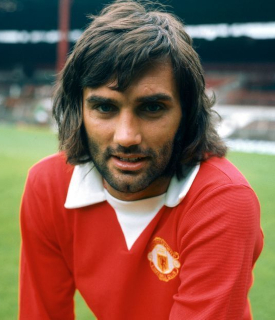
George Best, Northern Irish professional footballer, dies on November 25, 2005 due to complications from the immunosuppressive drugs he required following a 2002 liver transplant.

Best is born on May 22, 1946 and grows up in Cregagh, east Belfast. In 1957, he passes the eleven-plus and goes to Grosvenor High School, but he soon plays truant as the school specialises in rugby. He then moves to Lisnasharragh Secondary School, reuniting him with friends from primary school and allowing him to focus on football. He plays for Cregagh Boys Club. He grows up supporting Glentoran F.C. and Wolverhampton Wanderers F.C..

Best spends most of his club career at Manchester United. Named European Footballer of the Year in 1968, he is regarded as one of the greatest players of all time. A highly skillful winger, considered by several pundits to be one of the greatest dribblers in the history of the sport, he receives plaudits for his playing style, which combines pace, skill, balance, feints, two-footedness, goalscoring and the ability to get past defenders.

In international football, Best is capped 37 times for Northern Ireland between 1964 and 1977. A combination of the team’s performance and his lack of fitness in 1982 means that he never plays in the finals of a major tournament. He considers his international career as being “recreational football,” with the expectations placed on a smaller nation in Northern Ireland being much less than with his club. He is regarded as one of the greatest players never to have played at a World Cup. The Irish Football Association describes him as the “greatest player to ever pull on the green shirt of Northern Ireland.”

With his good looks and playboy lifestyle, Best becomes one of the first media celebrity footballers, earning the nickname “El Beatle” in 1966, but his extravagant lifestyle leads to various personal problems, most notably alcoholism, which he suffers from for the rest of his life. These issues affect him on and off the field, often causing controversy. Although conscious of his problems, he is publicly not contrite about them. He says of his career, “I spent a lot of money on booze, birds [women] and fast cars – the rest I just squandered.” After football, Best spends some time as a football analyst, but his financial and health problems continue into his retirement.

Best is diagnosed with severe liver damage in March 2000. His liver is said to be functioning at only 20%. In 2001, he is admitted to hospital with pneumonia. In August 2002, he has a successful liver transplant at King’s College Hospital in London.

On October 3, 2005, Best is admitted to intensive care at the private Cromwell Hospital in London, suffering from a kidney infection caused by the side effects of immunosuppressive drugs used to prevent his body from rejecting his transplanted liver. In the early hours of November 25, 2005, treatment is stopped. Later that day he dies, aged 59, as a result of a lung infection and multiple organ failure. He is interred beside his mother in a private ceremony at Roselawn Cemetery, overlooking east Belfast.


Leave a comment

Founding of the Irish Football Association

irish-football-association-crest

The Irish Football Association (IFA), the governing body for association football in Northern Ireland, is founded on November 18, 1880. It organises the Ireland national football team from 1880 to 1950, which after 1954, becomes the Northern Ireland national football team.

The IFA is founded by seven football clubs mostly in the Belfast area, as the organising body for the sport across all of Ireland. A meeting is called by Cliftonville F.C. of other football clubs that follow the rules set out by the Scottish Football Association (SFA). At that meeting at Queens Hotel, Belfast, the seven clubs form the IFA, making it the fourth oldest national football association in the world, after those of England, Scotland and Wales. The founding members are Alexander F.C., Avoniel F.C., Cliftonville F.C., Lisburn Distillery F.C., Knock F.C., Moyola Park F.C. and Oldpark F.C.

The IFA’s first decisions are to elect its first President, Major Spencer Chichester, and to form an annual challenge cup competition similar to the FA Cup and Scottish Cup competitions, called the Irish Cup. Two years later, Ireland plays its first international against England, losing 13–0, which remains a record for both teams, a record win for England and a record loss for Ireland.

Shortly after the partition of Ireland in 1921, the Football Association of Ireland (FAI) is established as a rival association to regulate the game in what is to become the Irish Free State. The immediate cause of the split lay in a bitter dispute over the venue for the replay of an Irish Cup match in 1921 involving Glentoran F.C. of Belfast and Shelbourne F.C. of Dublin. When the first cup match is drawn in Belfast, because of the Irish War of Independence, the IFA reneges on a promise to play the replay in Dublin and schedules the rematch again for Belfast. Shelbourne refuses to comply and forfeits the Cup.

Such is the anger over the issue that the Leinster Football Association breaks away from the IFA and forms its own national association. Those behind the FAI believe that football should be regulated by a federation based in the Irish Free State’s capital, Dublin. They also accuse the IFA of neglecting the development of the game in the South. The IFA’s supporters argue that the federation should be based where the game is primarily played – namely Ulster, and its principal city Belfast.

Both associations claim to represent the whole of the island, each competing internationally under the name “Ireland” and selecting players from both the rival national leagues, which also split at this time. Interventions by FIFA give the FAI de jure organising rights over the 26 counties of the Republic, with the IFA restricted to Northern Ireland. From the 1950s onwards, the IFA no longer claims it is the association for the whole of Ireland.

In 1960, the association moves to its present location on Windsor Avenue in south Belfast, in a building once occupied by Thomas Andrews. The IFA continues to regulate the game in Northern Ireland, and all results obtained by the Irish national side and records in the Irish Football League and the cup competition stand as Northern Irish records.


Leave a comment

Inauguration of Mary McAleese as 8th President of Ireland

CREATOR: gd-jpeg v1.0 (using IJG JPEG v62), quality = 100

Mary Patricia McAleese (née Leneghan) is inaugurated as the eighth President of Ireland on November 11, 1997. She succeeds Mary Robinson, making her the second female president of Ireland and the first woman in the world to succeed another woman as president. She is the first president to come from Northern Ireland.

Leneghan is born into a Roman Catholic family on June 27, 1951, in Ardoyne, north Belfast. The eldest of nine children, she grows up in Northern Ireland through the violent times that have come to be known as “The Troubles.” She is educated at St. Dominic’s High School, Queen’s University Belfast, from which she graduates in 1973, and Trinity College Dublin. She is called to the Bar of Northern Ireland in 1974 and remains a member of the Bar Council of Ireland. In 1975, she is appointed Reid Professor of Criminal Law, Criminology and Penology at Trinity College Dublin.

Leneghan marries Martin McAleese, an accountant and dentist in 1976. They have three children, Emma, born 1982, and twins Justin and SaraMai, born in 1985.

In 1987, McAleese returns to her Alma Mater, Queen’s University Belfast, to become Director of the Institute of Professional Legal Studies. In 1994, she becomes the first female Pro-Vice-Chancellor of the university.

McAleese defeats former Taoiseach Albert Reynolds in an internal party election in 1997, held to determine the Fianna Fáil nomination for the Irish presidency. Her opponents in the 1997 presidential election are Mary Banotti of Fine Gael, Adi Roche of the Labour Party and two Independents, Dana Rosemary Scallon and Derek Nally.

McAleese wins the presidency with 45.2% of first preference votes. In the second and final count against Banotti, McAleese wins 55.6% of preferences. Within weeks of her November 1997 inauguration, she makes her first official overseas trip to Lebanon.

McAleese describes the theme of her presidency as “building bridges.” The first individual born in Northern Ireland to become President of Ireland, McAleese is a regular visitor to Northern Ireland throughout her presidency, where she is on the whole warmly welcomed by both communities, confounding critics who had believed she would be a divisive figure. While on an official visit to the United States in 1998, Archbishop of Boston Cardinal Bernard Francis Law tells her he is “sorry for Catholic Ireland to have you as President.” She tells the cardinal that she is the “President of Ireland and not just of Catholic Ireland.”

McAleese’s initial seven-year term of office ends in November 2004, but she stands for a second term in the 2004 presidential election. She is re-elected on October 1, 2004, being the only validly nominated candidate.

McAleese is an experienced broadcaster, having worked as a current affairs journalist and presenter in radio and television with Radio Telefís Éireann. She has a longstanding interest in many issues concerned with justice, equality, social inclusion, anti-sectarianism and reconciliation.


Leave a comment

Birth of Conor Cruise O’Brien, Politician, Writer & Historian

conor-cruise-o-brien

Conor Cruise O’Brien, politician, writer, historian and academic often nicknamed “The Cruiser,” is born in Rathmines, Dublin on November 3, 1917. He serves as Minister for Posts and Telegraphs from 1973 to 1977, a Senator for University of Dublin from 1977 to 1979, a Teachta Dála (TD) for the Dublin North-East constituency from 1969 to 1977 and a Member of the European Parliament (MEP) from January 1973 to March 1973.

Cruise O’Brien follows his cousin Owen into Sandford Park School, which has a predominantly Protestant ethos despite objections from Catholic clergy. He subsequently attends Trinity College Dublin before joining the Irish diplomatic corps.

Although he is a fierce advocate of his homeland, Cruise O’Brien is a strong critic of Irish Republican Army violence and of what he considers the romanticized desire for reunification with Northern Ireland. His collection of essays Maria Cross: Imaginative Patterns in a Group of Modern Catholic Writers (1952; written under the pseudonym Donat O’Donnell) impresses UN Secretary-General Dag Hammarskjöld, who in 1961 appoints him UN special representative in the Congo, later the Democratic Republic of the Congo. He orders UN peacekeeping forces into the breakaway Katanga province, and the resulting scandal forces him out of office. Despite UN objections, he writes To Katanga and Back (1963) to explain his actions.

After serving as vice-chancellor of the University of Ghana (1962–65) and Albert Schweitzer Professor of Humanities at New York University (1965–69), Cruise O’Brien enters Irish politics. He holds a Labour Party seat in Dáil Éireann from 1969 to 1977 and then in the Senate from 1977 to 1979, representing Trinity College, of which he is pro-chancellor (1973–2008).

In 1979 Cruise O’Brien is named editor in chief of the British Sunday newspaper The Observer, but he leaves after three tumultuous years. He remains an active newspaper columnist, especially for the Irish Independent until 2007. His books include States of Ireland (1972) and On the Eve of the Millennium (1995), as well as perceptive studies of Charles Stewart Parnell, Edmund Burke, and Thomas Jefferson.

Conor Cruise O’Brien dies at the age of 91 on December 18, 2008, in Howth, Dublin.


Leave a comment

Mo Mowlam Presented International Woman of the Year Award

mo-mowlan

Marjorie “Mo” Mowlam, English Labour Party politician, is presented with the International Woman of the Year Award at a ceremony in Dublin on October 23, 2001. United Nations High Commissioner for Human Rights Mary Robinson wins the Overall Award at the Irish Tatler Women of the Year Awards.

Mowlam is born on September 18, 1949 in Watford, Hertfordshire, England but grows up in Coventry. She starts her education at Chiswick Girls’ grammar school in West London, then moves to Coundon Court school in Coventry which, at the time, is one of the first comprehensive schools in the country. She then studies at Trevelyan College, Durham University, reading sociology and anthropology. She joins the Labour Party in her first year.

Mowlam becomes the Secretary of the Durham Union Society in 1969 and later goes on to become the Vice-President of the Durham Student’s Union. She works for then-MP Tony Benn in London and American writer Alvin Toffler in New York, moving to the United States with her then-boyfriend and studying for a PhD in political science at the University of Iowa.

Mowlam is a lecturer in the Political Science Department at the University of Wisconsin–Milwaukee in 1977 and at Florida State University in Tallahassee from 1977 to 1979. During her time in Tallahassee, someone breaks into her apartment. She suspects that it is Ted Bundy, the serial killer and rapist who is thought to have murdered at least 35 young women and attacked several others. She returns to England in 1979 to take up an appointment at the University of Newcastle upon Tyne.

Having failed to win selection for the 1983 general election, Mowlam is selected as Labour candidate for the safe seat of Redcar after James Tinn stands down. She takes the seat in the 1987 general election, becoming the Labour spokesperson on Northern Ireland later that year. Together with Shadow Chancellor John Smith, she is one of the architects of Labour’s “Prawn Cocktail Offensive” dedicated to reassuring the UK’s financial sector about Labour’s financial rectitude.

Mowlam joins the Shadow Cabinet when John Smith becomes leader of the Labour Party in 1992, holding the title of Shadow Secretary of State for National Heritage. During this time, she antagonises both monarchists and republicans by calling for Buckingham Palace to be demolished and replaced by a “modern” palace built at public expense. Later, her willingness to speak her mind, often without regard to the consequences, is seen as her greatest strength by her supporters.

Following Smith’s death in 1994, Mowlam, alongside Peter Kilfoyle, becomes a principal organiser of Tony Blair‘s campaign for the Labour leadership. After his victory, Blair makes her Shadow Secretary of State for Northern Ireland. She initially resists being appointed to the position, preferring an economic portfolio, but, after accepting it, she throws her weight into the job.

Mowlam oversees the negotiations which lead to the 1998 Good Friday Agreement. She is successful in helping to restore an Irish Republican Army (IRA) ceasefire and including Sinn Féin in multi-party talks about the future of Northern Ireland. In an attempt to persuade the Ulster loyalists to participate in the peace process, she pays an unprecedented and potentially dangerous visit to loyalist prisoners in HM Prison Maze, meeting convicted murderers face-to-face and unaccompanied.

Mowlam witnesses the Good Friday Agreement signing in 1998, which leads to the temporary establishment of a devolved power-sharing Northern Ireland Assembly. However, an increasingly difficult relationship with Unionist parties means her role in the talks is ultimately taken over by Tony Blair and his staff.

Mowlam’s deteriorating relationship with Unionists is the key reason she is replaced by Peter Mandelson as Northern Ireland Secretary in October 1999. Her move to the relatively lowly position of Minister for the Cabinet Office possibly involves other factors, notably her health and her popularity. On September 4, 2000, she announces her intention to retire from Parliament and relinquishes her seat at the 2001 general election.

Five months before the 1997 general election, Mowlam is diagnosed with a brain tumor, a fact that she tries to keep private. She appears to suffer from balance problems as a result of her radiotherapy. According to her husband, she falls on July 30, 2005, receiving head injuries and never regaining consciousness. Her living will, in which she asks not to be resuscitated, is honoured. On August 12, 2005, Mowlan is moved to Pilgrims Hospice in Canterbury, Kent, where she dies seven days later, on August 19, 2005, aged 55.

Mowlam is an atheist and is cremated in Sittingbourne on September 1, 2005 at a non-religious service conducted by Reverend Richard Coles, formerly of the 1980s band The Communards. Half of her ashes were scattered at Hillsborough Castle, the Secretary of State for Northern Ireland’s official residence, and the other half in her former parliamentary constituency of Redcar.


Leave a comment

Birth of Máire Drumm, VP of Sinn Féin

maire-drumm

Máire Drumm, vice president of Sinn Féin and a commander in Cumann na mBan, is born in Newry, County Down, Northern Ireland on October 22, 1919.

Drumm is born to a staunchly Irish republican family. Drumm’s mother has been active in the Irish War of Independence and the Irish Civil War. Drumm grows up in the village of Killean, County Armagh, where she plays camogie. She is active in the republican movement after meeting her husband, a republican prisoner. She begins to speak at many rallies and protest meetings and is soon elected as Vice President of Sinn Fein. She becomes involved in the Northern Ireland Civil Rights Association in the 1960s and works to rehouse Irish Catholics forced from their homes by loyalist intimidation.

Drumm is jailed twice for seditious speeches. After she is released from HM Prison Armagh, raids on her house by the security forces escalate. She is widely demonised in the British media and is already a target for assassination when she is admitted to Belfast’s Mater Hospital for eye treatment in October 1976.

While recovering from the operation, Drumm is shot at point blank range on October 28, 1976, in a joint operation by the Ulster Volunteer Force and the Ulster Defence Association who are dressed as doctors enabling them to enter and leave the hospital undisturbed. No one has ever been convicted of her murder.

Drumm’s speeches and quotations can be found on murals across Northern Ireland, including:

“The only people worthy of freedom are those who are prepared to go out and fight for it every day, and die if necessary.”

“We must take no steps backward, our steps must be onward, for if we don’t, the martyrs that died for you, for me, for this country will haunt us forever.”


Leave a comment

Death of Jack Lynch, Politician & Taoiseach of Ireland

jack-lynch

Jack Lynch, Irish politician and Taoiseach of Ireland from 1966 to 1973 and from 1977 to 1979, dies in the Royal Hospital, Donnybrook in Dublin on October 20, 1999.

Lynch is born on August 15, 1917, in Blackpool, on the north side of Cork, County Cork. He is educated at St. Vincent’s Convent on Peacock Lane, and later at the North Monastery Christian Brothers School. He sits his Leaving Certificate in 1936, after which he moves to Dublin and works with the Dublin District Milk Board, before returning to Cork to take up a position in the Circuit Court Office.

Lynch eventually decides on a legal career, is called to the bar (1945), resigns from the civil service, and practices on the Cork circuit. He already enjoys a national reputation as a sports hero having won five All-Ireland medals as a Cork hurler and another as a footballer. He joins Fianna Fáil and wins a seat in Dáil Éireann, the lower house of the Oireachtas, in 1948. He works closely with Éamon de Valera in opposition (1948–51), and de Valera appoints him a parliamentary secretary in 1951–54, minister for the Gaeltacht in 1957, and Minister for Education in 1957–59. When Seán Lemass succeeds de Valera as Taoiseach in 1959, he makes Lynch Minister for Industry and Commerce and in 1965–66 Minister for Finance.

Lemass’s retirement in 1966 causes an internal party conflict over the succession that leads to Lynch’s selection as a compromise candidate, a position he reluctantly accepts. In November of that year, he becomes leader of Fianna Fáil and Taoiseach. In June 1969 he becomes the only Fianna Fáil leader other than de Valera to win an overall majority in a general election. In 1969–1973 Lynch plays an important role when civil unrest leads to the collapse of the government of Northern Ireland and poses a threat to the stability of the Irish state. He fires two cabinet ministers who are suspected of involvement in smuggling arms to the Provisional Irish Republican Army (IRA). He also creates a consensus in Irish party politics on a policy of conciliation and cooperation with the British government in seeking a solution to the Northern Ireland problem based on establishing power-sharing between the unionist majority and the Roman Catholic minority.

In 1972 Lynch wins an 83 percent majority in a referendum on Ireland’s entry into the European Economic Community. On January 1, 1973, Ireland becomes a member. Although he is defeated in the 1973 elections, he again demonstrates his remarkable popularity at the polls in 1977 when Fianna Fáil wins their largest and their last overall majority. In December 1979, however, discouraged by challenges to his authority from party colleagues, he resigns his leadership and soon after retires from politics. He serves on a number of corporate boards after his retirement.

In 1992 Lynch suffers a severe health setback, and in 1993 suffers a stroke in which he nearly loses his sight. Following this he withdraws from public life, preferring to remain at his home with his wife Máirín where he continues to be dogged by ill-health.

Lynch dies in the Royal Hospital, Donnybrook, Dublin on October 20, 1999, at the age of 82. He is honoured with a state funeral which is attended by the President of Ireland Mary McAleese, Taoiseach Bertie Ahern, former Taoisigh John Bruton, Albert Reynolds and Charles Haughey, and various political persons from all parties. The coffin is then flown from Dublin to Cork where a procession through the streets of the city draws some of the biggest crowds in the city’s history. After the Requiem Mass celebrated in his home parish of the Cathedral of St. Mary and St. Anne, Lynch’s friend and political ally, Desmond O’Malley, delivers the graveside oration, paying tribute to Lynch’s sense of decency. He is buried in St. Finbarr’s Cemetery in Cork.


Leave a comment

Hume & Trimble Receive 1998 Nobel Peace Prize

hume-trimble-noble-prize-1998

The 1998 Nobel Peace Prize is awarded on October 16, 1998, to John Hume and David Trimble, leaders of the largest Roman Catholic and Protestant political parties in Northern Ireland, for their efforts to bring peace to the long-polarized British province. The two men share the prize money of $960,000.

Hume, 61, the Catholic head of the Social Democratic and Labor Party, is cited by the Nobel Committee in Oslo for having been the “clearest and most consistent of Northern Ireland’s political leaders in his work for a peaceful solution.”

Trimble, 54, the Protestant leader of the Ulster Unionist Party, is honored for having demonstrated “great political courage when, at a critical stage in the process, he advocated solutions which led to the peace agreement.”

The leader of a third prominent party, Gerry Adams of Sinn Féin, the political wing of the Irish Republican Army (IRA), is not named as a prize winner. While it does not honor Adams, the committee says it wishes to “emphasize the importance of the positive contributions to the peace process made by other Northern Irish leaders.” Nor are several other figures mentioned as possibilities, including former Senator George Mitchell, who led the talks, British Prime Minister Tony Blair and Irish Taoiseach Bertie Ahern, United States President Bill Clinton, and Mo Mowlam, the British Government’s Secretary of State for Northern Ireland.

The accord, signed on April 10 and known as the Good Friday Agreement, gives the 1.7 million residents of Northern Ireland a respite from the sectarian violence that has claimed more than 3,200 lives in the previous 30 years. It also opens the possibility of lasting stability for the first time since the establishment of Northern Ireland with partition from Ireland in 1921.

Forging concessions from fiercely antagonistic populations, the accord seeks to balance the Protestant majority’s wish to remain part of Britain with Catholic desires to strengthen ties to the Republic of Ireland to the south. The committee, seeing in Northern Ireland’s two warring groups a dispute with notable similarities to violent tribal confrontations elsewhere, expresses the hope that the accord will serve “to inspire peaceful solutions to other religious, ethnic and national conflicts around the world.”

Adams, in New York on a fund-raising trip for Sinn Féin, welcomes the Oslo announcement and particularly praises Hume, who is widely seen as having helped persuade the IRA to adopt a cease-fire and having eased Sinn Féin’s entry into the talks. “Indeed, there would be no peace process but for his courage and vision,” Adams says, adding, “No one deserves this accolade more.” He also wishes Trimble well and says the prize imposes on everyone the responsibility to “push ahead through the speedy implementation of the agreement.”

In the unforgiving politics of Northern Ireland, the Unionist dissidents and members of other Protestant parties who do not join in the peace talks attack both Trimble and Hume. Ian Paisley Jr., son of the head of the Democratic Unionist Party, calls the Nobel Committee’s decision a “farce” and says of the winners, “These people have not delivered peace, and they are not peacemakers.”

Trimble says he is “slightly uncomfortable” with the award because so many other people have been involved beside him in reaching the settlement and much remains to be done to put it in place. “We know that while we have the makings of peace, it is not wholly secure yet,” he tells the BBC from Denver, where he is on an 11-city North American tour to spur foreign investment in Ulster. “I hope it does not turn out to be premature.”

Hume receives word of the prize at his home in Londonderry and terms it “an expression of the total endorsement of the work of very many people.” He adds, “This isn’t just an award to David Trimble and myself. It is an award to all the people in Northern Ireland.”

In Washington, D.C., President Clinton says “how very pleased” he is, “personally and as President, that the Nobel Prize Committee has rewarded the courage and the people of Northern Ireland by giving the Nobel Peace Prize to John Hume and to David Trimble.” He adds “a special word of thanks” to George Mitchell, who issues a statement praising Hume and Trimble as “fully deserving of this honor.”

The peace talks began in the summer of 1996. They eventually draw the participation of 8 of the 10 Northern Irish parties, with many of the men around the table convicted murderers and bombers who had emerged from prison with a commitment to peaceful resolution to what for nearly a century have been referred to wearily as “the Troubles.” The paramilitary groups had also made the tactical decision that violence would not secure their goals; a shared conviction that gives these talks a chance for success that past fitful attempts at settlement lacked.

The peace talks move in a desultory manner until Blair takes office in May 1997 and highlights the cause of peace in Northern Ireland as an early commitment. At his and Ahern’s urging, the IRA declares a cease-fire in July, and by September Sinn Féin is permitted to join the talks.

Blair also gives Trimble and Adams unprecedented access to 10 Downing Street, and the Ulster Protestants report that they obtained from Clinton the most sympathetic hearing they ever had from an American President, allaying their longtime suspicions of Washington’s bias in favor of the Catholic minority.

(From: “2 Ulster Peacemakers Win the Nobel Prize,” The New York Times, Warren Hoge, October 17, 1998)


Leave a comment

Irish Celtic Rock Band Horslips Disbands

horslips

Horslips, the Irish Celtic rock band regarded as the “founding fathers of Celtic rock,” disbands on October 12, 1980. The name originates from a spoonerism on The Four Horsemen of the Apocalypse which becomes “The Four Poxmen of The Horslypse.”

Barry Devlin, Eamon Carr and Charles O’Connor meet when they work at the Ark advertising company in Dublin. They are cajoled into pretending to be a band for a Harp Lager commercial but need a keyboard player. Devlin says he knows a Jim Lockhart who would fit the bill. The four enjoy the act so much that they decide to try being proper rock performers. They join guitarist Declan Sinnott, a colleague of Eamon Carr’s from Tara Telephone and, briefly, Gene Mulvaney to form Horslips (originally Horslypse) in 1970.

The band goes professional on St. Patrick’s Day 1972 having shed Mulvaney and released a single, “Johnny’s Wedding”, on their own record label, Oats. Declan Sinnott leaves soon after, primarily due to his annoyance at the group appearing in an advert for Mirinda orange drink. He is replaced by Gus Guest briefly, then Johnny Fean.

Following the release of six studio albums between 1972 and 1977, the ever-ambitious band tries to make it in the United States. In 1977 they produce Aliens, about the experience of the Irish in nineteenth-century America, which includes very little folk music. The Man Who Built America (1978), produced by Steve Katz of Blood, Sweat & Tears and The Blues Project fame, concerns Irish emigration to the United States and is commercially their most successful album. The heavier sound does bring some acceptance in America, but they lose their folk base and their freshness. Short Stories, Tall Tales (1979) is their last studio album and is panned by the record company and critics alike.

At a time when The Troubles are at its peak, Horslips plays gigs in both Northern Ireland and the Republic of Ireland without prejudice and are accepted everywhere. Their last recordings are from live performances at the Whitla Hall at Queen’s University Belfast in April and May 1980. A few months later, on October 12, 1980, they play their final gig in the Ulster Hall. They make no public announcement. They simply give an encore, The Rolling Stones‘ song “The Last Time,” and the final act is Charles O’Connor throwing his mangled fiddle into the audience. Ten years after they formed, they disband.

Although Horslips has limited commercial success when the band is playing in the 1970s, there is a revival of interest in their music in the late 1990s and they come to be regarded as one of the defining bands of the Celtic rock genre. There have since been small scale reunions including appearances on The Late Late Show and RTɑs Other Voices. The band reforms for two Irish shows in the Odyssey Arena in Belfast and the 3Arena in Dublin at the end of 2009 and have continued to play shows since then.