Maurice O’Neill, an Irish Republican Army (IRA) Captain captured in 1942 after a shootout with Irish police (Garda Síochána), is executed on November 12, 1942, one of only two people executed in independent Ireland for a non-murder offence.
O’Neill is a farmer from an Irish republican family in the farming community of Cahersiveen, County Kerry. He and his older brother Sean are dedicated Irish republicans. He fights in the Irish Republican Army’s 1942-44 Northern Campaign and is assigned to the IRA’s General Headquarters (GHQ) at the time of his capture. In the early 1930s, his brother Sean serves in the IRAs Dublin Brigade and serves on GHQ Staff IRA in various capacities from 1945 to 1955.
On October 24, 1942, O’Neill is arrested after a raid by Garda Síochána in which Garda Detective Officer Mordant is shot and killed in Donnycarney, Dublin. The mission of the police raid is the capture of Harry White, the IRA Quartermaster General. White escapes capture and O’Neill is arrested but not charged with the murder of the Detective Officer but with “shooting with intent.” It is thought that Detective Officer Mordant’s death may have been a result of crossfire between Special Branch policemen.
The 25-year-old O’Neill’s execution provokes particularly widespread protests, as he is a popular figure in his native County Kerry. He apparently is stoic and calm when his fate becomes clear. In a letter to his elder brother, Sean, from Arbour Hill Prison, he writes: “I suppose you saw in the papers where I met my Waterloo last Saturday night. Well, such are the fortunes of war…there is only one sentence, death or release. So I believe it is the full penalty for me. There is no good in having false hopes, hard facts must be faced.” In his last letter to his father he writes: “I am glad that I am not being reprieved as the thought of the torture I would have to endure in Portlaoise makes me shudder.”
Many Irish republican prisoners are released in 1948 as is the body of O’Neill (on September 17, 1948). O’Neill is buried in the republican plot at Kilavarnogue Cemetery, Cahersiveen, County Kerry. His name is listed on a monument in Fairview Park, Dublin, with the names other IRA members of that period who lose their lives. The Maurice O’Neill Bridge to Valentia Island is built in 1970 and named in memory of the young farmer who had been executed in 1942. In Kilflynn, County Kerry, the Crotta O’Neill’shurling club is named after him. In 2011, an Irish television documentary focuses on how O’Neill’s execution affected his family.
Four paramilitary bombings take place in the centre of Dublin between November 26, 1972, and January 20, 1973. On December 1, 1972, two separate car bombs explode within a 20-minute period in Eden Quay and Sackville Place. The bombings occur at the end of what is the bloodiest year in the entire 30-year-old religious-political conflict known as the Troubles, which had erupted at the end of the 1960s.
The first of the four bombs had exploded on November 26, 1972, in the laneway connecting Burgh Quay with Leinster Market outside the rear exit door of the Film Centre Cinema.
On Friday, December 1, 1972, at 7:58 p.m., a blue Hillman Avenger, registration number OGX 782 K, explodes at 29 Eden Quay close to Liberty Hall tower block. The blast blows the Avenger apart and what remains of the vehicle is catapulted 18 feet away to rest outside an optician’s office. A wall of flame shoots up which is visible to people across the River Liffey on the opposite Burgh Quay. Six cars parked in the vicinity of the Avenger are set on fire and piled on top of each other. Most of the windows of Liberty Hall and other nearby buildings implode and the edifices are damaged. Although a number of people suffer injuries – some horrific – nobody is killed. One of the injured is a pregnant woman. Customers inside the quayside Liffey Bar, near the explosion’s epicentre, are hurt by flying glass and some have open head wounds. Following the explosion, a huge crowd of people hurries to the scene where police and ambulances have already arrived.
At exactly the same time the carbomb detonates in Eden Quay, the Belfast News Letter receives a telephone call from a man using a coin box speaking with a Belfast English type of accent. He issues a warning that two bombs will explode in Dublin. He gives the locations as Liberty Hall and Abbey Street behind Clerys department store. The newspaper immediately phones the Royal Ulster Constabulary (RUC), who in turn relay the warnings to the Garda Control Room at Dublin Castle at 8:08 p.m. A team of Gardaí are sent to investigate the area around Sackville Place and Earl Street.
A policeman runs into a CIÉ company canteen in Earl Place warning the employees inside to clear the building as there is a bomb scare. Just after the building is evacuated, at 8:16 p.m., a silver-grey Ford Escort, registration number 955 1VZ, explodes in Sackville Place forty feet away from its intersection with Marlborough Street, throwing people up in the air and in all directions, killing two CIÉ employees who moments before had left the canteen. The victims are George Bradshaw (30), a bus driver and Thomas Duffy (23), a bus conductor. Both men are married with children. Bradshaw, whose body is rendered unrecognisable by the effects of the blast, dies of severe head injuries and Duffy is killed by a flying metal fragment which lacerates his aorta. Henry Kilduff, a CIÉ bus driver, later tells Gardaí that he had seen Bradshaw and Duffy en to twenty yards away walking down Sackville Place towards Marlborough Street when the carbomb exploded beside them.
Denis Gibney, another co-worker, informs police that Bradshaw had been headed in the direction of Liberty Hall after hearing that a bomb had gone off near there. Bradshaw is found lying badly mangled beside a damaged car and is carried into a ruined shop front where a priest performs last rites. As at Eden Quay, the Sackville Place bombing causes considerable damage to buildings and vehicles near the blast’s epicentre. Sackville Place is a narrow street off O’Connell Street, Dublin’s main thoroughfare. There is further panic amongst the survivors when the petrol tank inside the burning bomb car explodes. A total of 131 people are injured in both explosions.
The two bombings have immediate political ramifications. Just as the bombs are exploding in the city centre, Dáil Éireann is debating the controversial bill to amend the Offences Against the State Act, which would enact stricter measures against the Provisional Irish Republican Army (IRA) and other paramilitary groups. As a result of the two attacks, the Dáil votes for the amendment which introduces special emergency powers to combat the IRA. In particular this means that a member of the IRA or any other paramilitary group can be sentenced on the sworn evidence of a senior Garda officer in front of three judges. Before the bombings, many commentators had actually believed the bill, considered by some to be ‘draconian,’ would be defeated. It is believed that the November 26 and December 1 bombings are executed to influence the outcome of the voting.
Thirteen days after the double-bombing, three incendiary devices are found in Dublin – one inside Clerys department store and the other two in the toilets of the Premier Bar in Sackville Place. The devices had failed to explode. According to journalists Jim Cusack and Henry McDonald, the devices were planted by the same Ulster Volunteer Force (UVF) bomb unit that was responsible for the Eden Quay and Sackville Place car bombs.
Irish Supreme Court Justice Henry Barron commissions an official inquiry into the bombings. The findings are published in a report in November 2004. The Inquiry concludes that it “seemed more likely than not” that the bombing of the Film Centre Cinema on November 26, 1972, was “carried out by Republican subversives as a response to a Government ‘crackdown’ on the IRA and their associates” and to influence the outcome of the voting in the Dáil regarding the passage of the controversial amendment to the Offences Against the State Acts. Regarding December 1, 1972, and January 20, 1973, carbombings, the Inquiry concludes that confidential information obtained by the Gardaí indicates the three attacks were perpetrated by the UVF, “but no evidence was ever found to confirm this. Nor was there any evidence to suggest the involvement of members of the security forces in the attacks.”
The Dublin City Coroner’s Court holds an inquest in February 2005 into the deaths of George Bradshaw, Thomas Duffy, and Thomas Douglas. The jury of three men and four women returns a verdict of unlawful killing by persons or persons unknown for the three dead men.
The UVF has never admitted responsibility for the bombings.
(Pictured: The scene of destruction at Sackville Place, off O’Connell Street, Dublin, following the explosion. Photograph credit: Paddy Whelan)
Ó Brádaigh is born into a middle-class republican family. His father, Matt Brady, is an IRA volunteer who is severely wounded in an encounter with the Royal Irish Constabulary (RIC) in 1919. His mother, May Caffrey, is a Cumann na mBan volunteer and a 1922 graduate of University College Dublin (UCD). His father dies when he is ten and is given a paramilitary funeral led by his former IRA colleagues. His mother, prominent as the Secretary for the County Longford Board of Health, lives until 1974. He is educated at Melview National School at primary level and attends secondary school at St. Mel’s College, leaving in 1950, and graduates from University College Dublin in 1954. That year he takes a job teaching Irish language at Roscommon Vocational School in Roscommon. He is a deeply religious Catholic who refrains from smoking or drinking.
Ó Brádaigh joins Sinn Féin in 1950. While at university, in 1951, he joins the Irish Republican Army. In September 1951, he marches with the IRA at the unveiling of the Seán Russell monument in Fairview Park, Dublin. A teacher by profession, he is also a Training Officer for the IRA. In 1954, he is appointed to the Military Council of the IRA, a subcommittee set up by the IRA Army Council in 1950 to plan a military campaign against Royal Ulster Constabulary (RUC) barracks in Northern Ireland.
On August 13, 1955, Ó Brádaigh leads a ten-member IRA group in an arms raid on Hazebrouck Barracks, near Arborfield, Berkshire, England, a depot for the No. 5 Radar Training Battalion of the Royal Electrical and Mechanical Engineers. It is the biggest IRA arms raid in Britain. Most, if not all, of the weapons are recovered in a relatively short period of time. A van, traveling too fast, is stopped by the police and IRA personnel are arrested. Careful police work leads to weapons that had been transported in a second van and stored in London.
The IRA Border Campaign commences on December 12, 1956. As an IRA General Headquarters Staff (GHQ) officer, Ó Brádaigh is responsible for training the Teeling Column in the west of Ireland. During the Campaign, he serves as second-in-command of the Teeling Column. On December 30, 1956, he partakes in the Teeling Column attack on RUC barracks in Derrylin, County Fermanagh. RUC Constable John Scally is killed in the attack and is the first fatality of the new IRA campaign. Ó Brádaigh and others are arrested by the Garda Síochána across the border in County Cavan the day after the attack. They are tried and jailed for six months in Mountjoy Prison. A leading abstentionist, upon his arrest he refuses to recognize the authority of the Irish government and refuses to renounce violence in exchange for his release.
Upon completing his prison sentence, Ó Brádaigh is immediately interned at the Curragh Camp along with other republicans. On September 27, 1958, he escapes from the camp along with Dáithí Ó Conaill. While a football match is in progress, the pair cuts through a wire fence and escapes from the camp under a camouflage grass blanket. This is an official escape, authorised by the officer commanding (OC) of the IRA internees, Tomás Óg Mac Curtain. He is the first Sinn Féin TD on the run since the 1920s.
In October 1958, Ó Brádaigh becomes the IRA Chief of Staff, a position he holds until May 1959, when Seán Cronin is elected as his replacement. He is arrested in November 1959, refuses to answer questions, and is jailed in Mountjoy Prison under the Offences against the State Act. He is released in May 1960 and, after Cronin is arrested, again becomes Chief of Staff. Although he always emphasises that it is a collective declaration, he is the primary author of the statement ending the IRA Border Campaign in 1962. At the IRA 1962 Convention he indicates that he is not interested in continuing as Chief of Staff.
After Ó Brádaigh’s arrest in December 1956, he takes a leave from teaching at Roscommon Vocational School. He is re-instated and begins teaching again in late 1962, just after he is succeeded by Cathal Goulding in the position of Chief of Staff of the IRA. He remains an active member of Sinn Féin and is also a member of the IRA Army Council throughout the decade.
Ó Brádaigh opposes the decision of the IRA and Sinn Féin to drop abstentionism and to recognise the Westminster parliament in London, the Stormont parliament in Belfast and the Leinster House parliament in 1969/1970. On January 11, 1970, along with Seán Mac Stíofáin, he leads the walkout from the 1970 Sinn Féin Ard Fheis after the majority votes to end the policy of abstentionism, although the vote to change the Sinn Féin constitution fails to receive the required two-thirds majority. The delegates who walk out reconvene at the Kevin Barry Hall in Parnell Square, Dublin, and establish Provisional Sinn Féin.
Ó Brádaigh is voted chairman of the Caretaker Executive of Provisional Sinn Féin. That October, he formally becomes president of the party. He holds this position until 1983. In his presidential address to the 1971 Provisional Sinn Féin Ard Fheis, he says that the first step to achieving a United Ireland is to make Northern Ireland ungovernable. He apparently also serves on the Army Council or the executive of the Provisional Irish Republican Army until he is seriously injured in a car accident on January 1, 1984.
On May 31, 1972, Ó Brádaigh is arrested under the Offences Against the State Act and immediately commences a hunger strike. A fortnight later the charges against him are dropped and he is released. With Dáithí Ó Conaill he develops the Éire Nua policy, which is launched on June 28, 1972. The policy calls for a federal Ireland.
On December 3, 1972, Ó Brádaigh appears on the London Weekend TelevisionWeekend World programme. He is arrested by the Gardaí again on December 29, 1972, and charged in the newly established Special Criminal Court with Provisional IRA membership. In January 1973 he is the first person convicted under the Offences Against the State (Amendment) Act 1972 and is sentenced to six months in the Curragh Camp.
On December 10, 1974, Ó Brádaigh participates in the Feakle talks between the IRA Army Council and Sinn Féin leadership and the leaders of the Protestant churches in Ireland. Although the meeting is raided and broken up by the Gardaí, the Protestant churchmen pass on proposals from the IRA leadership to the British government. These proposals call on the British government to declare a commitment to withdraw, the election of an all-Ireland assembly to draft a new constitution and an amnesty for political prisoners.
The IRA subsequently calls a “total and complete” ceasefire intended to last from December 22, 1974, to January 2, 1975, to allow the British government to respond to proposals. British government officials also hold talks with Ó Brádaigh in his position as president of Sinn Féin from late December to January 17, 1975.
On February 10, 1975, the IRA Army Council, unanimously endorses an open-ended cessation of IRA “hostilities against Crown forces,” which becomes known as the 1975 truce. The IRA Chief of Staff at the time is Seamus Twomey of Belfast. It is reported in some quarters that the IRA leaders mistakenly believe they had persuaded the British Government to withdraw from Ireland and the protracted negotiations between themselves and British officials are the preamble to a public declaration of intent to withdraw. In fact, as British government papers now show, the British entertain talks with the IRA in the hope that this would fragment the movement further and score several intelligence coups during the talks. This bad faith embitters many in the republican movement, and another ceasefire does not happen until 1994.
In late December 1976, along with Joe Cahill, Ó Brádaigh meets two representatives of the Ulster Loyalist Central Co-ordinating Committee (ULCCC), John McKeague and John McClure, at the request of the latter body. Their purpose is to try to find a way to accommodate the ULCCC proposals for an independent Northern Ireland with the Sinn Féin’s Éire Nua programme. It is agreed that if this can be done, a joint Loyalist-Republican approach can then be made to request the British government to leave Ireland. Desmond BoalQC and Seán MacBrideSC are requested and accepted to represent the loyalist and republican positions. For months they have meetings in various places including Paris. The dialogue eventually collapses when Conor Cruise O’Brien, then Minister for Posts and Telegraphs and vociferous opponent of the Provisional IRA, becomes aware of it and condemns it on RTÉ Radio. As the loyalists had insisted on absolute secrecy, they feel unable to continue with the talks as a result.
In the aftermath of the 1975 truce, the Ó Brádaigh/Ó Conaill leadership comes under severe criticism from a younger generation of activists from Northern Ireland, headed by Gerry Adams, who becomes a vice-president of Sinn Féin in 1978. By the early 1980s, Ó Brádaigh’s position as president of Sinn Féin is openly under challenge and the Éire Nua policy is targeted in an effort to oust him. The policy is rejected at the 1981 Sinn Féin Ard Fheis and finally removed from the Sinn Féin constitution at the 1982 Ard Fheis. At the following year’s Ard Fheis, Ó Brádaigh and Ó Conaill resign from their leadership positions, voicing opposition to the dropping of the Éire Nua policy by the party.
On November 2, 1986, the majority of delegates to the Sinn Féin Ard Fheis vote to drop the policy of abstentionism if elected to Dáil Éireann, but not the British House of Commons or the Northern Ireland parliament at Stormont, thus ending the self-imposed ban on Sinn Féin elected representatives from taking seats at Leinster House. Ó Brádaigh and several supporters walk out and immediately assemble at Dublin’s West County Hotel and set up Republican Sinn Féin (RSF). As an ordinary member, he had earlier spoken out against the motion (resolution 162) in an impassioned speech. The Continuity IRA becomes publicly known in 1996. Republican Sinn Féin’s relationship with the Continuity IRA is similar to the relationship between Sinn Féin and the Provisional IRA when Ó Brádaigh was Sinn Féin’s president.
Ó Brádaigh believes RSF to be the sole legitimate continuation of the pre-1986 Sinn Féin, arguing that RSF has kept the original Sinn Féin constitution. RSF readopts and enhances his Éire Nua policy. His party has electoral success in only a few local elections.
Ó Brádaigh remains a vociferous opponent of the Good Friday Agreement, viewing it as a programme to copperfasten Irish partition and entrench sectarian divisions in the north. He condemns his erstwhile comrades in Provisional Sinn Féin and the Provisional IRA for decommissioning weapons while British troops remain in the country. In his opinion, “the Provo sell-out is the worst yet – unprecedented in Irish history.” He condemns the Provisional IRA’s decision to seal off a number of its arms dumps as “an overt act of treachery,” “treachery punishable by death” under IRA General Army Order Number 11.
In July 2005, Ó Brádaigh hands over a portion of his personal political papers detailing discussions between Irish Republican leaders and representatives of the British Government during 1974–1975 to the James Hardiman Library, National University of Ireland, Galway.
In September 2009, Ó Brádaigh announces his retirement as leader of Republican Sinn Féin. His successor is Des Dalton. He is also a long-standing member of the Celtic League, an organization which fosters cooperation between the Celtic people and promotes the culture, identity and eventual self-determination for the people, in the form of six sovereign states, for the Celtic nations – Wales, Cornwall, Brittany, Scotland, Isle of Man and Ireland.
After suffering a period of ill-health, Ó Brádaigh dies on June 5, 2013, at Roscommon County Hospital. His funeral is attended by 1,800 mourners including Fine Gael TD Frank Feighan and is policed by the Garda Emergency Response Unit and Gardaí in riot gear, for “operational reasons,” a show of force believed to have been to deter the republican tradition of firing a three-volley salute of shots over the final place of rest during the graveyard oration. As a result, there are some minor scuffles between gardai and mourners.
Murphy is an active Irish republican paramilitary from his late teens. In March 1972, he is arrested in Dundalk regarding an assault and is sentenced to two years in prison after the Garda Síochána find a loaded revolver in his car. He is imprisoned in the Curragh Camp but escapes in October 1972 and is not recaptured until May 1973. In June 1976, he is imprisoned again, receiving a three-year sentence for firearms offences and a one-year sentence for Provisional Irish Republican Army membership, both sentences to run concurrently. In July 1983, he is arrested in the United States after attempting to buy a consignment of M60 machine guns to be shipped to Ireland for use by the Irish National Liberation Army (INLA). He receives a five-year prison sentence but returns to Ireland in December 1985 after being released early.
In the late 1980s, Murphy begins investing in property and forms a company named Emerald Enterprises in 1990. He purchases the Emerald Bar public house in Dundalk for IR£100,000, and it later becomes a meeting place for dissident republicans. Other investments included 30 acres of land in Drogheda bought for IR£52,000 in 1995, and his company wins contracts for an IR£11 million development at Dublin City University (DCU) and the multi-million-pound International Financial Services Centre in the Dublin Docklands.
Murphy is arrested by the Gardaí on February 21, 1999, for questioning under anti-terrorist legislation. On February 24, he becomes the first person to be charged in connection with the Omagh bombing, when he appears before Dublin‘s Special Criminal Court and is charged with conspiring to cause an explosion under the terms of Ireland’s Offences Against the State Act, between August 13-16, 1998. He is also charged with membership in an illegal organisation, the Real Irish Republican Army (RIRA).
On October 10, 2000, the BBC television show Panorama names Murphy as one of four people connected with the Omagh bombing, along with Seamus Daly and Liam Campbell. In 2001, he undertakes legal action against the BBC and Daily Mail publishers Associated Newspapers for contempt of court. The action against Associated Newspapers is settled on July 31, 2001, and the newspaper releases a statement saying Murphy is entitled to be presumed innocent of the charges against him until proven guilty.
Murphy’s trial begins at Special Criminal Court in Dublin on October 12, 2001. The court hears that Murphy had supplied two mobile phones which were used during the bombing. One witness, Murphy’s second cousin, retracts his evidence and the judge calls the conduct of two detectives outrageous, saying they had persistently lied under cross-examination. Despite this, on January 22, 2002, he is convicted of conspiring to cause the Omagh bombing, and on January 25 is sentenced to 14 years imprisonment with the judge describing him as a long-time republican extremist.
On January 21, 2005, Murphy’s conviction is overturned and a new trial ordered, due to the invasion of Murphy’s presumption of innocence, and alteration of Gardaí interview notes and evidence presented by two officers. A week later, his legal case against the BBC is resolved, with the BBC issuing a statement that Murphy “was fully entitled to maintain his innocence of the charges against him and to test the evidence against him at his trial.”
On October 23, 2006, two Gardaí officers are found not guilty of perjuring themselves during Murphy’s trial. On May 23, 2007, it is announced that Murphy is suffering from short-term memory loss resulting from a car accident in 1988. His lawyers attempt to prevent a retrial taking place, on the grounds that his condition interferes with his right to a fair hearing. The Court of Criminal Appeal is scheduled to hear his case again in October 2008. Following a retrial held in January 2010, he is acquitted on February 24, 2010.
In 2009, Murphy is one of four men found by a civil court to be liable for the Omagh bombing in a case taken by relatives of the victims. On July 7, 2011, in Belfast High Court, Lord Justice Malachy Higgins directs a retrial of the civil claims against Murphy. He questions evidence surrounding emails from U.S. undercover agent David Rupert while overturning the judgment on Murphy. The paucity of the email evidence, the lack of consistency in the emails or at least ambiguity, the possibility of initials referring to someone other than Murphy and the fact that they refer on occasions to double hearsay considerably weaken the emails as evidence, he says. Following a civil retrial on March 20, 2013, Murphy and Seamus Daly are found liable for involvement in the bombing.
Mac Thomáis comes from a staunch Republican family. He is born Edward Patrick Thomas in the Dublin suburb of Rathmines on January 13, 1927. His father, a fire-brigade officer, dies when he is five years old and his family moves to Goldenbridge, Inchicore. He leaves school at thirteen to work as delivery boy for White Heather Laundry, learning Dublin neighbourhoods with great thoroughness. He says he found work to help his mother pay the rent. He later works as a clerk and is appointed credit controller for an engineering firm.
At the November 1959 Ardfheis Mac Thomáis is elected to the Ardchomhairle of Sinn Féin and edits and contributes to the Sinn Féin newspaper United Irishman. He is a close friend of Tomás Mac Giolla and is deeply affected by the 1970 split in Sinn Féin. He takes the Provisional side, opposing Mac Giolla.
Mac Thomáis takes over as editor of An Phoblacht in 1972. In July 1973, he is arrested and charged with IRA membership at the Special Criminal Court in Dublin. He refuses to recognise the court, but he gives a lengthy address from the dock. The following month he is sentenced to 15-months imprisonment. Within two months of completing his sentence he is again before the court on the same charge and again receives a 15-month sentence. Editors of six left-wing and Irish-language journals call for his release, as do a number of writers, and hundreds attend protest meetings – to no avail. He serves his full sentence.
Tim Pat Coogan, editor of The Irish Press, claims the charges against Mac Thomáis are politically motivated to a large degree as his activities are confined strictly to the newspaper An Phoblacht. Under Section 31 of the Broadcasting Act, due to his membership in Sinn Féin in the 1970s he is removed from his position in making some of the RTÉ historical programmes. As a historian he makes numerous contributions to various historical publications such as the Dublin Historical Review.
From 1974 Mac Thomáis writes a number of books on old Dublin. They sell well and remain in print for over 20 years. He also starts a number of walking tours of Dublin, which prove very popular.
Article 38 of the Constitution of Ireland empowers Dáil Éireann to establish “special courts” with wide-ranging powers when the “ordinary courts are inadequate to secure the effective administration of justice.” The Offences against the State Act 1939 leads to the establishment of the Special Criminal Court for the trial of certain offences. The scope of a “scheduled offence” is set out in the Offences Against the State (Scheduled Offences) Order 1972.
On May 26, 1972, the Government of Ireland exercises its power to make a proclamation pursuant to Section 35(2) of the Offences against the State Act 1939 which leads to the establishment of the Special Criminal Court for the trial of certain offences. The current court is first established by the Dáil under the Offences against the State Act 1939 to prevent the Irish Republican Army (IRA) from subverting Ireland’s neutrality during World War II and the Emergency. The current incarnation of the Special Criminal Court dates from 1972, just after the Troubles in Northern Ireland began.
Although the court is initially set up to handle terrorism-related crime, its remit has been extended and it has been handling more organised crime cases after the Provisional Irish Republican Armyceasefire in the 1990s. For instance, members of the drugs gang which murdered journalistVeronica Guerin were tried in the Special Criminal Court.
Section 35(4) and (5) of the Offences against the State Act 1939 provide that if at any time the Government or the Parliament is satisfied that the ordinary courts are again adequate to secure the effective administration of justice and the preservation of public peace and order, a rescinding proclamation or resolution, respectively, shall be made terminating the Special Criminal Court regime. To date, no such rescinding proclamation or resolution has been promulgated. Following the introduction of a regular Government review and assessment procedure on January 14, 1997, reviews taking into account the views of the relevant State agencies are carried out on February 11, 1997, March 24, 1998, and April 14, 1999, and conclude that the continuance of the Court is necessary, not only in view of the continuing threat to State security posed by instances of violence, but also of the particular threat to the administration of justice, including jury intimidation, from the rise of organised and ruthless criminal gangs, principally involved in drug-related and violent crime.
The Special Criminal Court has been criticised by the Irish Council for Civil Liberties, Amnesty International and the United Nations Commission on Human Rights for its procedures and for being a special court, which ordinarily should not be used against civilians. Among the criticisms are the lack of a jury and the increasing use of the court to try organised “ordinary” crimes rather than the terrorist cases it was originally set up to handle. Critics also argue that the court is now obsolete since there is no longer a serious terrorist threat to the State, although others disagree and cite the continuing violence from dissident republican terrorism, international terrorism and serious gangland crime.
Under the law, the court is authorised to accept the opinion of a Garda Síochána chief-superintendent as evidence that a suspect is a member of an illegal organisation. However, the court has been reluctant to convict on the word of a garda alone, without any corroborating evidence.
The Sinn Féin political party in the past has stated that it is their intention to abolish the Special Criminal Court as they believed it was used to convict political prisoners in a juryless court, however Sinn Féin are no longer in favour of its abolition. Some prominent Sinn Féin members, including Martin Ferris and Martin McGuinness, have been convicted of offences by it. In 1973 McGuinness was tried at the SCC, which he refused to recognise, after being arrested near a car containing 250 pounds (110 kg) of explosives and nearly 5,000 rounds of ammunition. He was convicted and sentenced to six months imprisonment.
(Pictured: The Criminal Courts of Justice complex in Dublin where Special Criminal Court (SCC) sittings are usually held)
O’Hara joins Na Fianna Éireann in 1970 and, in 1971, his brother Sean is interned in Long Kesh Prison. In late 1971, at the age of 14, he is shot and wounded by a soldier while manning a barricade. Due to his injuries, he is unable to attend the civil rights march on Bloody Sunday but watches it go by him in the Brandywell Stadium, and the events of the day have a lasting effect on him.
In October 1974, O’Hara is interned in Long Kesh Prison, and upon his release in April 1975 he joins the Irish Republican Socialist Party (IRSP) and INLA. He is arrested in Derry in June 1975 and held on remand for six months. In September 1976, he is arrested again and once more held on remand for four months.
On May 10, 1978, O’Hara is arrested on O’Connell Street in Dublin under section 30 of the Offences Against the State Act and is released eighteen hours later. He returns to Derry in January 1979 and is active in the INLA. On May 14, 1979, he is arrested and is convicted of possessing a hand grenade. He is sentenced to eight years in prison in January 1980.
O’Hara becomes Officer Commanding of the INLA prisoners at the beginning of the first hunger strike in 1980, and he joins the 1981 strike on March 22.
On Thursday, May 21, 1981, at 11:29 PM, Patsy O’Hara dies at the age of 23 after 61 days on hunger strike. In accordance with his wishes, his parents do not get him the medical intervention needed to save his life. His corpse is found to be mysteriously disfigured prior to its departure from prison and before the funeral, including signs of his face being beaten, a broken nose, and cigarette burns on his body.
The S-Plan contains many precise instructions for acts of destruction which have as their object the paralysis of all official activity in England and the greatest possible destruction of British defence installations. It divides the IRA campaign into two main lines: propaganda and offensive (military) action.
Operations are strictly concentrated on the island of Britain, in and around centres of population where IRA volunteers can operate freely without drawing attention. No attacks on targets in Northern Ireland or other areas under British control are planned as part of the S-Plan.
Sources of funding for the campaign are not known, but once the campaign is operational, the weekly expenses for operations in the field amount to approximately £700. Operational units are expected to raise any money needed themselves, and the men who act within IRA teams are unpaid and expected to support themselves while on missions.
On January 12, 1939, the IRA Army Council sends an ultimatum, signed by Patrick Fleming, to British Foreign SecretaryLord Halifax. The communiqué duly informs the British government of “The Government of the Irish Republic’s” intention to go to “war.”
On Sunday, January 15, with no reply from the British Government, a proclamation is posted in public places throughout Ireland announcing the IRA’s declaration of war on Britain. This proclamation is written by Joseph McGarrity, leader of Clan na Gael in the United States, and is signed by six members of the Army Council – Stephen Hayes, Patrick Fleming, Peadar O’Flaherty, George Oliver Plunkett, Larry Grogan and Seán Russell.
The five deaths during the Coventry bombing on August 25, 1939, effectively ends the campaign. By late 1940 the introduction of the Treason Act 1939 and the Offences Against the State Act 1939 in Ireland, and the Prevention of Violence (Temporary Provisions) Act in Britain lead to many IRA members interned in Ireland, arrested in Britain, or deported from Britain. The granting of extra powers to the Irish Justice Minister under the Emergency Powers Act in January 1940 leads to 600 IRA volunteers being imprisoned and 500 interned during the course of World War II alone.
The final figures resulting from the S-Plan are cited as 300 explosions, ten deaths and 96 injuries.
(Pictured: The aftermath of an IRA bike bomb in Coventry on August 25, 1939)
O’Hara joins Na Fianna Éireann in 1970 and, in 1971, his brother Sean is interned in Long Kesh Prison. In late 1971, at the age of 14, he is shot and wounded by a soldier while manning a barricade. Due to his injuries, he is unable to attend the civil rights march on Bloody Sunday but watches it go by him in the Brandywell Stadium, and the events of the day have a lasting effect on him.
In October 1974, O’Hara is interned in Long Kesh Prison, and upon his release in April 1975 he joins the Irish Republican Socialist Party (IRSP) and INLA. He is arrested in Derry in June 1975 and held on remand for six months. In September 1976, he is arrested again and once more held on remand for four months.
On May 10, 1978, O’Hara is arrested on O’Connell Street in Dublin under section 30 of the Offences Against the State Act and is released eighteen hours later. He returns to Derry in January 1979 and is active in the INLA. On May 14, 1979, he is arrested and is convicted of possessing a hand grenade. He is sentenced to eight years in prison in January 1980.
O’Hara becomes Officer Commanding of the INLA prisoners at the beginning of the first hunger strike in 1980, and he joins the 1981 strike on March 22.
On Thursday, May 21, 1981, at 11:29 PM, Patsy O’Hara dies after 61 days on hunger strike, at the age of 23. In accordance with his wishes, his parents do not get him the medical intervention needed to save his life. His corpse is found to be mysteriously disfigured prior to its departure from prison and before the funeral, including signs of his face being beaten, a broken nose, and cigarette burns on his body.


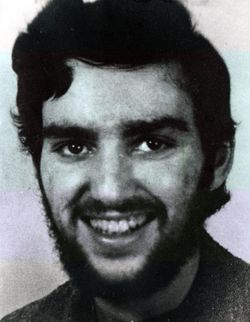

 seamus dubhghaill