seamus dubhghaill

Promoting Irish Culture and History from Little Rock, Arkansas, USA


Leave a comment

Birth of Kate O’Connell, Former Fine Gael Politician

Katherine O’Connell (née Newman), a former Fine Gael politician who serves as a Teachta Dála (TD) for the Dublin Bay South constituency from 2016 to 2020, is born in KilbegganCounty Westmeath, on January 3, 1980. During her time in the Dáil, O’Connell campaigns in favour of abortion rights as well as pushes for more funding for healthcare services in Ireland.

From 1999 to 2003, O’Connell studies to be a pharmacist at the University of Brighton, graduating with an M Pharm in the United Kingdom. She then works as a hospital pre-registrar in the Surrey and Sussex Healthcare NHS Trust, before returning to Ireland to practice as a locum-pharmacist. By 2006, she and her husband open up their first pharmacy in Sandyford, and later open up pharmacies in Rathgar, and Rathfarnham.

O’Connell is a member of Dublin City Council for the local electoral area of Rathgar–Rathmines from 2014 to 2016.

O’Connell is selected by Fine Gael for the 2016 Irish general election to “recapture” their seat in Dublin Bay South from Lucinda Creighton, who had left the party in 2013 over her objection to the party’s position on abortion and in 2015 founded Renua, an anti-abortion party. During the campaign, O’Connell called Creighton’s anti-abortion views “incredibly sanctimonious” and suggests that Creighton is an “out of touch career politician” whose views on abortion are borne out of a lack of connection with the real world. The Irish Independent refers to these comments as O’Connell “tearing strips off” of Creighton. In the election, O’Connell is elected, while Creighton loses her seat.

In her time in the Dáil, O’Connell campaigns in favour of abortion rights as well as pushing for more funding for healthcare services in Ireland.

In October 2016, O’Connell responds to comments by the Archbishop of Dublin Diarmuid Martin that TDs should remember their faith when legislating for abortion in Ireland by stating, “I don’t see why the archbishop’s views are in any way relevant. I don’t see why Archbishop Martin should be getting involved in women’s health issues. It is the same as asking my four-year-old. They [the Church] are entitled to their opinion, but I don’t put any weight in them. I don’t see what involvement the Catholic Church should have in women’s health issues”.

In November 2017, O’Connell confronts Barry Walsh, a member of Fine Gael’s executive council, with a dossier of tweets documenting that he repeatedly and frequently derogates women politicians, often calling them bitches, including fellow members of Fine Gael. After the leader of Fine Gael and Taoiseach Leo Varadkar comments that Walsh should resign, he does so.

O’Connell loses her seat at the 2020 Irish general election, placing 5th in the 4-seat constituency. In an August 2020 interview, she attributes her loss, in part, to being the running mate of the Minister for HousingEoghan Murphy, in an election fought over an ongoing housing crisis in Ireland.

On May 7, 2021, O’Connell declares she will not seek to be the Fine Gael candidate for the 2021 Dublin Bay South by-election. She suggests she will not be able to win a party selection again due to her relationship with the Fine Gael leadership souring in the meantime, partially because of her vocal support of Simon Coveney over Leo Varadkar in the 2017 Fine Gael leadership election. She also suggests many local Fine Gael branch members in Dublin South Bay regard her as an outsider and a “parachute candidate” due to the fact she is originally from County Westmeath, and have turned against her over this. The Phoenix offers the view that O’Connell would not be nominated because she has turned the Fine Gael leadership against her while lobbying for her sister, Mary Newman Julian, to be the party’s candidate in a 2018 Seanad by-election. In particular, a meeting between her and Simon Coveney in which her expectations are read as entitled is cited as hurting her relationships. Fine Gael’s candidate in the by-election is James Geoghegan, who had previously left the party to join Lucinda Creighton in Renua, but returns to Fine Gael after that party collapsed. He loses the by-election to Labour‘s Ivana Bacik, a senator for Dublin University and veteran pro-choice campaigner.

In October 2024, O’Connell leaves Fine Gael to contest the next general election in Dublin Bay South as an independent candidate. She fails to be elected or to achieve the one-quarter of the quota necessary to recoup her election expenses.

O’Connell states her family, the Newmans, have been “involved in Fine Gael since the 1960s,” starting when her maternal grandfather ran for Fine Gael as a councillor. Her father, Michael Newman, is also a Fine Gael councillor while Fine Gael minister Patrick Cooney is considered a family friend. O’Connell states that growing up, she and her family were greatly influenced by the progressive politics of Fine Gael leader Garret FitzGerald. Her sister, Mary Newman Julian, is also active in politics and contests elections for the Dáil in Tipperary and for Seanad Éireann, while another sister, Theresa Newman, works for a period as O’Connell’s political adviser in Leinster House. Her brother-in-law, Hugh O’Connell, is a prominent political journalist and editor who has worked for several Irish publications.

In 2018, during debates in the Dáil regarding abortion, O’Connell discloses personal details of a traumatic pregnancy she herself had experienced. During the pregnancy, she is told her child has only a 10% chance of survival. This prompts her to consider terminating the pregnancy. Ultimately, she decides to continue the pregnancy. The child is born with organs outside of the body but survives the birth. She cites the difficult decisions made during that pregnancy as having greatly informed her views on abortion.

Leave a comment

Birth of Edna O’Brien, Novelist, Playwright & Poet

Edna O’Brien, novelist, memoirist, playwright, poet and short story writer, is born in Tuamgraney, County Clare on December 15, 1930. Philip Roth describes her as “the most gifted woman now writing in English,” while the former President of Ireland Mary Robinson cites her as “one of the great creative writers of her generation.” Her works often revolve around the inner feelings of women, and their problems in relating to men, and to society as a whole.

O’Brien is the youngest child of “a strict, religious family.” From 1941 to 1946 she is educated by the Sisters of Mercy, a circumstance that contributes to a “suffocating” childhood. “I rebelled against the coercive and stifling religion into which I was born and bred. It was very frightening and all pervasive. I’m glad it has gone.” She is fond of a nun as she deeply misses her mum and tries to identify the nun with her mother.

In 1950, O’Brien is awarded a licence as a pharmacist. In Ireland, she reads such writers as Leo Tolstoy, William Makepeace Thackeray, and F. Scott Fitzgerald. In 1954, she marries, against her parents’ wishes, the Irish writer Ernest Gébler and the couple moves to London. They have two sons, but the marriage is dissolved in 1964. Gébler dies in 1998.

In London, O’Brien purchases Introducing James Joyce, with an introduction written by T. S. Eliot. When she learns that James Joyce‘s A Portrait of the Artist as a Young Man is autobiographical, it makes her realise where she might turn, should she decide to write herself. In London she starts work as a reader for Hutchinson, where on the basis of her reports she is commissioned, for £50, to write a novel. Her first novel, The Country Girls (1960), is often credited with breaking silence on sexual matters and social issues during a repressive period in Ireland following World War II.

This novel is the first part of a trilogy of novels which includes The Lonely Girl (1962) and Girls in Their Married Bliss (1964). Shortly after their publication, these books are banned and, in some cases burned, in her native country due to their frank portrayals of the sex lives of their characters. Her novel A Pagan Place (1970) is about her repressive childhood. Her parents are vehemently against all things related to literature and her mother strongly disapproves of her daughter’s career as a writer.

O’Brien is a panel member for the first edition of the BBC‘s Question Time in 1979. In 2017, she becomes the sole surviving member.

In 1980, she writes a play, Virginia, about Virginia Woolf, and it is staged originally in June 1980 at the Stratford Festival, Ontario, Canada and subsequently in the West End of London at the Theatre Royal Haymarket with Maggie Smith and directed by Robin Phillips. It is staged at The Public Theater in New York City in 1985.

Other works include a biography of James Joyce, published in 1999, and one of the poet Lord Byron, Byron in Love (2009). House of Splendid Isolation (1994), her novel about a terrorist who goes on the run, marks a new phase in her writing career. Down by the River (1996) concerns an under-age rape victim who seeks an abortion in England, the “Miss X case.” In the Forest (2002) deals with the real-life case of Brendan O’Donnell, who abducts and murders a woman, her three-year-old son, and a priest, in rural Ireland.

O’Brien now lives in London. She receives the Irish PEN Award in 2001. Saints and Sinners wins the 2011 Frank O’Connor International Short Story Award, the world’s richest prize for a short story collection. Faber and Faber publishes her memoir, Country Girl, in 2012. In 2015, she is bestowed Saoi by Aosdána.


Leave a comment

Death of Irish American Actor Gregory Peck

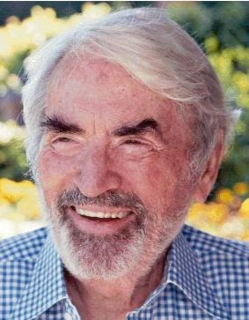
Actor Gregory Peck dies at his home in Los Angeles, California, from bronchopneumonia at the age of 87 on June 12, 2003.

Peck is born in La Jolla, California on April 5, 1916, to Bernice Mary (Ayres) and Gregory Pearl Peck, a chemist and pharmacist in San Diego. Through his Irish-born paternal grandmother, Catherine Ashe, Peck is related to Thomas Ashe, who takes part in the Easter Rising fewer than three weeks after Peck’s birth and dies while on hunger strike in 1917.

Peck’s parents divorce when he is five years old. An only child, he is sent to live with his grandmother. He never feels as though he has a stable childhood. His fondest memories are of his grandmother taking him to the movies every week and of his dog, which follows him everywhere.

At the age of ten Peck is sent to a Catholic military school, St. John’s Military Academy in Los Angeles. While he is a student there, his grandmother dies. At 14, he moves back to San Diego to live with his father and attends San Diego High School. After graduating he enrolls for one year at San Diego State Teacher’s College (now known as San Diego State University).

Peck studies pre-med at the University of California, Berkeley and while there is bitten by the acting bug and decides to change the focus of his studies. He enrolls in the Neighborhood Playhouse School of the Theatre in New York City and debuts on Broadway after graduation. His debut is in Emlyn Williams‘ play The Morning Star (1942). By 1943, he is in Hollywood, where he debuts in the RKO Pictures film Days of Glory (1944).

Stardom comes with Peck’s next film, The Keys of the Kingdom (1944), for which he is nominated for an Academy Award. Peck’s screen presence displays the qualities for which he becomes well known. He is tall, rugged and heroic, with a basic decency that transcends his roles. He appears in Alfred Hitchcock‘s Spellbound (1945) as an amnesia victim accused of murder. In The Yearling (1946), he is again nominated for an Academy Award and wins the Golden Globe Award. He is especially effective in westerns and appears in such varied fare as David O. Selznick‘s critically blasted Duel in the Sun (1946), the somewhat better received Yellow Sky (1948) and the acclaimed The Gunfighter (1950). He is nominated again for the Academy Award for his roles in Gentleman’s Agreement (1947), which deals with antisemitism, and Twelve O’Clock High (1949), a story of high-level stress in an Air Force bomber unit in World War II.

With a string of hits to his credit, Peck makes the decision to only work in films that interest him. He continues to appear as the heroic, larger-than-life figures in such films as Captain Horatio Hornblower R.N. (1951) and Moby Dick (1956). He works with Audrey Hepburn in her debut film, Roman Holiday (1953).

Peck finally wins the Oscar, after four nominations, for his performance as lawyer Atticus Finch in To Kill a Mockingbird (1962). In the early 1960s, he appears in two darker films than he usually makes, Cape Fear (1962) and Captain Newman, M.D. (1963), which deal with the way people live. He also gives a powerful performance as Captain Keith Mallory in The Guns of Navarone (1961), one of the biggest box-office hits of that year.

In the early 1970s, Peck produces two films, The Trial of the Catonsville Nine (1972) and The Dove (1974), when his film career stalled. He makes a comeback playing, somewhat woodenly, Robert Thorn in the horror film The Omen (1976). After that, he returns to the bigger-than-life roles he is best known for, such as MacArthur (1977) and the monstrous Nazi Dr. Josef Mengele in the huge hit The Boys from Brazil (1978). In the 1980s, he moves into television with the miniseries The Blue and the Gray (1982) and The Scarlet and the Black (1983). In 1991, he appears in the remake of his 1962 film, playing a different role, in Martin Scorsese‘s Cape Fear (1991). He is also cast as the progressive-thinking owner of a wire and cable business in Other People’s Money (1991).

In 1967, Peck receives the Academy’s Jean Hersholt Humanitarian Award. He has also been awarded the Presidential Medal of Freedom. Always politically progressive, he is active in such causes as anti-war protests, workers’ rights and civil rights. In 2003, Peck’s portrayal of Atticus Finch is named the greatest film hero of the past 100 years by the American Film Institute.

Peck dies in his sleep at his home in Los Angeles, California from bronchopneumonia at the age of 87 on June 12, 2003. He is entombed in the Cathedral of Our Lady of the Angels mausoleum in Los Angeles. His eulogy is read by Brock Peters, whose character, Tom Robinson, was defended by Peck’s Atticus Finch in To Kill a Mockingbird.


Leave a comment

Edna O’Brien Receives the Irish PEN Award for Literature

Josephine Edna O’Brien, novelist, memoirist, playwright, poet and short story writer, receives a lifetime achievement award from the society for Irish writers, the Irish PEN Award for Literature, on February 2, 2001, in recognition of her work which spans 25 years. Philip Roth describes her as “the most gifted woman now writing in English,” while Mary Robinson, former President of Ireland, cites her as “one of the great creative writers of her generation.”

O’Brien is born on December 15, 1930, the youngest child of farmer Michael O’Brien and Lena Cleary at Tuamgraney, County Clare, a place she would later describe as “fervid” and “enclosed.” Her father inherits a “thousand acres or more” and “a fortune from rich uncles,” but is a “profligate” hard drinker who gambles away his inheritance, the land sold off or bartered to pay debts. From 1941 to 1946 she is educated by the Sisters of Mercy at the Convent of Mercy boarding school at Loughrea, County Galway – a circumstance that contributes to a “suffocating” childhood. In 1950, having studied at night at pharmaceutical college and worked in a Dublin pharmacy during the day, she is awarded a licence as a pharmacist. She reads such writers as Leo Tolstoy, William Makepeace Thackeray, and F. Scott Fitzgerald.

In Dublin, O’Brien purchases Introducing James Joyce, with an introduction written by T. S. Eliot, and says that when she learned that James Joyce‘s A Portrait of the Artist as a Young Man was autobiographical, it made her realise where she might turn, should she want to write herself. “Unhappy houses are a very good incubation for stories”, she says. In London she starts work as a reader for Hutchinson, a publishing firm, where on the basis of her reports she is commissioned, for £50, to write a novel. She publishes her first book, The Country Girls, in 1960. This is the first part of a trilogy of novels (later collected as The Country Girls Trilogy), which includes The Lonely Girl (1962) and Girls in Their Married Bliss (1964). Shortly after their publication, these books are banned and, in some cases, burned in her native country due to their frank portrayals of the sex lives of their characters. She is accused of “corrupting the minds of young women.” She later says, “I felt no fame. I was married. I had young children. All I could hear out of Ireland from my mother and anonymous letters was bile and odium and outrage.”

In the 1960s, O’Brien is a patient of R. D. Laing. “I thought he might be able to help me. He couldn’t do that – he was too mad himself – but he opened doors,” she later says. Her novel A Pagan Place (1970) is about her repressive childhood. Her parents were vehemently against all things related to literature. Her mother strongly disapproved of her daughter’s career as a writer. Once when her mother found a Seán O’Casey book in her daughter’s possession, she tried to burn it.

O’Brien is a panel member for the first edition of BBC One‘s Question Time in 1979. In 2017 she becomes the sole surviving member.

In 1980, O’Brien writes a play, Virginia, about Virginia Woolf, and it is staged originally in June 1980 at the Stratford Festival, Ontario, Canada and subsequently in the West End of London at the Theatre Royal Haymarket with Maggie Smith and directed by Robin Phillips. It is staged at The Public Theater in New York City in 1985. Other works include a biography of James Joyce, published in 1999, and one of the poet Lord Byron, Byron in Love (2009). House of Splendid Isolation (1994), her novel about a terrorist who goes on the run and whose research involves visiting Irish republican Dominic McGlinchey who is later killed and whom she calls “a grave and reflective man,” marks a new phase in her writing career. Down by the River (1996) concerns an under-age rape victim who seeks an abortion in England, the “Miss X case.” In the Forest (2002) deals with the real-life case of Brendan O’Donnell, who abducts and murders a woman, her three-year-old son, and a priest, in rural Ireland.

In addition to the Irish PEN Award, O’Brien’s awards include The Yorkshire Post Book Award in 1970 for A Pagan Place, and the Los Angeles Times Book Prize in 1990 for Lantern Slides. In 2006, she is appointed adjunct professor of English Literature at University College Dublin.

In 2009, O’Brien is honoured with the Bob Hughes Lifetime Achievement Award during a special ceremony at the year’s Irish Book Awards in Dublin. Her collection Saints and Sinners wins the 2011 Frank O’Connor International Short Story Award, with judge Thomas McCarthy referring to her as “the Solzhenitsyn of Irish life.” RTÉ airs a documentary on her as part of its Arts strand in early 2012. For her contributions to literature, she is appointed an honorary Dame of the Order of the British Empire on April 10, 2018.

In 2019, O’Brien is awarded the David Cohen Prize for Literature at a ceremony in London. The £40,000 prize, awarded every two years in recognition of a living writer’s lifetime achievement in literature, has been described as the “UK and Ireland Nobel in literature.” Judge David Park says, “In winning the David Cohen Prize, Edna O’Brien adds her name to a literary roll call of honour.”

(Pictured: Edna O’Brien speaking at the 2016 Hay Festival, photo by Andrew Lih and licensed under the Creative Commons Attribution-Share Alike 3.0 Unported license)


Leave a comment

Birth of William Whitla, Physician & Politician

william-whitla

Sir William Whitla, Irish physician and politician, is born at The Diamond, Monaghan, County Monaghan on September 15, 1851.

Whitla is the fourth son of Robert Whitla, a woolen draper and pawnbroker, and his wife Anne, daughter of Alexander Williams of Dublin. His first cousin is painter Alexander Williams. Educated at the town’s Model School, he is articled at fifteen to his brother James, a local pharmacist, completing his apprenticeship with Wheeler and Whitaker, Belfast‘s leading pharmaceutical firm. Proceeding to study medicine at Queen’s College, Belfast, he takes the LAH, Dublin, and the LRCP and LRCS of Edinburgh in 1873.

With his qualifications Whitla obtains a post as resident medical officer at the Belfast General Hospital. He next spends some time in London, at St. Thomas’s Hospital, where he meets his future wife, Ada Bourne, daughter of George Bourne, a prominent Staffordshire farmer. She is a ward sister and friend of Florence Nightingale and a member of The Salvation Army.

The pair are married in 1876, settling in Belfast where Whitla establishes a general medical practice. He is awarded the MD of the Queen’s University of Ireland in 1877, with first class honours, gold medal, and commendation.

Whitla is appointed physician to the Belfast Royal Hospital and the Ulster Hospital for Children and Women in 1882. He holds post at the Belfast Royal Hospital and in the Royal Victoria Hospital, of which it is the forerunner, until his retirement in 1918. He succeeds Seaton Reid as professor of materia medica at the Queen’s College in 1890 and is twice president of the Ulster Medical Society (1886–1887, 1901–1902). Appointed a Knight Bachelor in the 1902 Coronation Honours list published on June 26, 1902, he is knighted by the Lord Lieutenant of Ireland, George Cadogan, 5th Earl Cadogan, at Dublin Castle on August 11, 1902.

In 1906 Whitla is appointed a governor of Methodist College Belfast, and he takes a keen interest in the school’s affairs. In 1919, he retires as Professor of Materia Medica in the university.

A strong unionist, Whitla is elected to parliament in 1918, serving until 1923 as representative of the Queen’s University at Westminster. He is appointed honorary physician to the king in Ireland in 1919 and is subsequently university pro-chancellor.

During the 1920s Whitla’s public appearances are fewer and, after a stroke in 1929, he is confined to his room. Lady Whitla dies in 1932. He dies at their Belfast residence, Lennoxvale, on December 11, 1933, and is given a civic funeral two days later. He is buried at Belfast City Cemetery.

During Whitla’s lifetime his gifts to his profession include the Good Samaritan stained glass window erected in the Royal Hospital and a building to house the Ulster Medical Society. At his death Lennoxvale is bequeathed to Queen’s University as a residence for the Vice-Chancellor. The university also is his residuary legatee and acts on his suggestion that the available funds should provide an assembly hall. The Sir William Whitla Hall is opened in 1949.

Whitla also leaves £10,000 to Methodist College Belfast to build a chapel, library or hall. The Whitla Hall at the Methodist College is opened in 1935.


Leave a comment

Birth of Irish American Actor Gregory Peck

gregory-peck

Actor Gregory Peck is born in La Jolla, California on April 5, 1916, to Bernice Mary (Ayres) and Gregory Pearl Peck, a chemist and pharmacist in San Diego. Through his Irish-born paternal grandmother, Catherine Ashe, Peck is related to Thomas Ashe, who takes part in the Easter Rising fewer than three weeks after Peck’s birth and dies while on hunger strike in 1917.

Peck’s parents divorce when he is five years old. An only child, he is sent to live with his grandmother. He never feels as though he has a stable childhood. His fondest memories are of his grandmother taking him to the movies every week and of his dog, which follows him everywhere.

At the age of ten Peck is sent to a Catholic military school, St. John’s Military Academy in Los Angeles. While he is a student there, his grandmother dies. At 14, he moves back to San Diego to live with his father and attends San Diego High School. After graduating he enrolls for one year at San Diego State Teacher’s College (now known as San Diego State University).

Peck studies pre-med at the University of California, Berkeley and while there is bitten by the acting bug and decides to change the focus of his studies. He enrolls in the Neighborhood Playhouse School of the Theatre in New York City and debuts on Broadway after graduation. His debut is in Emlyn Williams‘ play The Morning Star (1942). By 1943, he is in Hollywood, where he debuts in the RKO Pictures film Days of Glory (1944).

Stardom comes with Peck’s next film, The Keys of the Kingdom (1944), for which he is nominated for an Academy Award. Peck’s screen presence displays the qualities for which he becomes well known. He is tall, rugged and heroic, with a basic decency that transcends his roles. He appears in Alfred Hitchcock‘s Spellbound (1945) as an amnesia victim accused of murder. In The Yearling (1946), he is again nominated for an Academy Award and wins the Golden Globe Award. He is especially effective in westerns and appears in such varied fare as David O. Selznick‘s critically blasted Duel in the Sun (1946), the somewhat better received Yellow Sky (1948) and the acclaimed The Gunfighter (1950). He is nominated again for the Academy Award for his roles in Gentleman’s Agreement (1947), which deals with antisemitism, and Twelve O’Clock High (1949), a story of high-level stress in an Air Force bomber unit in World War II.

With a string of hits to his credit, Peck makes the decision to only work in films that interest him. He continues to appear as the heroic, larger-than-life figures in such films as Captain Horatio Hornblower R.N. (1951) and Moby Dick (1956). He works with Audrey Hepburn in her debut film, Roman Holiday (1953).

Peck finally wins the Oscar, after four nominations, for his performance as lawyer Atticus Finch in To Kill a Mockingbird (1962). In the early 1960s, he appears in two darker films than he usually makes, Cape Fear (1962) and Captain Newman, M.D. (1963), which deal with the way people live. He also gives a powerful performance as Captain Keith Mallory in The Guns of Navarone (1961), one of the biggest box-office hits of that year.

In the early 1970s, Peck produces two films, The Trial of the Catonsville Nine (1972) and The Dove (1974), when his film career stalled. He makes a comeback playing, somewhat woodenly, Robert Thorn in the horror film The Omen (1976). After that, he returns to the bigger-than-life roles he is best known for, such as MacArthur (1977) and the monstrous Nazi Dr. Josef Mengele in the huge hit The Boys from Brazil (1978). In the 1980s, he moves into television with the miniseries The Blue and the Gray (1982) and The Scarlet and the Black (1983). In 1991, he appears in the remake of his 1962 film, playing a different role, in Martin Scorsese‘s Cape Fear (1991). He is also cast as the progressive-thinking owner of a wire and cable business in Other People’s Money (1991).

In 1967, Peck receives the Academy’s Jean Hersholt Humanitarian Award. He has also been awarded the Presidential Medal of Freedom. Always politically progressive, he is active in such causes as anti-war protests, workers’ rights and civil rights. In 2003, Peck’s portrayal of Atticus Finch is named the greatest film hero of the past 100 years by the American Film Institute.

Gregory Peck dies in his sleep at his home in Los Angeles, California from bronchopneumonia at the age of 87 on June 12, 2003. He is entombed in the Cathedral of Our Lady of the Angels mausoleum in Los Angeles. His eulogy is read by Brock Peters, whose character, Tom Robinson, was defended by Peck’s Atticus Finch in To Kill a Mockingbird.


Leave a comment

Birth of Edna O’Brien, Novelist, Playwright & Poet

edna-o-brien

Edna O’Brien, novelist, memoirist, playwright, poet and short story writer, is born in Tuamgraney, County Clare on December 15, 1930. Philip Roth describes her as “the most gifted woman now writing in English,” while the former President of Ireland Mary Robinson cites her as “one of the great creative writers of her generation.” Her works often revolve around the inner feelings of women, and their problems in relating to men, and to society as a whole.

O’Brien is the youngest child of “a strict, religious family.” From 1941 to 1946 she is educated by the Sisters of Mercy, a circumstance that contributes to a “suffocating” childhood. “I rebelled against the coercive and stifling religion into which I was born and bred. It was very frightening and all pervasive. I’m glad it has gone.” She is fond of a nun as she deeply misses her mum and tries to identify the nun with her mother.

In 1950, O’Brien is awarded a licence as a pharmacist. In Ireland, she reads such writers as Leo Tolstoy, William Makepeace Thackeray, and F. Scott Fitzgerald. In 1954, she marries, against her parents’ wishes, the Irish writer Ernest Gébler and the couple moves to London. They have two sons, but the marriage is dissolved in 1964. Gébler dies in 1998.

In London, O’Brien purchases Introducing James Joyce, with an introduction written by T. S. Eliot. When she learns that James Joyce‘s A Portrait of the Artist as a Young Man is autobiographical, it makes her realise where she might turn, should she decide to write herself. In London she starts work as a reader for Hutchinson, where on the basis of her reports she is commissioned, for £50, to write a novel. Her first novel, The Country Girls (1960), is often credited with breaking silence on sexual matters and social issues during a repressive period in Ireland following World War II.

This novel is the first part of a trilogy of novels which includes The Lonely Girl (1962) and Girls in Their Married Bliss (1964). Shortly after their publication, these books are banned and, in some cases burned, in her native country due to their frank portrayals of the sex lives of their characters. Her novel A Pagan Place (1970) is about her repressive childhood. Her parents are vehemently against all things related to literature and her mother strongly disapproves of her daughter’s career as a writer.

O’Brien is a panel member for the first edition of the BBC‘s Question Time in 1979. In 2017, she becomes the sole surviving member.

In 1980, she writes a play, Virginia, about Virginia Woolf, and it is staged originally in June 1980 at the Stratford Festival, Ontario, Canada and subsequently in the West End of London at the Theatre Royal Haymarket with Maggie Smith and directed by Robin Phillips. It is staged at The Public Theater in New York City in 1985.

Other works include a biography of James Joyce, published in 1999, and one of the poet Lord Byron, Byron in Love (2009). House of Splendid Isolation (1994), her novel about a terrorist who goes on the run, marks a new phase in her writing career. Down by the River (1996) concerns an under-age rape victim who seeks an abortion in England, the “Miss X case.” In the Forest (2002) deals with the real-life case of Brendan O’Donnell, who abducts and murders a woman, her three-year-old son, and a priest, in rural Ireland.

O’Brien now lives in London. She receives the Irish PEN Award in 2001. Saints and Sinners wins the 2011 Frank O’Connor International Short Story Award, the world’s richest prize for a short story collection. Faber and Faber publish her memoir, Country Girl, in 2012. In 2015, she is bestowed Saoi by Aosdána.