seamus dubhghaill

Promoting Irish Culture and History from Little Rock, Arkansas, USA


Leave a comment

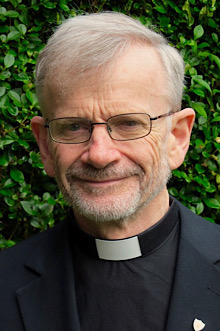
Birth of Alan McGuckian, Bishop of Down and Connor

Alexander Aloysius “Alan” McGuckianSJ, the 33rd Bishop of Down and Connor, is born on February 25, 1953, in CloughmillsCounty Antrim, Northern Ireland.

McGuckian is the youngest of six children to Brian McGuckian and his wife Pauline (née McKenna). He is named after his uncle, also Alexander Aloysius McGuckian, who dies five month before he is born. Yet another uncle, Daniel McGuckian, is a priest of the Diocese of Down and Connor and serves as parish priest of Cushendun and then Randalstown until his death in 1980. His father is a successful pig farmer who, alongside his brothers, develops the world’s biggest pig farm.

Two of McGuckian’s brothers are also Jesuit priests, while another brother is a businessman. Both of his sisters predecease him.

McGuckian attends primary school in Cloughmills and secondary school at St. MacNissi’s College, before beginning studies in Irish language and scholastic philosophy at Queen’s University, Belfast (QUB) in 1971, where he is a near-contemporary of future brother bishop Dónal McKeown. He first visits Ranafast, County Donegal, in 1968, and has since become a regular visitor to the Donegal Gaeltacht.

After one year in Belfast, McGuckian enters the Jesuit novitiate at Manresa House in Clontarf, Dublin, during which time he completes a Bachelor of Arts in Latin and Spanish from University College Dublin (UCD) between 1974 and 1977, a Bachelor of Philosophy from Milltown Institute of Theology and Philosophy between 1977 and 1979, and a Master of Divinity and a Licentiate of Sacred Theology from Regis College, Toronto, between 1981 and 1985. He subsequently completes a Master of Arts in Irish translation from Queen’s University, Belfast.

McGuckian is ordained to the priesthood on June 22, 1984, and makes his final profession on February 15, 1997.

Following ordination, McGuckian spends four years as a teacher in Clongowes Wood College and vocations director for the Jesuits, before undertaking a six month period of spiritual renewal in southern India and serving in a shanty town in Quezon CityPhilippines.

McGuckian returns to Ireland in 1992, where he is appointed director of the Jesuit Communication Centre, during which he develops Sacred Space, a website which allows people to pray at their computer, in 1999, and Catholic news service CatholicIreland.net in 2004.

McGuckian also serves as editor of both An Timire and Foilseacháin Ábhair Spioradálta, later translating the autobiography of Ignatius of Loyola into Irish under the title Scéal an Oilithrigh. He also co-authors the drama 1912 – A Hundred Years On with Presbyterian historian Philip Orr in 2011, which looks at the experiences of the Ulster Covenant and the wider Home Rule movement from both nationalist and unionist perspectives.

McGuckian also serves as chaplain to many of the Gaelscoileanna in the Diocese of Down and Connor, and subsequently as chaplain to Ulster University campuses in Belfast and Jordanstown. Following the publication of the Living Church Report, which outlines the findings of a synodal process within the diocese, he is appointed by Noël Treanor in 2012 to set up and lead the Living Church Office, whose aim is to realise the hopes and aspirations expressed in the report and subsequently in the upcoming diocesan pastoral plan.

McGuckian is also appointed diocesan director of formation for the permanent diaconate in 2014, and also works during his directorship of the Living Church Office to establish pastoral communities across the diocese, through fostering a culture of co-responsibility for the mission of the Church between clergy and lay people.

McGuckian is appointed Bishop-elect of Raphoe by Pope Francis on June 9, 2017. His appointment makes him the first member of the Jesuits to be appointed a bishop in Ireland.

McGuckian is consecrated by the Archbishop of Armagh and Primate of All IrelandEamon Martin, on August 6, 2017, in the Cathedral of St. Eunan and St. ColumbaLetterkenny. He uses the name and title Alan Mac Eochagáin, C. Í. when ministering in the Gaeltacht.

In an interview with The Irish Catholic in September 2019, McGuckian says that having a home is as fundamental as the right to life and education, and that the Government must be “pushed” to enshrine a right to housing in the Constitution of Ireland. He also joins a number of church leaders in the West of Ireland on September 16, 2021, in calling on the Irish government to offer reparations to homeowners whose properties are affected by defective concrete blocks.

In an interview with The Irish Catholic in February 2021, McGuckian takes issue with the view held by political leaders that public worship is deemed to be “non-essential” during the COVID-19 pandemic in the Republic of Ireland. Quoting Pope Francis, who states that “the right to worship must be respected, protected and defended by civil authorities like the right to bodily and physical health,” he expresses a need to let political leaders know that public worship is not only central, but also “utterly essential.”

Following a fatal explosion in Creeslough, County Donegal, on October 7, 2022, McGuckian refers to the explosion as “the darkest day in Donegal,” adding that the local community is “living through a nightmare of shock and horror.” He also concelebrates at the Funeral Masses of each of the victims, describing the fact that the parish church would be holding two funerals in the space of three hours as “surreal.”

McGuckian is appointed Bishop of Down and Connor by Pope Francis on February 2, 2024. In his first address following his appointment, he expresses his hope that the restoring of the Northern Ireland Executive will help the most vulnerable in society.


Leave a comment

Birth of Josephine Bracken, Common-law wife of José Rizal

Marie Josephine Leopoldine Bracken, the common-law wife of Philippine national hero José Rizal, is born in Victoria Barracks in Victoria, British Hong Kong, on August 9, 1876.

Bracken is born to Irish parents James Bracken, a corporal in the British Army, and Elizabeth Jane McBride, of Belfast. After her mother dies shortly after childbirth, her father gives her up for adoption. She is taken in by her godfather, the American George Taufer, a blind, and fairly well-to-do engineer of the pumping plant of the Hong Kong Fire Department, and his late Portuguese wife. He later remarries another Portuguese woman from Macau, Francesca Spencer, with whom he has another daughter.

After the second Mrs. Taufer dies in 1891, Taufer decides to remarry again but the new wife turns out to be difficult to deal with for Bracken. She spends two months in the Convent of the Canossian Sisters, where she previously attended early years of school. She decides to go back only after Taufer calls at the convent’s door pleading with her to come back home as his third wife turned out to be a bad housekeeper. A few months later she has trouble again with the third Mrs. Taufer and haunts her out of the house.

Bracken later recommends that her blind adoptive father see José Rizal, who is a respected ophthalmologist who had practiced at Rednaxela Terrace in Hong Kong. By this time, he is a political exile in Dapitan, Zamboanga del Norte in southern Philippines. The family sails to the Philippines and arrives in Manila on February 5, 1895, and later that month Bracken and Taufer sail to Dapitan.

Taufer’s double cataract is beyond Rizal’s help, but he falls in love with Bracken. Taufer vehemently opposes the union but finally listens to reason. She accompanies Taufer to Manila on his way back to Hong Kong, together with Rizal’s sister, Narcisa, on March 14, 1895. Rizal applies for marriage but because of his writings and political stance, the local priest Father Obach, will only agree to the ceremony if Rizal obtains permission from the Bishop of Cebu. Either the Bishop does not write him back or Rizal is not able to mail the letter because of Taufer’s sudden departure.

Before heading back to Dapitan to live with Rizal, Bracken introduces herself to members of his family in Manila. His mother suggests a civil marriage, which she believes to be a lesser “sacrament” but free from hypocrisy — and thus less a burden to Rizal’s conscience — than making any sort of political retraction. Nevertheless, Bracken and Rizal live together as husband and wife in Barangay Talisay, Dapitan, beginning in July 1895. The couple has a son, Francísco Rizal y Bracken, who is born prematurely and dies within a few hours of birth.

On the evening before his execution on December 30, 1896, on charges of treason, rebellion and sedition by the Spanish colonial government, the Catholic Church claims that Rizal returned to the faith and is married to Bracken in a religious ceremony officiated by Father Vicente Balaguer, S.J. sometime between 5:00 AM and 6:00 AM, an hour before his scheduled execution at 7:00 AM. Despite claims by Father Balaguer and Bracken herself, some sectors, including members of Rizal’s family, dispute that the wedding had occurred because no records are found attesting to the union.

Following Rizal’s death, Bracken joins revolutionary forces in Cavite province, where she takes care of sick and wounded soldiers, boosting their morale, and helping operate reloading jigs for Mauser cartridges at the Imus Arsenal under revolutionary general Pantaleón García. Imus is under threat of recapture, so Bracken, making her way through the thicket and mud, moves with the operation to the Cavite mountain redoubt of Maragondon. She witnesses the Tejeros Convention on March 22, 1897, before returning to Manila, and is later summoned by the Spanish Governor-General, who threatens her with torture and imprisonment if she does not leave the colony. Owing however to her adoptive father’s American citizenship, she cannot be forcibly deported, but she voluntarily returns to Hong Kong upon the advice of the American consul in Manila.

Upon returning to Hong Kong, Bracken once more lives in her father’s house. After his death, she marries Vicente Abad, a Cebuano mestizo, who represents his father’s tabacalera company in the British territory. A daughter, Dolores Abad y Braken, is born to the couple on April 17, 1900. A later testimony of Abad affirms that her mother “was already suffering from tuberculosis of the larynx” at the time of the wedding.

Bracken dies of tuberculosis on March 15, 1902, in Hong Kong and is interred at the Happy Valley Cemetery.


Leave a comment

Death of U.S. President William McKinley

william-mckinley

William McKinley, the 25th President of the United States, dies on September 14, 1901, eight days after being shot by anarchist Leon Czolgozc and six months into his second term. McKinley leads the nation to victory in the Spanish American War, raises protective tariffs to promote American industry, and maintains the nation on the gold standard in a rejection of free silver.

McKinley is born on January 29, 1843, in Niles, Ohio, the seventh child of William McKinley Sr. and Nancy (née Allison) McKinley. The McKinleys are of English and Scots Irish descent and settled in western Pennsylvania in the 18th century, tracing back to a David McKinley who is born in Dervock, County Antrim, in present-day Northern Ireland.

McKinley is the last president to serve in the American Civil War and the only one to start the war as an enlisted soldier, beginning as a private in the Union Army and ending as a brevet major. After the war, he settles in Canton, Ohio, where he practices law and marries Ida Saxton. In 1876, he is elected to the United States Congress, where he becomes the Republican Party‘s expert on the protective tariff, which he promises will bring prosperity. His 1890 McKinley Tariff is highly controversial which, together with a Democratic redistricting aimed at gerrymandering him out of office, leads to his defeat in the Democratic landslide of 1890.

McKinley is elected Ohio’s governor in 1891 and 1893, steering a moderate course between capital and labor interests. With the aid of his close adviser Mark Hanna, he secures the Republican nomination for president in 1896, amid a deep economic depression. He defeats his Democratic rival, William Jennings Bryan, after a front porch campaign in which he advocates “sound money” and promises that high tariffs will restore prosperity.

Rapid economic growth marks McKinley’s presidency. He promotes the 1897 Dingley Act to protect manufacturers and factory workers from foreign competition, and in 1900, he secures the passage of the Gold Standard Act. He hopes to persuade Spain to grant independence to rebellious Cuba without conflict, but when negotiation fails, he leads the nation into the Spanish American War of 1898. The U.S. victory is quick and decisive. As part of the Treaty of Paris (1898), Spain turns over to the United States its main overseas colonies of Puerto Rico, Guam, and the Philippines. Cuba is promised independence, but at that time remains under the control of the U.S. Army. The United States annexes the independent Republic of Hawaii in 1898, and it became a U.S. territory.

Historians regard McKinley’s 1896 victory as a realigning election, in which the political stalemate of the post–Civil War era gives way to the Republican-dominated Fourth Party System, which begins with the Progressive Era.

McKinley defeats Bryan again in the 1900 presidential election, in a campaign focused on imperialism, protectionism, and free silver. However, his legacy is suddenly cut short when he is shot on September 6, 1901, by Leon Czolgosz, a second-generation Polish American with anarchist leanings. McKinley dies eight days later on September 14, 1901, and is succeeded by his Vice President, Theodore Roosevelt. He is buried at the McKinley National Memorial in Canton, Ohio.

As an innovator of American interventionism and pro-business sentiment, McKinley’s presidency is generally considered above average, though his highly positive public perception is soon overshadowed by Roosevelt.