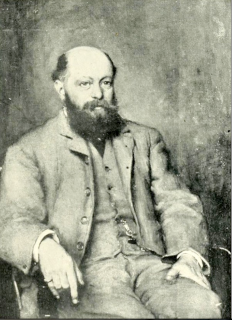
Drew is born on September 18, 1838, in Victoria Place, Belfast, into the large family of Rev. Thomas Drew, son of a Limerick grocer, and Isabella Drew (née Dalton). He is one of four sons and eight daughters of the couple, although most of the children die young. His sister, Catherine Drew, is a prominent Londonjournalist and an early champion of women’s rights.
Drew is educated in Belfast and in 1854 articled to the Antrimcounty surveyor and architect Sir Charles Lanyon, before moving to work in Dublin in 1862, where he becomes principal assistant to William George Murray. In 1865, he becomes the diocesan architect of the united dioceses of Down, Connor and Dromore. From this point forward, church architecture is his principal activity. He is consulting architect for both St. Patrick’s Cathedral and Christ Church Cathedral in Dublin.
Drew marries Adelaide Anne, sister of William George Murray, in 1871.
Among other projects, Drew is responsible for the design of the Ulster Bank on Dame Street, Rathmines Town Hall and the Graduates’ Building at Trinity College Dublin (TCD). He takes an interest in historic buildings and is the first to draw serious attention to the architectural and historic importance of the St. Audoen’s Church, Dublin’s oldest parish church, in 1866. He produces detailed plans of the church for which he wins the Fitzgerald medal from the Royal Institute of the Architects of Ireland (RIAI), carries out excavations and draws up a paper on the church and its history.
From 1885 to 1892, Richard Orpen works with Drew as a managing assistant. Drew’s most significant work in Belfast is St. Anne’s Cathedral, completed in 1899.
From 1879 onward Drew lives in Gortnadrew, one half of a pair of semi-detached houses of his own design, on Alma Road in Monkstown, County Dublin. For many years he serves as a commissioner of the local township of Blackrock, Dublin. He dies on March 13, 1910, a month after an unsuccessful operation for appendicitis. He is buried in Dean’s Grange Cemetery in the suburban area of Deansgrange in Dún Laoghaire–Rathdown, County Dublin.
Drew is commemorated in a memorial brass in Christ Church Cathedral, Dublin. His wife survives him by three years and in her will bequeaths back to the RIAI the loving cup presented to her husband in commemoration of his knighthood, and to the Belfast Municipal Museum and Art Gallery (Ulster Museum since 1962) an 1852 portrait of his father Thomas. A portrait of Drew by Walter Osborne is held in the National Gallery of Ireland (NGI) in Dublin.
Orpen wants to pursue painting, but “for family reasons” he becomes an architect. He spends eleven years with Thomas Drew, initially as a pupil, and later as a managing assistant from 1885 to 1892. From around 1884, he attends the annual excursions of the English Architectural Association. Around 1890, he establishes his own architectural practice in Drew’s offices at 22 Clare Street, Dublin. In 1896, he moves his office to 7 Leinster Street. In 1888 he is elected as a member of the Royal Institute of the Architects of Ireland (RIAI), serving as a council member from 1902 to 1910, as honorary secretary from 1903 to 1905, and as president from 1914 to 1917. He designs the institute’s official seal in 1909. In 1904, the Irish Builder describes him as the “originator of the bungalow in Ireland.”
From 1888, Orpen exhibits with the Royal Hibernian Academy (RHA), with watercolours and architectural drawings. He continues to exhibit with them until 1936. He collaborates with Percy French on a number of projects, including illustrating Racquetry Rhymes (1888) and The First Lord Liftinant and Other Tales (1890). He provides cartoons for French’s periodical, The Jarvey. His architectural illustrations are included in H. Goldsmith Whitton’s Handbook of the Irish Parliament Houses… (1891). He is one of the original members of the Architectural Association of Ireland, serving as its first president in 1896, and as vice-president in 1910.
Orpen is appointed the architect to St. Columba’s from 1897 to 1938, following a fire at the college in 1896. He becomes a fellow of the college, and the sanatorium becomes known as the Orpen building. He is an active member of the Arts and Crafts Society of Ireland, serving as secretary in 1895, on the committee in 1904, and in 1917 sits on the organising committee for the fifth exhibition. In 1906, he is a founding member of the Arts Club. In 1906 he moves his architectural practice to 13 South Frederick Street, and moves into a house he designed, Coologe, Carrickmines, County Dublin.
From 1910 to 1914, Orpen is in an architectural partnership with Page Dickinson, with the two collaborating on plans for the new Dublin municipal gallery and conversion of the Turkish Baths, Lincoln Place. Lane rejects his and Dickinson’s gallery plans, leading to him refusing to work with Lane’s choice of architect, Sir Edwin Lutyens. In 1914, he is appointed a guardian of the National Gallery of Ireland, and lectures at the Dublin Metropolitan School of Art on architectural history in 1914 and 1915. He is involved in the design of a number of memorials including the setting for a bronze relief by Beatrice Campbell for the members of the Royal Irish Regiment killed in the Second Boer War and the war memorial at the Rathgar Methodist church. He serves as president of the arts and crafts section of the Royal Dublin Society (RDS). He is also a governor of the Royal National Hospital for Consumption for Ireland in Newcastle, County Wicklow.
Orpen features as one of the many portraits in Seán Keating‘s Homage to Sir Hugh Lane. St. Columba’s College holds a portrait of Orpen by his brother, William, as well as a memorial stained-glass window to him by Catherine O’Brien.
Drew is the son of the Rev. Thomas Drew, son of a Limerick grocer, and Isabella Drew (née Dalton), daughter of a Dublin attorney. He is one of four sons and eight daughters of the couple, although most of the children die young. His sister, Catherine Drew, is a prominent Londonjournalist and an early champion of women’s rights.
Drew is trained under Sir Charles Lanyon before moving to work in Dublin, where he becomes principal assistant to William George Murray. In 1865, he becomes the diocesan architect of the united dioceses of Down, Connor and Dromore, and from that point forward Church architecture is his principal activity. He is consulting architect for both St. Patrick’s Cathedral and Christ Church Cathedral in Dublin.
Drew marries Adelaide Anne, sister of William George Murray, in 1871.
From 1885 to 1892, Richard Orpen works with Drew as a managing assistant. Drew’s most significant work in Belfast is St. Anne’s Cathedral, completed in 1899.
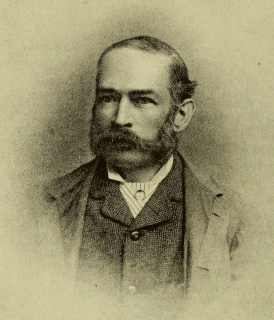
Ashlin is the son of J. M. Ashlin, J.P. He receives his early education at the Collège de St. Servais in Liège, Belgium. He later enrolls at St. Mary’s College, Oscott (1851-55) where he is subsequently a pupil of Edward Welby Pugin. It is during this time that he develops an interest in architecture. By 1858, he enters the Royal Academy Schools, London.
When Pugin receives the commission for SS Peter and Paul’s, Carey’s Lane, Cork, in 1859, he makes Ashlin a partner with responsibility for their Irish work. This partnership lasts until late 1868. In 1861 they open their office at St. Stephen’s Green, Dublin. The practice is primarily ecclesiastical, designing some 25 religious buildings. Their churches and Cathedrals are mainly located in the counties of Wexford, Cork and Kerry, and are all of similar design. By far the most important commission undertaken by this partnership is the building of St. Colman’s Cathedral, Cobh for Bishop William Keane.
In 1867 Ashlin marries Mary Pugin (1844-1933), sister of Edward Welby Pugin and daughter of Augustus Welby Pugin, the Gothic revivalist. Their only daughter, Miriam, is born ten years later.
The partnership with Pugin is dissolved in 1870. Thereafter Ashlin practises in his own right, branching out to cover the entire island nation. His works of this period include Ballycotten (1901), Ballybunion (1892), Church of the Most Holy Rosary, Midleton (1893) and the Munster & Leinster Bank, both of Midleton, and finally Kildare (1898).
Scott’s family originates in the province of Munster. His father, William Scott, is a school inspector from near Sneem on the Iveragh Peninsula in County Kerry. His mother is from County Cork. He is educated at Belvedere College in Dublin. There he first demonstrates his skills at painting and acting. Initially he wants to pursue a career as a painter, but his father points out that it might make more financial sense to become an architect.
Scott becomes an apprentice for the sum of £375 per annum to the Dublin architectural firm Jones and Kelly. He remains there from 1923 until 1926, where he studies under Alfred E. Jones. In the evenings after work, he also attends the Metropolitan School of Art and the Abbey School of Acting, and appears in many plays there until 1927, including the first productions of Seán O’Casey’s Juno and the Paycock and The Plough and the Stars. On completing his pupilage, he becomes an assistant to Charles James Dunlop and then has a brief spell as an assistant architect in the Office of Public Works.
In 1931 Scott partners with Norman D. Good to form Scott and Good, and they open an office in Dublin. They design the hospital at Tullamore (1934–1937) and Portlaoise General Hospital (1935). Between 1937 and 1938, he is the President of the Architectural Association of Ireland (AAI). He founds his company, Michael Scott Architects, in 1938. That same year he also designs his house Geragh, at Sandycove, County Dublin.
Scott’s most important pre-war commission is the Irish Pavilion for the 1939 New York World’s Fair. He produces a shamrock shaped building constructed in steel, concrete and glass. It is selected by an international jury as the best building in the show. As a result, he is presented with a silver medal for distinguished services and given honorary citizenship of the city of New York by then Mayor Fiorello H. La Guardia. Other better-known architects who design national pavilions for this World Fair include Alvar Aalto of Finland and Oscar Niemeyer of Brazil.
Scott has three major commissions from the Córas Iompair Éireann CIÉ, the Inchicore Chassis Works, the Donnybrook Bus Garage and, most famously, the Dublin Central Bus Station, to be known as àras Mhic Dhiarmada or Busáras. Though initially controversial, Busáras wins Scott the Royal Institute of the Architects of Ireland Triennial Gold Medal for Architecture.
Scott, who spends most of his life living at Sandycove Point, just south of Dún Laoghaire in south Dublin, dies in Dublin on January 24, 1989, and is buried near Sneem in County Kerry.
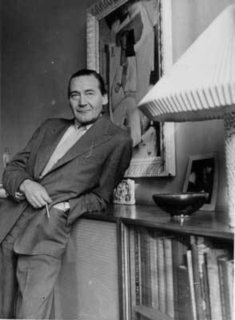
Scott is born in Drogheda on June 24, 1905. His family originates in the province of Munster. His father, William Scott, is a school inspector from near Sneem on the Iveragh Peninsula in County Kerry. His mother is from County Cork. He is educated at Belvedere College in Dublin. There he first demonstrates his skills at painting and acting. Initially he wants to pursue a career as a painter, but his father points out that it might make more financial sense to become an architect.
Scott becomes an apprentice for the sum of £375 per annum to the Dublin architectural firm Jones and Kelly. He remains there from 1923 until 1926, where he studies under Alfred E. Jones. In the evenings after work, he also attends the Metropolitan School of Art and the Abbey School of Acting, and appears in many plays there until 1927, including the first productions of Seán O’Casey’s Juno and the Paycock and The Plough and the Stars. On completing his pupilage, he becomes an assistant to Charles James Dunlop and then has a brief spell as an assistant architect in the Office of Public Works.
In 1931 Scott partners with Norman D. Good to form Scott and Good, and they open an office in Dublin. They design the hospital at Tullamore (1934–1937) and Portlaoise General Hospital (1935). Between 1937 and 1938, he is the President of the Architectural Association of Ireland (AAI). He founds his company, Michael Scott Architects, in 1938. That same year he also designs his house Geragh, at Sandycove, County Dublin.
Scott’s most important pre-war commission is the Irish Pavilion for the 1939 New York World’s Fair. He produces a shamrock shaped building constructed in steel, concrete and glass. It is selected by an international jury as the best building in the show. As a result, he is presented with a silver medal for distinguished services and given honorary citizenship of the city of New York by then Mayor Fiorello H. La Guardia. Other better-known architects who design national pavilions for this World Fair include Alvar Aalto of Finland and Oscar Niemeyer of Brazil.
Scott has three major commissions from the Córas Iompair Éireann CIÉ, the Inchicore Chassis Works, the Donnybrook Bus Garage and, most famously, the Dublin Central Bus Station, to be known as àras Mhic Dhiarmada or Busáras. Though initially controversial, Busáras wins Scott the Royal Institute of the Architects of Ireland Triennial Gold Medal for Architecture.
Scott, who spends most of his life living at Sandycove Point, just south of Dún Laoghaire in south Dublin, dies in Dublin on January 24, 1989, and is buried near Sneem in County Kerry.



 seamus dubhghaill