Traynor is born in Dublin on March 21, 1886, into a strongly nationalist family. He is educated by the Christian Brothers. In 1899, he is apprenticed to John Long, a famous woodcarver. As a young man he is a noted footballer and tours Europe as a goalkeeper with Belfast Celtic F.C. whom he plays with from 1910 to 1912. He rejects claims soccer is a foreign sport calling it “a Celtic game, pure and simple, having its roots in the Highlands of Scotland.”
When the Irish Civil War breaks out in June 1922, Traynor takes the Anti-Treaty IRA side. The Dublin Brigade is split, however, with many of its members following Michael Collins in taking the pro-Treaty side. During the Battle of Dublin, he is in charge of the Barry’s Hotel garrison, before making their escape. He organises guerilla activity in south Dublin and County Wicklow, before being captured by Free State troops in September. He is then imprisoned for the remainder of the war.
In 1936, Traynor is first appointed to the Cabinet as Minister for Posts and Telegraphs. In September 1939, he is appointed Minister for Defence and holds the portfolio to February 1948. In 1948, he becomes President of the Football Association of Ireland, a position he holds until his death. He serves as Minister for Defence in several Fianna Fáil governments and as Minister for Justice, where he is undermined by his junior minister, and later Taoiseach, Charles Haughey, before he retires in 1961.
Traynor dies in Dublin at the age of 77 on December 14, 1963. He has a road named in his memory, running from the Malahide Road through Coolock to Santry in Dublin’s northern suburbs.
The O’Neills and O’Donnells retain their lands and titles, although with much-diminished extent and authority. However, the countryside is laid bare in a campaign of destruction in 1602, which induces famine in 1603. Hugh O’Neill, Earl of Tyrone, is pardoned under the terms of the Treaty of Mellifont in March 1603 and submits to the crown.
When King James VI and I takes the English throne in 1603, he quickly proceeds to issue pardons for the Irish lords and their rebel forces. Already reigning as king of Scotland, he has a better understanding of the advantages from working with local chiefs in the Scottish Highlands. However, as in other Irish lordships, the 1603 peace involves O’Neill losing substantial areas of land to his cousins and neighbors, who would be granted freeholds under the English system, instead of the looser arrangements under the former Brehon law system. This is not a new policy but is a well-understood and longstanding practice in the Tudor conquest of Ireland.
On September 10, 1602, the Prince of Tyrconnell has already died, allegedly assassinated, in Spain, and his brother succeeds him as 25th Chieftain of the O’Donnell clan. He is later granted the Earldom of Tyrconnell by King James I on September 4, 1603, and restored to a somewhat diminished scale of territories in Tyrconnell on February 10, 1604.
In 1605, the new Lord Deputy of Ireland, Sir Arthur Chichester, begins to encroach on the former freedoms of the two Earls and The Maguire, enforcing the new freeholds, especially that granted in North Ulster to the O’Cahan chief. The O’Cahan had formerly been important subjects of the O’Neills and required protection; in turn, Chichester wants to reduce O’Neill’s authority. O’Cahan has also wanted to remove himself from O’Neill’s overlordship. An option is to charge O’Neill with treason if he does not comply with the new arrangements. The discovery of the Gunpowder Plot in the same year makes it harder for Catholics to appear loyal to both the crown and the papacy. A lengthy legal battle however finds in O’Neill’s favor.
By 1607, O’Neill’s allies the Maguires and the Earl of Tyrconnell are finding it hard to maintain their prestige on lower incomes. They plan to seek Spanish support before news of the Battle of Gibraltar arrives. When their ship drops anchor, O’Neill seems to have joined them on impulse. He had three options:
Flee with his friends and hope for a reinvasion by Spain
Go to London and stay at court until his grievances are redressed
Do nothing and live on a reduced income as a large landowner in Ulster
Fearing arrest, they choose to flee to Continental Europe, where they hope to recruit an army for the invasion of Ireland with Spanish help. However, earlier in 1607 the main Spanish fleet in Europe had been defeated by the Dutch in the Battle of Gibraltar. But the oft-repeated theory that they are all about to be arrested contradicts writer Tadhg Ó Cianáin, the main historical source on the Flight, who says at the start of his account that O’Neill heard news of the ship anchored at Rathmullen on Thursday September 6, and “took his leave of the Lord Justice (Chichester) the following Saturday.” They had been meeting at Slane for several days, and there is no proof that warrants for his arrest have been drawn up, nor is it a hurried departure.
Also, as the Anglo-Spanish War (1585–1604) has been ended by the Treaty of London in 1604, King Philip III of Spain wants to remain at peace with England under its new Stuart dynasty. As a part of the peace proposals, a Spanish princess is to marry James’ son, Henry, though this never happens. Spain had also gone bankrupt in 1598. Tyrone ignores all these realities, remains in Italy, and persists with his invasion plan until his death in exile in 1616.
The earls set sail from Rathmullan, a village on the shore of Lough Swilly in County Donegal, with some of the leading Gaelic families in Ulster. Several leave their wives behind, hoping either to return or retrieve them later. They travel down Lough Swilly on a French ship. Their departure is the end of the old Gaelic order, in that the earls are descended from Gaelic clan dynasties that had ruled their parts of Ulster for centuries. They finally reach the Continent on October 4, 1607.
Their destination is Spain, but they disembark in France. The party proceeds overland to Spanish Flanders, some remaining in Leuven, while the main party continues to Italy. Tadhg Ó Cianáin subsequently describes the journey in great detail. While the party is welcomed by many important officials in the Spanish Netherlands, he makes no mention of any negotiations or planning between the earls and the Spanish to start a new war to regain the earls’ properties.
James I soon plants the O’Neill and O’Donnell lands with Protestant settlers, helping to sow the seeds of the present “Troubles.” O’Donnell dies in Rome in 1608 and O’Neill dies there also in 1616.
Ó Cianáin’s diary is important as the only continuous and contemporaneous account of the Flight. Its original title, Turas na dTaoiseach nUltach as Éirinn – the departure of the Chiefs of Ulster from Ireland – has been changed since the creation of the more dramatic phrase “Flight of the Earls” to the latter’s modern literal translation, Imeacht na nIarlaí.
The Flight of the Earls is a watershed event in Irish history, as the ancient Gaelic aristocracy of Ulster goes into permanent exile. Despite their attachment to and importance in the Gaelic system, the Earls’ ancestors had accepted their Earldoms from the English-run Kingdom of Ireland in the 1540s, under the policy of surrender and regrant. Some historians argue that their flight is forced upon them by the fallout from the Tudor conquest of Ireland, while others that it is an enormous strategic mistake that clears the way for the Plantation of Ulster.
From 1616, a number of bards outside Ulster have a poetic debate in the “Contention of the bards” and one of the arguments celebrates King James’s Gaelic-Irish Milesian ancestry through Malcolm III of Scotland. So, it is debatable whether the Gaelic order has ended or is evolving.
(Pictured: A bronze sculpture commemorating the Flight in Rathmullan, County Donegal)
The Plantation of Ulster is the organised colonisation, or plantation, of the Irish province of Ulster by people from Great Britain during the reign of King James I. Most of the settlers, or planters, come from southern Scotland and northern England. Their culture differs from that of the native Irish. Small privately funded plantations by wealthy landowners begin in 1606, while the official plantation begins in 1609. Most of the colonised land had been confiscated from the native Gaelic chiefs, several of whom had fled Ireland for mainland Europe in 1607 following the Nine Years’ War against English rule. The official plantation comprises an estimated half a million acres of arable land in counties Armagh, Cavan, Fermanagh, Tyrone, Donegal, and Coleraine. Land in counties Antrim, Down, and Monaghan is privately colonised with the king’s support.
Among those involved in planning and overseeing the plantation are King James, the Lord Deputy of Ireland, Arthur Chichester, and the Attorney-General for Ireland, John Davies. They see the plantation as a means of controlling, anglicising, and “civilising” Ulster. The province is almost wholly Gaelic, Catholic, and rural and has been the region most resistant to English control. The plantation is also meant to sever Gaelic Ulster’s links with the Gaelic Highlands of Scotland. The colonists, or “British tenants,” are required to be English-speaking, Protestant and loyal to the king. Some of the undertakers and settlers, however, are Catholic. The Scottish settlers are mostly PresbyterianLowlanders and the English mostly Anglican Northerners. Although some “loyal” natives are granted land, the native Irish reaction to the plantation is generally hostile, and native writers bewail what they see as the decline of Gaelic society and the influx of foreigners.
The Plantation of Ulster is the biggest of the Plantations of Ireland. It leads to the founding of many of Ulster’s towns and creates a lasting Ulster Protestant community in the province with ties to Britain. It also results in many of the native Irish nobility losing their land and leads to centuries of ethnic and sectarian animosity, which at times spills into conflict, notably in the Irish Rebellion of 1641 and, more recently, the Troubles.
Traynor is born into a strongly nationalist family in Dublin. He is educated by the Christian Brothers. In 1899, he is apprenticed to John Long, a famous woodcarver. As a young man he is a noted footballer and tours Europe as a goalkeeper with Belfast Celtic F.C. whom he plays with from 1910 to 1912. He rejects claims soccer is a foreign sport calling it “a Celtic game, pure and simple, having its roots in the Highlands of Scotland.”
When the Irish Civil War breaks out in June 1922, Traynor takes the Anti-Treaty IRA side. The Dublin Brigade is split, however, with many of its members following Michael Collins in taking the pro-Treaty side. During the Battle of Dublin, he is in charge of the Barry’s Hotel garrison, before making their escape. He organises guerilla activity in south Dublin and County Wicklow, before being captured by Free State troops in September. He is then imprisoned for the remainder of the war.
In 1936, Traynor is first appointed to the Cabinet as Minister for Posts and Telegraphs. In September 1939, he is appointed Minister for Defence and holds the portfolio to February 1948. In 1948, he becomes President of the Football Association of Ireland, a position he holds until his death. He serves as Minister for Defence in several Fianna Fáil governments and as Minister for Justice, where he is undermined by his junior minister, and later Taoiseach, Charles Haughey, before he retires in 1961.
Traynor dies in Dublin at the age of 77 on December 15, 1963. He has a road named in his memory, running from the Malahide Road through Coolock to Santry in Dublin’s northern suburbs.
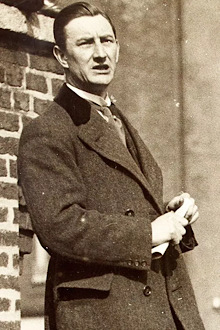
(Pictured: Minister for Defence Oscar Traynor at his desk, June 1940)
Charles is the eldest son of James Francis Edward Stuart, the exiled Stuart claimant to the British throne. Believing there is support for a Stuart restoration in both Scotland and England, he lands in Scotland in July 1745. The Jacobite Army is often assumed to have been largely composed of Gaelic-speaking Catholic Highlanders. In reality nearly a quarter of the rank and file are recruited in Aberdeenshire, Forfarshire and Banffshire, with another 20% from Perthshire. Although the army is predominantly Scots it contains a few English recruits plus significant numbers of Irish, Scottish and French professionals in French service with the Irish Brigade and Garde Écossaise.
After amassing his army of Scots Jacobite supporters, Charles takes Edinburgh by September and defeats a British government force at Prestonpans. The government recalls 12,000 troops from the Continent to deal with the rising. A Jacobite invasion of England reaches as far as Derby before turning back, having attracted relatively few English recruits.
The Jacobites, with limited French military support, attempt to consolidate their control of Scotland, whereby early 1746 they are opposed by a substantial government army. A scrambled Jacobite victory at Falkirk fails to change the strategic situation. With supplies and pay running short and with the government troops resupplied and reorganised under the Duke of Cumberland, son of British monarch George II, the Jacobite leadership has few options left other than to stand and fight. The two armies eventually meet at Culloden, on terrain that gives Cumberland’s larger, well-rested force the advantage.
The battle lasts only an hour, with the Jacobites suffering a bloody defeat with between 1,500 and 2,000 killed or wounded. Approximately 300 government soldiers are killed or wounded. While perhaps as many as 6,000 Jacobites remain in arms in Scotland, the leadership takes the decision to disperse, effectively ending the rising. The men of the combined Irish regiments, under the command of Brigadier Walter Stapleton, are the last off the field, covering the retreat of Prince Charles and the remnants of his army. The Irish had given their blood to the cause of a Stuart King for the last time. Most of the surviving Irish surrender at Inverness. The prince himself eventually manages to make his escape to France.
Culloden and its aftermath continue to arouse strong feelings. The University of Glasgow awards the Duke of Cumberland an honorary doctorate, but many modern commentators allege that the aftermath of the battle and subsequent crackdown on Jacobite sympathisers were brutal, earning Cumberland the sobriquet “Butcher.” Efforts are subsequently made to further integrate the comparatively undeveloped Scottish Highlands into the Kingdom of Great Britain. Civil penalties are introduced to undermine the Scottish clan system, which had provided the Jacobites with the means to rapidly mobilise an army.
Today, a visitor centre is located near the site of the battle. This centre is first opened in December 2007, with the intention of preserving the battlefield in a condition similar to how it was on April 16, 1746. One difference is that it currently is covered in shrubs and heather. During the 18th century, however, the area was used as common grazing ground, mainly for tenants of the Culloden estate. Those visiting can walk the site by way of footpaths on the ground and can also enjoy a view from above on a raised platform. Possibly the most recognisable feature of the battlefield today is the 20-foot-tall memorial cairn, erected by Duncan Forbes in 1881. In the same year Forbes also erects headstones to mark the mass graves of the clans.



 seamus dubhghaill