seamus dubhghaill

Promoting Irish Culture and History from Little Rock, Arkansas, USA


1 Comment

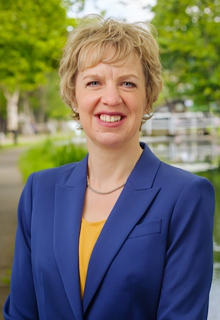
Birth of Ivana Bacik, Labour Party Politician

Ivana Catherine Bacik, Irish politician who has been the Leader of the Labour Party since March 24, 2022 and a Teachta Dála (TD) for the Dublin Bay South constituency since winning a by-election on July 9, 2021, is born in Dublin on May 25, 1968. She comes to prominence due to her abortion rights campaigning from the 1980s onward.

Bacik’s paternal grandfather, Charles Bacik, was a Czech factory owner who moved to Ireland in 1946. He eventually settled in Waterford, County Waterford, and in 1947 was involved in the establishment of Waterford Crystal. Her mother’s side of the family are Murphys from County Clare. Her father is an astronomer and is employed in a number of locations. As a result, she lives in London and South Africa, before moving to Crookstown, County Cork, at the age of six, when he becomes a physics lecturer in the Cork Institute of Technology. She attends the nearby national school in Cloughduv. When she is 11 years old, her family moves to the Sunday’s Well area of Cork city. At the age of 14, she moves to Dublin.

Bacik wins a scholarship to board at Alexandra College in Milltown, Dublin, and is awarded a sizarship at Trinity College Dublin. She has an LL.B. from Trinity and an LL.M. from the London School of Economics.

Bacik contests the Seanad Éireann elections in 1997 and 2002 as an independent candidate for the Dublin University constituency but is not successful.

She runs as a Labour Party candidate at the 2004 election to the European Parliament in the Dublin constituency. She runs with sitting MEP Proinsias De Rossa, who is also the party president, on the same ticket. She polls 40,707 first preference votes (9.6%) but is not elected.

In 2004, Bacik’s book Kicking and Screaming: Dragging Ireland into the 21st Century, is published by The O’Brien Press.

In 2007, she contested the Seanad Éireann elections for the third time in the Dublin University constituency, and is elected to the third seat, behind sitting Independent senators Shane Ross and David Norris. She initially sits as an Independent senator.

In February 2009, Bacik is included in an ‘All Star Women’s Cabinet’ in the Irish Independent. In March 2009, she confirmed claims made on a TV programme that she had taken two voluntary pay cuts of 10% in addition to a pension levy. In June 2009, she is the Labour Party candidate for the Dublin Central by-election. She comes in third with 17% of the first preference votes. She joins the Labour Party group in the Seanad in September 2009, and becomes Labour Party Seanad spokesperson for both Justice and Arts, Sports and Tourism. In November 2009, a feature by Mary Kenny of the Irish Independent includes Bacik in a list of women who “well deserved their iconic status.”

In May 2010, Bacik seeks Labour’s nomination to contest the next election in the Dublin South-East constituency but is not selected. In December 2010, she is added to the ticket as the second candidate beside Labour Party leader, Eamon Gilmore, in the Dún Laoghaire constituency for the 2011 Irish general election. Gilmore tops the poll, with Bacik receiving 10.1% of first preference votes but she is not elected. She is re-elected to Seanad Éireann at the subsequent election, after which she becomes Deputy Leader of the Seanad. She holds her seat in the Seanad in 2016 and in 2020.

On April 27, 2021, after the resignation of Eoghan Murphy from his Dáil seat in Dublin Bay South, Bacik announces her intention to stand in the upcoming by-election. She campaigns with an emphasis on providing affordable housing, as well as improving healthcare and childcare, tackling climate change, and achieving “a true republic in which church and state are separated.” During the campaign, she describes herself as having “more bills passed into law than any other Senator, on issues such as workers’ conditions, women’s health rights, and LGBT equality”. She also campaigns on increasing the number of sports amenities for children in the area, calling for unused Defence Forces football fields at the Cathal Brugha Barracks to be freed up for local sports, with the suggestion rejected by Fine Gael Minister for Defence Simon Coveney. Fine Gael complains to RTÉ after she features prominently on National Treasures, a prime-time TV show broadcast by RTÉ during the campaign. RTÉ has strict rules about fair coverage of candidates during campaigns. The national broadcaster blames an “inadvertent error” for the programme being shown three days before the election. A steering group within the broadcaster tells Fine Gael that “the broadcast should not have happened.” Consequentially, RTÉ has to show a special report on the by-election on Prime Time to “ensure fair coverage is given to all candidates.”

Bacik wins this election, receiving 8,131 (30.2%) first-preference votes. It is her fourth attempt as a Labour candidate, and she expresses her delight at the success at the count centre in the RDS. Following the election, she is described by The Irish Times as “a formidable activist and public intellectual” and that Fine Gael’s perceived antipathy towards their former TD, Kate O’Connell, may have contributed to the surge in support to Bacik from women voters. The newspaper claims that her election is “a long overdue morale boost” for Labour.

In August 2021, Bacik apologises for attending Katherine Zappone‘s controversial party in the Merrion Hotel, Dublin, in July of that year. She states that she believed that it took place within existing COVID-19 pandemic restrictions.

In March 2022, Bacik confirms she will run to succeed Alan Kelly as Labour Party leader. Kelly states that he believes that Bacik will succeed him. On March 24, 2022, she is confirmed as Labour Party leader unopposed at a party conference in Dublin. In a speech, she says she will focus on the rising cost of living and the serious and global problems facing the country. She pledges that Labour will fight the next election as a “standalone party” rather than joining any left-wing alliance.

At the 2024 Irish general election, Bacik is re-elected to the Dáil.

Bacik lives with husband Alan Saul and their two daughters in Portobello, Dublin.


Leave a comment

Birth of Pat Quinlan, Irish Army Officer

Patrick Quinlan, Irish Army officer who commands the Irish UN force that fights at the Siege of Jadotville in Katanga in 1961, is born in Reeneragh, Caherdaniel, County Kerry, on December 30, 1919.

Quinlan goes to school in nearby Loher. He and his wife Carmel have a son, Leo, who is sixteen when his father serves in the Congo, and later becomes a commandant, the same rank his father held when in Katanga, although the father retires with the higher rank of colonel.

The Siege of Jadotville (modern Likasi) takes place in September 1961, during the United Nations intervention in the Katanga conflict in Congo-Léopoldville, in Central Africa.

“A” Company, 35th Battalion (UN service) of the Irish Army United Nations Operation in the Congo (ONUC) contingent, commanded by Quinlan, is attacked by Katangese Gendarmerie troops loyal to President Moïse Tshombe and the State of Katanga. Quinlan’s lightly armed company is besieged in Jadotville, and resists Katangese assaults for six days. A relief force of Irish, Indian and Swedish troops is unsuccessful in their attempts to reach Quinlan’s position.

Quinlan’s company suffers five wounded in action during the six-day siege. On the other hand, up to 300 Katangese troops are killed, including thirty mercenaries, and an indeterminate number are wounded, with figures ranging from 300 to 1,000. Quinlan, however, has no access to resupply and reinforcements and, with his transport destroyed by Katanga’s Fouga Magister jet, a breakout is virtually impossible. In the end, with his position untenable, without any clear orders or promise of assistance, having run out of ammunition and food and low on water, he accepts a second offer to surrender to the Katangese.

Although suffering no loss of life, Quinlan’s company are held as prisoners of war and hostages for approximately one month. The Katangese barter the Irish soldiers for prisoners in the custody of the Congolese government. After being released, “A” Company are returned to their base in Elisabethville (now Lubumbashi). Some weeks later, Quinlan finds himself involved in active combat again, this time with his company in support of Swedish UN troops. Eventually they are reinforced with fresh troops from Ireland. After weeks of fighting and their six-month tour of duty now complete, “A” Company is rotated home to Ireland that December.

In its immediate aftermath, the Irish state does not give much recognition to the Battle of Jadotville, and no Irish soldier receives any decoration for actions at Jadotville. This may have been because of a perceived shame that “A” Company had surrendered and an unwillingness to highlight political or strategic errors at higher levels by the UN mission. Quinlan, however, recommends a number of his men for the Military Medal for Gallantry (MMG), Ireland’s highest award for military valour, for their actions during the battle.

Quinlan never serves overseas again and retires as a full colonel after forty years with the Irish Army.

Quinlan dies on August 27, 1997, unaware that his reputation will be restored nine years after his death. His wife does not live to see his official rehabilitation either, dying two years after her husband.

The veterans of Jadotville are dissatisfied with the Irish Defence Forces‘ refusal to acknowledge the battle and the implied black mark on the reputation of their commander. Following a long campaign for recognition, in 2004 the then Minister for Defence, Willie O’Dea, agrees to hold a review of the battle. An inquiry by the Defence Forces clears Quinlan and “A” Company of allegations of soldierly misconduct. A commemorative stone recognising the soldiers of “A” Company is erected on the grounds of Custume Barracks in Athlone in 2005. A commissioned portrait of Quinlan is installed in the Congo Room of the Irish Defence Forces’ UN School.

In 2016, the Irish government awards a Presidential Unit Citation to “A” Company, the first in the State’s history. In October 2017, a plaque commemorating Quinlan is unveiled by former Taoiseach Enda Kenny at Coomakista Pass, County Kerry.

In November 2020, an Independent Review Group commissioned by Irish Defence Minister Simon Coveney recommends that Quinlan receive the Distinguished Service Medal (DSM).

Quinlan’s tactics at Jadotville influence subsequent training programmes, and are, according to RTÉ, “cited in military textbooks worldwide as the best example of the use of the so-called perimeter defence.”

Quinlan is played by Jamie Dornan in the film The Siege of Jadotville (2016), which is adapted from Declan Power‘s book, The Siege at Jadotville: The Irish Army’s Forgotten Battle (2005). His wife Carmel is played by Fiona Glascott. Colonel Quinlan’s son, Commandant Leo Quinlan, says that Dornan bears an uncanny resemblance to his father, and gets everything about him right except his County Kerry accent, which is so strong that “if he had done my father’s accent, you’d need subtitles.” Quinlan’s grandson Conor is a member of the film’s cast.


1 Comment

Taoiseach Varadkar Announces Simon Coveney as the New Tánaiste

Taoiseach Leo Varadkar announces Simon Coveney as the new Tánaiste on November 30, 2017, replacing Frances Fitzgerald who resigned two days earlier over the Maurice McCabe controversy. Coveney, who was Varadkar’s rival for the Fine Gael leadership earlier in the year, is to continue to serve as Minister for Foreign Affairs and Trade with responsibility for Brexit.

Varadkar says in appointing Coveney as Tánaiste he is “very conscious of the important role he plays as Minister of Foreign Affairs, as minister responsible for Brexit.” He adds, “I believe his appointment as Tánaiste and deputy prime minister will enhance his position in representing the government overseas in the negotiations currently under way.”

Minister Heather Humphreys is also announced as Minster for Business, Enterprise and Innovation, and Josepha Madigan is announced as Minister for Culture, Heritage and the Gaeltacht.

Frances Fitzgerald steps down from the role of Tánaiste on November 28, after new revelations about what she knew of the garda strategy and aggressive stance towards Maurice McCabe at the O’Higgins inquiry in 2015.

In a statement, Fitzgerald says, “Today I made the decision to tender my resignation to the Taoiseach, stepping down with immediate effect as Tánaiste and Minister for Business, Enterprise and Innovation. It has been the greatest honour of my life to serve in Government, but I believe it is necessary to take this decision to avoid an unwelcome and potentially destabilising general election at this historically critical time.

Fitzgerald adds, “Throughout my career I have always sought to act with integrity and responsibility, and that is why I have decided on this occasion to put the national interest ahead of my own personal reputation. I have always believed in fairness and equality and these principles have guided my work as Minister for Children and Youth Affairs, as Minister for Justice and Equality, and now as Minister for Business, Enterprise and Innovation.’

Fitzgerald concludes, “I would like to thank the Taoiseach for showing the same courage and determination to protect my good name that he displayed three years ago when he stood up and defended the reputation of Maurice McCabe. What I admire most about the Taoiseach is that he has always believed in doing what was right – not what was popular or politically expedient. I will always be grateful for his confidence and support and for giving me the opportunity to serve in a Government that is making a real difference in people’s lives at a critical time in our history.”

(From: “Simon Coveney appointed new Tánaiste after Frances Fitzgerald steps down over Maurice McCabe controversy” by Lauren Kelly and Deborah McAleese, The Irish Sun, November 30, 2017 | Photo Credit: RollingNews.ie)


Leave a comment

Leo Varadkar Elected Taoiseach

On June 2, 2017, Leo Varadkar, son of Indian immigrants, wins the leadership contest against his only rival, Minister for Housing, Local Government and Heritage Simon Coveney, with 60% of the votes to lead Fine Gael, the biggest party in the coalition government. He is set to become the first openly gay Taoiseach (prime minister) of the Republic of Ireland and the youngest leader in the European Union. His election is seen as a change in political generations and social outlook in Ireland.

The current Taoiseach, 66-year-old Enda Kenny, announced his resignation the previous month after six years at the head of the centrist party, setting off a battle to lead the ruling Fine Gael.

“If somebody of my age, of my mixed-race background and of all the things that make up my character can potentially become leader of our country, then I think that sends out a message to every child born today that there is no office in Ireland that they can’t aspire to,” Varadkar tells Newstalk radio.

The Fine Gael parliamentary party votes overwhelmingly (70 percent) in favor of Varadkar while 65 percent of members favor Coveney. As Varadkar is backed by most lawmakers and local representatives, he gains victory under the center-right party’s electoral college system.

Varadkar’s position is confirmed later in the month after parliament resumes following a break.

Varadkar’s father, Ashok, a doctor, moves to Ireland in the 1970s and his youngest son is born in Dublin in 1979. He studies medicine at Trinity College Dublin and spends several years as a junior doctor before qualifying as a general practitioner in 2010.

Varadkar is first elected in local elections in 2003 and in 2007 to the lower house of Ireland’s assembly, the Dáil Éireann. He comes to public prominence in 2015 when Ireland votes in favor of same-sex marriage.

Varadkar is on the right wing of the centrist Fine Gael party and has held three cabinet posts since 2011 – Minister for Social Protection, Minister for Health and Minister for Transport, Tourism and Sport. More recently, in the time leading up to his election as Taoiseach, he heads a publicity campaign highlighting social welfare fraud.

Varadkar’s most pressing first international task is negotiating Ireland’s new arrangement with the United Kingdom after it leaves the European Union.

In a radio interview in 2015, Varadkar speaks for the first time about being gay, “It’s not something that defines me. I’m not a half-Indian politician, or a doctor politician or a gay politician for that matter. It’s just part of who I am. It doesn’t define me. It is part of my character I suppose.”

Varadkar’s partner is also a doctor in Dublin.

(From: “Ireland’s ruling party elects Varadkar new leader” by Jane Mcintosh, Deutsche Welle (DW), http://www.dw.com, June 2, 2017)


Leave a comment

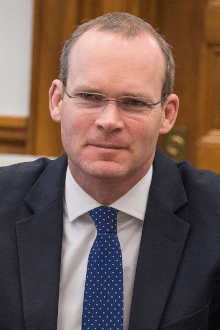
Birth of Simon Coveney, Minister of Foreign Affairs & Deputy Leader of Fine Gael

Simon Coveney, Fine Gael politician who has served as Minister for Foreign Affairs and Deputy Leader of Fine Gael since 2017 and Minister for Defence since 2020, is born in Cork, County Cork, on June 16, 1972.

Coveney is born to Hugh Coveney, a chartered quantity surveyor and later a TD, and Pauline Coveney. His uncle is Archbishop Patrick Coveney. His brother, Patrick, is chief executive of the food corporation Greencore. He is educated locally in Cork, before later attending Clongowes Wood College, County Kildare. He is expelled from the college in Transition Year but ultimately is invited back to complete his full six years there. He repeats his Leaving Certificate in Bruce College in Cork. He subsequently attends University College Cork and Gurteen College, County Tipperary, before completing a BSc in Agriculture and Land Management from Royal Agricultural College, Gloucestershire.

A keen fan of all competitive sport, Coveney plays rugby for Garryowen, Cork Constitution and Crosshaven Rugby Club. In 1997-98, he leads the “Sail Chernobyl Project” which involves sailing a boat 30,000 miles around the world and raising €650,000 for charity. He is a qualified sailing instructor and lifeguard. He spends several years working as an agriculture adviser and farm manager.

Coveney is first elected to Dáil Éireann in a 1998 by-election as a Fine Gael candidate for Cork South-Central. He holds Shadow Ministries in the areas of Drugs and Youth Affairs, Communications, Marine and Natural Resources, and Transport. He chairs the Fine Gael Policy Development Committee prior to the 2011 Irish general election.

Coveney is a member of Cork County Council and the Southern Health Board from 1999 to 2003.

Coveney is elected to the European Parliament in 2004 and is a member of the EPP-ED group. He is a member of the Committee on Foreign Affairs and the Internal Market and Consumer Protection Committee. He is the author of the European Parliament’s Annual Report on Human Rights in the World for the year 2004 and again for 2006.

Coveney is named Tánaiste by Leo Varadkar, replacing Frances Fitzgerald, on November 30, 2017, a position he holds until June 27, 2020. He also serves as Minister for Housing, Planning and Local Government as well as Minister for Agriculture, Food and the Marine. For the six-month period ending June 2013, he chairs the EU Council of Agriculture & Fisheries Ministers where he is at the forefront regarding EU efforts in respect of Common Agricultural (CAP) as well as Common Fisheries (CFP) Policy reforms. Under his chairmanship both dossiers are progressed significantly, with a reform package for CFP agreed in May 2013 and a reform package for CAP agreed at the end of the Irish Presidency in July. The Defence portfolio is added to his brief on July 11, 2014.

In July 2008, Simon marries his long-time girlfriend Ruth Furney, an IDA Ireland employee. They have three daughters and currently live in Carrigaline, County Cork.


Leave a comment

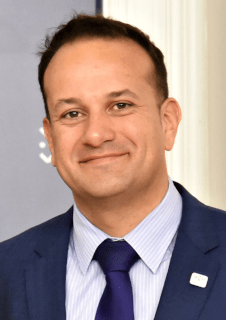
Birth of Leo Varadkar, Fine Gael Politician & Taoiseach

Leo Eric Varadkar, Irish Fine Gael politician who is serving since June 2020 as Tánaiste and Minister for Enterprise, Trade and Employment, is born on January 18, 1979, in the Rotunda Hospital, Dublin.

Varadkar is the third child and only son of Ashok and Miriam (née Howell) Varadkar. His father was born in Bombay (now Mumbai), India, and moved to the United Kingdom in the 1960s to work as a doctor. His mother, born in Dungarvan, County Waterford, meets her future husband while working as a nurse in Slough, Berkshire, England. He is educated at the St. Francis Xavier national school in Blanchardstown, Dublin, and then The King’s Hospital, a Church of Ireland secondary school in Palmerstown. During his secondary schooling, he joins Young Fine Gael. He is admitted to Trinity College Dublin (TCD), where he briefly reads law before switching to its School of Medicine. At TCD, he is active in the university’s Young Fine Gael branch and serves as Vice-President of the Youth of the European People’s Party, the youth wing of the European People’s Party, of which Fine Gael is a member. He is selected for the Washington Ireland Program for Service and Leadership (WIP), a half-year personal and professional development program in Washington, D.C., for students from Ireland.

Varadkar graduates in 2003, after completing his internship at King Edward Memorial Hospital in Mumbai. He then spends several years working as a non-consultant hospital doctor in St. James’s Hospital, Dublin, and Connolly Hospital, Blanchardstown, before specialising as a general practitioner in 2010.

In 2004, Varadkar joins Fine Gael and becomes a member of Fingal County Council and later serves as Deputy Mayor of Fingal. He is elected to Dáil Éireann for the first time in 2007. During the campaign for the 2015 same-sex marriage referendum, he comes out as gay, becoming the first serving Irish minister to do so.

Varadkar is elected a Teachta Dála (TD) for the Dublin West constituency in 2007. He serves under Taoiseach Enda Kenny as Minister for Transport, Tourism and Sport from 2011 to 2014, Minister for Health from 2014 to 2016, and Minister for Social Protection from 2016 to 2017.

In May 2017, Kenny announces that he is planning to resign as Taoiseach and Fine Gael leader. Varadkar stands in the leadership election to replace him. Although more party members vote for his opponent, Simon Coveney, he wins by a significant margin among Fine Gael members of the Oireachtas and is elected leader on June 2. Twelve days later, he is appointed Taoiseach, and at 38 years of age becomes the youngest person to hold the office. He is Ireland’s first, and the world’s fourth, openly gay head of government and the first Taoiseach of Indian heritage.

In 2020, Varadkar calls a general election to be held in February. While polls in 2019 have suggested a favourable result for Fine Gael, they ultimately come in third in terms of seats and votes, behind Fianna Fáil and Sinn Féin, with 35 seats, a loss of 15 seats for the party from the previous general election, when it had finished in first position. He resigns and is succeeded by Micheál Martin as Taoiseach. He is subsequently appointed Tánaiste and Minister for Enterprise, Trade and Employment as part of a three-party coalition composed of Fianna Fáil, Fine Gael and the Green Party.


Leave a comment

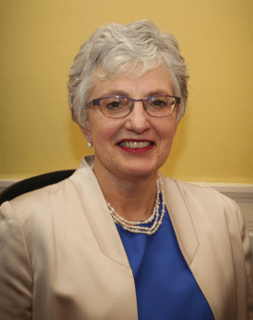
Birth of Katherine Zappone, American-Irish Independent Politician

Katherine Zappone, American Irish independent politician who serves as Minister for Children and Youth Affairs from May 2016 to June 2020, is born in Seattle, Washington, on November 25, 1953. She is a Teachta Dála (TD) for the Dublin South-West constituency from 2016 to 2020. She previously served as a Senator from 2011 to 2016, after being nominated by the Taoiseach, Enda Kenny.

Zappone is educated at Boston College (PhD), the Catholic University of America (MA) and University College Dublin (MBA). She becomes an Irish citizen in 1995. She and her wife, Ann Louise Gilligan, found An Cosán which supports individuals and communities to actively engage in the process of social change through transformative education. In Zappone and Gilligan v. Revenue Commissioners (2006), they unsuccessfully seek recognition in the High Court, for their Canadian marriage in Ireland. Zappone is a member of the Irish Human Rights Commission, chief executive of the National Women’s Council of Ireland, and a lecturer in the fields of ethics, theology, and education at Trinity College, Dublin. Though they are already married in Canada, she proposes to Gilligan on air as the positive result in the same-sex marriage referendum becomes known. Gilligan dies in June 2017.

Zappone is nominated by Taoiseach Enda Kenny to the 24th Seanad in 2011, having been recommended by Eamon Gilmore, the then leader of Fine Gael‘s coalition partners, the Labour Party. With her Seanad nomination, she becomes the first openly lesbian member of the Oireachtas and the first member in a recognised same-sex relationship.

Zappone is elected to the Dáil for the Dublin South-West constituency at the 2016 Irish general election, becoming the first openly lesbian TD and, by her own reckoning, the world’s 32nd lesbian to be elected to a national parliament. In May 2016, after a delay in government formation, due to prolonged talks, she becomes Ireland’s first openly lesbian government Minister and the first Minister to have been openly gay at the time of appointment to cabinet, when Taoiseach Enda Kenny appoints her as the Minister for Children and Youth Affairs. She loses her seat at the February 2020 Irish general election and continues to serve as a minister until June 2020 on the election of a new government.

Following the loss of her seat at the 2020 Irish general election, Zappone moves back to Seattle to work as a full-time volunteer for Joe Biden’s presidential campaign in the 2020 United States presidential election, then to New York.

In July 2021, it is announced that Zappone is to be appointed to the newly created position of Special Envoy to the UN for Freedom of Opinion and Expression. It subsequently emerges that the proposed appointment had not been flagged in advance of the Cabinet meeting where it was proposed by Minister Simon Coveney, raising the concerns of the Taoiseach, Micheál Martin. However, he does not block the appointment, attracting criticism from within government, the opposition and the public, with Sinn Féin describing the appointment as “cronyism.”

In the following days it is reported that Zappone had lobbied for the creation of an appointment to the part-time position, which was not openly advertised or subject to a competition. Further controversy arises when it is reported that shortly prior to the announcement of her appointment, she had hosted a party for 50 guests, including politicians such as Leo Varadkar, at the Merrion Hotel, while the COVID-19 pandemic in the Republic of Ireland was ongoing. Comparisons are made between the party and the Oireachtas Golf Society scandal from earlier in the pandemic. On August 4, 2021, she announces that she will not take up the envoy role, saying “While I am honoured to have been appointed by the Government to be the Special Envoy on Freedom of Opinion and Expression, it is clear that criticism of the appointment process has impacted the legitimacy of the role itself. It is my conviction that a Special Envoy role can only be of real value to Ireland and to the global community if the appointment is acceptable to all parties.”

In September 2021, Zappone is invited to appear before the Oireachtas Committee on Foreign Affairs and Defence, but chooses not to attend. As a U.S. citizen and resident, the committee has no power to compel her attendance.


Leave a comment

Death of Hugh Coveney, Former Lord Mayor of Cork

Hugh Coveney, politician and former Lord Mayor of Cork, falls to his death from a headland near Roberts Cove, County Cork on March 14, 1998.

Coveney is born into one of Cork‘s prosperous “merchant prince” families on July 20, 1935. He is educated at Christian Brothers College, CorkClongowes Wood College and the Royal Institution of Chartered Surveyors. He works as a chartered quantity surveyor before entering politics.

Coveney is interested in yachting throughout most of his adult life. His yacht Golden Apple of The Sun, designed by Cork-based designer Ron Holland, is a successful competitor in the Admiral’s Cup in the 1970s. A later 50-foot yacht, Golden Apple, is used by the family for the “Sail Chernobyl” project. The family sails around the world to raise €650,000 for Chernobyl Children’s Project International, a charity which offers assistance to children affected by the 1986 Chernobyl disaster.

Coveney is Lord Mayor of Cork from 1982 to 1983. He is first elected to Dáil Éireann as a Fine Gael Teachta Dála (TD) for Cork South–Central constituency at the 1981 general election. He loses his seat in the first general election of 1982 but regains it in the second election in the same year. He loses his seat again in the 1987 general election and does not contest the 1992 general election. He is elected to the Dáil again in 1994 in a by-election.

Coveney is first appointed to the Cabinet in 1994 under John Bruton. He is appointed Minister for Defence and Minister for the Marine. However, he is demoted to a junior ministry the following year after allegations of improper contact with businessmen.

In March 1998 it becomes publicly known that the Moriarty Tribunal has questioned Coveney about whether he had a secret offshore account with Ansbacher Bank, a bank which had become notorious for facilitating tax evasion. Ten days later, on March 13, 1998, Coveney visits his solicitor to change his will. The following day, he dies in a fall from a seaside cliff while out walking alone. His son, Simon Coveney, insists that his father had never held an Ansbacher account. It later emerges that Hugh Coveney had $175,000 on deposit in the secret Cayman Islands-based bank. The account was closed in 1979.

The funeral of Hugh Coveney takes place at St. Michael’s Church in Blackrock, Cork on March 18, 1998. Simon Coveney is later elected to succeed his father in the resulting by-election on November 3, 1998.


Leave a comment

Resignation of Taoiseach Enda Kenny

varadkar-kenny

Enda Kenny formally resigns as Taoiseach on June 13, 2017, after six years as head of Government of Ireland. He is the longest-serving Fine Gael Taoiseach and the first in his party to serve two consecutive terms in the highest political office.

An emotional Kenny makes his final address to Dáil Éireann as Taoiseach, saying he is the first to acknowledge that he had not gotten everything right. “But I can honestly say my motivation was always what I believed was in the best interests of the Irish people,” he added. “I really do believe politics is work worth doing, a noble profession.”

Flanked by Tánaiste Frances Fitzgerald, Minister for Finance Michael Noonan, his successor Leo Varadkar, Minister for Housing Simon Coveney and Minister for Health Simon Harris, Kenny informs the Dáil that he will be going later to Áras an Uachtaráin to submit his resignation to President Michael D. Higgins. He formally submits his letter that evening.

Following his speech in the Dáil, Kenny sits down, visibly emotional, to applause from all sides of the House.

Fianna Fáil leader Micheál Martin describes Kenny as “an Irish patriot and an Irish democrat.” Throughout his time in elected office and in government he had been a proud representative of his community, political tradition and country. He adds that “the mischievous enjoyment he has taken in this has been a genuine joy to behold”.

Sinn Féin leader Gerry Adams says his party and Fine Gael do not agree on many issues but “I always found Enda to be friendly on a personal level. Probably the best leader Fine Gael ever had.” Adams adds, “Let me say I will miss you. I will miss your entertaining tales of meetings you have had and meetings you have not had and recollections of people you have met along the way, like the man with the two pints in one hand.”

Adams says there have been successes including the success of the same-sex marriage referendum. But he also says there have been abject failures, including the Taoiseach’s consistent failure to recognise the State of Palestine, the squandering of the biggest mandate in the history of the State as the Fine Gael-Labour Government reneged on election promises, the clear lack of affinity with Northern Ireland and a clear lack of consistent strategic engagement with the process of change that is under way on the island.

Kenny now becomes a party backbencher until the next general election when he is expected to retire as a Teachta Dála (TD). He is also father of the House as the longest serving TD with 42 years in the Dáil. He is first elected in 1975 in a by-election following the death of his father Henry and faces another 12 elections in his Dáil tenure.

Kenny serves three years as a cabinet minister, serving as Minister for Tourism and Trade during the 1994 to 1997 Rainbow Coalition. He also serves for a year as Minister of State for Youth Affairs from February 1986 to March 1987. He takes over from Michael Noonan as party leader in 2002 after a disastrous general election for the party and in 2007 the party’s numbers in the Dáil rise from 32 to 51 TDs. In the 2011 general election at the height of the economic recession, Fine Gael secures 76 seats, the most in the party’s history, under his leadership.

(From: “Enda Kenny steps down as Taoiseach” by Michael O’Regan and Marie O’Halloran, The Irish Times, June 13, 2017)


Leave a comment

The Funeral of Hugh Coveney

hugh-coveney

The funeral of Hugh Coveney, politician and former Lord Mayor of Cork, takes place at St. Michael’s Church in Blackrock, Cork on March 18, 1998.

Coveney is born into one of Cork‘s prosperous “merchant prince” families on July 20, 1935. He is educated at Christian Brothers College, Cork, Clongowes Wood College and the Royal Institute of Chartered Surveyors. He works as a chartered quantity surveyor before entering politics.

Coveney is interested in yachting throughout most of his adult life. His yacht Golden Apple of The Sun, designed by Cork-based designer Ron Holland, is a successful competitor in the Admiral’s Cup in the 1970s. A later 50-foot yacht, Golden Apple, is used by the family for the “Sail Chernobyl” project. The family sails around the world to raise €650,000 for Chernobyl Children’s Project International, a charity which offers assistance to children affected by the 1986 Chernobyl disaster.

Coveney is Lord Mayor of Cork from 1982 to 1983. He is first elected to Dáil Éireann as a Fine Gael Teachta Dála (TD) for Cork South–Central constituency at the 1981 general election. He loses his seat in the first general election of 1982 but regains it in the second election in the same year. He loses his seat again in the 1987 general election and does not contest the 1992 general election. He is elected to the Dáil again in 1994 in a by-election.

Coveney is first appointed to the Cabinet in 1994 under John Bruton. He is appointed Minister for Defence and Minister for the Marine. However, he is demoted to a junior ministry the following year after allegations of improper contact with businessmen.

In March 1998 it becomes publicly known that the Moriarty Tribunal has questioned Coveney about whether he had a secret offshore account with Ansbacher Bank, a bank which had become notorious for facilitating tax evasion. Ten days later, on March 13, 1998, Coveney visits his solicitor to change his will. The following day, he dies in a fall from a seaside cliff while out walking alone. His son, Simon Coveney, insists that his father had never held an Ansbacher account. It later emerges that Hugh Coveney had $175,000 on deposit in the secret Cayman Islands-based bank. The account was closed in 1979.

Simon Coveney is later elected to succeed his father in the resulting by-election on November 3, 1998.