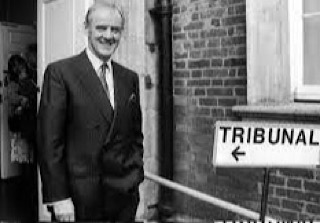
The Tribunal of Inquiry into the Beef Processing Industry, also known as the Beef Tribunal, is established on May 31, 1991, chaired by Justice Liam Hamilton. It is set up to inquire into malpractice in the Irish beef processing industry, mainly centred on Goodman International, owned and controlled by Larry Goodman. It also examines accusations of special dispensations given by the then Minister for Industry and Commerce, Albert Reynolds, to Goodman.
The Tribunal begins hearings on June 21, 1991, and it reports its conclusions in July 1994, at the time Ireland’s longest-running inquiry.
The Tribunal is tasked with “inquiring into the following definite matters of urgent public importance: (i) allegations regarding illegal activities, fraud and malpractice in and in connection with the beef processing industry made or referred to:– (a) in Dáil Éireann, and (b) on a television programme transmitted by ITV on May 13, 1991; (ii) any matters connected with or relevant to the matters aforesaid which the Tribunal considers it necessary to investigate in connection with its inquiries into the matters mentioned at (i) above; and 2. making such recommendations (if any) as the Tribunal, having regard to its findings, thinks proper.”
The Tribunal comes weeks after the broadcast of a World in Action programme. The allegations made in Dáil Éireann cover many of the allegations made in the television programme and included the following:
Abuses of the system under which subsidies are paid by the European Economic Community (EEC) to those engaged in the beef processing industry
Failure of regulatory authorities and allegations of political influence in relation to alleged abuses of the system
Tax evasion and Political influence in regard thereto
The Beef Tribunal concludes that tax evasion occurred at Goodman International and shined a light on widespread improper relationships between the beef industry, particularly Goodman, and the government. However, no criminal charges are brought, aside from the journalistSusan O’Keeffe who is charged and acquitted for not revealing sources.
Though not directly charged with wrongdoing, Albert Reynolds’s government is ultimately brought down by the fallout of the Beef Tribunal.
Ten years later, Fintan O’Toole comments that while a “shocking set of scandals” were uncovered (including the aforementioned tax evasion, fraud, and theft), “virtually nothing happened,” eroding public trust in the system.
(Pictured: Larry Goodman, founder and Executive Chairman of Goodman International, which is now ABP Food Group)
O’Hare is born in St. Louis, Missouri on March 13, 1914, the son of Edward Joseph O’Hare and Selma Anna (née Lauth). He is of Irish and German descent. When his parents divorce in 1927, he and his sisters, Patricia and Marilyn, stay with their mother in St. Louis while their father moves to Chicago. His father is a lawyer who works closely with Al Capone before turning against him and helping convict Capone of tax evasion.
On Sunday evening, January 11, 1942, as O’Hare and other VF-3 officers eat dinner in the wardroom, the USS Saratoga is damaged by a Japanese torpedo while patrolling southwest of Hawaii. She spends five months in repair on the west coast, so VF-3 squadron transfers to the USS Lexington on January 31.
At 15:42 on February 20, 1942, a jagged vee signal draws the attention of the USS Lexington‘s radar operator. The contact is then lost but reappears at 16:25 forty-seven miles west. O’Hare is one of several pilots launched to intercept nine Japanese Mitsubishi G4M “Betty” bombers from the 4th Kōkūtai‘s 2nd Chutai. His squadmates shoot down eight bombers but he and his wingman, Marion “Duff” Dufilho, are held back in the event of a second attack.
At 16:49, the USS Lexington‘s radar picks up a second formation of “Bettys” from the 4th Kōkūtai’s 1st Chutai, only 12 miles out, on the disengaged side of the task force. With the majority of VF-3 still chasing the 2nd Chutai, only O’Hare and Dufilho are available to intercept.
O’Hare’s initial maneuver is a high-side diving attack from the formation’s starboard side employing deflection shooting. He manages to hit the outside Betty’s right engine and wing fuel tanks. When the stricken aircraft abruptly lurches to starboard, he switches to the next plane up the line. The plane catches fire, but the crew manages to extinguish the flames with a fire-extinguisher. This plane catches up with the group before bomb release.
With two “Bettys” out of formation, O’Hare begins his second firing pass, this time from the port side. His first target is the outside plane. His bullets damage the right engine and left fuel tank, forcing the pilot to dump his bombs and abort his mission. O’Hare then targets another plane which becomes his first definite kill.
As O’Hare begins his third firing pass, again from the port side, the remaining “Bettys” are nearing their bomb release point. He shoots down another plane, leaving the lead plane exposed. His concentrated fire causes the plane’s port engine nacelle to break free from its mountings and fall from the plane. The resulting explosion leaves a gaping hole in the left wing, and the plane falls out of formation.
Shortly afterward, O’Hare makes a fourth firing pass, likely against the plane that had caught fire during his initial pass but runs out of ammunition. Frustrated, he pulls away to allow the ships to fire their anti-aircraft guns. The four surviving bombers drop their ordnance, but all their 250 kg bombs miss. O’Hare believes he has shot down six bombers and damaged a seventh. Captain Frederick C. Sherman later reduces this to five, as four of the reported nine bombers are still overhead when he pulls off.
In fact, O’Hare destroys only three “Bettys.” One of the planes, however, is not yet finished. The command pilot regains enough control to level his damaged plane and attempts to crash it into USS Lexington. He misses and crashes into the water near the carrier at 17:12. Another three “Bettys” are damaged by O’Hare’s attacks. Two safely land at Vunakanau Airfield at 19:50, while the third becomes lost in a storm and eventually ditches at Simpson Harbour at 20:10.
On March 26, O’Hare is greeted at Pearl Harbor by a horde of reporters and radio announcers. Credited with shooting down five bombers, he becomes a flying ace, is selected for promotion to lieutenant commander, and becomes the first naval aviator to receive the Medal of Honor. With PresidentFranklin D. Roosevelt looking on, his wife Rita places the Medal around his neck. After receiving the Medal of Honor, he is described as “modest, inarticulate, humorous, terribly nice and more than a little embarrassed by the whole thing.”
O’Hare receives further decorations later in 1943 for actions in battles near Minamitorishima in August and subsequent missions near Wake Island in October.
O’Hare’s final action takes place on the night of November 26, 1943, while he is leading the U.S. Navy’s first-ever nighttime fighter attack launched from an aircraft carrier. During this encounter with a group of Japanese torpedo bombers, his Grumman F6F Hellcat is shot down. A radio message is sent out, but there is no response. The aircraft is never found. He is declared dead a year later, his widow Rita receiving her husband’s posthumous decorations, a Purple Heart and the Navy Cross on November 26, 1944. On January 27, 1945, the U.S. Navy names a Gearing-class destroyer, USS O’Hare (DD-889), in his honor.
On September 19, 1949, the Chicago-area Orchard Depot Airport is renamed O’Hare International Airport, six years after O’Hare perished. A Grumman F4F Wildcat, in a livery identical to the aircraft flown by O’Hare, is on display in Terminal 2. The display is formally opened on the seventy-fifth anniversary of his Medal of Honor flight.
(Pictured: Lieutenant Edward H. “Butch” O’Hare, USN, circa April-May 1942, official U.S. Navy photograph, now in the collections of the National Archives)
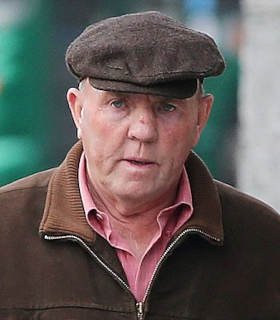
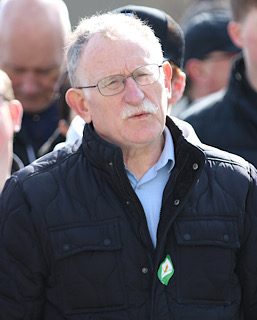
Accused by The Sunday Times of directing an IRA bombing campaign in Britain, in 1987 Murphy unsuccessfully sues the paper for libel in Dublin. The original verdict is overturned by the court of appeal because of omissions in the judge’s summing up and there is a retrial, which he also loses. At the retrial, both Sean O’Callaghan and Eamon Collins, former members of the Provisional Irish Republican Army, testify against Murphy, as do members of the Gardaí, Irish customs officials, British Army and local TDBrendan McGahon. Collins, who had also written a book about his experiences, Killing Rage, is beaten and killed by having a spike driven through his face near his home in Newry eight months later. In 1998, a Dublin court dismisses Murphy’s case after a high-profile trial, during which Murphy states that he has “never been a member of the IRA, no way” and claims not to know where the Maze prison is located. The jury rules, however, that he is an IRA commander and a smuggler.
The Sunday Times subsequently publishes statements given by Adrian Hopkins, the skipper who ferries weapons from Libya to the IRA, to the French authorities who intercept the fifth and final Eksund shipment. Hopkins details how Murphy met a named Libyan agent in Greece, paid for the weapons to be imported, and helped unload them when they arrived in Ireland. According to A Secret History of the IRA by Ed Moloney, Murphy has been the IRA Army Council’s chief of staff since 1997. Toby Harnden’s Bandit Country: The IRA & South Armagh also details Murphy’s IRA involvement.
On September 20, 2016, the BBC‘s Spotlight airs a programme in which an alleged British spy who had infiltrated the IRA claims that in 2006, Murphy had demanded the killing of Denis Donaldson, an IRA member and British informer, in order to maintain discipline. The BBC says it had tried to contact Murphy but had received no reply. He has yet to respond to the allegation. On September 23, 2016, the Donaldson family’s solicitor says that the allegation is “absolute nonsense.”
In October 2005, officers of the British Assets Recovery Agency and the Irish Criminal Assets Bureau carry out raids on a number of businesses in Manchester and Dundalk. It is extensively reported in the media that the investigation is aimed at damaging the suspected multi-million-pound empire of Murphy, who according to the BBC’s Underworld Rich List, has accumulated up to £40 million through smuggling oil, cigarettes, grain and pigs, as well as through silent or partial ownership in legitimate businesses and in property.
A large, purpose-built underground chamber that Gardaí believes the IRA used for interrogation is discovered close to Murphy’s home.
In his first-ever press release, issued on October 12, 2005, Murphy denies he owned any property and denies that he had any links with co-accused Cheshire businessman Dermot Craven. Furthermore, he claims that he had to sell property to cover his legal fees after his failed libel case against The Sunday Times, and that he made a living from farming.
On March 9, 2006, police, soldiers and customs officials from both sides of the Irish border launch a large dawn raid on Murphy’s house and several other buildings in the border region. Three persons are arrested by the Gardaí but are released three days later. A fleet of tankers, computers, documents, two shotguns, more than 30,000 cigarettes and the equivalent of 800,000 euros in sterling bank notes, euro bank notes and cheques are seized. Four diesel laundering facilities attached to a major network of storage tanks, some of which are underground, are also found. The Irish Criminal Assets Bureau later obtains seizure orders to take possession of euro cash and cheques and sterling cash and cheques, together worth around one million Euros.
Sinn Féin President Gerry Adams makes a public statement in support of Murphy following the March 2006 raids. Under political and media pressure over allegations of the IRA’s continued presence in South Armagh, Adams says, “Tom Murphy is not a criminal. He’s a good republican and I read his statement after the Manchester raids, and I believe what he says and also and very importantly he is a key supporter of Sinn Féin’s peace strategy and has been for a very long time.” He adds, “I want to deal with what is an effort to portray Tom Murphy as a criminal, as a bandit, as a gang boss, as someone who is exploiting the republican struggle for his own ends, as a multimillionaire. There is no evidence to support any of that.”
Murphy is arrested in Dundalk, County Louth, on November 7, 2007, by detectives from the Criminal Assets Bureau, on charges relating to alleged revenue offences. The following day, he is charged with tax evasion under the Tax Consolidation Act. He is later released on his own bail of €20,000 with an independent surety of €50,000.
On October 17, 2008, in an agreed legal settlement, Murphy and his brothers pay over £1 million in assets and cash to the authorities in Britain and the Republic in settlement of a global crime and fraud investigation relating to proceeds of crime associated with smuggling and money laundering. After an investigation involving the Irish Criminal Assets Bureau and the UK’s Serious Organised Crime Agency, more than 625,000 euros (£487, 000) in cash and cheques is confiscated by the Republic’s courts, while nine properties in North West England worth £445,000 are confiscated by British courts. Murphy is still fighting a claim in the Republic’s courts for tax evasion, relating to non-completion of tax returns for eight years from 1996. On April 26, 2010, he is further remanded on bail.
In 2011, there are claims that Murphy had become disillusioned with the Northern Ireland peace process and that he had fallen out with Sinn Féin. However, there is no evidence to support he is sympathetic to any dissident republican groups. In March 2013, the Garda and the Police Service of Northern Ireland (PSNI), along with members of the Irish Customs Authority and HM Revenue and Customs (HMRC), raid his farm on the Louth-Armagh border. The Sunday World reports that two hours prior to the raid, at approximately 4:00 a.m., fire is seen coming from Murphy’s yard. There are serious concerns within the Garda and PSNI that a mole may have tipped off Murphy about the raid hours earlier as laptops, computer disks and a large amount of documentation is destroyed in the fires. As a result, an internal Garda investigation takes place.
On December 17, 2015, Murphy is found guilty on nine charges of tax evasion by a three-judge, non-jury Special Criminal Court trial sitting in Dublin, lasting nine weeks. He is tried under anti-terrorist legislation due to the belief by the Director of Public Prosecutions (DPP) that there would not be a fair trial because of the potential of the intimidation of prosecution witnesses and jurors, and the security surrounding the trial.
Murphy is found guilty on all charges of failing to furnish tax returns on his income as a “cattle farmer” between 1996 and 2004. He is prosecuted following a 14-year-long Criminal Assets Bureau investigation, which during a raid of his property uncovers bags with more than €250,000 and more than £111,000 sterling in cash, along with documents, diaries and ledgers. He is remanded on bail until early 2016 for sentencing.
On February 26, 2016, Murphy is sentenced to 18 months in prison. None of the jail term is suspended. Following sentencing, he is immediately transferred from court to Ireland’s highest-security prison, Portlaoise Prison, reserved for terrorists, dissident republicans and serious gangland criminals, under a heavily armed Garda and Irish Army escort due to security concerns.
Murphy appeals the conviction in November 2016. His lawyer, John Kearney, claims that the tax Murphy had not paid had in fact been paid by his brother, Patrick. The Court of Appeal dismisses the appeal on all grounds in January 2017.
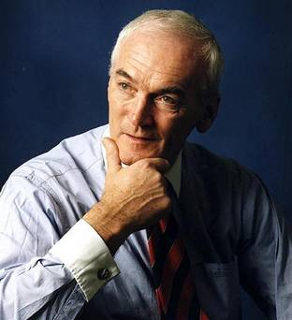
Coveney is interested in yachting throughout most of his adult life. His yacht Golden Apple of The Sun, designed by Cork-based designer Ron Holland, is a successful competitor in the Admiral’s Cup in the 1970s. A later 50-foot yacht, Golden Apple, is used by the family for the “Sail Chernobyl” project. The family sails around the world to raise €650,000 for Chernobyl Children’s Project International, a charity which offers assistance to children affected by the 1986 Chernobyl disaster.
In March 1998 it becomes publicly known that the Moriarty Tribunal has questioned Coveney about whether he had a secret offshore account with Ansbacher Bank, a bank which had become notorious for facilitating tax evasion. Ten days later, on March 13, 1998, Coveney visits his solicitor to change his will. The following day, he dies in a fall from a seaside cliff while out walking alone. His son, Simon Coveney, insists that his father had never held an Ansbacher account. It later emerges that Hugh Coveney had $175,000 on deposit in the secret Cayman Islands-based bank. The account was closed in 1979.
The funeral of Hugh Coveney takes place at St. Michael’s Church in Blackrock, Cork on March 18, 1998. Simon Coveney is later elected to succeed his father in the resulting by-election on November 3, 1998.
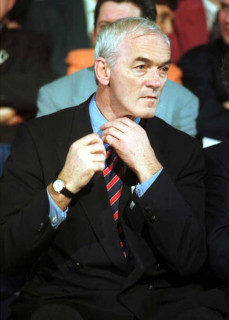
In the 1977 general election he is elected to the 21st Dáil for the new constituency of Dublin Ballyfermot. With the party’s loss of power in 1977, the new leader, Garret FitzGerald appoints Mitchell to the Party’s Front Bench as spokesman on Labour. At the 1981 general election Mitchell is elected for the Dublin West and Fine Gael dramatically increases its number of seats, forming a coalition government with the Labour Party. On his appointment as Taoiseach, Garret FitzGerald causes some surprise by excluding some of the older conservative ex-ministers from his cabinet. Instead, young liberals like Mitchell are appointed, with Mitchell receiving the high-profile post of Minister for Justice, taking responsibility for policing, criminal and civil law reform, penal justice, etc. The Fine Gael-Labour government collapses in January 1982 but regains power in December of that year. Mitchell again is included in a FitzGerald cabinet, as Minister for Transport.
As Minister for Transport, Mitchell grants the aviation license to a fledgling airline called Ryanair on November 29, 1985. This is granted despite strong opposition by Ireland’s national carrier Aer Lingus. The issue of the license breaks Aer Lingus’ stranglehold on flights to London from the Republic of Ireland.
Mitchell, who is seen as being on the social liberal wing of Fine Gael, is out of favour with John Bruton when he becomes Fine Gael leader in 1990. When Bruton forms the Rainbow Coalition in December 1994, Mitchell is not appointed to any cabinet post.
Mitchell contests and wins Dáil elections in 1977, 1981, (February and November) 1982, 1987, 1989, 1992, 1997. He runs for his party as its candidate to become a member of the European Parliament in the 1994 and 1998 elections. He also is director of elections for Austin Currie, the Fine Gael candidate, in the 1990 presidential election.
In 2001, Bruton is deposed as Fine Gael leader and replaced by Michael Noonan. Mitchell serves as his deputy from 2001 to 2002. He also chairs the key OireachtasPublic Accounts Committee. The Committee’s work under his chairmanship is widely praised for its inquiry into allegations of corruption and wide-scale tax evasion in the banking sector.
Though regarded in politics as one of Fine Gael’s “survivors,” who holds onto his seat amid major boundary changes, constituency changes and by attracting working class votes in a party whose appeal is primarily middle class, Mitchell loses his Dublin Central seat in the 2002 general election. That election witnesses a large-scale collapse in the Fine Gael vote, with the party dropping from 54 to 31 seats in Dáil Éireann. Although Mitchell suffers from the swing against Fine Gael in Dublin, he is not aided by the fact that Inchicore, which is considered his base in the constituency has been moved to Dublin South-Central. He chooses not to run in that constituency as his brother, Gay, is a sitting Teachta Dála (TD) running for re-election for that constituency.
Mitchell earlier has a liver transplant in an attempt to beat a rare form of cancer which had cost the lives of a number of his siblings. Though the operation is successful, the cancer returns. Although he appears to be making a recovery, Jim Mitchell ultimately dies of the disease on December 2, 2002.
His former constituency colleague and rival, Taoiseach Bertie Ahern, describes Jim Mitchell as having made an “outstanding contribution to Irish politics.”
Coveney is interested in yachting throughout most of his adult life. His yacht Golden Apple of The Sun, designed by Cork-based designer Ron Holland, is a successful competitor in the Admiral’s Cup in the 1970s. A later 50-foot yacht, Golden Apple, is used by the family for the “Sail Chernobyl” project. The family sails around the world to raise €650,000 for Chernobyl Children’s Project International, a charity which offers assistance to children affected by the 1986 Chernobyl disaster.
In March 1998 it becomes publicly known that the Moriarty Tribunal has questioned Coveney about whether he had a secret offshore account with Ansbacher Bank, a bank which had become notorious for facilitating tax evasion. Ten days later, on March 13, 1998, Coveney visits his solicitor to change his will. The following day, he dies in a fall from a seaside cliff while out walking alone. His son, Simon Coveney, insists that his father had never held an Ansbacher account. It later emerges that Hugh Coveney had $175,000 on deposit in the secret Cayman Islands-based bank. The account was closed in 1979.
Simon Coveney is later elected to succeed his father in the resulting by-election on November 3, 1998.