seamus dubhghaill

Promoting Irish Culture and History from Little Rock, Arkansas, USA


Leave a comment

Death of Cearbhall Ó Dálaigh, the Fifth President of Ireland

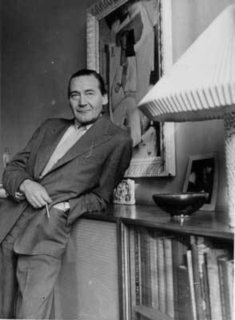
Cearbhall Ó Dálaigh, Fianna Fáil politician, judge and barrister who serves as the fifth president of Ireland from December 1974 to October 1976, dies on March 21, 1978, in Sneem, County Kerry. He serves as Attorney General of Ireland from 1946 to 1948 and from 1951 to 1953, a Judge of the Supreme Court of Ireland from 1953 to 1973, Chief Justice of Ireland from 1961 to 1973 and a Judge of the European Court of Justice from 1973 to 1974.

Ó Dálaigh, one of four children, is born on February 12, 1911, in Bray, County Wicklow. His father, Richard O’Daly, is a fishmonger with little interest in politics. His mother is Una Thornton. His birth name is registered in English as Carroll O’Daly, which he uses during his legal career, and which is recorded by some publications.

Ó Dálaigh has an elder brother, Aonghus, and two younger sisters, Úna and Nuala. He goes to Saint Cronan’s Boys’ National School in Bray, and later to Synge Street CBS in Dublin. While attending University College Dublin (UCD), he becomes auditor of An Cumann Gaelach and of the Literary and Historical Society. He also becomes Irish language editor of The Irish Press.

Ó Dálaigh is a committed Fianna Fáil supporter who serves on the party’s National Executive in the 1930s. He becomes Ireland’s youngest Attorney General in 1946, under Taoiseach Éamon de Valera, serving until 1948. Unsuccessful in Dáil and Seanad elections in 1948 and 1951, he is re-appointed as Attorney General of Ireland in 1951. In 1953, he is nominated as the youngest-ever member of the Supreme Court by his mentor, de Valera. Less than a decade later, he becomes Chief Justice of Ireland, on the nomination of Taoiseach Seán Lemass. He is a keen actor in his early years and becomes a close friend of actor Cyril Cusack. It is commonly stated that Ó Dálaigh and Cusack picketed the Dublin launch of Disney‘s Darby O’Gill and the Little People in 1959, for what they felt was the film’s stereotyping of Irish people. However, there is no known contemporary reference to this having occurred.

Ó Dálaigh is an opponent of the United States bombing of North Vietnam.

In 1972, Taoiseach Jack Lynch suggests to the opposition parties that they agree to nominate Ó Dálaigh to become President of Ireland when President de Valera’s second term ends in June of the following year. Fine Gael, confident that its prospective candidate, Tom O’Higgins, will win the 1973 presidential election, having almost defeated de Valera in 1966, turn down the offer. Fianna Fáil’s Erskine H. Childers goes on to win the election that follows.

When Ireland joins the European Economic Community (EEC), Lynch appoints Ó Dálaigh as Ireland’s judge on the European Court of Justice. When President Childers dies suddenly in 1974, all parties agree to nominate Ó Dálaigh to replace him.

Ó Dálaigh’s tenure as president proves to be contentious. While popular with Irish language speakers and with artists, and respected by many republicans, he has a strained relationship with the Government of the 20th Dáil, particularly with Minister Conor Cruise O’Brien and Taoiseach Liam Cosgrave.

Ó Dálaigh’s decision in 1976 to exercise his power to refer a bill to the Supreme Court to test its constitutionality brings him into conflict with the Fine Gael-Labour National Coalition. Following the assassination of the British Ambassador to Ireland, Christopher Ewart-Biggs, by the Provisional Irish Republican Army (IRA), on July 23, 1976, the government announces its intention to introduce legislation extending the maximum period of detention without charge from two to seven days.

Ó Dálaigh refers the resulting bill, the Emergency Powers Bill, to the Supreme Court. When the court rules that the bill is constitutional, he signs the bill into law on October 16, 1976. On the same day, an IRA bomb in Mountmellick, County Laois, kills Michael Clerkin, a member of the Garda Síochána, the country’s police force. Ó Dálaigh’s actions are seen by government ministers to have contributed to the killing of this Garda. On the following day, Minister for Defence Paddy Donegan, visiting a barracks in Mullingar, County Westmeath, to open a canteen, attacks the President for sending the bill to the Supreme Court, calling him a “thundering disgrace.”

Ó Dálaigh’s private papers show that he considered the relationship between the President (as Commander-in-Chief of the Defence Forces) and the Minister for Defence had been “irrevocably broken” by the comments of the Minister in front of the army Chief of Staff and other high-ranking officers. Donegan offers his resignation, but Taoiseach Liam Cosgrave refuses to accept it. This proves the last straw for Ó Dálaigh, who believes that Cosgrave had additionally failed to meet his constitutional obligation to regularly brief the President. He resigns from the presidency on October 22, 1976, “to protect the dignity and independence of the presidency as an institution.” He is succeeded as President of Ireland by Patrick Hillery.

Ó Dálaigh dies of a heart attack on March 21, 1978, less than two years after resigning the presidency. He is buried in Sneem, County Kerry.

Leave a comment

Death of Gobnait Ní Bhruadair, Irish Republican & Lifelong Radical

Gobnait Ní Bhruadair, Irish republican and lifelong radical, dies in Sneem, County Kerry, on January 16, 1955. She campaigns passionately for causes as diverse as the reform of nursing, protection and promotion of the Irish language and the freedom of Ireland from British rule.

Ní Bhruadair is born the Hon. Albinia Lucy Brodrick on December 17, 1861, at 23 Chester Square, Belgrave, London, the fifth daughter of William Brodrick, 8th Viscount Midleton (1830–1907), and his wife, Augusta Mary (née Freemantle), daughter of Thomas Fremantle, 1st Baron Cottesloe. She spends her early childhood in London until the family moves to their country estate in Peper Harow, Surrey in 1870. Educated privately, she travels extensively across the continent and speaks fluent German, Italian and French, and has a reading knowledge of Latin.

Ní Bhruadair’s family is an English Protestant aristocratic one which has been at the forefront of British rule in Ireland since the 17th century. In the early twentieth century it includes leaders of the Unionist campaign against Irish Home Rule. Her brother, St. John Brodrick, 1st Earl of Midleton, is a nominal leader of the Irish Unionist Alliance from 1910 until 1918 when he and other Unionists outside Ulster establish the Irish Unionist Anti-Partition League.

The polar opposite of Ní Bhruadair, her brother is consistent in his low opinion of the Irish and holds imperialist views that warmly embrace much of the jingoism associated with social Darwinism. The young Albinia Lucy Brodrick conforms to her familial political views on Ireland, if her authorship of the pro-Unionist song “Irishmen stand” is an indicator. However, by the start of the twentieth century she becomes a regular visitor to her father’s estate in County Cork. There she begins to educate herself about Ireland and begins to reject the views about Ireland that she had been raised on. In 1902 she writes about the need to develop Irish industry and around the same time she begins to develop an interest in the Gaelic revival. She begins to pay regular visits to the Gaeltacht where she becomes fluent in Irish and is horrified at the abject poverty of the people.

From this point on, Ní Bhruadair’s affinity with Ireland and Irish culture grows intensely. Upon her father’s death in 1907 she becomes financially independent and in 1908 purchases a home near West Cove, Caherdaniel, County Kerry. The same year she establishes an agricultural cooperative there to develop local industry. She organises classes educating people on diet, encourages vegetarianism and, during the smallpox epidemic of 1910, nurses the local people. Determined to establish a hospital for local poor people, she travels to the United States to raise funds.

There Ní Bhruadair takes the opportunity to study American nursing, meets leading Irish Americans and becomes more politicised to Ireland’s cause. Upon her return to Kerry, she establishes a hospital in Caherdaniel later in 1910. She renames the area Ballincoona (Baile an Chúnaimh, ‘the home of help’), but it is unsuccessful and eventually closes for lack of money. She writes on health matters for The Englishwoman and Fortnightly, among other journals, is a member of the council of the National Council of Trained Nurses and gives evidence to the royal commission on venereal disease in 1914.

Ní Bhruadair is a staunch supporter of the 1916 Easter Rising. She joins both Cumann na mBan and Sinn Féin. She visits some of the 1,800 Irish republican internees held by the British in Frongoch internment camp in Wales and writes to the newspapers with practical advice for intending visitors. She canvasses for various Sinn Féin candidates during the 1918 Irish general election and is a Sinn Féin member on Kerry County Council (1919–21), becoming one of its reserve chairpersons. During the Irish War of Independence, she shelters Irish Republican Army (IRA) volunteers and consequently her home becomes the target for Black and Tans attacks.

Along with Dr. Kathleen Lynn she works with the Irish White Cross to distribute food to the dependents of IRA volunteers. By the end of the Irish War of Independence she has become hardened by the suffering she has seen and is by now implacably opposed to British rule in Ireland. She becomes one of the most vociferous voices against the Anglo-Irish Treaty of December 6, 1921. She becomes a firebrand speaker at meetings in the staunchly republican West Kerry area. In April 1923 she is shot by Irish Free State troops and arrested. She is subsequently imprisoned in the North Dublin Union, where she follows the example of other republicans and goes on hunger strike. She is released two weeks later. Following the formation of Fianna Fáil by Éamon de Valera in 1926, she continues to support the more hardline Sinn Féin.

In October 1926 Ní Bhruadair represents Munster at the party’s Ardfheis. She owns the party’s semi-official organ, Irish Freedom, from 1926–37, where she frequently contributes articles and in its later years acts as editor. Her home becomes the target of the Free State government forces in 1929 following an upsurge in violence from anti-Treaty republicans against the government. She and her close friend Mary MacSwiney leave Cumann na mBan following the decision by its members at their 1933 convention to pursue social radicalism. The two then establish an all-women’s nationalist movement named Mná na Poblachta, which fails to attract many new members.

Ní Bhruadair continues to speak Irish and regularly attends Conradh na Gaeilge branch meetings in Tralee. Although sympathetic to Catholicism, she remains a member of the Anglican Church of Ireland, and regularly plays the harmonium at Sneem’s Church of Ireland services. Described by a biographer as “a woman of frugal habits and decided opinions, she was in many ways difficult and eccentric.” She dies on January 16, 1955, and is buried in the Church of Ireland graveyard in Sneem, County Kerry.

In her will Ní Bhruadair leaves most of her wealth (£17,000) to republicans “as they were in the years 1919 to 1921.” The vagueness of her bequest leads to legal wrangles for decades. Finally, in February 1979, Justice Seán Gannon rules that the bequest is void for remoteness, as it is impossible to determine which republican faction meets her criteria.


Leave a comment

Birth of Architect Michael Scott

michael-scott

Michael Scott, Irish architect whose buildings include the Busáras building in Dublin, Cork Opera House, the Abbey Theatre and both Tullamore and Portlaoise Hospitals, is born in Drogheda on June 24, 1905.

Scott’s family originates in the province of Munster. His father, William Scott, is a school inspector from near Sneem on the Iveragh Peninsula in County Kerry. His mother is from County Cork. He is educated at Belvedere College in Dublin. There he first demonstrates his skills at painting and acting. Initially he wants to pursue a career as a painter, but his father points out that it might make more financial sense to become an architect.

Scott becomes an apprentice for the sum of £375 per annum to the Dublin architectural firm Jones and Kelly. He remains there from 1923 until 1926, where he studies under Alfred E. Jones. In the evenings after work, he also attends the Metropolitan School of Art and the Abbey School of Acting, and appears in many plays there until 1927, including the first productions of Seán O’Casey’s Juno and the Paycock and The Plough and the Stars. On completing his pupilage, he becomes an assistant to Charles James Dunlop and then has a brief spell as an assistant architect in the Office of Public Works.

In 1931 Scott partners with Norman D. Good to form Scott and Good, and they open an office in Dublin. They design the hospital at Tullamore (1934–1937) and Portlaoise General Hospital (1935). Between 1937 and 1938, he is the President of the Architectural Association of Ireland (AAI). He founds his company, Michael Scott Architects, in 1938. That same year he also designs his house Geragh, at Sandycove, County Dublin.

Scott’s most important pre-war commission is the Irish Pavilion for the 1939 New York World’s Fair. He produces a shamrock shaped building constructed in steel, concrete and glass. It is selected by an international jury as the best building in the show. As a result, he is presented with a silver medal for distinguished services and given honorary citizenship of the city of New York by then Mayor Fiorello H. La Guardia. Other better-known architects who design national pavilions for this World Fair include Alvar Aalto of Finland and Oscar Niemeyer of Brazil.

Scott has three major commissions from the Córas Iompair Éireann CIÉ, the Inchicore Chassis Works, the Donnybrook Bus Garage and, most famously, the Dublin Central Bus Station, to be known as àras Mhic Dhiarmada or Busáras. Though initially controversial, Busáras wins Scott the Royal Institute of the Architects of Ireland Triennial Gold Medal for Architecture.

Later, Ronnie Tallon and Robin Walker become partners, and the firm is renamed Scott Tallon Walker in 1975, shortly after the firm wins the Royal Institute of British Architects (RIBA) Royal Gold Medal.

Scott, who spends most of his life living at Sandycove Point, just south of Dún Laoghaire in south Dublin, dies in Dublin on January 24, 1989, and is buried near Sneem in County Kerry.


Leave a comment

Death of Architect Michael Scott

michael-scott

Michael Scott, Irish architect whose buildings include the Busáras building in Dublin, Cork Opera House, the Abbey Theatre and both Tullamore and Portlaoise Hospitals, dies on January 24, 1989.

Scott is born in Drogheda on June 24, 1905. His family originates in the province of Munster. His father, William Scott, is a school inspector from near Sneem on the Iveragh Peninsula in County Kerry. His mother is from County Cork. He is educated at Belvedere College in Dublin. There he first demonstrates his skills at painting and acting. Initially he wants to pursue a career as a painter, but his father points out that it might make more financial sense to become an architect.

Scott becomes an apprentice for the sum of £375 per annum to the Dublin architectural firm Jones and Kelly. He remains there from 1923 until 1926, where he studies under Alfred E. Jones. In the evenings after work, he also attends the Metropolitan School of Art and the Abbey School of Acting, and appears in many plays there until 1927, including the first productions of Seán O’Casey’s Juno and the Paycock and The Plough and the Stars. On completing his pupilage, he becomes an assistant to Charles James Dunlop and then has a brief spell as an assistant architect in the Office of Public Works.

In 1931 Scott partners with Norman D. Good to form Scott and Good, and they open an office in Dublin. They design the hospital at Tullamore (1934–1937) and Portlaoise General Hospital (1935). Between 1937 and 1938, he is the President of the Architectural Association of Ireland (AAI). He founds his company, Michael Scott Architects, in 1938. That same year he also designs his house Geragh, at Sandycove, County Dublin.

Scott’s most important pre-war commission is the Irish Pavilion for the 1939 New York World’s Fair. He produces a shamrock shaped building constructed in steel, concrete and glass. It is selected by an international jury as the best building in the show. As a result, he is presented with a silver medal for distinguished services and given honorary citizenship of the city of New York by then Mayor Fiorello H. La Guardia. Other better-known architects who design national pavilions for this World Fair include Alvar Aalto of Finland and Oscar Niemeyer of Brazil.

Scott has three major commissions from the Córas Iompair Éireann CIÉ, the Inchicore Chassis Works, the Donnybrook Bus Garage and, most famously, the Dublin Central Bus Station, to be known as àras Mhic Dhiarmada or Busáras. Though initially controversial, Busáras wins Scott the Royal Institute of the Architects of Ireland Triennial Gold Medal for Architecture.

Later, Ronnie Tallon and Robin Walker become partners, and the firm is renamed Scott Tallon Walker in 1975, shortly after the firm wins the Royal Institute of British Architects (RIBA) Royal Gold Medal.

Scott, who spends most of his life living at Sandycove Point, just south of Dún Laoghaire in south Dublin, dies in Dublin on January 24, 1989, and is buried near Sneem in County Kerry.