seamus dubhghaill

Promoting Irish Culture and History from Little Rock, Arkansas, USA


Leave a comment

Assassination of RIC Inspector Phillip O’Sullivan

The Irish Republican Army (IRA) kills twenty-three-year-old Royal Irish Constabulary (RIC) District Inspector Phillip O’Sullivan in Dublin on December 17, 1920, while he is walking with his fiancée. O’Sullivan is from County Cork.

O’Sullivan is the son of Florence O’Sullivan and Margaret Aloysius O’Sullivan (née Barry) of Denis Quay, Kinsale, County Cork, who were married in Wicklow, County Wicklow in 1895. His father is a solicitor, practising in Kinsale.

O’Sullivan joins the Royal Naval Volunteer Reserve and is commissioned as a Temporary Lieutenant on June 8, 1918. He is sent for training to HMS Hermione, an Astraea-class cruiser, from where he is sent on August 22, 1918, to “Our Allies,” the mother ship for motor launches. He later serves on Motor Launches 386 and 530. While serving on a motor launch in the Mediterranean Sea, he is awarded the Military Cross for bravery during the Second Battle of Durazzo on October 2-3, 1918. He is demobilised on July 8, 1919, with the rank of Lieutenant, but this is later reversed as he had not yet reached the minimum age of 22.

O’Sullivan then qualifies as a solicitor and subsequently joins the Royal Irish Constabulary on July 24, 1920. He is appointed a District Inspector on October 1, 1920.

O’Sullivan is engaged to a Miss Moore, and he meets her near the General Post Office (GPO) on O’Connell Street in Dublin on December 17, 1920. They are walking down Henry Street when he is assassinated by a group of four men. One man shoots him in the head, but Miss Moore manages to grab the revolver from him. A second man shoots him as he lay on the ground. He dies one hour later in nearby Jervis Street Hospital. The cause of death is listed as shock and haemorrhage resulting from bullet wounds. His body is identified by his father. He is buried in the grave of his grandfather.

O’Sullivan had been identified by Ned Kelliher, possibly also from Kinsale, who had trailed him for a week. He points out O’Sullivan to members of Michael Collins‘s Squad, one of whom is Joe Byrne. Miss Moore states that she had been warned some time previously that O’Sullivan was “one of the Black and Tans” and she should have nothing to do with him. She had dismissed the threat.

O’Sullivan’s death is registered on January 7, 1921, on foot of a certificate received from a Military Court of Inquiry, following an inquest held on December 18, 1920.

The assassination is recorded by Joe Byrne in Witness Statement No. 461 to the Bureau of Military History, dated December 16, 1950. “I remember an evening in December 1920, when I was instructed, with others to proceed to Henry Street to assist in the shooting of D.I. O’Sullivan. About four of us comprised the party. A couple of us were detailed not to take part in the actual shooting but to cover off the men who were to do the job. I saw the D.I. being shot by a member of the Squad and when the shooting was over, we returned to Morelands.” Morelands is a shop on Abbey Street, Dublin, used as a base by The Squad.

O’Sullivan’s name is included on the supplementary list of the Glasnevin Cemetery War Memorial.

(From: The Royal Irish Constabulary Forum, irishconstabulary.com | Pictured: Photograph of District Inspector Philip John O’Sullivan, Cork Examiner, December 21, 1920)

Leave a comment

Death of Joan Denise Moriarty, Ballet Dance & Choreographer

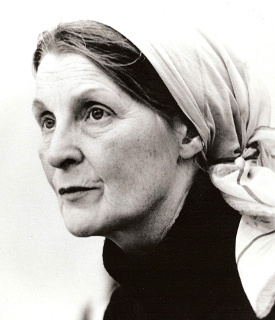
joan-denise-moriarty

Joan Denise Moriarty, Irish ballet dancer, choreographer, teacher of ballet and traditional Irish dancer and musician, dies on January 24, 1992. She is a key figure in the development of both amateur and professional ballet in Ireland.

Little is known of Moriarty’s early life. Her year of birth is estimated between 1910 and 1913 but no documentation has been found. The place of her birth is also unknown, and even the country is uncertain. She grows up as the daughter of Michael Augustus Moriarty, an alumnus of Stonyhurst College and contemporary of Sir Arthur Conan Doyle, and his wife, Marion (née McCarthy). The Moriartys are originally from Mallow, County Cork, where her grandfather John Moriarty was a successful solicitor.

Moriarty is brought up in England. She studies ballet until her early teens with Dame Marie Rambert. She is an accomplished Irish step-dancer and traditional musician and becomes the champion Irish step-dancer of Britain on April 24, 1931. She also wins a swimming championship. She is a member of the Liverpool branch of the Conradh na Gaeilge.

In the autumn of 1933 Moriarty returns with her family to their native Mallow in County Cork. In 1934, she sets up her first school of dance there. From 1938 she also gives weekly classes in Cork in the Gregg Hall and Windsor School. During the 1930s she takes part in the Cork Feis, annual arts competitions with a focus on traditional dance and music, competing in Irish step-dancing, warpipes and operatic solo singing. She performs on the warpipes in various public concerts and gives at least two broadcasts. In 1938 she is invited by Seán Neeson, lecturer in Irish music at University College Cork, to perform at a summer school which the Music Department organises for primary school teachers.

Moriarty’s mother dies in February 1940. The following November she moves to Cork where she sets up the Moriarty School of Dancing. The early years during the war are very difficult financially. In the early 1940s she performs with her dancers in musicals and variety shows at the Cork Opera House.

In 1945 the composer Aloys Fleischmann invites Moriarty to perform in his Clare’s Dragoons for baritone, war pipes, choir and orchestra, which had been commissioned by the national broadcasting company, Radio Éireann, for the Thomas Davis centenary. Moriarty agrees on condition that his Cork Symphony Orchestra would play for her Ballet Company’s annual performances, which marks the beginning of a lifelong collaboration.

Branches of the Moriarty School of Dance are established in Bandon, Clonmel, Fermoy, Killarney, Mallow, Tralee, Waterford, and Youghal. Moriarty bequeaths her Cork school to Breda Quinn, a long-standing member of the Cork Ballet Company, who runs it with another Moriarty student, Sinéad Murphy, who creates a new dance school, Cork School of Dance, after Breda’s death in 2009.

Moriarty founds the Cork Ballet Group in 1947, the members recruited from her school. It gives its first performance in June of that year at the Cork Opera House. In 1954 the group is registered as a company under the name “Cork Ballet Company.” The company’s final season is 1993, the year following Moriarty’s death.

Irish Theatre Ballet is founded by Moriarty in the summer of 1959, and gives its first performance in December 1959. It is a small touring company of 10 to 12 dancers, which travels all over Ireland, going to some 70 venues annually with extracts from the classical ballets, contemporary works and folk ballets. In an attempt to resolve the constant financial difficulties, the Arts Council in 1963 insists on a merger with Patricia Ryan’s Dublin National Ballet. The amalgamation does not bring a solution to the financial problems besetting both companies and, after one joint season, the amalgamated company, Irish National Ballet, has to be disbanded in March 1964.

In 1973, the Irish government decides to fund a professional ballet company, the Irish Ballet Company, and entrusts it to Moriarty. Like Irish Theatre Ballet, it is a touring company which travels all over Ireland in two annual seasons. The company has a number of striking successes between 1978 and 1981. In 1983 the name of the company is changed to Irish National Ballet. The severe recession in Ireland during the 1980s and shrinking funds force the Irish National Ballet to disband in 1989.

Moriarty spends almost 60 years working for ballet in Ireland. Her amateur Cork Ballet Company is still the longest-lasting ballet company the country’s history. Her two professional touring companies bring ballet to all parts of Ireland for 21 years. She receives numerous awards for her work, among them an honorary doctorate from the National University of Ireland in 1979.

During the last years of her life, Moriarty suffers ill-health, but continues her work with the Cork Ballet Company, bringing the shows to towns in the county. She dies on January 24, 1992, in Dublin.


Leave a comment

Birth of Robert Blair “Paddy” Mayne

robert-blair-paddy-mayne

Robert Blair “Paddy” Mayne, British Army soldier, solicitor, Ireland rugby union international, amateur boxer, and a founding member of the Special Air Service (SAS), is born in Newtownards, County Down, on January 11, 1915.

Mayne attends school at Regent House School, a school for students aged 4 to 18. While at Regent he discovers his skill and love for the game of rugby. He also enjoys cricket and golf and becomes a marksman with the rifle club. He goes on to Queen’s University Belfast to study law. At university he takes up boxing and becomes the Irish Universities Heavyweight Champion in August 1936. He also wins the Scrabo Golf Club President’s cup in 1937. He graduates from Queen’s University in 1939.

During 1938, Mayne travels to Africa on the 1938 British Lions Tour to South Africa. He plays on a team that tours around Africa playing other local clubs. While traveling, it is discovered that Mayne has a wild side and on various occasions finds himself in trouble. His “go to” is to trash the hotel rooms of his teammates. The team includes some of the best players from around Ireland and Britain.

In 1939, with outbreak of World War II, Mayne joins the Supplementary Reserves in Newtownards and receives a commission in the Royal Artillery. He serves in several units in Ireland and England, generally with light and heavy anti-aircraft units. He volunteers for the No. 11 (Scottish) Commando unit which is sent to the Middle East. There he sees action during the Syria-Lebanon campaign. Specifically, during the Battle of the Litani River, he draws attention from Captain David Stirling who is forming the new Special Air Service (SAS). Sterling recruits Mayne for the new SAS while he is in jail for striking his commanding officer.

From November 1941 to the end of 1942, Mayne is involved in several raids behind enemy lines with the SAS. He uses jeeps to go to various Axis bases and begin blowing up planes and fuel dumps. It is claimed that he personally destroyed 100 planes during these missions. In addition to serving in the Middle East, he serves as well in Sicily, Italy, Belgium, the Netherlands, Germany, Norway and France. In most of these locations he works with the resistance behind the enemy lines. In France he helps to train the French Resistance.

By the end of the war, Mayne has been promoted to the rank of Lieutenant Colonel and has also received the British Army’s Distinguished Service Order with three bars, which means he received the award four times. After the war he joins the British Antarctic Survey in the Falkland Islands. He returns home to Newtownards when back issues, which started while he was serving in the Middle East, become more difficult for him.

Mayne is initiated into Eklektikos Lodge No. 542 in Newtownards in 1945. He is a very enthusiastic mason and joins a second lodge in Newtownards, Friendship Lodge No. 447. On the evening of December 13, 1955, he attends a meeting of Friendship Lodge and then joins some of his masonic brothers at a local bar. At about 4:00 AM on December 14, he is found dead in his Riley RM roadster in Mill Street, Newtownards, having reportedly collided with a farmer’s vehicle.

At his funeral hundreds of mourners turn out to pay their respects and to see him interred in a family plot in the town’s old Movilla Abbey graveyard. After his death his masonic jewel is preserved for many years by an old school friend before it is presented to Newtownards Borough Council where it is displayed in the Mayoral Chamber of the Council Offices.