seamus dubhghaill

Promoting Irish Culture and History from Little Rock, Arkansas, USA


Leave a comment

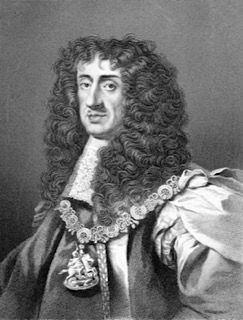
Birth of Charles Stuart, King Charles II of Great Britain and Ireland

Charles II, King of Scotland from 1649 until 1651 and King of England, Scotland, and Ireland from 1660 until his death in 1685, is born at St. James’s PalaceLondon, on May 29, 1630. The years of his reign are known in English history as the Stuart Restoration. His political adaptability and his knowledge of men enables him to steer his country through the convolutions of the struggle between Anglicans, Catholics, and Dissenters that mark much of his reign.

Charles is the eldest surviving son of Charles I and Henrietta Maria of France. His early years are unremarkable, but before he is twenty his conventional education has been completely overshadowed by the harsh lessons of defeat in the English Civil War against the Puritans and subsequent isolation and poverty. Thus he emerges into precocious maturity, cynical, self-indulgent, skilled in the sort of moral evasions that make life comfortable even in adversity.

Though the early years of tawdry dissipation tarnish the romance of Charles’s adventures, not all his actions are discreditable. He tries to fight his father’s battles in the west of England in 1645. He resists the attempts of his mother and his sister Henrietta Anne to convert him to Catholicism and remains openly loyal to his Protestant faith. In 1648, he makes strenuous efforts to save his father, and when, after Charles I’s execution in 1649, he is proclaimed Charles II by the Scots in defiance of the English republic. He is prepared to go to Scotland and swallow the stringently anti-Catholic and anti-Anglican Presbyterian Covenant as the price for alliance. But the sacrifice of friends and principles was futile and leaves him deeply embittered. The Scottish army is routed by the English under Oliver Cromwell at Dunbar in September 1650, and in 1651 Charles’s invasion of England ends in defeat at Worcester. The young king becomes a fugitive, hunted through England for forty days but protected by a handful of his loyal subjects until he escapes to France in October 1651.

Charles’s safety is comfortless, however. He is destitute and friendless, unable to bring pressure against an increasingly powerful England. France and the Dutch Republic are closed to him by Cromwell’s diplomacy, and he turns to Spain, with whom he concludes a treaty in April 1656. He persuades his brother James to relinquish his command in the French army and gives him some regiments of Anglo-Irish troops in Spanish service, but poverty dooms this nucleus of a royalist army to impotence. European princes take little interest in Charles and his cause, and his proffers of marriage are declined. Even Cromwell’s death does little to improve his prospects. But George Monck, one of Cromwell’s leading generals, realized that under Cromwell’s successors the country is in danger of being torn apart and with his formidable army creates the situation favourable to Charles’s restoration in 1660.

Most Englishmen now favour a return to a stable and legitimate monarchy, and, although more is known of Charles II’s vices than his virtues, he has, under the steadying influence of Edward Hyde, his chief adviser, avoided any damaging compromise of his religion or constitutional principles. With Hyde’s help, Charles issues in April 1660 his Declaration of Breda, expressing his personal desire for a general amnesty, liberty of conscience, an equitable settlement of land disputes, and full payment of arrears to the army. The actual terms are left to a free parliament, and on this provisional basis Charles is proclaimed king in May 1660. Landing at Dover on May 25, he reaches a rejoicing London on his 30th birthday.

The unconditional nature of the settlement that takes shape between 1660 and 1662 owes little to Charles’s intervention and likely exceeds his expectations. He is bound by the concessions made by his father in 1640 and 1641, but the Parliament elected in 1661 is determined on an uncompromising Anglican and royalist settlement. The Militia Act of 1661 gives Charles unprecedented authority to maintain a standing army, and the Corporation Act 1661 allows him to purge the boroughs of dissident officials. Other legislation places strict limits on the press and on public assembly, and the Act of Uniformity 1662 creates controls of education. An exclusive body of Anglican clergy and a well-armed landed gentry are the principal beneficiaries of Charles II’s restoration.

But within this narrow structure of upper-class loyalism there are irksome limitations on Charles’s independence. His efforts to extend religious toleration to his Nonconformist and Roman Catholic subjects are sharply rebuffed in 1663, and throughout his reign the House of Commons thwarts the more generous impulses of his religious policy. A more pervasive and damaging limitation is on his financial independence. Although the Parliament votes the king an estimated annual income of £1,200,000, Charles has to wait many years before his revenues produce such a sum, and by then the damage of debt and discredit is irreparable. He is incapable of thrift and finds it painful to refuse petitioners. With the expensive disasters of the Second Anglo-Dutch War of 1665–67 the reputation of the restored king sinks to its lowest level. His vigorous attempts to save London during the Great Fire of September 1666 cannot make up for the negligence and maladministration that leads to England’s naval defeat in June 1667.

Charles clears himself by dismissing his old adviser, Edward Hyde, and tries to assert himself through a more adventurous foreign policy. So far, his reign has made only modest contributions to England’s commercial advancement. The Navigation Acts of 1660 and 1663, which are prompted by the threat to British shipping by the rise of the Dutch carrying trade, are valuable extensions of Cromwellian policies, and the capture of New York in 1664 is one of his few gains from the Dutch. Although marriage to Princess Catherine of Braganza of Portugal in 1662 brings him the possession of Tangier and Bombay, they are of less strategic value than Dunkirk, which he sells to Louis XIV in 1662. He Is, however, prepared to sacrifice much for the alliance of his young cousin. Through his sister Henrietta Anne, Duchess of Orléans, he has direct contact with the French court, and it is through her that he negotiates the startling reversal of the Protestant Triple Alliance (England, the Dutch Republic, Sweden) of 1668. By the terms of the so-called Secret Treaty of Dover of May 1670, not only does England and France join in an offensive alliance against the Dutch, but Charles promises to announce his conversion to Roman Catholicism. If this provokes trouble from his subjects, he is assured of French military and financial support. He sees to it that the conversion clause of the treaty is not made public.

This clause, which is the most controversial act of Charles II’s reign, can be explained as a shortsighted bid for Louis XIV’s confidence. In this, however, it fails. Louis neither welcomes Charles’s intentions nor believes in them, and, in the event, it is only upon his deathbed that Charles is received into the Roman Catholic Church. But he has now fatally compromised himself. Although he subsequently attempts to pursue policies independent of Louis, he remains bound to him by inclination as well as by the fear of blackmail. More seriously, he has lost the confidence of his subjects, who deplore the French alliance and distrust the whole tendency of his policies.

Other circumstances deepen Englishmen’s discontent with their king. By the 1670s the miscarriages of the queen have reduced hopes that Charles will have a legitimate heir, and in 1673 the second marriage of his brother James, Duke of York, to Mary of Modena, increases the possibility of the Catholic line of succession, for James’s conversion to the Roman church is well known. But it is for his autocratic character as much as for his religion that James is feared as his brother is not, and it is on his brother’s behalf that Charles eventually has to face the severest political storm of his reign.

The Popish Plot of 1678 is an elaborate tissue of fictions built around a skeleton of even stranger truths. The allegations of Titus Oates, a former Anglican cleric who has been expelled from a Jesuit seminary, that Roman Catholics plan to murder Charles to make James king, seem to be confirmed by scraps of evidence of which Charles is justifiably skeptical. But he is obliged to bow before the gusts of national hysteria that seek to bar his brother from the line of succession. Between 1679 and 1681, Charles very nearly loses control of his government. Deprived of his chief minister, the Earl of Danby, who has been compromised by his negotiations with France, he has to allow Anthony Ashley-Cooper, 2nd Earl of Shaftesbury, and his Whig supporters, who uphold the power of the Parliament—men whom he detests—to occupy positions of power in central and local government. Three general elections produce three equally unmanageable parliaments, and, although Charles publicly denies the legitimacy of his first son, the Protestant Duke of Monmouth, he has to send his Catholic brother James out of the country and offer a plan of limitations that will bind James if he comes to the throne. The plan proves to be unacceptable both to the Whigs and to James, and, when Charles falls seriously ill in the summer of 1679, there is real danger of civil conflict.

But Charles keeps his nerve. He defends his queen against slanders, dismisses the intractable parliaments, and recovers control of his government. His subjects’ dread of republican anarchy proves stronger than their suspicion of James, and from March 1681, when he dissolves his last Parliament, Charles enjoys a nationwide surge of loyalty almost as fervent as that of 1660. He has made yet another secret treaty with France and in addition to a French subsidy can now count upon a healthy public revenue. Reforms at the Treasury, which he inaugurates in 1667, provide the crown with a firm basis of administrative control that is among Charles II’s most valuable legacies to English government.

As a result of these actions, Charles, who dies on February 6, 1685, at Whitehall in London, is able to end his reign in the kind of tranquil prosperity he has always sought.

Leave a comment

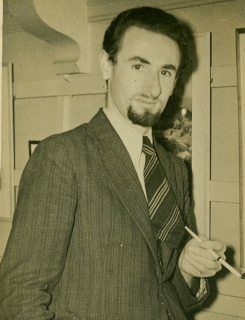
Birth of Patrick Hennessy, Irish Realist Painter

Patrick Anthony Hennessy RHA, Irish realist painter known for his highly finished still lifes, landscapes and trompe-l’œil paintings, is born in Cork, County Cork, on August 28, 1915. The hallmark of his style is his carefully observed realism and his highly finished surfaces, the result of a virtuoso painting technique.

Hennessy is the son of John Hennessy an army sergeant major from County Kerry and Bridget Hennessy from Cork. His father is killed in World War I at the Battle of Passchendaele in 1917. In 1921, when he is five years old, his mother remarries in Cork. Her second husband is a Scot named John Duncan and shortly afterwards the whole family moves to Arbroath, Scotland, where Duncan has relatives.

Hennessy is educated in Arbroath at St. Thomas RC Primary School followed by secondary education at Arbroath High School, where he begins to show an aptitude for art, leaving in 1933 with the Dux for Art and an accompanying medal. In the autumn of 1933 he enrolls at the Dundee of Jordanstone College of Art & Design, for a four-year Diploma course in Drawing and Painting under James McIntosh Patrick and Edward Baird. Here he meets Harry Robertson Craig who becomes his lifelong companion. He plays a full part in the social activities of the college, winning a fancy-dress award at the Christmas revels in 1935 and producing a ballet “Paradise Lost” the following year. He gains a First-Class Pass in each year of the course along with winning first prize in 1934 and 1936 for work done during the summer vacation. He graduates with a First-Class Distinction in 1937.

Having gained a scholarship, Hennessy continues his studies at the Dundee of Jordanstone College of Art & Design for a further year by doing a Post-Graduate Diploma course in Drawing and Painting. Within a month of gaining his Post-Graduate Diploma he holds his first joint exhibition at the Art Galleries in Arbroath. In June 1938 he is awarded the Annual Travelling Scholarship for further studies in Paris and Italy. In Paris he meets up with the artists Robert Colquhoun and Robert MacBryde, whom he had met the previous year, the three travelling south together to Marseilles towards the end of that year. On his return to Scotland he is selected for the residential summer school course at Hospitalfield House near Arbroath under James Cowie. Two of his paintings, a still life and a self-portrait, are accepted that year by the Royal Scottish Academy for their Annual Exhibition. However, by the autumn of 1939 with war looming and feeling somewhat disenchanted on his return to Scotland, he decides to return to Ireland.

On arrival in Dublin Hennessy is offered an exhibition in December 1939 at the Country Shop on St. Stephen’s Green which is opened by Mainie Jellett. This attracts favourable attention. During the early 1940s he lives at various addresses in and around Dublin with frequent trips to Cork. In 1940 he is invited to join the Society of Dublin Painters and holds regular annual exhibitions of his work there during the 1940s and early 1950s. These exhibitions are supplemented by an eclectic mix of commissions, mostly portraits which he undertakes during this period. In 1941 he has three of his paintings accepted by the Royal Hibernian Academy (RHA) for their annual exhibition. This is the beginning of a long relationship with the RHA. He exhibits there virtually every year from 1941 until 1979, the year before his death.

From the early 1940s onwards, Hennessey’s work sometimes incorporates a homosexual visual subtext. He re-unites with Harry Robertson Craig in 1946 and soon after they move to Crosshaven, County Cork, and later to Cobh. In 1947, Time magazine selects him as one of Ireland’s outstanding painters, in recognition of the important position he has then attained in the art world. In 1948 he has an exhibition at the Victor Waddington Gallery, Dublin, and that same year is elected an associate of the Royal Hibernian Academy and a full member the following year. In 1950 his painting De Profundis is selected for the Contemporary Irish Painting exhibition that tours North America. As a result of this tour, the American public and critics begin to take notice of his work. In 1951 he visits Italy, taking in Venice and Sicily and returning to Dublin with many of his canvases painted abroad. One of these paintings, Bronze Horses of St. Marks, is exhibited at the Royal Academy of Arts in London in 1954.

In 1956, a friend of Hennessy, David Hendriks, opens the Ritchie Hendriks Gallery on St. Stephen’s Green, Dublin and it is this gallery that is to be the main outlet for his work over the following 22 years. In October 1956 the Thomas Agnew Gallery in London holds an exhibition of his work comprising 38 of his paintings. However, during the winter of 1959 he becomes seriously ill with pneumonia. As a consequence of this, in the autumn of that year he and Craig decide to winter in Morocco. This is the beginning of a new era in both their lives. They would never again spend a full year in Ireland. His exhibitions at the Ritchie Hendriks Gallery had for many years enjoyed favourable reviews from the art critics but in the 1960s this changes with critics claiming his paintings to be dull, repetitive and suggest he needs to explore new areas. Despite the barrage of criticism, in 1965 the Guildhall Gallery in Chicago offers him a major exhibition. Shortly after this exhibition takes place in 1966, he becomes one of the artists on permanent display at the gallery with an annual exhibition. The North American market is extremely lucrative for him and by the end of the decade he is selling more of his work in the United States than in Ireland. In 1968 he finally moves to Tangier, Morocco on a permanent basis and in 1970 sells his studio on Raglan Lane, Dublin.

In Morocco, Hennessy paints prolifically for nine years to keep up with demand from the Hendriks Gallery and Guildhall Gallery along with the RHA. In 1975 the Guildhall Gallery mounts a highly successful Retrospective of his work. In 1978 he has his last exhibition in Dublin at the Hendriks Gallery. By this time he has moved to the Algarve, Portugal and is beginning to have health problems.

In November 1980, with his health deteriorating, Craig brings Hennessy to a hospital in London for treatment. However, on December 30, 1980 he dies from cancer. Following cremation his ashes are buried in nearby Golders Green Crematorium. He leaves his entire estate to Harry Robertson Craig with the proviso that on Craig’s death the Royal Hibernian Academy should be the beneficiary. This legacy has been used to set up the annual Hennessy Craig Scholarship for aspiring artists.

Hennessy falls into the category of painter who develops a distinctive personal style, labelled at various times in his life as a Traditional Realist, Romantic, Photo Realist, Illusionary and Surrealist. However, he always remains intrinsically himself. His subjects range from still life and interiors to landscapes and portraits.

Examples of Hennessy’s work can be found in the public collections of the Crawford Art Gallery, the Dublin City Gallery The Hugh Lane, the Irish Museum of Modern Art (IMMA), the Limerick City Gallery of Art (LCGA), the National Gallery of Ireland (NGI), the National Self-Portrait Collection of Ireland (NSPCI) at the University of Limerick (UL), and in the collections of University College Cork (UCC) and University College Dublin (UCD).


Leave a comment

Death of Patrick Hennessy, Irish Realist Painter

Patrick Anthony Hennessy RHA, Irish realist painter known for his highly finished still lifes, landscapes and trompe-l’œil paintings, dies in London on December 30, 1980. The hallmark of his style is his carefully observed realism and his highly finished surfaces, the result of a virtuoso painting technique.

Hennessy is born in Cork, County Cork, on August 28, 1915. The son of John Hennessy an army sergeant major from County Kerry and Bridget Hennessy from Cork. His father is killed in World War I at the Battle of Passchendaele in 1917. In 1921, when he is five years old, his mother remarries in Cork. Her second husband is a Scot named John Duncan and shortly afterwards the whole family moves to Arbroath, Scotland, where Duncan has relatives.

Hennessy is educated in Arbroath at St. Thomas RC Primary School followed by secondary education at Arbroath High School, where he begins to show an aptitude for art, leaving in 1933 with the Dux for Art and an accompanying medal. In the autumn of 1933 he enrolls at the Dundee of Jordanstone College of Art & Design, for a four-year Diploma course in Drawing and Painting under James McIntosh Patrick and Edward Baird. Here he meets Harry Robertson Craig who becomes his lifelong companion. He plays a full part in the social activities of the college, winning a fancy dress award at the Christmas revels in 1935 and producing a ballet “Paradise Lost” the following year. He gains a First Class Pass in each year of the course along with winning first prize in 1934 and 1936 for work done during the summer vacation. He graduates with a First Class Distinction in 1937.

Having gained a scholarship, Hennessy continues his studies at the Dundee of Jordanstone College of Art & Design for a further year by doing a Post-Graduate Diploma course in Drawing and Painting. Within a month of gaining his Post-Graduate Diploma he holds his first joint exhibition at the Art Galleries in Arbroath. In June 1938 he is awarded the Annual Travelling Scholarship for further studies in Paris and Italy. In Paris he meets up with the artists Robert Colquhoun and Robert MacBryde, whom he had met the previous year, the three travelling south together to Marseilles towards the end of that year. On his return to Scotland he is selected for the residential summer school course at Hospitalfield House near Arbroath under James Cowie. Two of his paintings, a still life and a self-portrait, are accepted that year by the Royal Scottish Academy for their Annual Exhibition. However, by the autumn of 1939 with war looming and feeling somewhat disenchanted on his return to Scotland, he decides to return to Ireland.

On arrival in Dublin Hennessy is offered an exhibition in December 1939 at the Country Shop on St. Stephen’s Green which is opened by Mainie Jellett. This attracts favourable attention. During the early 1940s he lives at various addresses in and around Dublin with frequent trips to Cork. In 1940 he is invited to join the Society of Dublin Painters and holds regular annual exhibitions of his work there during the 1940s and early 1950s. These exhibitions are supplemented by an eclectic mix of commissions, mostly portraits which he undertakes during this period. In 1941 he has three of his paintings accepted by the Royal Hibernian Academy (RHA) for their annual exhibition. This is the beginning of a long relationship with the RHA. He exhibits there virtually every year from 1941 until 1979, the year before his death.

From the early 1940s onwards, Hennessey’s work sometimes incorporates a homosexual visual subtext. He re-unites with Harry Robertson Craig in 1946 and soon after they move to Crosshaven, County Cork, and later to Cobh. In 1947, Time magazine selects him as one of Ireland’s outstanding painters, in recognition of the important position he has then attained in the art world. In 1948 he has an exhibition at the Victor Waddington Gallery, Dublin, and that same year is elected an associate of the Royal Hibernian Academy and a full member the following year. In 1950 his painting De Profundis is selected for the Contemporary Irish Painting exhibition that tours North America. As a result of this tour, the American public and critics begin to take notice of his work. In 1951 he visits Italy, taking in Venice and Sicily and returning to Dublin with many of his canvases painted abroad. One of these paintings, Bronze Horses of St. Marks, is exhibited at the Royal Academy of Arts in London in 1954.

In 1956, a friend of Hennessy, David Hendriks, opens the Ritchie Hendriks Gallery on St. Stephen’s Green, Dublin and it is this gallery that is to be the main outlet for his work over the following 22 years. In October 1956 the Thomas Agnew Gallery in London holds an exhibition of his work comprising 38 of his paintings. However, during the winter of 1959 he becomes seriously ill with pneumonia. As a consequence of this, in the autumn of that year he and Craig decide to winter in Morocco. This is the beginning of a new era in both their lives. They would never again spend a full year in Ireland. His exhibitions at the Ritchie Hendriks Gallery had for many years enjoyed favourable reviews from the art critics but in the 1960s this changes with critics claiming his paintings to be dull, repetitive and suggest he needs to explore new areas. Despite the barrage of criticism, in 1965 the Guildhall Gallery in Chicago offers him a major exhibition. Shortly after this exhibition takes place in 1966 he becomes one of the artists on permanent display at the gallery with an annual exhibition. The North American market is extremely lucrative for him and by the end of the decade he is selling more of his work in the United States than in Ireland. In 1968 he finally moves to Tangier, Morocco on a permanent basis and in 1970 sells his studio on Raglan Lane, Dublin.

In Morocco, Hennessy paints prolifically for nine years to keep up with demand from the Hendriks Gallery and Guildhall Gallery along with the RHA. In 1975 the Guildhall Gallery mounts a highly successful Retrospective of his work. In 1978 he has his last exhibition in Dublin at the Hendriks Gallery. By this time he has moved to the Algarve, Portugal and is beginning to have health problems.

In November 1980, with his health deteriorating, Craig brings Hennessy to a hospital in London for treatment. However, on December 30, 1980 he dies from cancer. Following cremation his ashes are buried in nearby Golders Green Crematorium. He leaves his entire estate to Harry Robertson Craig with the proviso that on Craig’s death the Royal Hibernian Academy should be the beneficiary. This legacy has been used to set up the annual Hennessy Craig Scholarship for aspiring artists.

Hennessy falls into the category of painter who develops a distinctive personal style, labelled at various times in his life as a Traditional Realist, Romantic, Photo Realist, Illusionary and Surrealist. However, he always remains intrinsically himself. His subjects range from still life and interiors to landscapes and portraits.

Examples of Hennessy’s work can be found in the public collections of the Crawford Art Gallery, the Dublin City Gallery The Hugh Lane, the Irish Museum of Modern Art (IMMA), the Limerick City Gallery of Art (LCGA), the National Gallery of Ireland (NGI), the National Self-Portrait Collection of Ireland (NSPCI) at the University of Limerick (UL), and in the collections of University College Cork (UCC) and University College Dublin (UCD).