seamus dubhghaill

Promoting Irish Culture and History from Little Rock, Arkansas, USA


Leave a comment

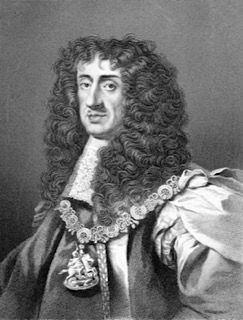
Birth of Charles Stuart, King Charles II of Great Britain and Ireland

Charles II, King of Scotland from 1649 until 1651 and King of England, Scotland, and Ireland from 1660 until his death in 1685, is born at St. James’s PalaceLondon, on May 29, 1630. The years of his reign are known in English history as the Stuart Restoration. His political adaptability and his knowledge of men enables him to steer his country through the convolutions of the struggle between Anglicans, Catholics, and Dissenters that mark much of his reign.

Charles is the eldest surviving son of Charles I and Henrietta Maria of France. His early years are unremarkable, but before he is twenty his conventional education has been completely overshadowed by the harsh lessons of defeat in the English Civil War against the Puritans and subsequent isolation and poverty. Thus he emerges into precocious maturity, cynical, self-indulgent, skilled in the sort of moral evasions that make life comfortable even in adversity.

Though the early years of tawdry dissipation tarnish the romance of Charles’s adventures, not all his actions are discreditable. He tries to fight his father’s battles in the west of England in 1645. He resists the attempts of his mother and his sister Henrietta Anne to convert him to Catholicism and remains openly loyal to his Protestant faith. In 1648, he makes strenuous efforts to save his father, and when, after Charles I’s execution in 1649, he is proclaimed Charles II by the Scots in defiance of the English republic. He is prepared to go to Scotland and swallow the stringently anti-Catholic and anti-Anglican Presbyterian Covenant as the price for alliance. But the sacrifice of friends and principles was futile and leaves him deeply embittered. The Scottish army is routed by the English under Oliver Cromwell at Dunbar in September 1650, and in 1651 Charles’s invasion of England ends in defeat at Worcester. The young king becomes a fugitive, hunted through England for forty days but protected by a handful of his loyal subjects until he escapes to France in October 1651.

Charles’s safety is comfortless, however. He is destitute and friendless, unable to bring pressure against an increasingly powerful England. France and the Dutch Republic are closed to him by Cromwell’s diplomacy, and he turns to Spain, with whom he concludes a treaty in April 1656. He persuades his brother James to relinquish his command in the French army and gives him some regiments of Anglo-Irish troops in Spanish service, but poverty dooms this nucleus of a royalist army to impotence. European princes take little interest in Charles and his cause, and his proffers of marriage are declined. Even Cromwell’s death does little to improve his prospects. But George Monck, one of Cromwell’s leading generals, realized that under Cromwell’s successors the country is in danger of being torn apart and with his formidable army creates the situation favourable to Charles’s restoration in 1660.

Most Englishmen now favour a return to a stable and legitimate monarchy, and, although more is known of Charles II’s vices than his virtues, he has, under the steadying influence of Edward Hyde, his chief adviser, avoided any damaging compromise of his religion or constitutional principles. With Hyde’s help, Charles issues in April 1660 his Declaration of Breda, expressing his personal desire for a general amnesty, liberty of conscience, an equitable settlement of land disputes, and full payment of arrears to the army. The actual terms are left to a free parliament, and on this provisional basis Charles is proclaimed king in May 1660. Landing at Dover on May 25, he reaches a rejoicing London on his 30th birthday.

The unconditional nature of the settlement that takes shape between 1660 and 1662 owes little to Charles’s intervention and likely exceeds his expectations. He is bound by the concessions made by his father in 1640 and 1641, but the Parliament elected in 1661 is determined on an uncompromising Anglican and royalist settlement. The Militia Act of 1661 gives Charles unprecedented authority to maintain a standing army, and the Corporation Act 1661 allows him to purge the boroughs of dissident officials. Other legislation places strict limits on the press and on public assembly, and the Act of Uniformity 1662 creates controls of education. An exclusive body of Anglican clergy and a well-armed landed gentry are the principal beneficiaries of Charles II’s restoration.

But within this narrow structure of upper-class loyalism there are irksome limitations on Charles’s independence. His efforts to extend religious toleration to his Nonconformist and Roman Catholic subjects are sharply rebuffed in 1663, and throughout his reign the House of Commons thwarts the more generous impulses of his religious policy. A more pervasive and damaging limitation is on his financial independence. Although the Parliament votes the king an estimated annual income of £1,200,000, Charles has to wait many years before his revenues produce such a sum, and by then the damage of debt and discredit is irreparable. He is incapable of thrift and finds it painful to refuse petitioners. With the expensive disasters of the Second Anglo-Dutch War of 1665–67 the reputation of the restored king sinks to its lowest level. His vigorous attempts to save London during the Great Fire of September 1666 cannot make up for the negligence and maladministration that leads to England’s naval defeat in June 1667.

Charles clears himself by dismissing his old adviser, Edward Hyde, and tries to assert himself through a more adventurous foreign policy. So far, his reign has made only modest contributions to England’s commercial advancement. The Navigation Acts of 1660 and 1663, which are prompted by the threat to British shipping by the rise of the Dutch carrying trade, are valuable extensions of Cromwellian policies, and the capture of New York in 1664 is one of his few gains from the Dutch. Although marriage to Princess Catherine of Braganza of Portugal in 1662 brings him the possession of Tangier and Bombay, they are of less strategic value than Dunkirk, which he sells to Louis XIV in 1662. He Is, however, prepared to sacrifice much for the alliance of his young cousin. Through his sister Henrietta Anne, Duchess of Orléans, he has direct contact with the French court, and it is through her that he negotiates the startling reversal of the Protestant Triple Alliance (England, the Dutch Republic, Sweden) of 1668. By the terms of the so-called Secret Treaty of Dover of May 1670, not only does England and France join in an offensive alliance against the Dutch, but Charles promises to announce his conversion to Roman Catholicism. If this provokes trouble from his subjects, he is assured of French military and financial support. He sees to it that the conversion clause of the treaty is not made public.

This clause, which is the most controversial act of Charles II’s reign, can be explained as a shortsighted bid for Louis XIV’s confidence. In this, however, it fails. Louis neither welcomes Charles’s intentions nor believes in them, and, in the event, it is only upon his deathbed that Charles is received into the Roman Catholic Church. But he has now fatally compromised himself. Although he subsequently attempts to pursue policies independent of Louis, he remains bound to him by inclination as well as by the fear of blackmail. More seriously, he has lost the confidence of his subjects, who deplore the French alliance and distrust the whole tendency of his policies.

Other circumstances deepen Englishmen’s discontent with their king. By the 1670s the miscarriages of the queen have reduced hopes that Charles will have a legitimate heir, and in 1673 the second marriage of his brother James, Duke of York, to Mary of Modena, increases the possibility of the Catholic line of succession, for James’s conversion to the Roman church is well known. But it is for his autocratic character as much as for his religion that James is feared as his brother is not, and it is on his brother’s behalf that Charles eventually has to face the severest political storm of his reign.

The Popish Plot of 1678 is an elaborate tissue of fictions built around a skeleton of even stranger truths. The allegations of Titus Oates, a former Anglican cleric who has been expelled from a Jesuit seminary, that Roman Catholics plan to murder Charles to make James king, seem to be confirmed by scraps of evidence of which Charles is justifiably skeptical. But he is obliged to bow before the gusts of national hysteria that seek to bar his brother from the line of succession. Between 1679 and 1681, Charles very nearly loses control of his government. Deprived of his chief minister, the Earl of Danby, who has been compromised by his negotiations with France, he has to allow Anthony Ashley-Cooper, 2nd Earl of Shaftesbury, and his Whig supporters, who uphold the power of the Parliament—men whom he detests—to occupy positions of power in central and local government. Three general elections produce three equally unmanageable parliaments, and, although Charles publicly denies the legitimacy of his first son, the Protestant Duke of Monmouth, he has to send his Catholic brother James out of the country and offer a plan of limitations that will bind James if he comes to the throne. The plan proves to be unacceptable both to the Whigs and to James, and, when Charles falls seriously ill in the summer of 1679, there is real danger of civil conflict.

But Charles keeps his nerve. He defends his queen against slanders, dismisses the intractable parliaments, and recovers control of his government. His subjects’ dread of republican anarchy proves stronger than their suspicion of James, and from March 1681, when he dissolves his last Parliament, Charles enjoys a nationwide surge of loyalty almost as fervent as that of 1660. He has made yet another secret treaty with France and in addition to a French subsidy can now count upon a healthy public revenue. Reforms at the Treasury, which he inaugurates in 1667, provide the crown with a firm basis of administrative control that is among Charles II’s most valuable legacies to English government.

As a result of these actions, Charles, who dies on February 6, 1685, at Whitehall in London, is able to end his reign in the kind of tranquil prosperity he has always sought.


Leave a comment

Birth of James Craig, Loyalist Paramilitary

James Pratt Craig, Northern Irish loyalist paramilitary during the Troubles in Northern Ireland, is born in Belfast on November 17, 1941.

Craig, known as Jim, grows up in an Ulster Protestant family on the Shankill Road. In the early 1970s, he, a former boxer, is sent to the HM Prison Maze for a criminal offence unrelated to paramilitary activities. While serving his sentence at the Maze he joins the Ulster Defence Association (UDA), and is asked by the organisation’s commander at the time, Charles Harding Smith, to take control of the UDA prisoners inside, on account of his reputation as a “hard man.”

After his release in 1976, Craig sets up a large protection racket and becomes the UDA’s chief fundraiser. By 1985, he has managed to blackmail and extort money from a number of construction firms, building sites, as well as pubs, clubs, and shops in Belfast and elsewhere in Northern Ireland, whose intimidated owners pay protection money out of fear of Craig and his associates. It is alleged that the UDA receives hundreds of thousands of pounds, some of which also find their way inside Craig’s pockets as part of his “commission.” He is acquitted on a firearm charge and Ulster Freedom Fighters (a cover name for the UDA) membership on March 18, 1982. In 1985, he is brought to court after a number of businessmen decide to testify against him, with the condition that their identities remained hidden. The case falls apart when Craig’s defence argues that his client’s rights were violated by the concealment of the witnesses’ identities.

Craig allegedly is involved in the double killing of a Catholic man and a Protestant man on the Shankill Road in 1977. The men, both colleagues, had entered a loyalist club and were later stabbed, shot and put into a car which was set on fire. By this time the UDA West Belfast Brigade no longer wants him in their ranks, as they claim they can no longer “afford him.” Craig, who is ordered to leave the Shankill Road, goes on to join forces with John McMichael’s South Belfast Brigade. In addition to being the principal fundraiser, he also sits on the UDA’s Inner Council. He usually travels in the company of his bodyguard, Artie Fee, a UDA member from the Shankill Road.

The rival Ulster Volunteer Force (UVF) carries out an investigation after it is rumoured Craig has been involved in the death of UVF major William Marchant, who is gunned down by Provisional Irish Republican Army gunmen from a passing car on the Shankill Road on April 28, 1987. Marchant is the third high-ranking UVF man to be killed by the IRA during the 1980s. Although their inquiries reveal that Craig had quarrelled with Marchant as well as Lenny Murphy and John Bingham prior to their killings, the UVF feel that there is not enough evidence to warrant an attack on such a powerful UDA figure as Craig.

In December 1987, when UDA South Belfast brigadier John McMichael is blown up by an IRA booby-trap car bomb outside his home in Lisburn‘s Hilden estate, it is believed that Craig had organised his death with the IRA. Allegedly Craig fears McMichael is about to expose his racketeering business, thus putting an end to his lucrative operation. McMichael reportedly sets up an inquiry and discovers that Craig is spending money on a lavish scale, going on holidays at least twice a year and indulging in a “champagne lifestyle.” At the same time, it is suggested that Craig has made certain deals with Irish republican paramilitary groups, dividing up the rackets in west Belfast, and he would be doing the IRA a favour by helping them to eliminate a high-profile loyalist such as McMichael. Craig has established links with republicans during his time in prison, and the profitable deals and exchanges of information between them ensures he will most likely not be a target for IRA assassination.

Craig is named as an extortionist in Central Television’s 1987 programme The Cook Report. He plans to sue the programme’s producers for libel. In January 1988, Jack Kielty (father of future television presenter Patrick Kielty), a building contractor from County Down who had promised to testify as a key witness against Craig, is murdered by the UDA. This killing is attributed to Craig, although it is never proven.

Craig is shot dead by two gunmen from the UDA in “The Castle Inn” (later called “The Bunch of Grapes”), a pub in Beersbridge Road, east Belfast on October 15, 1988, where he has been lured in the belief that there is to be a UDA meeting. He is playing pool in the pub at the time of his fatal shooting by the two men, both of whom are wearing boilersuits and ski masks and carrying automatic weapons. Upon spotting Craig they open fire, spraying the room with gunfire. Craig dies instantly. A bystander pensioner is also murdered in the attack, and four other bystanders are wounded by stray bullets. The UDA claims the killing is carried out due to Craig’s “treason” and involvement in John McMichael’s murder as they know he had provided the IRA with information to successfully carry out the assassination. They apologise for the unintentional death of the pensioner. Craig is not given a paramilitary funeral, and none of the UDA’s command attend it.


Leave a comment

Death of Marie-Louise O’Murphy, Mistress of Louis XV

Marie-Louise O’Murphy, one of the lesser mistresses of King Louis XV of France and possibly the model for the famous painting by François Boucher, dies in Paris on December 11, 1814.

O’Murphy is born in Rouen, France on October 21, 1737 as the youngest of twelve children of Daniel Morfi and Marguerite Iquy, a family of Irish origin. Her parents have well-known criminal histories. Her father was involved in a case of espionage and blackmail while her mother was accused of prostitution and theft. She and her sisters are also known for being involved in prostitution.

Contemporary and modern historiography believe O’Murphy is the very young model who posed for the Jeune Fille allongée (Reclining Girl), of François Boucher, a painting famous for its undisguised eroticism, dating from 1752. Two versions of this painting have survived, both conserved in Germany, one in the Alte Pinakothek at Munich and the other in the Wallraf-Richartz Museum at Cologne.

The term petite maîtresse (little mistress) is given to Louis XV’s mistresses that are not formally presented at court, and unlike the official mistress (maîtresse-en-titre) do not have an apartment in Palace of Versailles. Generally recruited by the King’s valets in Paris surroundings, if their affair lasts more than a single night, they are placed in a group of houses in the district of Parc-aux-Cerfs in Versailles, or close to other royal residences. O’Murphy resides there for two years, from 1753 to 1755.

After a miscarriage in mid-1753 which almost kills her, O’Murphy gives birth to Louis XV’s illegitimate daughter, Agathe-Louise de Saint-Antoine de Saint-André, born in Paris on June 20, 1754. The King, who does not want to recognize the offspring born from petites maîtresses and brief affairs, orders that the newborn must be immediately placed in care of a wet nurse. Subsequently, Agathe-Louise is sent to the Couvent de la Présentation, where she is raised.

After serving as a mistress to the King for almost two years, O’Murphy makes a mistake that is common for many courtesans, that of trying to replace the official mistress. She unwisely tries to unseat the longtime royal favorite, Madame de Pompadour. This ill-judged move quickly results in her downfall at court. In November 1755 she is expelled at night from her home at Parc-aux-Cerfs, repudiated by the King, and sent far away from Versailles.

O’Murphy hastily marries Jacques Pelet de Beaufranchet, Seigneur d’Ayat on November 25, 1755. Soon after she becomes pregnant. Her first child, a daughter named Louise Charlotte Antoinette Françoise Pelet de Beaufranchet, is born on October 30, 1756 (she dies at the age of two). Thirteen months later, on November 5, 1757, her husband is killed in action at the Battle of Rossbach. Seventeen days after his death she gives birth a second child, a son, Louis Charles Antoine de Beaufranchet, the later Comte de Beaufranchet and General under the Republic.

On February 19, 1759, O’Murphy marries François Nicolas Le Normant, Comte de Flaghac and Receiver General of Finance in Riom, a divorcee with three children. From this marriage, she gives birth to a daughter, Marguerite Victoire Le Normant de Flaghac on January 5, 1768, who, according to one theory, could be another illegitimate daughter of Louis XV. François Le Normant dies on April 24, 1783.

During the Reign of Terror O’Murphy is imprisoned as a “suspect,” under the name of O’Murphy, at Sainte-Pélagie Prison and later at the English Benedictine convent in Paris. After her release she marries Louis Philippe Dumont, a moderate MP for Calvados in the National Convention and twenty-eight years her junior, on June 19, 1795. This union quickly fails, and after almost three years, they divorce on March 16, 1798. She never marries again.

Marie-Louise O’Murphy dies in Paris on December 11, 1814 aged 77, at the home of her daughter Marguerite Le Normant.


Leave a comment

Birth of Actress Sara Ellen Allgood

sara-allgood

Sara Ellen Allgood, Irish American actress,is born to a Catholic mother and Protestant father in Dublin on October 31, 1879.

Allgood joins Inghinidhe na hÉireann (“Daughters of Ireland”), where she first begins to study drama under the direction of Maud Gonne and William Fay. She begins her acting career at the Abbey Theatre and is in the opening of the Irish National Theatre Society. Her first big role is in December 1904 at the opening of Lady Gregory‘s Spreading the News. By 1905 she is a full-time actress, touring England and North America.

In 1915 Allgood is cast as the lead in Peg o’ My Heart which tours Australia and New Zealand in 1916. She marries her leading man, Gerald Henson, in September 1916 in Melbourne, however, her happiness is short lived. She gives birth to a daughter named Mary in January 1918, who dies just a day later. Her husband dies of influenza during an outbreak in November 1918. After her return to Ireland, she continues to perform at the Abbey Theatre. Her most memorable performance is in Seán O’Casey‘s Juno and the Paycock in 1923. She wins acclaim in London when she plays Bessie Burgess in O’Casey’s The Plough and the Stars in 1926.

Allgood is frequently featured in early Alfred Hitchcock films, such as Blackmail (1929), Juno and the Paycock (1930), and Sabotage (1936). She also has a significant role in Storm in a Teacup (1937).

After many successful theatre tours in the United States, she settles in Hollywood in 1940 to pursue an acting career. She is nominated for the Academy Award for Best Supporting Actress for her role as Beth Morgan in the 1941 film How Green Was My Valley. She also has memorable roles in the 1941 retelling of Dr. Jekyll and Mr. Hyde, It Happened in Flatbush (1942), Jane Eyre (1943), The Lodger (1944), The Keys of the Kingdom (1944), The Spiral Staircase (1946), The Fabulous Dorseys (1947), and the original Cheaper by the Dozen (1950).

Allgood becomes a United States citizen in 1945 and dies of a heart attack on September 13, 1950, in Woodland Hills, California.

(Note: Many accounts give October 31, 1879, as her date of birth. Her headstone also gives 1879 as her year of birth. However, her sister Margaret is born on August 1, 1879, meaning she could not have been born in that year. Sara Allgood may have been born on October 31, 1880, but her parents may have been late registering her.)