seamus dubhghaill

Promoting Irish Culture and History from Little Rock, Arkansas, USA


Leave a comment

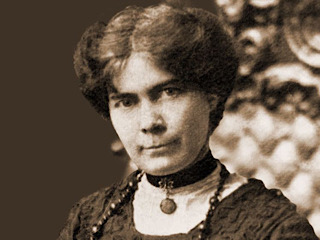
Death of Teresa Brayton, Irish Republican & Poet

Teresa Brayton, an Irish republican and poet who uses the pen name T. B. Kilbrook, dies in Kilbrook, a small village near Kilcock, County Kildare, on August 19, 1943.

Brayton is born Teresa Coca Boulanger in Kilbrook, the youngest daughter and fifth child of Hugh Boylan and Elizabeth Boylan (née Downes). Her family are long-time nationalists, with her great grandfather previously leading a battalion of pikesmen at the Battle of Prosperous.

Brayton later becomes a notable member of Irish national parties, the United Irish League and Cumann na mBan. She is described as “a patriot, but never in the vulgar sense a politician” in The Irish Times. She is closely associated with leaders of the 1916 Easter Rising, and writes poems in honour of Irish patriots including Charles Stewart ParnellRoger Casement and Patrick Pearse.

Brayton is educated from the age of 5 in Newtown National School. She writes her first poem at the age of twelve, and soon after wins her first literary award. Later on, she trains to be a teacher, and then becomes an assistant teacher to her older sister Elizabeth in the same school she received her education.

Brayton’s father is a tenant farmer, and from a young age she witnesses the effects of the land wars in Ireland. She is a supporter of Parnell, the Irish National Land League and the Irish Home Rule movement. Her work is largely influenced by her family history and Irish nationalism.

In September 1895, Brayton emigrates to the United States at the age of 27. She first lives in Boston, Chicago, and later moves to New York City. She meets Richard H. Brayton, a French-Canadian who works as an executive in the Municipal Revenue Department, who she then marries. She looks after their home and focuses on her career as a freelance journalist. She lives in the United States for 40 years and becomes well known in Irish American circles as a prominent figure in the Celtic Fellowship. It was in the United States that her reputation is established.

In the 1880s, Brayton begins her career as a poet, writing poetry for both national and provincial Irish newspapers, including Young Ireland and the King’s County Chronicle. She uses the pseudonym “T. B. Kilbrook” while contributing to these papers.

Brayton continues writing under the pseudonym until moving to the United States, where she becomes an acclaimed writer and continues to contribute to papers including the Boston newspaper The PilotNew York Monitor and Rosary Magazine. Her target audience is the Irish immigrant population of the United States. After establishing herself she releases her poetry in collections including Songs of Dawn (1913) and The Flame of Ireland (1926).

Brayton makes return trips to Ireland regularly and develops a relationship with nationalist peers, and the leaders of the Easter Rising. Upon returning to the United States, she becomes an activist for the Irish Republic and participates in organising the distribution of information to the Irish population through pamphlets and public speaking. Her contribution is acknowledged by Constance Markievicz. Her patriotism to Ireland admit her to the Celtic Fellowship in America, where she shares her poetry at events.

Brayton’s best-known poem is “The Old Bog Road,” which is later set to music by Madeline King O’Farrelly. It has since been recorded and released by many Irish musicians including Finbar FureyDaniel O’Donnell and Eileen Donaghy, among many others. Many more of her best-known ballads include, The Cuckoo’s CallBy the Old Fireside and Takin’ Tea in Reilly’s.

Brayton makes her permanent return to Ireland at the age of 64 following the death of her husband in 1932 and continues her career as a journalist writing for Irish newspapers and publishes religious poetry in the volume Christmas Verses in 1934. A short story called The New Lodger written by Brayton is published by the Catholic Trust Society in 1933. She dedicates much of her work to the exiled Irish living in the United States, incorporating themes of nostalgia, the familiarity of home and religion throughout her poetry.

Initially upon moving back to Ireland, she lives for a few years with her sister in Bray, County Wicklow. She then moves to Waterloo Avenue, North StrandCounty Dublin. Here, she witnesses the bombing of the North Strand on May 31, 1941 during World War II. Shortly after the bombing, she eventually settles back in Kilbrook, where she was born, and lives there for the rest of her life. She spends a brief period of time in the Edenderry Hospital before her death. During her stay there she becomes a good friend with Padraig O’Kennedy, the “Leinster Leader,” who is able to reveal to her something that is linked to a family member of his. A copy of her The Old Bog Road which had been set to music and autographed by her while she was living in the United States. She had it sent to O’Kennedy’s eldest son and on it she wrote the words: “To the boy who sings the Old Bog Road so sweetly.”

Two years after her return to Kilbrook, on August 19, 1943, Brayton dies in the same room where her mother had given birth to her over 75 years previously. She is buried at the Cloncurry cemetery in County Kildare. Her funeral is attended by many, including the then TaoiseachÉamon de Valera.

From the vivid imagery she speaks of in her poetry, Brayton, both a poet and a novelist, is described by some as “the poet of the homes of Ireland.” Such scenes include the vivid imagery of the fireside chats, the sound of her latch lifting as neighbours in to visit at night from her poem “The Old Boreen” and about her home cooking and work from “When the Leaves Begin to Fall.” Such images can be compared to most Irish households and can depict a vivid picture to those reading her poetry.

Brayton’s poetry leaves a lasting sense of Irish beauty and community. This can be seen in such poems as “A Christmas Blessing” where she speaks of “taking and giving in friendship” during Christmas. Since her passing she has continued to keep an audience from overseas from Boston and New York primarily, this as a result of the reminder her poems give to Irish exiles of Irish traditions and music which was close to them. While her poems are more often serious, some portray an almost comical undertone tone. In an article in The Irish Times, her poetry is also said to have a racy feel to them.

1 Comment

Death of Poet & Journalist John Boyle O’Reilly

john-boyle-o-reilly

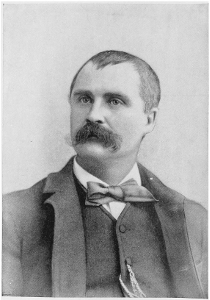
John Boyle O’Reilly, Irish American poet, journalist, author and activist, dies on August 10, 1890, in Hull, Massachusetts, due to accidental poisoning. His literature and work with civil rights have been celebrated throughout the years.

O’Reilly is born on June 28, 1844, at Dowth Castle to William David O’Reilly (1808–1871) and Eliza O’Reilly (née Boyle) (1815–1868) near Drogheda. His father is a headmaster. He is the third of six children. A year after his birth, the Great Famine begins, an event that shapes his life and beliefs. Most of his closest family manage to survive the famine, however many of his classmates lose their lives to the famine.

O’Reilly moves to his aunt’s residence in England as a teenager and becomes involved in journalism and shortly after becomes involved in the military. He leaves the military, however, in 1863 after becoming angry with the military’s treatment of the Irish and returns to Ireland the same year.

In 1864 O’Reilly joins the Irish Republican Brotherhood under an assumed name and is part of the group for two years until he and many others are arrested by authorities in early 1866. After a trial that same year he is sentenced to death, but the sentence is later commuted to 20 years’ penal servitude. In 1867 he is transported to Western Australia and moves to the town of Bunbury where he escapes two years later. He is assisted in escaping by a Fr. Patrick McCabe from Arnaghan, Gowna, County Cavan.

Following his escape O’Reilly moves to Boston, Massachusetts and embarks on a successful writing and journalism career that produces works such as Moondyne (1879) and Songs from the Southern Seas (1873), and poems such as The Cry of the Dreamer and The White Rose and In Bohemia (1886). He becomes a prominent spokesperson for the Irish community and culture through his editorship of the Boston newspaper The Pilot, his prolific writing and his lecture tours.

O’Reilly marries Mary Murphy (1850-1897), a journalist who writes for the Young Crusader under the name of Agnes Smiley, on August 15, 1872, and has four daughters. In the final four years of his life, he suffers various health issues.

On August 9, 1890, O’Reilly takes an early boat to his residence in Hull, Massachusetts. He has been suffering from bouts of insomnia during this time. That evening he takes a long walk with his brother-in-law, John R. Murphy, hoping that physical fatigue will induce the needed sleep. Later on that night he takes some of his wife’s sleeping medicine, which contains chloral hydrate.

In the early morning hours of August 10 his wife wakes up to find O’Reilly unconscious, sitting in a chair with one hand resting on the table near a book and a cigar in the other. She sends a servant for the family’s physician, Dr. Litchfield, and he spends nearly an hour trying to revive him, but O’Reilly dies shortly before 5:00 AM. Public announcements attribute O’Reilly’s death to heart failure but the official death register claims “accidental poisoning.” His memorial service held at Tremont Temple in Boston is a major public event.

The song “Van Diemen’s Land” on U2‘s Rattle and Hum (1988) album refers to and is dedicated to O’Reilly.


Leave a comment

Birth of Patrick Ford, Irish American Journalist

patrick-ford

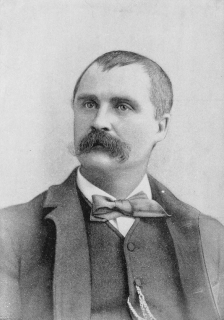
Patrick Ford, Irish American journalist, Georgist land reformer and fund-raiser for Irish causes, is born in Galway, County Galway on April 12, 1837.

Ford is born to Edward Ford (1805-1880) and Ann Ford (1815-1893), emigrating with his parents to Boston, Massachusetts in 1845, never returning to Ireland. He writes in the Irish World in 1886 that “I might as well have been born in Boston. I know nothing of England. I brought nothing with me from Ireland — nothing tangible to make me what I am. I had consciously at least, only what I found and grew up with in here.”

Ford leaves school at the age of thirteen and two years later is working as a printer’s devil for William Lloyd Garrison‘s The Liberator. He credits Garrison for his advocacy for social reform. He begins writing in 1855 and by 1861 is editor and publisher of the Boston Tribune, also known as the Boston Sunday Tribune or Boston Sunday Times. He is an abolitionist and pro-union.

During the American Civil War (1861–1865) Ford serves in the Union Army in the Ninth Massachusetts Regiment with his father and brother. He sees action in northern Virginia and fights in the Battle of Fredericksburg.

Ford spends four years after the war in Charleston, South Carolina, editing the Southern Carolina Leader, printed to support newly freed slaves. He settles in New York City in 1870 and founds the Irish World, which becomes the principal newspaper of Irish America. It promises “more reading material than any other paper in America” and outsells John Boyle O’Reilly‘s The Pilot.

In 1878, Ford re-titles his newspaper, the Irish World and American Industrial Liberator. During the early 1880s, he promotes the writings of land reformer, Henry George in his paper.

In 1880, Ford begins to solicit donations through the Irish World to support Irish National Land League activities in Ireland. Funds received are tabulated weekly under the heading “Land League Fund.” Between January and September 1881 alone, more than $100,000 is collected in donations. British Prime Minister William Ewart Gladstone later states that without the funds from the Irish World, there would have been no agitation in Ireland.”

Patrick Ford dies on September 23, 1913.


Leave a comment

The Catalpa Rescue

catalpa

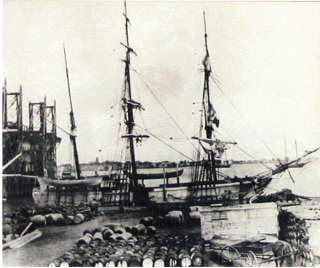
The whaling ship Catalpa is given a tumultuous welcome as it sails into New York harbor on August 19, 1876. She has no whales on board, but a far more valuable cargo, six Fenian prisoners from the British penal colony of Western Australia.

Clan na Gael‘s John Devoy, with the help of his friend John Boyle O’Reilly, a Fenian who had once escaped from Australia himself and editor of the Boston newspaper The Pilot, plan the escape. Somehow maintaining the secrecy of the mission, the two arrange to buy and crew the whaler Catalpa, purchased in New Bedford, Massachusetts, for the attempt.

The Catalpa sets out in April 1875 with most of the crew unaware of their actual mission. They reach western Australia in March 1876.

The first intended day for escape from the penal colony is April 6, but the appearance of HMS Convict and other Royal Navy ships and customs officers quickly lead to a postponement. The escape is rearranged for April 17, when most of the Convict Establishment garrison is watching the Royal Perth Yacht Club regatta.

Catalpa drops anchor in international waters off Rockingham and dispatches a whaleboat to shore. At 8:30 AM, six Fenians, Thomas Darragh, Martin Hogan, Michael Harrington, Thomas Hassett, Robert Cranston and James Wilson, who are working in work parties outside the prison walls abscond. They are met by Fenian agents John Breslin and Thomas Desmond and picked up in horse traps. A seventh Fenian, James Kiely, is left behind. The men race 12 miles south to Rockingham pier where Captain George Smith Anthony awaits them with the whaleboat. A local named Bell he had spoken to earlier sees the men and quickly alerts the authorities.

As they row to the Catalpa a fierce squall strikes, breaking the whaleboat’s mast. The storm lasts until dawn on April 18 and is so intense that Anthony later states that he did not expect the small boat to survive. At 7:00 AM, with the storm over, they again make for the Catalpa but an hour later spot the screw steamer SS Georgette, which has been commandeered by the colonial governor, heading for the whaler. The men lay down in the whaleboat and it is not seen by the SS Georgette. The SS Georgette finds the Catalpa, but in Captain Anthony’s absence the First Mate refuses to allow the colonial police to board as the ship is outside the colony’s three-mile limit. The steamer is forced to return to Fremantle for coal after following the Catalpa for several hours.

As the whaleboat again makes for the ship a police cutter with 30 to 40 armed men is spotted. The two boats race to reach the Catalpa first, with the whaleboat winning, and the men climbing aboard as the police cutter passes by. The cutter turns, lingers briefly beside the Catalpa, and then heads to shore.

Early on April 19 the refuelled and now heavily armed SS Georgette returns and comes alongside the whaler, demanding the surrender of the prisoners and attempting to herd the ship back into Australian waters. They fire a warning shot with the 12-pounder cannon that had been installed the night before. Ignoring the demand to surrender, Anthony raises and then points towards the U.S. flag, informing the SS Georgette that an attack on the Catalpa will be considered an act of war against the United States, and proceeds westward.

Governor William Cleaver Robinson has ordered the police on the SS Georgette not to create an incident outside territorial waters. After steaming around threateningly for about an hour, the SS Georgette heads back to Fremantle and Catalpa slips away into the Indian Ocean.

The Catalpa does its best to avoid Royal Navy ships on its way back to the United States. O’Reilly receives the news of the escape on June 6 and releases the news to the press. The news sparks celebrations in the United States and Ireland and anger in Britain and Australia, although there is also sympathy for the cause within the Australian population. The Catalpa arrives in New York Harbor on August 19, 1876. Clan na Gael and the Fenians achieve one of their greatest victories over the British Empire.


Leave a comment

Birth of Fanny Parnell, Poet & Nationalist

Fanny Parnell, Irish poet and Nationalist, is born Frances Isabelle Parnell in Avondale, County Wicklow on September 4, 1848. She is the sister of Charles Stewart Parnell, an important figure in nineteenth century Ireland.

Parnell is the eighth child out of eleven and fourth daughter born to John Henry Parnell, a landowner and the grandson of the last Chancellor of the Exchequer of Ireland, and Delia Tudor Stewart Parnell, an Irish American and the daughter of Admiral Charles Stewart (1778–1869) of the United States Navy. Her mother hates British rule in Ireland, a view presented through her children’s works. She is an intelligent girl and before she is through her teen years, she has studied mathematics, chemistry, and astronomy, and she can speak and write fluently in almost all the major European languages. She also has talents in music and painting and drawing in oil and water colours. Her parents separate when she is young. Soon afterwards, in July 1859, her father dies at the age of forty-eight and she and her mother move to Dalkey. A year later they move to Dublin, and in 1865 they move to Paris where Fanny studies art and writes poetry. In 1874 they move to Bordentown, New Jersey in the United States.

Parnell is known as the Patriot Poet. She shows interest in Irish politics and much of her poetry is about Irish nationalism. While she is living in Dublin in 1864, she begins publishing her poetry under the pseudonym “Aleria” in The Irish People, the newspaper of the Fenian Brotherhood. Most of her later work is published in The Pilot in Boston, the best-known Irish newspaper in America during the nineteenth century. Two of her most widely published works are The Hovels of Ireland, a pamphlet, and Land League Songs, a collection of poems. Her best-known poem is “Hold the Harvest,” which Michael Davitt refers to as the “Marseillaise of the Irish peasant.”

Parnell’s brother, Charles, becomes active in the Irish National Land League, an organisation that fights for poor tenant farmers, in 1879 and she strongly supports him. She and her younger sister, Anna Parnell (1852–1911), co-found the Ladies’ Land League in 1880 to raise money in America for the Land League. In 1881 the Ladies’ Land League continues the work of the men in the Land League while they are being imprisoned by the British government. In Ireland Anna becomes the president of the Ladies’ Land League, and the women hold many protests and quickly become more radical than the men, to the resentment of the male leaders. Fanny stays in America and works to raise money for the organisation. Most of the Land League’s financial support comes from America because of the campaigning done by Fanny Parnell.

Fanny Parnell dies on July 20, 1882, at the young age of 33, of a heart attack at the family mansion in Bordentown, New Jersey. She is buried at the Tudor family plot at Mount Auburn Cemetery in Cambridge, Massachusetts.


Leave a comment

Birth of Writer John Boyle O’Reilly

John Boyle O’Reilly, poet, journalist and fiction writer, is born in Dowth, County Meath on June 28, 1844.

O’Reilly is the third child of a headmaster and a schoolteacher. When he is fifteen, he moves to Lancashire and lives with his aunt and uncle. There he becomes a reporter with a local newspaper and joins the 11th Lancashire Rifle Volunteers in 1861. He returns to Ireland in 1863 and enlists with the 10th Royal Hussars in Dublin. However, after realising the way the British are treating his fellow people, he leaves the army and joins the Irish Republican Brotherhood around 1865.

In 1866 O’Reilly, along with many other members of the Brotherhood, are arrested and put on trial for treason. O’Reilly is found guilty and sentenced to death however, due to his young age, his sentence is reduced to 20 years penal servitude. He spends a year and a half in some English prisons before being transported to Western Australia in 1867, arriving in 1868.

A month after arriving O’Reilly is moved to the town of Bunbury where he starts receiving attention for protesting the chopping down of a tree. A year after arriving he decides to escape from the colony with the help of a local Catholic priest and some farmers from the nearby town of Dardanup. In February 1869 O’Reilly absconds from his convict camp and makes his way towards the Leschenault Peninsula where he waits for a ship to arrive. After approximately two weeks O’Reilly escapes on the Gazelle bound for the United States, arriving there in November 1869.

O’Reilly moves to Boston and becomes a well-known figure in the town where he becomes involved in civil rights, sports, and Irish American causes. He also becomes part owner of The Pilot newspaper. He publishes four books of poetry – Songs from the Southern Seas (1873), Songs, Legends and Ballads (1878), The Statues in the Block (1881) and In Bohemia (1886). He also publishes a novel Moondyne (1879) based on the convict of the same name and O’Reilly’s experiences in Western Australia. It becomes his most popular work. He also writes one last book of poems entitled Watchwords, which is released after his death.

John Boyle O’Reilly dies in Hull, Massachusetts on August 10, 1890, from heart failure after overdosing on his wife’s medication. His sudden death receives an outpouring of grief and tributes from the Boston community and also globally.

His funeral is held at St. Mary’s Church in Charlestown on August 13 and is attended by thousands. The streets near the church are lined with mourners. His wife does not attend the funeral due to grief and is unable to leave her bed. He is originally buried at Calvary Cemetery in Roxbury, but in November 1890 his remains are exhumed and moved to Holyhood Cemetery in Brookline.