seamus dubhghaill

Promoting Irish Culture and History from Little Rock, Arkansas, USA


Leave a comment

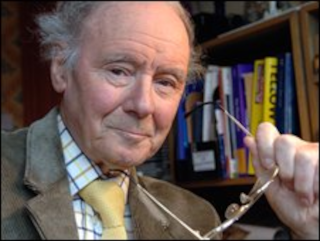
Birth of David Hammond, Singer & Folklorist

David Andrew (Davy) Hammond, singer, folkloristtelevision producer and documentary maker, is born on December 5, 1928, in Miss Kell’s nursing home on the Castlereagh Road in Belfast, Northern Ireland.

Hammond is the son of Leslie Hammond, a tram driver, and his wife Annie (née Lamont). His parents are not city people; his mother grew up near Ballybogy in the Ballymoney area of County Antrim, and his father, though from a family with roots in south County Londonderry, had lived in Ballymoney as a boy, and had been apprenticed to a blacksmith there. Both have a strong sense of their rural identity and maintain the Ulster Scots dialect of their childhood. They are never quite at home in the Belfast suburb of Cregagh, and in particular do not share the sectarian attitudes that are much more present in 1930s Belfast than they had been in north Antrim, one of the last strongholds of Presbyterian radicalism. Even as a boy, Hammond is interested in the old songs that his mother sang and realises that the traditions in which his parents had been nurtured are disappearing quickly in an increasingly urbanising and modernising world. When he encounters the work of Emyr Estyn Evans in the early 1940s, he is encouraged to document both rural tradition and the street life of the city, and he and a couple of friends, though still just teenagers, ride off on their bicycles to look for folklore in the hinterland of Belfast.

After primary school, Hammond wins a scholarship in 1941 to Methodist College Belfast, where he does well in examinations, and then goes to Stranmillis University College to train as a teacher. In his first job, in Harding Memorial primary school in east Belfast, he proves to be a popular, idealistic teacher, and is remembered by his pupils fifty years later as a fine singer and a teller of ghost stories, who had taken the class on memorable youth-hosteling trips to the Mourne Mountains. Youth hosteling and folklore collecting increases his awareness and understanding of the rich traditions of the whole community in the north of Ireland, and he is never constrained by political or religious barriers. His early career mirrors closely that of James Hawthorne, and their paths are to cross in later life.

Hammond is friendly with many others active in the cultural life of Northern Ireland and makes a name for himself as a song collector and eventually as an expert on all aspects of traditional singing. In 1956, he is awarded a scholarship to travel in the United States to meet the important pioneers of folk-music collecting and performance there. He records his first LP record of Ulster songs, I Am The Wee Falorie Man (1958), in the United States, and becomes friends with Pete Seeger, the Appalachian singer Jean Ritchie, with old blues singers, and notably with Liam Clancy, one of the three Clancy brothers who as a quartet with Tommy Makem are to popularise Irish folk music in the United States and elsewhere.

On returning to Belfast, Hammond takes a job in 1958 in Orangefield secondary school in the east of the city, where the highly regarded headmaster John Malone encourages new approaches to education. Among his pupils at Orangefield is George Ivan “Van” Morrison, who credits him with inspiring his interest in Irish traditional music. Hammond enjoys teaching but is increasingly drawn to folk-song performance and recording. He appears regularly on radio programmes of the BBC and Radio Éireann, and in 1964 joins the school’s department in BBC Northern Ireland. There, with colleagues like Sam Hanna Bell, James Hawthorne and others, he works on programmes such as Today and Yesterday in Northern Ireland, which for the first time introduces pupils (and many adults) to local history and to aspects of tradition. In 1968, with two friends, the poets Seamus Heaney and Michael Longley, he puts on poetry and traditional music events in schools all over the province. The Arts Council funds the Room to Rhyme project, which is immensely influential and inspiring, and is still talked about many years later by those who attended as children.

Hammond is creatively involved with hundreds of hours of broadcasting, in television as well as radio, and eventually for adults as well as children. He writes scripts, produces documentary series such as Ulster in Focusand Explorations, and brings an artistic sensibility to filming, as well as working sympathetically with traditional singers and craftspeople. Dusty Bluebells, a sensitively made film of Belfast children’s street games, wins the prestigious Golden Harp award in 1972. After he leaves the BBC to work as a freelance, and founds Flying Fox Films in 1986, he continues making documentaries on many aspects of Ulster life and heritage. His film called Steel Chest, Nail in the Boot and the Barking Dog (1986), about working in the Belfast shipyards, also wins a Golden Harp award. A companion book of the same name is published. Another book is Belfast, City of Song(1989), with Maurice Leyden. In 1979, he edits a volume of the songs of Thomas Moore. His documentary programmes include films about singers from Boho, County Fermanagh, and about the big houses of the gentry in Ireland. The Magic Fiddle (1991/2) examines the role of the instrument in the folk music of Ireland, ScandinaviaCanada, and the American south, while Another Kind of Freedom (1993) is about the experiences of a former Orangefield pupil, the Beirut hostage Brian Keenan. He also produces and directs the films Something to Write Home About (1998), Where Are You Now? (1999), and Bogland (1999), all of which explore Seamus Heaney’s home region and experiences.

The first poem in Heaney’s collection Wintering Out (1972) is entitled “For David Hammond and Michael Longley.” Their lifelong friendship leads to several other creative collaborations. In particular, after a distressing evening in 1972 when Hammond, affected by the despair and terror unleashed by Irish Republican Army (IRA) bombing of his city, is for once unable to sing, Heaney meditates on the experience in an essay and in an important poem, “The singer’s house” (subsequently included in his 1979 Field Work collection). The poem urges the singer to keep singing, to defend the values of art and friendship in a hostile time. Hammond collaborates with Dónal Lunny and other traditional musicians to bring out an LP also called The Singer’s House(1978), which includes Heaney’s poem on the album sleeve, and features some of the songs that he had made famous, such as “My Aunt Jane” and “Bonny Woodgreen,” from his vast repertoire of songs from Ulster. The album is reissued in 1980.

In 1995, Hammond is one of Heaney’s personal guests at the award of his Nobel prize in Stockholm, characteristically wearing his usual, mustard-yellow, cattle-dealer boots with evening dress. On another formal occasion, when he is awarded an honorary doctorate by Dublin City University in November 2003, he surprises the audience by standing up in his academic robes to sing “My Lagan love,” instead of giving an address. His unique, light mellow voice is an ideal vehicle for the traditional ballads which he knows so well. He records a number of records in the 1960s, including Belfast Street Songs, and publishes the book Songs of Belfast (1978). He also encourages traditional musicians like Arty McGlynn, and collaborates with them on various recording projects. He is well known for live and often impromptu performances at festivals and venues in Ireland and the United States. He also performs at the John F. Kennedy Center for the Performing Arts in Washington, D.C.

Hammond is also a notable collaborator with poets and dramatists, especially in the important Field Day Theatre Company project, of which he is a director, along with Seamus Heaney, Tom PaulinSeamus DeaneThomas Kilroy, and the project’s founders, Brian Friel and Stephen Rea. He supports the Field Day search for a “fifth province,” where history and community and culture can intersect, believing that to speak unthinkingly of “two traditions” is to perpetuate superficial political divisions. As he says in an interview in The Irish Times on July 4, 1998, songs can “take you out of yourself” and become bridges to unite people.

Hammond receives many honours. In 1994, he receives the Estyn Evans award for his contribution to mutual understanding, and his work is featured in several major events in his honour: in the University of North Florida (1999), in the Celtic Film Festival in Belfast (2003), and in Belfast’s Linen Hall Library (2005). A Time to Dream, a film about his life and work, is broadcast on BBC Northern Ireland in December 2008.

Hammond dies in hospital in Belfast, after a long illness, on August 25, 2008, survived by his wife Eileen (née Hambleton), whom he marries on July 19, 1954, and by their son and three daughters. His funeral in St. Finnian’s Church is a major cultural event, where friends sing, play and speak in his honour.

In Seamus Heaney’s last collection of poetry, Human Chain (2010), he includes a poignant farewell to Hammond. The poet imagines (or perhaps dreams) of another visit to the singer’s house, but this time “The door was open, and the house was dark.”

(From: “Hammond, David Andrew (‘Davy’)” by Linde Lunney, Dictionary of Irish Biography, http://www.dib.ie, December 2014)


Leave a comment

Birth of William Joyce, Last Person Executed for Treason in the UK

William Brooke Joyce, an American-born fascist and Nazi propaganda broadcaster during World War II, is born on Herkimer Street in Brooklyn, New York, on April 24, 1906. He has the distinction of being the last person to be executed for treason in the United Kingdom.

Joyce is the eldest of three sons of Michael Joyce, an Irish Catholic from a family of tenant farmers in Ballinrobe, County Mayo, and his wife, Gertrude (née Brooke), who although born in Shaw and Crompton, Lancashire, is from a well-off Anglican Anglo-Irish family of physicians associated with County Roscommon. The Joyces return to Ireland in 1909. William, a precocious child, attends Coláiste Iognáid SJ, a Jesuit school in County Galway, from 1915 to 1921. At the age of fourteen, he abandons Catholicism for Anglicanism, apparently after being told that all non-Catholics, including his mother, would be damned. In adult life he is nominally anglican, though his adherence to Christianity is tenuous.

The Joyces are unionists and teach their children fervent imperialism. During the Irish War of Independence, Joyce openly associates with the Black and Tans and acts as a scout for them. An acquaintance claims that his views are so extreme even loyalists dislike him. On December 9, 1921, he flees to England to join the Worcestershire Regiment and is followed to England in 1923 by the rest of the family. When he enlists, he claims to be eighteen, but after he contracts rheumatic fever, his age is discovered, and he is discharged in March 1922. For a time, he studies mathematics and chemistry at Battersea Polytechnic Institute as a pre-medical student (1922–23), but he leaves of his own accord, with a reputation for laziness and violent political views. His studies in English and history at Birkbeck College are more successful. He is a brilliant linguist and mathematician and graduates BA with first-class honours in 1927. He publishes an academic article on philology and considers progressing to an MA. He later falsely claims that his research had been plagiarised by a Jewish academic. In 1932, he enrolls at King’s College, London, for a Ph.D. in educational psychology.

Joyce is disturbed by the difference between depressed post-war Britain and the imperial ideal that he had imbibed in Galway and is mocked for his outspoken patriotism and obvious Irishness. He identifies strongly with Thomas Carlyle, an earlier angry anti-liberal from the provinces. His life is marked by repeated episodes of hero worship, followed by disillusion and bitter denunciation. In 1923, he joins the British Fascists, an organisation that has a significant Irish loyalist membership, and in 1924 he allies himself with a militant splinter group, the National Fascists. Most British fascists see themselves as Tory auxiliaries, and they often provide a security presence at conservative meetings. On October 22, 1924, while stewarding a meeting addressed by a Jewish conservative candidate, he has his face slashed and is left with a prominent scar across his right cheek. He joins the Conservative Party in 1928 and is active in the Chelsea constituency until 1930, when he is forced out because of his eccentricities and sexual misbehaviour. On April 30, 1927, he marries Hazel Kathleen Barr. They have two daughters but separate in 1935, largely because of his infidelities, heavy drinking, and temper. The marriage is dissolved in 1937.

In November 1933, Joyce abandons his Ph.D. studies to work for Sir Oswald Mosley‘s British Union of Fascists (BUF). By early 1934 he has become its paid publicity director, traveling throughout Britain to organise meetings. He is a powerful, rabble-rousing speaker, driven by an instinctive awareness that vitriolic verbal abuse gives speaker and audience a sense of power and solidarity. MI5 sees him as a compelling, though deranged, personality. On February 8, 1937, he marries Margaret Cairns White, a BUF activist from Lancashire, with whom he had cohabited since 1936.

Joyce leads a BUF faction that favours a recruitment strategy based on uncompromising ideological assertion. This is challenged by populists who prioritise marches and displays and hold that indoctrination should follow membership. In February 1937, he is BUF candidate for the London County Council in Shoreditch. The party wins 14 percent of the vote. In March 1937, he, along with many full-time BUF staff, are sacked when the BUF cuts expenses. But his dismissal also reflects Mosley’s awareness that his obsessive rhetoric repels “respectable” recruits and that he is no longer a biddable, slavish admirer of “the Leader.” He later falsely claims near-exclusive credit for the BUF’s escalating antisemitism, a view that Mosley eventually finds it convenient to adopt in order to evade his own responsibility.

In April 1937, Joyce founds the National Socialist League, helped by a wealthy patron. He supports himself as a private tutor, refusing to take Jewish pupils. He is active in various antisemitic and pro-Nazi groups such as the Right Club and engages in “peace” campaigns based on the view that British interests lay with Germany against Russia. Political marginalisation intensifies his admiration for Nazi Germany and hero worship of Adolf Hitler. By the time of the Munich crisis in 1938, he has decided that if war comes, he will go to Germany, though he also considers moving to Ireland. He renews his British passport for one-year terms in August 1938 and August 1939.

On August 26, 1939, Joyce and his wife leave London for Berlin. He is allegedly tipped off about his impending arrest and internment by an MI5 officer, to whom he had supplied information on communists. His siblings, whom he recruited into his fascist organisations, are variously penalised for his activities. At a loose end in Berlin, he is persuaded by a British associate to become a radio announcer with the English-language service of the Reichs-Rundfunk-Gesellschaft (RRG). He makes his first broadcast on September 6, 1939, and receives a contract in October. He finds in radio an outlet for his forceful style and delight in saying the unsayable, and in the early years of the war takes an exultant pride in recounting Nazi victories. His performances are admired by Joseph Goebbels, whom Joyce, to his regret, never meets. On September 26, 1940, he acquires German citizenship.

The novel experience of hearing the enemy in one’s own living room attracts wide audiences in Britain. Joyce’s practice of naming newly captured prisoners of war in his broadcasts is also a compelling motive for listening. In fact, he tries to recruit British prisoners of war as collaborators. The name “Lord Haw-Haw,” invented by the Daily Express radio critic in September 1939, initially applies to several English-language broadcasters but in time becomes associated with Joyce. He is initially a figure of fun, imitated by comedians, but there are sinister undercurrents of terrifying omnipotence, intensified by his sneering, gloating delivery and his delighted deployment of the “big lie” technique. It is widely believed that British-based fifth columnists supply him with information, that he predicts air raids, and shows minute local knowledge. In time, fear and his growing notoriety feed popular hatred of him in Britain, though his anti-British taunts allegedly win appreciative Irish audiences. He exults that he is daily committing treason and rendering himself liable to the death penalty.

In 1940, Joyce publishes a commissioned self-justifying propaganda work, Twilight over England. His representation of himself echoes that of Hitler in Mein Kampf – the provincial patriot, whose martial sacrifices are betrayed by corrupt elites, learning through poverty the hollowness of bourgeois patriotism and the need to synthesise socialism with nationalism. He shares with his hero a paranoid belief in his own ability to create an alternative reality through language and obstinacy. He dreams of becoming the English Führer.

In Berlin, the Joyces’ marriage comes under increasing strain, marked by drunken rows, domestic violence, and infidelity on both sides, though they retain a fierce mutual fascination. They divorce on August 12, 1941, but remarry on February 11, 1942, while continuing their previous behaviour. As the Axis powers begin to fail, his broadcasts become more defensive, focusing on the Soviet threat. On October 14, 1944, he is awarded the German War Merit Cross, first class. On October 22, he is sworn into the Volkssturm (territorial army) and begins drilling. The Joyces are evacuated from Berlin in March 1945, initially to Apen near the Dutch border and then to Hamburg, where he makes a last, drunken, defiant broadcast on April 30, 1945, the day of Hitler’s death. After an unsuccessful attempt to escape to Sweden, the Joyces hide at Flensburg near the Danish border. On May 28, 1945, he is shot and captured while gathering firewood.

Joyce is brought back to Britain on June 16 after Parliament passed legislation simplifying treason trial procedures. At his September 17-20 trial, he proves his American citizenship, but the court holds that his illegally acquired British passport incurred duties of allegiance. His appeals are rejected by the Court of Appeal and the House of Lords. His fate is influenced by British public opinion, and possibly by a desire to avoid antagonising the Soviet Union. In his death cell he blames the defeat of national socialism on German limitations. He also fantasises that he could have saved Hitler from his incompetent subordinates.

Joyce is hanged by Albert Pierrepoint at Wandsworth Prison on January 3, 1946. Unlike most of his fellow Nazis, he proclaims to the end his allegiance to national socialism and hatred of Jews. He corresponds cheerfully with Margaret, joking evasively about the death camps and expressing a belief that his spirit will survive, watch over her, and continue his work. To neo-Nazis he becomes a martyr. Even among those to whom his activities had been repellent, a significant body of opinion holds he should not have been condemned on a questionable and innovative technicality. The historian A. J. P. Taylor maintains that Joyce was executed for making a false declaration to obtain a passport, a misdemeanour that normally incurs a £2 fine.

In 1976, Joyce is reinterred in Galway as it is feared that a grave in England might become a fascist shrine. Thomas Kilroy‘s play Double Cross (1986) juxtaposes Joyce and Brendan Bracken as Irishmen who reinvented themselves through fantasies of Britishness. The BBC Sound Archive has recordings of some of Joyce’s broadcasts and transcripts of others, collected during the war as evidence for a future treason trial.

(From: “Joyce, William Brooke (‘Lord Haw-Haw’)” by Patrick Maume, Dictionary of Irish Biography, http://www.dib.ie, October 2009)


Leave a comment

Death of David Hammond, Singer, Folklorist & Television Producer

David Andrew (Davy) Hammond, singer, folklorist, television producer and documentary maker, dies in Belfast, Northern Ireland, following a long illness, on August 25, 2008.

Hammond is born on December 5, 1928, in Miss Kells’s nursing home on the Castlereagh Road in Belfast, the son of Leslie Hammond, a tram driver, and his wife Annie (née Lamont). His parents are not city people; his mother grew up near Ballybogy in the Ballymoney area of County Antrim, and his father, though from a family with roots in south County Londonderry, had lived in Ballymoney as a boy, and had been apprenticed to a blacksmith there. Both have a strong sense of their rural identity and maintain the Ulster Scots dialect of their childhood. They are never quite at home in the Belfast suburb of Cregagh, and in particular do not share the sectarian attitudes that are much more present in 1930s Belfast than they had been in north Antrim, one of the last strongholds of Presbyterian radicalism. Even as a boy, Hammond is interested in the old songs that his mother sang and realises that the traditions in which his parents had been nurtured are disappearing quickly in an increasingly urbanising and modernising world. When he encounters the work of Emyr Estyn Evans in the early 1940s, he is encouraged to document both rural tradition and the street life of the city, and he and a couple of friends, though still just teenagers, ride off on their bicycles to look for folklore in the hinterland of Belfast.

After primary school, Hammond wins a scholarship in 1941 to Methodist College Belfast, where he does well in examinations, and then goes to Stranmillis University College to train as a teacher. In his first job, in Harding Memorial primary school in east Belfast, he proves to be a popular, idealistic teacher, and is remembered by his pupils fifty years later as a fine singer and a teller of ghost stories, who had taken the class on memorable youth-hosteling trips to the Mourne Mountains. Youth hosteling and folklore collecting increases his awareness and understanding of the rich traditions of the whole community in the north of Ireland, and he is never constrained by political or religious barriers. His early career mirrors closely that of James Hawthorne, and their paths are to cross in later life.

Hammond is friendly with many others active in the cultural life of Northern Ireland and makes a name for himself as a song collector and eventually as an expert on all aspects of traditional singing. In 1956, he is awarded a scholarship to travel in the United States to meet the important pioneers of folk-music collecting and performance there. He records his first LP record of Ulster songs, I Am The Wee Falorie Man (1958), in the United States, and becomes friends with Pete Seeger, the Appalachian singer Jean Ritchie, with old blues singers, and notably with Liam Clancy, one of the three Clancy brothers who as a quartet with Tommy Makem are to popularise Irish folk music in the United States and elsewhere.

On returning to Belfast, Hammond takes a job in 1958 in Orangefield secondary school in the east of the city, where the highly regarded headmaster John Malone encourages new approaches to education. Among his pupils at Orangefield is George Ivan “Van” Morrison, who credits him with inspiring his interest in Irish traditional music. Hammond enjoys teaching but is increasingly drawn to folk-song performance and recording. He appears regularly on radio programmes of the BBC and Radio Éireann, and in 1964 joins the school’s department in BBC Northern Ireland. There, with colleagues like Sam Hanna Bell, James Hawthorne and others, he works on programmes such as Today and Yesterday in Northern Ireland, which for the first time introduces pupils (and many adults) to local history and to aspects of tradition. In 1968, with two friends, the poets Seamus Heaney and Michael Longley, he puts on poetry and traditional music events in schools all over the province. The Arts Council funds the Room to Rhyme project, which is immensely influential and inspiring, and is still talked about many years later by those who attended as children.

Hammond is creatively involved with hundreds of hours of broadcasting, in television as well as radio, and eventually for adults as well as children. He writes scripts, produces documentary series such as Ulster in Focus and Explorations, and brings an artistic sensibility to filming, as well as working sympathetically with traditional singers and craftspeople. Dusty Bluebells, a sensitively made film of Belfast children’s street games, wins the prestigious Golden Harp award in 1972. After he leaves the BBC to work as a freelance, and founds Flying Fox Films in 1986, he continues making documentaries on many aspects of Ulster life and heritage. His film called Steel Chest, Nail in the Boot and the Barking Dog (1986), about working in the Belfast shipyards, also wins a Golden Harp award. A companion book of the same name is published. Another book is Belfast, City of Song (1989), with Maurice Leyden. In 1979, he edits a volume of the songs of Thomas Moore. His documentary programmes include films about singers from Boho, County Fermanagh, and about the big houses of the gentry in Ireland. The Magic Fiddle (1991/2) examines the role of the instrument in the folk music of Ireland, Scandinavia, Canada, and the American south, while Another Kind of Freedom (1993) is about the experiences of a former Orangefield pupil, the Beirut hostage Brian Keenan. He also produces and directs the films Something to Write Home About (1998), Where Are You Now? (1999), and Bogland (1999), all of which explore Seamus Heaney’s home region and experiences.

The first poem in Heaney’s collection Wintering Out (1972) is entitled “For David Hammond and Michael Longley.” Their lifelong friendship leads to several other creative collaborations. In particular, after a distressing evening in 1972 when Hammond, affected by the despair and terror unleashed by Irish Republican Army (IRA) bombing of his city, is for once unable to sing, Heaney meditates on the experience in an essay and in an important poem, “The singer’s house” (subsequently included in his 1979 Field Work collection). The poem urges the singer to keep singing, to defend the values of art and friendship in a hostile time. Hammond collaborates with Dónal Lunny and other traditional musicians to bring out an LP also called The Singer’s House (1978), which includes Heaney’s poem on the album sleeve, and features some of the songs that he had made famous, such as “My Aunt Jane” and “Bonny Woodgreen,” from his vast repertoire of songs from Ulster. The album is reissued in 1980.

In 1995, Hammond is one of Heaney’s personal guests at the award of his Nobel prize in Stockholm, characteristically wearing his usual, mustard-yellow, cattle-dealer boots with evening dress. On another formal occasion, when he is awarded an honorary doctorate by Dublin City University in November 2003, he surprises the audience by standing up in his academic robes to sing “My Lagan love,” instead of giving an address. His unique, light mellow voice is an ideal vehicle for the traditional ballads which he knows so well. He records a number of records in the 1960s, including Belfast Street Songs, and publishes the book Songs of Belfast (1978). He also encourages traditional musicians like Arty McGlynn, and collaborates with them on various recording projects. He is well known for live and often impromptu performances at festivals and venues in Ireland and the United States. He also performs at the John F. Kennedy Center for the Performing Arts in Washington, D.C.

Hammond is also a notable collaborator with poets and dramatists, especially in the important Field Day Theatre Company project, of which he is a director, along with Seamus Heaney, Tom Paulin, Seamus Deane, Thomas Kilroy, and the project’s founders, Brian Friel and Stephen Rea. He supports the Field Day search for a “fifth province,” where history and community and culture can intersect, believing that to speak unthinkingly of “two traditions” is to perpetuate superficial political divisions. As he says in an interview in The Irish Times on July 4, 1998, songs can “take you out of yourself” and become bridges to unite people.

Hammond receives many honours. In 1994, he receives the Estyn Evans award for his contribution to mutual understanding, and his work is featured in several major events in his honour: in the University of North Florida (1999), in the Celtic Film Festival in Belfast (2003), and in Belfast’s Linen Hall Library (2005). A Time to Dream, a film about his life and work, is broadcast on BBC Northern Ireland in December 2008.

Hammond dies in hospital in Belfast, after a long illness, on August 25, 2008, survived by his wife Eileen (née Hambleton), whom he marries on July 19, 1954, and by their son and three daughters. His funeral in St Finnian’s church is a major cultural event, where friends sing, play and speak in his honour.

In Seamus Heaney’s last collection of poetry, Human Chain (2010), he includes a poignant farewell to Hammond. The poet imagines (or perhaps dreams) of another visit to the singer’s house, but this time “The door was open, and the house was dark.”

(From: “Hammond, David Andrew (‘Davy’)” by Linde Lunney, Dictionary of Irish Biography, http://www.dib.ie, December 2014)

Leave a comment

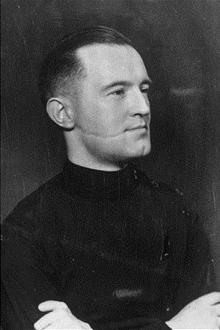
The Execution of William Joyce

William Brooke Joyce, an American-born fascist and Nazi propaganda broadcaster during World War II, is hanged in Wandsworth Prison by Albert Pierrepoint on January 3, 1946, making him the last person to be executed for treason in the United Kingdom.

Joyce is born on April 24, 1906, in Brooklyn, New York, the eldest of three sons of Michael Joyce, an Irish Catholic from a family of tenant farmers in Ballinrobe, County Mayo, and his wife, Gertrude (née Brooke), who although born in Shaw and Crompton, Lancashire, is from a well-off Anglican Anglo-Irish family of physicians associated with County Roscommon. The Joyces return to Ireland in 1909. William, a precocious child, attends Coláiste Iognáid SJ, a Jesuit school in County Galway, from 1915 to 1921. At the age of fourteen, he abandons Catholicism for Anglicanism, apparently after being told that all non-Catholics, including his mother, would be damned. In adult life he is nominally anglican, though his adherence to Christianity is tenuous.

The Joyces are unionists and teach their children fervent imperialism. During the Irish War of Independence, Joyce openly associates with the Black and Tans and acts as a scout for them. An acquaintance claims that his views are so extreme even loyalists dislike him. On December 9, 1921, he flees to England to join the Worcestershire Regiment and is followed to England in 1923 by the rest of the family. When he enlists, he claims to be eighteen, but after he contracts rheumatic fever, his age is discovered, and he is discharged in March 1922. For a time, he studies mathematics and chemistry at Battersea Polytechnic Institute as a pre-medical student (1922–23), but he leaves of his own accord, with a reputation for laziness and violent political views. His studies in English and history at Birkbeck College are more successful. He is a brilliant linguist and mathematician and graduates BA with first-class honours in 1927. He publishes an academic article on philology and considers progressing to an MA. He later falsely claims that his research had been plagiarised by a Jewish academic. In 1932, he enrolls at King’s College, London, for a Ph.D. in educational psychology.

Joyce is disturbed by the difference between depressed post-war Britain and the imperial ideal that he had imbibed in Galway and is mocked for his outspoken patriotism and obvious Irishness. He identifies strongly with Thomas Carlyle, an earlier angry anti-liberal from the provinces. His life is marked by repeated episodes of hero worship, followed by disillusion and bitter denunciation. In 1923, he joins the British Fascists, an organisation that has a significant Irish loyalist membership, and in 1924 he allies himself with a militant splinter group, the National Fascists. Most British fascists see themselves as Tory auxiliaries, and they often provide a security presence at conservative meetings. On October 22, 1924, while stewarding a meeting addressed by a Jewish conservative candidate, he has his face slashed and is left with a prominent scar across his right cheek. He joins the Conservative Party in 1928 and is active in the Chelsea constituency until 1930, when he is forced out because of his eccentricities and sexual misbehaviour. On April 30, 1927, he marries Hazel Kathleen Barr. They have two daughters but separate in 1935, largely because of his infidelities, heavy drinking, and temper. The marriage is dissolved in 1937.

In November 1933, Joyce abandons his Ph.D. studies to work for Sir Oswald Mosley‘s British Union of Fascists (BUF). By early 1934 he has become its paid publicity director, traveling throughout Britain to organise meetings. He is a powerful, rabble-rousing speaker, driven by an instinctive awareness that vitriolic verbal abuse gives speaker and audience a sense of power and solidarity. MI5 sees him as a compelling, though deranged, personality. On February 8, 1937, he marries Margaret Cairns White, a BUF activist from Lancashire, with whom he had cohabited since 1936.

Joyce leads a BUF faction that favours a recruitment strategy based on uncompromising ideological assertion. This is challenged by populists who prioritise marches and displays and hold that indoctrination should follow membership. In February 1937, he is BUF candidate for the London County Council in Shoreditch. The party wins 14 per cent of the vote. In March 1937, he, along with many full-time BUF staff, are sacked when the BUF cuts expenses. But his dismissal also reflects Mosley’s awareness that his obsessive rhetoric repels “respectable” recruits and that he is no longer a biddable, slavish admirer of “the Leader.” He later falsely claims near-exclusive credit for the BUF’s escalating antisemitism, a view that Mosley eventually finds it convenient to adopt in order to evade his own responsibility.

In April 1937, Joyce founds the National Socialist League, helped by a wealthy patron. He supports himself as a private tutor, refusing to take Jewish pupils. He is active in various antisemitic and pro-Nazi groups such as the Right Club and engages in “peace” campaigns based on the view that British interests lay with Germany against Russia. Political marginalisation intensifies his admiration for Nazi Germany and hero worship of Adolf Hitler. By the time of the Munich crisis in 1938, he has decided that if war comes, he will go to Germany, though he also considers moving to Ireland. He renews his British passport for one-year terms in August 1938 and August 1939.

On August 26, 1939, Joyce and his wife leave London for Berlin. He is allegedly tipped off about his impending arrest and internment by an MI5 officer, to whom he had supplied information on communists. His siblings, whom he recruited into his fascist organisations, are variously penalised for his activities. At a loose end in Berlin, he is persuaded by a British associate to become a radio announcer with the English-language service of the Reichs-Rundfunk-Gesellschaft (RRG). He makes his first broadcast on September 6, 1939, and receives a contract in October. He finds in radio an outlet for his forceful style and delight in saying the unsayable, and in the early years of the war takes an exultant pride in recounting Nazi victories. His performances are admired by Joseph Goebbels, whom Joyce, to his regret, never meets. On September 26, 1940, he acquires German citizenship.

The novel experience of hearing the enemy in one’s own living room attracts wide audiences in Britain. Joyce’s practice of naming newly captured prisoners of war in his broadcasts is also a compelling motive for listening. In fact, he tries to recruit British prisoners of war as collaborators. The name “Lord Haw-Haw,” invented by the Daily Express radio critic in September 1939, initially applies to several English-language broadcasters but in time becomes associated with Joyce. He is initially a figure of fun, imitated by comedians, but there are sinister undercurrents of terrifying omnipotence, intensified by his sneering, gloating delivery and his delighted deployment of the “big lie” technique. It is widely believed that British-based fifth columnists supply him with information, that he predicts air raids, and shows minute local knowledge. In time, fear and his growing notoriety feed popular hatred of him in Britain, though his anti-British taunts allegedly win appreciative Irish audiences. He exults that he is daily committing treason and rendering himself liable to the death penalty.

In 1940, Joyce publishes a commissioned self-justifying propaganda work, Twilight over England. His representation of himself echoes that of Hitler in Mein Kampf – the provincial patriot, whose martial sacrifices are betrayed by corrupt elites, learning through poverty the hollowness of bourgeois patriotism and the need to synthesise socialism with nationalism. He shares with his hero a paranoid belief in his own ability to create an alternative reality through language and obstinacy. He dreams of becoming the English Führer.

In Berlin, the Joyces’ marriage comes under increasing strain, marked by drunken rows, domestic violence, and infidelity on both sides, though they retain a fierce mutual fascination. They divorce on August 12, 1941, but remarry on February 11, 1942, while continuing their previous behaviour. As the Axis powers begin to fail, his broadcasts become more defensive, focusing on the Soviet threat. On October 14, 1944, he is awarded the German War Merit Cross, first class. On October 22, he is sworn into the Volkssturm (territorial army) and begins drilling. The Joyces are evacuated from Berlin in March 1945, initially to Apen near the Dutch border and then to Hamburg, where he makes a last, drunken, defiant broadcast on April 30, 1945, the day of Hitler’s death. After an unsuccessful attempt to escape to Sweden, the Joyces hide at Flensburg near the Danish border. On May 28, 1945, he is shot and captured while gathering firewood.

Joyce is brought back to Britain on June 16 after Parliament passed legislation simplifying treason trial procedures. At his September 17-20 trial, he proves his American citizenship, but the court holds that his illegally acquired British passport incurred duties of allegiance. His appeals are rejected by the Court of Appeal and the House of Lords. His fate is influenced by British public opinion, and possibly by a desire to avoid antagonising the Soviet Union. In his death cell he blames the defeat of national socialism on German limitations. He also fantasises that he could have saved Hitler from his incompetent subordinates.

Joyce is hanged at Wandsworth Prison on January 3, 1946. Unlike most of his fellow Nazis, he proclaims to the end his allegiance to national socialism and hatred of Jews. He corresponds cheerfully with Margaret, joking evasively about the death camps and expressing a belief that his spirit will survive, watch over her, and continue his work. To neo-Nazis he becomes a martyr. Even among those to whom his activities had been repellent, a significant body of opinion holds he should not have been condemned on a questionable and innovative technicality. The historian A. J. P. Taylor maintains that Joyce was executed for making a false declaration to obtain a passport, a misdemeanour that normally incurs a £2 fine.

In 1976, Joyce is reinterred in Galway as it is feared that a grave in England might become a fascist shrine. Thomas Kilroy‘s play Double Cross (1986) juxtaposes Joyce and Brendan Bracken as Irishmen who reinvented themselves through fantasies of Britishness. The BBC Sound Archive has recordings of some of Joyce’s broadcasts and transcripts of others, collected during the war as evidence for a future treason trial.

(From: “Joyce, William Brooke (‘Lord Haw-Haw’)” by Patrick Maume, Dictionary of Irish Biography, http://www.dib.ie, October 2009)


Leave a comment

Birth of Thomas Kilroy, Playwright & Novelist

Thomas F. Kilroy, Irish playwright and novelist, is born on September 23, 1934, in Green Street, Callan, County Kilkenny. He is a difficult writer to categorize, having written plays ranging from the conventional The Death and Resurrection of Mr. Roche to more technically innovative and avant-garde works such as Talbot’s Box and The Secret Fall of Constance Wilde. Nevertheless, common thematic concerns run throughout many of his plays, including the issue of personal and cultural—specifically, Irish versus English—identity and the mythologizing of the past. Best known as a playwright, he is also the author of the Booker Prize-shortlisted novel The Big Chapel (1971).

Kilroy is the son of Thomas and Mary (née Devine) Kilroy. He attends St. Kieran’s College and plays hurling for the school team, captaining the senior team in 1952. He studies at University College Dublin, where his first play, The Death and Resurrection of Mr. Roche, is produced to great success at the Olympia Theatre. In his early career he is play editor at the Abbey Theatre in Dublin. In the 1980s, he sits on the board of Field Day Theatre Company, founded by Brian Friel and Stephen Rea in 1980, and is Director of its touring company.

In 1978, Kilroy is appointed Professor of English at University College Galway, a post from which he resigns in 1989 to concentrate on writing.

In 2008, Kilroy receives the Irish PEN Award, given to honour an Irish-born writer who has made an outstanding contribution to Irish literature.

While some of Kilroy’s plays hit a lighter note than others, the common thread in most of them is his attempt to address some of the social upheavals that have occurred in Ireland in the past and present. This has been a concern of his since he was in his twenties and wrote in the 1959 essay “Groundwork for an Irish Theatre” that his contemporaries were “inclined to shirk the painful, sometimes tragic problems of a modern Ireland which is undergoing considerable social and ideological stress.” Although he has not been one of Ireland’s most prolific playwrights, his plays may certainly be considered important contributions to the modern stage.

Kilroy now lives in County Mayo and is a member of the Irish Academy of Letters, the Royal Society of Literature, and Aosdána.

The Thomas Kilroy Collection, his personal archive, is deposited at the James Hardiman Library at the National University of Ireland Galway (NUI Galway). Kilroy addresses the launch event in March 2011, which is attended by, amongst others, Brian Friel and the future President of Ireland Michael D. Higgins.