seamus dubhghaill

Promoting Irish Culture and History from Little Rock, Arkansas, USA


Leave a comment

Birth of Thomas Fitzsimons, U.S. Merchant & Statesman

Thomas Fitzsimons, Irish-born American Founding Father, merchant, banker, and politician, is born in Ireland on October 11, 1741. His birthplace is variously given as Nobber, County Wicklow; Limerick, County Limerick; the north of Ireland; and Edenderry, County Offaly. He represents Pennsylvania in the Continental Congress, the Constitutional Convention and the United States House of Representatives.

In the mid-1750s, Fitzsimons’s family immigrates to Philadelphia, Pennsylvania, where his father dies soon thereafter. He has enough education that he begins work as a clerk in a mercantile house. He marries Catherine Meade on November 23, 1761, and forms a business partnership with her brother George. Their firm, which specializes in the West Indies trade, operates successfully for over 41 years.

The firm is soon hit by the new revenue measures created to help support the finances of the British Empire, including the much reviled Stamp Act of 1765. Concerned with these ideas, Fitzsimons becomes active in the Irish merchant community in Philadelphia. He is a founding member of the Friendly Sons of St. Patrick in 1771 and later, in 1774, a steering committee organized to protest the Coercive Acts.

When Pennsylvania begins mobilizing and organizing a militia to fight the British, Fitzsimons is soon involved. He serves as captain of a company of home guards under the command of Colonel John Caldwalader. Initially his company serves as part of the soldiers who man posts along the New Jersey coast. His unit later serves as part of the reserve at the Battle of Trenton in 1776. Later in the war, he serves on the Pennsylvania Council of Safety and heads a board to oversee the newly formed Pennsylvania Navy.

Fitzsimons enters active politics as a delegate to the Continental Congress in 1782 and 1783. He is a member of the Pennsylvania House of Representatives from 1786 until 1795. He is also a delegate to the U.S. Constitutional Convention in 1787. Although not a leading member of that convention, he supports a strong national government, the end of slavery, the United States Congress‘s powers to impose a tariff on imports and exports, the granting the House of Representatives, and power in equal to the United States Senate in making treaties. He is one of only two Catholic signers of the Constitution of the United States, the other being Daniel Carroll of Maryland.

After the Constitution is established, Fitzsimons serves in the first three sessions of the House of Representatives as a Federalist, where he favors protective tariffs and a strong navy, co-drafting the Naval Act of 1794 authorizing the original six frigates of the United States Navy. He fails to win re-election in 1794. This is partially attributed to public opinion turning against the Federalist Party over the forceful suppression of the Whiskey Rebellion. Although he never holds elective office again, he serves in 1798 as head of the committee of merchants overseeing the subscription-loan to build a warship at private expense for use in the Quasi-War.

In 1796, Fitzsimons, along with James Innes of Virginia, is appointed by President John Adams to serve as one of two American members on the five-man debt commission charged under Article VI of the Jay Treaty with examining the claims of British subjects unable to collect debts incurred by Americans prior to the American Revolution. Fitzsimons, Innes and Samuel Sitgreaves, who replaces Innes upon the latter’s death, become annoyed with the arguments used by their British counterparts to inflate the claims total. Fitzsimons and Sitgreaves angrily and permanently secede from the board in July 1799. The claims are eventually disposed of by a lump-sum payment, agreed upon by United States Minister to Britain Rufus King with British Foreign Secretary Robert Banks Jenkinson and approved by President Thomas Jefferson and the Senate in 1802.

While withdrawing from politics, Fitzsimons remains active in civic and business affairs. He serves as president of Philadelphia’s Chamber of Commerce, as a trustee of the University of Pennsylvania, Director of the Delaware Insurance Company and a director of the Bank of North America from 1781–1803. He is a founder of the bank and supports efforts to found Georgetown College. He also helps found the Insurance Company of North America.

Fitzsimons dies on August 26, 1811, in Philadelphia, where he is buried in the cemetery of St. Mary’s Roman Catholic Church, which is in present-day Independence National Historical Park.


Leave a comment

Birth of Mick Moloney, Irish American Musician & Scholar

Michael “Mick” Moloney, Irish-born American musician and scholar, is born in Limerick, County Limerick, on November 15, 1944. He is the artistic director of several major arts tours and co-founds Green Fields of America.

Moloney is the son of Michael Moloney, the head air traffic control officer of Shannon Airport, and his wife, Maura, who works as the principal of a Limerick primary school. He first plays tenor banjo during his teenage years. He studies at University College Dublin (UCD), graduating with a bachelor’s degree in economics. He then relocates to London to be a social worker assisting immigrant communities, before joining The Johnstons. After playing with the group for five years, he immigrates to the United States in 1973. He initially settles in Philadelphia, Pennsylvania, and eventually becomes an American citizen.

Three years after moving to the United States, Moloney co-founds Green Fields of America, an ensemble of Irish musicians, singers, and dancers which tour across the country on several occasions. He also serves as the artistic director for several major arts tours. One of these is the 1985 festival in Manhattan titled “Cherish the Ladies” to highlight female musicians in the area of Irish traditional music, which had been dominated by men until that decade. He produces an album for the female group by the same name titled Irish Women Musicians in America. The group’s leader, Joanie Madden, is one of several future fellows of the National Endowment for the Arts (NEA) to be mentored by Moloney. He produces and performs on over 70 albums and serves as advisor for numerous festivals and concerts across America, with ethnomusicologist and musician Daniel T. Neely putting the figure as high as 125 albums.

Moloney undertakes postgraduate studies at the University of Pennsylvania, obtaining a master’s degree before being awarded a Doctor of Philosophy in folklore and folk life in 1992. He goes on to teach ethnomusicology, folklore, and Irish studies at Penn, Georgetown University, and Villanova University. He is also global distinguished professor of music and Irish studies at New York University (NYU) until his death. In recognition of his work in public folklore, he receives a 1999 National Heritage Fellowship from the NEA.

In addition to music performance, Moloney writes Far from the Shamrock Shore: The Story of Irish American History Through Song, which is published by Crown Publications in February 2002 with a supplementary CD on Shanachie Records. He hosts three nationally syndicated series covering folk music on American Public Television (APT). He works as a consultant, performer, and interviewee on the RTÉ special Bringing It All Back Home, and is also a participant, consultant, and music arranger for Out of Ireland, a documentary film by PBS. He performs on the PBS special The Irish in America: Long Journey Home.

Moloney is married three times over the course of his life. His first marriage is to Miriam Murphy. His second marriage is to Philomena Murray. Together, they have one child but eventually divorce. His third marriage to Judy Sherman also ends in divorce. He is in a domestic partnership with Sangjan Chailungka at the time of his death. During his later years, he divides his time between Bangkok, where he resides with Chailungka, and his apartment in Greenwich Village. In Bangkok, he volunteers as a music therapist and teacher for abandoned children with HIV at the Mercy Center in the Khlong Toei district, which is founded by the Redemptorist priest Joseph H. Maier.

Moloney dies at the age of 77 on July 27, 2022, at his home in Manhattan, having played at the Maine Celtic Festival less than a week before. The cause of death is not announced.


Leave a comment

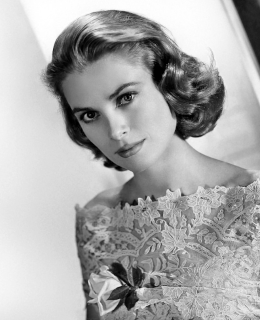
Birth of Grace Kelly, Award Winning Actress & Princess of Monaco

Grace Patricia Kelly, an American Academy Award winning actress, is born into an affluent Catholic family of half Irish and half German descent in Philadelphia, Pennsylvania, on November 12, 1929. After starring in several significant films in the early to mid-1950s, she becomes Princess of Monaco by marrying Prince Rainier III in April 1956.

Kelly’s father, Irish American John B. Kelly, Sr., wins three Olympic gold medals for sculling, and owns a successful brickwork contracting company that is well known on the East Coast. As Democratic nominee in the 1935 election for Mayor of Philadelphia, he loses by the closest margin in the city’s history. In later years he serves on the Fairmount Park Commission and, during World War II, is appointed by President Franklin D. Roosevelt as National Director of Physical Fitness. Her mother, Margaret Majer, has German parents. She teaches physical education at the University of Pennsylvania and is the first woman to coach women’s athletics at Penn. She also models for a time in her youth. After marrying John Kelly in 1924, she focuses on being a housewife until her four children are of school age, following which she begins actively participating in various civic organizations.

Kelly receives her elementary education in the parish of Saint Bridget’s in East Falls. While attending Ravenhill Academy, a reputable Catholic girls’ school, she models fashions at local charity events with her mother and sisters. In 1942, at the age of 12, she plays the lead in Don’t Feed the Animals, a play produced by the Old Academy Players also in East Falls. In May 1947, she graduates from Stevens School, a socially prominent private institution in nearby Chestnut Hill, where she participates in drama and dance programs. Owing to her low mathematics scores, she is rejected by Bennington College in July 1947. Despite her parents’ initial disapproval, she decides to pursue her dreams of becoming an actress.

After graduating from the American Academy of Dramatic Arts in 1949, Kelly begins appearing in New York City theatrical productions and over 40 live drama productions broadcast in early 1950s Golden Age of Television. She gains stardom from her performance in John Ford‘s adventure-romance Mogambo (1953), for which she is nominated for an Academy Award for Best Supporting Actress. She wins the Academy Award for Best Actress for her performance in the drama The Country Girl (1954). Other notable works include the western High Noon (1952), the romance-comedy High Society (1956), and three consecutive Alfred Hitchcock suspense thrillers: Dial M for Murder (1954), Rear Window (1954), and To Catch a Thief (1955). She works with some of the most prominent leading men of the era, including Gary Cooper, Clark Gable, Ray Milland, James Stewart, Bing Crosby, William Holden, Cary Grant, Alec Guinness, and Frank Sinatra.

Kelly retires from acting at age 26 to marry Rainier and begins her duties as Princess of Monaco. Hitchcock hopes that she will appear in more of his films which require an “icy blonde” lead actress, but he is unable to coax her out of retirement. The Prince and Princess have three children: Princess Caroline, Prince Albert, and Princess Stéphanie. Princess Grace retains her link to America by her dual U.S. and Monégasque citizenship. Her charity work focuses on young children and the arts, establishing the Princess Grace Foundation-USA to support local artisans in 1964. Her organization for children’s rights, World Association of Children;s Friends (AMADE), gains consultive status within UNICEF and UNESCO. Her final film contribution is in 1977 to documentary The Children of Theatre Street directed by Robert Dornhelm, where she serves as the narrator. The documentary is nominated for an Academy Award for Best Documentary Feature.

On September 13, 1982, Princess Grace suffers a small stroke while driving back to Monaco from her country home in Roc Agel. As a result, she loses control of her 1971 Rover P6 3500 and drives off the steep, winding road and down the 120-foot mountainside. Her teenage daughter Stéphanie, who is in the passenger seat, tries but fails to regain control of the car. The Princess is taken to the Monaco Hospital (later named the Princess Grace Hospital Centre) with injuries to the brain and thorax and a fractured femur. She dies the following night at 10:55 PM after Rainier decides to turn off her life support. Stéphanie suffers a slight concussion and a hairline fracture of a cervical vertebra and is unable to attend her mother’s funeral.

Princess Grace’s funeral is held at the Cathedral of Our Lady Immaculate in Monaco-Ville, on September 18, 1982. After a Requiem Mass, she is buried in the Grimaldi family vault. Over 400 people attend, including Cary Grant, Nancy Reagan, Danielle Mitterrand, the Princess of Wales, and Empress Farah of Iran.

Rainier, who does not remarry, is buried alongside her after his death in 2005.


Leave a comment

Birth of James Logan, 14th Mayor of Philadelphia

James Logan, a Scotch-Irish colonial American statesman, administrator, and scholar who serves as the fourteenth mayor of Philadelphia and holds a number of other public offices, is born in Lurgan, County Armagh, in what is now Northern Ireland, on October 20, 1674. He serves as colonial secretary to William Penn and is a founding trustee of the College of Philadelphia, the predecessor of the University of Pennsylvania.

Logan is born to Ulster Scots Quaker parents Patrick Logan (1640–1700) and Isabella, Lady Hume (1647–1722), who marry in early 1671 in Midlothian, Scotland. His father has a Master of Arts degree from the University of Edinburgh, and originally is an Anglican clergyman before converting to Quakerism, or the Society of Friends. Although apprenticed to a Dublin linen-draper, he receives a good classical and mathematical education, and acquires a knowledge of modern languages not common at the period. The Williamite War in Ireland (1688–1691) obliges him to follow his parents, first to Edinburgh, and then to London and Bristol, England where, in 1693, he replaces his father as schoolmaster. In 1699, he comes to the colony of Pennsylvania aboard the Canterbury as William Penn’s secretary.

Later, Logan supports proprietary rights in Pennsylvania and becomes a major landowner in the growing colony. After advancing through several political offices, including commissioner of property (1701), receiver general (1703), clerk (1701), and member (1703) of the provincial council, he is elected mayor of Philadelphia in 1722. During his tenure as mayor, he allows Irish Catholic immigrants to participate in the city’s first public Mass. He later serves as the colony’s chief justice from 1731 to 1739, and in the absence of a governor of Pennsylvania, becomes acting governor from 1736 to 1738.

As acting governor, Logan opposes Quaker pacifism and war tax resistance, and encourages pacifist Quakers to give up their seats in the Pennsylvania General Assembly so that it can make war requisitions. On October 9, 1736, he responds to requests from Native American leaders to control the sale of alcohol, which is creating serious social problems, by prohibiting the sale of rum in indigenous communities, but as the penalty 1s only a fine of ten pounds and the law is poorly enforced, it does not have a significant effect.

During his tenure as acting governor, Logan plays an active role in the territorial expansion of the colony. Whereas William Penn and his immediate successors had pursued a policy of friendly relations with the Leni Lenape (Delaware) peoples, Logan and other colony proprietors (notably the indebted brothers John, Richard and Thomas Penn) pursue a policy of land acquisition. Such efforts to expand are spurred by increased immigration to the colony and fears that the New York Colony is infringing on Pennsylvania’s northern borders in the Upper Delaware river valley. In addition, many proprietors (including Logan and the Penn brothers) had engaged in extensive land speculation, selling off lands occupied by the Lenape to new colonists before concluding an official treaty with the tribe.

As part of his efforts to expand Pennsylvania, Logan signs the Walking Treaty of 1737, commonly referred to as the Walker Purchase, with the Lenape, forcing the tribe to vacate lands in the Upper Delaware and Lehigh valleys under the auspices of the tribe having sold the lands to William Penn in 1686, a treaty whose ratifying document is considered by some sources to have been a fabrication. Under the terms of the treaty, the Lenape agree to cede as much territory as a man could walk in one and one-half days to the Pennsylvania colony. However, Logan uses the treaty’s vague wording, the Lenape’s unclear diplomatic status, and a heavily influenced “walk” to claim a much larger territory than is originally expected by the Lenape. In addition, he negotiates with the powerful Iroquois Confederacy to allow for the treaty to take place. As a result, the Iroquois (nominally the diplomatic overlords and protectors of the Lenape people) rebuff Lenape attempts to have the Iroquois intervene on their behalf. The net result of the Walker Treaty increases the colony’s borders by over 1,200,000 acres but leads to the diplomatic isolation of the Lenape people and a breakdown in relations between the Pennsylvania colony and the tribe.

Meanwhile, Logan engages in various mercantile pursuits, especially fur trading, with such success that he becomes one of the wealthiest men in the colonies. He writes numerous scholarly papers published by the American Philosophical Society and European journals. He is also a natural scientist whose primary contribution to the emerging field of botany is a treatise that describes experiments on the impregnation of plant seeds, especially corn. He tutors John Bartram, the American botanist, in Latin and introduces him to Carl Linnaeus.

Logan’s mother comes to live with him in Philadelphia in 1717. She dies on January 17, 1722, at Stenton, Logan’s country home. His daughter, Sarah, marries merchant and statesman Isaac Norris. Logan dies at the age of 77 on October 31, 1751, at Stenton, near Germantown, at the age of 77, and is buried at the site of Arch Street Friends Meeting House (built in 1804).

In Philadelphia, the Logan neighborhood and the landmark Logan Circle are named for him. His 1730 estate “Stenton” (now a National Historic Landmark, operated as a museum) is located in Logan area.


Leave a comment

Death of Thomas Fitzsimons, U.S. Merchant & Statesman

thomas-fitzsimons

Thomas Fitzsimons, American merchant and statesman of Philadelphia, Pennsylvania, dies in Philadelphia on August 26, 1811. He represents Pennsylvania in the Continental Congress, the Constitutional Convention and the United States House of Representatives.

Fitzsimons is born in Ireland in 1741. In the mid-1750s his family immigrates to Philadelphia, where his father dies soon thereafter. He has enough education that he begins work as a clerk in a mercantile house. He marries Catherine Meade on November 23, 1761 and forms a business partnership with her brother George. Their firm, which specializes in the West Indies trade, operates successfully for over 41 years.

The firm is soon hit by the new revenue measures created to help support the finances of the British Empire, including the much reviled Stamp Act of 1765. Concerned with these ideas, Fitzsimons becomes active in the Irish merchant community in Philadelphia. He is a founding member of the Friendly Sons of St. Patrick in 1771 and later, in 1774, a steering committee organized to protest the Coercive Acts.

When Pennsylvania begins mobilizing and organizing a militia to fight the British, Fitzsimons is soon involved. He serves as captain of a company of home guards under the command of Colonel John Caldwalader. Initially his company serves as part of the soldiers who man posts along the New Jersey coast. His unit later serves as part of the reserve at the Battle of Trenton in 1776. Later in the war, he serves on the Pennsylvania Council of Safety and heads a board to oversee the newly formed Pennsylvania Navy.

Fitzsimons enters active politics as a delegate to the Continental Congress in 1782 and 1783. He is a member of the Pennsylvania House of Representatives from 1786 until 1795. He is also a delegate to the U.S. Constitutional Convention in 1787. Although not a leading member of that convention, he supports a strong national government, the end of slavery, the United States Congress‘s powers to impose a tariff on imports and exports, the granting the House of Representatives, and power in equal to the United States Senate in making treaties. He is one of only two Catholic signers of the Constitution of the United States, the other being Daniel Carroll of Maryland.

After the Constitution is established, Fitzsimons serves in the first three sessions of the House of Representatives as a Federalist, where he favors protective tariffs and a strong navy, co-drafting the Naval Act of 1794 authorizing the original six frigates of the United States Navy. He fails to win re-election in 1794. This was partially attributed to public opinion turning against the Federalist Party over the forceful suppression of the Whiskey Rebellion. Although he never holds elective office again, he serves in 1798 as head of the committee of merchants overseeing the subscription-loan to build a warship at private expense for use in the Quasi-War.

In 1796, Fitzsimons, along with James Innes of Virginia, is appointed by President John Adams to serve as one of two American members on the five-man debt commission charged under Article VI of the Jay Treaty with examining the claims of British subjects unable to collect debts incurred by Americans prior to the American Revolution. Fitzsimons, Innes and Samuel Sitgreaves, who replaces Innes upon the latter’s death, become annoyed with the arguments used by their British counterparts to inflate the claims total. Fitzsimons and Sitgreaves angrily and permanently secede from the board in July 1799. The claims are eventually disposed of by a lump-sum payment, agreed upon by United States Minister to Britain Rufus King with British Foreign Secretary Robert Banks Jenkinson and approved by President Thomas Jefferson and the Senate in 1802.

While withdrawing from politics, Fitzsimons remains active in civic and business affairs. He serves as president of Philadelphia’s Chamber of Commerce, as a trustee of the University of Pennsylvania, Director of the Delaware Insurance Company and a director of the Bank of North America from 1781–1803. He is a founder of the bank and supports efforts to found Georgetown College. He also helps found the Insurance Company of North America.

Fitzsimons dies on August 26, 1811, in Philadelphia, where he is buried in the cemetery of St. Mary’s Roman Catholic Church, which is in present-day Independence National Historical Park.