seamus dubhghaill

Promoting Irish Culture and History from Little Rock, Arkansas, USA


Leave a comment

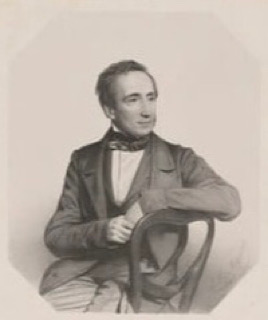
Birth of William Thompson, Naturalist

William Thompson, Irish naturalist celebrated for his founding studies of the natural history of Ireland, especially in ornithology and marine biology, is born on December 2, 1805, in the booming maritime city of Belfast.

Thompson is the eldest son of William Thompson, a prosperous linen merchant, and Elizabeth Thompson (née Callwell). He has at least two older sisters and several younger brothers. His mother’s father is Robert Callwell, a printer, book-collector, partner in the Commercial Bank, Belfast, and one of the owners of the Northern Star newspaper.

After attending the Royal Belfast Academical Institution (RBAI) from 1818, Thompson is apprenticed in the linen business of William Sinclair in 1821. When his apprenticeship ends, he goes with his cousin George Langtry, later a wealthy shipowner, on a four-month tour (May–September 1826) of the Low Countries, the Rhine, Switzerland, and Italy. On his return to Belfast, he sets up his own business in linen bleaching. Despite early success, losses are incurred. As family and economic circumstances change, he increasingly concentrates on his natural history studies. By 1831 he has given up business. A self-taught naturalist, related by ties of kinship or friendship to most of the liberal and cultivated families of the “northern Athens,” he is shy and fastidious, but is persuaded in 1826 to join the Belfast Natural History Society by its founder, his friend James Lawson Drummond. He reads his first scientific paper, The Birds of the Copeland Islands, to the society on August 13, 1827. In that year he becomes a member of the Belfast Natural History Society’s council, and in 1833 he is chosen as one of the society’s vice-presidents. He is president from 1843 until his death.

Thompson becomes the most important naturalist in mid nineteenth-century Ireland. From 1827 to 1852 he contributes almost eighty papers on Irish natural history to the Magazine of Zoology and Botany and the Proceedings of the Zoological Society of London. From 1836 to 1851 he contributes to The Magazine of Natural History. Invited to travel to the Levant and the Aegean Sea in April–July 1841 with Edward Forbes, professor of natural history at the University of Edinburgh, on HMS Beacon, he observes twenty-three species of birds on migratory flights and publishes “Notice of migratory birds” in The Annals of Natural History. His authoritative observations add considerably to knowledge of the still-to-be-ascertained details of migratory patterns. Indeed, some people refuse to believe, even at that date, that birds do migrate. He publishes other papers in the same journal during 1841–43. At a meeting of the British Association for the Advancement of Science in Glasgow in 1840 his Report on the fauna of Ireland (Vertebrata) attracts favourable notice. He presents and publishes a second and final part enumerating the invertebrates at the Cork meeting of the British Association in August 1843. The two reports form the most complete catalogue of Irish fauna yet published. Thanks to an assiduous correspondence with a network of informants, as well as his own extensive observations, he adds perhaps more than 800 species to Irish fauna lists.

Thompson’s chief work, The Natural History of Ireland, becomes the standard text in Irish zoology in the nineteenth century. The first three volumes, published between 1849 and 1851, deal with birds, particularly their habits and habitats rather than physical descriptions. He is one of the first naturalists to note the effects of industrialisation and other human activities on birdlife. He leaves instructions for his manuscripts on the remaining vertebrates and all the invertebrates to be prepared for publication by Robert Patterson and James Ramsey Garrett. Robert Ball and George Dickie also assist. His notes, though detailed and comprehensive, all require checking, and are found on tiny scraps of paper, even scribbled on the flaps of old envelopes. James Thompson of Macedon, Belfast, painstakingly gums them all into blank notebooks to facilitate the work of his brother’s literary executors, who preface the posthumous publication in 1856 with a lengthy memoir of their friend.

From about 1820 to 1852 Thompson lives with his mother at 1 Donegall Square West, Belfast, commuting from Holywood House, Holywood, County Down, during the summer. His daily routine begins with research, correspondence, or writing for publications for four hours after breakfast. After a two- or three-hour exercise period and dinner, he returns to work for a further two to three hours. He is president of the Belfast Literary Society (1837–39) and also an enthusiastic patron of the visual arts in the city. He enjoys hunting, wildfowling, shooting in Scotland, and gardening, though his health deteriorates from the 1840s.

Early in 1852 Thompson travels to London to make arrangements for that year’s Belfast meeting of the British Association. On February 15 he becomes ill, having suffered a minor stroke. He dies, unmarried, at his Jermyn Street lodgings on the day he is due to return home, February 17, 1852. He is buried in Clifton Street Cemetery, Belfast. He bequeaths his collection to the Belfast Natural History Society, and in March 1852 the Society adds a memorial Thompson Room to its museum, paid for by subscription.

Thompson is a corresponding member of natural history societies in Boston and Philadelphia and has many friends. He is known to assist many other researchers in Ireland, Britain, and the Continent. One of those who thinks highly of his work is Charles Darwin, with whom he corresponds. He also helps many local people, including the poet Francis Davis, with money and practical assistance. He is much loved, and his friends are deeply saddened by his death. His niece, Sydney Mary Thompson, later known by her married surname, Christen, who is born in Belfast, is an amateur naturalist, geologist, and artist, one of the first women to achieve distinction in geology.

(From: “Thompson, William” by Andrew O’Brien and Linde Lunney, Dictionary of Irish Biography, http://www.dib.ie, October 2009)


Leave a comment

Birth of Janet McNeill, Novelist & Playwright

Janet McNeill, prolific Irish novelist and playwright, is born on September 14, 1907, in Dublin. Author of more than 20 children’s books, as well as adult novels, plays, and two opera libretti, she is best known for her children’s comic fantasy series My Friend Specs McCann.

McNeill is born to Rev. William McNeill, a minister at Adelaide Road Presbyterian Church, and Jeannie Patterson (Hogg) McNeill. In 1913, the family moves to Birkenhead, Merseyside, England, where her father becomes minister at Trinity Road Church. She attends public school in Birkenhead and studies classics at the University of St. Andrews in St. Andrews, Scotland, completing a MA degree in 1929. While at university, she is involved in writing and acting with the College Players. In 1924, the family returns to Ireland due to her father’s failing health, and Rev. McNeill becomes the minister of a village church in Rostrevor, County Down, Northern Ireland, while Janet joins the Belfast Telegraph as a secretary.

In 1933, McNeill marries Robert Alexander, the chief engineer in the Belfast city surveyor’s department, and the couple settles in Lisburn, where they raise their four sons. One son is the zoologist Professor Robert McNeill Alexander, CBE, FRS. Though she plans to write her first novel early on, she finds it impossible to write seriously until the children grow up, saying, “It was four years before I had a baby and twenty-five before I produced the book.”

In 1946, McNeill wins a prize in a BBC competition for her play Gospel Truth. She begins writing radio dramas, which are broadcast by the BBC. She suffers an intracerebral hemorrhage in 1953. During her recovery, she begins writing novels both for adults and children, producing a large body of work between 1955 and 1964. Her popular children’s character, Specs McCann, who debuts in a 1955 book and makes several reappearances, also inspires a newspaper cartoon strip by Rowel Friers, a Belfast artist and friend of hers.

Her 1944 novel The Maiden Dinosaur is her first to be published in the United States, twenty-two years later. She also has three writing credits on television with series and plays. Several of her plays are staged at the Ulster Group Theatre.

In 1964, McNeill’s husband retires, and the couple moves to Bristol, South West England. She writes one more novel after she leaves Northern Ireland but continues to write children’s books for another decade. During this time, she writes her only children’s play, published as Switch On, Switch Off, and other plays (1968), which presents different moral themes in scenes set in “domestic and workplace settings in contemporary England.” Her children’s book The Battle of St. George Without is televised by the BBC in 1969.

In her adult fiction, McNeill focuses on the lifestyle and social mores of Belfast and Ulster in the mid-twentieth century. Her characters are primarily “menopausal, middle-aged, middle-class Protestants.” She depicts the “dreary, Ulster religiosity” of ministers and laymen alike, and the class conventions and sexual repression of middle-aged, upper-middle-class women. The theme of suppressing self-identity and goals, both by wives in deference to their husbands and parents on behalf of their children, pervades her adult novels.

McNeill has a number of health problems and dies in Bristol in October 1994.


Leave a comment

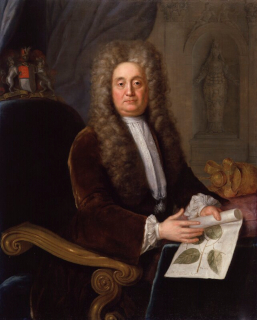
Birth of Sir Hans Sloane, Physician & Naturalist

Generated by IIPImage

Sir Hans Sloane, Irish physician and naturalist whose collection of books, manuscripts, and curiosities form the basis for the British Museum in London, is born on April 16, 1660, in Killyleagh, County Down in what is now Northern Ireland.

As a child Sloane possesses a strong curiosity of nature, and he develops a particular interest in plants. After studying medicine in London, he travels in France, taking an M.D. degree at the University of Orange in 1683. In 1685 he returns to London and is elected a fellow of the Royal Society. He proceeds to practice medicine as an assistant to British physician Thomas Sydenham. He is made a fellow of the Royal College of Physicians in 1687. That same year he accepts an opportunity to visit Jamaica, traveling as personal physician to the Christopher Monck, 2nd Duke of Albermarle, who had been appointed to govern the island.

The journey to Jamaica provides Sloane with the chance to pursue his interest in the natural sciences. During the 15 months of his travels, he visits multiple islands in the West Indies, including Saint Kitts, Nevis, and Barbados. He ultimately collects specimens of about 800 plants. He also records information on and collects specimens of various fish, mollusks, and insects, and he observes the local peoples and contemplates the natural phenomena of the area. His observations and the specimens he collects during the voyage lay the foundation for his later contributions to botany and zoology and for his role in the formation of the British Museum. He returns to England in 1689, his trip having been cut short by Monck’s death. His collection of plants from the West Indies is one of the first from that region to reach England.

Sloane’s trip to Jamaica also leads to his invention of a milk chocolate beverage. While on the island, he encounters a local drink made from a cacao plant. The beverage apparently makes him nauseous. To avoid this, he decides to mix the cacao material with milk. He finds this concoction to be not only more tolerable but also tasty and healthy. Shortly after his return to England, his milk-based concoction is sold by apothecaries as a medicinal product. His recipe later forms the basis for a milk chocolate product manufactured by Cadbury.

In 1696 Sloane publishes in Latin an elaborate catalogue, Catalogus Plantarum Quae in Insula Jamaica, on the plants he collected in Jamaica. He later publishes Natural History of Jamaica (2 Vol., 1707 and 1725), a comprehensive account of his studies of the natural phenomena of the island country.

Sloane also makes important contributions to medicine. He is physician to Queen Anne, King George I, and King George II. He is created a baronet in 1716, becoming the first medical practitioner to receive a hereditary title. He is relatively progressive as a physician, and, while serving George I, he adopts the practice of inoculation against smallpox for members of the royal family. In 1719 he is elected president of the Royal College of Physicians, a post he serves until 1735. In 1727 he becomes president of the Royal Society, succeeding physicist and mathematician Sir Isaac Newton. He holds the position until 1741. He earns a reputation as a specialist in eye diseases, and he eventually publishes Account of a Medicine for Soreness, Weakness and Other Distempers of the Eyes (1745).

Sloane is also known as an avid collector, and he benefits greatly from the acquisition of the cabinets of other collectors, including amateur scientist William Charleton and English apothecary and botanist James Petiver. When he retires from active work in 1741, his library and cabinet of curiosities has grown to be of unique value, and on his death, he bequeaths his collection to the nation, on condition that parliament pay his executors £20,000. The bequest is accepted and goes to form the collection opened to the public as the British Museum in 1759.

Sloane has no son that survives beyond infancy, and the baronetcy becomes extinct upon his death in London on January 11, 1753.

(From: Encyclopaedia Britannica, http://www.britannica.com/biography/Sir-Hans-Sloane-Baronet/)


Leave a comment

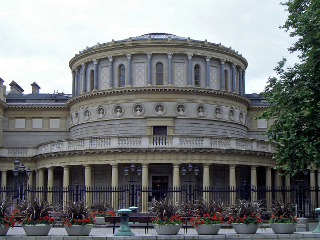
Opening of The Museum of Science and Art, Dublin

national-museum-of-ireland

The Museum of Science and Art, Dublin on Kildare Street opens on August 29, 1890. The museum is founded on August 14, 1877, by act of Parliament. The decision to establish a state-run museum arises from requests by the Royal Dublin Society for continued government funding for its expanding museum activities.

A number of developments lead to the Science and Art Museums Act of 1877, which has the effect of transferring the buildings and collections of the Royal Dublin Society to state ownership. The collections are further enhanced by the transfer of other notable collections from institutions such as the Royal Irish Academy and Trinity College Dublin.

The Museum is the responsibility of the Department of Science and Art, which is also responsible for the South Kensington museums in London. State support for the institution is manifested in the construction of the new building on Kildare Street. It is built in the Victorian Palladian style and has been compared with the Altes Museum in Berlin, designed by Karl Friedrich Schinkel in the 1820s. Neoclassical influences can be seen in the colonnaded entrance and the domed rotunda, which rises to a height of 20 metres, and is modeled on the Pantheon in Rome.

The new museum houses coins, medals and significant Irish antiquities from the Royal Irish Academy including the Tara Brooch and Ardagh Chalice, ethnographical collections with material from Captain James Cooke‘s voyages from Trinity College Dublin, and the collections of the Geological Survey of Ireland.

These are joined by material from the decorative arts and ethnographical collections of the Royal Dublin Society along with their Irish collections of antiquities, minerals and plants. The old Royal Dublin Society museum on the Merrion Street side of Leinster House, erected with government assistance and opened in 1856, is devoted to natural history. It is dominated by zoology throughout much of its subsequent history and has an annex devoted to geology.

The building on Kildare Street is designed by Thomas Newenham Deane and is used to show contemporary Irish, British and Continental craftsmanship in its construction. State involvement in the running of the Museum allows for steady funding and a connection with other state museums in London and Edinburgh which is of considerable benefit. The collections grow with material acquired through purchase, public donation and shares of significant collections acquired by the state and dispersed by the London museums.

Catalogues are prepared by leading experts in various disciplines and printed in the Museum’s own press. In 1900 control passes to the Department of Agriculture and Technical Instruction and in 1908 its name is changed from “The Dublin Museum of Science and Art” to the “National Museum of Science and Art.” The name of the institution is changed again in 1921 to the “National Museum of Ireland.”


Leave a comment

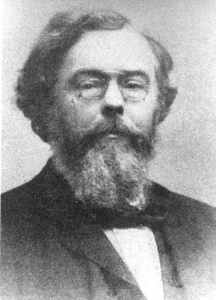
Birth of George Sigerson, Physician & Writer

george-sigerson

George Sigerson, Irish physician, scientist, writer, politician, and poet, is born at Holy Hill, near Strabane in County Tyrone on January 11, 1836. He is a leading light in the Irish Literary Revival of the late 19th century in Ireland.

Sigerson is the son of William and Nancy (née Neilson) Sigerson and has three brothers, James, John and William, and three sisters, Ellen, Jane, and Mary Ann. He attends Letterkenny Academy but is sent by his father, who developed the spade mill and who played an active role in the development of Artigarvan, to complete his education in France.

He studies medicine at the Queen’s College, Galway, and Queen’s College, Cork, and takes his degree in 1859. He then goes to Paris where he spends some time studying under Jean-Martin Charcot and Duchenne de Boulogne. Sigmund Freud is one of his fellow students.

Sigerson returns to Ireland and opens a practice in Dublin, specializing in neurology. He continues to visit France annually to study under Charcot. His patients included Maud Gonne, Austin Clarke, and Nora Barnacle. He lectures on medicine at the Catholic University of Ireland and is professor of zoology and later botany at the University College Dublin.

His first book, The Poets and Poetry of Munster, appears in 1860. He is actively involved in political journalism for many years, writing for The Nation. Sigerson and his wife Hester are by now among the dominant figures of the Gaelic Revival. They frequently hold Sunday evening salons at their Dublin home to which artists, intellectuals, and rebels alike attend, including John O’Leary, W.B. Yeats, Patrick Pearse, Roger Casement, and 1916 signatory Thomas MacDonagh. Sigerson is a co-founder of the Feis Ceoil and President of the National Literary Society from 1893 until his death. His daughter, Dora, is a poet who is also involved in the Irish literary revival.

Nominated to the first Seanad Éireann of the Irish Free State, Sigerson briefly serves as the first chairman on December 11-12, 1922, before the election of James Campbell, 1st Baron Glenavy. Sigerson dies at his home at 3 Clare Street, Dublin, on February 17, 1925, at the age of 89, after a short illness. On February 18, 1925, the day after his death, the Seanad Éireann pays tribute to him.

The Sigerson Cup, the top division of third level Gaelic football competition in Ireland is named in his honour. Sigerson donates the salary from his post at UCD so that a trophy can be purchased for the competition. In 2009, he is named in the Sunday Tribune‘s list of the “125 Most Influential People In GAA History.” The cup is first presented in 1911, with the inaugural winners being UCD GAA.