seamus dubhghaill

Promoting Irish Culture and History from Little Rock, Arkansas, USA


Leave a comment

Birth of Richard John Griffith, Author of Griffith’s Valuation

richard-john-griffith

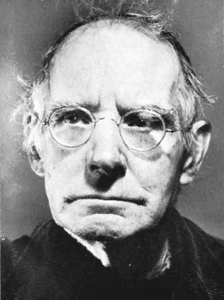
Richard John Griffith, Irish geologist, mining engineer, and chairman of the Board of Works of Ireland, is born in Hume Street, Dublin, on September 20, 1784. He completed the first complete geological map of Ireland and is author of the valuation of Ireland, known ever since as Griffith’s Valuation.

Griffith goes to school in Portarlington and later, while attending school in Rathangan, his school is attacked by the rebels during the Irish Rebellion of 1798. He also studies in Edinburgh, Scotland.

In 1799 he obtains a commission in the Royal Irish Artillery, but a year later, when the corps is incorporated with that of England, he retires, and devotes his attention to civil engineering and mining. He studies chemistry, mineralogy, and mining for two years in London under William Nicholson and afterwards examines the mining districts in various parts of England, Wales, and Scotland.

While in Cornwall he discovers ores of nickel and cobalt in material that has been rejected as worthless. He completes his studies under Robert Jameson and others at Edinburgh, is elected a Fellow of the Royal Society of Edinburgh in 1807, a member of the newly established Geological Society of London in 1808, and in the same year he returns to Ireland.

In 1809, he is appointed by the commissioners to inquire into the nature and extent of the bogs in Ireland and the means of improving them. In 1812 he is elected Professor of Geology and Mining Engineer to the Royal Dublin Society. Shortly afterwards he expresses his intention of preparing a geological map of Ireland. During subsequent years he makes many surveys and issues many reports on mineral districts in Ireland. These form the foundation of his first geological map of the country in 1815. He also succeeds Dr. Richard Kirwan as government inspector of mines in Ireland. In 1822 Griffith becomes engineer of public works in Cork, Kerry, and Limerick, and is occupied until 1830 in repairing old roads and in laying out many miles of new roads in some of the most inaccessible parts of the country.

Meanwhile, in 1825, he is appointed by the government to carry out a boundary survey of Ireland. He is to mark the boundaries of every county, barony, civil parish, and townland in preparation for the first Ordnance Survey. He is also called upon to assist in the preparation of a parliamentary Bill to provide for the general valuation of Ireland, which passes in 1826. Griffith is appointed Commissioner of Valuation in 1827 but does not start work until 1830 when the new 6″ maps become available from the Ordnance survey and which he is required to use as provided for by statute. He continues to work on this until 1868. On Griffith’s valuation the various local and public assessments are made.

His extensive investigations furnish him with ample material for improving his geological map and the second edition is published in 1835. A third edition on a larger scale (1 in. to 4 m.) is issued under the Board of Ordnance in 1839 and it is further revised in 1855. For this great work and his other services to science Griffith is awarded the Wollaston Medal by the Geological Society in 1854. In 1850 he is made chairman of the Irish Board of Works and in 1858 he is created a baronet.

Griffith dies at the age of 95 at his residence in Dublin on September 22, 1878. At the time of his death, he is the oldest surviving fellow of the Geological Society of London and is the last survivor of the long-since disbanded Royal Irish Regiment of Artillery. He is buried alongside his wife, Maria Jane, in Mount Jerome Cemetery, Harold’s Cross, Dublin.

4 Comments

Founding of “The Squad” (“The Twelve Apostles”)

the-squad

The Squad, originally nicknamed the Twelve Apostles, an Irish Republican Army (IRA) unit founded by Michael Collins to counter British intelligence efforts during the Irish War of Independence, is officially established on September 19, 1919, at 46 Rutland Square although by this time it has already been in operation for two months and has already carried out two killings.

On April 10, 1919, the First Dáil announces a policy of ostracism of Royal Irish Constabulary men. At the time Sinn Féin official policy is against acts of violence. Boycotting, persuasion, and mild intimidation succeed against many officers. However, others escalate their activities against republicans and in March 1920 Collins asks Dick McKee to select a small group to form an assassination unit.

When the squad is formed, it comes directly under the control of the Director of Intelligence or his deputy and under no other authority. The Squad is commanded by Mick McDonnell.

The original ‘Twelve Apostles’ are Mick McDonnell, Tom Keogh, Jimmy Slattery, Paddy Daly, Joe Leonard, Ben Barrett, Vincent Byrne, Sean Doyle, Paddy Griffin, Eddie Byrne, Mick Reilly, and Jimmy Conroy. After some time, the Squad is strengthened with the addition of Ben Byrne, Frank Bolster, Mick Keogh, Mick Kennedy, Bill Stapleton, and Sam Robinson. They are employed full-time and receive a weekly wage.

Sometimes the squad is strengthened as occasion demands by members of the Intelligence staff, the Active Service Unit, munition workers, and members of the Dublin Brigade.

On July 30, 1919, the first assassination authorised by Michael Collins is carried out when Detective Sergeant “the Dog” Smith is shot near Drumcondra, Dublin. The Squad continues targeting plainclothes police, members of the G Division of the Dublin Metropolitan Police, and occasionally, problematic civil servants. Organisationally it operates as a subsection of Collins’ Intelligence Headquarters. Two of the executions by The Squad are the killing on January 21, 1920, of RIC Inspector William Redmond of the DMP “G” Division and on March 2, 1920, of British double agent John Charles Byrnes.

One of the Apostles’ particular targets is the Cairo Gang, a deep-cover British intelligence group, so called since it has either been largely assembled from intelligence officers serving in Cairo or from the Dublin restaurant called The Cairo, which the gang frequents. Sir Henry Wilson brings in the Cairo Gang in mid-1920, explicitly to deal with Michael Collins and his organization. Given carte blanche in its operations by Wilson, the Cairo Gang adopts the strategy of assassinating members of Sinn Féin unconnected with the military struggle, assuming that this would cause the IRA to respond and bring its leaders into the open.

The most well-known operation executed by the Apostles occurs on Bloody Sunday, November 21, 1920, when British MI5 officers, linked to the Cairo Gang and significantly involved in spying, are shot at various locations in Dublin. Fourteen are killed and six are wounded. In addition to the Twelve Apostles, a larger number of IRA personnel are involved in this operation. The only IRA man captured during the operation is Frank Teeling. In response to the killings, the Black and Tans retaliate by shooting up a Gaelic football match between Dublin and Tipperary at Croke Park, killing fourteen civilians including one of the players, Michael Hogan, and wounding sixty-eight. The Hogan stand at Croke Park is named after him.

In May 1921, after the IRA’s Dublin Brigade takes heavy casualties during the burning of the Custom House, the Squad and the Brigade’s Active Service Unit are combined into the Dublin Guard, under the direction of Paddy Daly. Under the influence of Daly and Michael Collins, most of the Guard takes the Free State side and joins the Irish Army in the Irish Civil War of 1922-23. During this conflict some of them are attached to the Criminal Investigation Department and are accused of multiple assassinations of Anti-Treaty fighters.

(Pictured: Squad Members Mick McDonnell, Liam Tobin, Vinny Byrne, Paddy Daly, and Jim Slattery)


Leave a comment

Death of Irish Dramatist Seán O’Casey

Seán O’Casey, Irish dramatist and memoirist, dies of a heart attack in Torquay, Devon, England on September 18, 1964. A committed socialist, he is the first Irish playwright of note to write about the Dublin working classes.

O’Casey is born John Casey at 85 Upper Dorset Street, in the northern inner-city area of Dublin on March 30, 1880. He is a member of the Church of Ireland, baptised on July 28, 1880 in St. Mary’s parish and confirmed at St. John the Baptist Church in Clontarf. He is an active member of Saint Barnabas until his mid-twenties, when he drifts away from the church.

As O’Casey’s interest in Irish nationalism grows, he joins the Gaelic League in 1906 and learns the Irish language. At this time, he Gaelicises his name from John Casey to Seán Ó Cathasaigh. He also learns to play the Uilleann pipes and is a founder and secretary of the St. Laurence O’Toole Pipe Band. He joins the Irish Republican Brotherhood, and becomes involved in the Irish Transport and General Workers Union, established by James Larkin to represent the interests of the unskilled labourers who inhabit the Dublin tenements. In March 1914 he becomes General Secretary of Larkin’s Irish Citizen Army. On July 24, 1914 he resigns from the ICA, after his proposal to deny dual membership to both the ICA and the Irish Volunteers is rejected.

In 1917, his friend Thomas Ashe dies in a hunger strike and it inspires him to write. He spends the next five years writing plays. O’Casey’s first accepted play, The Shadow of a Gunman, is performed at the Abbey Theatre in 1923. This is the beginning of a relationship that is to be fruitful for both theatre and dramatist but which ends in some bitterness. It is followed by Juno and the Paycock (1924) and The Plough and the Stars (1926).

The Plough and the Stars is not well received by the Abbey audience. There is a riot reported on the fourth night of the show. His depiction of sex and religion offends some of the actors who refused to speak their lines. W.B. Yeats intervenes and describes the audience as “shaming themselves.”

In 1928, Yeats rejects O’Casey’s fourth play, The Silver Tassie, for the Abbey. It is an attack on imperialist wars and the suffering they cause. The Abbey refuses to perform it. The plays O’Casey writes after this include the darkly allegorical and highly controversial Within the Gates (1934), which is set within the gates of a busy city park based on London’s Hyde Park. It closes not long after opening and is another box office failure.

Over the next twenty years, O’Casey writes The Star Turns Red (1940), Purple Dust (1943), Red Roses for Me (1943), Oak Leaves and Lavender (1945), Cock-a-Doodle Dandy (1949), The Bishop’s Bonfire (1955), and The Drums of Father Ned (1958). In 1959, O’Casey gives his blessing to a musical adaptation of Juno and the Paycock by American composer Marc Blitzstein. The musical, retitled Juno, is a commercial failure, closing after only 16 Broadway performances. Also in 1959, George Devine produces Cock-a-Doodle Dandy at the Royal Court Theatre and it is also successful at the Edinburgh International Festival and has a West End run.

On September 18, 1964, at the age of 84, O’Casey dies of a heart attack, in Torquay, Devon. He is cremated at the Golders Green Crematorium.


Leave a comment

Birth of Chaim Herzog, Sixth President of Israel

chaim-herzog

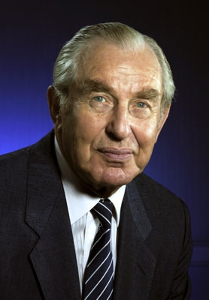
Chaim Herzog, Israeli politician, general, lawyer, and author who serves as the sixth President of Israel between 1983 and 1993, is born in Cliftonpark Avenue in Belfast on September 17, 1918.

Herzog is raised predominantly in Dublin, the son of Ireland’s Chief Rabbi Yitzhak HaLevi Herzog and his wife Sara. Herzog’s father, a fluent speaker of the Irish language, is known as “the Sinn Féin Rabbi” for his support of the First Dáil and the Irish Republican cause during the Irish War of Independence. Herzog studies at Wesley College, Dublin, and is involved with the Federation of Zionist Youth and Habonim Dror, the Labour-Zionist movement, during his teenage years.

The family emigrates to Mandatory Palestine in 1935 and Herzog serves in the Jewish paramilitary group Haganah during the 1936–1939 Arab revolt. He goes on to earn a degree in law at University College London, and then qualifies as a barrister at Lincoln’s Inn.

Herzog joins the British Army during World War II, operating primarily in Germany as a tank commander in the Armoured Corps. There, he is given his lifelong nickname of “Vivian” because the British could not pronounce the name, “Chaim.” A Jewish soldier had volunteered that “Vivian” is the English equivalent of “Chaim.”

Herzog returns to Palestine after the war and, following the end of the British Mandate and Israel’s Declaration of Independence in 1948, operates in the Battles of Latrun during the 1948 Arab–Israeli War. He retires from the Israel Defence Forces in 1962 with the rank of Major-General.

After leaving the army, Herzog opens a private law practice. He returns to public life when the Six-Day War breaks out in 1967, serving as a military commentator for Kol Israel radio news. Following the capture of the West Bank, he is appointed Military Governor of East Jerusalem, and Judea and Samaria.

In 1972 Herzog is a co-founder of Herzog, Fox & Ne’eman, which becomes one of Israel’s largest law firms. Between 1975 and 1978 he serves as Israel’s Permanent Representative to the United Nations, in which capacity he repudiates UN General Assembly Resolution 3379, the “Zionism is Racism” resolution, and symbolically tears it up before the assembly.

Herzog enters politics in the 1981 elections, winning a Knesset seat as a member of the Alignment. Two years later, in March 1983, he is elected to the largely ceremonial role of President. He serves two five-year terms before retiring in 1993. He dies on April 17, 1997, and is buried on Mount Herzl, Jerusalem. His son, Isaac Herzog, has led the Israeli Labour Party and the parliamentary Opposition in the Knesset since 2013.


Leave a comment

Hurricane Debbie Strikes Ireland

hurricane-debbieHurricane Debbie, the most powerful cyclone on record to strike Ireland in September and possibly the only tropical cyclone on record to ever strike the British Isles while still tropical, makes landfall in Ireland on September 16, 1961.

The fourth named storm of the 1961 Atlantic hurricane season, Debbie originates from a well-defined tropical disturbance that is first identified in late August over Central Africa. Tracking generally westward, the system moves off the coast of Senegal on September 5 into the Atlantic Ocean. By this time, it is estimated to have become a tropical storm, but forecasters do not issue advisories on the system until two days later. Late on September 6, Debbie passes through the southern Cape Verde Islands as a strong tropical storm or minimal hurricane, resulting in a plane crash that kills 60 people in the islands. Once clear of the islands, data on the storm becomes sparse and the status of Debbie is uncertain over the following several days as it tracks west-northwestward and later northward. It is not until a commercial airliner intercepts the storm on September 10 that its location becomes certain. The following day, Debbie intensifies and reaches its peak intensity as a Category 3 hurricane on the Saffir–Simpson hurricane scale, with maximum winds of 120 mph.

Maintaining its peak intensity for over a day, the hurricane gradually slows its forward motion and weakens. By September 13, Debbie’s motion becomes influenced by the Westerlies, causing the system to accelerate east-northeastward. The system passes over the western Azores as a minimal hurricane on September 15. At this point, there is uncertainty as to the structure of Debbie, whether it transitions into an extratropical cyclone or maintains its identity as a tropical system. Regardless of which takes place, the system deepens as it nears the British Isles, skirting the coast of Western Ireland on September 16. Shortly thereafter, the system is confirmed to have become extratropical as it continues towards the northeast.

Striking Ireland as a powerful storm, Debbie brings record winds to much of the island, with a peak gust of 114 mph measured just offshore. These winds cause widespread damage and disruption, downing tens of thousands of trees and power lines. Countless structures sustain varying degrees of damage, with many smaller buildings destroyed. Agriculture experiences extensive losses to barley, corn, and wheat crops. Throughout Ireland, Debbie kills 18 people, twelve in the Republic of Ireland and six in Northern Ireland. It causes $40–50 million in damage in the Republic and at least $4 million in Northern Ireland. The storm also batters parts of Great Britain with winds in excess of 100 mph.

The remnants of the storm later turned eastward, striking Norway and Russia, before dissipating on September 19.


Leave a comment

Anne Letitia Dickson Elected UPNI Leader

anne-letitia-dickson

Anne Letitia Dickson is elected leader of the Unionist Party of Northern Ireland (UPNI) on September 15, 1976, becoming the first woman to lead a political party in Ireland.

Born in London on April 18, 1928, Dickson moves with her family to Northern Ireland at an early age and is educated at Holywood and Richmond Lodge School. After service as the Chair of the Northern Ireland Advisory Board of the Salvation Army she becomes actively involved in politics for the Ulster Unionist Party (UUP). Elected as chair of the Carrick Division Unionist Association she later becomes a member of the Newtownabbey Urban District Council, serving as Vice-Chair from 1967 to 1969.

Dickson is then elected as an Ulster Unionist politician for the Carrick constituency in the Parliament of Northern Ireland at Stormont as a supporter of Prime Minister Terence O’Neill. After the dissolution of the Stormont Parliament, she is elected in the 1973 Assembly election for South Antrim as an Independent Unionist candidate having resigned from the Ulster Unionist Party in 1972.

After the Ulster Unionist party split in 1974 over the Sunningdale Agreement, Dickson joins the newly formed Unionist Party of Northern Ireland along with other supporters of former Northern Ireland prime minister Brian Faulkner. She retains her seat in South Antrim in the 1975 constitutional convention election. After the retirement of Brian Faulkner in 1976 she becomes leader of the Unionist Party of Northern Ireland, becoming the first woman to lead a major political party in Northern Ireland.

In 1979 Dickson contests the Belfast North constituency in the Westminster election, polling 10% of the vote, the best performance by a UPNI candidate in Northern Ireland, however her intervention is sufficient to split the moderate Unionist vote resulting in the seat being gained by the Democratic Unionist Party (DUP).

The Unionist Party of Northern Ireland disbands in 1981 after poor results in the local government elections and Dickson retires from active politics. Subsequently she is chair of the Northern Ireland Consumer Council from 1985 to 1990.


Leave a comment

1947 All-Ireland Senior Football Championship Final

1947-all-ireland-final

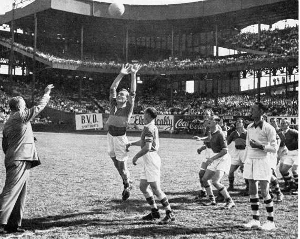
For the first and only time, the All-Ireland Senior Football Championship Final is played outside Ireland on September 14, 1947, at the Polo Grounds in Upper Manhattan, New York City, to cater for the large Irish American community there.

The New York final matching Cavan against Kerry is also intended to observe the centenary of the Great Famine that triggered mass Irish emigration to the United States and other countries. Around 30,000 people are in attendance for the final. Cavan travels to the U.S. by air and Kerry by sea. The Ulster team credits their victory partially to their shorter time spent travelling. The Cavan team flight, via the Azores, takes 30 hours. Kerry’s trip by Ocean Liner takes far longer.

Mick Higgins, a key member of the Cavan team that day, recalls later in life, “There was no huge send-off for us in Cavan, but both teams got a good reception in New York when we arrived. I remember the team stayed in the Commodore Hotel, but I stayed with my relatives.” He also remembers the “oppressive heat” during the game itself.

After a slow start, Cavan fights back to lead 2-5 to 2-4 at the break and goes on to win by four points. Peter Donohoe scores eight points from frees and is called “the Babe Ruth of Gaelic football” in the New York press. The match commentary was broadcast by radio across the Atlantic Ocean by Michael O’Hehir.

The Cavan team returns to Ireland aboard the RMS Queen Mary. Higgins recalls, “It was only after we arrived in Southampton that we realised the joy of it all. Large numbers of Cavan people turned up to see us in London and Birmingham. We were treated like kings in Cavan.”


Leave a comment

Birth of Hunger Striker Edward Martin Hurson

edward-martin-hurson

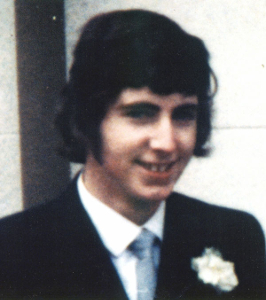
Edward Martin Hurson, Irish republican hunger striker and a volunteer in the East Tyrone Brigade of the Provisional Irish Republican Army (IRA), is born in Cappagh, County Tyrone, on September 13, 1956.

Hurson is one of nine children born to Johnnie and Mary Ann Hurson. Both of his parents come from the Cappagh district, and every member of the family is born into the white-washed farmhouse perched precipitously on top of the thirty hilly acres of rough land. Martin is close to the land as he grows up. He is educated to a primary level at Crosscavanagh Primary School in Galbally and at secondary level in St. Patrick’s, Galbally. When he is not at school, he is more often than not helping out about the farm, driving a tractor, helping to rear “croppy pigs,” or looking after cattle.

After leaving school, he works as an apprentice fitter welder for a while before going to Manchester, England where he stays for eighteen months with his brother Francis and works in the building trade. Returning to County Tyrone around Christmas of 1974, both he and his brother spend time in Bundoran, County Donegal, a known IRA training and supply centre.

Hurson, together with Kevin O’Brien, Dermot Boyle, Peter Kane, and Pat O’Neill are arrested and taken to the Omagh Royal Ulster Constabulary (RUC) barracks on November 11, 1976. He is beaten about the head, back, and testicles, spread-eagled against a wall and across a table, slapped, punched, and kicked. Under torture Martin signs statements admitting involvement in republican activity. On Saturday night, November 13, Martin is charged with a landmine explosion at Galbally in November 1975.

This charge is later dropped, but he is then further charged with IRA membership and explosive offences. Hurson spends a year on remand before being convicted in November 1977 and sentenced to 20 years for possession of landmines and conspiracy. He appeals his conviction on the grounds that the judge had ignored medical evidence about his ill-treatment.

The appeal is dismissed but he is granted a retrial. At the four-day trial in September 1979, the Omagh statements are ruled inadmissible, but instead of Martin walking free the judge goes on to accept the admissibility of the Cookstown statements, themselves extracted under threat of renewed torture. Following his retrial, he appeals his conviction once again, challenging the admissibility of the Cookstown statements, but his appeal is disallowed in June 1980.

Hurson becomes engaged to his long-term girlfriend, Bernadette Donnelly, while in prison. He is part of the blanket protest and joins the 1981 Irish Hunger Strike on May 28, replacing South Derryman Brendan McLaughlin who withdraws following a perforated stomach ulcer.

He loses the ability to hold down water after approximately 40 days on hunger strike and suffers a horrifically agonising death due to dehydration at 4:30 AM on July 13, after only 46 days on hunger strike, considerably shorter than any other hunger striker. Near the end his family considers the possibility of intervening to save his life, but they are told that he will likely have permanent brain damage.


Leave a comment

Mary Robinson Resigns as President of Ireland

mary-robinson

President Mary Robinson resigns on September 12, 1997, two months ahead of the end of her term, in order to take up appointment as United Nations High Commissioner for Human Rights.

On July 24, 1997, Robinson announces her intention to resign as President of Ireland. The Irish Government states that her announcement “was not unexpected” and wishes her “every success.” She resigns by addressing a message to the Ceann Comhairle of Dáil Éireann and it takes effect at 1:00 PM on September 12.

Upon her resignation as President, the role of President is transferred to the Presidential Commission, which is comprised of the Chief Justice, the Ceann Comhairle, and the Cathaoirleach of the Seanad Éireann, from September 12 until November 11, 1997, when Mary McAleese is sworn in as the new President.

Media reports suggest that Robinson has been head-hunted for the post by Secretary General of the United Nations Kofi Annan to assume an advocacy as opposed to administrative role, in other words to become a public campaigner outlining principles rather than the previous implementational and consensus-building model. The belief is that the post has ceased to be seen as the voice of general principles and has become largely bureaucratic. Robinson’s role is to set the human rights agenda within the organisation and internationally, refocusing its appeal.

Robinson is the first High Commissioner for Human Rights to visit Tibet, making her trip in 1998. During her tenure she criticises the Irish system of permits for non-EU immigrants as similar to “bonded labour” and criticises the United States’ use of capital punishment.

In 2001, Robinson chairs the Asia Regional Preparatory Meeting for the World Conference against Racism, Racial Discrimination, Xenophobia and related intolerances, which is held in Tehran, Iran. Representatives of the Simon Wiesenthal Centre, a Jewish group, and the Baha’i International Community are not permitted to attend. Robinson wears a headscarf at the meeting in conformance to the Iranians edict that all women attending the conference must wear a headscarf. Women who do not wear the headscarf are criticized, which Robinson says plays into the hands of religious conservatives.

She extends her intended single four-year term by a year following an appeal by Secretary General Annan to preside over the World Conference against Racism 2001 in Durban, South Africa. The conference proves controversial, and under continuing pressure from the United States, Robinson resigns her post in September 2002.


Leave a comment

Ireland Reacts to Terrorist Attacks in U.S.

tricolour-at-ground-zero

President Mary McAleese goes on RTÉ Radio on September 11, 2001, to express her shock and horror at the terrorist attacks in the United States.

The President says that these atrocities are “crimes against the very foundations of our humanity.” She comments that “it is unbearable and almost unbelievable for the rest of the world to be witnessing such wanton destruction of human life in front of our eyes.”

President McAleese speaks by telephone with the United States Ambassador to Ireland, Richard Egan, and asks him to convey to President George W. Bush the heartfelt sympathies of the Irish people in this hour of great tragedy for the people of America, a nation which Ireland holds so dear.

The Irish government names more than a dozen of its natives among the dead in New York City, Washington, D.C., and Pennsylvania. Based on family names and individual stories, there are many hundreds of American dead with Irish heritage, including Americans who through parents or grandparents have become Irish citizens.

The website www.IrishTribute.com, set up in reaction to the September 11 attacks, estimates that perhaps one-sixth of the dead are in some way “Irish.” The website claims that “September 11, 2001 may well go down as the bloodiest day in the history of the Irish people. An estimated 1,000 people who were of Irish descent or of Irish birth were lost in the violent events on that day.”

A National Day of Mourning is held in Ireland on September 14 and a remembrance mass is held on September 12, 2001. Ireland is one of the few countries to hold a service day. Taoiseach Bertie Ahern and President McAleese are both in attendance.

Families in Limerick take in American tourists grounded at Shannon Airport after all flights into and out of the United States are cancelled.

The only flag, other than the U.S. flag, to fly at the Ground Zero site is the Irish tricolour, which is put in place by the Carpenters Union #608 and FDNY Command Post.

In the wake of the attacks, the Irish government immediately begins reviewing security arrangements.