seamus dubhghaill

Promoting Irish Culture and History from Little Rock, Arkansas, USA


Leave a comment

Birth of Helen Blackburn, Feminist & Women’s Rights Activist

Helen Blackburn, feminist and campaigner for women’s rights, especially in the field of employment, is born in Knightstown, County Kerry, on May 25, 1842. She is also an editor of The Englishwoman’s Review.

Blackburn is the daughter of Bewicke Blackburn, a civil engineer from County Kerry, and Isabella Lamb of County Durham in North East England. When her family moves to London in 1859, she soon comes into contact with the women of the Langham Place Group, especially Jessie Boucherett and Emily Faithfull.

Over the years Blackburn and Boucherett work together in a number of endeavours. Both are editors of The Englishwoman’s Review. Together they establish the Women’s Employment Defence League in 1891 to defend women’s working rights against restrictive employment legislation. Together they also edit The Condition of Working Women and the Factory Acts, 1896.

Blackburn joins the National Society for Women’s Suffrage in 1872 and is secretary of the executive committee of the Society from 1874 to 1880. She subsequently holds similar positions in a number of related organisations. She also takes opportunities to study, taking a class in Roman Law at University College London in 1875, and later (1886–88) classes at University College, Bristol. In the early 1890s, she assists Charlotte Carmichael Stopes in her writing of British Freewomen: Their Historical Privilege by supplying her own notes on the subject, then by purchasing the whole of the first edition in 1894. She retires in 1895 to care for her aged father, though later returns to take up her work.

Blackburn inspires and funds two collections. The first is an art collection in 1885 that includes pictures and work done by professional women to show the result of women’s industry. She is insistent that this does not include voluntary or amateurish work but rather show the products of female professionals. This loan exhibition includes portraits of leading women like Florence Nightingale and Mary Carpenter. This is donated to the University of Bristol, but recent enquiries indicate that this work is now lost. Her second collection is focused on a book collection by women. The books are from her collection, friends and from secondhand sources. Bookplates are commissioned and two bookcases which are decorated with paintings of Lydia Becker and Caroline Ashurst Biggs who had been the previous chairs of the Central Committee of the National Society for Women’s Suffrage. These bookcases are given to Girton College, Cambridge and are extant. In 1880 she is secretary of the West of England Suffrage Society in Bristol and is the main organizer of a large demonstration.

Blackburn’s long-term connection with the women’s movement allows her to write her history of the Victorian women’s suffrage campaign, Women’s suffrage: a record of the women’s suffrage movement in the British Isles, with biographical sketches of Miss Becker, finished in 1902, shortly before her death the following year, at Greycoat Gardens, Westminster, on January 11, 1903. She is buried at Brompton Cemetery. She leaves her archives and the decorated book collection to Girton College, Cambridge. Her will also makes provisions for establishing a loan fund for training young women.

A collaboration with Nora Vynne, published in 1903, titled Women under the Factory Act, criticises legislators for treating women as if they have not the intelligence of animals. Blackburn and Vynne argue that women should be allowed to take risks with their health in the workplace or they may find themselves always in need to protection as if they are incapable. The book is noted for its accuracy, but The Economic Journal recognises its authors as Freedom of Labour Defence members and suspects that it may have political motives arguing for the “equality of men and women.”

Blackburn’s name and picture, as well as those of 58 other women’s suffrage supporters, are on the pedestal of the statue of Millicent Fawcett in Parliament Square, London, unveiled in 2018.


Leave a comment

Birth of William Trevor, Novelist, Playwright & Short Story Writer

William Trevor KBE, Irish novelist, playwright and short story writer, is born William Trevor Cox in Mitchelstown, County Cork, on May 24, 1928. One of the elder statesmen of the Irish literary world, he is widely regarded as one of the greatest contemporary writers of short stories in the English language.

Trevor is born to a middle-class, Anglo-Irish Protestant family. They move several times to other provincial towns, including Skibbereen, Tipperary, Youghal and Enniscorthy, as a result of his father’s work as a bank official. He is educated at St. Columba’s College, Dublin, and at Trinity College, Dublin, from which he receives a degree in history. He works as a sculptor under the name Trevor Cox after his graduation from Trinity College, supplementing his income by teaching. He marries Jane Ryan in 1952 and emigrates to Great Britain two years later, working as a copywriter for an advertising agency. It is during this time that he and his wife have their first son.

Trevor’s first novel, A Standard of Behaviour, is published in 1958 by Hutchinson of London, but has little critical success. He later disowns this work and, according to his obituary in The Irish Times, “refused to have it republished.” It was, in fact, republished in 1982 and in 1989.

In 1964, at the age of 36, Trevor wins the Hawthornden Prize for Literature for The Old Boys. The win encourages him to become a full-time writer. He and his family then move to Devon in South West England, where he resides until his death. In 2002, he makes honorary KBE for services to literature. Despite having spent most of his life in England, he considers himself to be “Irish in every vein.”

Trevor writes several collections of short stories that are well received. His short stories often follow a Chekhovian pattern. The characters in his work are typically marginalised members of society. The works of James Joyce influence his short-story writing, and “the odour of ashpits and old weeds and offal” can be detected in his work, but the overall impression is not of gloominess since, particularly in his early work, his wry humour offers the reader a tragicomic version of the world. He adapts much of his work for stage, television and radio. In 1990, Fools of Fortune is made into a film directed by Pat O’Connor, along with a 1999 film adaptation of Felicia’s Journey, which is directed by Atom Egoyan.

Trevor’s stories are set in both England and Ireland. They range from black comedies to tales based on Irish history and politics. His early books are peopled by eccentrics who speak in a pedantically formal manner and engage in hilariously comic activities that are recounted by a detached narrative voice. Instead of one central figure, the novels feature several protagonists of equal importance, drawn together by an institutional setting, which acts as a convergence point for their individual stories. The later novels are thematically and technically more complex. The operation of grace in the world is explored, and several narrative voices are used to view the same events from different angles.

Trevor wins the Whitbread Prize three times and is nominated five times for the Booker Prize, the last for his novel Love and Summer (2009), which is also shortlisted for the International Dublin Literary Award in 2011. His name is also mentioned in relation to the Nobel Prize in Literature. In 2014, he is bestowed Saoi by the Aosdána.

William Trevor dies peacefully in his sleep at the age of 88 on November 20, 2016, in Somerset, England.


Leave a comment

Birth of Singer-Songwriter Luka Bloom

Kevin Barry Moore, Irish folk singer-songwriter best known as Luka Bloom, is born on May 23, 1955 in Newbridge, County Kildare. He is the younger brother of folk singer Christy Moore.

Moore’s parents are Andy Moore and Nancy Power, who had already raised three daughters and two other sons. He attends a Patrician Brothers primary school and later studies at Newbridge College, run by the Dominican Order. In college he forms the group Aes Triplex with his brother Andy and a school friend. He later attends a college in Limerick, but he drops out after a couple of years to pursue a music career.

In 1969, 14-year-old Moore embarks on a tour supporting his eldest brother, Christy Moore, at various English folk clubs. After the tour he spends all of his time practising and writing music. In 1976, Christy records one of his songs “Wave up to the Shore.” In 1977, he tours Germany and England as part of the group Inchiquin.

In 1978, Moore releases his debut album, Treaty Stone. In 1979, having normally played guitar using a finger-picking technique, he is afflicted with tendonitis and is forced to learn to play with a plectrum, which alters his guitar style. That same year, he moves to Groningen in the Netherlands. In 1980, he records and releases his second album, In Groningen. In 1982, he releases his third album, No Heroes, which contains songs all written by Moore himself. For three years, from 1983 to 1986, he is the front-man for the Dublin-based band Red Square. During this time, in 1984, his son Robbie is born.

In 1987, Moore moves to the United States and begins performing using the stage name of “Luka Bloom.” He chooses the name “Luka” from the title of Suzanne Vega‘s song about child abuse and “Bloom” from the main character in James Joyce‘s novel Ulysses. Initially he lives and performs primarily in Washington D.C., but in late 1987 he moves to New York City. The following year, he releases his first album – later withdrawn – under the name Luka Bloom.

In 1990, Bloom releases his album Riverside, which includes the song “The Man Is Alive.” The album is recorded in New York, with its lyrics reflecting his experiences living and performing in that city. In 1991, he returns to Dublin to record The Acoustic Motorbike, which includes a cover version of LL Cool J‘s “I Need Love.” The cover song is reviewed by Rolling Stone magazine, noting that “the prospect of a folksy Irish rocker covering a rap ballad may seem strange, but experimenting with different forms is precisely what keeps established traditions vital.”

In 1993, Bloom again returns to Ireland to record the album Turf, this time with producer Brian Masterson and sound engineer Paul Ashe-Browne. The album attempts to capture the sound of a live performance, and is recorded in front of an audience that is asked to remain as quiet as possible. In 1998, he releases Salty Heaven, an album inspired by his return to Ireland.

Bloom’s early albums showcase his frenetic strumming style, including “Delirious,” the debut track on Riverside, and his penchant for thoughtful cover songs, an affinity that he maintains even in more recent work. In addition to his LL Cool J cover, he also covers Elvis Presley‘s “Can’t Help Falling in Love” on the album The Acoustic Motorbike.

Released in 2000, Keeper of the Flame is an album of cover versions featuring renditions of ABBA‘s “Dancing Queen,” Bob Marley‘s “Natural Mystic,” and the Hunters & Collectors‘ “Throw Your Arms Around Me,” among others. His 2004 acoustic mini-album, Before Sleep Comes, is recorded while he is recovering from tendinitis. He states that the purpose of the album is “to help bring you closer to sleep, our sometimes elusive night-friend.”

In 2005, Bloom releases the album Innocence. Some of the songs feature a new-found interest in Eastern European Romani music and other world music. The album features him playing classical guitar, and the resonant plucking associated with that style of instrument. In his previous work, he relies almost exclusively on steel-stringed acoustic guitars that created his distinctive style. In 2007, he releases the album Tribe, a collaboration with County Clare musician Simon O’Reilly. O’Reilly composes the music and sends the recordings to Bloom for him to complete with lyrics and singing.

In February 2008, Bloom releases a DVD titled The Man is Alive, featuring footage filmed in Dublin and at his home in Kildare, a question and answer session with fans, the documentary My Name is Luka, and a CD of music taken from the two performances. In September of that year, he releases the album Eleven Songs, which features an expanded ensemble of instrumentation, giving the album a distinct sound within his catalogue.


Leave a comment

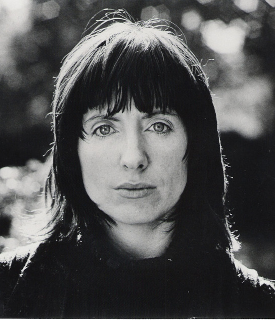
Birth of Caitlín Maude, Poet, Actress & Singer

Caitlín Maude, Irish poet, activist, teacher, actress and traditional singer, is born in Casla, County Galway on May 22, 1941.

Maude is reared in the Irish language. Her mother, Máire Nic an Iomaire, is a school teacher from Ballyfinglas. She receives her primary education from her mother on a small island off the coast of Rosmuc, Connemara. Her father, John Maude, is from Cill Bhriocáin in Rosmuc. She attends University College Galway, where she excels in French. She becomes a teacher, working in schools in Counties Kildare, Mayo, and Wicklow. She also works in other capacities in London and Dublin.

Maude is widely praised as an actor. She acts at the University, at An Taibhdhearc in Galway and the Damer in Dublin, and is particularly successful in a production of An Triail by Máiréad Ní Ghráda in 1964, in which she plays the protagonist of the story, Máire Ní Chathasaigh. She herself is a playwright and co-authors An Lasair Choille with poet Michael Hartnett.

Maude begins writing poetry in Irish in secondary school and develops a lyrical style closely attuned to the rhythms of the voice. Though not conventionally religious, she says in an interview that she has a deep interest in the spiritual and that this leaves its mark on her poetry. She is noted as a highly effective reciter of her own verse. Géibheann is the best-known of her poems, and is studied at Leaving Certificate Higher Level Irish in the Republic of Ireland. A posthumous collected edition, Caitlín Maude, Dánta, is published in 1984, Caitlín Maude: file in 1985 in Ireland and Italy, and Coiscéim in 1985.

As a member of the Dublin Irish-speaking community Maude is active in many campaigns, including the establishment of the Gaelscoil (Irish-medium primary school) Scoil Santain in Tallaght, County Dublin.

Maude is a sean-nós singer of distinction. She makes one album in this genre, Caitlín, released in 1975 on Gael Linn Records and now available as a CD. It contains both traditional songs and a selection of her poetry.

Maude marries Cathal Ó Luain in 1969. They have one child, their son Caomhán.

Maude dies of complications from cancer at the age of 41 on June 6, 1982. She is buried in Bohernabreena graveyard overlooking the city on the Dublin Mountains.

In 2001, a new writers’ centre in Galway, Ionad Schribhneoiri Chaitlin Maude, Gaillimh, is named in her memory.


2 Comments

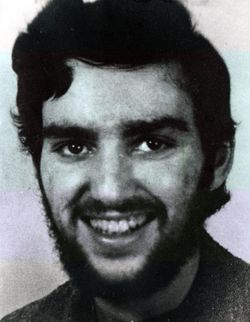
Irish Republican Patsy O’Hara Dies on Hunger Strike

Patsy O’Hara, Irish republican hunger striker and member of the Irish National Liberation Army (INLA), dies on hunger strike in the H Blocks of Long Kesh Prison at 11:29 PM on May 21, 1981. Earlier in the day, at 2:11 AM, he is preceded in death by his friend and fellow hunger-striker, Raymond McCreesh.

O’Hara is born on July 11, 1957, in Bishop Street, Derry, County Londonderry, Northern Ireland.

O’Hara joins Na Fianna Éireann in 1970 and, in 1971, his brother Sean is interned in Long Kesh Prison. In late 1971, at the age of 14, he is shot and wounded by a soldier while manning a barricade. Due to his injuries, he is unable to attend the civil rights march on Bloody Sunday but watches it go by him in the Brandywell Stadium, and the events of the day have a lasting effect on him.

In October 1974, O’Hara is interned in Long Kesh Prison, and upon his release in April 1975 he joins the Irish Republican Socialist Party (IRSP) and INLA. He is arrested in Derry in June 1975 and held on remand for six months. In September 1976, he is arrested again and once more held on remand for four months.

On May 10, 1978, O’Hara is arrested on O’Connell Street in Dublin under section 30 of the Offences Against the State Act and is released eighteen hours later. He returns to Derry in January 1979 and is active in the INLA. On May 14, 1979, he is arrested and is convicted of possessing a hand grenade. He is sentenced to eight years in prison in January 1980.

O’Hara becomes Officer Commanding of the INLA prisoners at the beginning of the first hunger strike in 1980, and he joins the 1981 strike on March 22.

On Thursday, May 21, 1981, at 11:29 PM, Patsy O’Hara dies at the age of 23 after 61 days on hunger strike. In accordance with his wishes, his parents do not get him the medical intervention needed to save his life. His corpse is found to be mysteriously disfigured prior to its departure from prison and before the funeral, including signs of his face being beaten, a broken nose, and cigarette burns on his body.

O’Hara’s mother, Peggy O’Hara, is a candidate in the 2007 Northern Ireland Assembly election in the Foyle constituency. She is not elected, but she is one of the more successful dissident republican candidates opposed to the new policy of the Sinn Féin leadership of working with the Police Service of Northern Ireland (PSNI) and wins 1,789 votes. On the eve of the election, over 330 former republican prisoners write a letter to the Derry Journal endorsing her campaign.


Leave a comment

Queen Elizabeth II Visits Cork

Queen Elizabeth II spends the last of her four days in Ireland visiting Cork on May 20, 2011, where she once again is greeted warmly. Despite initial concerns about security, the visit proves to be a huge success for both countries. The Queen’s apology at Dublin Castle for the treatment her government meted out to Ireland over many years is received with enormous positive, emotional response.

Large crowds line the streets in Cork city centre and the Queen is given a tour of the city’s English Market by the Lord Mayor of Cork, Terry Shannon. She meets some stall owners and speaks to members of the public after she leaves the market. There is a carnival atmosphere on the streets of Cork and the visit is more relaxed than many engagements in Dublin.

The Queen and Prince Philip also visit the Tyndall Institute, which is run by University College Cork. While at the institute, they meet twins Hassan and Hussein Benhaffaf and their mother Angie. Earlier, they visit the Rock of Cashel in County Tipperary and pay a private visit to Coolmore Stud.

The Queen indicates she would like to return to Ireland for another visit. Taoiseach Enda Kenny says he invited her to return as she boarded her flight at Cork Airport. Kenny says the Queen told him she and the royal party enjoyed the visit. He pays tribute to everyone involved in the State visit. He says Ireland responded magnificently to the visit, from the President right down to ordinary people, who showed restraint and understanding.

Kenny says the Queen had received a real Irish welcome, which he says demonstrates the importance of a new beginning for both islands. He says that Ireland has measured up to the highest global standards and the county can be proud.

Tánaiste and Minister for Foreign Affairs Eamon Gilmore says the visit has enhanced Ireland’s reputation abroad at a time when there are only negative headlines. He says that, because of the visit, the world is finally getting a picture of a country that does things well and that is working through its difficulties.

Sinn Féin President Gerry Adams says that, while expressing concerns about Queen Elizabeth’s visit, he also hopes some good will come from it.

At Cork Airport she walks to her plane passing an army guard of honour and Taoiseach Enda Kenny is there to bid her farewell. The plane departs bringing an end to her four-day State visit.

(From: “Queen Elizabeth II concludes Irish visit,” RTÉ.ie, the website of Raidió Teilifís Éireann, May 20, 2011)


Leave a comment

The Kilmeena Ambush

The Kilmeena ambush takes place at Kilmeena, County Mayo, on May 19, 1921 during the Irish War of Independence. The ambush ends in defeat for the local West Mayo Irish Republican Army (IRA), with six IRA volunteers killed and seven wounded. Two members of the Royal Irish Constabulary (RIC) and one Black and Tan are also killed in the action.

The IRA in west Mayo is relatively quiet until January 1921, when Michael Kilroy, described as “a puritanical and ascetic blacksmith” takes over command of the Brigade after Thomas Derrig is arrested by the Royal Irish Constabulary. Kilroy forms a relatively large “flying column” of 40 to 50 men to carry out attacks on Crown forces in the area. On May 6 they suffer a reverse at Islandeady, when a police patrol comes upon the IRA men cutting a road. Three volunteers are killed and two captured.

On May 18, 1921, the IRA decides to attack an RIC/Black and Tan convoy at Kilmeena. Two small-unit attacks are made on the RIC barracks in Newport and Westport to try to draw the police out of their well-defended barracks. One RIC man dies in these attacks.

At 3:00 AM the next day, May 19, the column of 41 IRA men take up position close to Knocknabola Bridge. The British convoy, traveling from Newport to Westport, consists of two Crossley lorries and one Ford touring car and a total of about thirty men. The convoy does not arrive until 3:00 PM and its arrival sparks a two-hour fire-fight. In the battle, one RIC man is wounded and later dies. The British regroup around the house of the parish priest, Father Conroy, and launch a counterattack.

Four IRA volunteers are killed. They are Seamus Mc Evilly, Thomas O’Donnell, Patrick Staunton and Sean Collins. Paddy Jordan of the Castlebar battalion is injured and dies later at Bricens Hospital in Dublin. Seven more IRA men are wounded.

The remainder of the column, carrying their wounded, flee over the mountains to Skerdagh, where they have safe houses. However, the police track them there and, in another exchange of fire, another IRA man is killed, Jim Brown from Newport, along with one RIC Constable and a Black and Tan.

The Black and Tans throw the dead and wounded IRA men onto the street outside the RIC barracks in nearby Westport, causing widespread revulsion among the local people and local police. The Marquis of Sligo, no friend of the republican guerrillas, visits the barracks to complain of their treatment of enemy dead. At the funerals of those killed, in Castlebar, the authorities allow only close family to attend and forbid the draping of the Irish tricolour over the coffins.

The local IRA blames their defeat in the ambush on the failure of an IRA unit from Westport to show up in time.

Kilroy’s column manages to get some revenge for the setback at Kilmeena the following month in an action at Carrowkennedy on June 3, where they kill eight policemen and capture sixteen.


Leave a comment

Robert King, 2nd Earl of Kingston, Acquitted of Murder

Robert King, 2nd Earl of Kingston, an Anglo-Irish peer, is acquitted of the murder of his brother-in-law, Colonel Henry Gerald FitzGerald, on May 18, 1798.

King is the eldest surviving son of Edward King, 1st Earl of Kingston, and Jane Caulfeild. From 1767 to 1768 he is educated at Eton College. He is styled Viscount Kingsborough between 1768 and 1797. He marries Caroline FitzGerald, daughter of Richard FitzGerald and Margaret King, on December 5, 1769, from whom he later separates. Together they have nine children.

King sits in the Irish House of Commons as the Member of Parliament for Boyle from 1776 to 1783, and for Cork County between 1783 and 1797, and serves as a Governor of County Cork in 1789. In 1797 he succeeds to his father’s titles and assumes his seat in the Irish House of Lords. Between 1797 and his death he is Custos Rotulorum of Roscommon.

On May 18, 1798, King is tried by his peers in the Irish House of Lords after allegedly murdering Colonel Henry FitzGerald. FitzGerald is a married man who elopes with King’s daughter. With public sympathy on King’s side and with considerable publicity he is tried by his peers. An executioner stands beside King with an immense axe, painted black except for two inches of polished steel, and holds at the level of the defendant’s neck. King is acquitted as after three summonses no witnesses come forward. After a short conferee the Lords Temporal returns to the House of Commons and delivers the verdict ‘not guilty.’ The Lord Chancellor of Ireland, John FitzGibbon, 1st Earl of Clare, pronounces the verdict, breaks his wand and dismisses the assembly.

The Directory of the United Irishmen had planned to use the occasion to kill the entire government and all the lords, but one vote cast against this scheme by the informer Francis Magan causes it to be abandoned.

King dies on April 17, 1799 in Rockingham, County Roscommon.

(Pictured: “Robert King, 2nd Earl of Kingston,” pastel by Hugh Douglas Hamilton, RHA (Dublin 1739-1808))


Leave a comment

Tom McClean Completes First Solo Rowboat Transatlantic Crossing

Tom McClean crosses from Newfoundland to Blacksod Bay, County Mayo, completing the first solo transatlantic crossing in a rowboat on May 17, 1969.

McClean is born on February 12, 1941. Having been abandoned as a baby, he starts life as an orphan at Bethany Home in Dublin. He spends much of his teenage years working on a farm until he becomes bored and enlists in the British Army. After Chay Blyth and John Ridgway row the Atlantic in 1966, he announces to both that he is going to complete this alone.

McClean starts his military career in the Parachute Regiment and then progresses into the Special Air Service (SAS). Following his retirement from military service, he gains fame for numerous feats of endurance. He holds the world record as the first man to row solo across the Atlantic Ocean from west to east which he does in 1969. In 1982 he sails across the Atlantic in the smallest boat to accomplish that crossing. The self-built boat measures 9-feet and 9-inches, and because of the weight of the food takes seven weeks to cross. His record is broken three weeks later by a sailor manning a 9-feet and 1-inch long boat. In response, McClean uses a chainsaw to cut two feet off his own vessel, making it 7-feet and 9-inches long. During the return trip he loses his mast and the journey takes even longer than his first attempt but he regains the record.

He is a survival expert who lives on the island of Rockall from May 26 to July 4, 1985 to affirm the United Kingdom‘s claim to it. This is the third longest human occupancy of the island, surpassed in 1997 by a team from Greenpeace which spends 42 days on the island, and in 2014 by Nick Hancock who spends 45 days there. Two years later, the then 44-year-old McClean sets about regaining his transatlantic rowing record and achieves his goal crossing the Atlantic in 54 days, a record still held.

In 1990 McClean completes a west-east crossing in a 37-foot bottle-shaped vessel, which had been constructed at Market Harborough by Springer Engineering, a firm with a past history of steel fabrication and narrowboat construction. The Typhoo Atlantic Challenger sails from New York to Falmouth, England. This vessel is now preserved at Fort William Diving Centre.

McClean’s most recent feat is the construction, in 1996, of a boat shaped like a giant whale, which completes a circumnavigation of Great Britain. The boat, ‘Moby’ Prince of Whales, stands 25-feet high and 65-feet long. It has a spout which can launch water as high as 6 metres in the air. The Moby Dick, as of 2017, is in the process of conversion to electric power for an Atlantic crossing.

McClean is the subject of This Is Your Life in 1987 when he is surprised by Eamonn Andrews.


Leave a comment

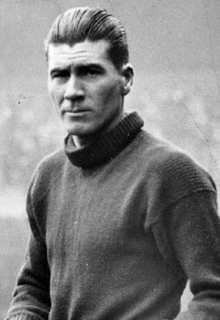
Death of Elisha Scott, Northern Irish Goalkeeper

Elisha Scott, Northern Irish football goalkeeper, dies in Belfast on May 16, 1959. He plays for Liverpool from 1912 to 1934 and still holds the record as their longest-serving player.

Scott is born in Belfast on August 24, 1893. He plays for Linfield and Broadway United before Liverpool manager Tom Watson signs him on September 1, 1912, following a recommendation from Scott’s older brother Billy Scott. Liverpool only gets the opportunity to sign Scott when Everton decides that the 19-year-old is too young.

Scott is reported as signed by Crewe Alexandra in August 1913, presumably under some sort of loan arrangement. He succeeds Thomas Charles Allison as deputy for the first-choice keeper, Arthur Box, and plays for them in the early part of the 1913-14 season.

Scott finally makes his Liverpool debut on January 1, 1913, at St. James’ Park. The team plays Newcastle United to a 0–0 draw.

During the early days of his career, Scott is understudy to Kenny Campbell and only appears occasionally. World War I interrupts his career for four years. He finally gets a chance of a run in the Liverpool goal at the end of the season. His goalkeeping position is set in stone when Campbell is allowed to leave in April 1920. He establishes himself as Liverpool’s number one. He is a major part of the back-to-back Championship winning teams of 1922 and 1923, missing just three games of the first title and none in the second.

Numerous stories about Scott exist in Liverpool folklore. One such story relates to a 1924 game, after Scott has just made a phenomenal save at Ewood Park against Blackburn Rovers. A man appearing from the crowd goes over to Scott and kisses him. He is part of one of the legendary rivalries of the day along with Everton’s Dixie Dean. The two of them are the main topic of discussion when the day of the Merseyside derby is approaching. Everton declares that Dean will score while Liverpool disagrees, saying Scott will not let a single shot past. A famous story, possibly apocryphal, associated with the two men is that of how they once encountered each other in Belfast city centre the day before an Ireland versus England game. Dean, famed for his remarkable heading ability, touches his hat and nods to Scott as they are about to pass. Scott responds by diving as if to try to save an imaginary header, much to the initial shock and then delight of the locals who witness it while a mildly shocked Dean smiles and quietly continues on his walk.

Towards the end of the decade, Scott loses his starting position to another Liverpool goalkeeper, Arthur Riley, but he never gives up the battle for the position of goalkeeper. However, at the beginning of the 1930s it becomes more and more difficult for Scott to get into the line-up. Eventually he asks if he can return to his homeland when his old team Belfast Celtic offers him a player-manager role in 1934. Liverpool consents. He plays the last of his 467 appearances at Chelsea on February 21, 1934, where Chelsea defeats Liverpool 2–0.

Upon Liverpool’s final home match of the season Scott heads to the director’s box to give his adoring fans a farewell speech. He plays his final game for the Belfast club in 1936 at the age of 42. In his time as manager of the Celtics, he wins ten Irish League titles, six Irish Cups, three City Cups, eight Gold Cups and five County Antrim Shields.

Scott dies in Belfast on May 16, 1959, and is buried in Belfast City Cemetery.