McClean is born on February 12, 1941. Having been abandoned as a baby, he starts life as an orphan at Bethany Home in Dublin. He spends much of his teenage years working on a farm until he becomes bored and enlists in the British Army. After Chay Blyth and John Ridgway row the Atlantic in 1966, he announces to both that he is going to complete this alone.
McClean starts his military career in the Parachute Regiment and then progresses into the Special Air Service (SAS). Following his retirement from military service, he gains fame for numerous feats of endurance. He holds the world record as the first man to row solo across the Atlantic Ocean from west to east which he does in 1969. In 1982 he sails across the Atlantic in the smallest boat to accomplish that crossing. The self-built boat measures 9-feet and 9-inches, and because of the weight of the food takes seven weeks to cross. His record is broken three weeks later by a sailor manning a 9-feet and 1-inch long boat. In response, McClean uses a chainsaw to cut two feet off his own vessel, making it 7-feet and 9-inches long. During the return trip he loses his mast and the journey takes even longer than his first attempt but he regains the record.
He is a survival expert who lives on the island of Rockall from May 26 to July 4, 1985 to affirm the United Kingdom‘s claim to it. This is the third longest human occupancy of the island, surpassed in 1997 by a team from Greenpeace which spends 42 days on the island, and in 2014 by Nick Hancock who spends 45 days there. Two years later, the then 44-year-old McClean sets about regaining his transatlantic rowing record and achieves his goal crossing the Atlantic in 54 days, a record still held.
In 1990 McClean completes a west-east crossing in a 37-foot bottle-shaped vessel, which had been constructed at Market Harborough by Springer Engineering, a firm with a past history of steel fabrication and narrowboat construction. The Typhoo Atlantic Challenger sails from New York to Falmouth, England. This vessel is now preserved at Fort William Diving Centre.
McClean’s most recent feat is the construction, in 1996, of a boat shaped like a giant whale, which completes a circumnavigation of Great Britain. The boat, ‘Moby’ Prince of Whales, stands 25-feet high and 65-feet long. It has a spout which can launch water as high as 6 metres in the air. The Moby Dick, as of 2017, is in the process of conversion to electric power for an Atlantic crossing.
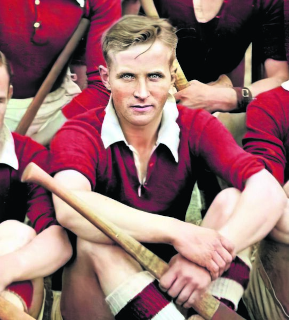
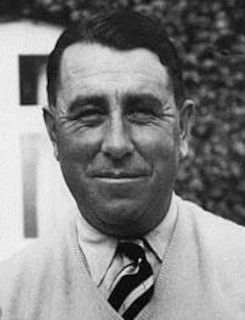
Scott is born in Belfast on August 24, 1893. He plays for Linfield and Broadway United before Liverpool manager Tom Watson signs him on September 1, 1912, following a recommendation from Scott’s older brother Billy Scott. Liverpool only gets the opportunity to sign Scott when Everton decides that the 19-year-old is too young.
Scott is reported as signed by Crewe Alexandra in August 1913, presumably under some sort of loan arrangement. He succeeds Thomas Charles Allison as deputy for the first-choice keeper, Arthur Box, and plays for them in the early part of the 1913-14 season.
Scott finally makes his Liverpool debut on January 1, 1913, at St. James’ Park. The team plays Newcastle United to a 0–0 draw.
During the early days of his career, Scott is understudy to Kenny Campbell and only appears occasionally. World War I interrupts his career for four years. He finally gets a chance of a run in the Liverpool goal at the end of the season. His goalkeeping position is set in stone when Campbell is allowed to leave in April 1920. He establishes himself as Liverpool’s number one. He is a major part of the back-to-back Championship winning teams of 1922 and 1923, missing just three games of the first title and none in the second.
Numerous stories about Scott exist in Liverpool folklore. One such story relates to a 1924 game, after Scott has just made a phenomenal save at Ewood Park against Blackburn Rovers. A man appearing from the crowd goes over to Scott and kisses him. He is part of one of the legendary rivalries of the day along with Everton’s Dixie Dean. The two of them are the main topic of discussion when the day of the Merseyside derby is approaching. Everton declares that Dean will score while Liverpool disagrees, saying Scott will not let a single shot past. A famous story, possibly apocryphal, associated with the two men is that of how they once encountered each other in Belfast city centre the day before an Ireland versus England game. Dean, famed for his remarkable heading ability, touches his hat and nods to Scott as they are about to pass. Scott responds by diving as if to try to save an imaginary header, much to the initial shock and then delight of the locals who witness it while a mildly shocked Dean smiles and quietly continues on his walk.
Towards the end of the decade, Scott loses his starting position to another Liverpool goalkeeper, Arthur Riley, but he never gives up the battle for the position of goalkeeper. However, at the beginning of the 1930s it becomes more and more difficult for Scott to get into the line-up. Eventually he asks if he can return to his homeland when his old team Belfast Celtic offers him a player-manager role in 1934. Liverpool consents. He plays the last of his 467 appearances at Chelsea on February 21, 1934, where Chelsea defeats Liverpool 2–0.
Upon Liverpool’s final home match of the season Scott heads to the director’s box to give his adoring fans a farewell speech. He plays his final game for the Belfast club in 1936 at the age of 42. In his time as manager of the Celtics, he wins ten Irish League titles, six Irish Cups, three City Cups, eight Gold Cups and five County Antrim Shields.
In 1904, Flanagan emigrates to the United States and becomes a US citizen in 1919. He attends Mount St. Mary’s University in Emmitsburg, Maryland, where he receives a Bachelor of Arts degree in 1906 and a Master of Arts degree in 1908. He studies at Saint Joseph’s Seminary in Dunwoodie, Yonkers, New York. He continues his studies in Italy and at the University of Innsbruck in Austria where he is ordained a priest on July 26, 1912. His first parish is in O’Neill, Nebraska, where from 1912 he serves as an assistant pastor at St. Patrick’s Catholic Church. He then moves to Omaha, Nebraska, to serve as an assistant pastor at St. Patrick’s Church and later at St. Philomena’s Church.
In 1917, Flanagan founds a home for homeless boys in Omaha. Bishop Jeremiah James Harty of the Diocese of Omaha has misgivings but endorses Flanagan’s experiment. Because the downtown facilities are inadequate, he establishes Boys Town, ten miles west of Omaha in 1921. Under his direction, Boys Town grows to be a large community with its own boy-mayor, schools, chapel, post office, cottages, gymnasium, and other facilities where boys between the ages of 10 and 16 can receive an education and learn a trade.
Boys Town, a 1938 film starring Spencer Tracy based on Flanagan’s life, wins Tracy an Academy Award for Best Actor for his performance. Mickey Rooney also stars as one of the residents. Tracy spends his entire Oscar acceptance speech talking about Flanagan. Without confirming it with Tracy, an overzealous MGM publicity representative announces incorrectly that Tracy is donating his Oscar to Flanagan. The Academy of Motion Picture Arts and Sciences hastily strikes another inscription, so Tracy keeps his statuette and Boys Town gets one as well. A sequel also starring Tracy and Rooney, Men of Boys Town, is released in 1941.
Flanagan himself appears in a separate 1938 MGM short, The City of Little Men, promoting Boys Town and giving a tour of its facilities. The actor Stephen McNally plays Flanagan in a 1957 episode of the ABC religion anthology series, Crossroads.
Flanagan receives many awards for his work with the delinquent and homeless boys. Pope Pius XI names him a Domestic Prelate with the title Right Reverend Monsignor in 1937. He serves on several committees and boards dealing with the welfare of children and is the author of articles on child welfare. Internationally known, he travels to the Republic of Ireland in 1946, where he is appalled by the children’s institutions there, calling them “a national disgrace.” When his observations are published after returning to Omaha, instead of improving the horrid conditions, vicious attacks are leveled against him in the Irish print media and the Oireachtas. He is invited by General Douglas MacArthur to Japan and Korea in 1947 to advise on child welfare, as well as to Austria and Germany in 1948. While in Germany, he dies of a heart attack on May 15, 1948. He is interred at Dowd Memorial Chapel of the Immaculate Conception Parish in Boys Town, Nebraska.
On February 25, 2012, the Catholic Archdiocese of Omaha, Nebraska opens the canonization process of Flanagan. At a March 17, 2012 prayer service at Boys Town’s Immaculate Conception Church, he is given the title “Servant of God,” the first of three titles bestowed before canonization as a Catholic saint. The investigation is completed in June 2015 and the results forwarded to the Vatican. If the Vatican approves the local findings, Flanagan will be declared venerable. The next steps will be beatification and canonization.
There is a portrait statue dedicated to Fr. Edward J. Flanagan in Ballymoe, County Galway.
Barrington’s escapades, arrests, and trials are widely chronicled in the London press of his day. For over a century following his death, and still perhaps today, he is most celebrated for the line “We left our country for our country’s good.” The attribution of the line to Barrington is considered apocryphal since the 1911 discovery by Sydney book collector Alfred Lee of the 1802 book in which the line first appears.
In 1771 Barrington robs his schoolmaster in Dublin and runs away from school, becoming a member of a touring theatrical company at Drogheda under the assumed name of Barrington. At the Limerick races he joins the manager of the company in picking pockets. The manager is detected and sentenced to penal transportation, and Barrington flees to London, where he assumes clerical dress and continues his pickpocketing. At Covent Garden theatre he robs the Russian Count Orlov of a snuff box, said to be worth £30,000. He is detected and arrested but, as Count Orlov declines to prosecute, is discharged, though subsequently he is sentenced to three years’ hard labour for pocket-picking at Theatre Royal, Drury Lane.
On his release, Barrington is again caught at his old practices and sentenced to five years’ hard labour, but influence secures his release on the condition that he leave England. He accordingly goes for a short time to Dublin and then returns to London, where he is once more detected pocket-picking, and, in 1790, sentenced to seven years’ penal transportation.
One account states that on the voyage out to Botany Bay a conspiracy is hatched by the convicts on board to seize the ship. Barrington discloses the plot to the captain, and the latter, on reaching New South Wales, reports him favourably to the authorities, with the result that Barrington obtains a warrant of emancipation in 1792, becoming subsequently superintendent of convicts and later high constable of Parramatta.
While enjoying the beginnings of his prosperity in Australia, Barrington romances and cohabits with a native woman, Yeariana, who soon leaves him to return to her family. He says that Yeariana possessed “a form that might serve as a perfect model for the most scrupulous statuary.”
Barrington dies on December 27, 1804, at the age of 49 in Parramatta, New South Wales.
At some point in the 1785–1787 period Barrington marries, and the couple has a child, but the names of the wife and child, and their eventual fates, are not known.
Seán Patrick Michael Sherrard, Irish singer and composer better known by his stage name Johnny Logan, is born in the Melbourne suburb of Frankston, Victoria, Australia on May 13, 1954. He is known as being the only performer to have won the Eurovision Song Contest twice, in 1980 and 1987. He also composes the winning song in 1992.
Logan is born while his father, Charles Alphonsus Sherrard, is a Derry-born Irish tenor known by the artistic name Patrick O’Hagan, is touring Australia. The family moves back to Ireland when he is three years old. He learns the guitar and begins composing his own songs by the age of thirteen. On leaving school he apprentices as an electrician, while performing in pubs and cabaret. His earliest claim to fame is starring as “Adam” in the 1977 Irish musical Adam and Eve and “Joseph” in Joseph and the Amazing Technicolor Dreamcoat.
Logan adopts the stage name Johnny Logan after the main character of the film Johnny Guitar and releases his first single in 1978. He first attempts to participate in the Eurovision Song Contest in 1979, when he places third in the Irish National Final with the song “Angie.” Readers of The Connaught Telegraph in Ireland vote him as “Best New Male Artist.”
In 1980, Logan again enters the Irish National selection for the Eurovision Song Contest with the Shay Healy song “What’s Another Year,” winning the Irish final on March 9 in Dublin. Representing Ireland in the Netherlands, he wins the Eurovision Song Contest on April 19. The song becomes a hit all over Europe and reaches number one in the UK.
In 1987, Logan makes another attempt at Eurovision and with his self-penned song, “Hold Me Now,” representing Ireland at the Eurovision Song Contest in Belgium. The song wins the contest, and he becomes the first person to win the contest twice.
Having composed the Irish Eurovision Song Contest 1984 entry for Linda Martin, “Terminal 3” (which finishes in second place), Logan repeats the collaboration in 1992 when he gives Martin another of his songs, “Why Me?” The song becomes the Irish entry at the finals in Sweden. The song takes the title and cements Logan as the most successful artist in Eurovision history with three wins.
Logan continues to perform and write songs. He is sometimes referred to as “Mister Eurovision” by fans of the contest and the media at large. He has continued his love of participating in musical theatre, having toured Norway with Which Witch, an opera-musical originating in that country. He continues to have success, particularly in the Scandinavian countries. His 2007 album, The Irish Connection, goes platinum in Denmark, twice platinum in Norway and gold in Sweden. He performs in the Celtic rock opera Excalibur from 2009 to 2011.
Wentworth is born in London on April 13, 1593, the eldest surviving son of Sir William Wentworth, a Yorkshire landowner. Educated at St. John’s College, Cambridge, and at the Inner Temple, he is knighted by James I in 1611. His marriage to Lady Margaret Clifford, daughter of the impoverished Francis Clifford, 4th Earl of Cumberland, establishes a link with an ancient and noble family still influential in the north.
Wentworth represents Yorkshire in the parliaments of 1614 and 1621 and Pontefract in 1624. His wife dies childless in 1622, and in February 1625 he marries Arabella Holles, daughter of John Holles, 1st Earl of Clare, a peer out of favour at court who brings Wentworth into touch with the critics of the King’s expensive and inefficient policy of war against Spain and, from 1627, against France. Along with other critics of the court he is prevented from sitting in the Parliament of 1626, and later in the year he refuses to subscribe to the forced loan imposed to pay for the war and is for some time under arrest. Despite his record of opposition to the King’s policy, he is approached by the crown — anxious to strengthen its position in the north — with the offer of a barony in 1628. He is appointed lord president of the Council of the North and in 1629 is given a seat on the Privy Council of the United Kingdom.
Wentworth’s return to the service of the court, coming so soon after his vehement opposition to it in Parliament, startles even some of his closest friends. His conduct is no doubt partly inspired by personal ambition, though he has logical reasons for his change of front since in the summer of 1628 the King gradually abandons his war policy.
On the Privy Council Wentworth seems to advocate the paternalist government that distinguishes the early years of the King’s personal rule. As President of the Council of the North he quells all defiance of his authority and makes many enemies by his insistence on the honour due to him as the King’s representative, but his administration is on the whole just and efficient. In 1631 he is deeply distressed by the death of his much-loved wife, though he provokes scandalous rumours not long afterward by secretly marrying Elizabeth Rodes, the young daughter of a neighbouring squire, in October 1632.
The King meanwhile has appointed Wentworth Lord Deputy of Ireland. Taking up his office in the summer of 1633, he immediately sets himself to consolidate the royal authority, break the power of the dominant clique of “new English” landowners, extend English settlement, improve methods of agriculture, increase the productivity of the land, and stimulate industry and trade. His ultimate goal is to assimilate Irish law and customs to the English system and to make a prosperous Protestant Ireland into a source of revenue to the English crown.
Wentworth continues his effective and firm-handed administration of Ireland until 1639, when he is recalled to England by King Charles I. The King needs advice and support in handling a Scottish revolt precipitated by an ill-conceived attempt to enforce episcopacy on the Scots. He is created Earl of Strafford in 1640 and is expected to resolve the crisis. But his policy of making war on Scotland proves disastrous for both him and the King. The English Parliament, called especially to vote money for the war, prove recalcitrant, and Strafford, in command of the English army, fails to prevent the Scots from overrunning the northern counties. The King, unable to pay his own troops or to buy off the Scots, is compelled by joint English and Scottish action to call a new Parliament in November 1640.
Wentworth is the chief target of attack from both nations. He is advised to leave the country, but the King relies on his help and assures him that he should not suffer in life or fortune. Detained by illness, he reaches Westminster on November 10 with the intention of impeaching the King’s opponents in Parliament for treasonable correspondence with the Scots. The leader of the House of Commons, John Pym, acts first by impeaching Wentworth before he can take his seat in the House of Lords.
Wentworth’s trial begins in March 1641. The basic accusation is that of subverting the laws and is supported by a charge that he had offered to bring over the Irish army to subdue the King’s opponents in England. More detailed charges rest on his administration in Ireland and the north. He conducts his defense with great skill, and it looks at one point as though he might be acquitted. Pym therefore introduces a bill of attainder. The Commons passes it by a large majority. The Lords, intimidated by popular rioting, pass it as well, but by a much smaller majority.
While an angry mob surges around Whitehall, Wentworth writes to the King releasing him from his promise of protection, and Charles, afraid for the safety of the Queen, gives his consent to the bill. He is executed before a crowd estimated, probably with some exaggeration, at 300,000 on May 12, 1641 (as this number is roughly the population of London at the time, the crowd is likely to have been a good deal smaller). In his last speech he once more professes his faith in “the joint and individual prosperity of the king and his people,” for which, in his view, he has always worked.
Wentworth remains an enigmatic figure in English history: ambitious, greedy for power and wealth, ruthless, and sometimes dishonest, but with a vision of benevolent authoritarian government and efficient administration to which he often gave persuasive expression. He made innumerable enemies, but his few close friends were deeply attached to him. In the last weeks of his life his dignity, eloquence, and loyalty to the King made a deep impression even on some of his enemies.
In 1920 twelve RIC Constables, or Peelers as they are called, are stationed in the barracks in Hollyford. They are regarded as the eyes and ears of the British establishment and therefore a thorn in the side of the local IRA. Since the previous year, the IRA has developed a policy of attacking police barracks throughout the country and forcing their closure thereby reducing the flow of information to Dublin Castle.
On the night of May 11, 1920, it is the turn of Hollyford Barracks. The local IRA with its leaders assembles at Phil Shanahan’s house on the Glenough road. At this time Shanahan is a member of the First Dáil, elected from a Dublin constituency as he is living and running a public house there. He fought in the Jacob’s Biscuit Factory under Thomas MacDonagh during the 1916 Easter Rising. It is decided the attack will be led by Ernie O’Malley, an organiser for the IRA who moves around to various Brigades throughout the country. His second in command is Séumas Robinson, commanding officer of the 3rd Tipperary Brigade. Other officers are Seán Treacy, whose mother Bridget Allis is from Lacknacreena, Dan Breen who is quartermaster general (QMG) of the Brigade, Comdt. Tadgh O’Dwyer, Captain Paddy O’Dwyer and Lt. Jim O’Gorman.
Roads are blocked in the vicinity and telephone lines are cut. Robinson and O’Malley, with the help of ladders, get on the roof and with lump hammers break holes in the slates. They then drop hand grenades and petrol in through the holes. They also ignite turf sods soaked in petrol and drop them through the holes. The fire on the upper floor escalates. While all this is happening, Seán Treacy, with his covering party, concentrate their fire on the port holes which keeps the occupants pinned down. The battle goes on all night and, as daylight approaches on the morning of May 12, the attackers have to withdraw without dislodging the police. While they do not achieve their aim to capture guns and ammunition, they do enough damage to ensure the RIC leaves Hollyford immediately never to return.
The next occupants, following the Anglo-Irish Treaty, are the Gárda Síochána in 1948. Various changes in personnel take place in the 1950s until Gárda Maurice Slattery is the only Gárda left in Hollyford. In 1965, after a lifetime in the Gárdí, he retires, and he and his family move to Limerick. He is the last Gárda to serve in Hollyford.
(From: “The Burning of Hollyford Barracks,” Third Tipperary Brigade Memorial (www.thirdtippbrigade.ie), July 12, 2018)
A farmer’s son, Kelly is raised amid the horror of the Irish Civil War. The family is burned out when he is five and, penniless, goes north to take a worker’s house near the Harland & Wolff shipyard in Belfast. Even though they are Protestant the Kellys are met with a cold welcome. To counter that, his mother starts a bakery while he and his father sell the hot rolls to the area pubs.
Kelly initially attends a shipyard workers’ school, sometimes without shoes, and then goes on to Methodist College Belfast, where only boys prepared to work hard are welcome. His mother, who had taught him to play the piano by marking out the keyboard on the kitchen table, is so cross when she hears that he has been playing football in the street that she tells the headmaster that he does not have enough homework.
On a visit to an elder sister at Trinity College, Dublin, Kelly is so impressed by her smoking and her painted nails that he decides to follow her to the university, where he reads legal science. After being called to the Bar of Northern Ireland in 1944, he has the usual slow start, traveling up to 100 miles to earn a five-guinea fee. However, aided by a photographic memory and the patronage of Catholicsolicitors, he gradually builds up a large practice, concentrating on crime and workers’ compensation while earning a reputation as the finest cross-examiner in the province.
Kelly first makes a mark by his successful defence of an aircraftman accused of killing a judge’s daughter. The man is found guilty but insane, though the complications involved bring it back to court 20 years later. After appointment as Queen’s Counsel in 1958 he skillfully conducts two cases which go to the House of Lords. One involves the liability of a drunken psychopath, the other the question of automatism where a person, acting like a sleepwalker, does not know what he is doing.
In 1973, Kelly is appointed as a judge of the High Court of Northern Ireland, and then as a Lord Justice of Appeal of Northern Ireland in 1984, when he is also knighted and appointed to the Privy Council of the United Kingdom. On the bench he proves a model of fairness and courtesy with a mastery of facts, but his role often puts him in danger.
A Provisional Irish Republican Army (IRA) gang once targets him with a bomb-laden milk van, intending to drive it through his gates. But the police are alerted and immediately take him to Stormont, where he lives for the next two months.
For a year Kelly presides alone over a non-jury Diplock court, protected by armed police and wearing a bulletproof vest before writing his judgment under Special Air Service (SAS) guard in England. He convicts dozens of people on “supergrass” evidence, though there are subsequently doubts about the informant and some of his judgments are overturned.
One of the accused, Kevin Mulgrew, is sentenced to 963 years in prison, with Kelly telling him, “I do not expect that any words of mine will ever raise in you a twinge of remorse.” While the IRA grumbles about the jail terms he dispenses, and he is often portrayed as an unthinking legal hardliner by Sinn Féin, he is a more subtle figure and is often merciful towards those caught up in events or those whom he considers too young for prison.
Kelly retires in 1995 and moves to England, where he dies at the age of 88 at his home in Berkshire on December 5, 2008, following a short illness. He is survived by his wife, Pamela Colmer.
(From: “Basil Kelly,” Independent.ie (www.independent.ie), January 4, 2009)
Austin Clarke, considered at his death to be the greatest poet of his generation after W. B. Yeats, is born in 83 Manor Street, Stoneybatter, Dublin, on May 9, 1896. He also writes plays, novels and memoirs. His main contribution to Irish poetry is the rigour with which he uses technical means borrowed from classical Irish language poetry when writing in English.
Effectively, this means writing English verse based not so much on metre as on complex patterns of assonance, consonance, and half rhyme. Describing his technique to Robert Frost, Clarke says, “I load myself down with chains and try to wriggle free.”
Clarke’s early poetry clearly shows the influence of Yeats. His first book, The Vengeance of Fionn, is a long narrative poem retelling an Ossianic legend. It meets with critical acclaim and, unusually for a first book of poetry, goes to a second edition. Between this and the 1938 volume Night and Morning, he publishes a number of collections, all of which, to one extent or another, can be seen as being written in the shadow of Yeats. There is, however, one significant difference. Unlike the older poet, Clarke is a Catholic, and themes of guilt and repentance run through this early work.
Between 1938 and 1955, Clarke publishes no new lyric or narrative poetry. He is co-founder of the Lyric Theatre, Dublin and writes a number of verse plays for them. He also works as a journalist and has a weekly poetry programme on RTÉ radio. It seems likely that he also experiences some kind of personal crisis during this time, and this has significant consequences for his later poetry.
Clarke returns to publishing poetry with the 1955 collection Ancient Lights and is to continue writing and publishing prolifically for the remainder of his life. Although he continues to use the same Gaelic-derived techniques, this late poetry is markedly different from his earlier work. Many of the later poems are satires of the Irish church and state, while others are sensual celebrations of human sexuality, free of the guilt of the earlier poems. He also publishes the intensely personal Mnemosyne Lay in Dust, which is a poem sequence detailing the fictional Maurice Devanes’s nervous breakdown and subsequent recovery.
Clarke also comes to admire the work of more avant-garde poets like Ezra Pound and Pablo Neruda, both of whom he writes poems about. A number of the late long poems, such as, for instance, the 1971 Tiresias, show the effects of studying these poets and their looser formal structures. He sets up the Bridge Press to publish his own work, which allows him the freedom to publish work that many mainstream Irish publishers of the time might have been reluctant to handle. His Collected Poems is published in 1974 and a Selected Poems in 1976.
In addition to some twenty volumes of poetry and numerous plays, Clarke publishes three novels: The Bright Temptation (1932), The Singing Men at Cashel (1936), and The Sun Dances at Easter (1952). All of these are banned by the Censorship of Publications Board (Ireland). He also publishes two volumes of memoirs, Twice Round the Black Church (1962) and A Penny in the Clouds (1968), and a number of scattered critical essays and book reviews. While all of these prose writings are of interest, his reputation rests firmly on his poetry.
In 1920 Clarke marries Cornelia (Lia) Cummins. The marriage effectively lasts only a few days, and he spends several months in St. Patrick’s Hospital recovering from it, but they do not divorce before Cummins dies in 1943. He meets, has three sons with, and later marries (1945) Norah Esmerelda Patricia Walker (1900–1985), granddaughter of Matthew Harris, MP for East Galway from 1885 to 1890.
Clarke lives in Bridge House beside Templeogue Bridge which spans the River Dodder in the south Dublin suburb of Templeogue. After his death on March 19, 1974, there is a proposal to preserve the house and his library of 6,500 books as a memorial. This is not possible owing to long-term plans to demolish the house and widen the road. The old Templeogue Bridge, built in 1800, and Bridge House are removed. A new bridge is opened by CouncillorBernie Malone, Chairman Dublin City Council, on December 11, 1984, which is renamed Austin Clarke Bridge in his honour.
The IRA’s East Tyrone Brigade is active mainly in eastern County Tyrone and neighbouring parts of County Armagh. By the mid-1980s it had become one of the IRA’s most aggressive formations. The British security forces receive intelligence of the IRA’s plan weeks prior to the attack and learn the target at least 10 days before the attack. It has been alleged that the security forces had a double agent inside the IRA unit, and that he was killed by the British Army‘s Special Air Service (SAS) during the ambush. Other sources claim that the security forces had instead learned of the ambush through other surveillance methods.
Three local RUC officers work at the station, which is only open part-time, from 9:00 AM to 11:00 AM, and from 5:00 PM to 7:00 PM daily.The IRA’s attack involves two teams. One team is to drive a digger with a bomb in its bucket through the base’s perimeter fence and light the fuse. At the same time, another team is to arrive in a van and open fire on the base, with the intent of killing the three RUC officers as they come off duty.
The IRA unit arrives in Loughgall from the northeast shortly after 7:00 PM, when the station is scheduled to close for the night. They are armed and wearing bulletproof vests, boilersuits, gloves and balaclavas. The digger drives past the police station, turns around and drives back again with the Toyota van carrying the main IRA assault party doing the same. Not seeing any activity in the station, members of the IRA unit feel that something is amiss and debate whether to continue, but decide to go ahead with the attack. Tony Gormley and Gerard O’Callaghan get out of the van and join Declan Arthurs on the digger. At about 7:15 PM Arthurs drives the digger towards the station with the front bucket containing 300–400 lbs. of Semtex inside an oil drum, partially hidden by rubble and wired to two 40-second fuses. The other five members of the unit follow in the van with Eugene Kelly driving, unit commander Patrick Kelly in the passenger seat, with unit commander Jim Lynagh, Pádraig McKearney, and Seamus Donnelly in the back seat.
The digger crashes through the light security fence and the fuses are lit. The van stops a short distance ahead and, according to the British security forces, three of the team jump out and fire on the building with automatic weapons. At the same time, the bomb detonates, the blast destroying the digger and badly damaging the building.
Within seconds the SAS opens fire on the IRA attackers from the station and from hidden positions outside. All eight IRA members are killed in the hail of gunfire, each with multiple wounds to their bodies. Declan Arthurs is shot in a lane-way opposite Loughgall F.C. premises. Three of the IRA members are shot at close range as they lay either dead or wounded on the ground. Three other IRA members in the scout cars escape from the scene, managing to pass through British Army and RUC checkpoints set up after the ambush had been sprung. The two RUC Headquarters Mobile Support Unit (HMSU) officers are injured in the explosion and an SAS soldier receives a facial injury from glass after a window is broken by gunfire.
Two civilians, brothers Anthony and Oliver Hughes, traveling in a car that happens to drive into the scene of the ambush while it is underway are also fired upon by the British forces. Oliver is wearing overalls similar to those being worn by the IRA unit. About 130 yards from the police station, British soldiers open fire on their car from behind, killing Anthony and badly wounding Oliver. The villagers had not been told of the operation and no attempt had been made to evacuate anyone or to seal off the ambush zone, as this might have alerted the IRA.
The security forces recover eight IRA firearms from the scene. The RUC links the weapons to seven known murders and twelve attempted murders in the Mid-Ulster region. On of the weapons, a Ruger Security-Six, had been stolen from Reserve RUC officer William Clement, killed two years earlier in the IRA attack on Ballygawley RUC base. It is found that another of the guns had been used in the murder of Harold Henry, a builder employed by the British Army and RUC in facilities construction in Northern Ireland.
(Pictured: Mural commemorating the IRA members killed in the ambush)