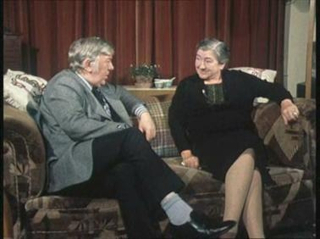
Ní Scolaí is born in May 24, 1909 in Dublin. She is the daughter of Michael Scully, a commercial traveler and Mary Scully (née Kavanagh). She attends the Central Model Schools, were she learns Irish through the pilot Irish language courses. She studies Irish further at Ring College, County Waterford. She moves to Galway with her sister Mona as a young adult, and begins teaching Irish singing and dancing. With the Irish language theatre, An Taibhdhearc, she plays a number of leading roles. In Micheál Mac Liammóir‘s 1928 production of Diarmaid agus Gráinne, she plays Gráinne.
Ní Scolaí’s interpretation of traditional Irish songs gains her fame, and she sings many times on 2RN as well as radio in France, Italy, the United States and the United Kingdom. She trains as a mezzo-soprano and licentiate of the Trinity College of Music, London, and is noted as one of the few people who combines classical music with sean-nós singing successfully. She wins awards at feiseanna such as Feis Chonnacht and Feis Shligigh, later becoming a judge. She is also an award winner at Aonach Tailteann, as well at the Welsh Eisteddfod, the Scottish mòd, the Manx Tynwald, and the Breton Bretagne celebrations. She performs at London’s Covent Garden and Queen’s Hall. She travels around Gaeltacht areas in Ireland to collect and save songs that might have otherwise been lost. The traditional singers she collects from included Cáit Uí Chonláin in Spiddal and Labhras “Binn” Ó Cadhla. HMV records and releases her performances of Seacht ndolas na Maighduine Mhuire, Caoineadh na dtrí Muire, and Eibhlín a Rún.
On September 9, 1931 she marries Liam Ó Buachalla at University Church, St. Stephen’s Green, Dublin. She dies on June 29, 1985, and is buried in Galway.
(Pictured: Ciarán Mac Mathúna and Máire Ní Scolaí (1976))
Marie Kean, actress of stage and screen whose career spanned over 40 years, is born in the village of Rush, County Dublin on June 27, 1918. The Stage calls her one of Ireland’s most impressive actresses, and “an artist of considerable emotional depth and theatrical command.”
Kean grows up in Rush and is educated at Loreto College, North Great George’s Street, Dublin. She learns her craft at the Gaiety School of Acting and is part of the Abbey Theatre company until 1961.
Kean’s leading role as the kindly matriarch, Mrs. Kennedy, in the RTÉ Radio serial drama, The Kennedys of Castleross, makes her famous throughout Ireland. She stars in the programme for the duration of its 18-year run.
In 1968, Kean wins a Jacob’s Award for her performance as Winnie in RTÉ television’s production of Samuel Beckett‘s play Happy Days, a role she had previously performed on stage and which she describes later as her favourite part. Among her other television roles is that of Mrs. Conn Brickley, Bridget’s mother, in an episode of The Irish R.M. called “The Boat’s Share.”
Kean’s many stage appearances include performances in the plays of John Millington Synge, Seán O’Casey and Brian Friel. She takes the lead role of Maggie Polpin in the 1969 world première of John B. Keane‘s play Big Maggie at the Cork Opera House. In 1978 she wins the State of New York best actress award for her performance in what has become Keane’s most successful play.
Arguably her most memorable film role is as Barry’s scheming mother in Stanley Kubrick‘s Barry Lyndon. She also plays a bigoted Irish shopkeeper in David Lean‘s Ryan’s Daughter. Her final movie appearance is in John Huston‘s The Dead (1987), in which she plays the part of Mrs. Malins.
Marie Kean dies in Donnybrook, Dublin at the age of 75 on December 30, 1993. Her husband, William Mulvey, predeceases her in 1977.
Creighton Hale, Irish American theatre, film, and television actor, is born Patrick Fitzgerald on May 24, 1882, in County Cork. His career extends more than a half-century, from the early 1900s to the end of the 1950s.
Some believe that in 1923 Hale stars in an early pornographic “stag” filmOn the Beach (a.k.a. Getting His Goat and The Goat Man). In the film, three nude women agree to have sex with him, but only through a hole in a fence. Photographs of the scene clearly show that the man in the film is not Hale but is another actor who also wears glasses.
Hale’s two sons, Creighton Hale, Jr. and Robert Lowe Hale, from his first marriage to Victoire Lowe, are adopted by Lowe’s second husband, actor John Miljan. After his divorce, Hale marries Kathleen Bering in Los Angeles in 1931.
Davis starts as a news reporter with the American network ABC and BBC Northern Ireland before spending 11 years in the newsroom at RTÉ. In the early 1980s he becomes a newsreader for The Six-o-clock News and begins to become well-known due to his sometimes-off-the-cuff comments on news stories.
Davis impersonates Big Tom on the RTÉ satirical programme Hall’s Pictorial Weekly and, as a result, is offered a part in a showband in Cork. After a ballroom tour, he joins RTÉ proper in 1975, initially to work as a television news reporter, eventually becoming newsreader on the nine o’clock news. In the mid-1980s, he hosts his own talk show, Davis at Large. It is on this show, which is screened live, that he is attacked and hurled across the studio by a guest female body builder. In addition to this he has an interactive summer current affairs show, simply called Davis. In 1986, he begins co-hosting (with Thelma Mansfield) RTÉ 1’s afternoon programme Live at 3, a role he fills for eleven years.
Davis presents the Rose of Tralee twice in 1995 and 1996, the first of these when Gay Byrne is taken ill at short notice. He memorably thanks the providers of the air conditioning while wiping sweat from his brow. Live at 3 comes to an end in 1997. Davis returns to the screen in the late 1990s with a marine programme devoted to boats and the waters around Ireland called Out of the Blue, which runs for four series, the last of which is broadcast in 2001.
In 2000, Davis presents a radio quiz show called A Question of Food. During the summer season he takes over RTÉ Radio 1‘s mid-morning slot usually occupied by Today with Pat Kenny, and he also hosts the radio phone-in show, Liveline, when regular presenter Joe Duffy is on holiday. Later, he presents Sunday Magazine with Davis on 4 on 4fm.
In 2005, Davis hosts a show called Time on Their Hands, a travel series for older people. One of his last television appearances is on the second season of Celebrity Bainisteoir in 2009, in which he and seven other Irish celebrities manage an intermediate Gaelic football club team from their home county in an official GAA tournament. Davis’s team wins the tournament.
During the 2010s, Davis makes frequent guest appearances on TV3‘s Tonight with Vincent Browne, where he and another guest preview the following morning’s papers.
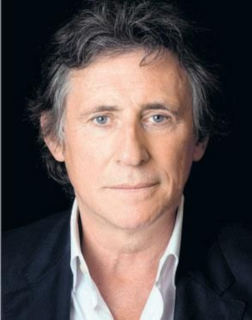
Byrne is the first of six children. His father is a cooper and his mother a hospital worker. He is raised Catholic and educated by the Irish Christian Brothers. He spends five years of his childhood in a seminary training to be a Catholic priest. He later says, “I spent five years in the seminary, and I suppose it was assumed that you had a vocation. I have realized subsequently that I didn’t have one at all. I don’t believe in God. But I did believe at the time in this notion that you were being called.” He attends University College Dublin (UCD), where he studies archeology and linguistics, and becomes proficient in the Irish language. He plays football in Dublin with the Stella Maris Football Club.
Byrne works in archeology after he leaves UCD but maintains his love of his language, writing Draíocht (Magic), the first drama in Irish on Ireland’s national Irish television station, TG4, in 1996.
He discovers his acting ability as a young adult. Before that he works at several occupations which include being an archaeologist, a cook, a bullfighter, and a Spanish schoolteacher. He begins acting when he is 29 years old. He begins on stage at the Focus Theatre and the Abbey Theatre in Dublin, later joining the Royal Court Theatre and the Royal National Theatre in London.
Byrne does not visit the United States until he is 37 years old. In 1988, he married actress Ellen Barkin with whom he has two children. The couple separates amicably in 1993 and divorce in 1999.
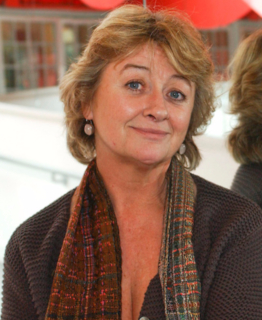
Cusack is the second daughter of the actors Cyril Cusack (1910-1993) and Maureen Cusack (1920-1977). Her elder sister is actress Sinéad Cusack, and her younger sister is actress Niamh Cusack. She is a half-sister to Catherine Cusack. Through her sister Sinéad, she is the sister-in-law of actor Jeremy Irons and the aunt of actor Max Irons and his brother, former child actor Samuel Irons.
Cusack has made many film and television appearances including The Bill, Casualty (as Staff Nurse/Ward Sister Kate Wilson from 1994 to 1997), the 1973 BBC adaptation of Jane Eyre, and the film Snatch (as the traveller mother of Mickey, played by Brad Pitt). In 1998, she plays Mother Duck on the cartoon The First Snow of Winter in UK Version. She also acts for radio, including a guest appearance in the BBC Radio 4 series Baldi and starring as Juno Boyle in the 2014 BBC Radio 3 production of Juno and the Paycock. She plays Helen Connor in Coronation Street in 2008, but because of her other acting commitments the role is played by Dearbhla Molloy when the character returns in July 2009.
In 2011, Cusack plays Mrs. Nicholson in two episodes of the first series of Mrs. Brown’s Boys. Susie Blake takes over the role for the second and third series. Despite this, she plays the part of Justice Dickie in the 2014 film Mrs. Brown’s Boys D’Movie. Since 2013 she has played Mrs. McCarthy, the housekeeper and parish secretary, in the BBC adaptation of the Father Brown mysteries. In 2015, she plays Bridie Stevenson in the BBC television series River.
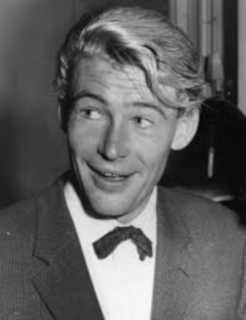
Peck’s parents divorce when he is five years old. An only child, he is sent to live with his grandmother. He never feels as though he has a stable childhood. His fondest memories are of his grandmother taking him to the movies every week and of his dog, which follows him everywhere.
At the age of ten Peck is sent to a Catholic military school, St. John’s Military Academy in Los Angeles. While he is a student there, his grandmother dies. At 14, he moves back to San Diego to live with his father and attends San Diego High School. After graduating he enrolls for one year at San Diego State Teacher’s College (now known as San Diego State University).
With a string of hits to his credit, Peck makes the decision to only work in films that interest him. He continues to appear as the heroic, larger-than-life figures in such films as Captain Horatio Hornblower R.N. (1951) and Moby Dick (1956). He works with Audrey Hepburn in her debut film, Roman Holiday (1953).
Peck finally wins the Oscar, after four nominations, for his performance as lawyer Atticus Finch in To Kill a Mockingbird (1962). In the early 1960s, he appears in two darker films than he usually makes, Cape Fear (1962) and Captain Newman, M.D. (1963), which deal with the way people live. He also gives a powerful performance as Captain Keith Mallory in The Guns of Navarone (1961), one of the biggest box-office hits of that year.
In the early 1970s, Peck produces two films, The Trial of the Catonsville Nine (1972) and The Dove (1974), when his film career stalled. He makes a comeback playing, somewhat woodenly, Robert Thorn in the horror film The Omen (1976). After that, he returns to the bigger-than-life roles he is best known for, such as MacArthur (1977) and the monstrous Nazi Dr. Josef Mengele in the huge hit The Boys from Brazil (1978). In the 1980s, he moves into television with the miniseriesThe Blue and the Gray (1982) and The Scarlet and the Black (1983). In 1991, he appears in the remake of his 1962 film, playing a different role, in Martin Scorsese‘s Cape Fear (1991). He is also cast as the progressive-thinking owner of a wire and cable business in Other People’s Money (1991).
In 1967, Peck receives the Academy’s Jean Hersholt Humanitarian Award. He has also been awarded the Presidential Medal of Freedom. Always politically progressive, he is active in such causes as anti-war protests, workers’ rights and civil rights. In 2003, Peck’s portrayal of Atticus Finch is named the greatest film hero of the past 100 years by the American Film Institute.
Gregory Peck dies in his sleep at his home in Los Angeles, California from bronchopneumonia at the age of 87 on June 12, 2003. He is entombed in the Cathedral of Our Lady of the Angels mausoleum in Los Angeles. His eulogy is read by Brock Peters, whose character, Tom Robinson, was defended by Peck’s Atticus Finch in To Kill a Mockingbird.
McGoohan is the son of Rose (Fitzpatrick) and Thomas McGoohan, who are living in the United States after emigrating from Ireland to seek work. He is brought up as a Catholic. Shortly after he is born, his parents move back to Mullaghmore, County Leitrim. Seven years later they emigrate to Sheffield, England.
McGoohan attends St. Vincent’s School and De La Salle College in Sheffield. During World War II, he is evacuated to Loughborough, Leicestershire. There he attends Ratcliffe College, where he excels in mathematics and boxing. He leaves school at the age of 16 and returns to Sheffield, where he works as a chicken farmer, a bank clerk, and a lorry driver before getting a job as a stage manager at Sheffield Repertory Theatre. When one of the actors becomes ill, McGoohan is substituted for him, launching his acting career.
McGoohan is most closely identified with two 1960s British television series, Danger Man and The Prisoner. The espionage drama Danger Man, which runs in the United States as Secret Agent, runs for 86 episodes during 1960–1961 and 1964–1967. The cult hit The Prisoner runs for 17 episodes in 1967–1968.
In Danger Man McGoohan puts a new spin on the secret agent formula by refusing to allow his character, John Drake, to carry a gun or indulge in sexual dalliances. The show’s success makes him Britain’s highest-paid TV actor.
McGoohan is one of several actors considered for the role of James Bond in Dr. No. While McGoohan turns down the role on moral grounds, the success of the Bond films is generally cited as the reason for Danger Man being revived in 1964. He is later considered for the Bond role in Live and Let Die but again turns it down.
The success of Danger Man provides McGoohan the leverage he needs to produce The Prisoner, an allegorical Kafkaesque series in which he portrays Number Six, an unnamed agent, thought by many to represent Drake, who angrily resigns and is then held captive in a superficially banal place called The Village, where the mysterious unseen Number One, the ever-changing Number Two, and others try to overcome the fiercely individualistic Number Six’s escape attempts and pry information from him.
McGoohan’s later works include the short-lived medical mystery series Rafferty (1977), such films as Ice Station Zebra (1968), Escape from Alcatraz (1979), and Braveheart (1995), the Broadway spy drama Pack of Lies (1985), and a record four guest-villain appearances on the American detective series Columbo, two of which earned him Emmy Awards. He also directs and writes several episodes of The Prisoner and Columbo. One of his last roles is as Number Six in a 2000 episode of the animated TV comedy The Simpsons.
Jordan is educated at St. Paul’s College, Raheny. Later, Jordan attends University College Dublin, where he studies Irish history and English literature. He is raised a Catholic and is quite religious during the early stages of his life. Regarding his current beliefs, he states that “God is the greatest imaginary being of all time. Along with Einstein‘s General Theory of Relativity, the invention of God is probably the greatest creation of human thought.”
When John Boorman is filming Excalibur in Ireland, he recruits Jordan as a “creative associate.” A year later Boorman is executive producer on Jordan’s first feature, Angel, a tale of a musician caught up in the Troubles, starring Stephen Rea who subsequently appears in almost all of Jordan’s films to date. During the 1980s, he directs films that win him acclaim, including The Company of Wolves and Mona Lisa, both made in England. The Company of Wolves becomes a cult favorite.
As a writer/director, Jordan has a highly idiosyncratic body of work, ranging from mainstream hits like Interview with the Vampire to commercial failures like We’re No Angels to a variety of more personal, low-budget arthouse pictures. He is also the driving force behind the cable TV series The Borgias.
Unconventional sexual relationships are a recurring theme in Jordan’s work, and he often finds a sympathetic side to characters that audiences would traditionally consider deviant or downright horrifying. His film The Miracle, for instance, follows two characters who struggle to resist a strong, incestuous attraction, while The Crying Game makes complicated, likable characters out of an IRA volunteer and a transgender woman. Interview with the Vampire, like the Anne Rice book it is based on, focuses on the intense, intimate interpersonal relationship of two undead men who murder humans nightly, accompanied by an equally lusty vampire woman who is eternally trapped in the body of a little girl. While Lestat (Tom Cruise) is depicted in an attractive but villainous manner, his partner Louis (Brad Pitt) and the child vampire Claudia (Kirsten Dunst) are meant to capture the audience’s sympathy despite their predatory nature.
In addition to the unusual sexuality of Jordan’s films, he frequently returns to the Troubles of Northern Ireland. The Crying Game and Breakfast on Pluto both concern a transgender character, both concern the Troubles, and both feature frequent Jordan leading man Stephen Rea. The two films, however, are very different, with The Crying Game being a realistic thriller/romance and Breakfast on Pluto a much more episodic, stylized, darkly comic biography. Jordan also frequently tells stories about children or young people, such as The Miracle and The Butcher Boy. While his pictures are most often grounded in reality, he occasionally directs more fantastic or dreamlike films, such as The Company of Wolves, High Spirits, Interview with the Vampire, and In Dreams.
The critical success of Jordan’s early pictures leads him to Hollywood, where he directs High Spirits and We’re No Angels. Both are critical and financial disasters. He later returns home to make the more personal The Crying Game, which is nominated for six Academy Awards. Jordan wins the Academy Award for Best Original Screenplay for the film. Its unexpected success leads him back to American studio filmmaking, where he directs Interview with the Vampire. He also directs the crime drama The Brave One starring Jodie Foster.
Deevy is born on January 21, 1894, in Waterford. She is the youngest of 13 siblings, all girls. Her mother is Mary Feehan Deevy and her father is Edward Deevy who passes away when she is two years old.
Deevy attends the Ursuline Convent in Waterford and in 1913, at the age of 19, she enrolls in University College Dublin, to become a teacher. However, that same year, she becomes deaf through Ménière’s disease and has to relocate to University College Cork so she can receive treatment in the Cork Ear, Eye, and Throat Hospital, while also being closer to the family home. In 1914 she goes to London to learn lip reading and returns to Ireland in 1919. She starts writing plays and contributing articles and stories to the press around 1919.
In 1930 Deevy has her first production at the Abbey Theatre, Reapers. Many more follow in rapid succession, such as In Search of Valour, Temporal Powers, The King of Spain’s Daughter and Katie Roche, the play she is perhaps best known for. Her works are generally very well received with some of them winning competitions, becoming headline performances, or being revived numerous times. After a number of plays staged in the Abbey, her relationship with the theater sours over the rejection of her play, Wife to James Whelan in 1937.
After Deevy stops writing plays for the Abbey, she mainly concentrates on radio, a remarkable feat considering she had already become deaf before radio had become a popular medium in Ireland in the mid-to-late 1920s. She has a prolific output for twenty years on Raidio Éireann and on the BBC.
Deevy is elected to the prestigious Irish Academy of Letters in 1954, as a recognition to her contribution to the Irish theater. Her sister, Nell, with whom she had lived in Dublin, dies in the same year, so she returns to Waterford. She becomes a familiar figure in Waterford as she cycles around the city on her “High Nelly” bike.
When Deevy’s health begins to fail she is eventually admitted to the Maypark Nursing Home in Waterford. She dies there on January 19, 1963, at the age of 68, two days before her birthday.