seamus dubhghaill

Promoting Irish Culture and History from Little Rock, Arkansas, USA


Leave a comment

Death of Singer Delia Murphy Kiernan

delia-murphy

Delia Murphy Kiernan, singer and collector of Irish ballads, dies of a massive heart attack on February 11, 1971, five days before her 69th birthday. She records several 78 RPM records in the 1930s, 1940s, and 1950s. In 1962 she records her only LP record, The Queen of Connemara, for Irish Prestige Records, New York, on the cover of which her name appears alongside the LP title. Her notable voice gives her the nickname the “Queen of Connemara.”

Murphy is born on February 16, 1902, in Ardroe, Roundfort, County Mayo, to a well-off family. Her father, John Murphy, from nearby Hollymount, makes his fortune in the Klondike Gold Rush. While in America, he marries Ann Fanning from Roscrea, County Tipperary. They return to Ireland in 1901 and purchase the large Mount Jennings Estate in Hollymount. Murphy’s father encourages her interest in singing ballads from a young age. He also allows Irish travellers to camp on the estate. According to her own account, she learns her first ballads at their campfires.

Murphy is educated at Presentation Convent in Tuam, Dominican College in Dublin, and University College Galway (UCG), where she graduates with a Bachelor of Commerce degree. While at UCG she meets Dr. Thomas J. Kiernan, and they marry in 1924, on her 22nd birthday. Kiernan then joins the Irish diplomatic service, where his first posting is to London. While there Murphy sings at many venues including many gatherings of Irish emigrants and becomes quite well-known. In 1939 she records The Blackbird, The Spinning Wheel, and Three Lovely Lassies for HMV.

In 1941, Kiernan is appointed Irish Minister Plenipotentiary to the Holy See in Rome. The Irish legation is the only English-speaking legation to remain open after the United States enters World War II. Murphy becomes one of those who assist Monsignor Hugh O’Flaherty in saving the lives of 6,500 Allied soldiers and Jews. In 1943, when Italy changes sides, many escaped POWs are helped by the legation to leave Italy.

In 1946, Murphy is awarded to Dame Commander of the Equestrian Order of the Holy Sepulchre.

Kiernan later serves as Irish High Commissioner and later first Ambassador in Australia, and later to West Germany, Canada, and the United States. In 1961, while living in Ottawa, Murphy makes the recording of The Queen of Connemara produced by Ken Goldstein. Murphy and Kiernan purchase a farmhouse in Jasper, Ontario, near the Rideau Canal where she spends most of her time, even after Kiernan is posted to Washington, D.C. Tom Kiernan dies in December 1967.

By 1969 Murphy’s health is in decline. In November of that year, she sells her farmhouse in Canada and returns to Ireland. She lives in a cottage in Strawberry Beds, Chapelizod, County Dublin, until her death. During her lifetime she records upwards of 100 songs.

Leave a comment

Birth of Brendan Behan, Irish Republican, Poet & Writer

brendan-behan

Brendan Francis Aidan Behan, Irish Republican, poet, short story writer, novelist, and playwright who writes in both English and Irish, is born in Dublin on February 9, 1923.

Behan is widely regarded as one of the greatest Irish writers and poets of all time. He is also an Irish republican and a volunteer in the Irish Republican Army (IRA). Born in Dublin into a staunchly republican family, he becomes a member of the IRA’s youth organisation Fianna Éireann at the age of fourteen. However, there is also a strong emphasis on Irish history and culture in the home, which means he is steeped in literature and patriotic ballads from an early age. Behan eventually joins the IRA at sixteen, which leads to his serving time in a borstal youth prison in the United Kingdom. He is also imprisoned in Ireland. During this time, he takes it upon himself to study and he becomes a fluent speaker of the Irish language. Subsequently released from prison as part of a general amnesty given by the Fianna Fáil government in 1946, Behan moves between homes in Dublin, Kerry, and Connemara, and also resides in Paris for a time.

In 1954, Behan’s first play, The Quare Fellow, is produced in Dublin. It is well received, however, it is the 1956 production at Joan Littlewood‘s Theatre Workshop in Stratford, London, that gains Behan a wider reputation. This is helped by a famous drunken interview on BBC television. In 1958, Behan’s play in the Irish language, An Giall, has its debut at Dublin’s Damer Theatre. Later, The Hostage, Behan’s English-language adaptation of An Giall, meets with great success internationally. Behan’s autobiographical novel, Borstal Boy, is published the same year and becomes a worldwide best-seller.

He marries Beatrice Ffrench-Salkeld in 1955. By early March 1964, after developing diabetes, the end is in sight. Collapsing at the Harbour Lights bar, he is transferred to the Meath Hospital in central Dublin, where he dies at the age 41 on March 20, 1964. He is given an IRA guard of honour, which escorts his coffin. It is described by several newspapers as the biggest funeral since those of Michael Collins and Charles Stewart Parnell.


Leave a comment

Establishment of the Central Bank of Ireland

central-bank-of-ireland

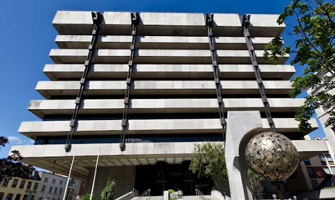
The Central Bank of Ireland is established on February 1, 1943, when the Central Bank Act 1942 comes into effect which renames the Currency Commission.

The Central Bank of Ireland is Ireland’s central bank, and as such part of the European System of Central Banks (ESCB). It is also the country’s financial services regulator for most categories of financial firms. It is the issuer of Irish pound banknotes and coinage until the introduction of the euro currency and now provides this service for the European Central Bank.

The Central Bank, however, does not initially acquire many of the characteristics of a central bank:

  • It is not given custody of the cash reserves of the commercial banks
  • It has no statutory power to restrict credit, though it can promote it
  • The Bank of Ireland remains the government’s banker
  • The conditions for influencing credit through open-market operations does not yet exist
  • Ireland’s external monetary reserves are largely held as external assets of the commercial banks

The mid-1960s see the Bank take over the normal day-to-day operations of exchange control from the Department of Finance. The Central Bank broadens its activities over the decades, but it remains in effect a currency board until the 1970s.

Since January 1, 1972, the Central Bank has been the banker of the Government of Ireland in accordance with the Central Bank Act 1971, which can be seen in legislative terms as completing the long transition from a currency board to a fully functional central bank.

Its head office is located on Dame Street, Dublin, where the public may exchange non-current Irish coinage and currency, both pre- and post-decimalization, for euros. It also operates from premises in Spencer Dock, Iveagh Court, and College Green. The Currency Centre at Sandyford is the currency manufacture, warehouse, and distribution site of the bank.

By March 2017 its city centre staff moves to a new building at North Wall Quay.


Leave a comment

Sinking of the MV Princess Victoria

mv-princess-victoria

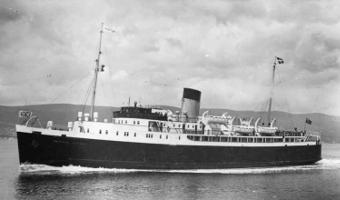
MV Princess Victoria, one of the earliest roll-on/roll-off ferries, sinks on January 31, 1953, in the North Channel during a severe European windstorm with the loss of 133 lives. It is then the deadliest maritime disaster in United Kingdom waters since World War II.

Princess Victoria is built in 1947 by William Denny and Brothers, Dumbarton. She is the first purpose-built ferry of her kind to operate in British coastal waters and could hold 1,500 passengers plus cargo and had sleeping accommodations for 54.

Captained by James Ferguson, the vessel leaves Stranraer‘s railway loading pier at 7:45 AM on January 31, 1953 with 44 tons of cargo, 128 passengers, and 51 crew. Captain Ferguson has served as master on various ferries on the same route for seventeen years. A gale warning is in force but he makes the decision to put to sea. Loch Ryan is a sheltered inlet and the immediate force of the wind and sea is not apparent, but it is noted that spray is breaking over the stern doors. A “guillotine door” has been fitted, because of a previously identified problem with spray and waves hitting the stern doors, but it is rarely used, because it takes too long to raise and lower. This would provide extra protection for the sliding stern doors but on this occasion it is not lowered.

Shortly after clearing the mouth of Loch Ryan, the ship turns west towards Larne, County Antrim, Northern Ireland and exposes her stern to the worst of the high seas. Huge waves damage the low stern doors, allowing water to enter the car deck. The crew struggles to close the doors again but they prove to be too badly damaged and water continues to flood in from the waves. The scuppers do not appear to be allowing the water to drain away. The ship takes a list to starboard and at this point Captain Ferguson decides to retreat to the safety of Loch Ryan by going astern and using the bow rudder. This proves to be impossible, because the extreme conditions prevent the deckhands from releasing the securing pin on the bow rudder. Ferguson then makes a decision to try to reach Northern Ireland by adopting a course which keeps the stern of the craft sheltered from the worst of the elements. At 9:46 AM, two hours after leaving Stranraer, a message is transmitted in Morse code (the Princess Victoria does not have a radio telephone) by radio operator David Broadfoot to the Portpatrick Radio Station: “Hove-to off mouth of Loch Ryan. Vessel not under command. Urgent assistance of tugs required.”

With a list to starboard exacerbated by shifting cargo, water continues to enter the ship. At 10:32 AM an SOS transmission is made, and the order to abandon is given at 2:00 PM. Possibly the first warship in the area is HMS Launceston Castle, commanded by Lt. Cdr J M Cowling, a frigate which is en route to Derry. Searches are carried out but Launceston Castle is forced to leave when her condensers are contaminated by salt. Upon the upgrade of the assistance message to an SOS, the Portpatrick Lifeboat the Jeannie Spiers is dispatched, as is the destroyer HMS Contest. Contest, commanded by Lt. Commander HP Fleming, leaves Rothesay at 11:09 AM but, although she comes close to her position at 1:30 PM, poor visibility prevents the crew from seeing the sinking ship. The destroyer has been trying to maintain a speed of 31 knots to reach the listing ferry but, after sustaining damage from the seas, Captain Fleming is forced to reduce speed to 16 knots.

The Princess Victoria is still reporting her position as 5 miles northwest of Corsewall Point but her engines are still turning and even at the speed of 5 knots are gradually drawing the vessel closer to Northern Ireland and away from her reported position. At 1:08 PM, the ship broadcasts that her engines have stopped. The final morse code message at 1:58 PM reports the ship “on her beam end” five miles east of the Copeland Islands.

The Court of Enquiry into the sinking, held in March 1953 at Crumlin Road Courthouse in Belfast, finds that the Princess Victoria was lost due to a combination of factors. In a 30,000 page report the enquiry finds that firstly, the stern doors are not sufficiently robust. Secondly, arrangements for clearing water from the car deck are inadequate. The report concludes “If the Princess Victoria had been as staunch as those who manned her, then all would have been well and the disaster averted.” The court also notes the failure of the duty destroyer HMS Tenacious from the 3rd Training Squadron based at HMS Sea Eagle at Londonderry Port to be able to put to sea as too many men had been released on shore leave. As a consequence of the enquiry the duty destroyer from the 3rd Squadron is subsequently based “on station” at the mouth of Lough Foyle on one hour readiness to put to sea.

The wreck lay undiscovered until 1992 when a team from Cromarty Firth Diving, led by John MacKenzie and funded by the BBC, working from data provided by a Royal Navy seabed survey carried out in 1973, are able to locate it five miles north northeast of the Copeland Islands in 90 metres of water. Video footage and stills from this expedition are transmitted on a BBC programme called Home Truths (Things Don’t Happen to Boats Like This) on the 40th anniversary of the sinking in 1993.


Leave a comment

Birth of Singer/Songwriter Eleanor McEvoy

eleanor-mcevoy

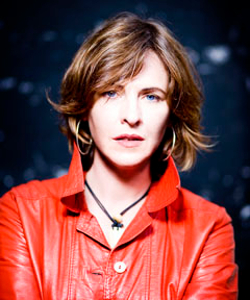
Eleanor McEvoy, one of Ireland’s most accomplished contemporary singer/songwriters, is born in Dublin on January 22, 1967. McEvoy composes the song “Only A Woman’s Heart,” the title track of A Woman’s Heart, the best-selling Irish album in Irish history.

McEvoy’s life as a musician begins at the age of four when she begins playing piano. At the age of eight she takes up violin and, as a teen, she joins the Junior Irish Youth Orchestra. Upon finishing school, she attends Trinity College, Dublin where she studies music by day and works in pit orchestras and music clubs by night.

McEvoy graduates from Trinity with an Honors Degree in music and spends four months busking in New York City. In 1988, she is accepted into the RTÉ National Symphony Orchestra where she spends four years before leaving to concentrate on songwriting.

During a solo date in July 1992, she performs a little-known, self-penned song, “Only a Woman’s Heart.” Mary Black, of whose band McEvoy is a member, is in the audience and invites her to add the track to an album of Irish female artists. The album is subsequently titled A Woman’s Heart and the track is released as the lead single. The album goes on to sell over three-quarters of a million copies in Ireland alone and remains the biggest selling Irish album of all time. The record’s success makes McEvoy a superstar virtually overnight.

Eleanor McEvoy, the self-titled debut offering, recorded in Windmill Lane Studios, is released in February 1993, and tours in the United States, Asia, and Europe follow. Back on Irish soil, McEvoy is awarded Best New Artist, Best New Performer, and Best Songwriter Awards by the Irish entertainment and music industries.

McEvoy signs a contract with Columbia Records and begins working on a new, edgier second album, which is eventually entitled What’s Following Me? The album is released in 1996 and the sound is louder and grungier than her debut.

McEvoy releases her third album Snapshots in 1999. Her primary goal is to make Snapshots her most song-oriented album to date. Toward that goal, she hooks up with legendary producer Rupert Hine, who has worked with Stevie Nicks, Tina Turner, Suzanne Vega, and Duncan Sheik, and records the album at Rupert’s “Chateau de la Tour de Moulin” and then in Metropolis Studios in London.

As the century closes, McEvoy has had enough of major-label involvement, making the decision to take the fourth album and head down the independent road. Yola was a turning point in McEvoy’s musical direction. Released in 2001, it reflects the acoustic, jazz-influenced style she had developed on stage with Brian Connor.

March 2004 sees the release of Early Hours, produced by McEvoy and Brian Connor. The style differs from McEvoy’s previous work, taking on a jazz/blues feel for many of the songs. She continues to tour with Brian Connor until April 2005. She then begins performing solo, accompanying herself on bass guitar, electric guitar, mandolin, and violin.

McEvoy continues to release new albums almost on a yearly basis with Out There (2006), Love Must Be Tough (2008), Singled Out (2009), I’d Rather Go Blonde (2010), Alone (2011), If You Leave… (2013), and Stuff (2014).

Naked Music (2016) is McEvoy’s twelfth studio album. It is recorded at the Grange Studio in Norfolk, UK. McEvoy records the tracks by “studio-performing,” in other words, playing the songs as she would in a live performance. The album features exclusive artwork by famed painter Chris Gollon.


Leave a comment

Death of Irish Painter Sir John Lavery

john-lavery

Sir John Lavery, Irish painter best known for his portraits and wartime depictions, dies of natural causes at the age of 84 in Kilmoganny, County Kilkenny, on January 10, 1941.

Born in Belfast on March 20, 1856, Lavery attends Haldane Academy in Glasgow in the 1870s and the Académie Julian in Paris in the early 1880s. He returns to Glasgow and is associated with the Glasgow School. In 1888 he is commissioned to paint the state visit of Queen Victoria to the Glasgow International Exhibition of Science, Art and Industry. This launches his career as a society painter, and he moves to London soon thereafter. In London he becomes friends with James McNeill Whistler and is clearly influenced by him.

Like William Orpen, Lavery is appointed an official artist in World War I. Ill-health, however, prevents him from travelling to the Western Front. A serious car crash during a Zeppelin bombing raid also keeps him from fulfilling this role as war artist. He remains in Britain and mostly paints boats, aeroplanes, and airships. During the war years he is a close friend of H.H. Asquith‘s family and spends time with them at their Sutton Courtenay Thames-side residence, painting their portraits and idyllic pictures like Summer on the River (Hugh Lane Gallery).

After the war Lavery is knighted and in 1921 he is elected to the Royal Academy of Arts.

michael-collins-love-of-ireland

During this time, he and his wife, Hazel, are tangentially involved in the Irish War of Independence and the Irish Civil War. They give the use of their London home to the Irish negotiators during the negotiations leading to the Anglo-Irish Treaty. After Michael Collins is assassinated, Lavery paints Michael Collins, Love of Ireland, now in the Hugh Lane Gallery. In 1929, Lavery makes substantial donations of his work to both the Ulster Museum and the Hugh Lane Gallery and in the 1930s he returns to Ireland. He receives honorary degrees from the University of Dublin and Queen’s University Belfast. He is also made a free man of both Dublin and Belfast. A long-standing member of Glasgow Art Club, Lavery exhibits at the club’s annual exhibitions, including its exhibition in 1939 in which his The Lake at Ranelagh is included.

Sir John Lavery dies in Rossenarra House, Kilmoganny, County Kilkenny on January 10, 1941, and is interred in Putney Vale Cemetery.


Leave a comment

Dáil Éireann Approves the Anglo-Irish Treaty

second-all-ireland-dail

Dáil Éireann votes to approve the Anglo-Irish Treaty on January 7, 1922, following a debate through late December 1921 and into January 1922. The vote is 64 in favour, 57 against, with the Ceann Comhairle and three others not voting. The Sinn Féin party splits into opposing sides in the aftermath of the Treaty vote, which leads to the Irish Civil War from June 1922 until May 1923. The treaty is signed in London on December 6, 1921.

Two elections take place in Ireland in 1921, as a result of the Government of Ireland Act 1920 to establish the House of Commons of Northern Ireland and the House of Commons of Southern Ireland. The election is used by the Irish Republic as the basis of membership of the Second Dáil. The general election to the Northern Ireland House of Commons occurs on May 24, 1921. Of 52 seats, forty are won by unionists, six by moderate Irish nationalists, and six by Sinn Féin. No actual polling takes place in the Southern Ireland constituencies, as all 128 candidates are returned unopposed. Given the backdrop of the increasingly violent War of Independence, any candidates opposed to Sinn Féin, and their supporters can expect to be harassed by the Irish Republican Army (IRA). Supporters of the Irish Labour Party stand aside to allow the constitutional situation to run its course. Of these 128, 124 are won by Sinn Féin, and four by independent unionists representing the University of Dublin constituency. Only the Sinn Féin candidates recognise the Second Dáil and five of these have been elected in two constituencies, one in each part of Ireland, so the total number of members who assemble in the Second Dáil is 125.

During the Second Dáil, the government of the Irish Republic and the British government of David Lloyd George agree to hold peace negotiations. On September 14, 1921, the Dáil ratifies the appointment of Arthur Griffith, Michael Collins, Robert Barton, Eamonn Duggan, and George Gavan Duffy as envoys plenipotentiary for the peace conference in England. These envoys eventually sign the Anglo-Irish Treaty on December 6. After almost a month of acrimonious debate the treaty is formally ratified by Dáil Éireann on January 7, 1922.

To satisfy the requirements of the British constitution, the treaty also has to be ratified by the House of Commons of Southern Ireland. Thus, Irish nationalists end their boycott of the home rule parliament to attend the southern House of Commons as MPs. This they do alongside the four Unionist MPs who had refused to recognise the Dáil. In this way the treaty is ratified a second time in Dublin, this time unanimously as the anti-Treaty TDs refuse to attend.

Under the terms of the Anglo-Irish Treaty a provisional parliament, considered by nationalists to be the Third Dáil, is elected in the 1922 general election on June 16. Collins and Éamon de Valera agree a pact between the pro- and anti-Treaty wings of Sinn Féin, and this pact and the elections are endorsed by the Second Dáil. The new assembly is recognised both by nationalists and the British Government and so replaces both the Parliament of Southern Ireland and the Second Dáil with a single body. The anti-Treaty groups of IRA members, TDs, and their supporters are still bitterly opposed the settlement, despite the election result, and this leads to the Irish Civil War.

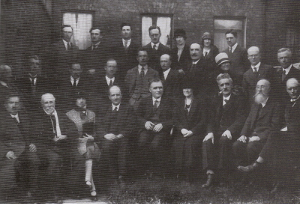
(Pictured: Second All-Ireland Dáil Éireann, elected in 1921)


Leave a comment

Death of Dan Breen, Irish Patriot & Politician

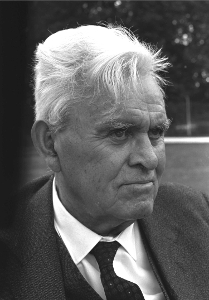
Irish republican Dan Breen (1967)

Daniel “Dan” Breen, volunteer in the Irish Republican Army during the Irish War of Independence and the Irish Civil War, dies in Dublin on December 27, 1969. In later years, he was a Fianna Fáil politician.

Breen is born in Grange, Donohill parish, County Tipperary, on August 11, 1894. His father dies when he is six, leaving the family very poor. He is educated locally before becoming a plasterer and later a linesman on the Great Southern Railways.

Breen is sworn into the Irish Republican Brotherhood in 1912 and the Irish Volunteers in 1914. On January 21, 1919, the day the First Dáil meets in Dublin, Breen takes part in the Soloheadbeg Ambush. The ambush party of eight men, led by Seán Treacy, attacks two Royal Irish Constabulary (RIC) men who are escorting explosives to a quarry. The two policemen, James McDonnell and Patrick O’Connell, are fatally shot during the incident. The ambush is considered to be the first incident of the Irish War of Independence.

During the conflict, the British put a £1,000 price on Breen’s head, which is later increased to £10,000. He quickly establishes himself as a leader within the Irish Republican Army (IRA). He is known for his courage. On May 13, 1919 he helps rescue his comrade Seán Hogan at gunpoint from a heavily guarded train at Knocklong station in County Limerick. Breen, who is wounded, remembers how the battalion is “vehemently denounced as a cold-blooded assassins” and roundly condemned by the Catholic Church. After the fight, Treacy, Séamus Robinson, and Breen meet Michael Collins in Dublin, where they are told to make themselves scarce although they do not necessarily agree.

Breen and Sean Treacy shoot their way out through a British military cordon in the northern suburb of Drumcondra (Fernside). They escape, only for Treacy to be killed the next day. Breen is shot at least four times, twice in the lung.

The British reaction is to make Tipperary a “Special Military Area,” with curfews and travel permits. Volunteer GHQ authorises entrerprising attacks on barracks. The British policy forces Breen and Treacy to retreat to Dublin. They join Michael Collins’ Squad of assassins, later known as the Dublin Guard, and Dublin becomes the centre of the war.

Breen is present in December 1919 at the ambush in Ashtown beside Phoenix Park in Dublin where Martin Savage is killed while trying to assassinate the Lord Lieutenant of Ireland, Viscount John French. The IRA hides behind hedges and a dungheap as the convoy of vehicles drives past. They have been instructed to ignore the first car but this contains their target, Lord French. Their roadblock fails as a policeman removes the horse and cart intended to stop the car.

Breen utterly rejects the Anglo-Irish Treaty, which makes him, like many others, angry and embittered. In the June 1922 elections Breen is nominated as a candidate by both the pro- and anti-Treaty sides, but is not elected.

Breen is elected to Dáil Éireann at the 1923 general election as a Republican anti-Treaty Teachta Dála (TD) for the Tipperary constituency. Following the Anglo-Irish Treaty, Breen joins the Anti-Treaty IRA in the civil war, fighting against those of his former comrades in arms who support the Treaty. He is arrested by the National Army of the Irish Free State and interned at Limerick Prison. He spends two months there before going on hunger strike for six days followed by a thirst strike of six days, prompting his release.

Breen writes a best-selling account of his guerrilla days, My Fight for Irish Freedom, in 1924. He represents Tipperary from the Fourth Dáil in 1923 as a Republican with Éamon de Valera and Frank Aiken. He is defeated in the June 1927 general election and travels to the United States where he opens a prohibition speakeasy. In 1932 he returns to Ireland and regains his seat as a member of Fianna Fáil in the Dáil at that year’s general election. During World War II he is said to hold largely pro-Axis views. He represents his Tipperary constituency without a break until his retirement at the 1965 election.

Breen dies in Dublin on December 27, 1969 and is buried in Donohill, near his birthplace. His funeral is the largest seen in west Tipperary since that of his close friend and comrade-in-arms Seán Treacy at Kilfeacle in October 1920. An estimated attendance of 10,000 mourners assemble in the tiny hamlet, giving ample testimony to the esteem in which he was held.

Breen is the subject of a 2007 biography Dan Breen and the IRA by Joe Ambrose.


Leave a comment

Death of IRA Chief of Staff Cathal Goulding

cathal-goulding

Cathal Goulding, former Chief of Staff of the Irish Republican Army and the Official IRA, dies in Dublin on December 26, 1998.

Goulding is born on January 2, 1923, one of seven children born on East Arran Street, north Dublin to an Irish republican family. As a teenager Goulding joins Fianna Éireann, the youth wing of the Irish Republican Army (IRA). He joins the IRA in 1939. In December of that year, he takes part in a raid on Irish Army ammunition stores in Phoenix Park, Dublin. In November 1941 he is gaoled for a year in Mountjoy Prison for membership in an unlawful organisation and possession of IRA documents. Upon his release in 1942, he is immediately interned at the Curragh Camp, where he remains until 1944.

In 1945, he is involved in the attempts to re-establish the IRA which has been badly affected by the authorities in both the Irish Free State and Northern Ireland. He is among twenty-five to thirty men who meet at O’Neill’s Pub, Pearse Street, to try to re-establish the IRA in Dublin. He organises the first national meeting of IRA activists after the World War II in Dublin in 1946 and is arrested along with John Joe McGirl and ten others and sentenced to twelve months in prison when the gathering is raided by the Garda Síochána.

Upon his release in 1947, Goulding organises IRA training camps in the Wicklow Mountains and takes charge of the IRA’s Dublin Brigade in 1951. In 1953, Goulding, along with Seán Mac Stíofáin and Manus Canning, is involved in an arms raid on the Officers Training Corps armoury at Felsted School, Essex. The three are arrested and sentenced to eight years’ imprisonment, but are released in 1959 after serving only six years at Pentonville, Wakefield, and Stafford prisons. During his time in Wakefield prison, he befriends EOKA members and Klaus Fuchs, a German-born spy who has passed information about the U.S. nuclear programme to the Soviet Union, and becomes interested in the Russian Revolution.

In 1959, Goulding is appointed IRA Quartermaster General and in 1962 he succeeds Ruairí Ó Brádaigh as IRA Chief of Staff. In February 1966, together with Sean Garland, he is arrested for possession of a revolver and ammunition. In total, Goulding spends sixteen years of his life in British and Irish jails.

Goulding is instrumental in moving the IRA to the left in the 1960s. He argues against the policy of abstentionism and develops a Marxist analysis of Irish politics. He believes the British state deliberately divides the Irish working class on sectarian grounds to exploit them and keep them from uniting and overthrowing their bourgeois oppressors. This analysis is rejected by those who later go on to form the Provisional IRA after the 1969 IRA split.

Goulding remains chief of staff of what becomes known as the Official IRA until 1972. Although the Official IRA, like the Provisional IRA, carries out an armed campaign, Goulding argues that such action ultimately divides the Irish working class. After public revulsion regarding the shooting death of William Best, a Catholic from Derry who is also a British soldier, and the bombing of the Aldershot barracks, the Official IRA announces a ceasefire in 1972.

Goulding is prominent in the various stages of Official Sinn Féin‘s development into the Workers’ Party. He is also involved in the anti-amendment campaign in opposition to the introduction of a constitutional ban on abortion along with his partner, Dr. Moira Woods. However, in 1992, he objects to the political reforms proposed by party leader Proinsias De Rossa and remains in the Workers’ Party after the formation of Democratic Left. He regards the Democratic Left as having compromised socialism in the pursuit of political office.

In his later years, Goulding spends much of his time at his cottage in Raheenleigh near Myshall, County Carlow. He dies of cancer in his native Dublin and is survived by three sons and a daughter. He is cremated and his ashes scattered, at his directive, at the site known as “the Nine Stones” on the slopes of Mount Leinster.


Leave a comment

Birth of Shane MacGowan, Lead Singer of The Pogues

shane-macgowan

Shane Patrick Lysaght MacGowan, Anglo-Irish musician and singer, best known as the lead singer and songwriter of Celtic trad punk band The Pogues, is born to Irish parents in Pembury, Kent, England, on December 25, 1957.

MacGowan spends his early childhood in County Tipperary, before his family moves back to England when he is six years old. He lives in many parts of the southeast of England, including Brighton and London.

MacGowan’s father, Maurice, works for a department store. MacGowan’s mother, Therese, is a singer and traditional Irish dancer, and has worked as a model in Dublin. In 1971, after attending Holmewood House School at Langton Green, Tunbridge Wells, MacGowan earns a literature scholarship and is accepted into Westminster School. He is found in possession of drugs and is expelled in his second year.

MacGowan gets his first taste of fame in 1976 at a concert by British punk band The Clash, when his earlobe is damaged by Jane Crockford, later to be a member of Mo-dettes. A photographer snaps a picture of him covered in blood and it makes the papers, with the headline “Cannibalism at Clash Gig.” Shortly after this, he forms his own punk rock band, The Nipple Erectors, later renamed The Nips.

MacGowan draws upon his Irish heritage when founding The Pogues and changes his early “punk” voice for a more authentic sound with tutoring from his extended family. Many of his songs are influenced by Irish nationalism, Irish history, the experiences of the Irish in London and the United States, and London life in general.

Between 1985 and 1987, he co-writes “Fairytale of New York,” which he performs with Kirsty MacColl. In the coming years MacGowan and The Pogues release several albums.

After The Pogues throw MacGowan out for unprofessional behaviour, he forms a new band, Shane MacGowan & The Popes, recording two studio albums, a live album, three tracks on The Popes Outlaw Heaven (2010) and a live DVD, and touring internationally. From December 2003 until May 2005, Shane MacGowan & The Popes tour extensively in the UK, Ireland, and Europe.

The Pogues and MacGowan reform for a sell-out tour in 2001 and each year from 2004 to 2009 for further tours, including headline slots at GuilFest in England and the Azkena Rock Festival in Basque Country. In May 2005, he rejoins The Pogues permanently.

The Pogues’ last performance on British soil occurs on July 5, 2014 at the British Summer Time festival in London’s Hyde Park.

For many years MacGowan suffers from binge drinking and heroin use. In 2001, Sinéad O’Connor reports MacGowan to the police in London for drug possession in what she says is an attempt to discourage him from using heroin. Initially furious, MacGowan later expresses gratitude towards O’Connor and claims that the incident helped him kick his heroin habit.

MacGowan has long been known for having very bad teeth. He loses the last of his natural teeth around 2008. In 2015, he has 28 new dentures on a titanium frame fitted in a nine-hour procedure which is the subject of an hour-long television programme. Dr. Darragh Mulrooney, the dental surgeon who carries out the procedure, comments that MacGowan recorded most of his great works while he still had some teeth: “We’ve effectively re-tuned his instrument and that will be an ongoing process.”

In the summer of 2015, MacGowan falls as he is leaving a Dublin studio, fracturing his pelvis. He is seen in public on crutches by December 2015, and continues to experience difficulty with general mobility.