seamus dubhghaill

Promoting Irish Culture and History from Little Rock, Arkansas, USA


Leave a comment

Eighth Amendment of the Constitution of Ireland Approved

eighth-amendment

The Eighth Amendment of the Constitution of Ireland, which introduces a constitutional ban on abortion by recognizing a right to life of an unborn child, is approved by referendum on September 7, 1983, and signed into law on October 7 of the same year. It is often referred to as the Irish Pro-Life Amendment.

The amendment is adopted during the Fine Gael–Labour Party coalition government led by Garret FitzGerald but is drafted and first suggested by the previous Fianna Fáil government of Charles Haughey. The amendment is supported by Fianna Fáil and some of Fine Gael and is generally opposed by the political left. Most of those opposed to the amendment, however, insist that they are not in favour of legalising abortion. The Roman Catholic hierarchy supports the amendment, but it is opposed by the other mainstream churches. After an acrimonious referendum campaign, the amendment is passed by 67% voting in favour to 33% voting against.

Under sections 58 and 59 of the Offences against the Person Act 1861, abortion is already illegal in Ireland. However, anti-abortion campaigners fear the possibility of a judicial ruling in favour of allowing abortion. In McGee v. Attorney General (1973), the Supreme Court of Ireland had ruled against provisions of the Criminal Law Amendment Act 1935 prohibiting the sale and importation of contraception on the grounds that the reference in Article 41 to the “imprescriptable rights, antecedent and superior to all positive law” of the family conferred upon spouses a broad right to privacy in marital affairs. In the same year, the Supreme Court of the United States ruled on similar grounds in Roe v. Wade to find a right to an abortion grounded on privacy.

The Pro-Life Amendment Campaign (PLAC) is founded in 1981 to campaign against a ruling in in Ireland similar to Roe. Prior to the 1981 general election, PLAC lobbies the major Irish political parties – Fianna Fáil, Fine Gael, and the Labour Party – to urge the introduction of a Bill to allow the amendment to the constitution to prevent the Irish Supreme Court so interpreting the constitution as giving a right to abortion. The leaders of the three parties – respectively Charles Haughey, Garret FitzGerald, and Frank Cluskey – agree although there is little consultation with any of their parties’ ordinary members. All three parties are in government over the following eighteen months, but it is only in late 1982, just before the collapse of a Fianna Fáil minority government, that a proposed wording for the amendment is produced.

The referendum is supported by PLAC, Fianna Fáil, some members of Fine Gael, and the Roman Catholic hierarchy and opposed by various groups under the umbrella name of the Anti-Amendment Campaign (AAC), including Labour senator, and future President of Ireland, Mary Robinson, feminist campaigners, and trade unions.

There is currently a campaign for repeal of the Eighth Amendment in Ireland. This is led by both a coalition of human rights and pro-choice groups and has widespread support from a number of legal academics and members of the medical profession. In the run up to the 2016 general election, a number of parties commit to a referendum to repeal the Eighth Amendment and a group of feminist law academics publish model legislation to show what a post-Eighth Amendment abortion law could look like. In June 2016, Minister for Health Simon Harris states his support for a referendum on repealing the 8th.

On July 27, 2016, the government appoints Supreme Court judge Mary Laffoy as chair of a Citizens’ Assembly to consider a number of topics, including the Eighth Amendment.

Leave a comment

The Great Dublin Lockout

great-dublin-lockout

The Great Dublin Lockout, a major industrial dispute between approximately 20,000 workers and 300 employers, begins in Dublin on August 26, 1913, and lasts until January 18, 1914. It is often viewed as the most severe and significant industrial dispute in Irish history.

Irish workers live in terrible conditions in tenements. The infant mortality rate among the poor is 142 per 1,000 births, extraordinarily high for a European city. Poverty is perpetuated in Dublin by the lack of work for unskilled workers, who lack any form of representation before trade unions are founded.

James Larkin, the main protagonist on the side of the workers in the dispute, is a docker in Liverpool and a union organiser. In 1907 he is sent to Belfast as local organiser of the British-based National Union of Dock Labourers (NUDL). His tactic of the sympathetic strike is deemed highly controversial and as a result Larkin is transferred to Dublin.

Larkin sets about organising the unskilled workers of Dublin, which is a cause of concern for the NUDL, who are reluctant to engage in a full-scale industrial dispute with the powerful Dublin employers. They suspended Larkin from the NUDL in 1908. Larkin then leaves the NUDL and sets up the Irish Transport and General Workers’ Union (ITGWU), the first Irish trade union to cater for both skilled and unskilled workers.

Another important figure in the rise of an organised workers’ movement in Ireland at this time is James Connolly, an Edinburgh-born Marxist of Irish parentage. In 1911, Connolly is appointed the ITGWU’s Belfast organiser. In 1912, Connolly and Larkin form the Irish Labour Party to represent workers in the imminent Home Rule Bill debate in Parliament.

Foremost among employers opposed to trade unionism in Ireland is William Martin Murphy, Ireland’s most prominent capitalist, born in Castletownbere, County Cork. In 1913, Murphy is chairman of the Dublin United Tramway Company and owns Clery’s department store. Murphy is vehemently opposed to trade unions, which he sees as an attempt to interfere with his business. In particular, he is opposed to Larkin, whom he sees as a dangerous revolutionary.

The resulting industrial dispute is the most severe in Ireland’s history. Employers in Dublin lock out their workers and employ blackleg labour from Britain and elsewhere in Ireland. Dublin’s workers apply for help and are sent £150,000 by the British Trades Union Congress (TUC) and other sources in Ireland, doled out dutifully by the ITGWU.

The “Kiddies’ Scheme,” allowing for the starving children of Irish strikers to be temporarily looked after by British trade unionists, is blocked by the Roman Catholic Church and especially the Ancient Order of Hibernians, who claim that Catholic children will be subject to Protestant or atheist influences when in Britain. The Church supports the employers during the dispute, condemning Larkin as a socialist revolutionary.

Guinness, the largest employer and biggest exporter in Dublin, refuses to lock out its workforce. It has a policy against sympathetic strikes and expects its workers, whose conditions are far better than the norm in Ireland, not to strike in sympathy. Six who do strike are dismissed.

Strikers use mass pickets and intimidation against strike breakers, who are also violent towards strikers. The Dublin Metropolitan Police baton charge worker’s rallies, including a rally on Sackville Street which results in two deaths and over 300 injuries. James Connolly, Larkin, and ex-British Army Captain Jack White form a worker’s militia, the Irish Citizen Army, to protect workers’ demonstrations.

For seven months, the lockout affects tens of thousands of Dublin families. The lock-out eventually concludes in January 1914, when the Trades Union Congress (TUC) in Britain rejects Larkin and Connolly’s request for a sympathetic strike. Most workers, many of whom are on the brink of starvation, go back to work and sign pledges not to join a union. The ITGWU is badly damaged by its defeat in the Lockout and is further hit by the departure of Larkin to the United States in 1914 and the execution of Connolly, one of the leaders of the Easter Rising in 1916.

Although the actions of the ITGWU are unsuccessful in achieving substantially better pay and conditions for workers, they mark a watershed in Irish labour history. The principle of union action and workers’ solidarity has been firmly established. No future employer would ever try to “break” a union in the way that Murphy attempted with the ITGWU.


Leave a comment

Nelson Mandela Awarded the Freedom of the City of Dublin

nelson-mandela-freedom-of-dublin

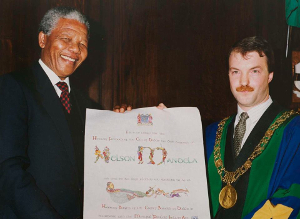
Nelson Rolihlahla Mandela, the first president of South Africa to be elected in a fully representative democratic election, is awarded the Freedom of the City of Dublin on his 70th birthday, July 18, 1988. Mandela is not available to receive his award on the date it is conferred, however, as he is a prisoner in South Africa at the time. On July 1, 1990, after his release from prison, Mandela  finally receives the Freedom of the City of Dublin at a ceremony in the Mansion House Dublin.

The Freedom of the City of Dublin is awarded by Dublin City Council after approving a person nominated by the Lord Mayor of Dublin. Eighty people have been honoured under the current process introduced in 1876. Most honourees have made a contribution to the life of the city or of Ireland in general, including politicians, public servants, humanitarians, artists, and entertainers. Others have been distinguished members of the Irish diaspora and foreign leaders, honoured visiting Dublin. Honourees sign the roll of freedmen in a ceremony at City Hall or the Mansion House and are presented with an illuminated scroll by the Lord Mayor.

Mandela is honoured with the Freedom of Dublin city for his contribution to society and commitment to the study and promotion of Human Rights and also his work in the area of development and social inclusion, which has enhanced the lives of local communities in Ireland and fostered global links with institutions and organisations.

Among the notable recipients of this award are American presidents John F. Kennedy and Bill Clinton, Mikhail Gorbachev, Éamon de Valera, Mother Teresa, Pope John Paul II, Aung San Suu Kyi, all four members of U2, Bob Geldof, and Ronnie Delaney.

Holders of this award have some ancient privileges and duties such as the right to bring goods into Dublin through the city gates without paying customs duties, the right to pasture sheep on common ground within the city boundaries including College Green and St. Stephen’s Green (this right is exercised as a publicity stunt by U2 members the day after their 2000 conferring), and the right to vote in municipal and parliamentary elections. Some of the ancient duties are that freemen/women must be ready to defend the city of Dublin from attack and, at short notice, can be called up to join a city militia. Also a law which was passed in 1454 states that freemen/women must own a bow, a coat of mail, a helmet, and a sword.


Leave a comment

Birth of Sister Stanislaus Kennedy

stanislaus-kennedy

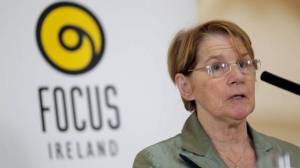
Sister Stanislaus Kennedy, campaigner against poverty and homelessness and a member of the congregation of Religious Sisters of Charity since 1958, is born in Dingle, County Kerry, on June 19, 1939. She is affectionately known as Sr. Stan.

At the age of 18, Sr. Stan, then Treasa Kennedy, decides to become a nun. Following in the footsteps of Mary Aikenhead, founder of the Religious Sisters of Charity, she too is drawn to work on behalf of the poor in the towns and cities of Ireland. For over fifty years she has pioneered, campaigned, explored, and developed a range of inspiring social innovations to benefit thousands of people who have experienced exclusion in its many forms.

In the 1960s, Sr. Stan is missioned to Kilkenny to work alongside Bishop Peter Birch in developing Kilkenny Social Services. For nineteen years Peter Birch is both guide and mentor to Sr. Stan as the Kilkenny social services develop into an innovative, comprehensive model of community care becoming a blue-print for the rest of Ireland.

In 1974, the Irish Government appoints Sr. Stan as the first chair of The National Committee on Pilot Schemes to Combat Poverty, and in 1985 the European Commission appoints her as trans-national coordinator in the European rural anti poverty programme working across Europe.

Moving to Dublin in the early 1980s, Sr. Stan tackles one of Ireland’s most neglected social inequalities – homelessness. In 1985, she establishes Focus Point which is now Focus Ireland, the biggest national, voluntary organisation helping people to find, create, and maintain a home.

Sr. Stan founds The Sanctuary in 1998, a meditation/spirituality centre in the heart of Dublin, a place where people can find a quiet space and time for themselves to explore and develop their inner world and wisdom and find stillness.

Sr. Stan establishes two other initiatives in 2001, the Immigrant Council of Ireland (ICI), an independent national organisation working to promote the rights of immigrants through information, advocacy, and legal aid and the Young Social Innovators (YSI), a national showcase providing an opportunity for students to become involved in social issues.

Sr. Stan has also written thousands of articles that have been published in Ireland and elsewhere. She lectures on social issues and policies, is a frequent keynote speaker at many events, and regularly gives talks to many diverse groups in Ireland, Europe, and outside of Europe.


Leave a comment

Birth of Activist & Feminist Hanna Sheehy-Skeffington

hanna-sheehy-skeffington

Johanna Mary “Hanna” Sheehy-Skeffington, Republican activist and feminist, is born in Kanturk, County Cork, on May 24, 1877.

Sheehy is the eldest daughter of Elizabeth McCoy and David Sheehy, an ex-Fenian and Member of Parliament (MP) for the Irish Parliamentary Party, representing South Galway. One of her uncles, Father Eugene Sheehy, is known as the Land League Priest, and his activities land him in prison. He is also one of Éamon de Valera‘s teachers in Limerick. When Hanna’s father becomes an MP in 1887, the family moves to Drumcondra, Dublin.

Sheehy is educated at the Dominican Convent on Eccles Street, where she is a prize-winning pupil. She then enrolls at St. Mary’s University College, a third level college for women established by the Dominicans in 1893, to study modern French and German. She sits for examinations at Royal University of Ireland and receives a Bachelor of Arts degree in 1899, and a Master of Arts Degree with first-class honours in 1902. This leads to a career as a teacher in Eccles Street and an examiner in the Intermediate Certificate examination.

Sheehy marries Francis Skeffington in 1903, and they both take the surname Sheehy Skeffington, which they do not hyphenate but use as a double name. In 1908, they found the Irish Women’s Franchise League, a group aiming for women’s voting rights.

Sheehy-Skeffington gets into numerous scuffles with the law. She is jailed in 1912 for breaking windows of government buildings in support of suffrage as part of an IWFL campaign. That same year she also throws a hatchet at visiting British Prime Minister Herbert Asquith. She loses her teaching job in 1913 when she is arrested and imprisoned for three months after throwing stones at Dublin Castle and assaulting a police officer in a feminist action. While in jail she goes on hunger strike and is released under the Prisoner’s Temporary Discharge of Ill Health Act but is soon rearrested.

Being free from her teaching job enables Sheehy-Skeffington to devote more time to the fight for suffrage. She is influenced by James Connolly and during the 1913 lock-out works with other suffragists in Liberty Hall, providing food for the families of the strikers.

She strongly opposes participation in World War I which breaks out in August 1914 and is prevented by the British government from attending the International Congress of Women held in The Hague in April 1915. The following June her husband is imprisoned for anti-recruiting activities. He is later shot dead during the 1916 Easter Rising after having been arrested by British soldiers.

Sheehy-Skeffington refuses compensation for her husband’s death, which is offered on condition of her ceasing to speak and write about the murder. Rather, she travels to the United States to publicise the political situation in Ireland. In October 1917, she is the sole Irish representative to League for Small and Subject Nationalities where, along with several other contributors, she is accused of pro-German sympathies. She publishes British Militarism as I Have Known It, which is banned in the United Kingdom until after the World War I. Upon her return to Britain she is once again imprisoned, this time in Holloway prison. After release, Sheehy-Skeffington attends the 1918 Irish Race Convention in New York City and later supports the anti-Treaty Irish Republican Army (IRA) during the Irish Civil War.

In 1926, Sheehy-Skeffington becomes a founding member of Fianna Fáil and is elected to the party’s Ard Comhairle. During the 1930s, she is assistant editor of An Phoblacht. In January 1933, she is arrested in Newry for breaching an exclusion order banning her from Northern Ireland. At her trial she says, “I recognize no partition. I recognize it as no crime to be in my own country. I would be ashamed of my own name and my murdered husband’s name if I did…Long live the Republic!” She is sentenced to a month’s imprisonment.

Sheehy-Skeffington is a founding member of the Irish Women Workers’ Union and an author whose works deeply oppose British imperialism in Ireland. Her son, Owen Sheehy-Skeffington, becomes a politician and Irish Senator.

Hanna Sheehy-Skeffington dies in Dublin on April 20, 1946, at the age of 68 and is buried with her husband in Glasnevin Cemetery, Dublin.