Lynch is born in Dublin on March 25, 1859. Her father, who is a committed, non-violent Fenian, dies when she is young. Her mother, Anna Theresa Calderwood, is married twice. She grows up in a very female house with her mother and ten sisters and half-sisters. Her stepfather is James Cantwell, also a Fenian, who runs the Star and Garter Hotel. After finishing school, she works as a sub-editor for a provincial paper and as a governess in Europe.
A nationalist like her father and stepfather, Lynch is an executive member of the Ladies’ Land League and as a result closely associates with Fanny Parnell. She writes extensively, producing short stories and satirical sketches, as well as Land War fiction, travel writing, translations and literary criticism. Her satirical pieces include “A Dublin Literary Coterie Sketched by a Non-Pretentious Observer” (1888) and “My Friend Arcanieva” (1895). She publishes William O’Brien‘s paper United Ireland from France, after it is suppressed in Ireland. She disagrees with William Butler Yeats on the literary merit of Emily Lawless, calling her work “highly polished literary stories.”
Lynch also writes fiction on the subject of political and cultural affairs in Ireland, sometimes meeting controversy. Her first novel, Through Troubled Waters (1885), is a fictionalised version of a real-life incident in Galway in which the daughters of a prosperous landowning family are murdered to make way for the sons to inherit the land. The novel also depicts the rural clergy as complicit, by denouncing the victims from the pulpit. The newspaper United Ireland strongly criticises the novel, claiming it peddles in anti-Irish stereotypes for a British audience. She responds by stating that she had intended the book for an Irish publisher and audience, and that she should not be asked “to prove my patriotism at the expense of truth.”
Lynch publishes across Ireland, the United Kingdom and from Paris. By 1896, she has settled in Paris, having also lived in both Spain and Greece. She speaks Greek and French. She then returns to lecture in Ireland and is a part of the salons of Paris in the Belle Époque as well as the Irish Literary Revival in Dublin. She is friends with the historian, biographer and literary critic Arvède Barine (pseudonym of Louise-Cécile Vincens), the writers Mabel and Mary Robinson, and the medievalist Gaston Paris. Her work however does not bring significant income, and she is forced to apply to the Royal Literary Fund for help on multiple occasions. Eventually it takes a toll on her health. She spends time in hospital in Margate, England in 1903.
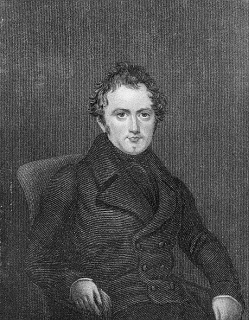
O’Brien is born near Granard, County Longford, in 1804 or 1805. He goes to a local church school, where one of his teachers recognises his intellectual abilities and arranges for him to be educated at the progressive Lovell Edgeworth School. In 1822 he proceeds to Trinity College, Dublin, where he wins several academic prizes including the Science Gold Medal. After studying law at King’s Inns, he moves to England in 1829 with the intention of becoming a lawyer in London.
O’Brien begins contributing articles to Henry Hetherington’s Poor Man’s Guardian. He signs these articles with the pseudonym ‘Bronterre’ and he eventually adopts it as his middle name. He works very closely with Hetherington and when he is imprisoned for publishing an unstamped newspaper, O’Brien takes over the editorship of Poor Man’s Guardian. He and Hetherington also collaborate on other unstamped newspapers such as The Destructive and the London Dispatch. In 1837 he begins publishing Bronterre’s National Reformer. In an attempt to avoid paying stamp duty, the journal includes essays rather than ‘news items.’ During this period, he and Hetherington lead the struggle against the stamp duty and are consistent in their arguments that working people need cheap newspapers that contain political information.
O’Brien is influenced by the socialist writer François-Noël Babeuf, who had been executed during the French Revolution. In 1836 he begins publishing translations of Babeuf’s work in the Poor Man’s Guardian. He also includes Filippo Buonarroti‘s account of Babeuf and the Conspiracy of Equals. He becomes fascinated with the history of radicalism and begins work on books on Maximilien Robespierre, the French Revolution and the English Commonwealth. However, the authorities raid his house in 1838 and seize his manuscripts and the projects are never completed.
In 1838 O’Brien adds his support for a more militant approach to winning the vote that is being advocated by Feargus O’Connor and George Julian Harney through the London Democratic Association. However, he, unlike O’Connor, refuses to support the use of violence to achieve universal suffrage. He argues that the Chartists should adopt a policy that is midway between the petitioning supported by William Lovett and the Moral Force Chartists, and the violence being threatened by O’Connor’s Physical Force group.
After Bronterre’s National Reformer ceases publication, O’Brien works for O’Connor’s Northern Star. His articles play an important role in increasing the circulation of what had become the most important of the radical newspapers. As well as writing for the Northern Star, he also finds time to publish his own newspaper, The Operative.
O’Brien continues to be active in the Chartist movement and in 1840 he is arrested and charged with making a seditious speech in Manchester. He is convicted of sedition and sentenced to eighteen months in Lancaster Prison. When he is released from prison, he finds it difficult to continue working with Feargus O’Connor. The two men disagree over the issue of physical force. Another source of dispute concerns parliamentary elections. O’Brien favours the idea of putting up Chartist candidates whereas O’Connor prefers the tactic of putting pressure on the Whig government by threatening to vote for Tory candidates. He is involved in standing Chartist candidates against Government Ministers in key seats, particularly in standing against Henry John Temple, 3rd Viscount Palmerston in Tiverton.
O’Brien finally breaks with O’Connor when, along with Henry Vincent and Robert George Gammage, he joins the Complete Suffrage Union. He continues to publish newspapers. He joins with his old friend Henry Hetherington to revive the Poor Man’s Guardian in 1843, and this is followed by the National Reformer in 1844. These newspapers are not a financial success and by May 1847, both papers cease publication.
After the failure of these two newspapers, O’Brien concentrates on writing for other publications such as Reynold’s Weekly Newspaper and the Glasgow Sentinel. He also gives public lectures and in 1851 he opens the Eclectic Institute in Denmark Street, Soho, London, where adult education classes are offered in English, French, science and mathematics.
By the 1850s O’Brien’s poverty begins to damage his health. He suffers from bronchitis and his Chartist friends attempt to raise money in recognition of the great sacrifices that he had made in the struggle to win universal suffrage and the freedom of the press. However, the damage to his health is so bad that he spends his last years bedridden. He dies on December 23, 1864, and is buried in Abney Park Cemetery.
Cahir Healy, Irish nationalist politician, is born in Mountcharles, County Donegal, on December 2, 1877. He is a leader of northern Nationalists and is a self educated man who makes major contributions to Ireland’s cultural and literary heritage.
Healy is re-elected in 1923, but remains in custody until the following year, in which he does not defend his seat. Instead, he is elected to represent the seat in the House of Commons of Northern Ireland in the 1925 Northern Ireland general election, but does not take his seat until 1927 due to the Nationalist abstentionist policy. In 1928 he becomes a founder of the National League of the North. In 1929, with the break-up of the large Fermanagh and Tyrone constituency, he switches to sit for the new seat of South Fermanagh. In a 1931 Fermanagh and Tyrone by-election he is again elected for Fermanagh and Tyrone to the British Parliament, but stands down again in 1935.
Healy becomes an insurance official but continues to write, his output including journalism, poetry and short stories. He is interned by the United Kingdom government for a year during World War II under Defence Regulation 18B. In 1950 he is elected to the British House of Commons for a third time, on this occasion representing Fermanagh and South Tyrone. He finally sits in the British Parliament in 1952, and holds the seat until he stands down in 1955. He leaves the Northern Ireland House of Commons in 1965, by which point he is the Father of the House.
Healy dies on February 8, 1970, at the age of 92 at Enniskillen, County Fermanagh.
(Pictured: Portrait of Cahir Healy by Lafayette, half-plate nitrate negative, July 7, 1932, given by Pinewood Studios via Victoria and Albert Museum, 1989, National Portrait Gallery, London)
Pádraic Ó Conaire, Irish writer and journalist whose production is primarily in the Irish language, dies in Dublin on October 6, 1928. In his lifetime he writes 26 books, 473 stories, 237 essays and 6 plays. His acclaimed novel Deoraíocht has been described by Angela Bourke as “the earliest example of modernist fiction in Irish.”
Ó Conaire is born in the Lobster Pot public house on the New Docks in Galway, County Galway, on February 28, 1882. His father is a publican, who owns two premises in the town., and his mother is Kate McDonagh. He is orphaned by the age of eleven. He spends a period living with his uncle in Gairfean, Ros Muc, Connemara. The area is in the Gaeltacht (Irish-speaking area) and Ó Conaire learns to speak Irish fluently.
Ó Conaire emigrates to London in 1899 where he gets a job with the Board of Education and becomes involved in the work of the Gaelic League. A pioneer in the Gaelic revival in the last century, he and Pádraig Pearse are regarded as being the two most important Irish language short story writers during the first decades of the 20th century.
Ó Conaire marries Molly Ní Mhanais, with whom he has four children: Eileen (b. 22 Feb 1905), Patrick (b. 3 Nov 1906), Kathleen (b. 24 Feb 1909), and Mary Josephine (b. 28 Jul 1911), who dies of diphtheria in 1922.
Ó Conaire returns to Ireland in 1914, leaving his family in London. Living mostly in Galway, he earns a meagre living through writing, teaching at Gaeltacht summer schools, and as an occasional organiser for the Gaelic League.
Ó Conaire dies at the age of 46 on October 6, 1928, while on a visit to Dublin, after complaining of internal pains while at the head office of the Gaelic League. His fellow poet Frederick Robert Higgins writes a celebrated Lament for Pádraic Ó Conaire.
Ó Conaire has family still living to this day in England, as well as in Galway and Canada. The Ó Conaire surname is still strong in the Ros Muc area.
Ó Conaire’s short story M’asal Beag Dubh is the inspiration for an Internet-based satire on the football transfer market. The fictitious character Masal Bugduv is created. The name sounds similar to the Gaelic pronunciation of M’asal Beag Dubh. Journalists who did not fact check quite as thoroughly as they should have missed the satire and tell the world of the up-and-coming Moldovan star.
A statue of Ó Conaire’s is unveiled in 1935 by Éamon de Valera in Eyre Square in the heart of Galway City. It is popular with tourists until it is decapitated by four men in 1999. It is repaired at a cost of £50,000 and moved to Galway City Museum in 2004. A bronze replica of the statue is unveiled in Eyre Square in November 2017.
Michael George Mulhall, Irish author, statistician, economist and newspaper editor, is born in Dublin on September 29, 1836. He co-founds the Buenos Aires Standard, which in 1862 becomes the first English-language newspaper to be published daily in South America. He co-authors the first English-language book published in that continent, The Handbook of the River Plate, a work that goes to six editions, is widely consulted by immigrants and is now a historical sourcebook. His Dictionary of Statistics (1883 and later editions) becomes a standard work of reference.
Mulhall is the third son of Thomas Mulhall. He is educated for the priesthood at the Pontifical Irish College, Rome, but not having the vocation emigrates to Argentina to work with his brother Edward Thomas Mulhall, then a large sheep farmer in that country. In 1861 the Mulhall brothers found the Buenos Aires Standard, which in the next year becomes a daily. It is the preferred newspaper of the Anglo-Argentine community and claims to be the only English-language daily newspaper to be published south of the equator. A third brother, Francis Healey Mulhall, also emigrates to Argentina and founds the Southern Cross, a newspaper of the Irish-Argentine community.
By 1864 Mulhall, despite his relative youth, is regarded as a spokesman for the entire British community in the region.
In 1878 (1868 by another source) Mulhall marries Marion McMurrough Murphy, herself an author whose works include Between the Amazon and the Andes (1881) and Explorers in the New World (1909). She cooperates with him closely on his statistical work.
Dillon is born on May 5, 1814, in the town of Ballaghaderreen, on the border of counties Mayo and Roscommon. He is a son of Anne Blake and her husband Luke Dillon (d. 1826), who had been a land agent for his cousin Patrick Dillon, 11th Earl of Roscommon. His niece is Anne Deane, who helps to raise his family after his death.
Dillon is educated at St. Patrick’s College, Maynooth, leaving after only two years there, having decided that he is not meant for the priesthood. He later studies law at Trinity College, Dublin, and in London, before being called to the Irish Bar. It is during his time at Trinity College that he first meets and befriends Thomas Davis.
The young wing of the party, of which they are key members with William Smith O’Brien and Thomas Francis Meagher, come to be known as Young Ireland and advocate the threat of force to achieve repeal of the Act of Union. This is in contrast to the committed pacifism of O’Connell’s “Old Ireland” wing. This posturing eventually leads to the Young Ireland rebellion of 1848 where a countryside devastated by the Great Famine fails to rise up and support the rebels.
According to fellow Irish nationalist, Justin McCarthy, “…it has been said of him that while he strongly discouraged the idea of armed rebellion and had no faith in the possibility of Ireland’s succeeding by any movement of insurrection, yet when Smith O’Brien risked Ireland’s chances in the open field, he cast his lot with his leader and stood by his side in Tipperary.”
After the failure of Young Ireland’s uprising, Dillon flees Ireland, escaping first to France and, eventually, to the United States, where he serves the New York Bar.
Ó Dónaill is the olderst of the six children of Tarlach Ó Dónaill and Éilis Nic Ruairí from Grial, Loughanure. They own a little land and a few cows. His father spends June to November working in Scotland and dies when he is 13 years old. He himself spends summers working in the tunnels in Scotland.
Ó Dónaill receives his education at Scoil Loch an Iúir in Loughanure before gaining a scholarship to St. Eunan’s College in Letterkenny. Another scholarship takes him to University College Dublin to study Irish, English and History. During his time in university Ó Dónaill spends his summers teaching at Coláiste Bhríde in Rann na Feirste, County Donegal.
Ó Dónaill writes the book Bruigheann Féile which is based on stories of pastimes in the Gaeltacht town Loughanure and its surrounding area. His book Na Glúnta Rosannacha is first published in 1952.
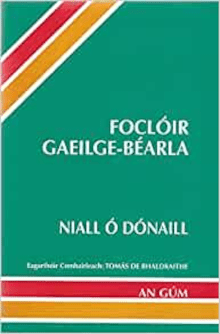
Ó Dónaill is most famous for his work as editor of the 1977 Irish-English dictionary Foclóir Gaeilge-Béarla, which is still widely used today.
From a Unitarian background, Praeger is raised in Holywood and attends the school of the Reverend McAlister and then the nearby Sullivan Upper School.
Praeger works in the National Library of Ireland in Dublin from 1893 to 1923. He co-founds and edits The Irish Naturalist, and writes papers on the flora and other aspects of the natural history of Ireland. He organises the Lambay Survey in 1905-06 and, from 1909 to 1915, the wider Clare Island Survey. He is an engineer by qualification, a librarian by profession and a naturalist by inclination.
Praeger is instrumental in developing advanced methodologies in Irish botany by inviting Knud Jessen, the acclaimed Danish expert in Glacial and Post-Glacial flora, to undertake research and teaching in Ireland. This leads to the establishment of ‘paleoecology‘ as a distinct field of study in Ireland.
A vice-county system is adopted by Praeger dividing Ireland into forty vice-counties based on the counties. However, the boundaries between them does not always correspond to the administrative boundaries and there are doubts as to the correct interpretation of them.
Praeger dies on May 5, 1953 and is buried in Dean’s Grange Cemetery, Dublin, together with his wife Hedwig. His younger sister Rosamond Praeger is a sculptor and botanical artist.
(Pictured: Portrait of Robert Lloyd Praeger by Sarah Cecilia Harrison, National Museums Northern Ireland)
Griffith, a Roman Catholic, is born at 61 Upper Dominick Street, Dublin on March 31, 1871, of distant Welsh lineage. He is educated by the Irish Christian Brothers. He works for a time as a printer before joining the Gaelic League (Conradh na Gaeilge), which is aimed at promoting the restoration of the Irish language.
After a short spell in South Africa, Griffith founds and edits the Irish nationalist newspaper The United Irishman in 1899. In 1904, he writes The Resurrection of Hungary: A Parallel for Ireland, which advocates the withdrawal of Irish members from the Parliament of the United Kingdom and the setting up of the institutions of government at home, a policy that becomes known as Sinn Féin (ourselves). On November 28, 1905, he presents “The Sinn Féin Policy” at the first annual Convention of the National Council. The occasion is marked as the founding date of the Sinn Féin party. Although the organization is still small at the time, Griffith takes over as president of Sinn Féin in 1911.
Griffith is arrested following the Easter Rising of 1916, despite not having taken any part in it. On his release, he works to build up Sinn Féin, which wins a string of by-election victories. At the party’s Ardfheis (annual convention) in October 1917, Sinn Féin becomes an unambiguously republican party, and Griffith resigns the presidency in favour of the 1916 leader Éamon de Valera, becoming vice-president instead. Griffith is elected as a member of parliament (MP) for East Cavan in a by-election in June 1918, and is re-elected in the 1918 Irish general election, when Sinn Féin wins a huge electoral victory over the Irish Parliamentary Party and, refusing to take their seats at Westminster, set up their own constituent assembly, Dáil Éireann.
In the Dáil, Griffith serves as Minister for Home Affairs from 1919 to 1921, and Minister for Foreign Affairs from 1921 to 1922. In September 1921, he is appointed chairman of the Irish delegation to negotiate a treaty with the British government. After months of negotiations, he and the other four delegates sign the Anglo-Irish Treaty, which creates the Irish Free State, but not as a republic. This leads to a split in the Dáil. After the Treaty is narrowly approved by the Dáil, de Valera resigns as president and Griffith is elected in his place. The split leads to the Irish Civil War.
Griffith enters St. Vincent’s Nursing Home, Leeson Street, Dublin, during the first week of August 1922, following an acute attack of tonsillitis. He is confined to his room by his doctors, who had observed signs of what they thought might be a subarachnoid hemorrhage. It is difficult to keep him quiet and he resumes his daily work in the government building. When about to leave for his office shortly before 10:00 AM on August 12, 1922, he pauses to retie his shoelace and falls down unconscious. He regains consciousness but collapses again with blood coming from his mouth. Three doctors render assistance, but to no avail. Father John Lee of the Marist Fathers administers extreme unction, and Griffith expires as the priest recites the concluding prayer. The cause of death, intracerebral hemorrhage, is also reported as being due to heart failure. He dies at the age of 51, ten days before Michael Collins‘s assassination in County Cork and two months after the outbreak of the Irish Civil War. He is buried in Glasnevin Cemetery four days later.
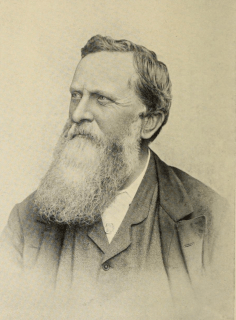
O’Donoghue is born to Irish parents and grows up in the Hans Town area of Chelsea. He is the son of John O’Donoghue, a bricklayer from Kilworth, County Cork, and Bridget Griffin, who is from County Tipperary. He is the third of nine children, and has four brothers, Thomas, John, James, and Edmund, and four sisters, Mary, Ellen, Katherine, and Agnes. He is first an upholsterer‘s apprentice from the age of sixteen before becoming a journalist and author.
O’Donoghue attends a Catholic school and furthers his education at the British Museum. He begins his journalistic work by writing for the Dublin papers upon subjects relating to Irish music, art, and literature. A founder-member of the Irish Literary Society in London, he is also vice president of the National Literary Society, Dublin, and the compiler of a biographical dictionary, The Poets of Ireland (1891–93; revised edition, 1912), with entries on 2,000 authors. His published works also include Irish Poetry of the Nineteenth Century (1894), Humor of Ireland (1894), List of 1300 Irish Artists (1894), The Life and Writings of James Clarence Mangan (1897), Bibliographical Catalogue of Collections of Irish Music (1899), and Geographical Distribution of Irish Ability (1906).
In 1896 O’Donoghue moves to Dublin. In 1909 he becomes librarian of University College Dublin. He is co-editor of Catalogue of the Gilbert Library (in Dublin; 1918). William Butler Yeats writes of him in his Autobiographies of William Butler Yeats (1938).







 seamus dubhghaill