seamus dubhghaill

Promoting Irish Culture and History from Little Rock, Arkansas, USA


Leave a comment

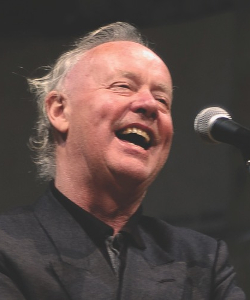
Birth of John Millington Synge, Poetic Dramatist

John Millington Synge, a leading figure in the Irish Literary Revival, is born at Rathfarnham, near Dublin, on April 16, 1871. He is a poetic dramatist of great power who portrays the harsh rural conditions of the Aran Islands and the western Irish seaboard with sophisticated craftsmanship.

After studying at Trinity College and at the Royal Irish Academy of Music in Dublin, Synge pursues further studies from 1893 to 1897 in GermanyItaly, and France. In 1894 he abandons his plan to become a musician and instead concentrates on languages and literature. He meets William Butler Yeats while studying at the Sorbonne in Paris in 1896. Yeats inspires him with enthusiasm for the Irish renaissance and advises him to stop writing critical essays and instead to go to the Aran Islands and draw material from life. Already struggling against the progression of Hodgkin’s lymphoma which is untreatable at the time and eventually causes his death, Synge lives in the islands during part of each year between 1898 and 1902, observing the people and learning their language, recording his impressions in The Aran Islands (1907) and basing his one-act plays In the Shadow of the Glen and Riders to the Sea (1904) on islanders’ stories. In 1905 his first three-act play, The Well of the Saints, is produced.

Synge’s travels on the Irish west coast inspire his most famous play, The Playboy of the Western World (1907). This morbid comedy deals with the moment of glory of a peasant boy who becomes a hero in a strange village when he boasts of having just killed his father but who loses the villagers’ respect when his father turns up alive. In protest against the play’s unsentimental treatment of the Irishmen’s love for boasting and their tendency to glamorize ruffians, the audience riots at its opening at Dublin’s Abbey Theatre. Riots of Irish Americans accompany its opening in New York City in 1911, and there are further riots in Boston and Philadelphia. Synge remains associated with the Abbey Theatre, where his plays gradually win acceptance, until his death. His unfinished Deirdre of the Sorrows, a vigorous poetic dramatization of one of the great love stories of Celtic mythology, is performed there in 1910.

John Millington Synge dies at the Elpis Nursing Home in Dublin on March 24, 1909, at the age of 37, and is buried in Mount Jerome Cemetery and CrematoriumHarold’s Cross, Dublin.

In the seven plays he writes during his comparatively short career as a dramatist, Synge records the colourful and outrageous sayings, flights of fancy, eloquent invective, bawdy witticisms, and earthy phrases of the peasantry from Kerry to Donegal. In the process he creates a new, musical dramatic idiom, spoken in English but vitalized by Irish syntax, ways of thought, and imagery.


Leave a comment

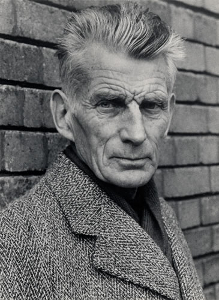
Birth of Playwright & Poet Samuel Barclay Beckett

Samuel Barclay Beckett, avant-garde novelist, playwright, theatre director, and poet, is born on Good Friday, April 13, 1906, in FoxrockDublin. His father, William Frank Beckett, works in the construction business and his mother, Maria Jones Roe, is a nurse. Beckett attends Earlsfort House School in Dublin and then, at age 14, he goes to Portora Royal School, the same school attended by Oscar Wilde. He receives his bachelor’s degree from Trinity College, Dublin in 1927. In his youth he periodically experiences severe depression keeping him in bed until mid-day. This experience later influences his writing.

In 1928, Beckett finds a welcome home in Paris where he meets and becomes a devoted student of James Joyce. In 1931, he embarks on a restless sojourn through Great BritainFrance and Germany. He writes poems and stories and does odd jobs to support himself. On his journey, he comes across many individuals who inspire some of his most interesting characters.

In 1937, Beckett settles in Paris. Shortly thereafter, he is stabbed by a pimp after refusing his solicitations. While recovering in the hospital, he meets Suzanne Dechevaux-Dumesnuil, a piano student in Paris. The two become life-long companions and eventually marry. After meeting with his attacker, Beckett drops the charges, partly to avoid the publicity.

During World War II, Beckett’s Irish citizenship allows him to remain in Paris as a citizen of a neutral country. He fights in the resistance movement until 1942 when members of his group are arrested by the Gestapo. He and Suzanne flee to the unoccupied zone until the end of the war.

After the war, Beckett is awarded the Croix de Guerre for bravery during his time in the French resistance. He settles in Paris and begins his most prolific period as a writer. In five years, he writes EleutheriaWaiting for GodotEndgame, the novels MolloyMalone DiesThe Unnamable, and Mercier et Camier, two books of short stories, and a book of criticism.

Beckett’s first publication, Molloy, enjoys modest sales, but more importantly praise from French critics. Soon, Waiting for Godot, achieves quick success at the small Theatre de Babylone putting Beckett in the international spotlight. The play runs for 400 performances and enjoys critical praise.

Beckett writes in both French and English, but his most well-known works, written between World War II and the 1960s, are written in French. Early on he realizes his writing has to be subjective and come from his own thoughts and experiences. His works are filled with allusions to other writers such as Dante AlighieriRené Descartes, and James Joyce. Beckett’s plays are not written along traditional lines with conventional plot and time and place references. Instead, he focuses on essential elements of the human condition in dark humorous ways. This style of writing has been called “Theater of the Absurd” by Martin Esslin, referring to poet Albert Camus’ concept of “the absurd.” The plays focus on human despair and the will to survive in a hopeless world that offers no help in understanding.

The 1960s are a period of change for Beckett. He finds great success with his plays across the world. Invitations come to attend rehearsals and performances which lead to a career as a theater director. In 1961, he secretly marries Suzanne Dechevaux-Dumesnuil who takes care of his business affairs. A commission from the BBC in 1956 leads to offers to write for radio and cinema through the 1960s.

Beckett continues to write throughout the 1970s and 1980s, mostly in a small house outside Paris. There he can give total dedication to his art evading publicity. In 1969, he is awarded the Nobel Prize in Literature, though he declines accepting it personally to avoid making a speech at the ceremonies. However, he should not be considered a recluse. He often times meets with other artists, scholars and admirers to talk about his work.

By the late 1980s, Beckett is in failing health and is moved to a small nursing home. His wife Suzanne dies in July 1989. His life is confined to a small room where he receives visitors and writes. He dies on December 22, 1989, in a hospital of respiratory problems just months after his wife.


Leave a comment

Kidnapping of Writer Brian Keenan

Irish writer Brian Keenan is taken hostage in BeirutLebanon, on April 11, 1986.

Keenan is born into a working-class family in East Belfast on September 28, 1950. He leaves Orangefield High Schoolearly and begins work as a heating engineer. However, he continues an interest in literature by attending night classes and in 1970 gains a place at the University of Ulster in Coleraine. Other writers there at the time include Gerald Dawe and Brendan Hamill. In the mid-1980s Keenan returns to the Magee College campus of the university for postgraduate study. Afterwards he accepts a teaching position at the American University of Beirut, where he works for about four months.

On the morning of April 11, 1986 Keenan is kidnapped by Islamic Jihad. After spending two months in isolation, he is moved to a cell shared with the British journalist John McCarthy. He is kept blindfolded throughout most of his ordeal, and is chained by his hands and feet when taken out of solitary.

The British and American governments at the time have a policy that they will not negotiate with terrorists and Keenan is considered by some to have been ignored. Because he is travelling on both British and Irish passports, the Irish government makes numerous diplomatic representations for his release, working closely with the Iranian government. Throughout the kidnap the government also provides support to Keenan’s two sisters, Elaine Spence and Brenda Gillham, who are spearheading the campaign for his release.

Keenan is released from captivity to Syrian military forces on August 24, 1990 and is driven to Damascus. There he is handed over by the Syrian Foreign Ministry to the care of Irish Ambassador, Declan Connolly. His sisters are flown by Irish Government executive jet to Damascus to meet him and bring him home to Northern Ireland.

An Evil Cradling is an autobiographical book by Keenan about his four years as a hostage in Beirut. The book revolves heavily around the great friendship he experiences with fellow hostage John McCarthy, and the brutality that is inflicted upon them by their captors. It is the 1991 winner of The Irish Times Literature Prize for Non-fiction and the Christopher Ewart-Biggs Memorial Prize.

Keenan returns to Beirut in 2007 for the first time since being released 17 years earlier, and describes “falling in love” with the city. He now lives in Dublin.

(Pictured: Brian Keenan arrives at Dublin Airport after his release from captivity in Beirut in August 1990)


Leave a comment

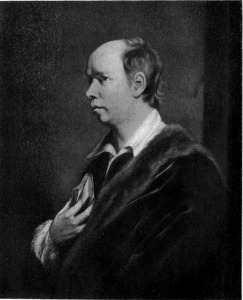
Death of Oliver Goldsmith, Novelist, Playwright & Poet

Oliver Goldsmith, Irish novelist, playwright, and poet best known for his novel The Vicar of Wakefield (1766), his pastoral poem The Deserted Village (1770), and his plays The Good-Natur’d Man (1768) and She Stoops to Conquer (1771, first performed in 1773), dies in London on April 4, 1774. He is thought to have written the classic children’s tale The History of Little Goody Two-Shoes (1765).

Goldsmith’s birth date and location are not known with certainty, although he reportedly tells a biographer that he was born on November 10, 1728. The location of his birthplace is either in the townland of Pallas, near BallymahonCounty Longford, where his father is the Anglican curate of the parish of Forgney, or at the residence of his maternal grandparents, at the Smith Hill House near Elphin, County Roscommon, where his grandfather Oliver Jones is a clergyman and master of the Elphin diocesan school, which is where Goldsmith studies. When Goldsmith is two years old, his father is appointed the rector of the parish of “Kilkenny West” in County Westmeath. The family moves to the parsonage at Lissoy, between Athlone and Ballymahon, and continues to live there until his father’s death in 1747.

In 1744 Goldsmith enters Trinity College, Dublin. His tutor is Theaker Wilder. Neglecting his studies in theology and law, he falls to the bottom of his class. In 1747, along with four other undergraduates, he is expelled for a riot in which they attempt to storm the Marshalsea Prison. He is graduated in 1749 as a Bachelor of Arts, but without the discipline or distinction that might have gained him entry to a profession in the church or the law. His education seems to have given him mainly a taste for fine clothes, playing cards, singing Irish airs, and playing the flute. He lives for a short time with his mother, tries various professions without success, studies medicine desultorily at the University of Edinburgh from 1752 to 1755, and sets out on a walking tour of FlandersFranceSwitzerland, and Northern Italy.

Goldsmith settles in London in 1756, where he briefly holds various jobs, including an apothecary‘s assistant and an usher of a school. Perennially in debt and addicted to gambling, Goldsmith produces a massive output as a hack writer for the publishers of London, but his few painstaking works earn him the company of Samuel Johnson, with whom he is a founding member of “The Club.” There, through fellow Club member Edmund Burke, he makes the acquaintance of Sir George Savile, who later arranges a job for him at Thornhill Grammar School. The combination of his literary work and his dissolute lifestyle leads Horace Walpole to give him the epithet “inspired idiot.” During this period, he uses the pseudonym “James Willington,” the name of a fellow student at Trinity, to publish his 1758 translation of the autobiography of the Huguenot Jean Marteilhe.

Goldsmith is described by contemporaries as prone to envy, a congenial but impetuous and disorganised personality who once planned to emigrate to America but failed because he missed his ship. At some point around this time he works at Thornhill Grammar School, later basing Squire Thornhill on his benefactor Sir George Savile and certainly spending time with eminent scientist Rev. John Mitchell, whom he probably knows from London. Mitchell sorely misses good company, which Goldsmith naturally provides in spades. Thomas De Quincey writes of him “All the motion of Goldsmith’s nature moved in the direction of the true, the natural, the sweet, the gentle.”

His premature death in 1774 is believed to have been partly due to his own misdiagnosis of a kidney infection. Goldsmith is buried in Temple Church in London. There is a monument to him in the centre of Ballymahon and also in Westminster Abbey with an epitaph written by Samuel Johnson.


Leave a comment

Death of Street Rhymer Michael J. Moran

Michael J. Moran, an Irish street rhymer popularly known as Zozimus, dies in Dublin on April 3, 1846. He is a resident of Dublin and also known as the “Blind Bard of the Liberties” and the “Last of the Gleemen.”

Moran is born around 1794 in Faddle Alley off the Blackpitts in Dublin’s Liberties and lives in Dublin all his life. At two weeks old he is blinded by illness. He develops an astounding memory for verse and makes his living reciting poems, many of which he has composed himself, in his own lively style. He is described by songwriter Patrick Joseph McCall as the last gleeman of the Pale.

Many of his rhymes have religious themes while others are political or recount current events. He is said to have worn “a long, coarse, dark, frieze coat with a cape, the lower parts of the skirts being scalloped, an old soft, greasy, brown beaver hat, corduroy trousers and Francis Street brogues, and he carried a long blackthorn stick secured to his wrist with a strap.”

Moran performs all over Dublin including at Essex BridgeWood Quay, Church Street, Dame Street, Capel Street, Sackville StreetGrafton StreetHenry Street, and Conciliation Hall.

In his last few years, Moran’s voice grows weak, costing him his means of livelihood. He ends up feeble and bedridden and he dies on April 3, 1846 at his lodgings in 15 Patrick Street. He is buried two days later on Palm Sunday in Glasnevin’s Prospect Cemetery, which is guarded day and night, as he had feared grave robbers, who are busy in Dublin at the time.

His grave remains unmarked until the late 1960s, when the band Dublin City Ramblers erect a tombstone in his memory. His grave is in the “Poor Ground” of the cemetery, not far from Daniel O’Connell‘s monument.

Moran’s nickname is derived from a poem written by Anthony Coyle, Bishop of Raphoe about Saint Mary of Egypt. According to legend, she had followed pilgrims to Jerusalem with the intent of seducing them, then, turning penitent on finding herself prevented from entering the Church of the Holy Sepulchre by a supernatural force, she flees to the desert and spends the remainder of her life in solitary penance. When she is at the point of death, God sends Zosimas of Palestine to hear her confession and give her Holy Communion, and a lion to dig her grave. The poem has the intolerable cadence of the eighteenth century, but is so popular, and so often called for, that Moran is soon nicknamed “Zozimus,” and by that name is remembered.


Leave a comment

Birth of William Allingham, Poet, Diarist, & Editor

William Allingham, Irish poet, diarist, and editor, is born on March 19, 1824, in the little port of BallyshannonCounty Donegal. He writes several volumes of lyric verse, and his poem “The Faeries” is much anthologised. However, he is better known for his posthumously published Diary, in which he records his lively encounters with Alfred TennysonThomas Carlyle, and other writers and artists. His wife, Helen Allingham, is a well-known watercolorist and illustrator.

Allingham is the son of the manager of a local bank who is of English descent. His younger brothers and sisters are Catherine (b. 1826), John (b. 1827), Jane (b. 1829), Edward (b. 1831; who lived only a few months), and a still-born brother (b. 1833). During his childhood his parents move twice within the town, where the boy enjoys the country sights and gardens, learns to paint, and listens to his mother’s piano playing. His mother dies when he is nine years old.

Allingham obtains a post in the custom house of his native town, and holds several similar posts in Ireland and England until 1870. It is during this period that Poems (1850), which includes his well-known poem “The Fairies,” and Day and Night Songs (1855) are published.  Lawrence Bloomfield in Ireland, his most ambitious though not his most successful work, a narrative poem illustrative of Irish social questions, appears in 1864. He also edits The Ballad Book for the Golden Treasury series in 1864, and Fifty Modern Poems in 1865.

In April 1870, Allingham retires from the customs service, moves to London and becomes sub-editor of Fraser’s Magazine, eventually becoming editor in succession to James Anthony Froude in June 1874, a post he holds until 1879. On August 22, 1874 he marries the illustrator, Helen Paterson, who is twenty-four years younger than him. His wife gives up her work as an illustrator and becomes well known under her married name as a water-colour painter. At first the couple lives in London, at 12 Trafalgar Square, Chelsea, near Allingham’s friend, Thomas Carlyle, and it is there that they have their first two children – Gerald Carlyle (b. November 1875) and Eva Margaret (b. February 1877). Allingham’s Songs, Poems and Ballads is published in 1877. In 1881, after the death of Carlyle, the Allinghams move to Sandhills near Witley in Surrey, where their third child, Henry William, is born in 1882. At this period Allingham publishes Evil May Day (1883), Blackberries (1884), and Irish Songs and Poems (1887).

In 1888, because of William’s declining health, they move back to the capital, to the heights of Hampstead village. However, on November 18, 1889, William Allingham dies at Hampstead. According to his wishes he is cremated. His ashes are interred at St. Anne’s church in his native Ballyshannon.

Posthumously Allingham’s Varieties in Prose is published in 1893. William Allingham A Diary, edited by Mrs. Helen Allingham and D. Radford, is published in 1907. It contains Allingham’s reminiscences of Alfred Tennyson, Thomas Carlyle, and other writers and artists.


Leave a comment

Founding of the Ossianic Society

The Ossianic Society, an Irish literary society, is founded in Dublin on Saint Patrick’s Day 1853, taking its name from the poetic material associated with the ancient narrator Oisín.

Founding members include John O’Daly, William Elliot Hudson, John Edward PigotOwen ConnellanJohn Windele, and William Smith O’Brien. The antiquary Standish Hayes O’Grady is a principal member and later becomes its president. By 1860 the list of subscribers numbers 746, six volumes of Transactions are produced, and the preparations for further issues are extant when it ceases operations in 1863.

The group of Irish scholars emerge from competing societies, such as the Celtic Society and the Irish Archaeological Society, focusing on the translation of Irish literature from the “Fenian period of Irish history,” specifically, the mythological works of Oisín and the Fianna, and the promotion of the Irish language. The manifesto stipulates the membership be entirely composed of Irish scholars, the intent being to distinguish itself from similar societies that cater to Anglo-Irish interests and influence. Though such societies have credible scholars as steering members, the work produced is thought to be influenced by the local ascendancy and their royal (English) patrons.

The correspondence of members of the Society reveals a fractious relationship with other important figures of the time, Eugene O’Curry and those of the Royal Irish Academy, and are often frustrated in their attempts to access early manuscripts.


Leave a comment

Birth of Novelist Mickey Spillane

mickey-spillane

Frank Morrison Spillane, better known as Mickey Spillane, American crime novelist whose stories often feature his signature detective character Mike Hammer, is born in Brooklyn, New York City, on March 9, 1918. More than 225 million copies of his books have sold internationally. Spillane is also an occasional actor, once even playing Hammer himself.

Born in Brooklyn and raised in Elizabeth, New Jersey, Spillane is the only child of his Irish bartender father, John Joseph Spillane, and his Scottish mother, Catherine Anne. Spillane attends Erasmus Hall High School, graduating in 1935. He starts writing while in high school, briefly attends Fort Hays State College in Kansas, and works a variety of jobs, including summers as a lifeguard at Breezy Point, Queens, and a period as a trampoline artist for the Ringling Bros. and Barnum & Bailey Circus.

Spillane starts as a writer for comic books. While working as a salesman in Gimbels department store basement in 1940, he meets tie salesman Joe Gill, who later finds a lifetime career in scripting for Charlton Comics. Gill tells Spillane to meet his brother, Ray Gill, who writes for Funnies Inc., an outfit that packages comic books for different publishers. Spillane soon begins writing an eight-page story every day.

Spillane joins the United States Army Air Forces on December 8, 1941, the day after the attack on Pearl Harbor, becoming a fighter pilot and a flight instructor. While flying over Murrells Inlet, South Carolina, he says, “That is where I want to live.” Later, he uses his celebrity status to publicize the Grand Strand on television, but when it becomes a popular resort area and traffic becomes a problem, Spillane says, “I shouldn’t have told people about it.”

Spillane decides to boost his bank account by writing a novel. In nineteen days he writes I, the Jury. At the suggestion of Ray Gill, he sends it to E. P. Dutton. With the combined total of the 1947 hardcover and the Signet paperback (December 1948), I, the Jury sells 6-1/2 million copies in the United States alone. I, the Jury introduces Spillane’s most famous character, hard-boiled detective Mike Hammer.

Spillane is an active Jehovah’s Witness. He and Mary Ann Spillane have four children, and their marriage ends in 1962. In November 1965, he marries his second wife, nightclub singer Sherri Malinou. After that marriage ends in divorce and a lawsuit in 1983, Spillane shares his waterfront house in Murrells Inlet with his third wife, Jane Rogers Johnson, whom he marries in October 1983, and her two daughters.

In the 1960s, Spillane becomes a friend of the novelist Ayn Rand. Despite their apparent differences, Rand admires Spillane’s literary style, and Spillane becomes, as he describes it, a fan of Rand’s work.

He receives an Edgar Allan Poe Grand Master Award in 1995. Spillane’s novels go out of print, but in 2001, the New American Library begins reissuing them.

Spillane dies July 17, 2006, at his home in Murrells Inlet, of pancreatic cancer. After his death, his friend and literary executor, Max Allan Collins, begins the task of editing and completing Spillane’s unpublished typescripts, beginning with a Mike Hammer novel, The Goliath Bone (2008).

In July 2011, the town of Murrells Inlet names U.S 17 Business the “Mickey Spillane Waterfront 17 Highway.” The proposal first passes the Georgetown County Council in 2006 while Spillane is still alive, but the South Carolina General Assembly rejects the plan at that time.


Leave a comment

Birth of Patrick Joseph McCall, Songwriter & Poet

patrick-joseph-mccall

Patrick Joseph McCall, Irish songwriter and poet known mostly as the author of lyrics for popular ballads, is born at 25 Patrick Street in Dublin on March 6, 1861. He is assisted in putting the Wexford ballads, dealing with the Irish Rebellion of 1798, to music by Arthur Warren Darley using traditional Irish airs. His surname is one of the many anglicizations of the Irish surname Mac Cathmhaoil, a family that were chieftains of Kinel Farry (Clogher area) in County Tyrone.

McCall is the son of John McCall (1822-1902), a publican, grocer, and folklorist from Clonmore near Hacketstown in County Carlow. He attends St. Joseph’s Monastery, Harold’s Cross, a Catholic University School.

He spends his summer holidays in Rathangan, County Wexford, where he spends time with local musicians and ballad singers. His mother came from Rathangan near Duncormick on the south coast of County Wexford. His aunt Ellen Newport provides much of the raw material for the songs and tunes meticulously recorded by her nephew. He also collects many old Irish airs but is probably best remembered for his patriotic ballads. Airs gathered at rural céilí and singsongs are delivered back to the Royal Irish Academy in Dublin.

He contributes to the Dublin Historical Record, the Irish Monthly, The Shamrock, and Old Moore’s Almanac (under the pseudonym Cavellus). He is a member of the group in Dublin which founds the National Literary Society and becomes its first honorary secretary.

He marries Margaret Furlong, a sister of the poet Alice Furlong, in 1901. They live in the suburb of Sutton, near Howth.

In 1902 he is elected as a Dublin City councillor, defeating James Connolly, and serves three terms. As a councillor he concerns himself with local affairs, particularly projects to alleviate poverty.

Patrick Joseph McCall dies on March 5, 1919, one day before his 58th birthday, in Sutton, Fingal, Dublin.


Leave a comment

Birth of Alice Taylor, Writer & Novelist

alice-taylor

Alice Taylor, best-selling Irish writer and novelist particularly known for her nostalgia works looking back at life in a small village, is born on February 28 , 1938, on a farm in Lisdangan, Newmarket in northern County Cork.

Taylor is educated at Drishane Convent. She works in Bandon before marrying Gabriel Murphy. They have four sons and one daughter. When she marries she moves to Innishannon in the southern part of the county in 1961. There she runs a guesthouse, the local post office, and a shop.

In 1984 she edits and publishes a local magazine, Candlelight, and in 1986 she publishes an illustrated collection of her poetry. However it is the launch of her book To School Through the Fields, published in May 1988, which brings her fame. She has numerous interviews on national shows including RTÉ Radio‘s Gay Byrne Show and The Late Late Show. The next books are equally successful and have been sold internationally. Since then she has moved on to novels which have also become best sellers.

Her husband dies in 2005. Taylor remains very connected to the village of Innishannon where she continues to live. Since her eldest son has taken over responsibility for the shop, she has been able to devote more time to her writing. One of the programs she has been involved in is the restoration of the old Innishannon Tower.