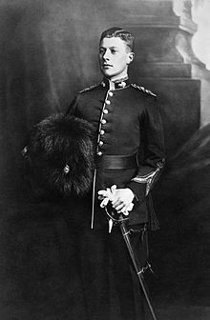
Nimy Bridge is being defended by a single company of the 4th Royal Fusiliers and a machine-gun section with Dease in command. The gunfire is intense and the casualties very heavy, but the lieutenant continues to fire in spite of his wounds, until he is hit for the fifth time and is carried away.
Dease wins the first Victoria Cross to be awarded in the Great War and he receives it on the first day of the first significant British encounter in that war.
When Lieutenant Dease has been mortally wounded, Private Sidney Godley offers to defend the Railway Bridge while the rest of the section retreats and is also awarded the Victoria Cross. He is taken prisoner of war.
A combination of deception and skilled administration, designed to conceal his true destination from friend and foe alike, enables Marlborough to march 250 miles unhindered from the Low Countries to the River Danube in five weeks. After securing Donauwörth on the Danube, Marlborough seeks to engage the Elector’s and Marsin’s army before Marshal Camille d’Hostun, duc de Tallard can bring reinforcements through the Black Forest. However, with the Franco-Bavarian commanders reluctant to fight until their numbers are deemed sufficient, the duke enacts a policy of plundering in Bavaria designed to force the issue. The tactic proves unsuccessful, but when Tallard arrives to bolster the Elector’s army, and Prince Eugene of Savoy arrives with reinforcements for the Allies, the two armies finally meet on the banks of the Danube in and around the small village of Blindheim, from which the English “Blenheim” is derived.
Blenheim is one of the battles that alters the course of the war, which until then was leaning for Louis’ coalition, and ends French plans of knocking the emperor out of the war. France suffers as many as 38,000 casualties including the commander-in-chief, Marshal Tallard, who is taken captive to England. Before the 1704 campaign ends, the Allies have taken Landau, and the towns of Trier and Traben-Trarbach on the Moselle in preparation for the following year’s campaign into France itself. The offensive never materialises as the Grand Alliance’s army has to depart the Moselle to defend Liège from a French counteroffensive. The war would rage on for another decade.
(Pictured: The Duke of Marlborough Signing the Despatch at Blenheim. Oil by Robert Alexander Hillingford)
By 1647, The Irish Catholic Confederation controls all of Ireland except for Parliamentarian enclaves around Dublin and Cork and a Scottish outpost in Ulster. The previous year they had rejected a treaty with the English Royalists in favour of eliminating the remaining British forces in Ireland.
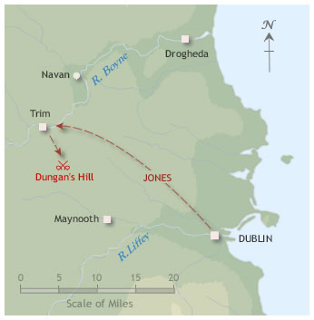
In August 1647, the Confederate Leinster army under Thomas Preston is attempting to take Dublin from the English Parliamentarian garrison under Michael Jones, when it is intercepted by the Roundheads and forced to give battle. Jones had marched to Trim to relieve the Parliamentarian outpost there at Trim Castle. Preston, who had been shadowing Jones’ movements, attempts to march on Dublin before Jones’ army returns there, but covers only 12 of the 40 miles before being caught at Dungan’s Hill, where the Confederate forces have to form up for battle.
From a Parliamentarian point of view, victory in this battle is presented to them by the incompetence of the Irish commander. Preston is a veteran of the Thirty Years’ War, where he had been a commander of the Spanish garrison at Leuven, but has no experience in open warfare or handling cavalry. Jones, by contrast, had been a cavalry officer in the English Civil War. As a result, Preston tries to move his cavalry along a narrow covered lane where they are trapped and subjected to enemy fire without being able to respond. Even worse, Preston has placed a large number of his troops in wheat fields over seven feet tall. As a result these troops are unable to see the Parliamentarians until it is too late. With the Confederate army spread out and in confusion, Jones’ troops fall in amongst them causing the demoralised Irish cavalry to flee the field, leaving the remainder of Preston’s infantry unsupported.
The Confederate army’s infantry are primarily equipped with pikes and heavy muskets and trained to stand in tercios in the Spanish manner. This means they are difficult to break, but also highly immobile, without cavalry to cover their cumbersome formation when it moves. What is worse, Preston has positioned them in a large walled field, so that when their cavalry has run away, the Parliamentarians can surround and trap them. Some of the Irish infantry, Scottish Highlanders brought to Ireland by Alasdair Mac Colla, manage to charge and break through Jones’ men and escape into a nearby bog, where the English cavalry could not follow. Preston and 2,000 to 3,000 of his regular infantry manage to follow the Highlanders to safety, but the remainder are trapped.
What happens next is disputed. The Irish infantry manages to hold off several assaults on their position, before trying to follow their comrades into the safety of the bog. This makes them lose their formation and the Parliamentarians get in amongst them and then surround them in the bogland. Parliamentarian accounts simply say that the Irish force is then destroyed. Irish accounts, however, claim that the Confederate troops surrender and are then massacred. One account, by a Catholic friar named O Meallain, says that the corpses of the Irish foot soldiers are found with their hands tied. A recent study suggests that the Irishmen probably tried to surrender, but that, according to the conventions of 17th century warfare, this had to be accepted before it entitled them to safety. In this case, it was not accepted and the infantrymen were butchered.
Around 3,000 Confederate troops and a small number of Parliamentarians die at Dungan’s Hill. One of the English regimental commanders, Colonel Anthony Hungerford, is shot in the mouth, a wound that invalids him out of the English Army. Most of the dead are Irish infantrymen killed in the last stage of the battle. Those prisoners who are taken are mainly officers, whom the Parliamentarians can either ransom or exchange for prisoners of their own. Richard Talbot, a junior cavalry officer but later Earl of Tyrconnell and Lord Deputy of Ireland, is among the Confederate prisoners.
In the immediate aftermath of the battle, Owen Roe O’Neill‘s Ulster Army marches through the pass of Portlester Mill to mount an effective rearguard action, routing Jones’ advanced brigade and enabling the survivors of the Leinster army to escape. Jones, fearing O’Neills army, does not continue the pursuit and returns to Dublin. O’Neill and his Ulstermen return four months later to bury the dead Confederates.
Rathlin Island is used as a sanctuary because of its natural defences and rocky shores. In earlier times, when the wind blows from the west it is almost impossible to land a boat. It is also respected as a hiding place, as it is the one-time abode of Saint Columba. Installing themselves in Rathlin Castle (also known as Bruce’s Castle), the MacDonnells of Antrim make Rathlin their base for resistance to the Enterprise of Ulster. Their military leader, Sorley Boy MacDonnell (Scottish Gaelic: Somhairle Buidhe Mac Domhnaill) and other Scots have thought it prudent to send their wives, children, elderly, and sick to Rathlin Island for safety.
Acting on the instructions of Sir Henry Sidney and the Walter Devereux, 1st Earl of Essex, Sir Francis Drake and Sir John Norreys take the castle by storm. Drake uses two cannons to batter the castle and when the walls give in, Norreys orders direct attack on July 25, and the Garrison surrenders. Norreys sets the terms of surrender, whereupon the constable, his family, and one of the hostages are given safe passage and all other defending soldiers are killed. On July 26, 1575, Norreys’ forces hunt the old, sick, very young and women who are hiding in the caves. Despite the surrender, they kill all the 200 defenders and more than 400 civilian men, women and children. Sir Francis Drake is also charged with the task of preventing any Scottish reinforcement vessels from reaching the island.
The entire family of Sorley Boy MacDonnell perishes in the massacre. Essex, who orders the killings, boasts in a letter to Francis Walsingham, the Queen’s secretary and spymaster, that Sorley Boy MacDonnell watched the massacre from the mainland helplessly and was “like to run mad from sorrow.”
Norreys stays on the island and tries to rebuild the walls of the castle so that the English might use the structure as a fortress. As Drake is not paid to defend the island, he departs with his ships. Norreys realises that it is not possible to defend the island without intercepting Scottish galleys and he returns to Carrickfergus in September 1575.
The crisis, triggered by the 1981 Irish hunger strike of Provisional IRA and Irish National Liberation Army (INLA) prisoners, leads to an increase in militant Irish republican activity in Northern Ireland. British intelligence reports unveil IRA intentions of mounting illegal checkpoints and hijacking vehicles on the IRA-controlled roads in South County Armagh, near the Irish border. To counter it, the British Army deploy the so-called COPs (close observation platoons), small infantry sections acting as undercover units, a tactic introduced by Major GeneralRichard Trant in 1977.
On May 6, 1981, a day after the death of hunger-striker Bobby Sands, one IRA member from a three-man unit is arrested while trying to set up a roadblock east of the main Belfast-Dublin road by twelve members of the Royal Green Jackets, divided in three teams. A second volunteer crosses the border, only to be arrested by the Irish Army. The third IRA man escapes apparently injured. A total of 689 rounds are fired by the soldiers.
After this initial success, the British Army continues these tactics. On July 16, another operation is carried out by eighteen Royal Green Jackets soldiers. That night, four concealed positions – Alpha, Bravo, Charlie and Delta – are inserted into the Glassdrumman area, around a scrapyard along the border. The plan is that another unit, called the triggering team, would ambush any IRA unit on sight, while the other four would block the expected escape routes. On July 17, the commanders in charge of Alpha and Delta teams, suspecting that the operation has been compromised by the presence of local civilians, orders the withdrawal of their men. Shortly thereafter, Bravo team is suddenly engaged by automatic fire from an M60 machine gun and AR-15 rifles fired by six or seven IRA members. The concealed position, emplaced inside a derelict van, is riddled by more than 250 bullets. The team’s leader, Lance Corporal Gavin Dean, is killed instantly and one of his men, Rifleman John Moore, is seriously wounded. Moore is later awarded the Military Medal. The IRA members fire their weapons from across the border, 160 yards away.
British army commanders conclude that “it was not worth risking the lives of soldiers to prevent an IRA roadblock being set up.” The incident also exposes the difficulties of concealing operations from local civilians in South Armagh, whose sympathy with the IRA is manifest. Several years later, the IRA would repeat its success against undercover observation posts in the course of Operation Conservation in 1990.
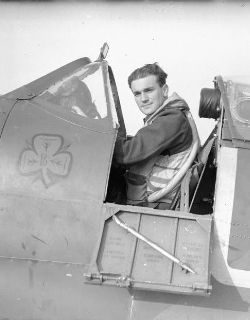
Finucane, born on October 16, 1920 in Rathmines, Dublin, is credited with 28 aerial victories, five probably destroyed, six shared destroyed, one shared probable victory, and eight damaged. Included in his total are twenty-three Messerschmitt Bf 109s, four Focke-Wulf Fw 190s and one Messerschmitt Bf 110. Official records differ over the exact total. After the war, two of Finucane’s victories that had been credited as probables had, in fact, been destroyed, but are not officially included. His total victory count could be as high as 32.
On July 15, Finucane is killed at the age of 21 while leading the Hornchurch Wing in a fighter “Ramrod” operation targeting a German Army camp at Étaples, France. He takes off with his wing at 11:50 AM. The attack is timed to hit the Germans at lunchtime. Crossing the beach at Le Touquet, they target machine gun positions. His plane is hit in the radiator at 12:22 PM. His wingman, Alan Aikman, notifies him of the white plume of smoke and Finucane acknowledges it with a thumbs up. Standard regulations insist the wing carry on the mission even if the leader is in trouble. Radio silence is maintained so the enemy radio-interception services do not become aware that a person of importance has been hit.
Finucane flies slowly out to sea, talking calmly to Aikman as he glides along in his stricken fighter. Finally, some 8 miles off Le Touquet on the French coast, he breaks radio silence and sends his last message. Aikman, flying alongside Finucane, sees him pull back the canopy, and before taking off his helmet, say “This is it Butch.” It is a well–executed landing, but the waves are difficult to predict and the Spitfire‘s nose strikes the water and disappears in a wall of spray. Before he hits the water, witnesses Aikman and Keith Chisholm of 452 Squadron see him release, or perhaps tighten, his parachute release harness and straps. If Finucane did release them, it is possible he could have been thrown forward onto the gun-sight and killed, or knocked unconscious and drowned. The exact circumstances remain unknown.
Millmount has been fortified in historical times since the early 12th century when invading Normans built a mote and bailey on what was probably originally a neolithic passage grave similar to Newgrange. In Irish cosmology, it is often assumed to be the burial place of Amergin Glúingel, whose name indicates that in ancient Irish mythology he was regarded as the originator of the arts of song, poetry and music.
Hugh de Lacy, one of the Normans who comes to Ireland after Strongbow, builds the original fort circa 1172, having been granted the Kingdom of Meath by Henry II of England. Later a stone castle is built on the site. This castle forms part of the defences of the town during the Siege of Drogheda during the Cromwellian conquest of Ireland in 1649. The fort’s English defenders attempt to surrender to Parliamentarian troops under Oliver Cromwell but are massacred when they give themselves up on September 11, 1649. The complex is later called Richmond Barracks. Some of the present buildings, in the courtyard, are built circa 1714. After the unrest and rebellions of the 1790s and the Acts of Union 1800 the complex is re-fortified, and the Martello tower is built.
The fort suffers considerable damage during the Irish Civil War. It is occupied by Anti-Treaty forces and on July 4, 1922, it becomes the target of shelling by the army of the Irish Free State. The Free State Forces under Michael Collins have been given extensive support by the British Army at the express wish of Winston Churchill who insists that the Republican Forces be crushed. Using the same British Army 18-pounder artillery piece which had shelled the Republican H.Q. in the Four Courts in Dublin some days earlier the Free State Forces bombard Millmount fort for several hours before the Republican garrison retreats. The famous Martello tower is all but destroyed during the shelling.
Today, after being restored in 2000, the complex houses the Millmount Museum which houses a wide variety of artifacts of local and national importance. The complex is Drogheda’s most dominant feature, clearly visible from all parts of the town. The Martello tower is affectionately known as “The Cup and Saucer” by locals. The whole fort is a national monument and has been designated as Drogheda’s Cultural Quarter.
A week before the Falls Curfew, on Saturday, June 27, 1970, there is severe rioting in Belfast following marches by the Protestant/unionist Orange Order. At the Short Strand, a Catholic enclave in a Protestant part of the city, the Provisional Irish Republican Army (IRA) fights a five-hour gun battle with loyalists. Three people are killed, and the loyalists withdraw. The Provisional IRA presents itself as having successfully defended a vulnerable Catholic enclave from armed loyalist mobs.
Meanwhile, the Official IRA arranges for a large number of weapons to be brought into the mainly nationalist and Catholic Lower Falls area for distribution. The area is a stronghold of the Official IRA.
The operation begins at about 4:30 PM on Friday, July 3, as a search for weapons in the staunchly Irish nationalist district. As the search ends, local youths attack the British soldiers with stones and petrol bombs and the soldiers respond with CS gas. This quickly develops into gun battles between British soldiers and the Irish Republican Army (IRA). After four hours of continuous clashes, the British commander seals off the area, which comprises 3,000 homes, and imposes a curfew which lasts 36 hours. Thousands of British troops move into the curfew zone and carry out house-to-house searches for weapons, while coming under intermittent attack from the IRA and rioters. The searches cause much destruction, and a large amount of CS gas is fired into the area. Many residents complain of suffering abuse at the hands of the soldiers. On July 5, the curfew is brought to an end when thousands of women and children from Andersonstown march into the curfew zone with food and groceries for the locals.
During the operation, four civilians are killed by the British Army, at least 78 people are wounded and 337 are arrested. Eighteen soldiers are also wounded. Large quantities of weapons and ammunition are captured. The British Army admits afterwards that some of its soldiers had been involved in looting.
The Falls Curfew is a turning point in the Troubles. It is seen as having turned many Catholics/Irish nationalists against the British Army and having boosted support for the IRA.
(Pictured: British soldiers on the Falls Road during the 1970 curfew)
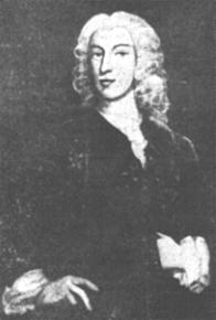
Murphy is born at Tincurry in the Parish of Ferns, County Wexford in 1753, the youngest son of Thomas and Johanna Murphy. Studying for the priesthood is then illegal in Ireland and so priests are trained abroad. He sails for Spain in early 1772 and studies for the priesthood in Seville, where many of the clergy in Ireland receive their education due to the persecution of Catholics as a result of the Penal Laws.
Fr. Murphy is initially against rebellion and actively encourages his parishioners to give up their arms and sign an oath of allegiance to the British Crown. On May 26, 1798, a company of men armed with pikes and firearms gather under Fr. Murphy to decide what to do for safety against the regular yeomanry patrols at a townland called the Harrow. At about eight o’clock that evening, a patrol of some twenty Camolin cavalry spot the group and approach them, demanding to know their business. They leave after a brief confrontation, having burned the cabin of a missing suspected rebel whom they had been tasked to arrest. As the patrol returns, they pass by Fr. Murphy’s group, who are now angry at the sight of the burning cabin. As the cavalry passes by the men an argument develops, followed by stones being thrown and then an all-out fight between the men and the troops. Most of the cavalry quickly flees, but two of the yeomen are killed. The Wexford Rebellion has begun and Fr. Murphy acts quickly. He sends word around the county that the rebellion has started and organises raids for arms on loyalist strongholds.
Parties of mounted yeomen respond by killing suspects and burning homes, causing a wave of panic. The countryside is soon filled with masses of people fleeing the terror and heading for high ground for safety in numbers. On the morning of May 28, a crowd of some 3,000 gather on Kilthomas Hill but is attacked and put to flight by Crown forces who kill 150. At Oulart Hill, a crowd of over 4,000 combatants gather, plus many women and children. Spotting an approaching North Cork Militia party of 110 rank and file, Fr. Murphy and the other local United Irishmen leaders such as Edward Roche, Morgan Byrne, Thomas Donovan, George Sparks and Fr. Michael Murphy organise their forces and massacre all but five of the heavily outnumbered detachment.
The victory is followed by a successful assault on the weak garrison of Enniscorthy, which swells the Irish rebel forces and their weapon supply. However, defeats at New Ross, Arklow, and Bunclody mean a loss of men and weapons. Fr. Murphy returns to the headquarters of the rebellion at Vinegar Hill before the Battle of Arklow and is attempting to reinforce its defences. Twenty thousand British troops arrive at Wexford with artillery and defeat the rebels, armed only with pikes, at the Battle of Vinegar Hill on June 21. However, due to a lack of coordination among the British columns, the bulk of the rebel army escapes to fight on.
Eluding the crown forces by passing through the Scullogue Gap, Fr. Murphy and other leaders try to spread the rebellion across the country by marching into Kilkenny and towards the midlands. On June 26, 1798, at the Battle of Kilcumney Hill in County Carlow, their forces are tricked and defeated. Fr. Murphy and his bodyguard, James Gallagher, become separated from the main surviving group. Fr. Murphy decides to head for the safety of a friend’s house in Tullow, County Carlow, when the path clears. They are sheltered by friends and strangers. One Protestant woman, asked by searching yeomen if any strangers have passed, answers “No strangers passed here today.” When she is later questioned about why she had not said Murphy and Gallagher had not passed, she explains that they had not passed because they were still in her house when she was questioned.
After a few days, some yeomen capture Murphy and Gallagher in a farmyard on July 2, 1798. They are brought to Tullow later that day where they are brought before a military tribunal, charged with committing treason against the British crown, and sentenced to death. Both men are tortured in an attempt to extract more information from them. Fr. Murphy is stripped, flogged, hanged, decapitated, his corpse burned in a barrel of tar and his head impaled on a spike. This final gesture is meant to be a warning to all others who fight against the British Crown.
Fr. John Murphy’s remains are buried in the old Catholic graveyard with Fr. Ned Redmond in Ferns, County Wexford.
McCarthy becomes a professional soldier and shows great skill in his profession, but poor eyesight hampers his career. He enters the French army in 1671 and then transfers to James Scott, 1st Duke of Monmouth‘s regiment, then in French pay, and serves against the Dutch.
McCarthy comes to England in 1678 and is befriended by the future James II, who generally chooses soldiers, especially Irish soldiers, as his boon companions. Charles II decides to use his services in Ireland and makes him a colonel in Sir Thomas Dongan‘s regiment. On the outbreak of the Popish Plot, however, the discovery of McCarthy’s presence at Whitehall causes uproar. He flees the country and the Secretary of State for the Northern Department, Sir Joseph Williamson, who had issued his commission, is sent to the Tower of London.
In 1689 McCarthy takes Castlemartyr and Bandon for James. At Bandon there is a massacre called “Black Monday,” but he persuades the King to issue a general pardon to his defeated opponents. He meets James at his landing at Kinsale and is commanded to raise seven regiments. He sits in the Irish House of Lords in the Parliament of Ireland of 1689.
With 3,000 men McCarthy advances from Dublin toward Enniskillen, which with Derry is the remaining resistance to James II. He is met by 2,000 Protestant “Inniskillingers” at the Battle of Newtownbutler on July 31, 1689. His forces are routed, he is wounded and then captured. Allowed out on parole he breaks parole and escapes to Dublin. Frederick Schomberg, 1st Duke of Schomberg, remarks that he had thought McCarthy was a man of honour, but on the other hand he expected no better from an Irishman.
McCarthy goes into exile in France and commands the first Irish Brigade of Louis XIV. His later career is hampered by his near blindness. He dies at Barèges on July 1, 1694, and is buried there.