seamus dubhghaill

Promoting Irish Culture and History from Little Rock, Arkansas, USA


Leave a comment

Death of Robert Mallet, the Father of Seismology

robert-mallet

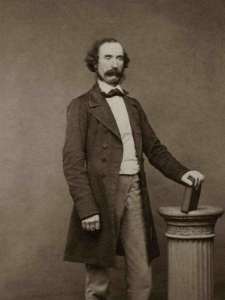
Robert Mallet, geophysicist, civil engineer, and inventor who distinguishes himself in research on earthquakes and is sometimes called the Father of Seismology, dies on November 5, 1881.

Mallet is born in Dublin on June 3, 1810, the son of factory owner John Mallet. He is educated at Trinity College, Dublin, entering it at the age of 16 and graduating in science and mathematics in 1830 at the age of 20.

Following his graduation, he joins his father’s iron foundry business and helps build the firm into one of the most important engineering works in Ireland, supplying ironwork for railway companies, the Fastnet Rock lighthouse, and a swing bridge over the River Shannon at Athlone. He also helps manufacture the characteristic iron railings that surround Trinity College, and which bear his family name at the base.

Mallet is elected to the Royal Irish Academy in 1832 at the early age of 22. He also enrolls in the British Association for the Advancement of Science in 1835 which helps finance much of his research in seismology.

In 1838 he becomes a life member of the Royal Geological Society of Ireland and serves as its President from 1846–1848. From 1848–1849 he constructs the Fastnet Rock lighthouse, southwest of Cape Clear.

On February 9, 1846, he presents to the Royal Irish Academy his paper On the Dynamics of Earthquakes, which is considered to be one of the foundations of modern seismology. He is also credited with coining the word “seismology” and other related words which he uses in his research. He also coins the term epicentre.

From 1852 to 1858, he is engaged in the preparation of his work, The Earthquake Catalogue of the British Association (1858) and carries out blasting experiments to determine the speed of seismic propagation in sand and solid rock.

On December 16, 1857, the area around Padula, Italy is devastated by the Great Neapolitan earthquake which causes 11,000 deaths. At the time it is the third largest known earthquake in the world and has been estimated to have been of magnitude 6.9 on the Richter Scale. Mallet, with letters of support from Charles Lyell and Charles Darwin, petitions the Royal Society of London and receives a grant of £150 to go to Padula and record at first hand the devastation. The resulting report is presented to the Royal Society as the Report on the Great Neapolitan Earthquake of 1857. It is a major scientific work and makes great use of the then new research tool of photography to record the devastation caused by the earthquake. In 1862, he publishes the Great Neapolitan Earthquake of 1857: The First Principles of Observational Seismology in two volumes. He brings forward evidence to show that the depth below the Earth’s surface, from where the impulse of the Neapolitan earthquake originated, is about 8–9 geographical miles.

One of Mallet’s papers is Volcanic Energy: An Attempt to develop its True Origin and Cosmical Relations, in which he seeks to show that volcanic heat may be attributed to the effects of crushing, contortion, and other disturbances in the crust of the earth. The disturbances leading to the formation of lines of fracture, more or less vertical, down which water would find its way, and if the temperature generated be sufficient volcanic eruptions of steam or lava would follow.

Mallet is elected Fellow of the Royal Society in 1854, and in 1861 moves to London, where he becomes a consulting engineer and edits The Practical Mechanic’s Journal. He is awarded the Telford Medal by the Institution of Civil Engineers in 1859, followed by the Cunningham Medal of the Royal Irish Academy for his research into the theory of earthquakes in 1862, and the Wollaston Medal of the Geological Society of London in 1877, the Geological Society’s highest award.

Blind for the last seven years of his life, Robert Mallet dies at Stockwell, London, on November 5, 1881, and is buried at West Norwood Cemetery.


Leave a comment

Birth of Comedian Hal Roach

hal-roach-write-it-downHal Roach, prominent Irish comedian, is born in Waterford on November 4, 1927. He spends over 60 years in show business, and is featured in the Guinness Book of Records for the longest-running engagement of a comedian at the same venue: 26 years at Jury’s Irish Cabaret, Jury‘s Ballsbridge Hotel, Dublin.

Born John Roach, he attends the Manor C.B.S. school. He begins his career after winning a local talent competition as a boy soprano. He initially tours with an illusionist and specialises in magic, but later moves to comedy. Roach has been cited as a major influence by other comedians such as Brendan Grace.

A couple of typical Hal Roach jokes go like this:

“He told me that I have a cult following, at least I think that’s what he said.”

“There is a man sitting in the middle of the road casting his fishing line… now none of us is perfect, but c’mon! So I asked him, ‘How many have you caught today?’ He said, ‘You’re the ninth.'”

Perhaps his most famous catchphrase is “Write it down, it’s a good one!”

Roach is popular particularly with American tourists visiting Ireland. His act plays heavily on traditional tourist imagery of Ireland and on Irish jokes. Several of his shows have been released on cassette and CD, and they are popular with tour bus drivers in several English-speaking countries who play them to passengers to help pass the time between destinations.

After suffering from a long bout of ill health, Roach dies on February 28, 2012. The following month, RTÉ broadcasts a tribute to Roach in one of its graveyard slots, a repeat airing of a programme from the That’s Entertainment series first broadcast in 1972.


Leave a comment

Opening of the Catholic University of Ireland

The Catholic University of Ireland in Dublin is opened, and lectures commence on November 3, 1854, with the registration of seventeen students, the first being Daniel O’Connell, grandson of the notable Catholic politician Daniel O’Connell.

The university is founded in 1851 following the Synod of Thurles in 1850, and in response to the Queen’s University of Ireland and its associated colleges which are non-denominational. Cardinal Paul Cullen has previously forbidden Catholics from attending these “godless colleges.” On May 18, 1854, the university is formally established with five faculties of law, letters, medicine, philosophy, and theology with John Henry Newman as the Rector.

In 1861, Dr. Bartholomew Woodlock, the rector from 1860–1879, tries to secure land for a building near Holy Cross College Clonliffe, the establishment to be known as St. Patrick’s University. Plans are drawn up by architect J.J. McCarthy and a foundation stone laid. Cardinal Cullen is against the idea of educating lay and clerical students on the same premises. However, this plan is shelved because of the expansion of the railway line. A church and monastery are eventually built on the site. Under the name St. Patrick’s University night classes are advertised by the University under Dr. Woodlock’s name.

Some feeder secondary schools are established for the Catholic University of Ireland. The nearby Catholic University School is joined by St. Flannan’s College in County Clare and Catholic University High School in Waterford.

The Catholic University is neither a recognised university so far as the civil authorities are concerned, nor an institution offering recognised degrees. Newman has little success in establishing the new university, though over £250,000 has been raised from the laity to fund it. Though they hold the foundation money as trustees, the hierarchy in 1859 spends most of it to support an Irish Brigade led by Myles O’Reilly to help defend Rome in the Second Italian War of Independence. Newman leaves the university in 1857.

Subsequently the school goes into a serious decline, with only three students registered in 1879. The situation changes in 1880 when the recognised Royal University of Ireland comes into being and students at the Catholic University are entitled to sit the Royal University examinations and receive its degrees.

In 1909 the Catholic University essentially comes to an end with the creation of the National University of Ireland, with University College Dublin as a constituent, however the Catholic University of Ireland remains a legal entity until 1911.

(Pictured: J. J. McCarthy’s design for the Catholic University of Ireland)


Leave a comment

Founding of Republican Sinn Féin

republican-sinn-fein

Republican Sinn Féin (Irish: Sinn Féin Poblachtach), an unregistered Irish Republican political organisation, is founded at the West County Hotel in Dublin on November 2, 1986.

Republican Sinn Féin (RSF) claim to be heirs of the Sinn Féin party founded in 1905 and take its present form in 1986 following a split with Provisional Sinn Féin. RSF members take seats when elected in local Irish councils but do not recognise the partition of Ireland and subsequently the legitimacy of the Northern Ireland or Republic of Ireland governments, so does not register itself under them.

The decision to form, or to reorganise or reconstitute as its supporters see it, the organisation was taken in response to Gerry Adams-led Sinn Féin’s decision at its 1986 ardfheis to end its policy of abstentionism and to allow elected Sinn Féin Teachtaí Dála take their seats in Leinster House‘s Dáil Éireann. The supporters of Ruairí Ó Brádaigh and Dáithí Ó Conaill who go on to form RSF oppose this move as it signals a departure from the traditional republican analysis which views the parliament of the Republic of Ireland as an illegal assembly, set up by an act of the British parliament. They argue that republicans owe their allegiance to the All-Ireland (32 County) Irish Republic, maintaining that this state exists de jure and that its authority rests with the IRA Army Council. Hence, if elected, its members refuse to take their seats in the Oireachtas.

The organisation views itself as representing “true” or “traditional” Irish republicanism, while in the mainstream media the organisation is portrayed as a political expression of “dissident republicanism.” Republican Sinn Féin rejects the Good Friday Agreement and indeed the Anglo-Irish Treaty. As part of this they refuse to discount Irish republicans using militant means to “defend the Irish Republic” and considers the Continuity Irish Republican Army (IRA) to be the legitimate army of the Irish Republic. The CIRA is designated as a terrorist organisation by the governments of the United Kingdom and Republic of Ireland.


Leave a comment

Founding of the Gaelic Athletic Association

gaelic-athletic-associationThe Gaelic Athletic Association (GAA) is founded on November 1, 1884, by a group of Irishmen gathered in the billiard room of the Hayes’ Hotel in Thurles, County Tipperary. The architects and founding members are Michael Cusack of County Clare, Maurice Davin, Joseph K. Bracken, Thomas St. George McCarthy, P.J. Ryan of Tipperary, John Wyse Power, and John McKay. Their goal is to to formulate a plan and establish an organisation to foster and preserve Ireland’s unique games and athletic pastimes.

The GAA focuses primarily on promoting Gaelic games, which include the traditional Irish sports of hurling, camogie, Gaelic football, handball, and rounders. The Association also promotes Irish music and dance, as well as the Irish language.

It has more than 500,000 members worldwide, assets in excess of €2.6 billion, and declares total revenues of €94.8 million in 2010, with a total gross profit of €78.5 million.

Gaelic football and hurling are the most popular activities promoted by the organisation, and the most popular sports in the Republic of Ireland in terms of attendances. Gaelic football is also the largest participation sport in Northern Ireland. GAA competitions, activities, and structures are organised on an all-Ireland basis, without reference to the border drawn in 1921. The women’s version of these games, ladies’ Gaelic football and camogie, are organised by the independent but closely linked Ladies’ Gaelic Football Association and the Camogie Association respectively. GAA Handball is the Irish governing body for the sport of handball, while the other Gaelic sport, rounders, is managed by the GAA Rounders National Council.

Since its foundation in the late 19th century, the Association has grown to become a major influence in Irish sporting and cultural life with considerable reach into communities throughout Ireland and among the Irish diaspora.


Leave a comment

Demolition of HM Prison Maze Begins

maze-prison

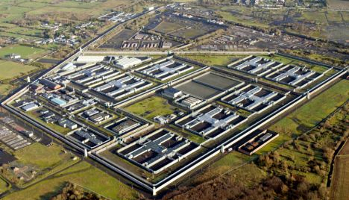
Bulldozers begin demolishing Northern Ireland‘s notorious HM Prison Maze, previously known as Long Kesh Detention Centre, on October 31, 2006. The prison once housed the most dangerous guerrillas from both sides of the province’s sectarian conflict.

Among the inmates at Maze are ten Irish nationalist hunger strikers who starved themselves to death in 1981. The prison has been empty since 2000, after the release of most guerrilla prisoners under the Good Friday Agreement, which ushered in relative peace after 30 years of fighting in which 3,600 people died.

A sports stadium, equestrian center, hotel, and shopping center are originally proposed for the 360-acre site in County Antrim. In January 2009, however, Sports Minister Gregory Campbell rules out the plan for a multi-sports stadium which has divided political and sporting opinion, opting instead to explore alternatives with the soccer, rugby, and Gaelic Athletic Association (GAA) authorities.

Northern Ireland first and deputy first ministers, Peter Robinson and Martin McGuinness, announce in 2010 that an agreement has been reached on building a peace and conflict resolution facility at the Maze site. It will also host the Royal Ulster Agricultural Society’s annual show. On February 2, 2012, European funding of £18m is approved for building the contentious conflict resolution centre.

Planning permission for the peace centre on the site of the former prison is granted on April 18, 2013. However, in June the Orange Order calls on unionist politicians to halt the peace centre plan, objecting to its location on the former prison site.

On August 15, 2013, Peter Robinson calls a halt to the peace centre plan. In a letter to Democratic Unionist Party (DUP) members, he says it would be wrong to proceed without a consensus about how it will operate. As a result, in October 2013 the European Union funding programme withdraws its £18m offer in financial support for the Maze peace centre.

That the Maze Prison development remains unrealised 16 years after the site’s closure testifies to the complexities involved. That the prospect of redevelopment has never been taken off the table affirms the ineluctable power ideas of profit still hold.


Leave a comment

Birth of Sir Charles Brett, Solicitor & Journalist

long-shadows-cast-before

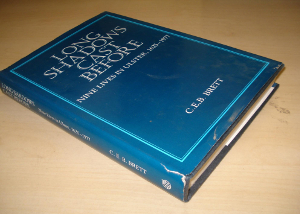
Sir Charles Edward Bainbridge Brett, Northern Irish solicitor, journalist, author and founding member, and first chairman, of the Ulster Architectural Heritage Society (UAHS), is born in Holywood, County Down, on October 30, 1928. He is known to many simply as Charlie Brett.

Brett is born into a long line of solicitors, the family firm being L’Estrange and Brett, based in Belfast. He is a partner there from 1954 until 1994. He is educated at Rugby School and New College, Oxford, where he is President of the Poetry Society and a friend of Dylan Thomas and attends lectures by Lord Clark.

Between 1949 and 1950 he works in France as a journalist with the Continental Daily Mail, where he is said to have mixed in anarchist and Trotskyite circles.

In 1956, the Earl of Antrim invites Brett to join the Northern Ireland Committee of the National Trust. On finding there are no books written to prepare himself for this, he resolves to write the necessary volumes. In 1957 he becomes the first chairman of the Ulster Architectural Heritage Society, founded alongside, amongst others Lady Dunleath. Brett serves as chairman for ten years and then as President from 1979 until his death.

With the National Trust he puts his legal skill to use in order to establish a public footpath along the cliffs of the North Coast of Ulster. He also sits on the board of the Irish Architectural Archive in Dublin.

In 1971, he is appointed to the board of the newly created Northern Ireland Housing Executive. He serves as Chairman for five years from 1979, during which time 50,000 dwellings are built. He is asked to compile a list of historic buildings in Jersey in 1975. In 1986, Brett becomes the first chairman of the International Fund for Ireland, established to encourage investment in Ireland.

Brett is also involved in Northern Irish politics, being chairman of the Northern Ireland Labour Party for a time. In 1981 he receives a CBE, this is followed by a Knighthood in 1990.

Brett dies on December 19, 2005. His church memorial is located along those of his family in the Comber Church of Ireland Parish Church of St. Mary, in Comber, North County Down.


Leave a comment

Death of Irish American Painter William Harnett

william-harnett

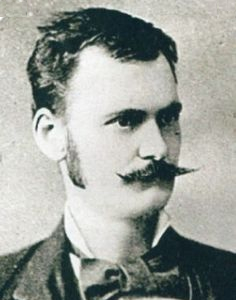
William Michael Harnett, Irish American painter known for his trompe-l’œil still lifes of ordinary objects, dies at New York Hospital on October 29, 1892.

Harnett is born in Clonakilty, County Cork, on August 10, 1848, during the time of the Great Famine. Shortly after his birth his family emigrates to America, settling in Philadelphia. Becoming a United States citizen in 1868, he makes a living as a young man by engraving designs on table silver, while also taking night classes at the Pennsylvania Academy of the Fine Arts and later, in New York City, at Cooper Union and at the National Academy of Design. His first known oil painting, a still life, dates from 1874.

The style of trompe-l’œil painting that Harnett develops is distinctive and inspired many imitators, but it is not without precedent. A number of 17th century Dutch painters, Pieter Claesz for instance, specialize in tabletop still life of astonishing verisimilitude. Raphaelle Peale, working in Philadelphia in the early 19th century, pioneers the form in America. What sets Harnett’s work apart, besides his enormous skill, is his interest in depicting objects not usually made the subject of a painting.

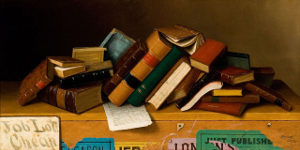
Harnett paints musical instruments, hanging game, and tankards, but also painted the unconventional Golden Horseshoe (1886), a single rusted horseshoe shown nailed to a board. He paints a casual jumble of second-hand books set on top of a crate, Job Lot, Cheap (1878), as well as firearms and even paper currency. His works sell well, but they are more likely to be found hanging in a tavern or a business office than in a museum, as they did not conform to contemporary notions of high art.

Harnett spent the years 1880–1886 in Europe, staying in Munich from 1881 until early 1885. Harnett’s best-known paintings, the four versions of After the Hunt, are painted between 1883 and 1885. Each is an imposing composition of hunting equipment and dead game, hanging on a door with ornate hinges at the right and keyhole plate at the left. These paintings, like the horseshoe or currency depictions mentioned earlier, are especially effective as trompe-l’œil because the objects occupy a shallow space, meaning that the illusion is not spoiled by parallax shift if the viewer moves.

job-lot-cheap

Overall, Harnett’s work is most comparable to that of the slightly younger John F. Peto. The two artists know each other, and a comparison can be made between two paintings featuring violins. Harnett’s Music and Good Luck from 1888 shows the violin hanging upright on a door with ornate hinges and with a slightly torn piece of sheet music behind it. The elements are arranged in a stable, deliberate manner. Peto’s 1890 painting shows the violin hanging askew, as well as chipped and worn, with one string broken. The sheet music is dog-eared and torn around the edges and placed haphazardly behind the instrument. The hinges are less ornate, and one is broken. Harnett’s objects show signs of use but are well preserved, while Peto’s more humble objects are nearly used up.

Crippling rheumatism plagues Harnett in his last years, reducing the number but not the quality of his paintings. He seeks relief in the waters at Karlsbad and Wiesbaden, Germany and later at Hot Springs, Arkansas. But he continues to worsen and is hospitalized several times. He dies in New York City in 1892.


Leave a comment

Assassination of Máire Drumm, VP of Sinn Féin

maire-drumm

Máire Drumm, vice president of Sinn Féin and a commander in Cumann na mBan, is shot dead on October 28, 1976, by Ulster loyalists dressed as doctors while recovering from an eye operation in Belfast‘s Mater Hospital.

Drumm is born in Newry, County Down to a staunchly Irish republican family. Drumm’s mother has been active in the Irish War of Independence and the Irish Civil War. Drumm grows up in the village of Killean, County Armagh, where she plays camogie. She is active in the republican movement after meeting her husband, a republican prisoner. She begins to speak at many rallies and protest meetings and is soon elected as Vice President of Sinn Fein. She becomes involved in the Northern Ireland Civil Rights Association in the 1960s and works to rehouse Catholics forced from their homes by loyalist intimidation.

Drumm is jailed twice for seditious speeches. After she is released from HM Prison Armagh, raids on her house by the security forces escalate. She is widely demonised in the British media and is already a target for assassination when she is admitted to Belfast’s Mater Hospital for eye treatment in October 1976.

While recovering from the operation, Drumm is shot at point blank range in a joint operation by the Ulster Volunteer Force and the Ulster Defence Association who are able to enter and leave the hospital undisturbed. No one has ever been convicted of her murder.

Drumm’s speeches and quotations can be found on murals across Northern Ireland, including:

“The only people worthy of freedom are those who are prepared to go out and fight for it every day, and die if necessary.”

“We must take no steps backward, our steps must be onward, for if we don’t, the martyrs that died for you, for me, for this country will haunt us forever.”


Leave a comment

Birth of Bryan Guinness, 2nd Baron Moyne

bryan-guinness

Bryan Walter Guinness, 2nd Baron Moyne, heir to part of the Guinness family brewing fortune, lawyer, poet, and novelist, is born on October 27, 1905.

Guinness is born in London to Walter Edward Guinness, 1st Baron Moyne, son of Edward Guinness, 1st Earl of Iveagh, and Lady Evelyn Stuart Erskine, daughter of Shipley Gordon Stuart Erskine, 14th Earl of Buchan. He attends Heatherdown School, near Ascot in Berkshire, followed by Eton College, and Christ Church, Oxford, and is called to the bar in 1931.

As an heir to the Guinness brewing fortune and a handsome, charming young man, Bryan is an eligible bachelor. One of London’s “Bright Young Things,” he is an organiser of the 1929 “Bruno Hat” hoax art exhibition held at his home in London. Also, in 1929 he marries the Hon. Diana Mitford, one of the Mitford sisters, and has two sons with her. The couple become leaders of the London artistic and social scene and are dedicatees of Evelyn Waugh‘s second novel Vile Bodies. However, they divorce in 1933 after Diana deserts him for British fascist leader Sir Oswald Mosley.

Guinness remarries happily in 1936 to Elisabeth Nelson, of the Nelson publishing family, with whom he has nine children.

During World War II, Guinness serves for three years in the Middle East with the Spears Mission to the Free French, being a fluent French speaker, with the rank of major. Then in November 1944 Guinness succeeds to the barony when his father, posted abroad as Resident Minister in the Middle East by his friend Winston Churchill, is assassinated in Cairo.

After the war, Lord Moyne serves on the board of the Guinness corporation as vice-chairman (1947-1979), as well as the Guinness Trust and the Iveagh Trust, sitting as a crossbencher in the House of Lords. He serves for 35 years as a trustee of the National Gallery of Ireland and donates several works to the gallery. He writes a number of critically applauded novels, memoirs, books of poetry, and plays. With Frank Pakenham he seeks the return of the “Lane Bequest” to Dublin, resulting in the 1959 compromise agreement. He is invested as a Fellow of the Royal Society of Literature.

Lord Moyne dies of a heart attack on July 6, 1992, at Biddesden House, his home in Wiltshire, and is succeeded by his eldest son Jonathan. He is buried at Ludgershall, Wiltshire, England.