seamus dubhghaill

Promoting Irish Culture and History from Little Rock, Arkansas, USA


Leave a comment

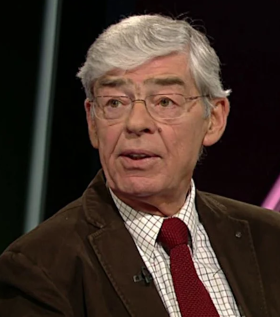
Birth of Bobby Molloy, Independent Politician

Robert Molloy, independent politician, is born in Galway, County Galway, on July 9, 1936.

Molloy’s father, Michael Edward Molloy, is originally from Ballyhaunis, County Mayo, and runs a successful wholesale drapery business in the city. His mother, Rita Stanley, hails from Clifden, County Galway. He is educated at Coláiste Iognáid and University College Galway. Before entering politics, he works for several years in printing, the clothing industry and his family’s drapery firm.

Molloy is first elected to Dáil Éireann as a Fianna Fáil TD for the Galway West constituency at the 1965 Irish general election. In 1968, he is also elected Mayor of Galway. The following year he was appointed as Parliamentary Secretary to the Minister for Education

Molloy’s early political career is marked by his loyalty to Fianna Fáil’s leadership under Taoiseach Jack Lynch. He quickly rises through the ranks and is appointed Minister for Local Government in 1970, a position he holds until 1973. His tenure as Minister for Local Government is characterised by his efforts to modernise and streamline local government structures in Ireland. His tenure in Fianna Fáil sees him as a stalwart of the party’s establishment, though tensions with its leadership grow over the years, particularly with Charles Haughey.

In opposition from 1973, Molloy serves as the frontbench spokesman, where he becomes involved in a high-profile dispute with James Tully, the Labour Minister for Local Government, over the controversial redrawing of constituencies, known as the “Tullymander.” Molloy, along with fellow Fianna Fáil member Brendan Crinion, used Dáil privilege to accuse Tully of having an improper commercial relationship with a builder in County Meath. The accusation is strongly denied by Tully and Molloy and Crinion later withdraw the charge. Despite this, Molloy faces severe repercussions, being forced to resign from his frontbench position. He is subsequently condemned by a judicial tribunal and censured by the Dáil for abusing parliamentary privilege.

When Fianna Fáil returns to office in 1977, Molloy becomes Minister for Defence in the final government of Jack Lynch.

Molloy supports George Colley in the 1979 Fianna Fáil leadership electionCharles Haughey wins the contest and drops Molloy, alongside other opponents, from the cabinet. Thereafter Molloy becomes a member of the Gang of 22 who oppose Haughey’s leadership of the party.

In 1986, Molloy resigns from Fianna Fáil and joins the newly formed Progressive Democrats, spearheaded by Haughey’s arch-rival Desmond O’Malley. Molloy’s move is seen as a major break from the political establishment, as the Progressive Democrats advocate for low-tax, market-oriented economic policies and a more liberal economic agenda. His decision is driven by his dissatisfaction with the direction of Fianna Fáil under Haughey’s leadership and his belief that the party has become increasingly alienating. 

In 1989, Molloy contests the European Parliament elections but is unsuccessful in his attempt. Following the 1989 Irish general election, Molloy, along with newly elected MEP for Munster Pat Cox, represents the Progressive Democrats in the lengthy negotiations with Fianna Fáil to form a coalition government. Once the negotiations conclude, he is reinstated in the Cabinet as Minister for Energy under Taoiseach Charles Haughey, who had previously caused Molloy’s political humiliation a decade earlier. Over the following three years, Molloy and his Progressive Democrat colleague Desmond O’Malley have a working relationship with their former Fianna Fáil colleagues, though tensions grow due to resentment over their presence in the Cabinet. The issue comes to a head when Molloy and O’Malley make it clear they will not serve in a Cabinet that includes Brian Lenihan Snr, following his controversial remarks during the 1990 Irish presidential election about alleged phone calls to President Patrick Hillery from 1982.

In January 1992, Haughey faces further complications when Seán Doherty reveals information about the phone tapping of journalists dating back to 1982. Despite this, the coalition government ends when Albert Reynolds, Haughey’s successor, calls for a general election after accusing O’Malley of giving “dishonest” evidence to the Beef Tribunal. Molloy strongly denounces Reynolds’ accusation, describing it as “outrageous,” and criticises him for what he perceives as a “lack of generosity” in recent North-South negotiations, in which Molloy had represented the Progressive Democrats in talks with British Unionists.

Molloy stands at the European Parliament elections again in 1994 but is again unsuccessful.

Following the 1997 Irish general election, Molloy is part of the negotiations that lead to the formation of a coalition government between the Progressive Democrats and Fianna Fáil. On that occasion, he is appointed as Minister of State at the Department of the Environment and Local Government and sits at cabinet as Minister of State to the Government.

Molloy resigns as a minister and quits politics just before the 2002 Irish general election amid controversy surrounding his involvement in the rape case of Barbara Naughton. The controversy stems from a letter Molloy sent to then Minister for Justice, John O’Donoghue, on behalf of a constituent whose relative had been convicted of rape. The letter, which requests the temporary release of the individual pending an appeal, leads to public criticism. The case is high-profile, involving a Connemara man sentenced to eleven years for the systematic abuse of his young daughter. During the trial, the judge, Philip O’Sullivan, notes that someone acting on Molloy’s behalf had tried to contact him in his chambers to clarify whether he had received certain correspondence from the victim’s sister, which the judge describes as “quite improper.” In response to the backlash, Molloy resigns, describing the letter as a “human error of judgment,” but insisting it was not intended to be dishonest. He retires from politics after the election.

Molloy is a member of Fianna Fáil for over 20 years, but his views are not always in line with the mainstream of the party, particularly under the leadership of Charles Haughey. His decision to leave Fianna Fáil in 1986 and join the Progressive Democrats is motivated by ideological differences, notably the party’s move toward a more conservative, state-controlled economy. Molloy, on the other hand, embraces a platform of fiscal conservatism, with an emphasis on reducing taxes, deregulation, and the liberalisation of the economy.

In terms of social issues, Molloy is ahead of his time in advocating for progressive policies, particularly on women’s rights. In a survey conducted in 1976 by the Women’s Political Association (WPA), Molloy scores among the highest of any member of the Dáil for his progressive stance on issues affecting women. He supports measures such as divorce, contraception, and family law reform, which are seen as highly controversial at the time. His responses to the WPA’s questions reveal that he holds views that are in stark contrast to many of his colleagues within Fianna Fáil. His progressive views on women’s rights are notable, as he is the only member of Jack Lynch’s cabinet who consistently supports reformist policies on issues like family law and the role of women in public life.

In 1972, Molloy marries Phyllis Barry, a Montessori teacher from Foxrock, County Dublin, whose father is a cousin of the executed revolutionary Kevin Barry. The couple meet while campaigning in a by-election in mid-Cork. Together, they have four children: Sinead, Sorcha, Donnacha, and Dara.

Molloy dies at the age of 80 on October 2, 2016, in Salthill, Galway, County Galway. He is buried at Bohermore Cemetery, Bohermore, Galway.

Leave a comment

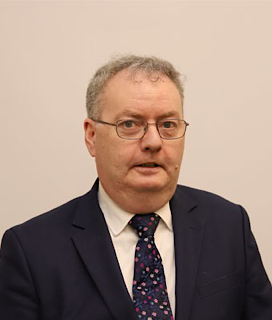
Death of Michael Moynihan, Labour Party Politician

Michael Moynihan, Irish Labour Party politician, dies in Cork, County Cork, on June 27, 2001. He serves as Minister of State at the Department of Trade, Commerce and Tourism from 1982 to 1987. He also serves as a senator from 1973 to 1981 and as a Teachta Dála for the Kerry South constituency from 1981 to 1987 and 1989 to 1992.

Moynihan is born in Kinsale, County Cork, on June 17, 1917. He is a psychiatric nurse by profession.

Moynihan is an unsuccessful candidate in the Kerry South constituency six times, at the  1954,  1961,  1965,  1973 and  1977 Irish general elections, and at a by-election in 1966.

Moynihan is elected in 1973 to the 13th Seanad as a senator for the Industrial and Commercial Panel, which re-elects him in 1977 to the 14th Seanad.

At the 1981 Irish general election, on his seventh attempt, Moynihan is elected to the 22nd Dáil, becoming the first ever Labour Party TD for Kerry South, and returns to the 23rd Dáil at the February 1982 Irish general election. He is re-elected at the November 1982 Irish general election, sitting in the 24th Dáil. He serves as Minister of State at the Department of Trade, Commerce and Tourism from 1982 to 1987.

Moynihan is defeated at the 1987 Irish general election, but returns at the 1989 Irish general election to sit in the 26th Dáil. He does not stand at the 1992 Irish general election, when his seat is retained for the Labour Party by his daughter Breeda Moynihan-Cronin.


Leave a comment

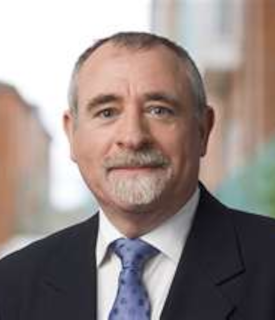
Birth of Nora Owen, Former Fine Gael Politician

Nora Owen (née O’Mahony), former Fine Gael politician, is born in Malahide, Dublin, on June 1, 1945. She serves as Minister for Justice from 1994 to 1997 and Deputy leader of Fine Gael from 1993 to 2001. She serves as a Teachta Dála (TD) for the Dublin North constituency from 1981 to 1987 and 1989 to 2002. She is a presenter of TV3‘s topical programme Midweek.

Owen is a sister of Mary Banotti and a grandniece of the Irish revolutionary leader Michael Collins. She is educated at Dominican Convent, County Wicklow and University College Dublin (UCD) where she qualifies as an industrial chemist.

Owen is first elected to Dublin County Council in 1979 for the Malahide local electoral area. She is later elected as a Fine Gael TD for the first time in 1981, serving until the 1987 Irish general election when she loses her seat. That year she becomes a member of the executive of Trócaire, an International Non-Governmental Organisation (INGO) which is based in Ireland. She returns to Dáil Éireann following the 1989 Irish general election. In 1993, she becomes Deputy leader of Fine Gael. The following year she becomes Minister for Justice, remaining in that post until 1997. She undertakes a significant programme of criminal law reform. Among the major changes she implements is the referendum on bail in 1996, leading to the Bail Act of 1997, which allows a court to refuse bail to those charged with a serious offence where it is considered necessary to prevent them committing a serious offence. Journalist Veronica Guerin was murdered in 1996 and in its aftermath, Owen introduces the highly successful Criminal Assets Bureau to crack down on organised crime. In 2002, she becomes the first high-profile Fine Gael TD to lose her seat in Dublin North in the party’s disastrous general election result.

Owen is the patron of the Collins 22 Society, which works to keep the memory and legacy of Michael Collins in living memory. She occasionally works as an election pundit. In August 2011, it is announced she is to present the Irish version of Mastermind on TV3.


Leave a comment

Birth of Eric Byrne, Former TD and Labour Party Politician

Eric Joseph Byrne, former Labour Party politician who serves as a Teachta Dála (TD) for the Dublin South-Central constituency from 1989 to 1992, 1994 to 1997 and 2011 to 2016, is born in Dublin on April 21, 1947. He is formerly a member of Official Sinn Féin, the Workers’ Party and Democratic Left.

Byrne is educated at Synge Street CBS and the Bolton Street College of Technology. A carpenter before entering politics, he stands unsuccessfully for election to Dáil Éireann as a Workers’ Party candidate for Dublin Rathmines West at the 1977 Irish general election and Dublin South-Central at the 1981, February 1982, November 1982 and 1987 Irish general elections.

He is elected in 1985 as a Workers’ Party member of Dublin City Council for CrumlinKimmage area, and is re-elected at subsequent local elections until 2011, when he is forced to resign his seat due to dual mandate. He is finally elected at the 1989 Irish general election. He joins with Workers’ Party members who form Democratic Left in 1992. He unexpectedly loses his seat at the 1992 Irish general election. Labour’s Pat Upton is unexpectedly returned on the first count, with Byrne finally losing the last seat to Fianna Fáil‘s Ben Briscoe by five votes after a marathon 10-day count.

Byrne is elected to the 27th Dáil at a by-election on June 9, 1994, following the resignation of long-serving Fianna Fáil TD John O’Connell, who had previously been a Labour TD for the same constituency. He is a backbench supporter of the Rainbow government led by Fine Gael‘s John Bruton.

He loses his seat again at the 1997 Irish general election. Although the Labour Party and the Democratic Left merge in 1999, he is not selected to contest the Dublin South-Central by-election which follows Pat Upton‘s death later that year. Upton’s sister Mary is elected for the Labour Party.

Byrne contests the 2002 Irish general election on the Labour Party ticket as Mary Upton’s running-mate but is unsuccessful. Along with Upton, he contests the Dublin South-Central constituency at the 2007 Irish general election advocating a Labour Party/Fine Gael government but misses the final seat by 69 votes. He is nominated by the Labour Party to contest the Seanad election in the Labour panel but is not elected. In 2009, he is re-elected to Dublin City Council. At the 2011 Irish general election he is re-elected to the Dáil, after a fourteen-year absence.

In January 2015, Byrne becomes involved in an altercation with Sinn Féin TD, Jonathan O’Brien. During ministers’ questions, O’Brien criticises Tánaiste Joan Burton over homelessness in Ireland, citing the experiences of his brother, a recovering heroin addict. Byrne asks of O’Brien, “Why doesn’t his good family give him a home?” This infuriates O’Brien. The Irish Times journalist Miriam Lord criticizes Byrne, remarking that “You sense the relief rising in the chamber. They don’t like it when the real world intrudes. These sort of things don’t really happen to TDs.”

Byrne loses his seat at the 2016 Irish general election.


Leave a comment

Birth of Alan Dukes, Former Fine Gael Politician

Alan Martin Dukes, former Fine Gael politician, is born in Drimnagh, Dublin, on April 20, 1945. He holds several senior government positions and serves as a Teachta Dála (TD) from 1981 to 2002. He is one of the few TDs to be appointed a minister on their first day in the Dáil.

His father, James F. Dukes, is originally from Tralee, County Kerry, and is a senior civil servant and the founding chairman and chief executive of the Higher Education Authority (HEA), while his mother is from near Ballina, County Mayo.

The Dukes family originally comes from the north of England. His grandfather serves with the Royal Engineers in World War I and settles in County Cork and then County Kerry afterward where he works with the Post Office creating Ireland’s telephone network.

Dukes is educated by the Christian Brothers at Coláiste Mhuire, Dublin, and is offered several scholarships for third level on graduation, including one for the Irish language. His interest in the Irish language continues to this day, and he regularly appears on Irish-language television programmes.

On leaving school he attends University College Dublin (UCD), where he captains the fencing team to its first-ever Intervarsity title.

Dukes becomes an economist with the Irish Farmers’ Association (IFA) in Dublin in 1969. After Ireland joins the European Economic Community (EEC) in 1973, he moves to Brussels where he is part of the IFA delegation. In this role, he is influential in framing Ireland’s contribution to the Common Agricultural Policy (CAP). He is appointed as chief of staff to Ireland’s EEC commissioner Richard Burke, a former Fine Gael politician.

In the 1979 European Parliament election, Dukes stands as a Fine Gael candidate in the Munster constituency. He has strong support among the farming community, but the entry of T. J. Maher, a former president of the IFA, as an independent candidate hurts his chances of election. Maher tops the poll.

He stands again for Fine Gael at the 1981 Irish general election in the expanded Kildare constituency, where he wins a seat in the 22nd Dáil. On his first day in the Dáil, he is appointed Minister for Agriculture by the Taoiseach, Garret FitzGerald, becoming one of only eight TDs so appointed. He represents Kildare for 21 years.

This minority Fine Gael–Labour Party coalition government collapses in February 1982 on the budget but returns to power with a working majority in December 1982. Dukes is again appointed to cabinet, becoming Minister for Finance less than two years into his Dáil career.

He faces a difficult task as finance minister. Ireland is heavily in debt while unemployment and emigration are high. Many of Fine Gael’s plans are deferred while the Fine Gael–Labour Party coalition disagrees on how to solve the economic crisis. The challenge of addressing the national finances is made difficult by electoral arithmetic and a lack of support from the opposition Fianna Fáil party led by Charles Haughey. He remains in the Department of Finance until a reshuffle in February 1986 when he is appointed Minister for Justice.

Fine Gael fails to be returned to government at the 1987 Irish general election and loses 19 of its 70 seats, mostly to the new Progressive Democrats. Outgoing Taoiseach and leader Garret FitzGerald steps down and Dukes is elected leader of Fine Gael, becoming Leader of the Opposition.

This is a difficult time for the country. Haughey’s Fianna Fáil runs on promises to increase spending and government services, and attacking the cutbacks favoured by Fine Gael. However, on taking office, the new Taoiseach and his finance minister Ray MacSharry immediately draw up a set of cutbacks including a spate of ward and hospital closures. This presents a political opportunity for the opposition to attack the government.

However, while addressing a meeting of the Tallaght Chamber of Commerce, Dukes announces, in what becomes known as the Tallaght Strategy that: “When the government is moving in the right direction, I will not oppose the central thrust of its policy. If it is going in the right direction, I do not believe that it should be deviated from its course, or tripped up on macro-economic issues.”

This represents a major departure in Irish politics whereby Fine Gael will vote with the minority Fianna Fáil Government if it adopts Fine Gael’s economic policies for revitalising the economy. The consequences of this statement are huge. The Haughey government is able to take severe corrective steps to restructure the economy and lay the foundations for the economic boom of the nineties. However, at a snap election in 1989, Dukes does not receive electoral credit for this approach, and the party only makes minor gains, gaining four seats. The outcome is the first-ever coalition government for Fianna Fáil, whose junior partner is the Progressive Democrats led by former Fianna Fáil TD Desmond O’Malley.

The party’s failure to make significant gains in 1989 leaves some Fine Gael TDs with a desire for a change at the top of the party. Their opportunity comes in the wake of the historic 1990 Irish presidential election. Fine Gael chooses Austin Currie TD as their candidate. He had been a leading member of the Northern Ireland Civil Rights Association (NICRA) movement in the 1960s and had been a member of the Social Democratic and Labour Party (SDLP) before moving south.

Initially, Fianna Fáil’s Brian Lenihan Snr is the favourite to win. However, after several controversies arise, relating to the brief Fianna Fáil administration of 1982, and Lenihan’s dismissal as Minister for Defence midway through the campaign, the Labour Party’s Mary Robinson emerges victorious. To many in Fine Gael, the humiliation of finishing third is too much to bear and a campaign is launched against Dukes’ leadership. He is subsequently replaced as party leader by John Bruton.

Bruton brings Dukes back to the front bench in September 1992, shortly before the November 1992 Irish general election. In February 1994, Dukes becomes involved in a failed attempt to oust Bruton as leader and subsequently resigns from the front bench. Bruton becomes Taoiseach in December 1994 and Dukes is not appointed to cabinet at the formation of the government.

In December 1996, Dukes returns as Minister for Transport, Energy and Communications following the resignation of Michael Lowry. At the 1997 Irish general election, he tops the poll in the new Kildare South constituency, but Fine Gael loses office. He becomes Chairman of the Irish Council of the European Movement. In this position, he is very involved in advising many of the Eastern European countries who are then applying to join the European Union.

In 2001, Dukes backs Michael Noonan in his successful bid to become leader of Fine Gael.

After 21 years, Dukes loses his Dáil seat at the 2002 Irish general election. This contest sees many high-profile casualties for Fine Gael, including Deputy Leader Jim Mitchell, former deputy leader Nora Owen and others. Many local commentators feel that Dukes’ loss is due to a lack of attention to local issues, as he is highly involved in European projects and has always enjoyed a national profile.

He retires from frontline politics in 2002 and is subsequently appointed Director General of the Institute of International and European Affairs. He remains active within Fine Gael and serves several terms as the party’s vice-president. From 2001 to 2011, he is President of the Alliance française in Dublin, and in June 2004, the French Government appoints him an Officer of the Legion of Honour. In April 2004, he is awarded the Commander’s Cross of the Order of Merit of the Republic of Poland.

In December 2008, Dukes is appointed by Finance Minister Brian Lenihan Jnr as a public interest director on the board of Anglo Irish Bank. The bank is subsequently nationalised, and he serves on the board until the Irish Bank Resolution Corporation (IBRC) is liquidated in 2013.

From 2011 to 2013, Dukes serves as chairman of the Board of Irish Guide Dogs for the Blind. In 2011, he founds the think tank Asia Matters, which inks an agreement with the Chinese People’s Association for Friendship with Foreign Countries in May 2019.

Dukes has lived in Kildare since first being elected to represent the Kildare constituency in 1981. His wife Fionnuala (née Corcoran) is a former local politician and serves as a member of Kildare County Council from 1999 until her retirement in 2009. She serves as Cathaoirleach of the council from 2006 to 2007, becoming only the second woman to hold the position in the body’s one-hundred-year history. They have two daughters.


Leave a comment

Birth of Rory O’Hanlon, Fianna Fáil Politician

Rory O’Hanlon, former Fianna Fáil politician, is born in Dublin on February 7, 1934. He serves as Ceann Comhairle of Dáil Éireann (2002-07), Leas-Cheann Comhairle of Dáil Éireann (1997-2002), Minister for the Environment (1991-92), Minister for Health (1987-91) and Minister of State for Social Welfare Claims (1982). He serves as a Teachta Dála (TD) for the Cavan–Monaghan constituency (1977-2011).

O’Hanlon is brought up in a family that has a strong association with the republican tradition. His father is a member of the Fourth Northern Division of the Irish Republican Army (IRA) during the Irish War of Independence (1919-21). He is educated at Mullaghbawn National School, before later attending St. Mary’s College, Dundalk and Blackrock College in Dublin. He subsequently studies medicine at University College Dublin (UCD) and qualifies as a doctor. In 1965, he is appointed to Carrickmacross as the local general practitioner and is the medical representative on the North Eastern Health Board from its inception in 1970 until 1987.

O’Hanlon enters his first electoral contest when he is the Fianna Fáil candidate in the 1973 Monaghan by-election caused by the election of Erskine Childers to the Presidency. He is unsuccessful on this occasion but is eventually elected at the 1977 Irish general election for the Cavan–Monaghan constituency. He is one of a handful of new Fianna Fáil deputies who are elected in that landslide victory for the party and, as a new TD, he remains on the backbenches. Two years later he becomes a member of Monaghan County Council, serving on that authority until 1987.

In 1979, Jack Lynch suddenly resigns as Taoiseach and Leader of Fianna Fáil. The subsequent leadership election results in a straight contest between Charles Haughey and George Colley. The latter has the backing of the majority of the existing cabinet; however, a backbench revolt sees Haughey become Taoiseach. O’Hanlon supports Colley and is thus overlooked for appointment to the new ministerial and junior ministerial positions. Despite this, he does become a member of the powerful Public Accounts Committee in the Oireachtas.

When Fianna Fáil returns to power after a short-lived Fine GaelLabour Party government in 1982, O’Hanlon is once again overlooked for ministerial promotion. An extensive cabinet reshuffle toward the end of the year sees him become Minister of State for Social Welfare Claims. His tenure is short-lived as the government falls a few weeks later and Fianna Fáil are out of power.

In early 1983, Charles Haughey announces a new front bench, and O’Hanlon is promoted to the position of spokesperson on Health and Social Welfare.

Following the 1987 Irish general election, Fianna Fáil are back in power, albeit with a minority government, and O’Hanlon becomes Minister for Health. Immediately after taking office, he is confronted with several controversial issues, including the resolution of a radiographers’ dispute and the formation of an HIV/AIDS awareness campaign. While Fianna Fáil campaigns on a platform of not introducing any public spending cuts, the party commits a complete U-turn once in government. The savage cuts about healthcare earn O’Hanlon the nickname “Dr. Death.” Despite earning this reputation, he also introduces a law to curb smoking in public places.

O’Hanlon’s handling of the Department of Health means that he is one of the names tipped for promotion as a result of Ray MacSharry‘s departure as Minister for Finance. In the end, he is retained as Minister for Health and is disappointed not to be given a new portfolio following the 1989 Irish general election.

In 1991, O’Hanlon becomes Minister for the Environment following Albert Reynolds‘ failed leadership challenge against Charles Haughey.

When Reynolds eventually comes to power in 1992, O’Hanlon is one of several high-profile members of the cabinet who lose their ministerial positions.

In 1995, O’Hanlon becomes chair of the Fianna Fáil parliamentary party before being elected Leas-Cheann Comhairle (deputy chair) of Dáil Éireann in 1997. Following the 2002 Irish general election, he becomes Ceann Comhairle of Dáil Éireann. In this position, he is required to remain neutral and, as such, he is no longer classed as a representative of any political party. He is an active chair of the Dáil. However, on occasion, he is criticised, most notably by Labour’s Pat Rabbitte, for allegedly stifling debate and being overly protective of the government. Following the 2007 Irish general election, he is succeeded as Ceann Comhairle by John O’Donoghue. He is the vice-chair of the Joint Oireachtas Committee on Foreign Affairs.

O’Hanlon retires from politics at the 2011 Irish general election.

Two of O’Hanlon’s children have served as local politicians in Cavan-Monaghan. A son Shane is a former member of Monaghan County Council and a daughter Fiona O’Hea serves one term on Cootehill Town Council. The Sinn Féin TD Caoimhghín Ó Caoláin is also a relation of O’Hanlon. He is also the father of actor and comedian Ardal O’Hanlon.


Leave a comment

Birth of Desmond “Des” O’Malley, Irish Politician

Desmond Joseph “Des” O’Malley, Fianna Fáil and Progressive Democrats politician, is born on February 2, 1939, in Limerick, County Limerick.

O’Malley is born into a storied Limerick political family. His maternal grandfather, Denis O’Donovan, is killed during the Irish War of Independence by the Black and Tans, two of his uncles and his father hold the office of Mayor of Limerick, and his uncle Donogh O’Malley is a Minister for Education. He is educated at the Jesuit Crescent College and at University College Dublin (UCD), from which he graduates with a degree in law in 1962.

In 1968, O’Malley enters politics upon the sudden death of his uncle Donogh who, at that the time, is the sitting Minister for Education. He is chosen after Donogh’s widow, Hilda, still in shock at the sudden death of her husband, turns down the opportunity to contest the by-election necessitated by his death.

O’Malley is subsequently elected as a Fianna Fáil TD for the Limerick East constituency in the by-election. Perhaps the first sign of the defiance that would define his career materialises during the 1969 Irish general election when Hilda asks her nephew to step aside and allow her to contest in the Limerick East constituency as the main Fianna Fáil candidate. He refuses and places third in the four-seat constituency, with his aunt, running as an independent, coming in fifth.

Following the general election, O’Malley is appointed Parliamentary Secretary to both Minister for Defence Jim Gibbons and Taoiseach Jack Lynch and serves as Government Chief Whip. In his role as a confidante of Lynch, the political lines within Fianna Fáil that put him on a collision course of over twenty years with Charles Haughey, are drawn. He plays a central role in the Arms Crisis prosecutions of Haughey and Neil Blaney in 1970. After their acquittals, the stage is set within Fianna Fáil for a long-term power struggle that eventually results in O’Malley’s expulsion from the party in 1984.

In the meantime, O’Malley’s next position within Lynch’s government comes when he is made Minister for Justice after Mícheál Ó Móráin is forced to resign due to ill-health. One of the most significant aspects of his legacy transpires during his tenure as Minister for Justice from 1970 to 1973. In response to the ongoing conflict in Northern Ireland, he tries and fails to introduce internment without trial for republicans within the State. He is, however, successful in reintroducing the Offences Against the State Act, which enables convictions for Irish Republican Amy (IRA) membership on the word of a Garda Superintendent, and the Special Criminal Court, a non-jury court presided over by three judges which tries cases of terrorism and serious organised crime.

When Lynch resigns the Fianna Fáil leadership following electoral defeat in 1979, O’Malley and Martin O’Donoghue manage the leadership campaign of George Colley, who subsequently loses to Haughey. Following Haughey’s ascent to leadership, O’Malley retains the industry and commerce ministerial portfolio he had been appointed to following the 1977 Irish general election.

In 1982, after Fianna Fáil loses its majority but stays in government by virtue of a confidence and supply agreement with Sinn Féin – The Workers Party and two independents, O’Malley is appointed Minister for Trade, Commerce and Tourism, but with the death of Colley and the loss of O’Donoghue’s seat, he becomes increasingly isolated within Fianna Fáil.

After the party whip is removed from him in 1984, amidst inter-party wrangling over the New Ireland Forum, O’Malley is expelled from the party the following year, the final straw being his famous “I stand by the Republic” speech in which he announces his intention to abstain on a vote regarding the liberalisation of the sales of contraceptives, which Fianna Fáil opposes.

O’Malley goes on to establish the Progressive Democrats, joined by Mary Harney (who had also been expelled by Fianna Fáil), and later by Fianna Fáil TDs Bobby Molloy and Pearse Wyse, as well as Fine Gael TD Michael Keating. In the 1987 Irish general election, the Progressive Democrats win fourteen seats, making them the third biggest party in the Dáil. Among those elected are O’Malley, his cousin Patrick O’Malley, Anne Colley, daughter of George Colley, Martin Gibbons, son of Jim Gibbons, Michael McDowell and Martin Cullen.

O’Malley’s animus for Haughey does not stop him from entering coalition with Fianna Fáil after the 1989 Irish general election, with him once again appointed Minister for Industry and Commerce. While in government, he finally witnesses the downfall of Haughey in 1992, when he is forced to resign over the emergence of new evidence concerning his tapping of journalists’ phones in the 1980s. The coalition with Fianna Fáil does not last long under new Taoiseach Albert Reynolds, with the Government collapsing after Reynolds accuses O’Malley of dishonesty during the Beef Tribunal.

O’Malley retires as leader of the Progressive Democrats in 1993, and the party moves into opposition, only to re-enter government with Fianna Fáil in 1997, where it remains upon O’Malley’s retirement from politics in 2002.

While the Progressive Democrats no longer exist, they are generally credited with the breaking up of the Fianna Fáil versus Fine Gael dichotomy of Irish politics that had dominated since the founding of the Free State. Since 1922, Irish governments have tended to be either single-party Fianna Fáil cabinets, be they minority or majority, or Fine Gael-led coalitions, typically involving the Labour Party. A Fine Gael-Labour coalition is in power at the time of the founding of the Progressive Democrats, and a single-party government or clear majority has not been won in Ireland since.

O’Malley dies in Dublin on July 21, 2021, at the age of 82, having been in poor health for some time. He is predeceased by his wife, Pat, and survived by their six children, four daughters including the former TD Fiona O’Malley, and two sons.

Perhaps O’Malley’s greatest legacy is the political reality of Ireland today: the low-tax, pro-business economic policies of the Progressive Democrats have been the dominant ideology in the State since the 1990s. Sinn Féin, the party most affected by his measures as Minister for Justice, no longer vote against the retention of the Offences Against the State Act and Special Criminal Court.

(From: “Desmond O’Malley: 1939-2021,” eolas Magazine, http://www.eolasmagazine.ie, August 2021)


Leave a comment

Birth of Geraldine Kennedy, First Female Editor of “The Irish Times”

Geraldine Kennedy, Irish journalist and politician who serves as the first female editor of The Irish Times newspaper, is born on September 1, 1951, in Tramore, County Waterford. She previously serves as a Teachta Dála (TD) for the Dún Laoghaire constituency from 1987 to 1989.

Kennedy studies at Dublin Institute of Technology (DIT) and begins her journalistic career with a regional newspaper, The Munster Express. She moves to The Cork Examiner after less than a year but spends only a few years there before joining The Irish Times.

On the foundation of the Sunday Tribune in 1980, Kennedy joins it as the paper’s political correspondent. The paper’s publisher, John Mulcahy, had become familiar with Kennedy when she had contributed to his journal, The Hibernia Magazine. When the Tribune briefly ceases production, she moves to the Sunday Press.

In 1982, Kennedy’s telephone, along with those of two other journalists, is tapped by former Minister for Justice Seán Doherty. Early in 1987, she successfully sues the incumbent Charles Haughey-led Fianna Fáil government for illegally tapping her phone. The revelation in 1992 that Charles Haughey had personally ordered the phone taps leads to Haughey’s resignation as Taoiseach.

Kennedy stands in the 1987 Irish general election as a candidate for the newly formed Progressive Democrats party in Dún Laoghaire. She comes in third in the poll, winning 9.4% of the first-preference vote. She is one of fourteen Progressive Democrat TDs elected to Dáil Éireann in that election, a feat the party never achieves again. She is appointed the party’s spokesperson for foreign affairs.

She stands again in the 1989 Irish general election and wins 9% of the first-preference vote but fails to retain her seat.

Following her election defeat, Kennedy returns to The Irish Times, then edited by Conor Brady, whom she had worked with at the Tribune when he was the editor. She avoids party-political journalism for several years, but she returns to covering politics in the early 1990s and becomes the political editor of The Irish Times in 1999. She becomes the newspaper’s first female editor upon the departure of Brady in late 2002. One of her rivals for the editor’s chair is the paper’s high-profile columnist, Fintan O’Toole.

Kennedy is paid more than the editor of Britain’s top non-tabloid newspaper The Daily Telegraph, which has a circulation of about nine times that of The Irish Times. Later columnist Fintan O’Toole tells the Sunday Independent, “We as a paper are not shy of preaching about corporate pay and fat cats but with this there is a sense of excess. Some of the sums mentioned are disturbing. This is not an attack on Ms. Kennedy, it is an attack on the executive level of pay. There is double standard of seeking more job cuts while paying these vast salaries.”

In September 2006, Kennedy approves the publication of an article in The Irish Times giving confidential details of investigations being made into payments purported to have been made in 1993 to Taoiseach Bertie Ahern. She refuses, upon request of the investigating Mahon Tribunal, to provide details of the source of the printed information. She responds that the documents have since been destroyed. Her refusal causes the Tribunal to seek High Court orders compelling her to provide details of the source. On October 23, 2007, the High Court grants the orders compelling her to go before the Tribunal and answer all questions. In its judgment, the High Court, criticising her decision to destroy the documents, says it was an “astounding and flagrant disregard of the rule of law.” In 2009, however, the Supreme Court of Ireland overturns this ruling, holding that the High Court had not struck the correct balance between the journalists’ right to protect their source and the tribunal’s right to confidentiality.

Kennedy announces on March 12, 2011, her intention to retire from The Irish Times by September, after a nine-year term as editor. She actually retires in June and is succeeded by news editor Kevin O’Sullivan on June 23, 2011.

In August 2012, Kennedy is appointed Adjunct Professor of Journalism at the University of Limerick. She has been awarded five honorary doctorates from Irish universities.


Leave a comment

Death of Pat Upton, Labour Party Politician & Veterinarian

Pat Upton, Irish Labour Party politician and veterinarian, dies of a heart attack on February 22, 1999.

Upton is born in Kilrush, County Clare and educated at St. Flannan’s College in Ennis, at University College Galway, and at University College Dublin (UCD) where he receives a doctorate in veterinary medicine. He then works as a lecturer.

Upton is first elected to public office as a Labour Party member of Dublin County Council for Terenure at the 1991 Irish local elections, where he serves until the Council’s abolition in 1994, and then as a member of South Dublin County Council until 1999.

Upton unsuccessfully contests the Dublin South-Central constituency at the 1989 Irish general election. However, he is then elected to the 19th Seanad on the Agricultural Panel and becomes the Labour Party’s leader in Seanad Éireann.

At the 1992 Irish general election, Upton stands again in Dublin South-Central, and in Labour’s “Spring Tide” surge at that election, he tops the poll with nearly 12,000 first-preference votes, a remarkable 1.48 quotas. He is re-elected at the 1997 Irish general election with a considerably reduced vote.

In the 28th Dáil Upton is appointed as Labour’s spokesperson on Justice, Equality and Law Reform. A leading critic of Labour’s 1999 merger with the Democratic Left, he nonetheless becomes the party’s spokesman on communications and sport after the merger.

Upton is a member of the Parliamentary Assembly of the Council of Europe in 1994–95.

Upton dies suddenly of a heart attack on February 22, 1999, at the UCD Veterinary College, where he is an occasional lecturer. He is taken to St. Vincent’s Hospital, and his death is officially confirmed. He is survived by his wife and their four children. Politicians of all parties pay glowing tributes to him for his outspoken but “erudite and incisive” contributions to politics and to Irish culture.

The by-election for Upton’s Dáil seat in Dublin South-Central is held on October 27, 1999, and won for the Labour Party by his sister Mary Upton.

Following Upton’s death, the University College Dublin branch of the Labour party is named in his honour due to his involvement with the college. It has since been renamed to honour the Spanish Civil War veteran Charlie Donnelly.


Leave a comment

Tribute to Fianna Fáil Politician Denis Gallagher

Politicians from all parties join hundreds of mourners on Achill Island on November 5, 2001, to pay tribute to former Gaeltacht Minister and Mayo Fianna Fáil Teachta Dála (TD) Denis Gallagher who died the previous day. He serves as Minister for the Gaeltacht on two occasions.

Gallagher is born in Currane, County Mayo, by Clew Bay, facing Achill Island, on November 23, 1922. He is educated locally and at Coláiste Éinde in Salthill, County Galway. He qualifies as a national school teacher having graduated from St. Patrick’s College in Drumcondra, Dublin. He teaches in Drimnagh in Dublin for several years before returning to Mayo in 1946 to take up a teaching post. He stands as a Clann na Poblachta candidate at the 1954 Irish general election for Mayo North but is not elected.

In the 1960s Gallagher changes allegiance and becomes a member of Fianna Fáil. He is elected to Mayo County Council in 1967 and is elected to Dáil Éireann on his third attempt at the 1973 Irish general election for the Mayo West constituency. He does not remain on the backbenches for very long. He joins the Fianna Fáil front bench in 1974 as spokesperson on Fisheries. He remains in that position until 1977 when the party returns to power, and he is appointed Minister for the Gaeltacht. He is an active Minister with an interest in Irish language affairs.

During the 1979 Fianna Fáil leadership election Gallagher supports George Colley. However, Charles Haughey becomes party leader and Taoiseach. Because of this Gallagher is demoted to the position of Minister of State. In October 1982, following the resignations of Martin O’Donoghue and Desmond O’Malley from the Cabinet, after they supported Charlie McCreevy‘s motion of no confidence, he returns as Minister for the Gaeltacht. He remains in that post until December when Fianna Fáil goes into opposition.

Following the 1987 Irish general election, Gallagher is not appointed to cabinet. He is, however, appointed as Minister of State at the Department of the Gaeltacht, while Haughey has appointed himself as Minister for the Gaeltacht. As a result, he retires from politics at the following general election in 1989. After his retirement, he works to advance the Irish language cause and also serves as chairman of the Gaelic Athletic Association in Mayo.

Gallagher dies on November 4, 2001, at the age of 78 in Castlebar, County Mayo. He is buried at Polranny Cemetery, Achill Sound, County Mayo. He is survived by his wife Hannah, twelve children and thirty grandchildren.