seamus dubhghaill

Promoting Irish Culture and History from Little Rock, Arkansas, USA


Leave a comment

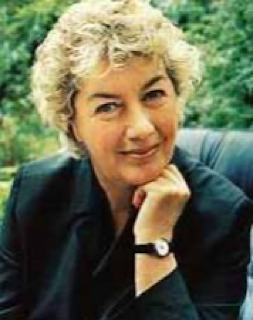
Death of Nuala O’Faolain, Journalist & Writer

Nuala Brigid Anne O’Faolainjournalist and writer, dies in Blackrock, Dublin, on May 9, 2008. Her debut memoirAre You Somebody?, published when she is in her mid-fifties, becomes a sensation in Ireland and a worldwide bestseller.

O’Faolain is born in Dublin on March 1, 1940, the second of nine children of Tomás O’Faolain and Kathleen O’Sullivan. Originally a schoolteacher and Army lieutenant, under the pen name Terry O’Sullivan, her father becomes a prominent social diarist for the Evening Press in Dublin. He is distant from his children and engages in extra-marital affairs which produce at least two half-siblings. Despite earning as much money as the newspaper’s editor, Douglas Gageby, he does not share his income with his family. The family lives in poor conditions, frequently going hungry. Her mother becomes an alcoholic, going to the pub every day at 4 p.m. and not returning home until midnight.

O’Faolain attends convent school in Dublin but is expelled at the age of fourteen after going home from dances with a married man. She then goes to a boarding school in County Monaghan, whose austere environment and strict educational standards benefit her. From there, she studies English literature at University College Dublin (UCD), where she runs in a social circle that includes Mary LavinJohn McGahernPatrick Kavanagh, and Louis MacNeice. Although she drops out of her studies temporarily and spends time working menial jobs in England, with financial assistance from Lavin and others, she graduates in 1961. On scholarships, she studies medieval English at the University of Hull before completing a postgraduate degree in 19th-century English literature at the University of Oxford. She then returns to Dublin to work at UCD as an academic in the English literature department, which brings her into contact with the bohemian Dublin literary scene of the late 1960s and early 1970s.

In 1970, O’Faolain moves to London to work for the BBC. She is a producer at the Community Programme Unit, which seeks to allow members of the public to create programmes for national broadcast on human interest topics like transgender people, anti-pornography protests, and community organising in the Bogside. She also makes programmes with the arts faculty of the Open University, and teaches evening classes at Morley College. During this period, she shows little interest in Ireland, regarding the country as backward and unsophisticated, but a visit to the Merriman Summer School in County Clare in 1974 sparks new enthusiasm. In 1977, she moves back to Dublin to work for the public broadcaster, RTÉ, where she becomes a colleague of female journalists like Doireann Ní BhriainMarian Finucane, and Nell McCafferty – later her partner – who are making programmes about Irish society with a feminist bent. She Is the producer of Women Today, a pioneering radio programme, from 1983 to 1986. One series she works on, Plain Tales, a televised interview programme in which women speak directly to camera about their life experiences, wins a Jacob’s Award in 1985.

O’Faolain has an interest in books from an early age, and credits voracious reading for helping her through a difficult childhood. She works as a book reviewer for The Times. Between 1990 and 1993, she co-presents Booklines, a television programme about books for RTÉ, a programme she says “nobody ever watched because it was on terribly late at night.”

In 1986, Conor Brady, the editor of The Irish Times, offers O’Faolain a newspaper column after hearing her being interviewed by Gay Byrne on the radio. Brady is struck by her ability to “infuse ordinary people’s everyday activities with value and interest.” The column becomes a major success and she is awarded journalist of the year in 1986.

O’Faolain acts as a roving commentator for The Irish Times, covering the 1994 Cregg Wood murders in County Clare, and visiting Northern Ireland at the time of the Good Friday Agreement in 1998. Following periods of leave while she works on her books, she leaves the paper in 2002, and writes a column in the Sunday Tribune from 2005 until her death.

O’Faolain never marries and has no children. Although she writes about her relationships with men and women, she does not identify as bisexual, though others have described her as such. She suffers from alcoholism. After Are You Somebody?, she divides her time between Ireland and New York City. During the final years of her life, she is in a relationship with a Brooklyn-based lawyer, John Low-Beer, whom she meets on Match.com.

O’Faolain is diagnosed with metastatic cancer while living in New York City in early 2008. She experiences a strange feeling in the right side of her body and presents at the emergency department of a hospital, where she is told that she has primary tumours in her lungs which has spread to her brain and liver, and that her cancer is incurable. She refuses chemotherapy.

O’Faolain returns to Ireland and is interviewed by her friend, Marian Finucane, on her radio show about her terminal illness on April 12, 2008. Both O’Faolain and Finucane are in tears during the interview, which is recorded in Galway, where she is undergoing radiotherapy. She tells Finucane: “I don’t want more time. As soon as I heard I was going to die, the goodness went from life”. Her frank discussion of her illness leads to the interview being preceded by a warning that her comments may be upsetting to others with life-threatening conditions. She says that she does not believe in God or an afterlife, but as in the song “Thíos i Lár an Ghleanna,” she is asking for help she knows will not come from a god she does not believe in. The interview has a major public impact in Ireland. After Finucane’s death in 2020, the Irish Independent describes it as “one of the most extraordinary [interviews] in the history of Irish broadcasting.”

In the final weeks of her life, O’Faolain travels Europe with close friends and family, staying in the Ritz Hotel in Paris and visiting the Berlin State Opera and the Prado Museum in Madrid for the first time. She dies in a hospice in Blackrock, Dublin, late on May 9, 2008. Her funeral takes place in the Church of Our Lady of the Visitation in Fairview in north Dublin on May 13. Her ashes are buried in Kilbarrack Cemetery in north Dublin with her maternal grandparents, Terence and Marion O’Sullivan, and her brother, Dermot Phelan.


Leave a comment

Birth of Geraldine Kennedy, First Female Editor of “The Irish Times”

Geraldine Kennedy, Irish journalist and politician who serves as the first female editor of The Irish Times newspaper, is born on September 1, 1951, in Tramore, County Waterford. She previously serves as a Teachta Dála (TD) for the Dún Laoghaire constituency from 1987 to 1989.

Kennedy studies at Dublin Institute of Technology (DIT) and begins her journalistic career with a regional newspaper, The Munster Express. She moves to The Cork Examiner after less than a year but spends only a few years there before joining The Irish Times.

On the foundation of the Sunday Tribune in 1980, Kennedy joins it as the paper’s political correspondent. The paper’s publisher, John Mulcahy, had become familiar with Kennedy when she had contributed to his journal, The Hibernia Magazine. When the Tribune briefly ceases production, she moves to the Sunday Press.

In 1982, Kennedy’s telephone, along with those of two other journalists, is tapped by former Minister for Justice Seán Doherty. Early in 1987, she successfully sues the incumbent Charles Haughey-led Fianna Fáil government for illegally tapping her phone. The revelation in 1992 that Charles Haughey had personally ordered the phone taps leads to Haughey’s resignation as Taoiseach.

Kennedy stands in the 1987 Irish general election as a candidate for the newly formed Progressive Democrats party in Dún Laoghaire. She comes in third in the poll, winning 9.4% of the first-preference vote. She is one of fourteen Progressive Democrat TDs elected to Dáil Éireann in that election, a feat the party never achieves again. She is appointed the party’s spokesperson for foreign affairs.

She stands again in the 1989 Irish general election and wins 9% of the first-preference vote but fails to retain her seat.

Following her election defeat, Kennedy returns to The Irish Times, then edited by Conor Brady, whom she had worked with at the Tribune when he was the editor. She avoids party-political journalism for several years, but she returns to covering politics in the early 1990s and becomes the political editor of The Irish Times in 1999. She becomes the newspaper’s first female editor upon the departure of Brady in late 2002. One of her rivals for the editor’s chair is the paper’s high-profile columnist, Fintan O’Toole.

Kennedy is paid more than the editor of Britain’s top non-tabloid newspaper The Daily Telegraph, which has a circulation of about nine times that of The Irish Times. Later columnist Fintan O’Toole tells the Sunday Independent, “We as a paper are not shy of preaching about corporate pay and fat cats but with this there is a sense of excess. Some of the sums mentioned are disturbing. This is not an attack on Ms. Kennedy, it is an attack on the executive level of pay. There is double standard of seeking more job cuts while paying these vast salaries.”

In September 2006, Kennedy approves the publication of an article in The Irish Times giving confidential details of investigations being made into payments purported to have been made in 1993 to Taoiseach Bertie Ahern. She refuses, upon request of the investigating Mahon Tribunal, to provide details of the source of the printed information. She responds that the documents have since been destroyed. Her refusal causes the Tribunal to seek High Court orders compelling her to provide details of the source. On October 23, 2007, the High Court grants the orders compelling her to go before the Tribunal and answer all questions. In its judgment, the High Court, criticising her decision to destroy the documents, says it was an “astounding and flagrant disregard of the rule of law.” In 2009, however, the Supreme Court of Ireland overturns this ruling, holding that the High Court had not struck the correct balance between the journalists’ right to protect their source and the tribunal’s right to confidentiality.

Kennedy announces on March 12, 2011, her intention to retire from The Irish Times by September, after a nine-year term as editor. She actually retires in June and is succeeded by news editor Kevin O’Sullivan on June 23, 2011.

In August 2012, Kennedy is appointed Adjunct Professor of Journalism at the University of Limerick. She has been awarded five honorary doctorates from Irish universities.


Leave a comment

Geraldine Kennedy Appointed Editor of The Irish Times

Geraldine Kennedy, Irish journalist and politician, is appointed editor of The Irish Times on October 11, 2002, becoming the first female editor of a national daily newspaper.

Kennedy is born on September 1, 1951, in Tramore, County Waterford. She studies at Dublin Institute of Technology and begins her journalistic career with a regional newspaper, The Munster Express. She moves to The Cork Examiner after less than a year but spends only a few years there before joining The Irish Times.

On the foundation of the Sunday Tribune in 1980, Kennedy joins it as the paper’s political correspondent. The paper’s publisher, John Mulcahy, had become familiar with her when she had contributed to his journal Hibernia. When the Tribune briefly ceases production, she moves to the Sunday Press.

In 1982, Kennedy’s telephone, along with those of two other journalists, is tapped by former Minister for Justice Seán Doherty. Early in 1987, Kennedy successfully sues the incumbent Charles Haughey-led Fianna Fáil government for illegally tapping her phone. The revelation in 1992 that Haughey had ordered the phone taps leads to his resignation as Taoiseach.

Kennedy stands in the 1987 Irish general election as a candidate for the newly formed Progressive Democrats party in Dún Laoghaire. She comes third in the poll, winning 9.4% of the first-preference vote. She is one of fourteen Progressive Democrats TDs elected to Dáil Éireann in that election — a feat the party never achieves again. She is appointed the party’s spokesperson for foreign affairs. She stands again in the 1989 Irish general election and wins 9% of the first-preference vote but fails to retain her seat.

Following her election defeat, Kennedy returns to The Irish Times, then edited by Conor Brady, whom she had worked with at the Tribune when he was the editor. She avoids party-political journalism for several years, but she returns to covering politics in the early 1990s and becomes The Irish Times‘ political editor in 1999. She becomes the newspaper’s first female editor upon the departure of Conor Brady in October 2002. One of her rivals for the editor’s chair is the paper’s high-profile columnist, Fintan O’Toole.

Kennedy is paid more than the editor of Britain’s top non-tabloid newspaper The Daily Telegraph, which has a circulation of about nine times that of The Irish Times. Later columnist Fintan O’Toole tells the Sunday Independent, “We as a paper are not shy of preaching about corporate pay and fat cats but with this there is a sense of excess. Some of the sums mentioned are disturbing. This is not an attack on Ms. Kennedy, it is an attack on the executive level of pay. There is double standard of seeking more job cuts while paying these vast salaries.”

In September 2006, Kennedy approves the publication of an article in The Irish Times giving confidential details of investigations being made into payments purported to have been made in 1993 to Taoiseach Bertie Ahern. She refuses, upon request of the investigating Mahon Tribunal, to provide details of the source of the printed information. She responds that the documents have since been destroyed. Her refusal causes the Tribunal to seek High Court orders compelling her to provide details of the source. On October 23, 2007, the High Court grants the orders compelling her to go before the Tribunal and answer all questions. In its judgment, the High Court, criticising her decision to destroy the documents, says it is an “astounding and flagrant disregard of the rule of law.” In 2009, however, the Supreme Court of Ireland overturns this ruling, holding that the High Court had not struck the correct balance between the journalists’ right to protect their source and the tribunal’s right to confidentiality.

Kennedy announces on March 12, 2011, her intention to retire from The Irish Times by September, after a nine-year term as editor. She actually retires in June, and is succeeded by news editor, Kevin O’Sullivan, who succeeds her as editor on June 23, 2011.

In August 2012, Kennedy is appointed Adjunct Professor of Journalism at the University of Limerick. She has been awarded five honorary doctorates from Irish universities.