seamus dubhghaill

Promoting Irish Culture and History from Little Rock, Arkansas, USA


Leave a comment

Death of Patrick Dinneen, Lexicographer & Historian

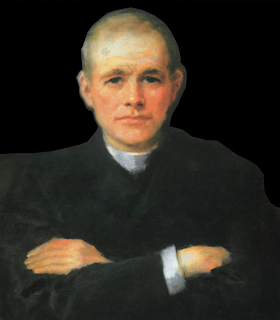
Patrick Stephen Dinneen (Irish: Pádraig Ua Duinnín), an Irish lexicographer, historian and a leading figure in the Gaelic revival, dies in Dublin on September 29, 1934.

Dinneen is born near Rathmore, County Kerry on December 25, 1860, the fifth of ten children of Maitiú Ó Duinnín, farmer and livestock trader, and Máire Ní Dhonnchadha. He is educated at Shrone and Meentogues National Schools and at St. Brendan’s College in Killarney. He earns second class honours bachelor’s and master’s degrees from the Royal University of Ireland. The BA (1885) is in classics and mathematical science, the MA (1889) is in mathematical science. He joins the Society of Jesus in 1880 and is ordained a priest in 1894, but leaves the order in 1900 to devote his life to the study of the Irish language while still remaining a priest. After his ordination, he teaches Irish, English, classics, and mathematics in three different Jesuit colleges, including Clongowes Wood College, a Jesuit boarding school near Clane, County Kildare.

Dinneen is a leading figure in the Irish Texts Society, publishing editions of Geoffrey Keating‘s Foras Feasa ar Éirinn, poems by Aogán Ó RathaillePiaras FeiritéarTadhg Gaelach Ó Súilleabháin, and other poets. He also writes a novel and a play in Irish, and translates such works as Charles Dickens‘s A Christmas Carol into Irish. His best known work, however, is his Irish–English dictionaryFoclóir Gaedhilge agus Béarla, which is first published in 1904. The stock and plates of the dictionary are destroyed during the Easter Rising of 1916, so Dinneen takes the opportunity to expand the dictionary. A much larger second edition, compiled with the assistance of Liam S. Gógan, is published in 1927. His request to the Irish Texts Society to include Gogan’s name on the title page is refused. Gogan continues to work on the collection of words up to his death in 1979. This complementary dictionary is published online in 2011.

Dinneen dies in Dublin at the age of 73 on September 29, 1934, and, following a funeral Mass in the Jesuits’ Gardiner Street church, is buried in Glasnevin Cemetery, Dublin.

(Pictured: Portrait of Patrick S. Dinneen, oil on canvas by John Butler Yeats, National Gallery of Ireland)


Leave a comment

Birth of John Jordan, Poet & Writer

john-jordan

John Jordan, Irish poet, short-story writer and broadcaster, is born in the Rotunda Hospital, Dublin on April 8, 1930.

Jordan is educated at Synge Street CBS, University College Dublin (UCD) and Pembroke College, Oxford. In his teens he acts on the stage of the Gate Theatre, Dublin, before winning a Scholarship in English and French to the University of Oxford from UCD. In the mid-1950s he returns to UCD as a lecturer in English and teaches there until the end of the 1960s. He also lectures on sabbatical leave at the Memorial University of Newfoundland and briefly at Princeton University in the United States. He is a founding member of Aosdána. He is a celebrated literary critic from the late 1950s until his death on June 6, 1988, in Cardiff, Wales, where he had been participating in the Merriman Summer School.

In 1962 Jordan re-founds and edits the literary magazine Poetry Ireland in hopes of contributing towards the recreation of Dublin as a literary centre. In this journal, he introduces a number of poets who are to become quite famous later, including Paul Durcan, Michael Hartnett and Seamus Heaney. This series of Poetry Ireland lasts until 1968–69.

In 1981 Jordan becomes the first editor of the new magazine published by the Poetry Ireland Society, called Poetry Ireland Review. He serves as a reviewer of novels for The Irish Times, writes a column for Hibernia, contributes to Envoy, A Review of Literature and Art and The Irish Press among others, and serves as a TV presenter and arts interviewer. He is a defender of Gaelic literature, translates Pádraic Ó Conaire, edits The Pleasures of Gaelic Literature (Mercier Press, 1977), and champions the later plays of Seán O’Casey. His translation of one of Aogán Ó Rathaille‘s essays is published in The Pleasures of Gaelic Poetry (London: Allen Lane, 1982).

Jordan’s Collected Poems (Dedalus Press) and Collected Stories (Poolbeg Press) are edited by his literary executor, Hugh McFadden, and published in Dublin in 1991. His Selected Prose, Crystal Clear, also edited by McFadden, is published by The Lilliput Press in Dublin in 2006. His Selected Poems, edited with an introduction by McFadden, is published in February 2008 by Dedalus Press. Uncollected stories appear in Penguin Book of Irish Short Stories, Cyphers, and The Irish Press, among other places.

Jordan’s literary papers and letters are held in the National Library of Ireland. In 1953 the young Irish artist Reginald Gray is commissioned by University College Dublin to design the decor and costumes for their production of “The Kings Threshold” by William Butler Yeats. The leading role is given to Jordan. During the preparations for the production, Gray starts a portrait of Jordan, which he never finishes. This work now hangs in the Dublin Writers Museum.

(Pictured: John Jordan, by Patrick Swift, c. 1950)