seamus dubhghaill

Promoting Irish Culture and History from Little Rock, Arkansas, USA


Leave a comment

Birth of John Gray, Physician, Journalist & Politician

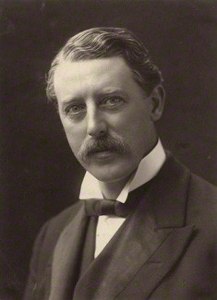
Sir John Gray JP, Irish physician, surgeon, newspaper proprietor, journalist and politician, is born in Claremorris, County Mayo, on July 13, 1815. He is active both in municipal and national government for much of his life and has nationalist ideals, which he expresses as owner of the Freeman’s Journal, chairman of the Dublin Corporation Water Works Committee between 1863 and 1875, and Member of Parliament in the House of Commons of the United Kingdom of Great Britain and Ireland for Kilkenny City from 1865 until his death.

Gray is the third son of John and Elizabeth Gray of Mount Street. He is educated at Trinity College Dublin and obtains the degree of M.D. and Master of Surgery at the University of Glasgow in 1839. Shortly before his marriage in the same year, he settles in Dublin and takes up a post at a hospital in North Cumberland Street. He is admitted as a licentiate of the Royal College of Physicians in due course.

Gray is publicly minded and contributes to periodicals and the newspaper press. In 1841, he becomes joint proprietor of the Freeman’s Journal, a nationalist paper which is then published daily and weekly. He acts as political editor of the Journal for a time, before becoming sole proprietor in 1850. As owner, he increases the newspaper’s size, reduces its price and extends its circulation.

Gray enters politics at a relatively young age and attaches himself to Daniel O’Connell‘s Repeal Association. As a Protestant Nationalist, he supports the movement for the repeal of the Acts of Union with Britain. In October 1843, he is indicted with O’Connell and others in the Court of the Queen’s Bench in Dublin on a charge of sedition and “conspiracy against the queen.” The following February, he, together with O’Connell, is condemned to nine months imprisonment, but in early September 1844 the sentence is remitted on appeal. The trial has a strong element of farce, as the hot-tempered Attorney-General for Ireland, Sir Thomas Cusack-Smith, challenges Gray’s counsel, Gerald Fitzgibbon, to a duel, for which he is sternly reprimanded by the judges. From then on Gray is careful to distance himself from the advocacy of violence in the national cause, though he is sympathetic to the Young Ireland movement without being involved in its 1848 rebellion. Through the growing influence of the Freeman’s Journal, he becomes a significant figure in Dublin municipal politics. He is also active in national politics during an otherwise quiet period of Irish politics up until 1860. With the resurgence of nationalism after the famine, he helps to organise the Tenant’s League founding conference in 1850, standing unsuccessfully as the League’s candidate for Monaghan in the 1852 United Kingdom general election.

Later Gray originates and organises the “courts of arbitration” which O’Connell endeavours to substitute for the existing legal tribunals of the country. Following O’Connell’s death, in 1862 he inaugurates an appeal for subscriptions to build a monument to O’Connell on Sackville Street (now O’Connell Street). Independent from O’Connell, he continues to take a prominent part in Irish politics and in local affairs.

In municipal politics, Gray is elected councillor in 1852 and alderman of Dublin Corporation and takes an interest in the improvement of the city. As chairman of the committee for a new water supply to Dublin, he actively promotes what becomes the “Vartry scheme.” The Vartry Reservoir scheme involves the partial redirection and damming of the River Vartry in County Wicklow, and the building of a series of water piping and filtering systems (and related public works) to carry fresh water to the city. This work is particularly important in the improvement of conditions in the city, and to public health, as it improves sanitation and helps reduce outbreaks of cholera, typhus and other diseases associated with contaminated water. On the opening of the works on June 30, 1863, he is knighted by the Earl of Carlisle, then Lord Lieutenant of Ireland. Partially in recognition of these efforts, he is later be nominated for the position of Lord Mayor of Dublin for the years 1868–69, but he declines to serve.

In national politics, the Liberal government at the time is keen to conciliate an influential representative of the moderate nationalists to support British Liberalism and who will resume O’Connell’s constitutional agitation. In an unusual alliance with the Catholic Archbishop of Dublin, Paul Cullen, a man devoted to O’Connell’s memory, Gray’s newspaper exploits this shift in government policy. It supports the archbishop’s creation, the National Association of Ireland, established in 1864 with the intention of providing a moderate alternative to the revolutionary nationalism of the Fenians. The Freeman’s Journal adopts the aims of the Association as its own: it advocates the disestablishment of the Anglican Church of Ireland, reform of the land laws, educational aspirations of Irish Catholicism and free denominal education.

In the 1865 United Kingdom general election Gray is elected MP for Kilkenny City as a Liberal candidate. In this capacity he campaigns successfully at Westminster and in Ireland for the reforms also advocated in his paper. His newspaper’s inquiry into the anomalous wealth of the established church amidst a predominately Catholic population contributes considerably to William Ewert Gladstone‘s Irish Church Act 1869. He helps to furnish the proof that Irish demands are not to be satisfied by anything other than by radical legislation. He fights for the provision in the new Landlord & Tenant (Ireland) Act 1870 for fixity of tenure, which Gladstone eventually concedes. The Act’s other weaknesses, however, result in its failure to resolve the “land question,” the accompanying coercion, the disappointment with Gladstone’s handling of the university question and national education, causing Gray to deflect from the Liberals and become mistrusted in Britain. In the 1874 United Kingdom general election he is re-elected as a Home Rule League MP for Kilkenny, joining its Home Rule majority in the House of Commons, and holds his seat until his death the following year.

Gray dies at Bath, Somerset, England, on April 9, 1875. His remains are returned to Ireland, and he is honoured with a public funeral at Glasnevin Cemetery. Almost immediately afterwards public subscriptions are sought for the erection in O’Connell Street, of a monument to Gray. The monument is completed in 1879 and is dedicated to the “appreciation of his many services to his country, and of the splendid supply of pure water which he secured for Dublin.” His legacy also includes his contributions to the passage of the Irish Church and Land Bills, his advocacy for tenant’s rights and his support of the Home Rule movement.

Gray marries Mary Anna Dwyer of Limerick in 1839, and they have five children, three sons and two daughters. One of his sons, Edmund Dwyer Gray, takes over the management of the Freeman’s Journal. Edmund also follows his father into politics, eventually becoming MP for Dublin St. Stephen’s Green, Lord Mayor of Dublin (1880–1881), and a supporter of Charles Stewart Parnell. Edmund John Chisholm Dwyer-Gray, Edmund Dwyer Gray’s son and John Gray’s grandson, becomes Premier of Tasmania.

(Pictured: Statue to Sir John Gray on Dublin’s O’Connell Street, designed by Thomas Farrell and unveiled on June 24, 1879. Photo credit: Graham Hickey)
Leave a comment

“The Siege of Rochelle” First Performed at Drury Lane Theatre

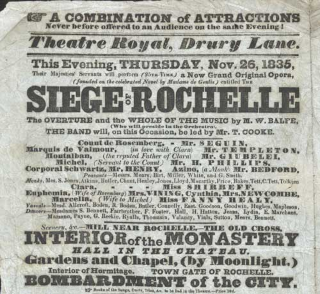
Irish composer Michael William Balfe‘s opera The Siege of Rochelle is first performed at the Drury Lane Theatre in London on October 29, 1835.

The opera is originally prepared for the English Opera House but for some reason the theatrical manager, Samuel James Arnold, does not want it. Instead, Alfred Bunn, the manager of Drury Lane Theatre, seizes the opportunity and begins what is a very fruitful collaboration with Balfe that lasts a decade. Balfe is to become the mainstay of English Opera for almost the next 30 years with a succession of popular operas.

The opera runs for 70 nights on its initial run and is revived in the following three seasons with Balfe singing the role of Michel. Queen Victoria sees the opera on November 15, 1837, her first state visit to a theatre during her reign. In 1836, the opera is reported as staged in Leeds, York, Sheffield, Manchester, Liverpool, Bath and Dublin with Abigail Betts as Clara. John Wilson, who sings in the initial run of the opera, also sings in, at least, some of these. Madame Balfe chooses the opera for her benefit in 1841, and Bunn opens his 1843 season with it on September 30. Emma Romer uses it to open her 1853 season at the Surrey Theatre, although it is being described by then as “somewhat hacknied.”

October 1875 sees a revival of the opera by the Carl Rosa Opera Company at the Princess’s Theatre, and it is then included in the company’s repertoire that tours to Manchester in 1875, Liverpool in 1876, Birmingham in 1877 and Dublin in 1879. The Turner Company tours it in 1893. This is possibly the opera’s last performance until the Wexford Festival Opera performances in 1963. The overture and songs from the opera, such as “When I beheld the anchor weigh’d” continue to retain a place in the concert hall and the home into the 20th century.

In 1838, the opera is performed by the Caradori-Allan troupe at the Park Theatre in New York but fails although it appears to be retained in the repertory. In 1839, it is performed again in Dublin with Balfe as Michel and in Sydney in 1848.

The opera’s production sparks an acrimonious argument between a correspondent in The Examiner accusing Balfe of plagiarism from Luigi Ricci‘s 1832 opera, Chiara di Rosemberg, and, in defence, Frederick Beale, from Balfe’s publishers, and Balfe. The matter seems to be settled in Balfe’s favour when the score of Chiara di Rosemberg is displayed at music publisher Cramer, Beale and Co. so that people can compare the two for themselves. While Edward Fitzball probably uses Ricci’s libretto as the basis for his, it does not seem to have been a straight translation, as some allege, but similarities would help to feed the accusations of plagiarism, bolstered by the Italian training and approach of both composers and the fact that Balfe had sung in Chiara di Rosemberg in Italy in 1834.

Balfe is said to have been paid £5 a night by Bunn and 400 guineas for the score by the publishers Cramer, Beale and Co. In 1871, the Bury and Norwich Post (April 11, 1871) report that the copyright has sold for £156 and just over ten years later the Aberdeen Evening Express (May 8, 1883) notes that the copyright has been sold again for approximately £20, adding “So much for Balfe’s ‘popularity.”


Leave a comment

Birth of James Sheridan Knowles, Dramatist & Actor

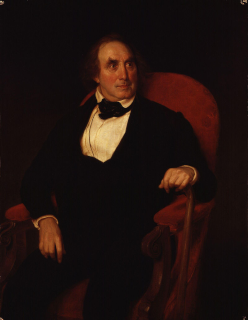
James Sheridan Knowles, Irish dramatist and actor, is born in Cork, County Cork, on May 12, 1784. A relative of Richard Brinsley Sheridan, he enjoys success writing plays for the leading West End theatres. Later in his career he also produces several novels.

Knowles’s father is the lexicographer James Knowles, cousin of Richard Brinsley Sheridan. The family moves to London in 1793, and at the age of fourteen he publishes a ballad entitled The Welsh Harper, which, set to music, is very popular. His talents secure him the friendship of William Hazlitt, who introduces him to Charles Lamb and Samuel Taylor Coleridge. He serves for some time in the Wiltshire and afterwards in the Tower Hamlets militia, leaving the service to become a pupil of Dr. Robert Willan. He obtains the degree of M.D. and is appointed vaccinator to the Jennerian Society.

Although Dr. Willan offers him a share in his practice, Knowles decides to give up medicine for the stage, making his first appearance as an actor probably at Bath, and plays Hamlet at the Crow Street Theatre, Dublin. At Wexford he marries, in October 1809, Maria Charteris, an actress from the Edinburgh Theatre. In 1810, he writes Leo, a successful play in which Edmund Kean appears. Another play, Brian Boroihme, written for the Belfast Theatre in the next year, attracts crowds. Nevertheless, his earnings are so small that he is obliged to become assistant to his father at the Royal Belfast Academical Institution. In 1817 he moves from Belfast to Glasgow, where, besides keeping a flourishing school, he continues to write for the stage.

Knowles first important success is Caius Gracchus, produced at the Belfast Theatre in 1815. His Virginius, written for William Charles Macready, is first performed in 1820 at Covent Garden. In William Tell (1825), he writes for Macready one of his favourite parts. His best-known play, The Hunchback, is produced at Covent Garden in 1832, and he wins praise acting in the work as Master Walter. The Wife is brought out at the same theatre in 1833. The Daughter, better known as The Wrecker’s Daughter, in 1836, and The Love Chase in 1837. His 1839 play Love is praised by Mary Shelley for its “inspiring situations founded on sentiment and passion.” His second wife is the actress, Emma Knowles.

In his later years Knowles forsakes the stage for the pulpit and, as a Baptist preacher, attracts large audiences at Exeter Hall and elsewhere. He publishes two polemical works: the Rock of Rome and the Idol Demolished by Its Own Priests in both of which he combats the special doctrines of the Roman Catholic Church. He is for some years in the receipt of an annual pension of £200, bestowed by Sir Robert Peel in 1849. In old age he befriends the young Edmund Gosse, whom he introduces to Shakespeare. He makes a happy appearance in Gosse’s Father and Son.

Knowles dies at Torquay on November 30, 1862. He is buried under a huge tomb at the summit of the Glasgow Necropolis.

A full list of the works of Knowles and of the various notices of him can be found in The Life of James Sheridan Knowles (1872), privately printed by his son, Richard Brinsley Knowles (1820–1882), who is well known as a journalist. It is translated into German.


Leave a comment

Lord Gosford Denounces Protestant Extremists in Armagh

The Governor of County Armagh, Arthur Acheson, 1st Earl of Gosford, gives his opinion of the violence in Armagh which results from the “battle” at a meeting of magistrates on December 28, 1795.

Acheson is born around 1744-45. He is the eldest son of Archibald Acheson, 1st Viscount Gosford, and his wife, the former Mary Richardson. His paternal grandfather is Sir Arthur Acheson, 5th Baronet, and his maternal grandfather is John Richardson of Rich Hill. His father succeeds to the baronetcy in 1748 upon the death of his father and is subsequently created Baron Gosford in 1776 and Viscount Gosford in 1785.

In 1774, Acheson marries Millicent Pole, daughter of Lieutenant-General Edward Pole, who is descended from the Poles of Radbourne Hall in Derbyshire, and Olivia (née Walsh) Pole, a daughter and heiress of John Walsh of Ballykilcavan. The have seven children, two of whom die at a young age.

Acheson is a Member of Parliament (MP) for Old Leighlin from 1783 until 1791. He serves as governor of County Armagh at the time of the Armagh disturbances of 1795 and on December 28 denounces the Protestant extremists:

“It is no secret that a persecution is now raging in this country… the only crime is… profession of the Roman Catholic faith. Lawless banditti (Orange Order) have constituted themselves judges… and the sentence they have denounced… is nothing less than a confiscation of all property, and an immediate banishment.”

Upon the death of his father in 1790, Acheson succeeds to the viscountcy. He is subsequently created Earl of Gosford in February 1806.

Acheson dies on January 14, 1807, at Bath, Somerset, England. His widow, Lady Gosford, dies on November 1, 1825.

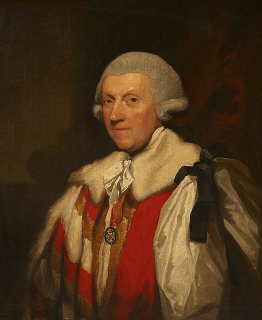
(Pictured: “Arthur Acheson (c.1742–1807), 2nd Viscount, 1st Earl of Gosford,” oil on canvas by Gilbert Stuart)


Leave a comment

Birth of Thomas Heazle Parke, Physician, British Army Officer & Author

Thomas Heazle Parke FRSGS, Irish physician, British Army officer and author who is known for his work as a doctor on the Emin Pasha Relief Expedition, is born at Clogher House in Kilmore, County Roscommon on November 27, 1857.

Parke is brought up in Carrick-on-Shannon, County Leitrim. He attends the Royal College of Surgeons in Ireland in Dublin, graduating in 1878. He becomes a registered medical practitioner in February 1879, working as a dispensary medical officer in Ballybay, County Monaghan, and then as a surgeon in Bath, Somerset, England.

Parke joins the British Army Medical Services (AMS) in February 1881 as a surgeon, first serving in Egypt during the final stages of the ʻUrabi revolt in 1882. As a senior medical officer at a field hospital near Cairo, he is responsible for treating battle casualties as well as the deadly cholera epidemic that afflicts 20% of British troops stationed there. In late 1883, he returns to Ireland, where he is stationed at Dundalk with the 16th The Queen’s Lancers. He arrives in Egypt once again in 1884 as a part of the Nile Expedition sent in relief of General Charles Gordon, who is besieged in Khartoum by Mahdists in neighbouring Sudan. The expedition arrives too late, and Gordon is killed. Parke later negatively recounts this experience in an 1892 journal article titled How General Gordon Was Really Lost. Following the expedition, he spends the next few years stationed in Alexandria, where he notably introduces fox hunting to Egypt, becoming master of the Alexandria Hunt Club.

In January 1887, while in Alexandria, Parke is invited by Edmund Musgrave Barttelot to accompany him on the Emin Pasha Relief Expedition. The expedition is led by Henry Morton Stanley, and journeys through the African wilderness in relief of Emin Pasha, an Egyptian administrator who had been cut off by Mahdist forces following the Siege of Khartoum. He is initially rejected by Stanley upon his arrival in Alexandria but is invited by telegram a day later to join the expedition in Cairo. On February 25, 1887, the expedition sets off from Zanzibar for the Congo.

The expedition lasts for three years and faces great difficulty, with the expedition of 812 men suffering from poor logistical planning and leadership. The rainforest is much larger than Stanley expected, leading much of the party to face starvation and disease. The expedition has to resort to looting native villages for food, escalating the conflict between the two groups. Parke, for his part, saves the lives of many in the party, including Stanley, who suffers from acute abdominal pain and a bout of sepsis. Stanley describes Parke’s care as “ever striving, patient, cheerful and gentle…most assiduous in his application to my needs, and gentle as a woman in his ministrations.” Parke also treats Arthur Jephson for fever, and nurses Robert H. Nelson through starvation. Furthermore, after a conflict with the natives, he has to save William Grant Stairs by orally sucking the poison out of an arrow wound.

During the expedition, Parke purchases from an Arab slaver a Mangbetu Pigmy girl, who serves as his nurse and servant for over a year.

After returning to Ireland, Parke receives an Honorary Fellowship of the Royal College of Surgeons in Ireland and is awarded gold medals from the British Medical Association (BMA) and the Royal Geographical Society. He publishes several books, including My Personal Experiences in Equatorial Africa (1891) and A Guide to Health in Africa.

In August 1893, Parke visits William Beauclerk, 10th Duke of St. Albans in Ardrishaig, Scotland. He dies during that visit on August 11, 1893, presumably due to a seizure. His coffin is brought back to Ireland, where he receives a military funeral as it passes from the Dublin docks to Broadstone railway station. He is buried near his birthplace in Drumsna, County Roscommon.

A bronze statue of Parke stands on Merrion Street in Dublin, outside the National Museum of Ireland – Natural History. He is also commemorated by a bust in the Royal College of Surgeons in Ireland.

(Pictured: Photograph of Thomas Heazle Parke by Eglington & Co., Wellcome Collection gallery)


Leave a comment

Birth of Richard Lovell Edgeworth, Politician, Writer & Inventor

Richard Lovell Edgeworth, Anglo-Irish politician, writer and inventor, is born on May 31, 1744, in Pierrepont Street, Bath, Somerset, England.

Edgeworth is the son of Richard Edgeworth senior, and great-grandson of Sir Salathiel Lovell through his mother, Jane Lovell, granddaughter of Sir Salathiel. The Edgeworth family comes to Ireland in the 1580s. He is descended from Francis Edgeworth, appointed joint Clerk of the Crown and Hanaper in 1606, who inherits a fortune from his brother Edward Edgeworth, Bishop of Down and Connor.

A Trinity College, Dublin and Corpus Christi College, Oxford alumnus, Edgeworth is credited for creating, among other inventions, a machine to measure the size of a plot of land. He also makes strides in developing educational methods. He anticipates the caterpillar track with an invention that he plays around with for forty years but never successfully develops. He describes it as a “cart that carries its own road.”

Edgeworth is married four times, including both Honora Sneyd and Frances Beaufort, older sister of Francis Beaufort of the Royal Navy. He is the father of 22 children by his four wives. Beaufort and he install a semaphore line for Ireland. He is a member of the Lunar Society of Birmingham. The Lunar Society evolves through various degrees of organization over a period of years but is only ever an informal group. No constitution, minutes, publications or membership lists survive from any period, and evidence of its existence and activities is found only in the correspondence and notes of those associated with it. Dates given for the society range from sometime before 1760 to it still operating as late as 1813. Fourteen individuals have been identified as having verifiably attended Lunar Society meetings regularly over a long period during its most productive time: these are Matthew Boulton, Erasmus Darwin, Thomas Day, Richard Lovell Edgeworth, Samuel Galton, Jr., James Keir, Joseph Priestley, William Small, Jonathan Stokes, James Watt, Josiah Wedgwood, John Whitehurst and William Withering.

Edgeworth and his family live in Ireland at his estate at Edgeworthstown, County Longford, where he reclaims bogs and improves roads. He sits in Grattan’s Parliament for St. Johnstown (County Longford) from 1798 until the Act of Union 1801 and advocates Catholic Emancipation and parliamentary reform. He is a founder-member of the Royal Irish Academy.

Edgeworth dies in Edgeworthstown on June 13, 1817.

(Pictured: “Portrait of Richard Lovell Edgeworth (1744-1817)” oil on canvas by Hugh Douglas Hamilton)


Leave a comment

Birth of Novelist & Critic John Broderick

Irish novelist and critic John Broderick is born in Athlone, County Westmeath, on July 30, 1924.

Broderick is the only child of the proprietors of a thriving local business, Broderick’s Bakery. His father dies when he is just three years old. He begins his secondary education at the Marist Brothers’ School but, at the age of 12, on his mother’s remarriage to the bakery manager in 1936, he is sent to board at St. Joseph’s College, Garbally Ballinasloe. He leaves in 1941 without sitting the Leaving Certificate and is expected to take over the bakery business, but always intends to write.

From 1951 he lives for a time in Paris where he knows some of the French and expatriate literary community, among them Gore Vidal, Truman Capote, James Baldwin and most importantly Julien Green. Green is a French Academician and highly respected novelist and diarist, who becomes a mentor and personal friend. He visits Broderick in Athlone in 1974 and 1975.

The Irish Times accepts a travel article from Broderick in 1956. In the same year, the paper publishes the first of his book reviews. He continues to review widely and to write general articles for The Irish Times and Hibernia magazine, among others, until shortly before his death. As a critic he is frequently controversial being dismissive of a number of established writers including Heinrich Boll, Seamus Heaney and most notably Edna O’Brien while he is extremely generous and encouraging to a host of young Irish writers. His first novel, The Pilgrimage (1961) is banned by the Irish Censorship of Publications Board. Broderick is elected to membership of the Irish Academy of Letters in 1968, and in 1975 receives the Academy’s Annual Award for Literature.

Broderick lives most of his life in Athlone, with his mother until her death in 1974, and alone until he moves to Bath, England in 1981. He dies in Bath in 1989. The Westmeath County Library system has a collection of his papers, manuscripts and other materials.

Most of Broderick’s family are born and reared in Athlone, and many still live there today. John Broderick is third cousins to Shauna, Cliodhna and Aisling Golden, three sisters who perform together as a singing act called “The Golden Sisters” who are quarter finalists on the RTÉ prime time show “The All Ireland Talent Show.”


3 Comments

Birth of Stage Actress Julia Betterton Glover

julia-betterton-glover

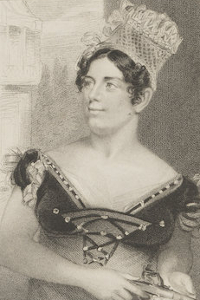
Julia Betterton Glover, Irish-born stage actress well known for her comic roles in the late 18th and 19th centuries, is born on January 8, 1779, in Newry, in what is now Northern Ireland.

“Betterton” is not her real name, despite her father`s promotion of the fiction. She is born Julianna Butterton, the daughter of the Newry`s theatre manager William Butterton. His venture fails and he decides there will be financial benefit to him if her name is changed to “Betterton,” claiming links to a famous actor and long dead Thomas Betterton. With this deception he and his family travel round the theatres and the young Julia is acclaimed as an infant acting prodigy in York, the West Country, Bath, and elsewhere.

In 1787, she joins the York Circuit under manager Tate Wilkinson and appears as the Page in Thomas Otway‘s The Orphan, as well as the Duke of York with George Frederick Cooke in Richard III. When Cooke is cast as Glumdalca, the Queen of the Giants, in Henry Fielding‘s burlesque play Tom Thumb, Cooke chooses Julia to play the title role.

In 1790, at age nine, she makes her debut in Scotland at the Dumfries Theatre Royal. In 1795 she goes to Bath and plays the parts of Juliet, Imogen, Desdemona, Lady Macbeth, and Lydia Languish. She becomes well known, particularly praised for her comic role as Languish, and news of her success reaches London. A number of job offers are made, but they are declined by her father. He eventually accepts a lucrative offer, taking her salary for himself, for which she makes her London début in 1797 as Percy by Hannah More.

In 1800, her father sells her in marriage to Samuel Glover, the son of an industrial family from Birmingham, for £1, 000, although the money is never paid. Unhappily married, she has eight children, four of whom survive childhood. In 1820, she plays Hamlet at the Lyceum Theatre to critical acclaim. In 1822, she appears as Nurse in Romeo and Juliet at the Theatre Royal, Drury Lane. Her daughter Phyllis plays Juliet. On February 8, 1837, her father, with whom she has had an unhappy relationship, dies.

One of her sons is Edmund Glover and another is William Howard Glover. In 1850, Glover announces her retirement from the stage. After two weeks confined to her bed, she appears at Drury Lane for her farewell benefit performance on July 12, 1850, as Mrs. Malaprop in The Rivals. She is noticeably ill and weak during her performance and is unable to stand to receive her applause at the end of the play. Instead, the curtain rises to reveal Glover seated, surrounded by the rest of the cast. She dies in London four days later on July 16, 1850. She is buried in St. George’s Churchyard Gardens in London.


Leave a comment

Birth of Henry Grattan Guinness, Evangelist & Author

henry-grattan-guinness

Henry Grattan Guinness, Irish Protestant Christian preacher, evangelist, and author, is born in Kingstown in Taney Parish, Dublin, on August 11, 1835. He is the great evangelist of the Evangelical awakening and preaches during the Ulster Revival of 1859 which draws thousands to hear him. He is responsible for training and sending hundreds of “faith missionaries” all over the world.

Guinness begins preaching in 1855. He offers to join the China Inland Mission founded by James Hudson Taylor in 1865 but takes Taylor’s advice to continue his work in London.

In September 1866, while in Keighley, Yorkshire, Guinness sees a notice advertising a series of lectures by the freethinker and communist Harriet Law. For a week he holds a series of meetings at the same time to try to counteract her influence. He is appalled at the “scoffing unbelief” of such speakers. With the help of Professor John Couch Adams, some astronomical tables, and examination of the scriptures, Guinness works out the prophetic chronology of the bible in terms of a series of “solilunar cycles.” This proves to him that he is living at the end of the sixth unsabbatic day of creation, 6,000 years from Adam, and that the “redemption Sabbath” will soon arrive. This revelation becomes the subject of many of his books and sermons.

In March 1873, Henry and his wife Fanny start the famous East London Missionary Training Institute, also known as Harley College, at Harley House in Bromley-by-Bow, East End of London with just six students. The renowned Dr. Thomas John Barnardo is co-director with Dr. Guinness and is greatly influenced by him. The school trains 1,330 missionaries for 30 societies of 30 denominations.

Harley College becomes so successful that it needs a larger home. In 1883, Elizabeth Hulme offers Guinness Cliff House near Calver, Derbyshire. Harley College is renamed Hulme Cliff College. Now known as Cliff College it continues to this day training and equipping Christians for mission and evangelism.

In 1873, Guinness founds the East London Institute for Home and Foreign Missions, the root of the Regions Beyond Missionary Union. In 1877, he founds the Livingstone Inland Mission. His son, Dr. Henry Grattan Guinness, founds the Congo-Balolo Mission in 1888 and co-founds the Congo Reform Association in 1904.

Guinness dies in Bath, Somerset, England, on June 21, 1910, at 75 years of age.